Hood design-Week 2
Passenger Vehicle Hood Outer and Inner Panel using NX_CAD
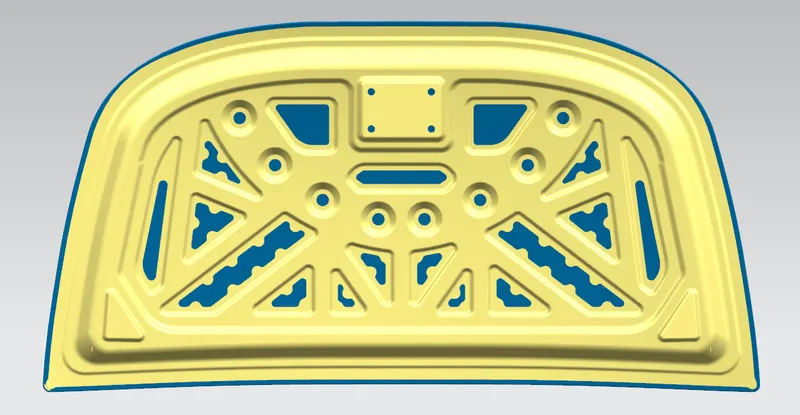
In this project we focused on developing the hood of the car using the give master profile. While designing the hood, we took into consideration the safety considerations. Once we have designed the panels we have also generated an entire assembly which include the striker and hinges.
Introduction
A car hood, also known as a bonnet in some regions, is a hinged cover that sits at the front of a car and covers the engine compartment. The main function of the hood is to protect the engine and its components from damage, as well as to provide access to the engine for maintenance and repair.
The main structural components of a car hood include:
-
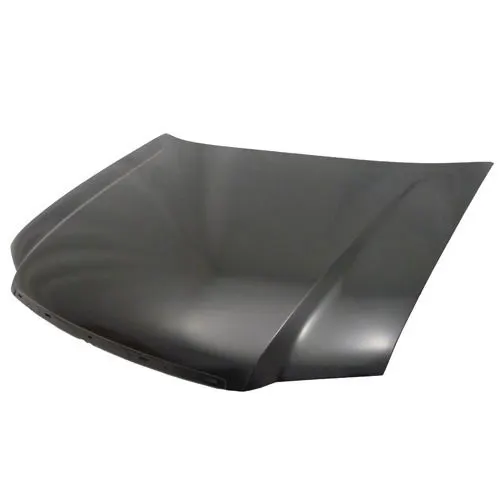
Outer panel: This is the visible skin, outer layer of the hood that gives it its shape and appearance. The hood can has few opening to direct the flow of air towards enginner compartment or it can can be completely closed, thus serving as a purely decorative member of the hood. It is carefully crafted by the styling team to give the car a sleek appearance while concealing the inner panel and engine parts. Rather than being welded, the skin is bonded to the inner panel using sealant and mastic points, resulting in a sturdy hood.
-
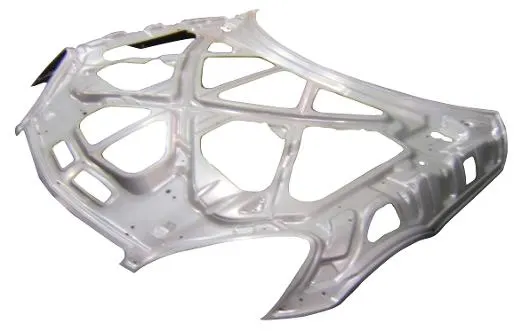
Inner panel: This panel is located underneath the outer panel and provides additional strength and support to the hood. The inner panel also has embossed reinforcements, which are structural components that are integrated into the hood to provide additional strength and rigidity.
-
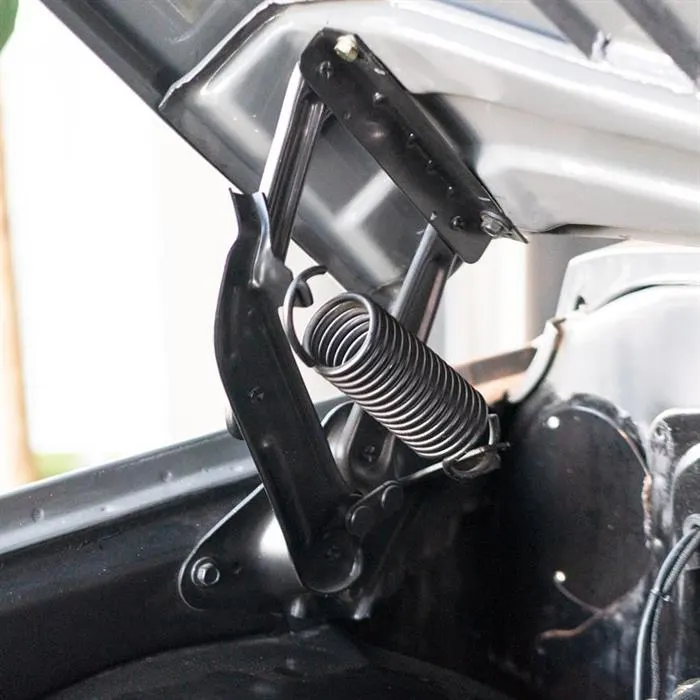
Hinges: These are the mechanisms that allow the hood to pivot and open. They are typically located on either side of the hood. The hood hinge comprises two components - one located on the inner panel and the other on the engine compartment. This mechanism enables the hood to open and close, while also creating a connection between the engine block and the hood. In addition, it regulates the lifting of the hood and reduces the impact of a collision involving a pedestrian and the vehicle.
-
Striker Latch: This is the mechanism that holds the hood closed when the car is in motion. It may be located at the front of the hood or at the base of the windshield. This component is responsible for securely latching the hood onto the striker on the engine block when it is not in use. It facilitates the smooth opening and closing of the hood during car maintenance, ensuring a tight and noise-free locking position while the vehicle is in operation.
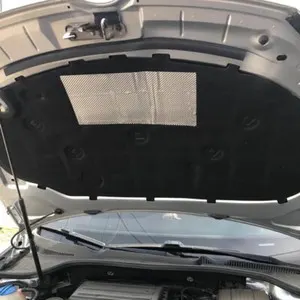
PEDESTRAIN SAFETY
Pedestrians are at high risk of being involved in vehicle collisions on the road, resulting in a significant number of fatalities and injuries worldwide. Head injury is a major cause of fatalities, caused by the hard impact of the head against the hood or ground. Significant efforts should be invested in designing of the vehicle front end, including the bumper and hood, to reduce pedestrian injuries in the event of a collision.
Wrap Around Distance
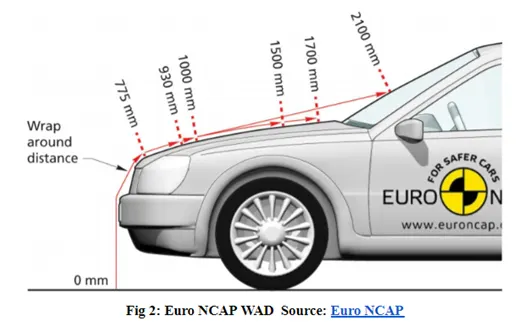
The Wrap Around Distance (WAD) is the distance between the ground and the head impact zone on the outer surface of a car. It is an important measurement for pedestrian safety during a frontal crash. The severity of the injury depends on the type and shape of the vehicle, speed, and pedestrian movement. Two test areas, Child and Adult head impact zones, are created during crash analysis based on WAD. Child head impact zone is between 1000 to 1700 mm WAD and adult head impact zone ranges between 1700 to 2100 mm WAD.
Hood Stay
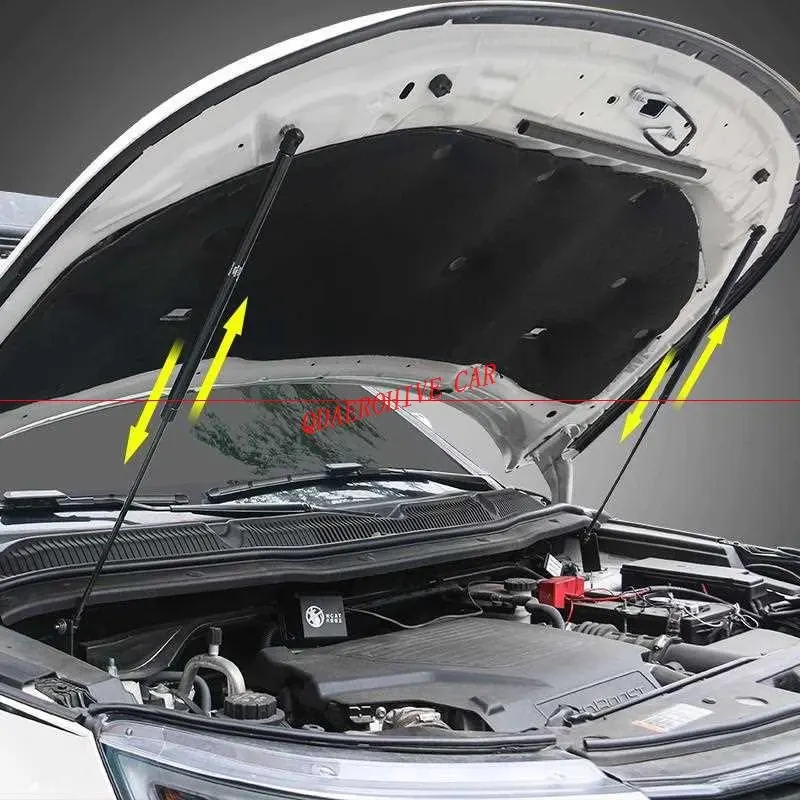
A hood stay is a device used in a car's engine compartment to securely hold the engine hood open, even in the face of external forces such as wind or vibration. It also makes it easier to open and close the engine hood. It can be classified either as a support rod or as a gas stay.
Gas Stays
Hood lifts are used to effortlessly lift heavy car hoods with the help of gas pressure. A hood lift typically consists of gas-filled struts that provide lifting force to the car hood. The struts contain pressurized nitrogen gas and some oil for damping movement and lubricating the seals. When the hood is unlatched and lifted, the gas pressure inside the struts causes them to extend and hold the hood in the open position. This makes it easier to access the engine compartment and perform maintenance tasks.
Support Rods
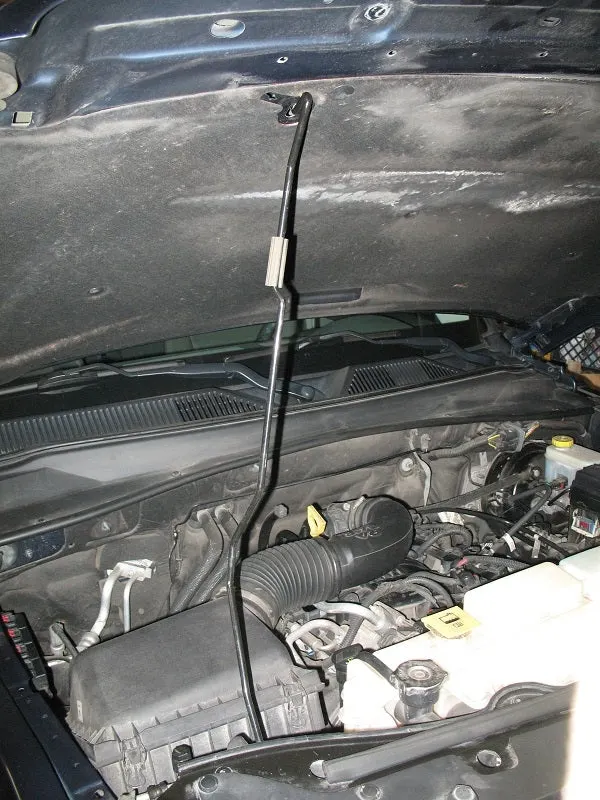
These are most commonly used in passenger vehicles, becasue it is an inexpansive solution for keeping the hood open to access the engine compartment. However, this only work well when car hood weigth is less and can be lifted by a single person. The support rod can be mounted in two ways, with the grommet side on the engine compartment or vice versa. It increases support force, provides automatic buffering, and has a strong load-bearing capacity for safe and stable use. The standard grommet and clip ensure reliable and easy support of the engine hood.
DESIGN METHODOLOGY
Hood Master Section
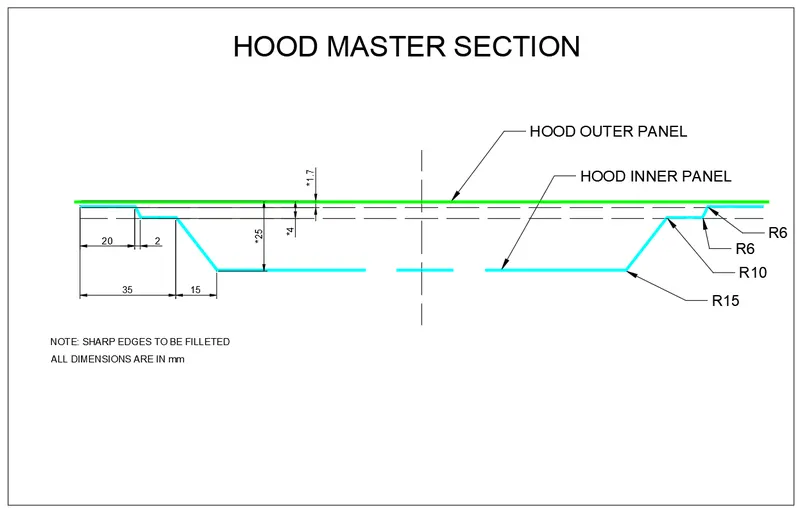
The master sections are design guidelines that determine the placement of components after the technical surfaces, such as Styling, Concept or Class-A, have been established.
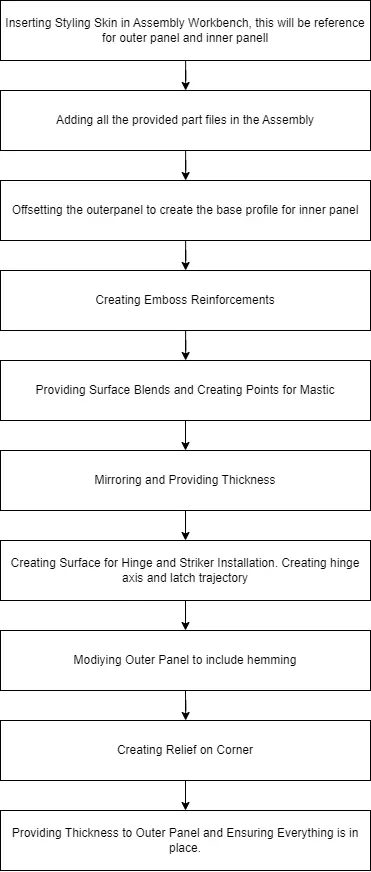
Desing Methodology
Latch Trajectory
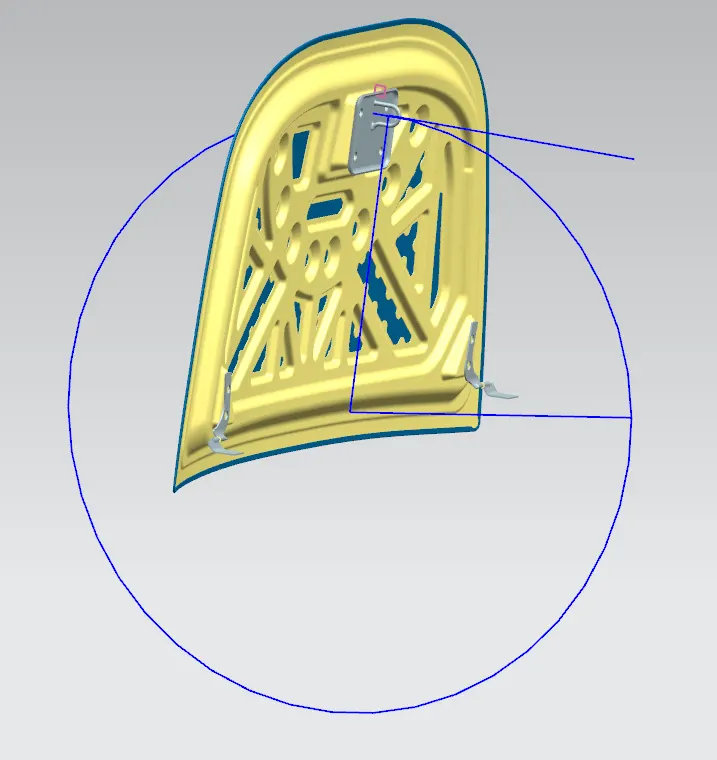
The latch trajectory is the path that the striker follows when the hood of a vehicle is opened and closed. This path is circular, and the radius of the circle is determined by a standard based on the average height of a person. The radius is measured from the hinge axis to the latch. This trajectory ensures that the hood can be opened and closed without hitting or injuring a person standing in front of the vehicle.
Manufacturing Processes Involved in Hood Design
Deep Drawing :
Deep drawing is a metal forming process used to produce a three-dimensional part from a flat sheet metal blank. In this process, the blank is clamped on a blank holder and is drawn into a forming die by a punch. The punch is designed to shape the metal into the desired form, which could be a cup, a box, or a more complex shape. During the process, the blank is subjected to tensile stress and compressive stress, which causes the material to flow and stretch into the die cavity. The depth of the part that can be produced by deep drawing is usually greater than the diameter of the part
Hemming
Hemming is a sheet metal forming process used to join two metal panels together, typically used in the automotive industry for making car body panels. In the hemming process, one panel edge is bent over onto the other panel edge and then secured by mechanical fasteners or adhesives. The bent-over edge forms a hem or flange that wraps around the second panel, creating a smooth and secure joint. The hem can be a single fold or a double fold, depending on the desired strength of the joint.
The process typically involves multiple steps, including trimming the panels to size, preparing the edges for hemming, and then performing the hemming operation. The edges of the panels are first cleaned and sometimes coated with adhesives to improve bonding. Then, a hemming tool is used to fold the first panel edge over onto the second panel edge, creating the hem or flange. Hemming provides a strong, secure joint between two panels, as well as a smooth and aesthetically pleasing appearance. It also offers some structural benefits, such as increased stiffness and improved crash performance.
Different Views of The Designed Hood
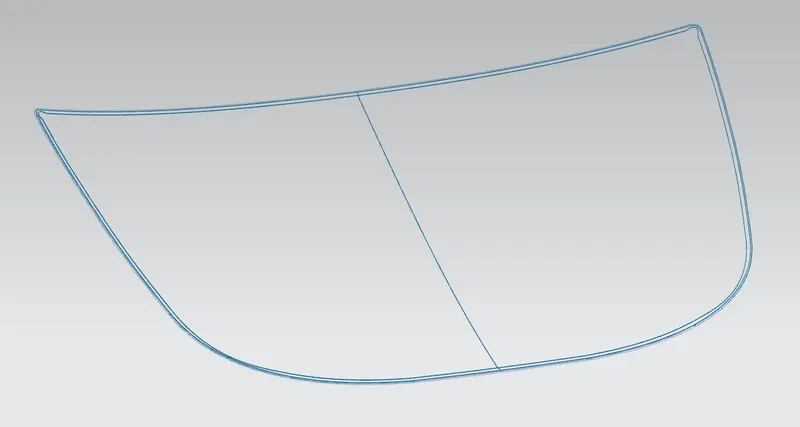
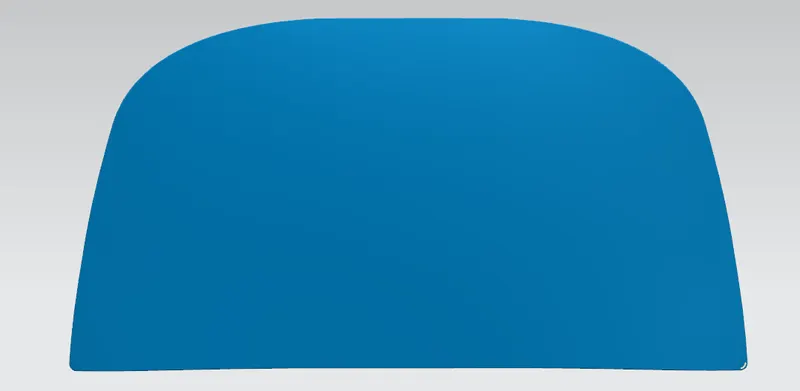
Image of Outer Panel of Hood. It is also showing the Hemming Profile
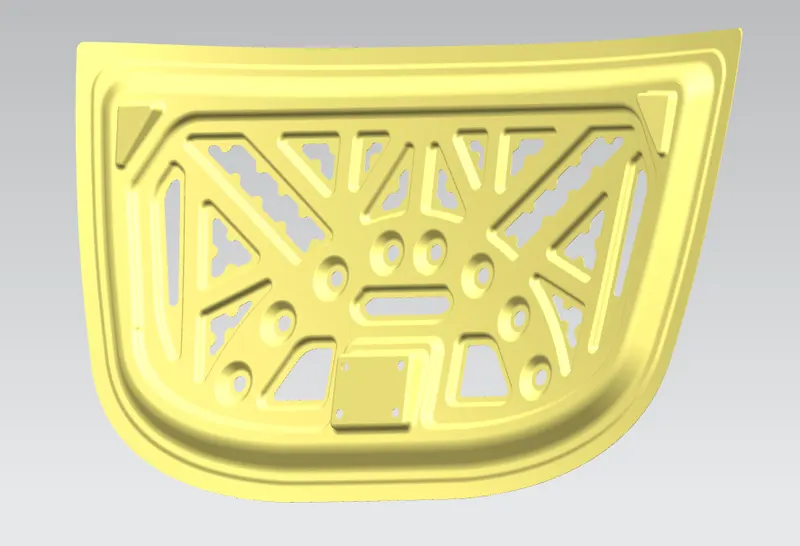
Image of Inner Panel. The Reinforcement Emboss and Hemming Points are clearly visible.
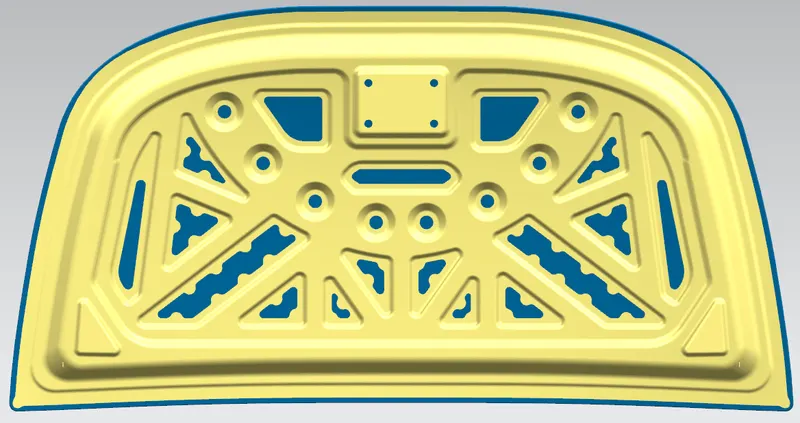
Front View
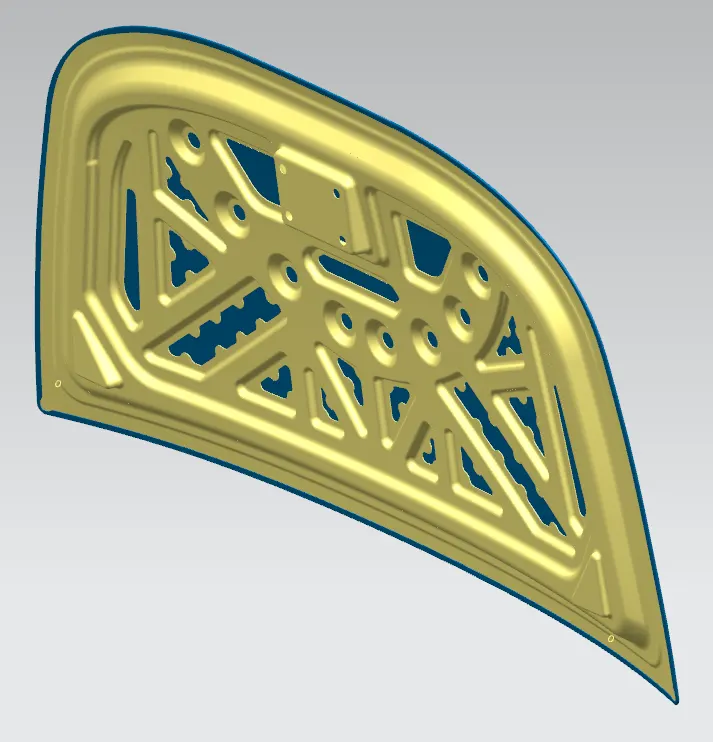
Isometric View
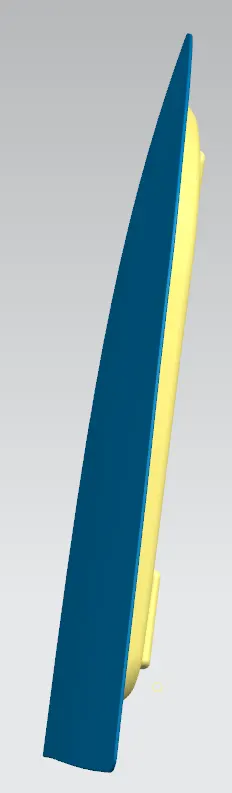
Side View