Hood design-Week 2
AIM:
Design hood outer panel, inner panel and reinforcements with the given outer hood skin, master section and design parameters.
INTRODUCTION:
- The hood or bonnet is the hinged cover over the engine of motor vehicles.
- Hoods can open to allow access to the engine compartment (or trunk on rear-engine and some mid-engine vehicles) for maintenance and repair.
- In design perspective hood should meet some specific conditions like pedestrian safety, hood head zone for the lock striker, force distribution when subjected to frontal collision (occupant safety), manufacturability etc.
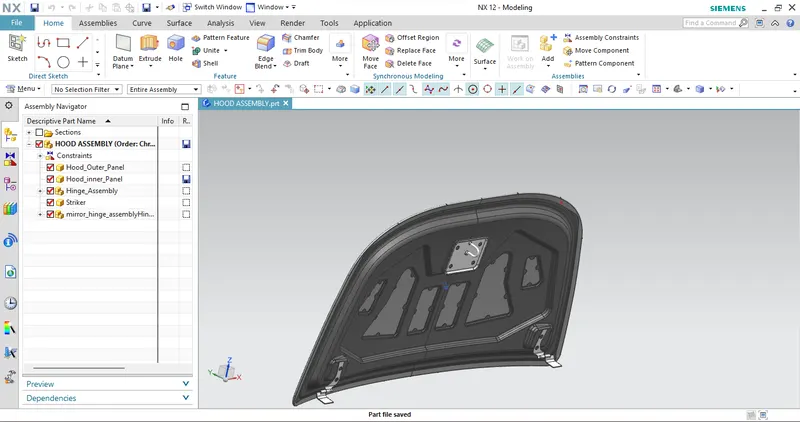
- A typical hood assembly consist of hood outer panel, inner panel, latch and striker, hinge, hood stay.
- Hood stay is an apparatus for supporting the engine hood of a moto vehicle in its open position.
- The purpose of opening the engine hood is for inspecting engine room, replenishing cooling water and engine oil, changing parts and making repairs etc.
- Common types of hood stays are Support Rod and Gas Stay. Support rods are manually operated and they are cost effective and simple to design whereas gas stays require no man power but they are costly.
- Hood are typically made out of the same material as the rest of the bodywork. This may include steel and aluminium.
- Deep drawing, hemming, blanking and piercing are the common sheet metal operations that are used in manufacturing hoods in automotive industries.
DESIGN PARAMETERS:
Hood Thickness Information-
- Outer Panel Thickness = 0.75mm
- Inner Panel Thickness = 0.75mm
- Reinforcement Thickness = 1.5mm.
Master Section:
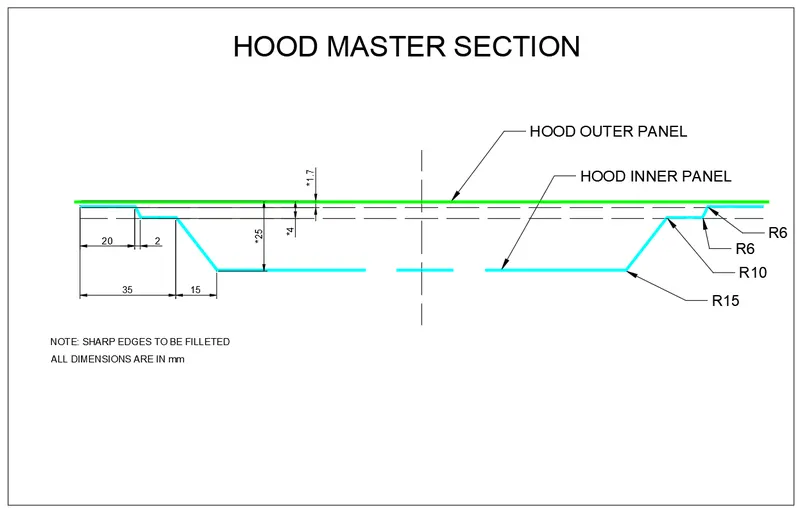
DESIGN CONSIDERATIONS FOR CAR HOOD :
- Consideration of Noise Vibration Harshness (NVH): Noise, vibration, and harshness (NVH), also known as noise and vibration (N&V), is the study and modification of the noise and vibration characteristics of vehicles, particularly cars and trucks. While noise and vibration can be readily measured, harshness is a subjective quality, and is measured either via "jury" evaluations, or with analytical tools that can provide results reflecting human subjective impressions.
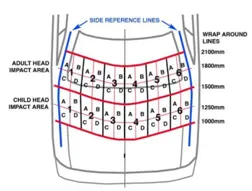
- Pedestrian safety: Pedestrian safety is important consideration while designing the hood. According to the wrap around distance and pedestrian head impact zone hood is designed. Safety is the most important criteria in automobile designs which concentrates on both pedestrian and occupant safety. The pedestrians are the most vulnerable road users and are at high risk of traffic accidents. The major reason for the fatality of the pedestrian in traffic accident is due to the head injury resulting from the hard impact of the head against the stiffer hood or the ground. This leads to the necessity of new inner hood panel which is less stiffer and pedestrian friendly. The area at the head impact zone is made softer to reduce the impact force during accident.
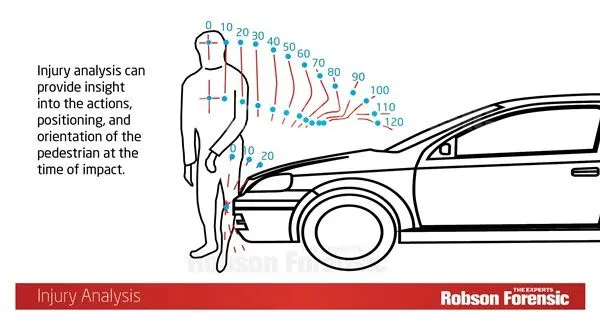
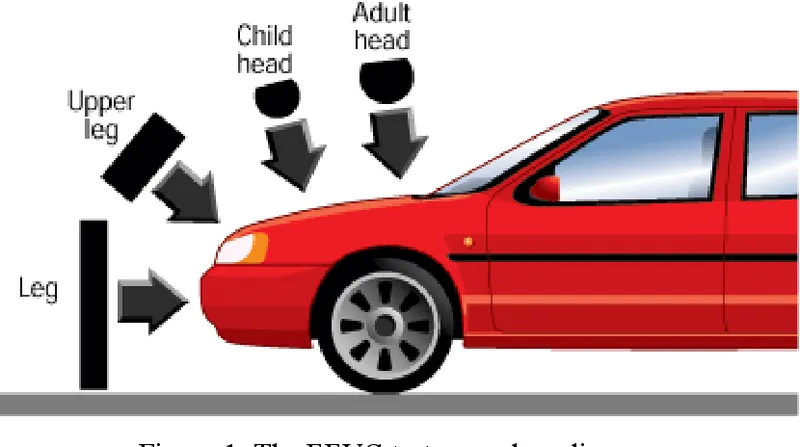
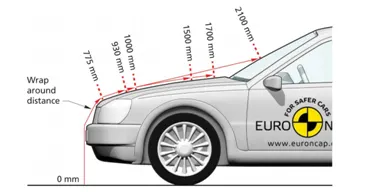
- WRAP AROUND DISTANCE: The headform test area is defined as the outer structure that includes the upper surface of all outer structures. It includes, but is not limited to, the bonnet, wings, windscreen scuttle, wiper arms/spindles, windscreen frame, A-pillars and roof. It is bounded by the geometric trace of the 1000mm wrap around line in the front, the Bonnet Side Reference Lines and the 2100mm wrap around distance (WAD)
COMPONENTS USED IN HOOD:
1.SUPPORT ROD:
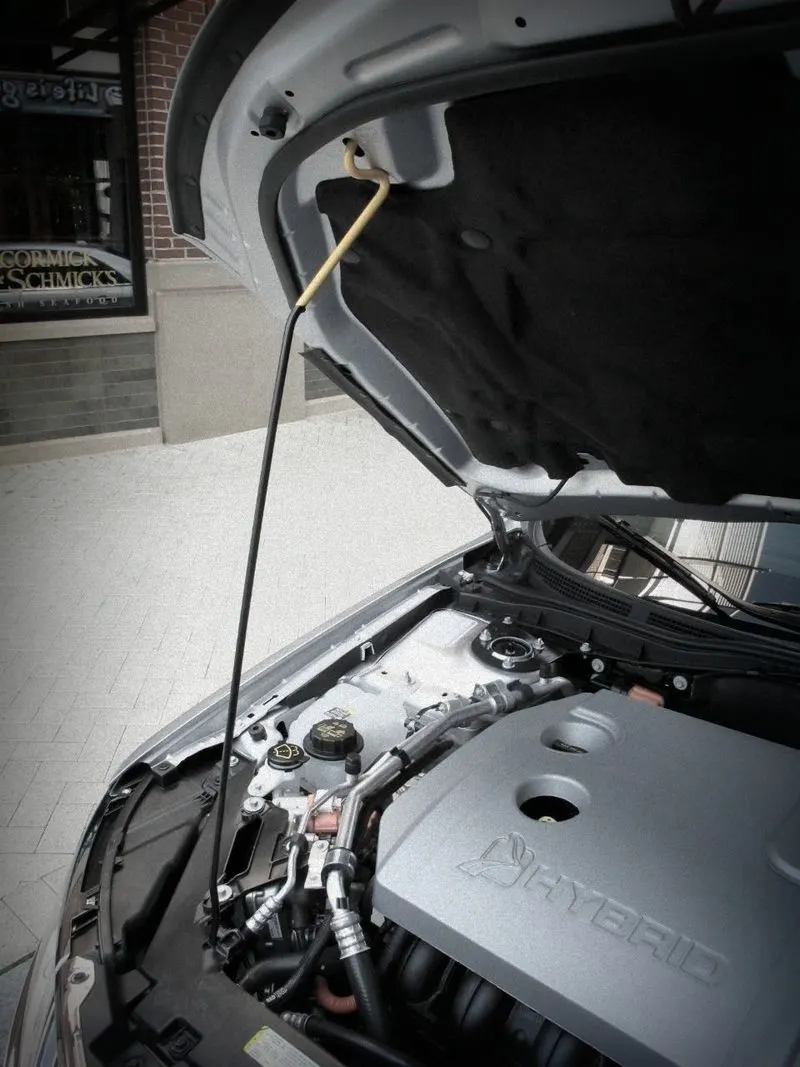
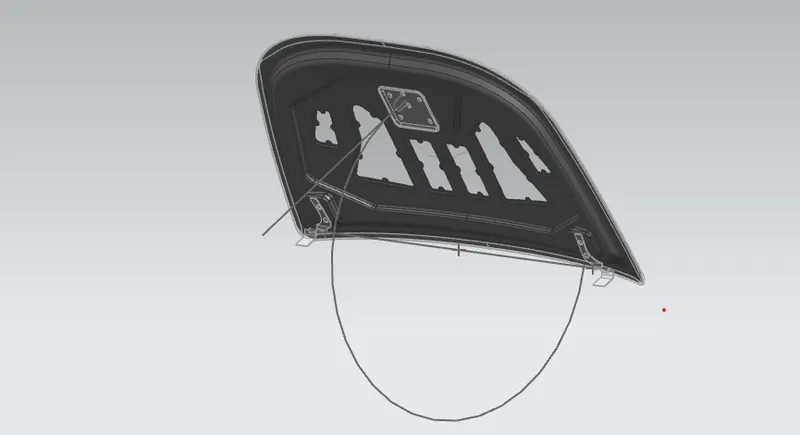
The support rod is usually inside the engine compartment, when we open the hood and keep it in open condition, one end of the support rod attaches to the hood and supports it.This support rod has to be fixed manually onto the hood.The design of the support rod is not linear but it should have some bends to increase the rigidity and strength of the rod. the support rod should be mounted such that it does not collide with other parts, also the support rod should be mounted on the opposite side of the battery to avoid disturbance while removing the battery from car.
2.GAS STAY:
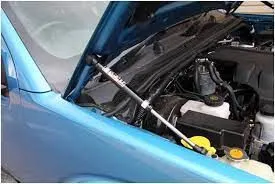
A gas stay is used to open the hood. it uses compressed gas to open the bonnet automatically.gas stays for the front hood are mainly used in high end performance cars where the bonnet weight is high.
3.STRIKER:
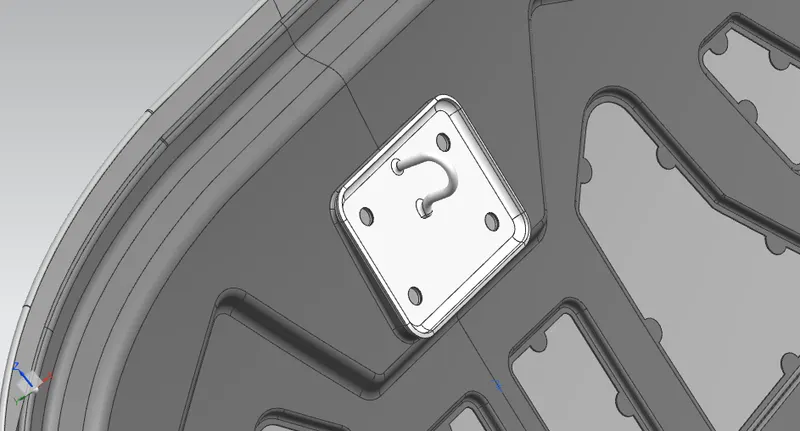
This is the part of the hood that has a striker or hook type design used to lock or unlock from the vehicle engine compartment.
4.HINGE ASSEMBLY:
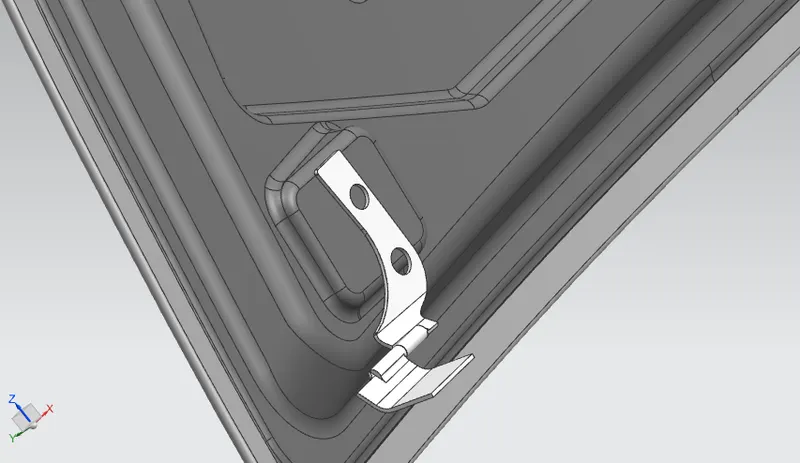
This hinge was placed on the hood to give rollover action to tilt up or tilt down the hood.
5.HOOD OUTER PANEL:
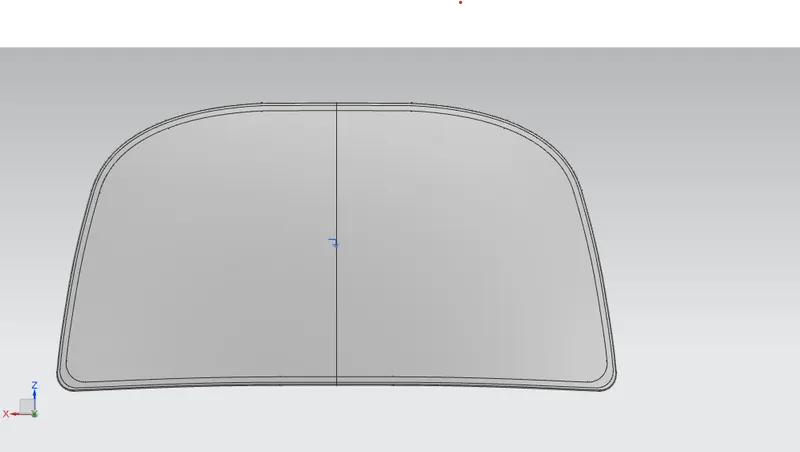
The outer panel is actually called the skin of the vehicle which is designed by the styling team to get a good look for a vehicle by covering the inner panel and engine parts of the car. This part should not be welded to the inner panel but using the sealant and mastic points makes contact between the inner and outer panel which acts as a bond between both and makes the hood stiff.
6.HOOD INNER PANEL:
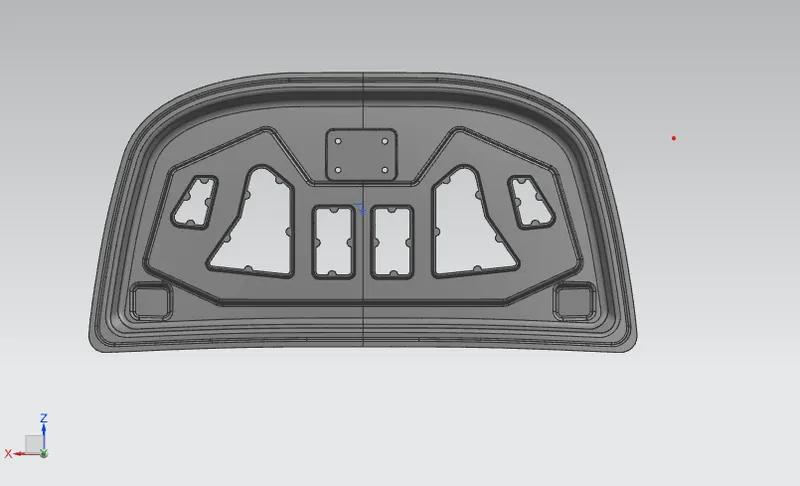
The main part of the hood which gives support to the outer panel of the car and with its embossing shapes dissipates the force in different directions when the vehicle takes crashes to not to injure the men in the car.
MANUFACTURING PROCESS:
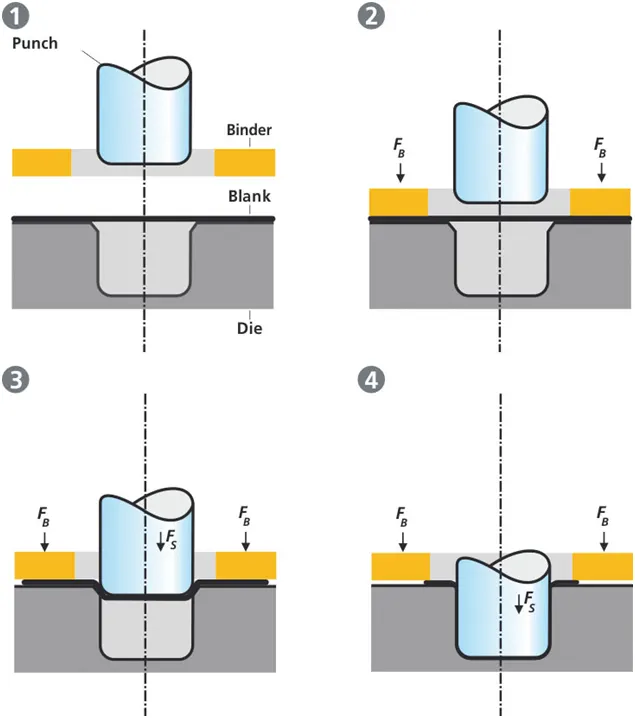
1.DEEP DRAWING:
Deep drawing is one of the most widely used processes in Sheet metal forming. Apart from its use in many other sectors, it is applied in the automotive industry for the manufacturing of car body parts.
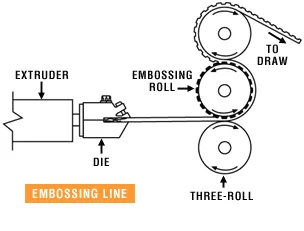
2.EMBOSSING:
Embossing is a metal forming process for producing raised or sunken designs or relief in sheet material by means of matched male and female roller dies, theoretically with no change in metal thickness, or by passing sheet or a strip of metal between rolls of the desired pattern.
Characteristics of the metal embossing process include:
- Its ability to form ductile metals.
- Its use in medium to high production runs.
- The ability to maintain the same metal thickness before and after embossing.
- The ability to produce unlimited patterns, depending on the roll dies and
- The ability to reproduce product with no variation.
3.MASTIC SEALANTS:
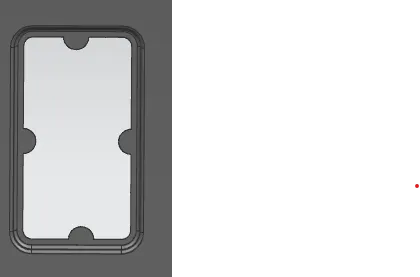
A mastic sealant is a type of liquid sealant that cures in an elastic state, thus making it flexible while holding the bond of the surfaces that has attached together. It adheres to just about any material making an all purpose type of sealant.
4.HEMMING:
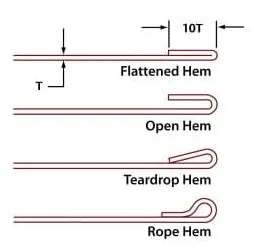
Hemming in automotive manufacturing is a cold process of joining an inner and outer panel by folding the flanges of the outer panel onto the inner panel, permanently clamping the inner panel in place. This process is used in the manufacture of doors, hoods, and decklids and can be accomplished using a traditional press or with a robotically controlled roller.
TYPES OF HEMMING:
- Flattened/closed hemming
- Open hemming
- Tear drop hemming
- Rolled/rope hemming
FINAL ASSEMBLY OF HOOD DESIGN:
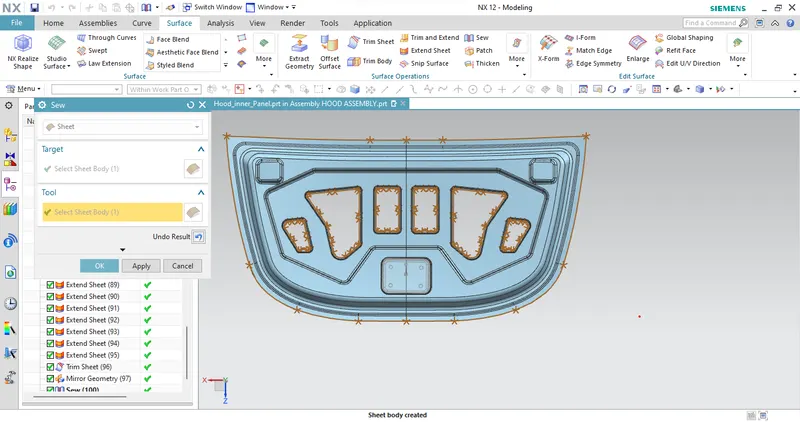
sew:
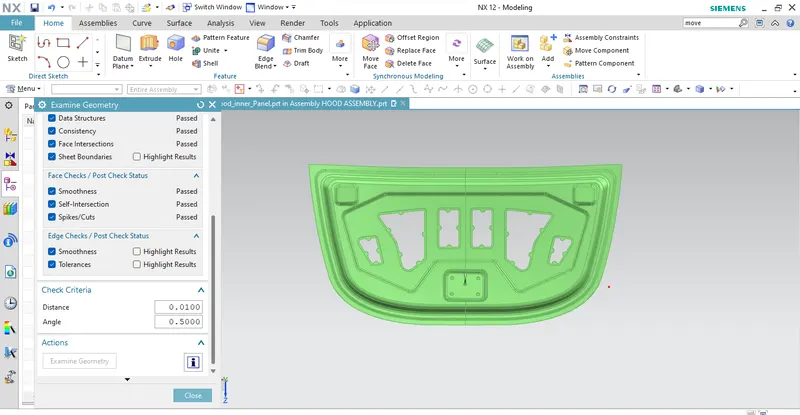
examine geometry:
striker assembly process:
final assembly:
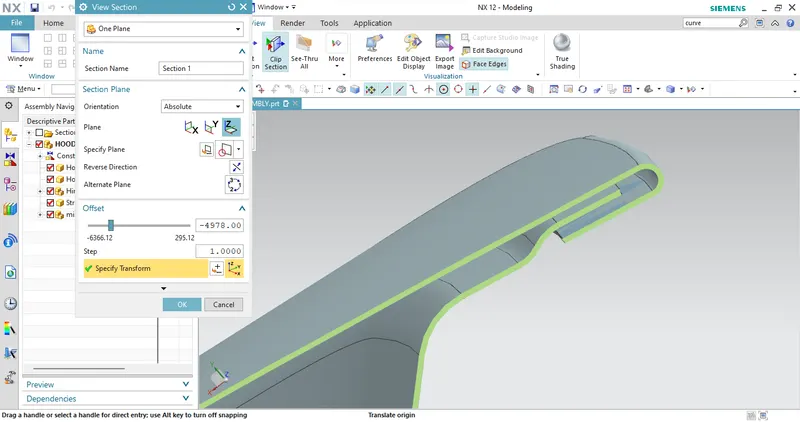
view section:
CONCLUSION:
As per the given data, the hood/bonnet of car has been designed and assembled by using nx-cad.