Hood design-Week 2
HOOD DESIGN
AIM:
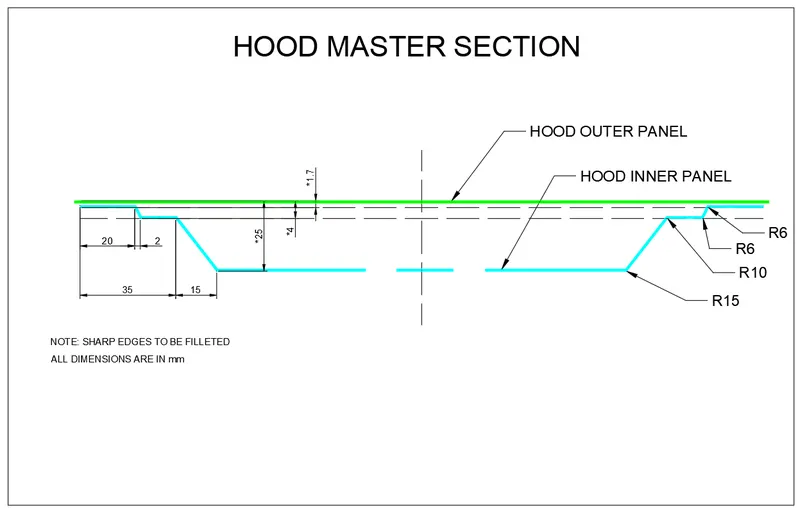
Design Hood Outer Panel, Inner Panel and the necessary reinforcements by following the Master Section mentioned with the Design parameters.
INTRODUCTION
HOOD OR BONNET:
The term "hood" and "bonnet" both refer to the protective covering over the engine compartment of a vehicle. In American English, it is typically called a "hood," while in British English, it is often referred to as a "bonnet."
The hood/bonnet is a hinged panel that can be raised to allow access to the engine for maintenance and repair. It also serves to protect the engine and other components from debris, water, and other elements that may enter the engine compartment while driving. Additionally, the hood/bonnet often contains insulation to help reduce engine noise and keep heat from escaping from the engine compartment.

DESIGN CONSIDERATIONS
A car's bonnet is regarded as a part of the frontal BIW enclosure. The purpose of bonnets is to lessen air resistance as it moves around the vehicle. Apart from this, bonnets are also designed to meet several other requirements.They serve a great deal of purpose in protecting the passengers inside the car & the pedestrians in the event of an accident. It also acts as the cover for the engine.
Hood Thickness Information:
- Outer Panel Thickness = 0.75mm
- Inner Panel Thickness = 0.75mm
- Reinforcement Thickness = 1.5mm
GIVEN MASTER-SECTION:
INNRER PANEL:
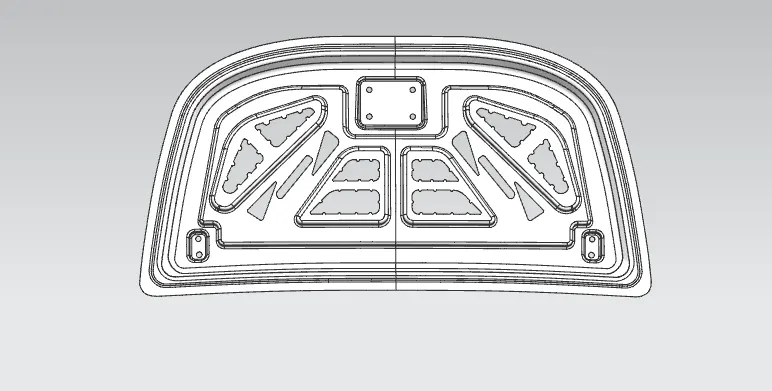
The hood inner panel refers to the sheet metal or plastic component that lines the underside of the hood/bonnet. It is located between the exterior sheet metal of the hood and the engine compartment.
The purpose of the hood inner panel is to provide support and structure to the hood, as well as to reduce noise and vibration. It also serves as a barrier to prevent dirt, debris, and moisture from entering the engine compartment from the top of the vehicle. Additionally, the hood inner panel may have insulation material to help regulate engine temperature and protect the hood from heat damage.
In some cases, the hood inner panel may have various components mounted to it, such as hood latches, hinges, and release mechanisms.
OUTER PANEL:
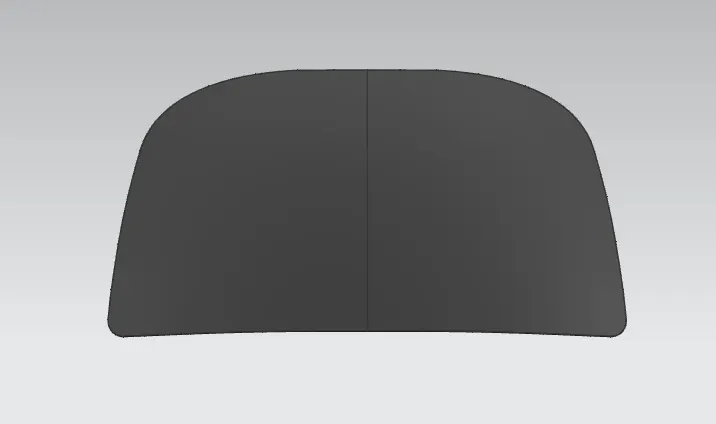
The hood outer panel refers to the sheet metal or plastic component that makes up the exterior of the hood/bonnet. It is the visible part of the hood that is seen from the front of the vehicle when the hood is closed.
The primary purpose of the hood outer panel is to protect the engine and other components in the engine compartment from environmental elements such as rain, snow, debris, and sunlight. It is also designed to be aerodynamic, reducing wind resistance and improving fuel efficiency while driving.
The hood outer panel may be made of a variety of materials depending on the manufacturer and the model of the vehicle. Common materials used in hood construction include steel, aluminum, fiberglass, and carbon fiber. The outer panel may also be designed to include various features such as air vents, scoops, or grilles to improve engine cooling and performance.
HINGE ASSEMBLY:
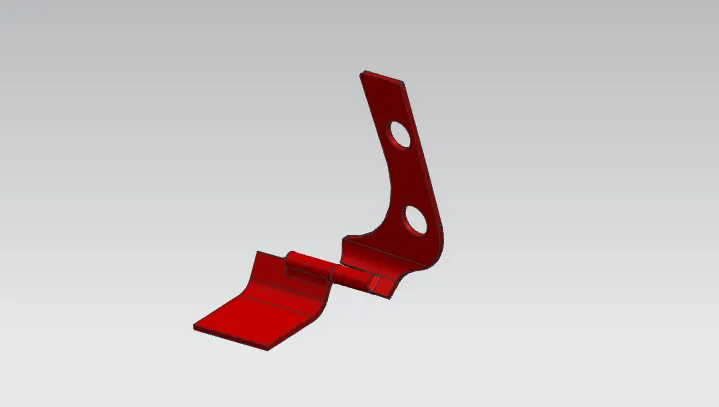
The hood hinge assembly is a set of mechanical components that attach the hood/bonnet to the vehicle's body and allow it to be opened and closed.
The hinge assembly typically includes two hinges, one on each side of the hood, that are mounted to the vehicle's body and the underside of the hood. The hinges are usually made of metal and are designed to pivot to allow the hood to be raised and lowered.
The hinge assembly also includes a hinge spring, which provides tension to keep the hood in the open position. The spring may be a separate component or integrated into the hinge itself.
The hood hinge assembly may also include various components such as bolts, nuts, washers, and bushings to secure the hinges to the vehicle and allow them to pivot smoothly.
Proper functioning of the hood hinge assembly is important for safe operation of the vehicle. If the hinges become damaged or worn, they may cause the hood to become misaligned or to not close properly, which can be a safety hazard while driving.
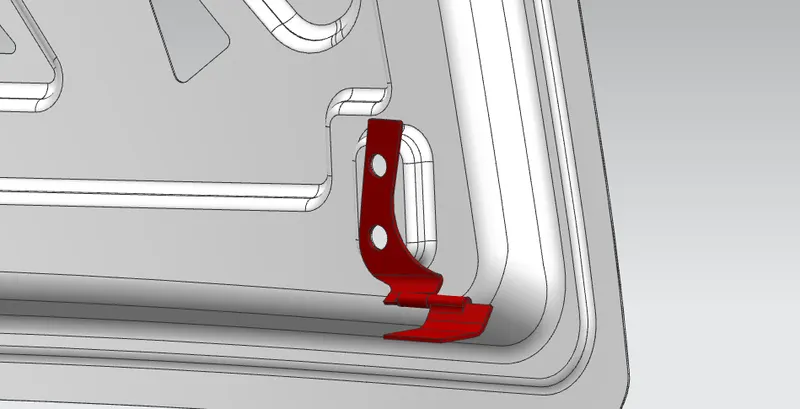
STRIKER ASSEMBLY:
The hood striker assembly is a mechanical component that is typically located on the body of the vehicle and serves as the latch for the hood/bonnet when it is closed.
The striker assembly usually consists of a metal plate that is mounted to the vehicle's body and a latch mechanism that is attached to the underside of the hood. When the hood is closed, the latch mechanism engages with the striker plate, securing the hood in place.
The hood striker assembly may also include an adjustment mechanism that allows for minor adjustments to be made to the position of the striker plate to ensure proper alignment and a secure fit of the hood.
The striker assembly may also include a safety catch mechanism, which is designed to prevent the hood from accidentally opening while driving. This safety catch is typically activated by a cable that is connected to the hood release inside the vehicle's cabin.
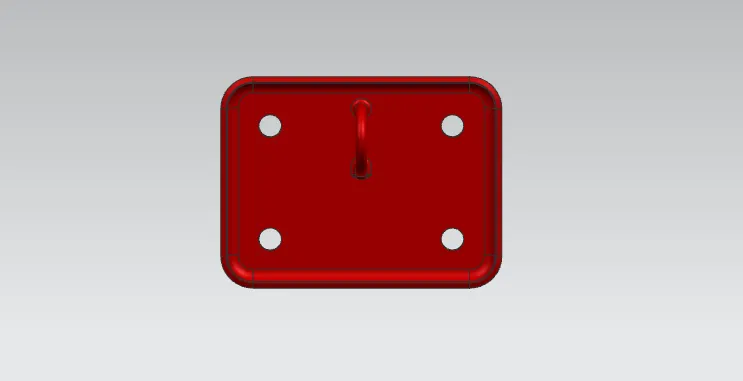
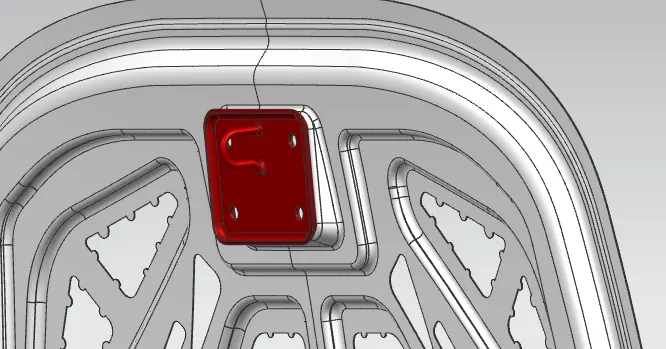
HEMMING:
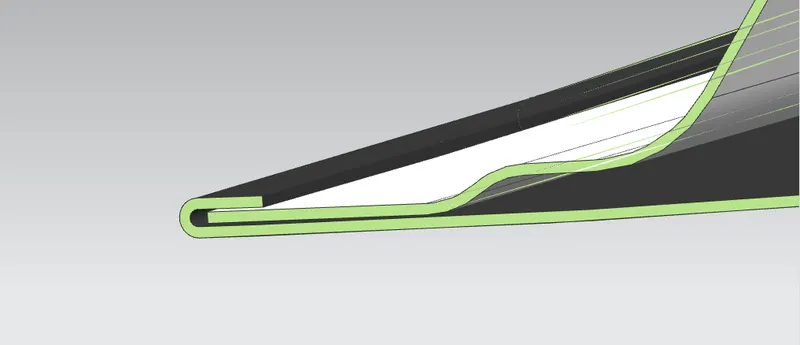
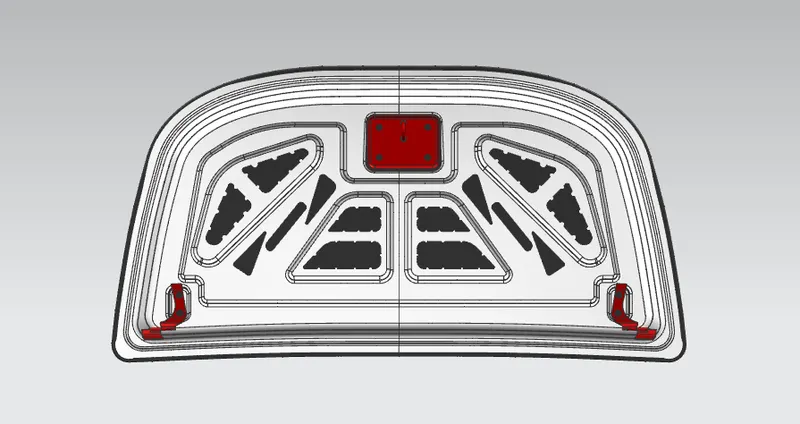
Hood hemming is a process in which the edge of the hood/bonnet is folded over onto itself to create a double layer of material. This process is often used in automotive manufacturing to create a more finished look to the hood edge, as well as to provide additional strength and stiffness to the hood.
The hood hemming process involves bending the metal or plastic material of the hood edge over itself using specialized machinery. The edge is then clamped down or welded in place to hold the double layer of material in position.
GIVEN DATA-
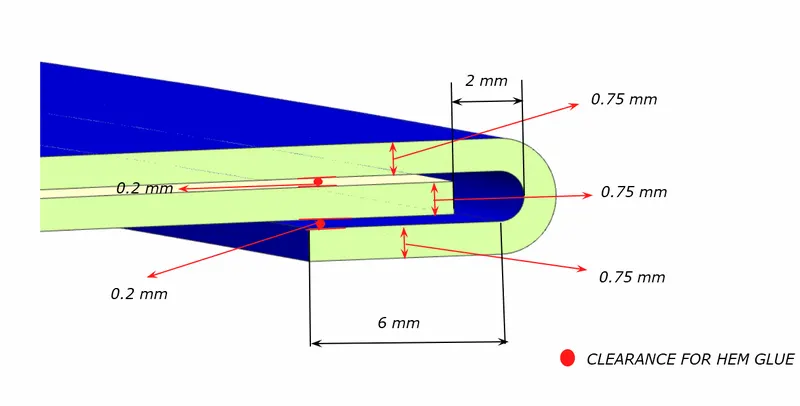
Hood hemming can also be used to create a smoother, more aerodynamic edge to the hood. By folding the edge over onto itself, any rough or jagged edges are hidden, creating a more streamlined appearance to the hood/bonnet.
DEEP DRAWING:
Hood deep drawing is a manufacturing process used to create the hood/bonnet of a vehicle from a sheet of metal or other material. The process involves the use of a deep drawing press to form the sheet metal into the shape of the hood.
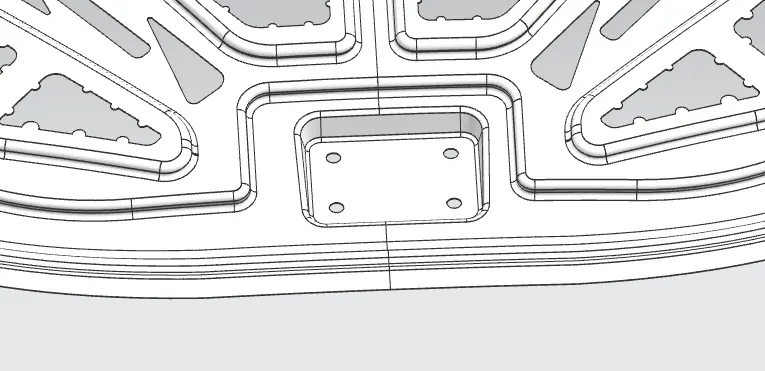
The deep drawing process begins with a flat sheet of material that is placed over a die, which is a mold that is shaped like the final product. The die is then pressed onto the sheet metal with a punch, which forces the metal to conform to the shape of the die. This process is repeated several times until the desired depth and shape of the hood is achieved.
Hood deep drawing can produce hoods with complex shapes and contours that would be difficult to achieve using other manufacturing methods. The process can also be used to create hoods with varying thicknesses in different areas, which can provide additional strength and rigidity to the hood.
After the deep drawing process is complete, the hood may undergo additional manufacturing processes such as trimming, bending, and welding to create the final product.
EMBOSSING:
Hood embossing is a manufacturing process used to add a raised design or logo to the surface of a hood/bonnet. The process involves pressing a mold or die onto the surface of the hood to create a raised pattern.
The embossing process typically involves the use of a hydraulic press or other specialized machinery. The mold or die is created with the desired design or logo, and is then pressed onto the surface of the hood using high pressure and heat.
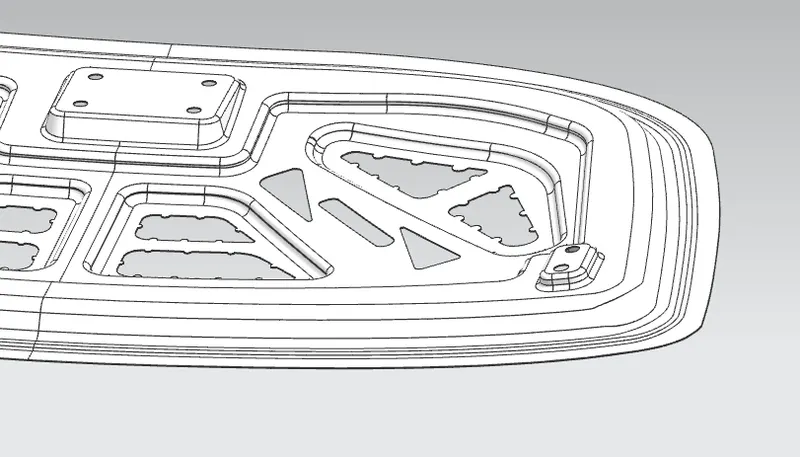
Hood embossing can be used to create a variety of designs and logos on the hood surface, ranging from simple patterns to intricate designs. The process can also be used to add texture to the surface of the hood, which can enhance the visual appeal of the hood and provide additional grip for maintenance and repair work.
In addition to its aesthetic benefits, hood embossing can also provide additional strength and rigidity to the hood. By adding material to the surface of the hood in a raised pattern, the hood is less likely to deform or bend under stress.
MASTIC DATA:
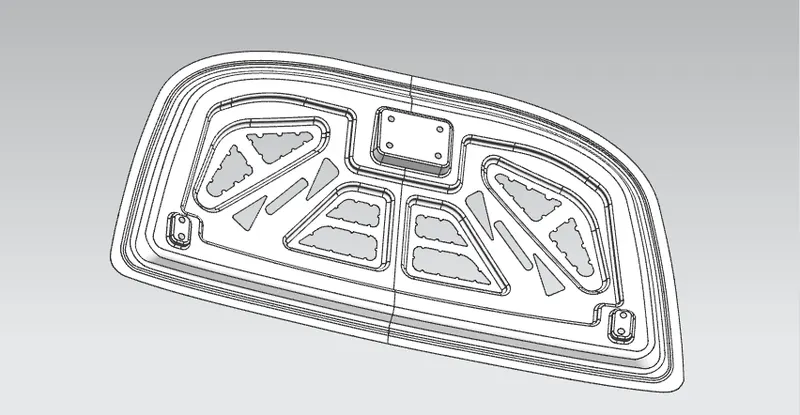
Hood mastic data refers to information related to the type, amount, and location of mastic used in the manufacturing of the hood/bonnet of a vehicle. Mastic is a type of adhesive that is used to bond different parts of the hood together, as well as to provide additional noise and vibration dampening.
LATCH TRAJETORY:
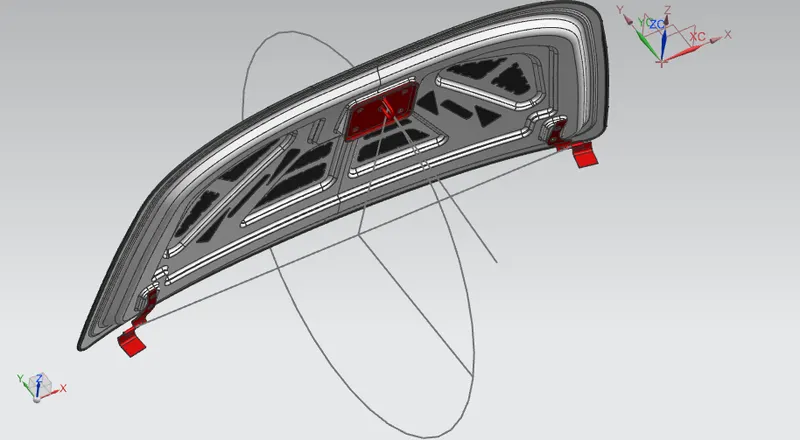
Latch trajectory is a term used in automotive engineering and design to refer to the path that the hood latch follows as it engages with the striker assembly to secure the hood/bonnet in place.
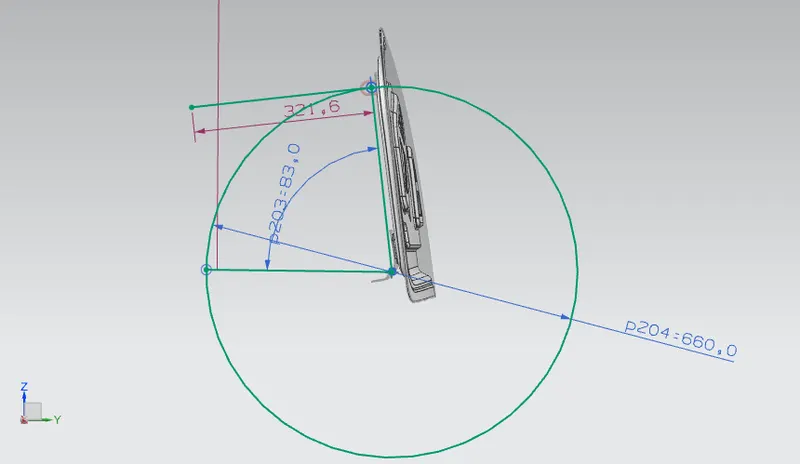
The latch trajectory is important for ensuring that the hood is securely fastened and that it remains in place while driving. The trajectory must be precise and consistent to ensure proper alignment between the latch and striker assembly.
The latch trajectory is determined by the placement and orientation of the latch mechanism, as well as the shape and size of the striker assembly. In order to achieve a consistent and reliable latch trajectory, the latch and striker assembly must be designed and manufactured to very precise tolerances.
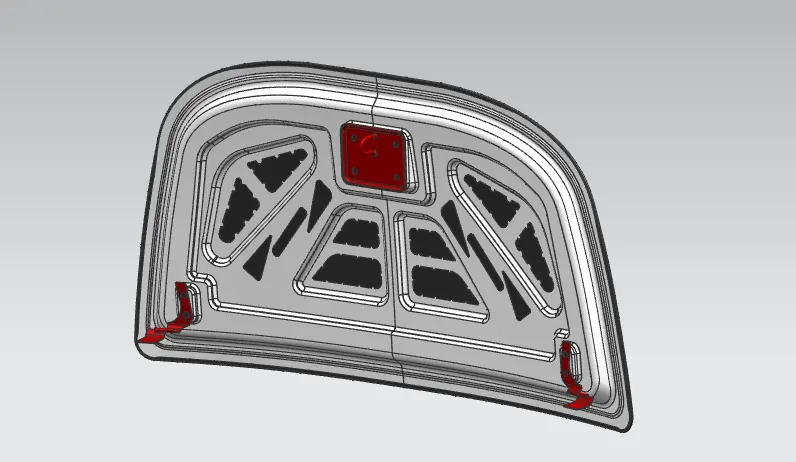
FINAL HOOD ASSEMBLY:
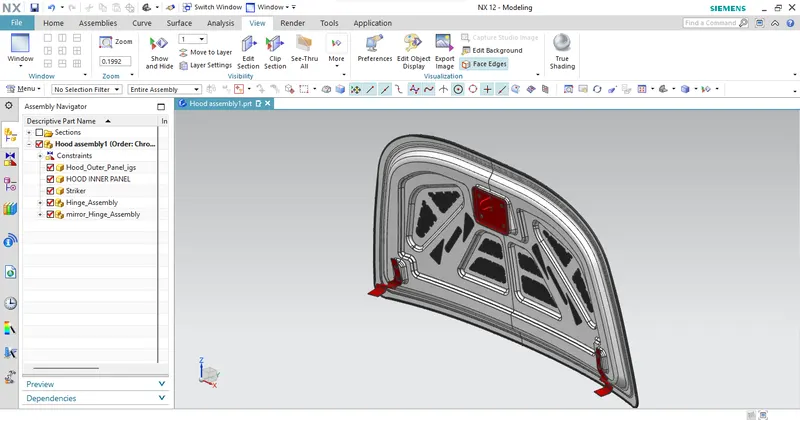
Output-
CONCLUSION:
Designing the hood of a vehicle requires careful consideration of several factors, including structural integrity, weight, aerodynamics, and aesthetics. To ensure that the hood meets these requirements, it is typically divided into two main components: the outer panel and the inner panel, which are then reinforced as necessary based on the design parameters.
Overall, the design of the hood outer panel, inner panel, and necessary reinforcements is a complex process that requires careful consideration of a range of design parameters. By following the master section and taking these parameters into account, automotive engineers can ensure that the hood is both structurally sound and aesthetically pleasing, while also meeting the necessary weight and aerodynamic requirements.