Hood design-Week 2
AUTOMOBILE HOOD
Hood is the front most BIW enclosure component it covers the engine compartment and other parts in the front engine mounted automobiles. It cuts the air drag by providing good aerodynamic shape for the smoother ride and also provides good aesthetic look to the automobile. It has a Hinge mechanism which is helpful for ease of access of engine compartment and other components.
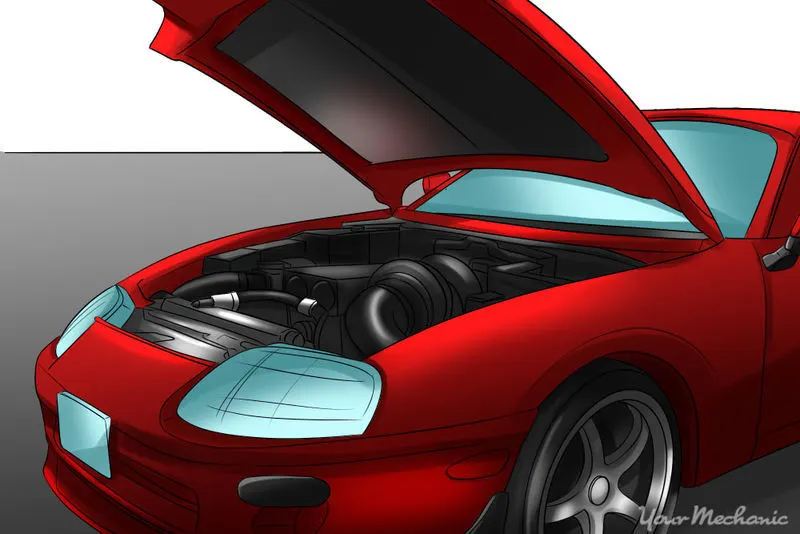
Here we are going to learn how to design a hood or the bonnet of the car by using the NX CA and what are all the parts that required to complete the hood as per the desigin constraints and the regulation and what are all the process that will require to complete this challenge.
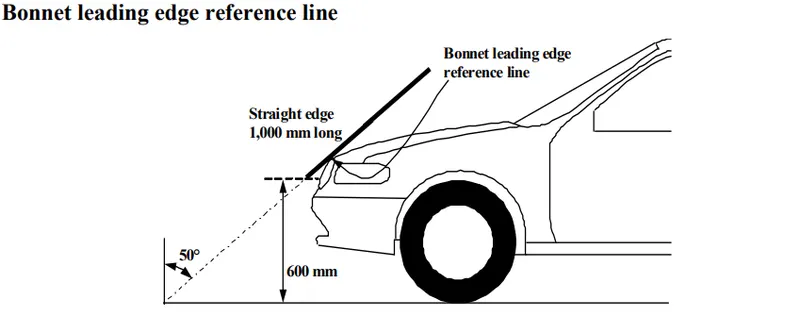
HOOD MASTER SKETCH
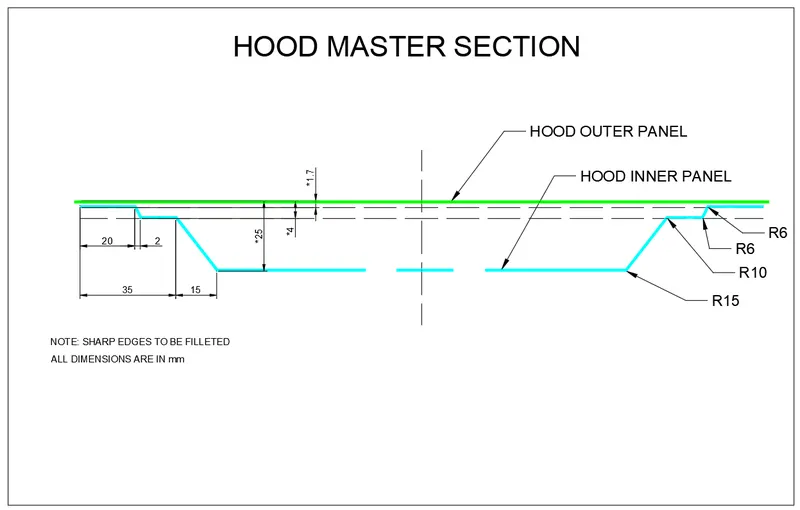
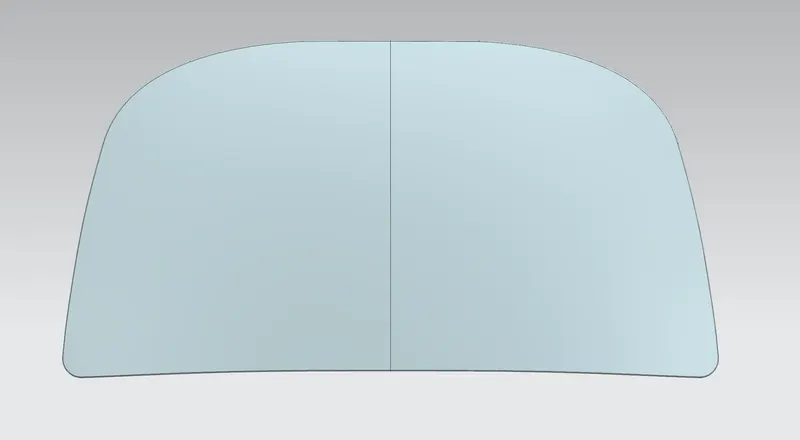
The master skecth is provided is created based upon the requirements that are recived from the marketability team and the manufacturing requirments that we saw below image is the master section that is used to design the hood.
Automobile hood consists of the fallowing components
(a) Hood Inner panel
(b) Hood outer panel or skin of the hood
(c) Reinforcements
(d) Latch and striker assembly
(e) Hinge assembly
(a) Hood Inner panel - It is the skeleton of the hood and provides proper strength to the hood. It accomodates all the other components of the hood assembly based on functional requirements.
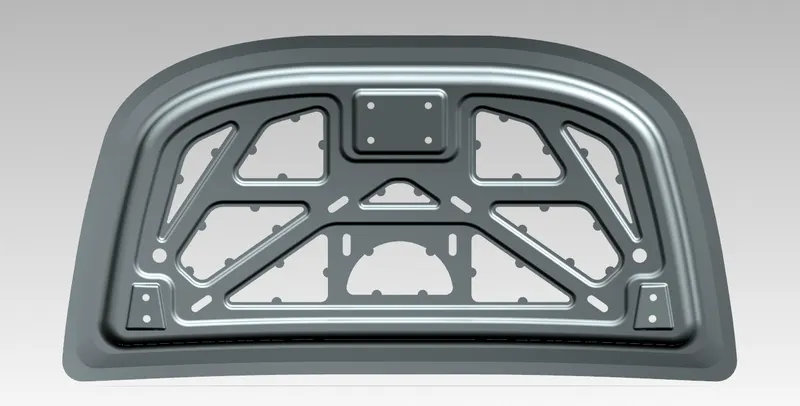
(b) Hood outer panel or skin of the hood - It is the outer most skin of the hood, covers the automobile's engine compartment and other components. It enhances the overall look of the automobile and provides protection from external corrosive conditions
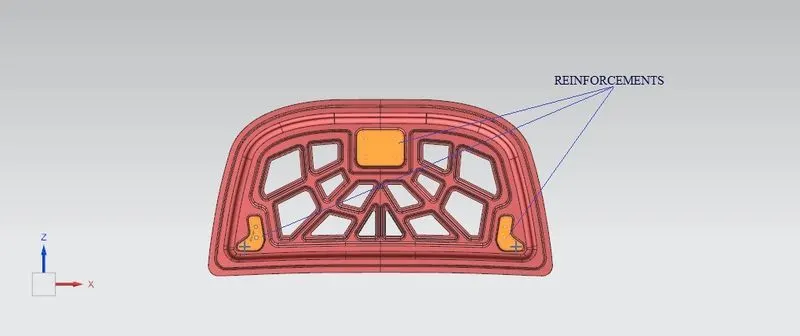
(c) Reinforcements - These add extra strength to the areas where attachments for the Latch and striker assembly, Hinge assembly etc., are provided in the inner hood it minimizes the local stresses generated due to attachments
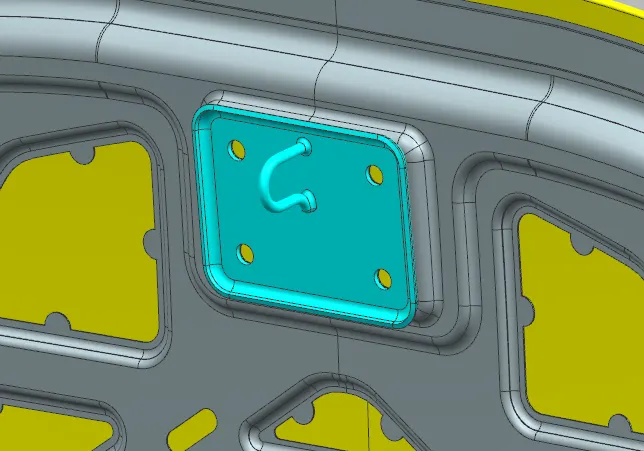
(d) Latch and striker assembly - It is a locking mechanisam of the hood attached to the inner panel and to the body of automobile.
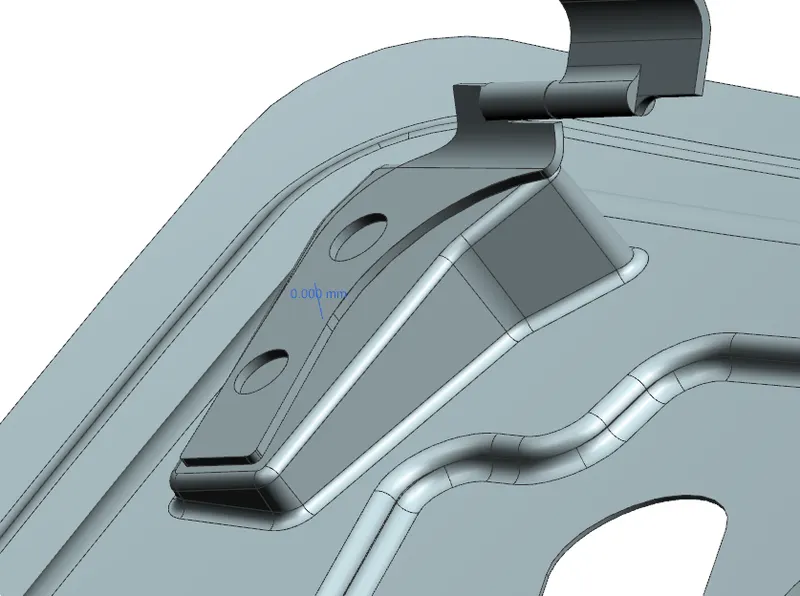
(e) Hinge assembly - : It provides the rotational degree of freedom to the hood about the hinge axis in order to access the engine compartment of the automobile
Manufacturing Methods For Production of Hood The following manufacturing methods are employed for production of hood
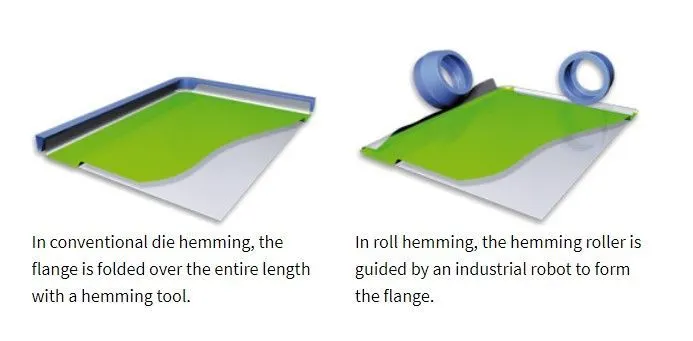
Hemming: Hemming is a forming process in which the sheet's edges are folded or folded over another section to create a snug fit. Hemming procedures are commonly used to join parts, improve the look of a part, and reinforce part edges. In car part production, hemming is used in assembly as a secondary operation after deep drawing, trimming and flanging operations to join two sheet metal parts (outer and inner) together. Typical parts for this type of assembly are hoods, doors, trunk lids and fenders. There are various types of hemming operations:
- Conventional die hemming
- Roll hemming
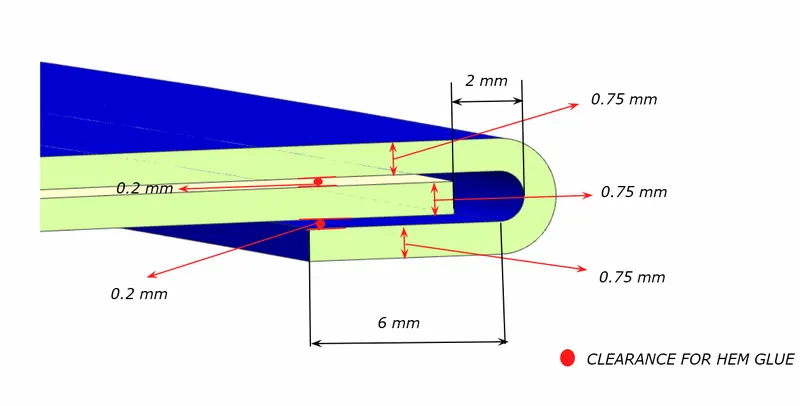
Hemming Data:
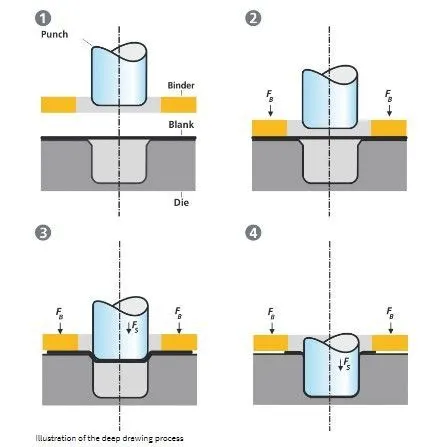
Deep Drawing: The deep drawing process is a forming process which occurs under a combination of tensile and compressive conditions. A flat sheet metal blank is formed into a hollow body open on one side or a hollow body is formed into a hollow body with a smaller cross-section. In the automotive industry, deep drawing is usually carried out using rigid tools. When drawing complex car body parts in practice, there is usually a combination of stretch and deep drawing involved. It is necessary that the sheet metal is stretched as well as possible without reaching the material’s limits (e.g. splits, wrinkles).
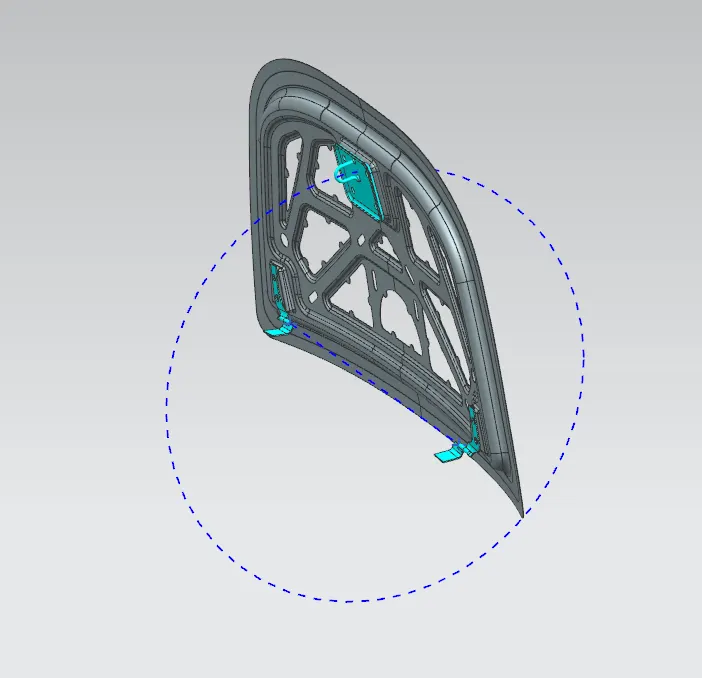
Latch trajectory : Circle is drawn from the hinge axis center so we can finalize the position of latch striker. For proper mating, the tip of the striker should be tangential to the latch trajectory. the position of latch striker follows the path of this circle.Latch trajectory :- Circle is drawn from the hinge axis center so we can finalize the position of latch striker. For proper mating, the tip of the striker should be tangential to the latch trajectory. the position of latch striker follows the path of this circle.
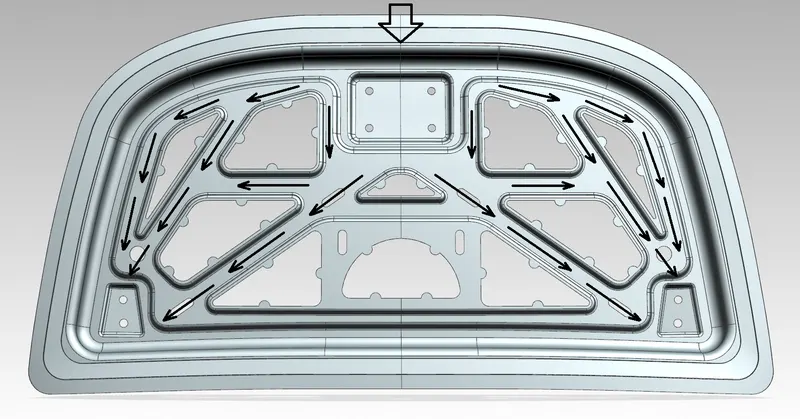
Emboss Definition : Embosses are provided to increase the strength of inner panel. Shape of embosses also determines the direction of collision force distribution and the collision forces should be directed towards outward side of the car (towards hinge side).
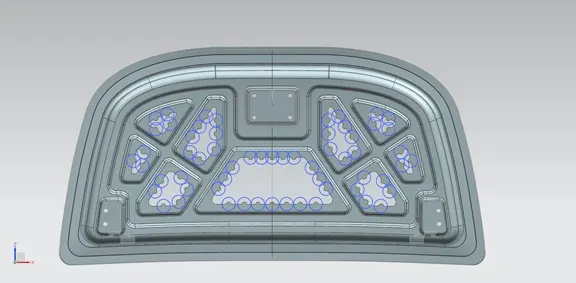
Mastic sealant: Mastic sealant helps to locally improve strength of the hood. It is generally a hard rubber part, which is introduced as a paste in between inner and outer panel of the hood, which will get hardened inside the furnace. Every mastic sealant point will have a tendency to improve the local strength in around 80 mm diameter. Considering this, the mastic points are positioned such that most of the hood region is covered.
Tools used in the NX-CAD
Surface tool: Offset surface, trim sheet, face and edge blend, emboss, through curve, extract geometry, low extension, thicken, sew.
Curve tools: curve on surface, offset curve in face, bridge curve, trim curve, offset curve, project curve etc.
Assemblies tools: Move component, assembly constraints, wave geometry linker etc.
Conclusion
From this challenge I have learned to design Car Hood using Siemens NX CAD .I have been also learned more knowledge and features in it. Therefore the Design of Hood considering various rules and approaches has been done and validated successfully.