Hood design-Week 2
CAR HOOD DESIGN:
AIM:
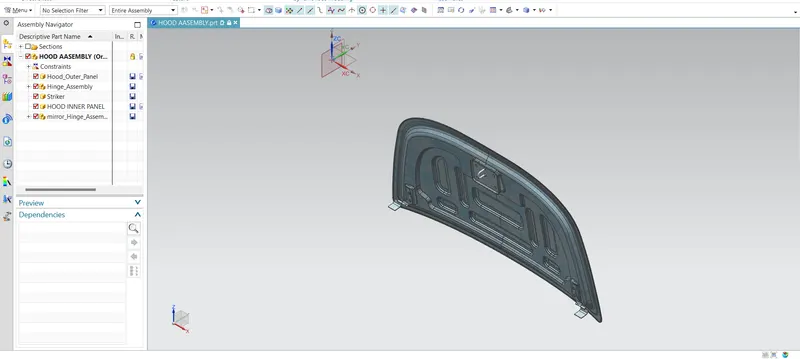
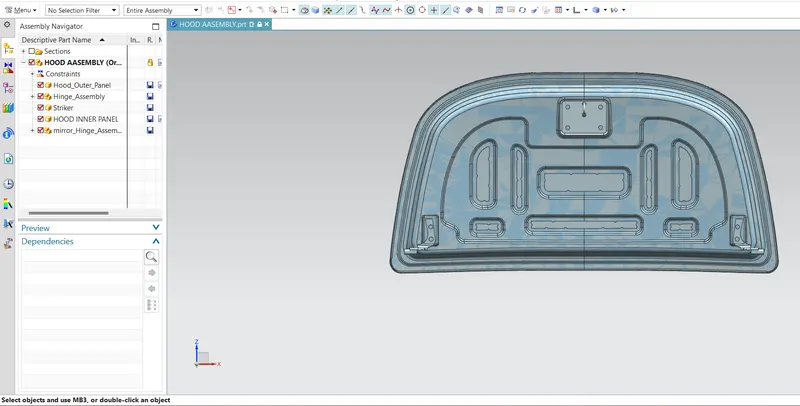
To Design a car Hood Assembly components are inner panel , outer panel, latch trajectory hinge assembly through Nx cad softwatre and assemble all the parts in the Hood assembly.
Introduction of hood:
The hood is an openly body for cover the engine portion in the front side of the car .It consits of inner and outer panel.Outer panel provides the safety for the pedestrains in the situation of accident .Because engine components are strong material it hits causes major inujury to pedestrain. outer panel is used to decrease the injury level . Inner panel was give a stiffenes and support to the outer panel .It is also a styled purpose for the vehicle .
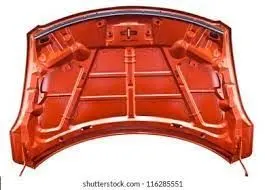
hood is the metal part and is constructed a materials like steel ,aluminium and .For remodeling purpose out of the company hood can be manufactured the materials like Carbon fibre , fiber glass or dry carbon.
Hood also contains hood scoops, wiper jets power bulge
In hood design perspective hood should meet some specifications like
- Pedestrain safety
- Hood head zone
- For heat transfer
- Force distribution
- Occupant safety
- Manufacturability
A typically hood assembly consists of
- Hood outer panel
- Hood inner panel
- Latch and Striker
- Hinge assembly
- Hood stay
Pedestrain Safety:
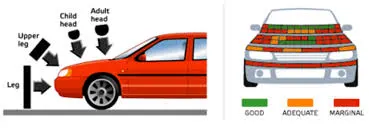
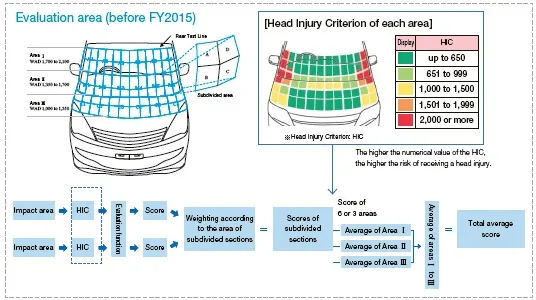
when the car hits a pedestrain design should be surch way that it should be reduce the injuries to the pedestrains in the event of a pedestrain vehicle collison .The objective of these is to reduce the number of road accident fatalities and severity of injuries sustaiend by pedstrains involved in a collision with a vehicle in urban traffic .Vehicle safety factor should simultaneously consider occupant and pedestrain safety , given that pedestrains are the third largest category of traffic fatalities most pedestrain death due to occur with head injury.
Hood Head Zone:
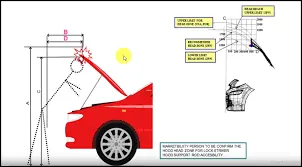
while designing the hood of the car hood zone,hood head zone should be taken into consideration because when the person open the hood of the engine for performing the repair and maintenance or the engine like engine oil maintenance and parts replacement in this time head should not collide with the hood in the opening , there should be provide a minium height whemn we open the hood .So, height of the hood should be more than average height of the human in the country.
Noise vibration :
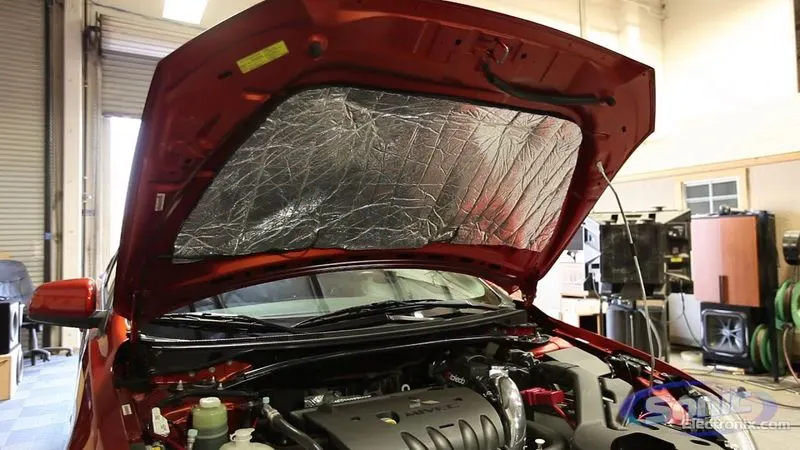
One of thegood considerations inthe design of hood inthe noise and vibration from various transmissons systems engine noise and vibration can be reduced by the help of hood.
Requirement and function of car hood:
- Safety for pedestrain
- Aesthetic look
- Reduce the nois eand vibrations ,hardness
- Aerodynamic shape .
- cover the engine from the outside particles.
Design parameters:
Hood thickness
- For inner panel -0.75mm
- For outer pannel-0.75mm
- Reinforcement thickness-1.5mm
(reinforcement thickness is depends upon the cost of the car and safety of the car)
Hood support:
- Gas stay
- support rod
Gas stay:
A device for supporting the engine hood of a motor vehicle in its open position by mean of an actuator which is activated by gas.
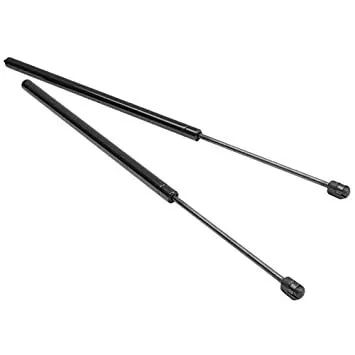
Advantages:
- easy to lift because hood is weight component its hard to lift especially it is very useful for woman .
Disadvantages:
- High cost
- It is sometimes failed their isany leakeage in the stay than suddenly drops the hood.
Support rod:
It is the device that support the hood in open position without droping is known as balance rod or support rod for hood balance.
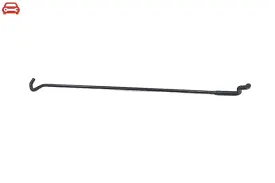
Advantage of support rod:
- Easy to manufacture
- Low cost
Disadvantags of support rod:
- rust was formed
- in the travelling car suddenly stopped try to touch the support rod to inspect the engine room its feel very hot to touch.
- sudden breakeage was occur due to deformations or rust formations on the edges of rod.
components of hood:
- outer panel
- inner panel
- Hinge assembly
- Latch and Striker
- Reinforcement
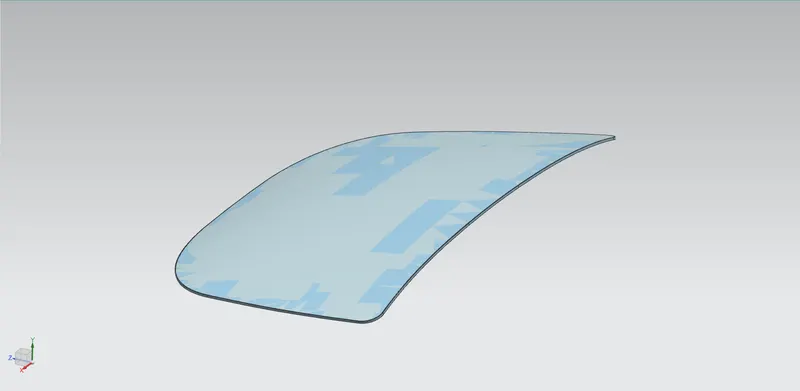
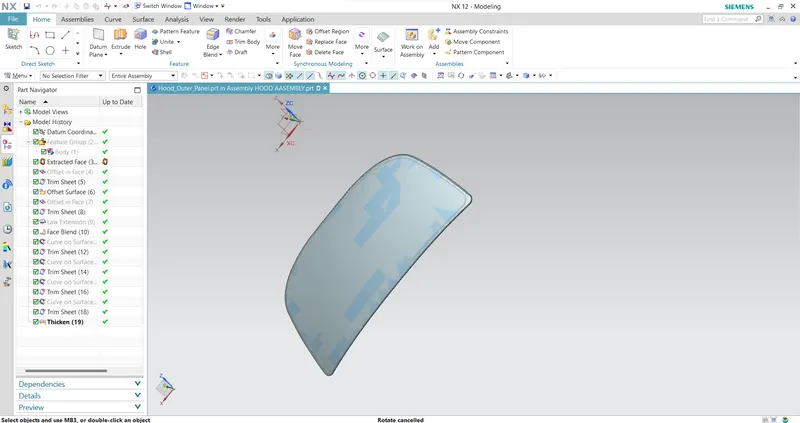
Outer panel:
It is to be called as a Class -A or Aesthetic face .It is situated inthe outer side of hood it uses for styling and looks like very weak with hellp of this hemming was happend .
in the automotiveindustry mostly used aluminimum a deformed lloys are 6111,6016,5182
Deep drawing is a key process to ensure the qulaity of products.
Inner panel :
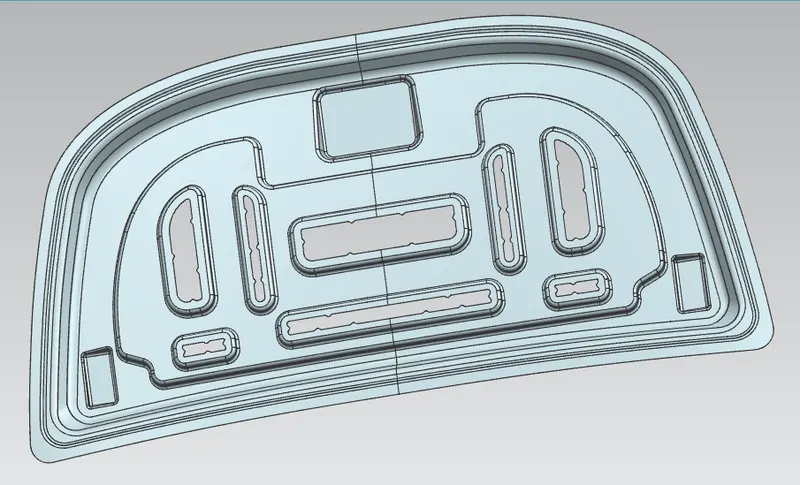
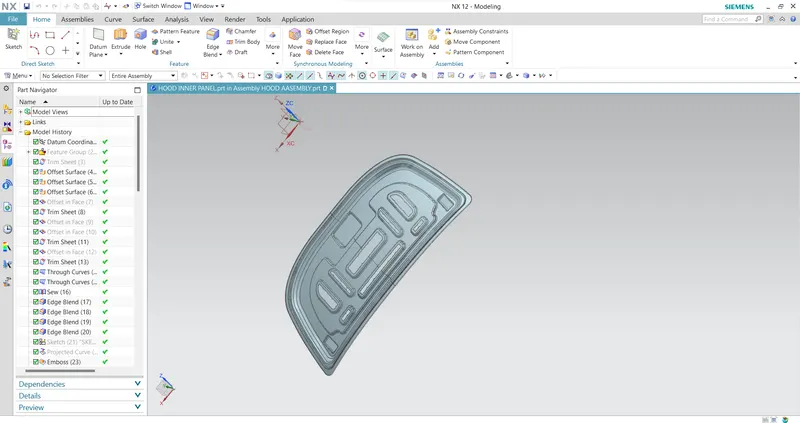
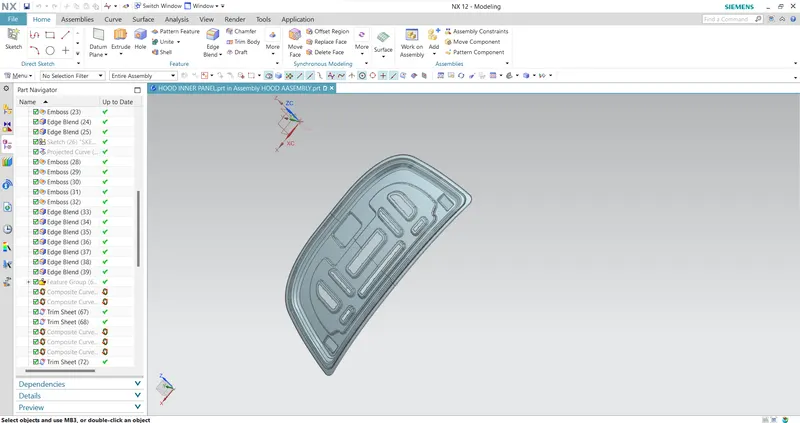
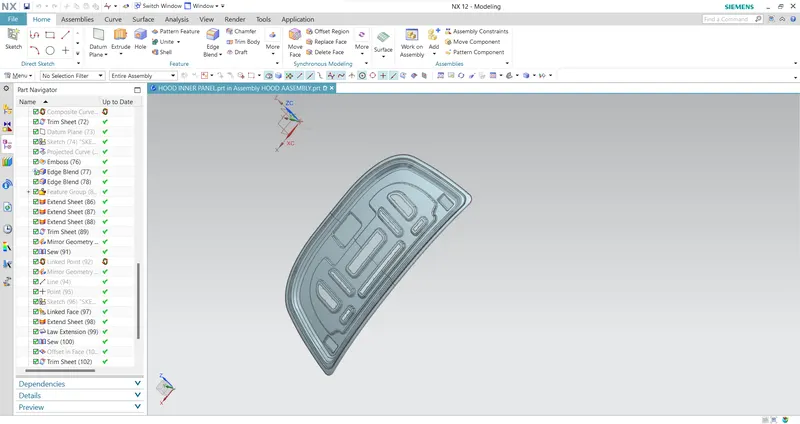
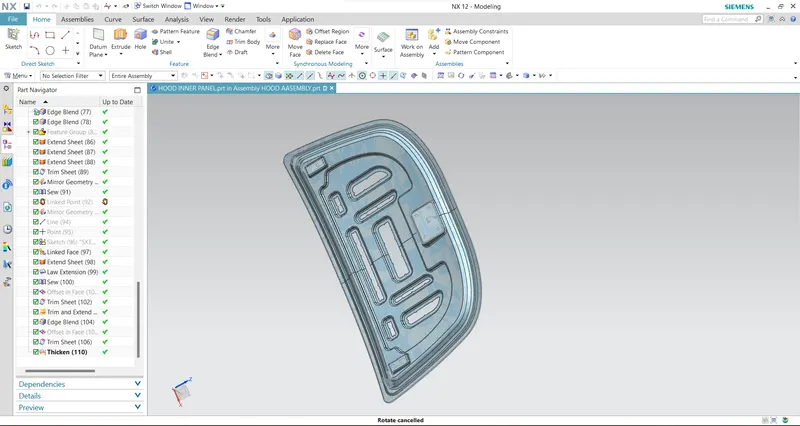
It is inthe downside it was givce a stiffness to hood through embosses .
striker and hinges are fixed to the lower panel hood .
Hinge assembly:
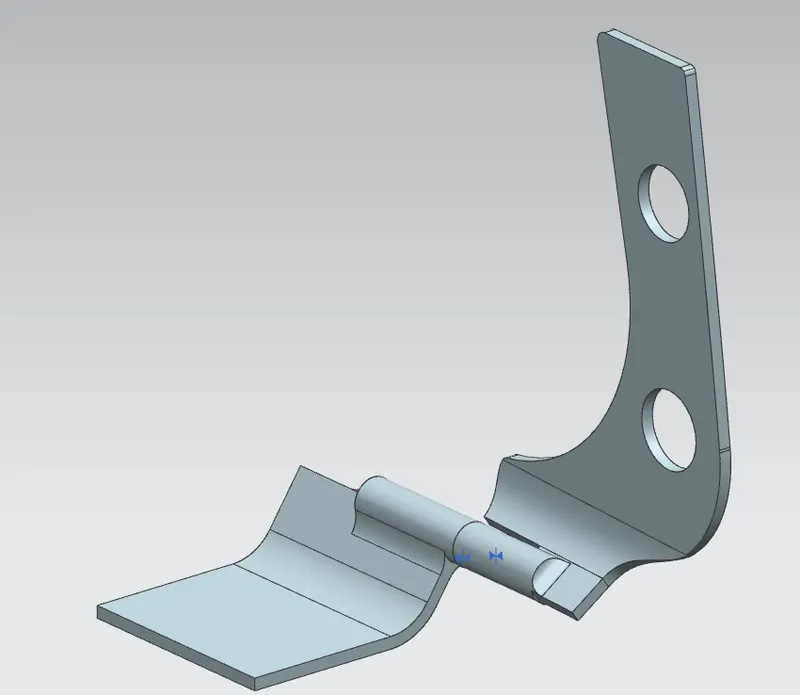
- Hinges was connected two bodies into one body .
- it is used to open the hood in an angular motion rotate in fixed axis for opening and closing of the hood .
- One end is mounted onthe emboss of the inner panel and another end is fixed to engine component.
Latch and striker:
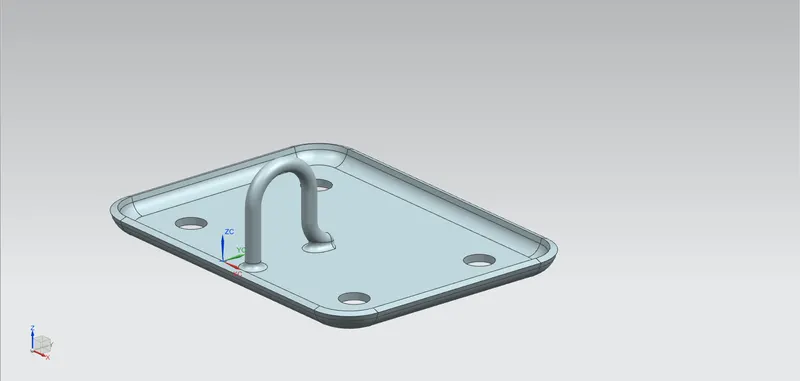
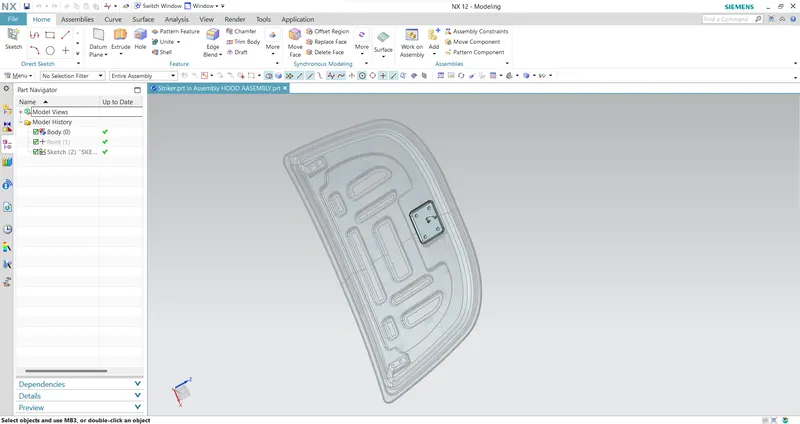
- Latch and striker is important mechansim inthe hood .It is used to lock the hood .
- Latch is used to lock the striker and avoid accidental openings inthe driving.
- Latch is connected inthe engine compartment and striker is fixed to inner panel of the hood .
Reinforcement:
Reinforcemnt are providing a freedom to add material to inner panle to provide extrra trength to the hood it is providedar the hinge and latch regions t improve the strength locally.Usually thickness of the reinforcemnt is higher then the inner panel and outer panel
it varies according to the cost of the cars and type requirement of the car.
Sheet metal operatons:
- Deep drawing
- Hemming
- Deep drawing:
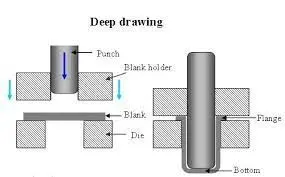
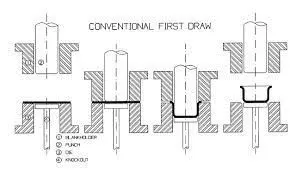
Deep drawing is a sheet metal forming process in which a sheet metal blank is radially drawn into a forming die by the mechanical action of a punch. It is thus a shape transformation process with material retention. The process is considered "deep" drawing when the depth of the drawn part exceeds its diameter.
The deep drawing process is a forming process which occurs under a combination of tensile and compressive conditions. A flat sheet metal blank is formed into a hollow body open on one side or a hollow body is formed into a hollow body with a smaller cross-section.
Deep drawing processes are divided into three types:
- Deep drawing with tools
- Deep drawing with active media
- Deep drawing with active energy
- Hemming:
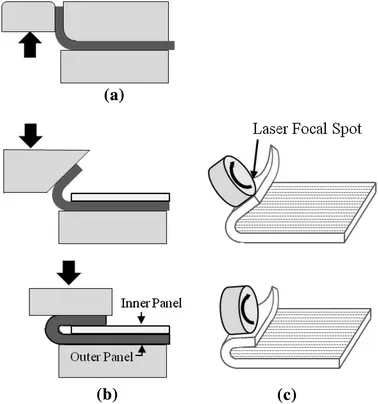
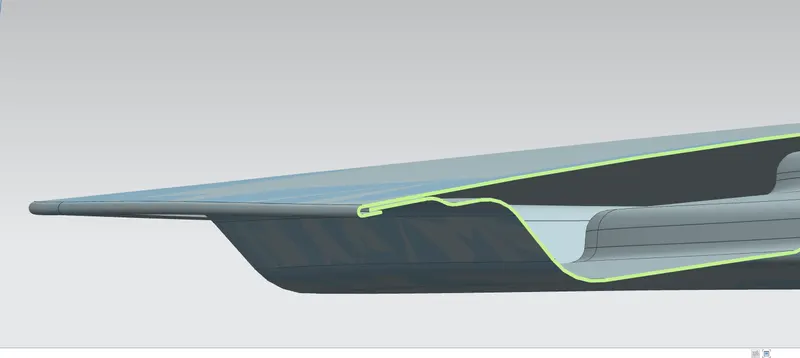
Hemming is a sheet metal forming process in which sheets are joined by bending it to 180°. Automotive body panels and automotive parts such as deck-lids, trunk-lids, doors, hoods and tailgates are formed by hemming process. In this process, usually a sheet is bent with the help of inner sheet in three different stages. There is also some corner relief given to the sheet to get stationed so that the rollers that do the Heming of sheets can roll appropriately in the required area. Hemming is a sheet metal operation widely used in the automobile sector because the welding or joining process can not be done on styling parts as it may affect the car's aesthetics.
Reliefs:
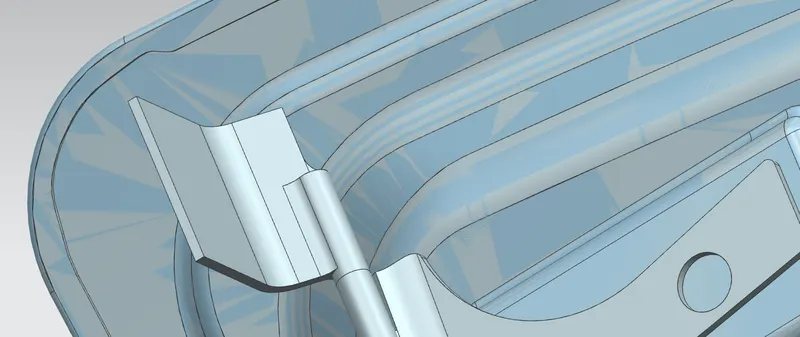
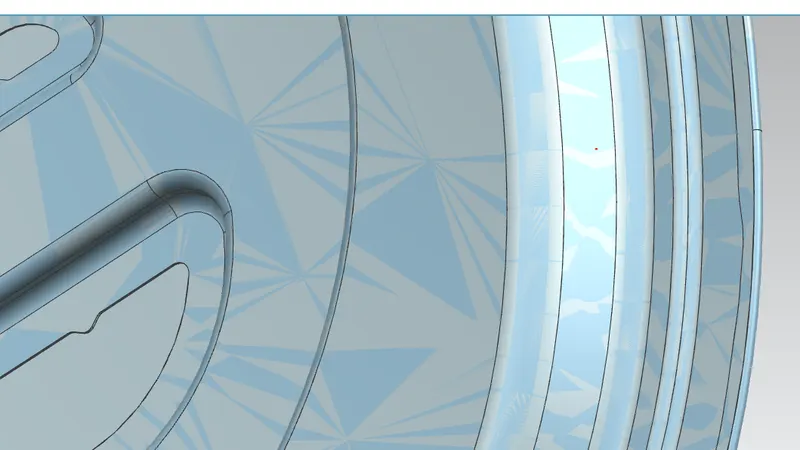
Reliefs are provided at the front and side portion of the panel for smooth rolling operation .so that no tearing of the sheet happens when the roller passes through a specific portion.
Mastic seal data:
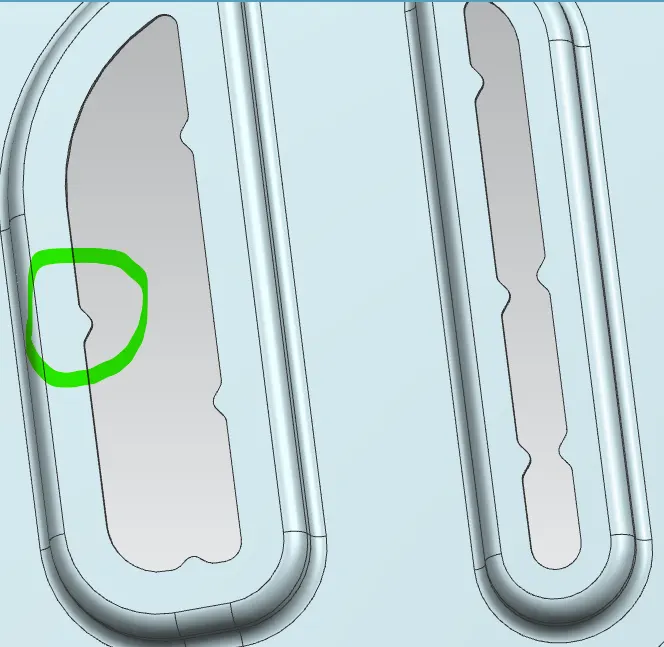
It is used to join the both inner and outer panel of hood through hemming process he mastic points are regions where mastic interferes with the outer panel to the inner board. We can't use spot welding because this gives less elegantly fulfilling results. Accordingly, mastic is used to join the panel as it doesn't modify the actual metal.
selaent shape of a circle was 5mm as per skilllync .Irt was change as per industrial companys process.
Emboss:
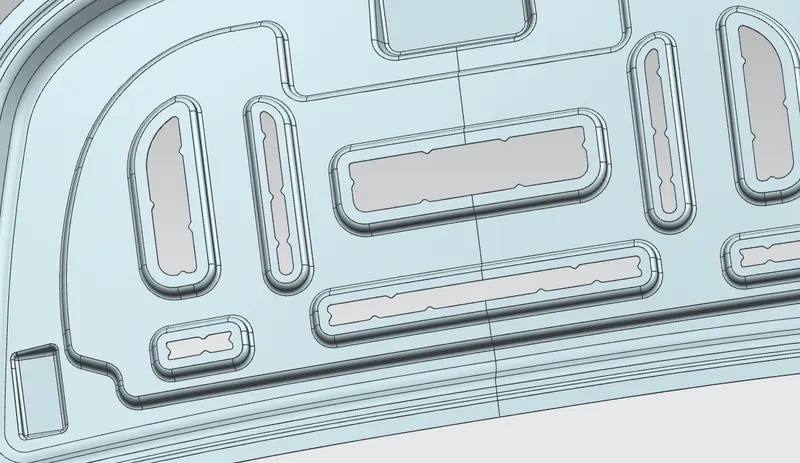
Emboss surface plays a major role in the hood design and also inportant role in car hood design whicle casing or accident of a car.Because during the colison the car that timeforce flow in the direction of collison so that car user can get injury so that the generally emboss surface is design in Y aand v shape of hood inner panel that impact forces coming inthe direction of collison is diverted towards the corner point of hood and driver or user not effected
Latch and directory:
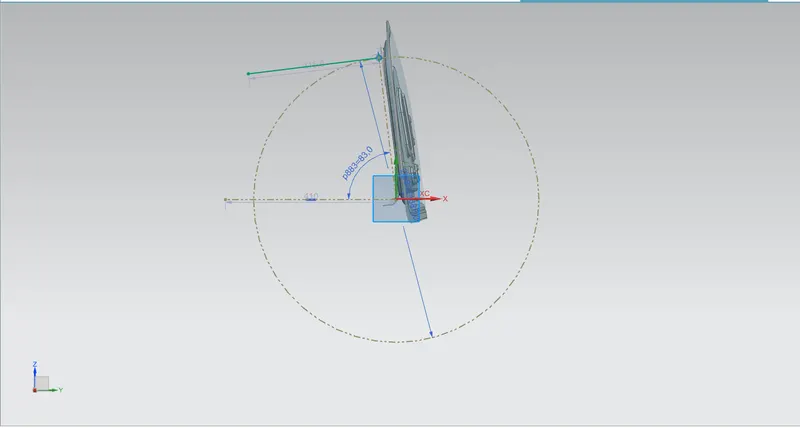
while assembling the latch with the hood panel it is strictly recommended that the position of latch striker should be placed such that the latch striker exactly fit in to the latch hole in the engine compartment .keeping this in mind the latch striker is placed on the inner hood panel using latch trajectory path. This path is created using the hinge axis taken as referenceto draw a big trajectory path.
commands:
Datum plane:
It is used to create a plane on the required position to create a sketch and points. in different planes like XY,YZ,ZX.positions.it will be used create a diagrams in differnt angles .
Sketch:
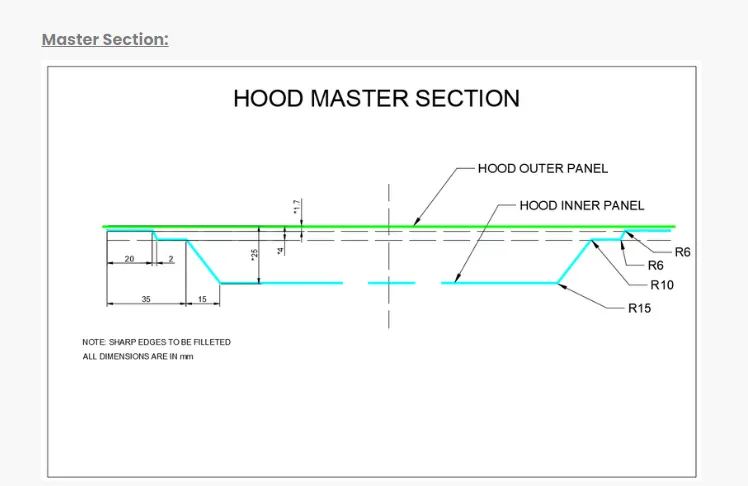
It is used to help of datum coordinates and plane create a 2d sketch inthis and after convert into 3D. Intial diagram was create as per master section.
Extracted surface:
- It is used to extract the required face into seperate surface and used per our required .
- It is also used to create tooling axis take a reference of extract surface.
- It is also a duplicate surface of original .
Offset surface:
It is totally offset the surface into downward or upward as per our requirement and depends on the which face was selected .If we are selcted side face than it will act as right or side offset was applied.
Offset curve in face:
This command was worked as only curved can be offset in inward or outward sides .
Trim sheet:
It is used to remove the part which it was not used .Like we selct the face then select the curve after that which region has to to be keep .Unwanted faces are removed .
Trim and extend:
select the two faces from a sheet to trim the sides which we are want than remainig faces are to be trimmed.
Difference between the Trim sheet and Trim extend are Trim sheet was totally removed unwanted faces and next one is extend.
Sew:
Sew command is a join of two sheets into one .It is also a say as joining.
Law extension:
It is used to extend the surface depends onthe angle , distance and direction .It is like a exttrude the surface into angle was included.
Face blend:
It works as remove the edges and smoothening the edges of the surface with a certain radius.
Through curves:
It is used to join the curve edges convert into surface of required radius finally all curve surface are merge into one as through sew command.
Edge blend:
Give a smoothnes the edges of the surface with the radius .It is also called as edge fillet.
Projected curve:
After sketch was finished than 2D curve was projected onthe surface through projected curve commnad with the help of vectors.
Emboss:
It gives a strength to surface it was gives a dip to skecth was projected on the surface than give the blendto edgesof the emboss faces.
It is give a stiffenes to the surface . It was decrease the impact on the collision it was diverts the force of vibration into various sides.
Bridge curve:
It was formed a curved into required shape with face and curve radius it works through tangential and curvature also .
composite curve:
After completon of bridge curve formation than composite curve is work as select the what we are required unwnated curves are to be hide .It is like a trim sheet in surface commands.
Extend sheet:
In the Surface sheet was not fitted to the part we want to increase the component with the help of this command sheet was extended than component also fitted as per shape.
mirror geometry:
The curve or face which we are to be copy to other side with the help of planes are to be said as mirror geometry .
It is to be said as mirroring the part or curve into other side.
mirror assembly:
Assembly inclludes various parts it is to be mirror into the other side with the mirror assembly command inthe assemblies section it was mirror the whole assembly into other side. as per plane we are selected.
Thicken:
It is used to thick the surface in downward or upward direction .It also calleda solid surface.
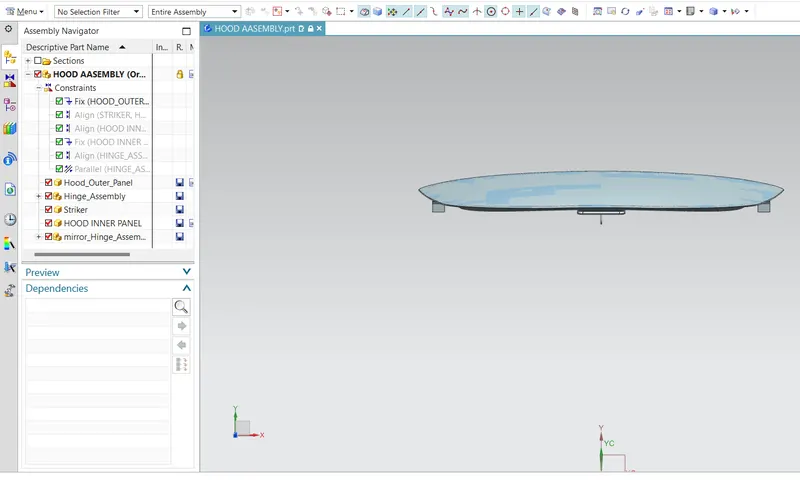
Constriants:
Touch and align:
It is to select the faces what we are to be join select than click on align both are to be fixed .
Parallel:
This constraint was wroked as select the lines or faces or surface than click parallel constraint both are to be change as parallel .
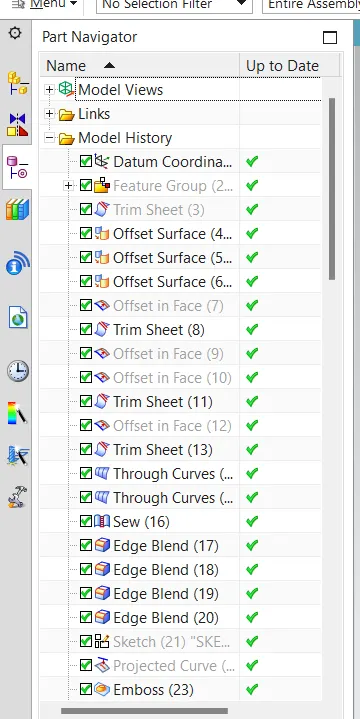
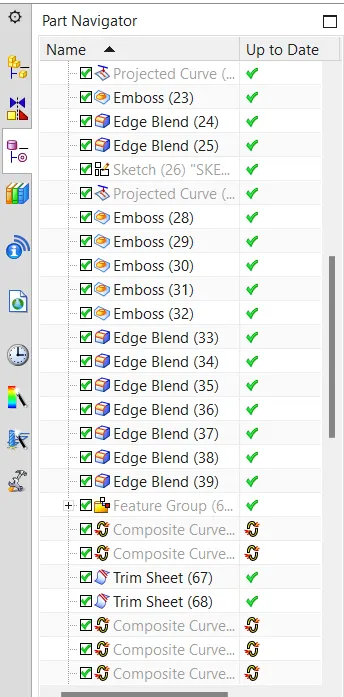
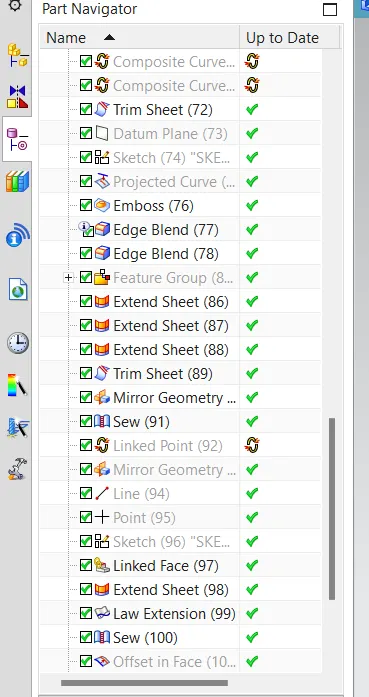
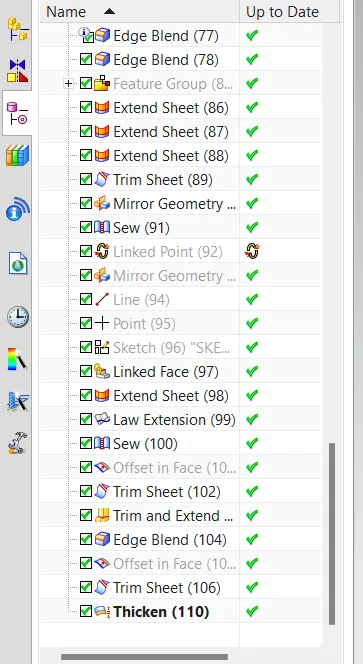
Tree structure:
outerpanel:
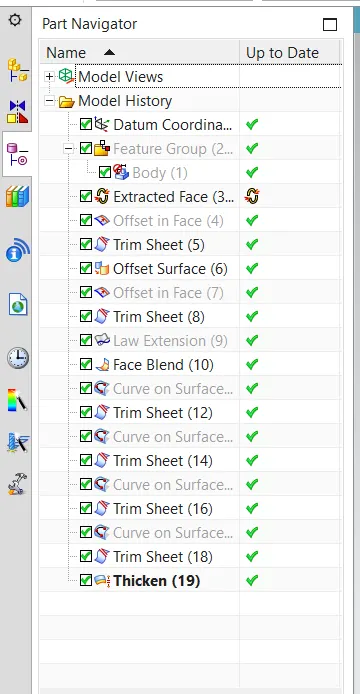
innerpanel:
striker:
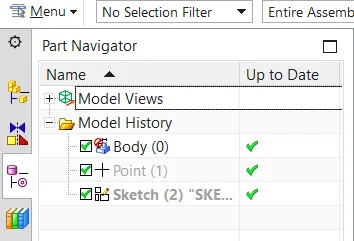
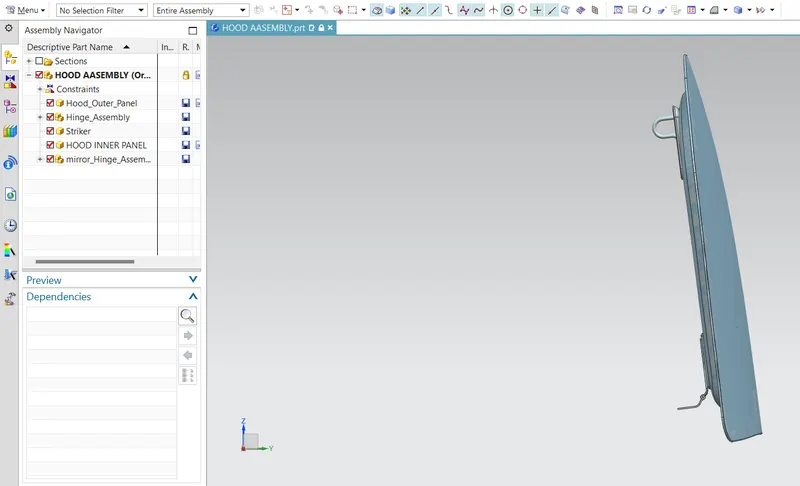
Different views: