Hood design-Week 2
- Objective
To understand the design strategy and consideration that goes under designing and developing an automotive hood to achieve maximum safety for all condition.
With this understanding, an OEM-standards hood panel is to be designed which can very well be manufactured and assembled. In other words, the design has to follow (DFMEA) and (DFA) standards as well.
In this report, the following information are contained.
- Understanding
- Design Concepts
- Design(All parts)
- Draft Analysis
- Conclusion
- Referance
- Understanding
Hood is basicaly indicated by two names (Hood or Bonnet), it is the essentially a type of door that covers the powertrain and other vehicle propulsion system components such as drive belts, battery,fluid levels and lamp unites in the frontal or rear based engine placements region of an automobile. It acts as a critical safety componet both for the vehicle occupant as well as pedestrain.
Hood is the major closure systems in vehicle and fundamentally a reinforced skin with many design quality safety regulations.
Hood contains with several sub-assembly like Outer and inner panels,striker,hinge etc. inner panel work like a structure for the vehicle to dissipate and channel shock waves at time of a crash while the outer panel works more as an aesthetic for the automobiles overall presentation and to channel airflow over the vehicle. Hence, Both required critical precision as well as a dedicated strategy right from the design conceptualization to the production step.
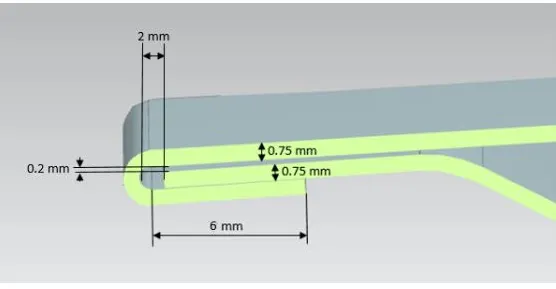
Once the design is done. the manufacturing process begins. Inner panel is manufacturing by the deep drawing process. Once the both parts manufactured then this two parts are joining are done by several procees like Hemming,spot welding,gluing etc. Mostely hemming will be prepared.
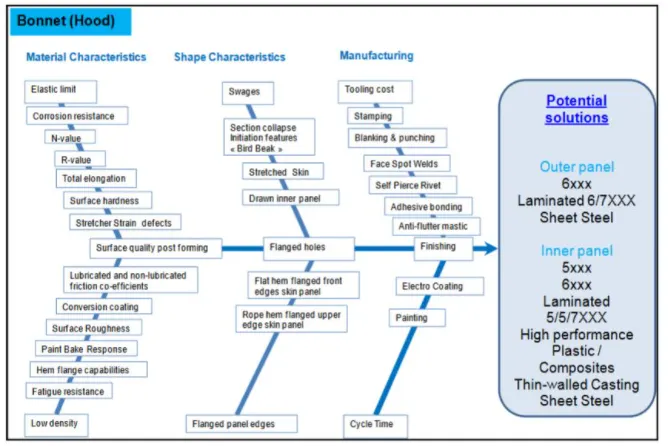
Fig. (a). Desired Characteristics and manufacturing techniques arranged in a herring-bone diagram.(1)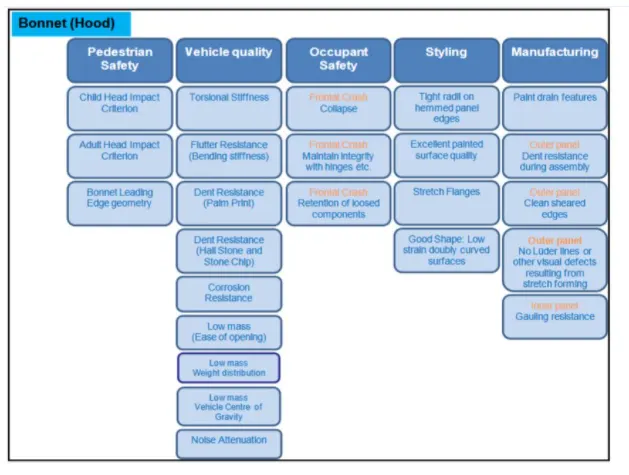
Fig. (b). Design Boundary condition for bonnet. (1)
2.Design Consederation.
As discussed in the earlier section, the hood plays a critical safety function in an vehicle, not only for the occupants of the vehicle but also for the pedestrian. Hence, a lot goes in while designing the hood and must be compliant with the standards and considerations. In this topic, the European new car assessment programme, popularly know as EuroNCAP, was followed to understand the consideration and standards one must follow while designing a hood. EuroNCAP plays an instrumental role in raising awareness on safe and effective design for the pedestrian. It programs and develops test series and rating systems for accessing design safety for pedestrian during impact with a vehicle. The tests are generally executed for vehicle hit speed at around 40km/hr and covers the pedestrian body interaction with the vehicle upon collision.
Below fig represented the some considerations for the frontal crash of a vehicle with a pedestrian.
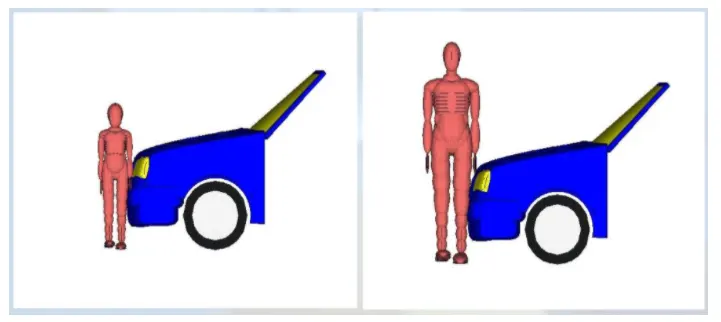
Fig. (c). Pedestrian Crash Dummy Placement-Child (Left) & Adult (Right) (2)
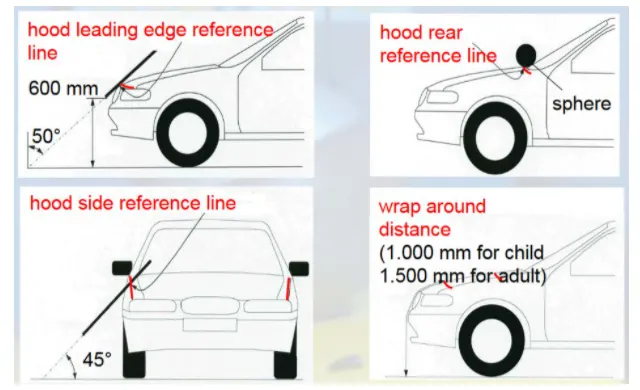
Fig. (d). Head Impact Zone (2)
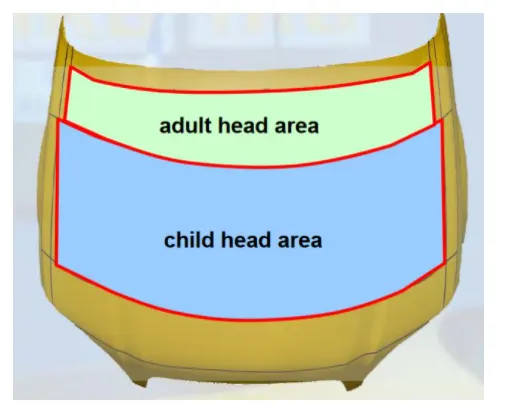
Fig. (e). Head Impact Zone Of Child & Adult (2)
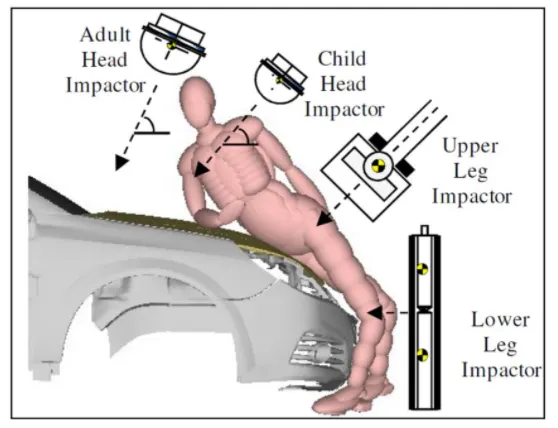
Fig. (f). Body - Bonnet Interaction (2)
As we could see the impact zone, based on the impact zone the thickness of the hood at those zones are reduced to allow softer landing and lower impact. Upon impact of the pedestrian, the hood in the zones should absorb and dissipate the energy allowing deformation and hence collapsing, which in term would result in a lower impact on the Pedestrian.
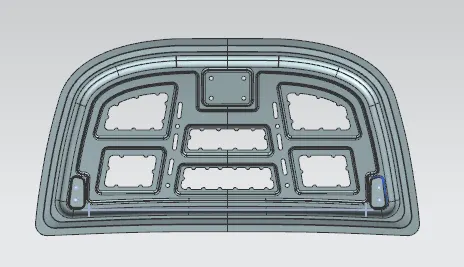
At the same time, The impact on the vehicle should be channeled the vehicle to safeguard the occupants from severe injuries. Based on these consideration, the inner panel should be embossed with strategized channels and empty cut-outs to allow for maximum absorption of such impacts.
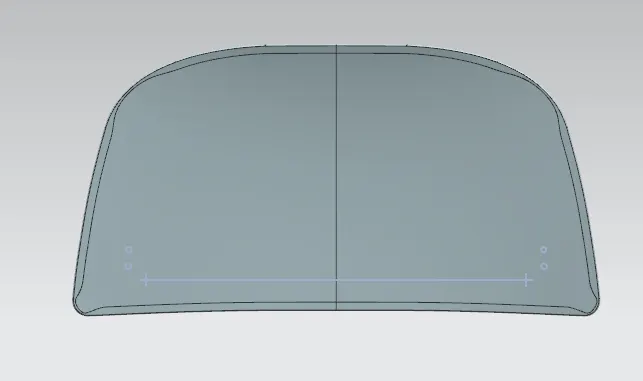
With this understanding, the below-provided design was executed using Siemens NX 12.
3. Design.
Inner Panel
Outer Panel
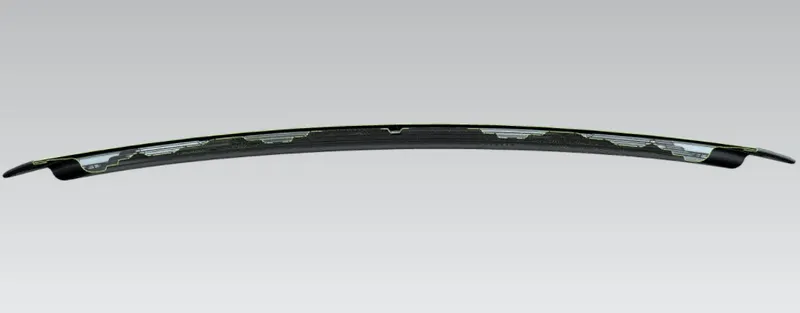
Cross-Section
Hemming
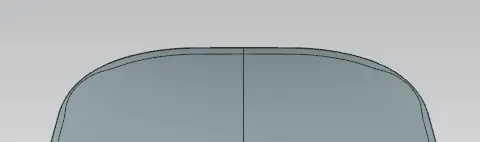
Front Relief
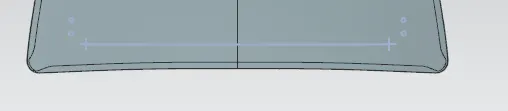
Rear Relief
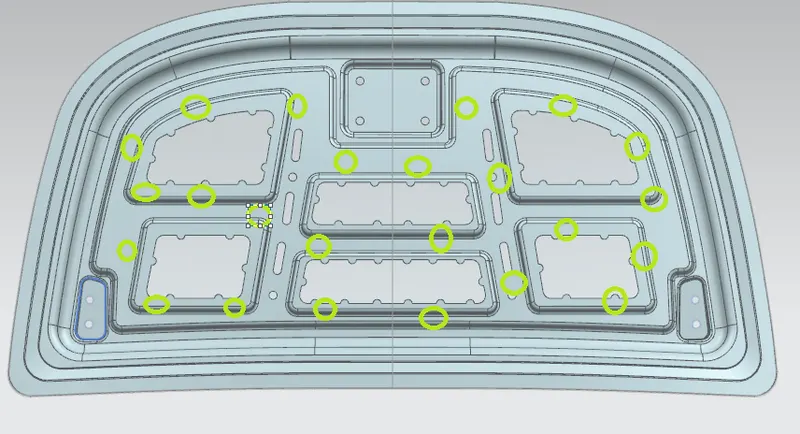
Mastic and Sealant Regions
Mastics and Sealants generally having an area infiluence about 80mm.
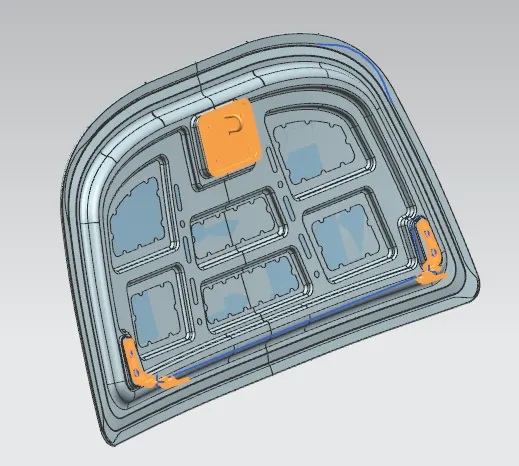
Stricker and Hinge Mounting(This are Reinforcements).
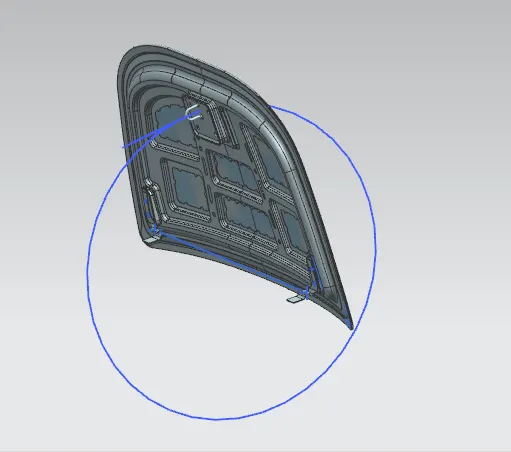
Hood Opeing and Closing Trajectory
The trajectory for opening and closing is considered to be proper when the striker's axis is coincidental with the hood axis. The perpendicular line from this axis is selected from the hinges on either side.
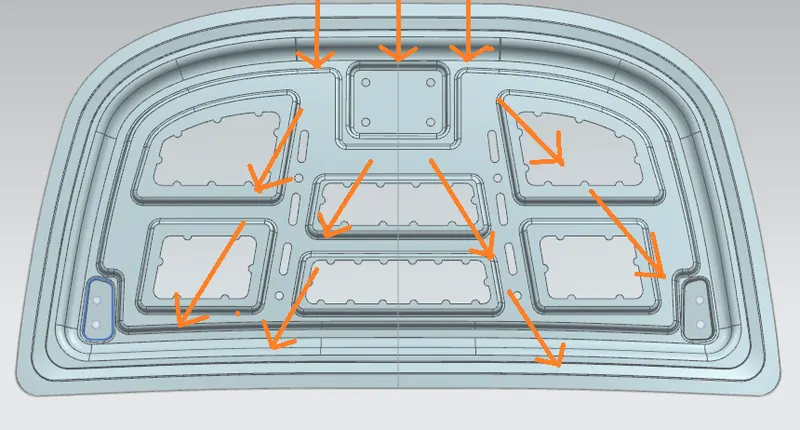
Shock Flow
The embossed channels were designed to direct the impact force towards outside of structure.
4. Draft Analysis.
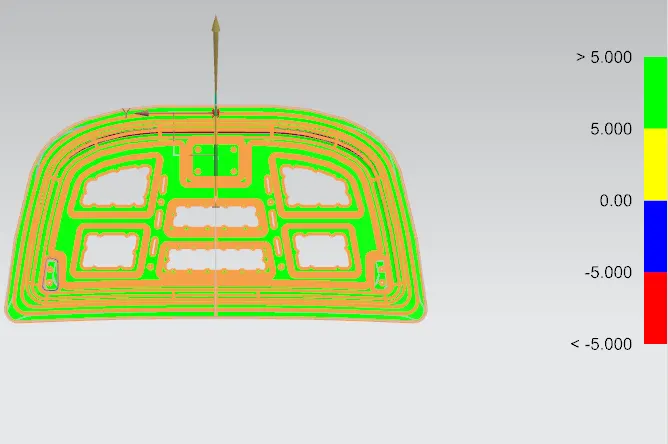
Once the design was ready, the complete hood was analyzed for manufacturability. Using the Draft Analysis function from Siemens NX, it could be seen that the designed part can be manufactured without any difficulties.
5.Conclusion.
With the completion of the design and analyyzing it for successful manufacturability, we can conclude that this can be used for assembly in the vehicle. Also the design was executed under the EuroNCAP safety standards and hence satisfies hood safety both for the occupants and the pedestrians.
6. Referance
[1] Design-Case study:Bonnet and boot lid;https://www.european-aluminium.eu/meadia/1799/aam-design-6-case-study-bonnet-and-boot-lid.pdf