Hood design-Week 2
Hood Design in UG NX
Objective
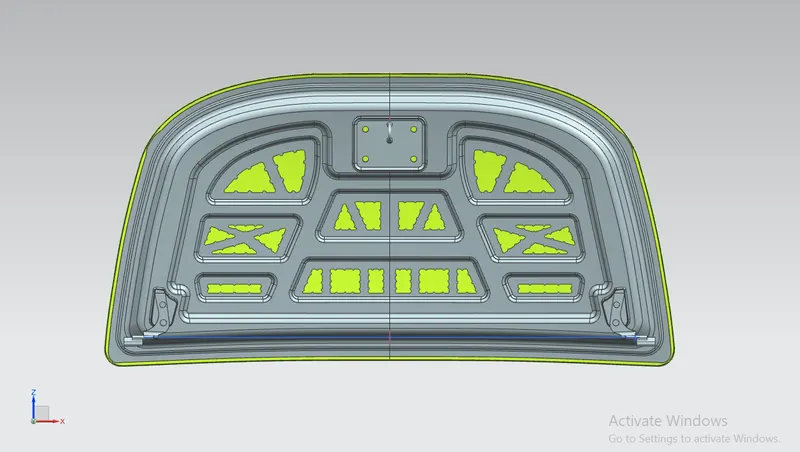
Design hood outer panel, inner panel and reinforcements with the given outer panel, master section and design parameters.
Introduction
The hood or bonnet is the hinged cover over the engine of motor vehicles. Hoods can open to allow access to the engine compartment (or trunk on rear-engine and some mid-engine vehicles) for maintenance and repair. In design perspective hood should meet some specific conditions like pedestrian safety, hood head zone for the lock striker, force distribution when subjected to frontal collision (occupant safety), manufacturability etc.
A typical hood assembly consist of hood outer panel, inner panel, latch and striker, hinge, hood stay. Hood stay is an apparatus for supporting the engine hood of a moto vehicle in its open position. The purpose of opening the engine hood is for inspecting engine room, replenishing cooling water and engine oil, changing parts and making repairs etc.
Design parameters
Hood Thickness Information
Outer Panel Thickness = 0.75mm
Inner Panel Thickness = 0.75mm
Reinforcement Thickness = 1.5mm
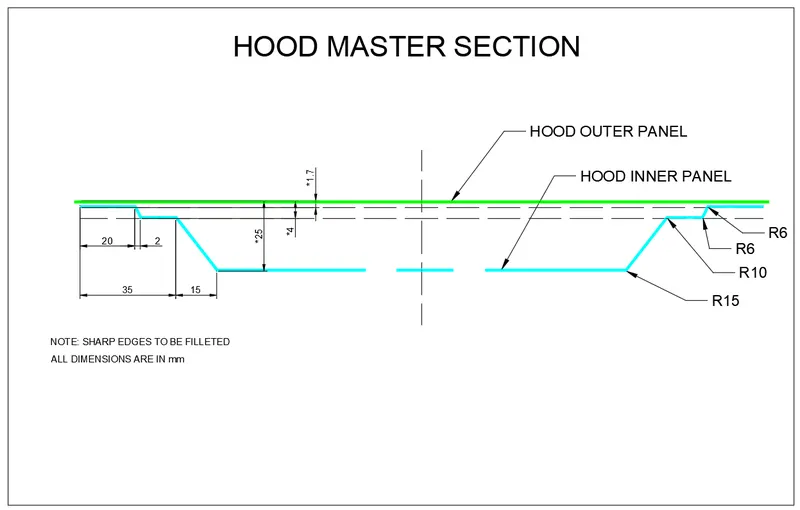
Master Section
Hood Introduction
The hood (North American English) or bonnet (Commonwealth English) is the hinges cover over the engine of the motor vehicles. Hoods can open to allow access to the engine compartment, or trunk (boot in Commonwealth English) on rear-engine and some mid-engine vehicles) for maintenance and repair.
Hood Design Facilitates
- Hood Covers all engine components
- Easy access in engine compartment
- Frontal Crash impact forces absorption
- Reduce Engine Noise
- Aerodynamic Shape
- Safety of Pedestrain
- Good Aesthetic appearence
Opening Angle of Hood
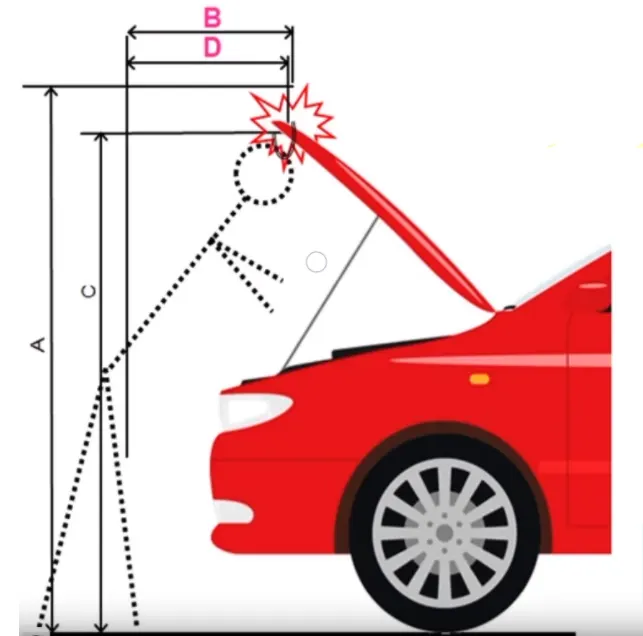
This is one of the main criteria in designing of hood. This opening angle varies from person to person and country to country. In India, the average height of a person is 5.8 feet/ 177 cm (Current data) whereas in the European countries the average height is 6 feet, these points refers variation in opening angle of hood.
Components
1.Hood outer panel
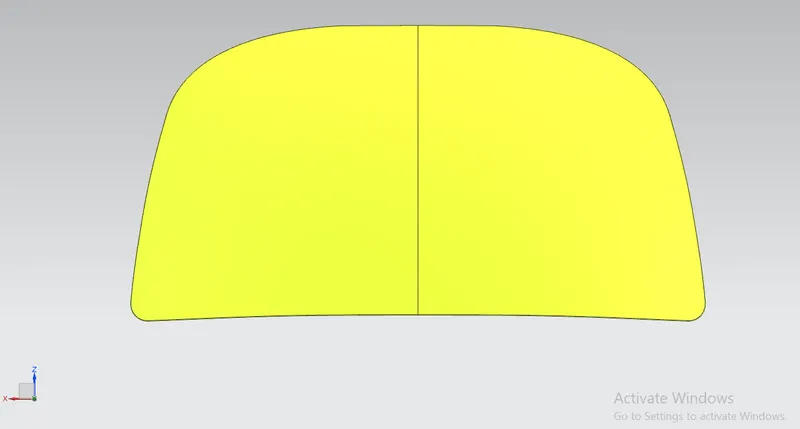
Outer panels are the aesthetic elements of a car. It is the styling team who provides the skin for the outer panel. The shape, position and size of the hood should satisfy the safety norms. So while designing the hood we should give more importance to pedestrian safety. The outer panel is attached to the inner panel by hemming. So, it is necessary to provide required hemming flange and reliefs for the hemming operation. We also provide mastic sealants between outer panel and inner panel to reduce vibration.
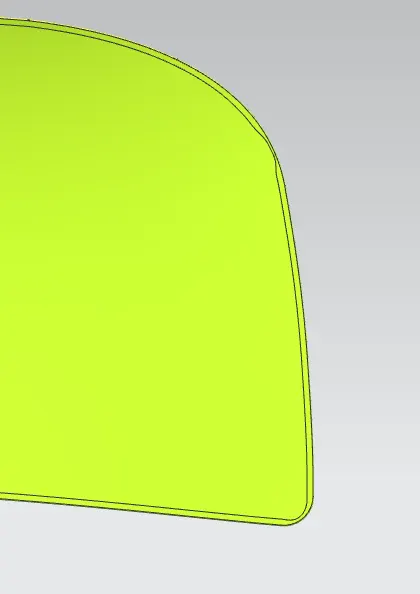
CORNER RELIEF
- Relief is provided onto the part or component in order to remove any stresses developed in a particular area i.e sharp corners that takes place during the hemming process is carried out. Thus corners are rounded or chamfered.
- Relief of 3 mm from sheet metal for Roll hemming process.
2.Hood inner panel
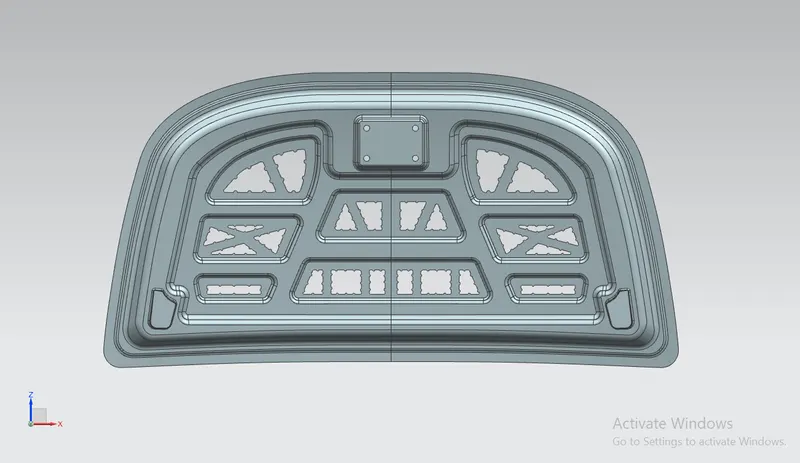
Inner panel is the part that gives strength and rigidity to the outer panel. The master section represents the initial emboss shape and size. Then we provide the emboss for the latch and hinge elements after fixing the location.
3.Reinforcement
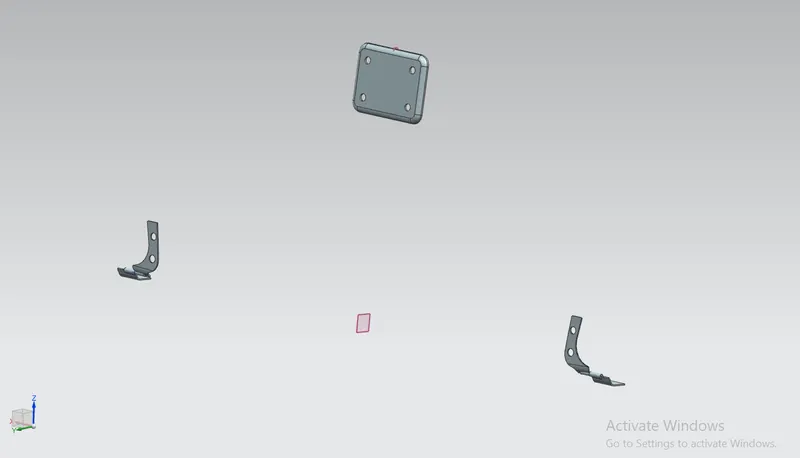
Reinforcements are provided according to the design requirements. Mainly it is provided at the hinge and latch regions to improve the strength locally. Usually thickness of reinforcements will be higher than that of the inner panels and the value varies according to cost and requirement. According to the design requirement here it is given 1.5mm thickness to both hinge and latch reinforcements.
Latch Placement
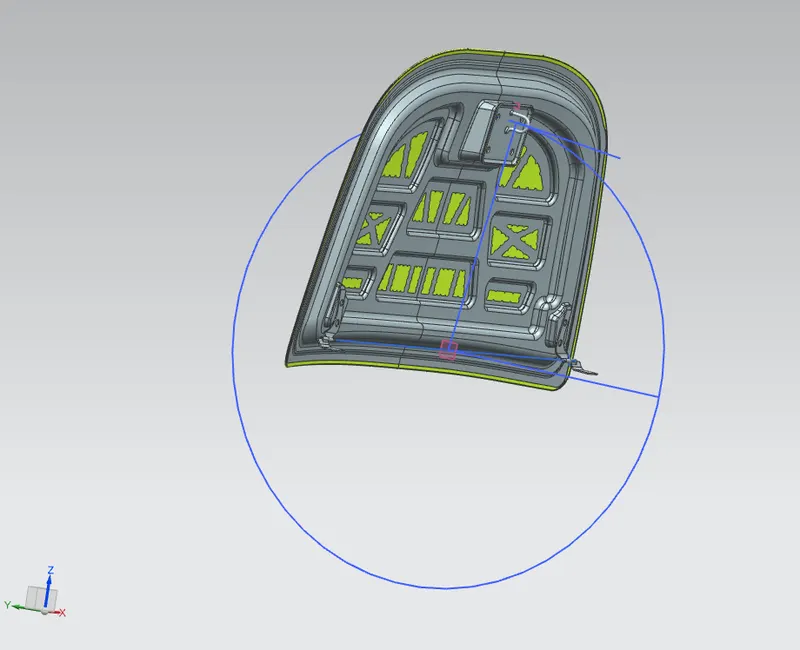
Using the axis of the hinge, a circle is drawn at the middle of the hood and the latch is placed perpendicular to that circle.
Mastic Data
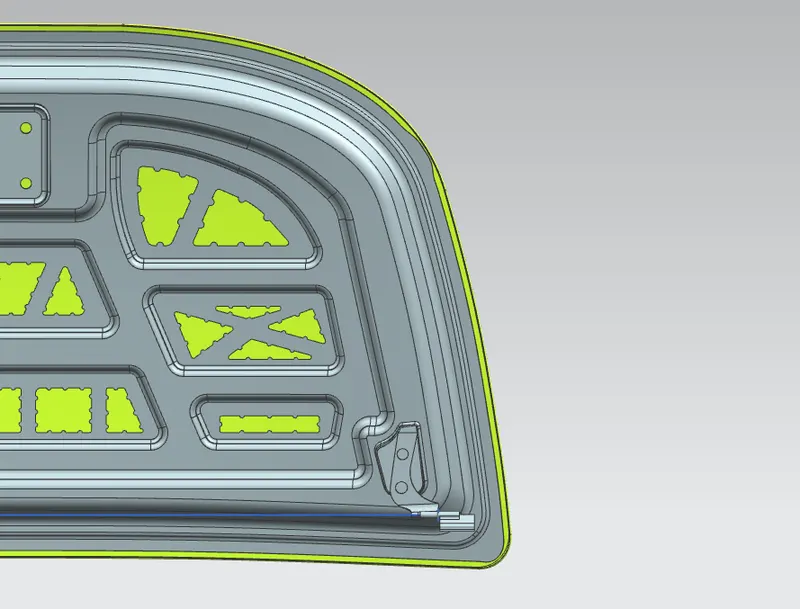
Hood commonly possess large surface area and hemming can only be provided through its boundary. We cannot use other joining techniques like welding, riveting etc because they leave marks on the outer panel which spoil its aesthetic appearance. So, mastic sealants are used to stick the inner surfaces of outer panel and inner panel. Mastic sealants are elastic compound that behave like rubber. It is applied between the inner and outer panels at specified spots. Each spot of mastic sealants has its effect around a circular region of 80mm diameter. Thus, the mastic points are arranged in such a way that it covers the areas away from the hemming which are more vulnerable to vibrate.
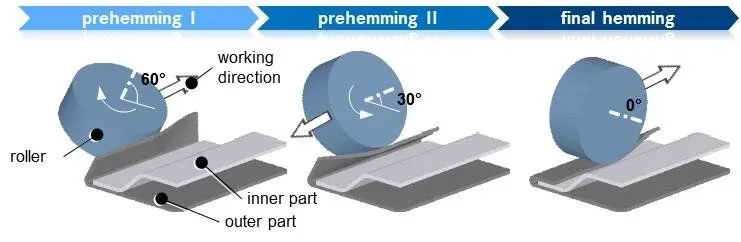
Hemming
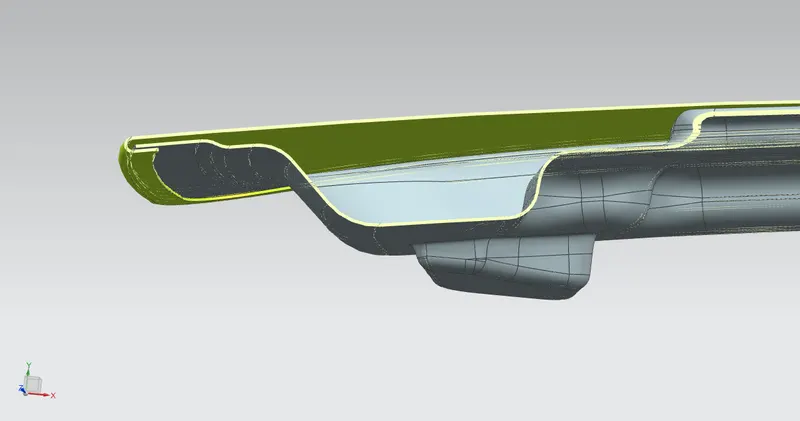
Hemming is a forming operation in which the edges of the sheet are folded or folded over another part in order to achieve a tight fit. Normally hemming operations are used to connect parts together, to improve the appearance of a part and to reinforce part edges.
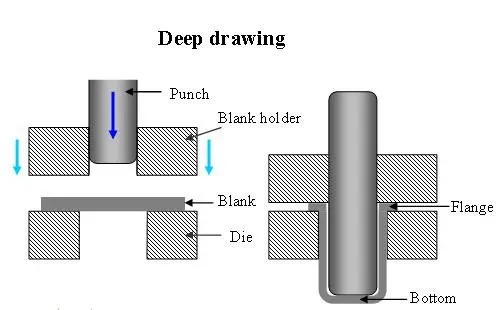
In car part production, hemming is used in assembly as a secondary operation after deep drawing, trimming and flanging operations to join two sheet metal parts (outer and inner) together. Typical parts for this type of assembly are hoods, doors, trunk lids and fenders.
The accuracy of the hemming operation is very important since it affects the appearance of the surface and surface quality. Material deformations, which occur during the hemming process, can lead to dimensional variations and other defects in parts. Typical hemming defects are splits or wrinkles in the flange, material overlaps in the corner areas or material roll-in. This is why it is important to provide required reliefs at the corners.
Important factors
Opening angle:
It is the angle between the hood surface and the hinge axis (parallel to road).It may vary with countries based on the average height of their citizens.
Hood Support rod and strut:
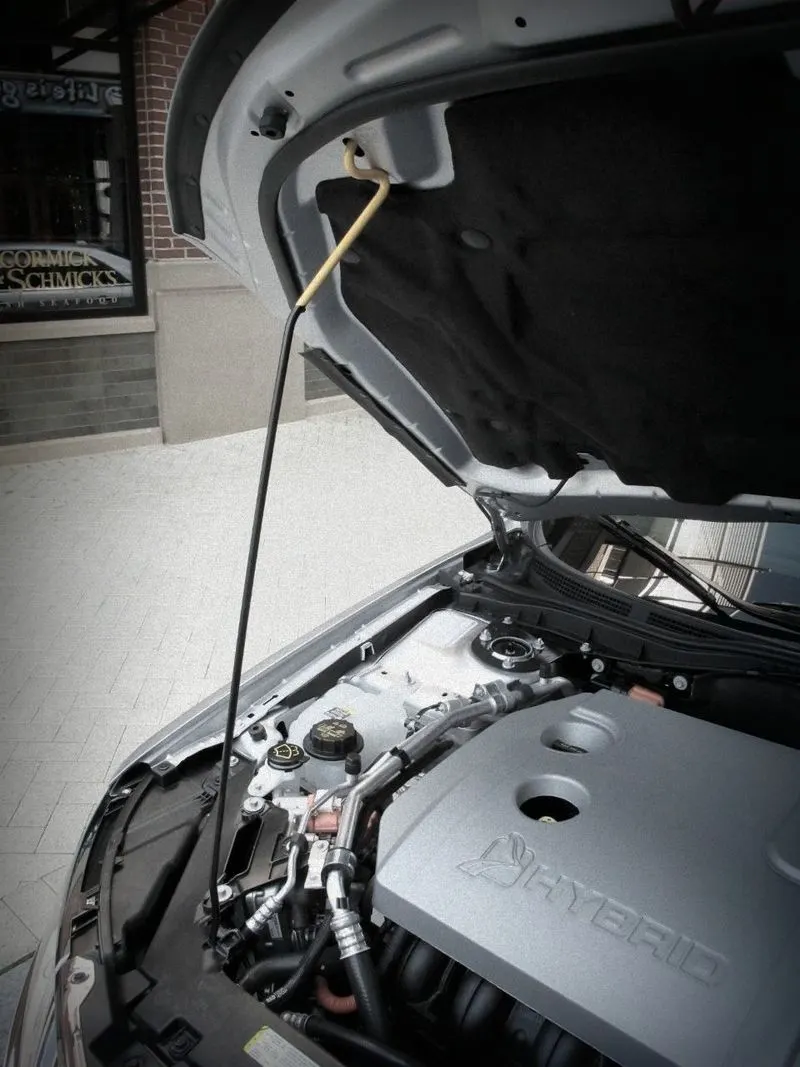
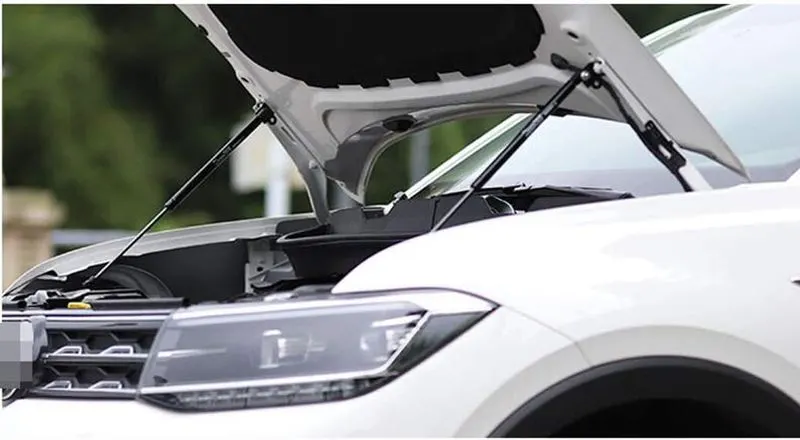
Support rods are ordinary roads with some bends to make it more rigid and most cars have heavy steel torsion springs and brackets to hold the hood up. Struts were introduced to save weight. Upon lifting the hood, the hood struts extend, assisting you with raising the hood. Also called hood lift support, the hood struts acting as a prop rod to hold the hood up when fully extended.
MANUFACTURING PROCESS
POINTS CONSIDERED FOR FEASIBLE MANUFACTURING
- Minimum Draft of 7 Degrees given for sheet metal - For easy removal of component from tool(Die)
- Sharp edges are avoided for easy manufacturing
- Complex shape is avoided.
Sheetmetal operations
- Deep Drawing
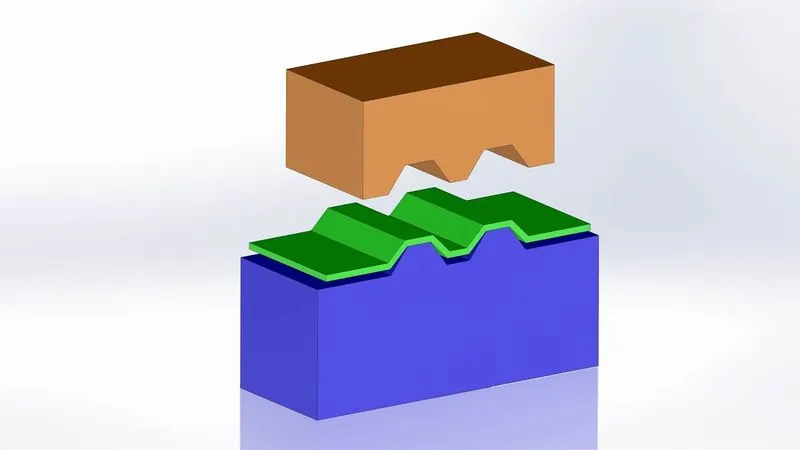
- Embossing
- Hemming
Types of Hood Support
- Support Rod- These support rods are widely used in cars to support the hood in open Position. These support rods are cost effective compare to gas stay. In this type of hood support the hood opens manually. The support rod is fixed on the hood or the engine compartment, to hold hood (in Open Position) the support rod needs to positioned(manually) on the supporting rod point which is opposite to the support rod position. Generally these support rods are used only in the lighter weight hood Vehicles.
- Gas Stay - These Gas stay are type of support rods which is used for heavy weight hoods. In these gas stay rods, pressurized gas is filled which helps to hold the hood in open position. Gas stay just needs the initial force to open the hood. Gas stays are convient to use but these are expensive when compared to support rods.
Head Impact
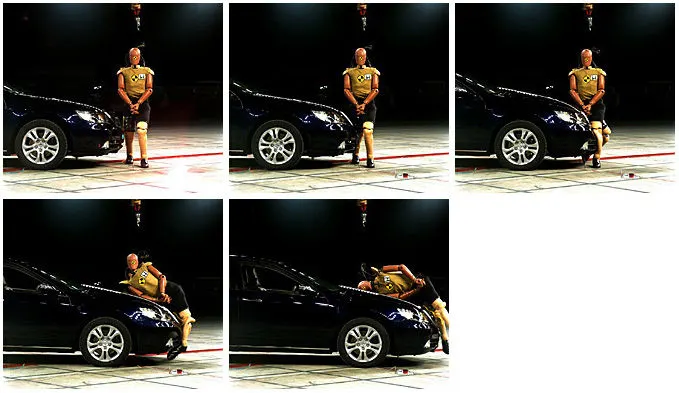
Safety is th most important criteria in automobile design which concentrates on both pedestrian and occupant safety. The pedestrians are the most vulnerable road users are at high risk of traffic accidents. The major reason for fatality of the pedestrian in traffic accidents is due to the head injury resulting fron the hard impact of the head against the stiffer hood of the ground. This leads to the necessity of new inner hood panel which is less stiffer an pedestrian friendly.
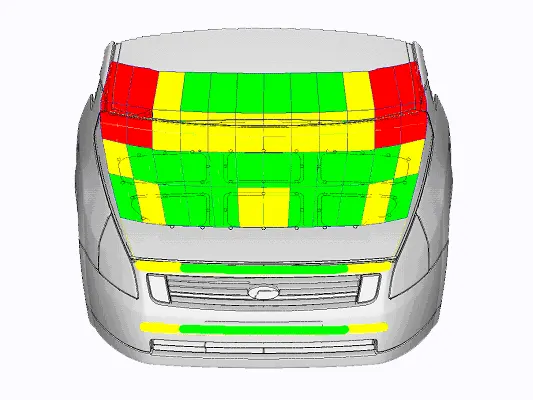
Wrap Around Distance (WAD)
Noise, Vibration, Harshness (NVH)
Noise, Vibration and Harshness (NVH) is the study and modification of the noise and vibration characteristics of vehicle, particularly cars and trucks. To improve NVH, mastic sealants were provided on the inner panel to attach with outer panel. Here mastic points on the inner panel plays a major role to avoid Noise and Vibration into the cabin.

CONCLUSION
This hood was designed in Siemens NX Student Version software with given and required design guidelines for hood design and manufacturing.