Hood design-Week 2
Hood:
A Car hood, also reffered to as a "bonnet" in some countries, is the hinged cover that rests over the engine bay of a front-engine vehicles. The car hood protects the engine and connected parts from the elements while providing easy access for repairs and maintenance.
Car hoods are typically constructed from steel and sometimes from aluminum. Aftermarket car hoods may be constucted from various other materials, including carbon fiber, fiberglass, or dry carbon.
A concealed latch is typically used to lock the hood in place while driving. A release for the mechanism can be accessed from the dash below the streeing wheel. On race cars and vehicles with an aftermarket hood, exposed pins may be used to secure the car hood.
Hood sometimes contain a hood scoop or a power bulge to allow for greater engine capacity and airflow to increase the car's performance output.
Hood Components:
* Outer panel,
* Inner panel,
* Hinge,
* Striker,
* Latch.
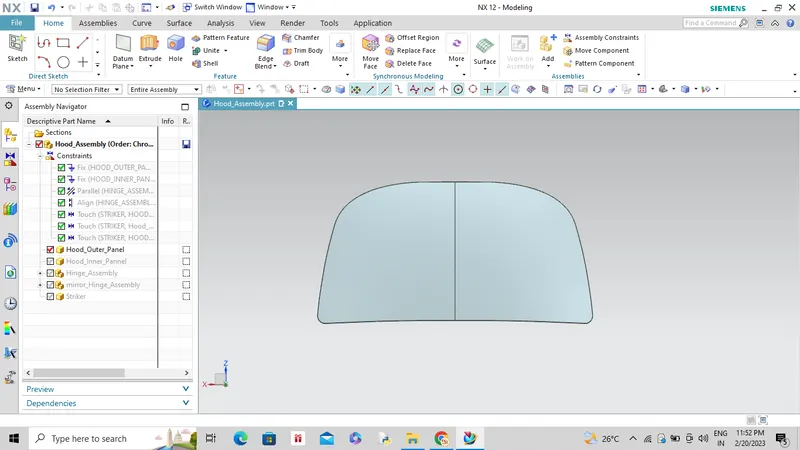
Outer Panel:
Outer panel is the most important part of the hood to makes the car looks good. That the outer panel is perfectly made intense to achieve the asthetic look. This part should not be welded to the inner panel but using the sealant and mastic points makes contact between the inner and outer panel which acts as a bond between both and makes the hood staff.
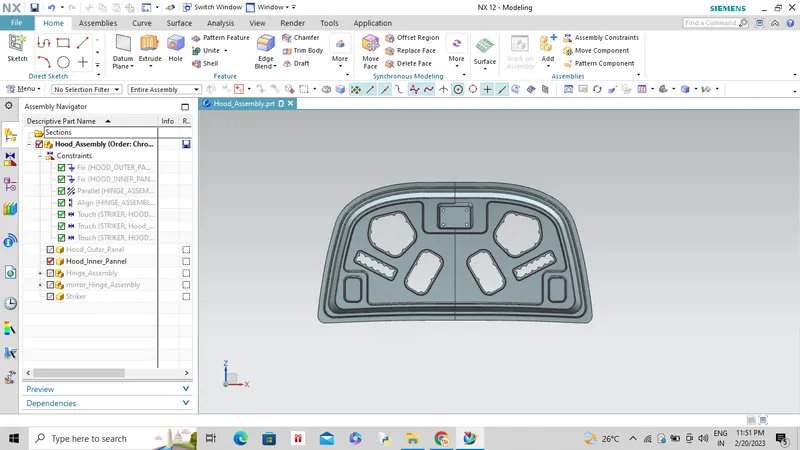
Inner Panel:
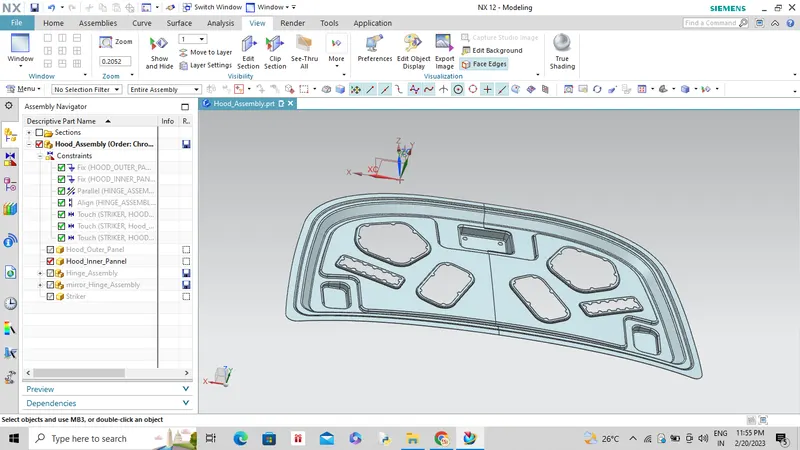
The main part of the hood which gives support to the outer panel of the car and with the embossing shapes dissipates the force in different directions when the vehicles takes crashes to not to injure the men in the car. Lots of design changes and researches are done and being carried out in the inner panel only to achieve the pedestrian safety and the passenger safety to makes the standards.
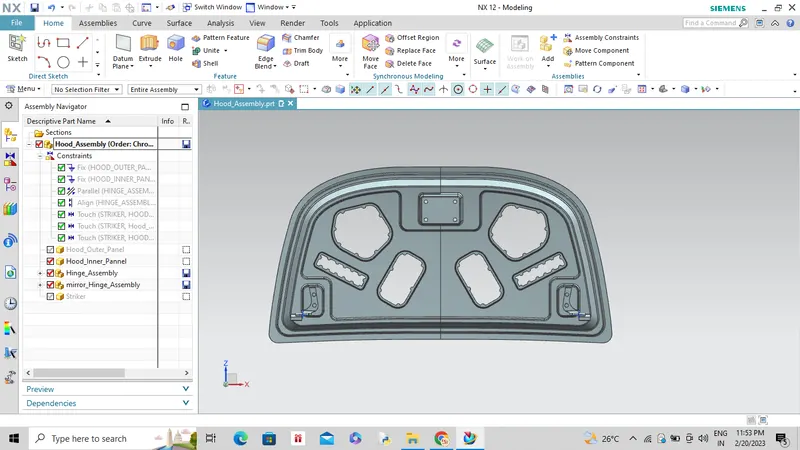
Hinges:
Hinges open and close with an axis, then it plays major role.Hinges at the inner panel allows the hood to open and close, as well as makes contact between the engine block to the hood. It also controls the lifting of the bonnet mitigates the consequence of a collision between a pedestrian and a vehicle.
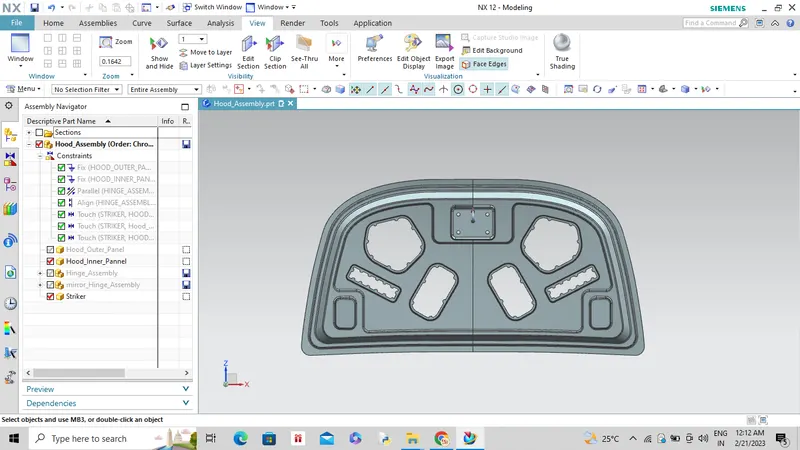
Striker:
Striker is a part that helps in locking the hood with the striker which is mounted on the engine block when it is not in use. It plays a major role in opening and closing hood for maintanance of car engine and gives a tight locking position not to create undisturbed noises when the vehicle is running.
Latch Trajectory:
The latch trajectory is the path which the stricker will follow when the hood is open/closed while pivoting on the hinge axis. The latch trajectory is taken as a circle with the hinge axis as the center of the circle. The striker is placed 90 degree such that it is tangent to the circle.
Sheet metal operations:
Hemming:
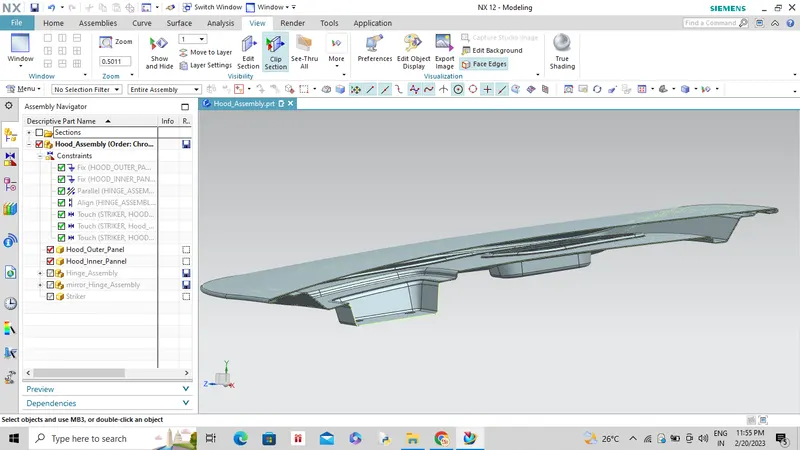
Hemming is used to fit the parts together. It can be done by the edges of one parts is to be folded over the other partto fix within it. This operation is done by using the roller. There are two types of hemming process, one is conventional die hemming and another one is Roll hemming.
Conventional die hemming- In this method the hemming process is done by using the hemming die to fold the sheet metal edge by the entire length.
Roll hemming- in this method rollers are used to done the process and at the same time two or more rollers are fold the sheet metal from the different location of the sheet metal edges to achieve the hemming which is close to accurate. And also this is the easier way when compare to conventional die hemming.
Embossing:
Sheet metal embossing is a stamping process for producing raised or sunken designs or relief in sheet metal. This process can be made by means of matched male and female roller dies, or by-passing sheet or a strip of metal between rolls of the desired pattern. It is often combined with foil stamping to create a shiny, 3D effect.
Deep drawing:
Deep drawing is a sheet metal forming process in which a sheet metal blank is radially drawn into a forming die by the mechanical action of a punch. It is a shape transformation process with material retention. The process is considered "Deep" drawing when the depth of the drawn part exceeds its diameter.
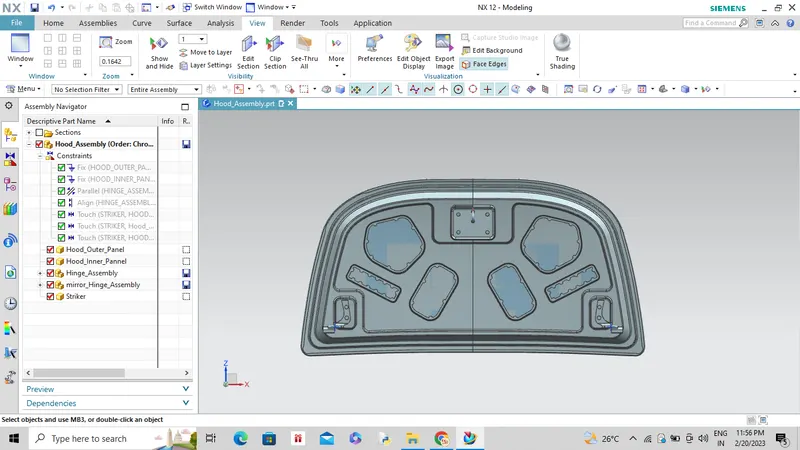
Hood Assembly:
Conclusion:
The main aim was to improve the pedestrian safety rating by reducing the risk of injuries. And Finally, the hood design has been completed by considering the criteria, dimensions, procedures and standards.