Hood design-Week 2
DETAIL REPORT ON HOOD
HOOD :
HOOD COMONENTS :
- LATCH TRAJECTORY
- STRIKER
- HINGES
LATCH TRAJECTORY :
it is placed on the engine side ,the use of trajectory helps us to fix the striker at the proper place in the hood and it is a self-locking unit
STRIKER :
it is component is placed on the hood inner panel at end of the striker it has a 'U' shape hooq it helps when u close the hood it touches that latch trajectory it locks the hood automatically
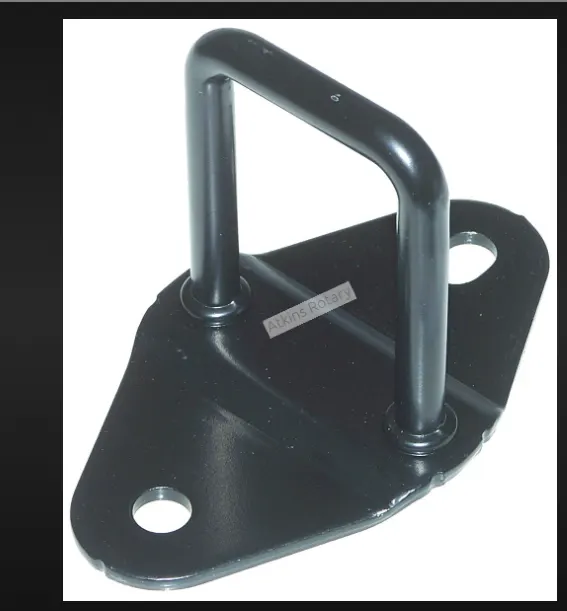
HINGE :
hinge is component is used for hood close and open freely
MASTIC :
mastic is a bond material which is help to join two components in hood it uses as to join hood inner panel and hood outer panel each 10mm mastic gives 80 mm strength to the hood
manufacturing process for hood :
- The invention discloses a manufacturing process of a car hood, and relates to the field of car manufacturing. The manufacturing process comprises the following steps:
- (1) blanking,
- (2) stretch forming,
- (3) trimming and punching,
- (4) deburring,
- (5) welding,
- (6) grinding,
- (7) painting,
- (8) baking,
- (9) polishing and waxing, and
- (10) coating.
deeep drawing
Deep drawing is a metal forming process for creating seamless, sheet metal parts that are closed on one end and have a depth greater than their radius. Deep drawn parts achieve their shape by drawing metal into a cavity rather than by stretching or thinning over a die, so the original sheet thickness remains essentially the same from start to finish. A deep drawn part can be recognized by its depth and its smooth, radiused corners. Examples range from cans, pots, kegs, and compressed gas cylinders to eyelets, sinks, and automotive body panels.
Advantages of Deep Drawing
Deep drawing has been around for centuries, and for good reason. The process is accurate and repeatable with many advantages:
- No Seams: Deep drawing produces shapes that are uniform and seamless, reducing potential weak points in the finished part.
- Strength: In some cases, material hardening during deformation can increase the strength of parts.
- Uniformity: Deep drawn parts have a high degree of consistency from the start of a production run to the end.
- Rapid Cycle Time: Presses set up for deep drawing can be cycled quickly, making this a very efficient way to produce large quantities of parts.
- Reduced Technical Labor: Deep drawing can be automated, reducing labor costs significantly.
- Low Maintenance: Deep draw setups require less ongoing maintenance than competing processes.
- Faster Assembly: Deep drawing can create shapes with a closed end, reducing or eliminating the need for fabrication or welding as secondary processes.
heaming process :
Hemming and seaming are two similar metal working processes in which a sheet metal edge is rolled over onto itself. Hemming is the process in which the edge is rolled flush to itself, while a seam joins the edges of two materials.
Hems are commonly used to reinforce an edge, hide burrs and rough edges, and improve appearance
DESIGN PARAMETERS FOR HOOD :
1 to maintain the gap between outer panel and the inner panel is 5 mm
2 to maintain some relief at corners maximum of 3mm
3 avoid sharp corners
4 maintain heaming gap 0.2 mm