Hood design-Week 2
Hood Design :-
Objective
Design hood outer panel, inner panel and reinforcements with the given outer hood skin, master section and design parameters.
Also ASSEMBLY of Hood Inner Panel, Outer Panel, Latch, Hinge and the Reinforcements.
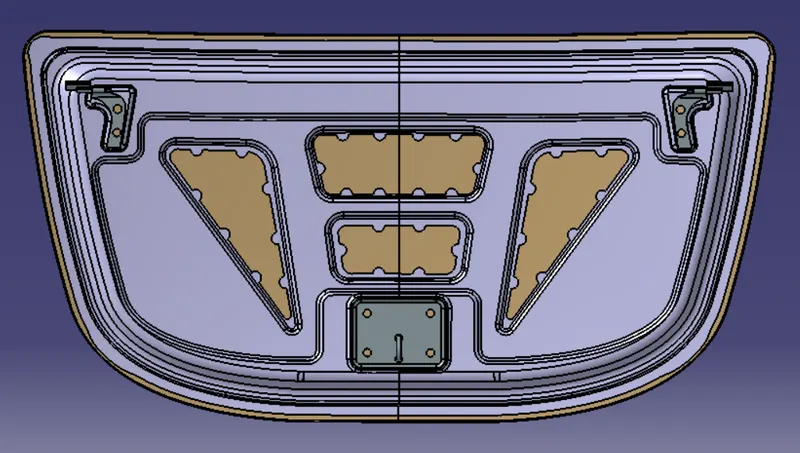
Hood Thickness Information
- Outer Panel Thickness = 0.75mm
- Inner Panel Thickness = 0.75mm
- Reinforcement Thickness = 1.5mm
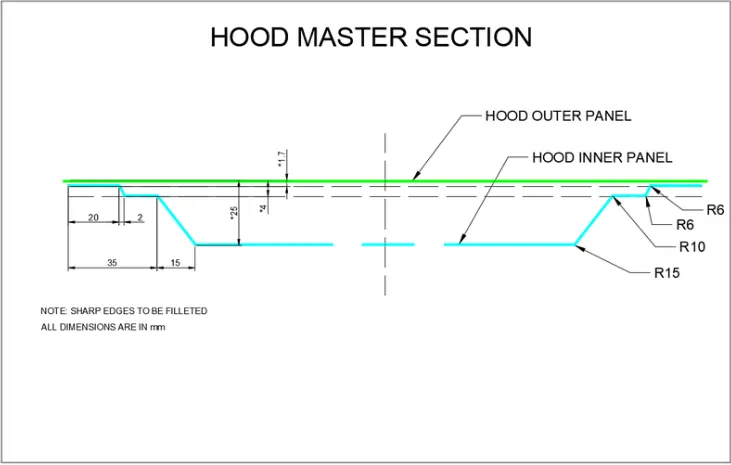
Components :-
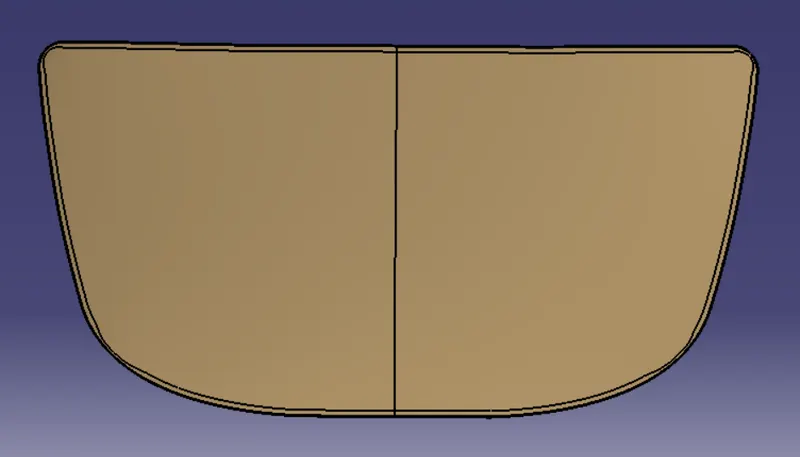
Hood Outer Panel -
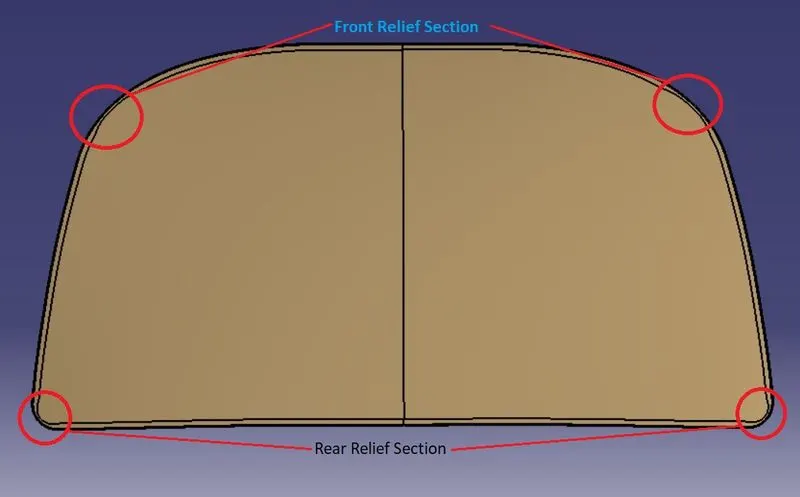
Hood outer panels provide aesthetic look and cover to the engine compartment of a car. The styling team whos provide the skin/Surface for the outer panel. The position, shape and size of hood should satisfy the safety norms. So while dooing the design of hood we have to consider importance of pedestrian safety. The outer panel and inner panel is attached by hemming operation. So it is necessary to provide required hemming flange and reliefs for the hemming operation. We also provide mastic sealants between outer panel and inner panel to reduce vibration.
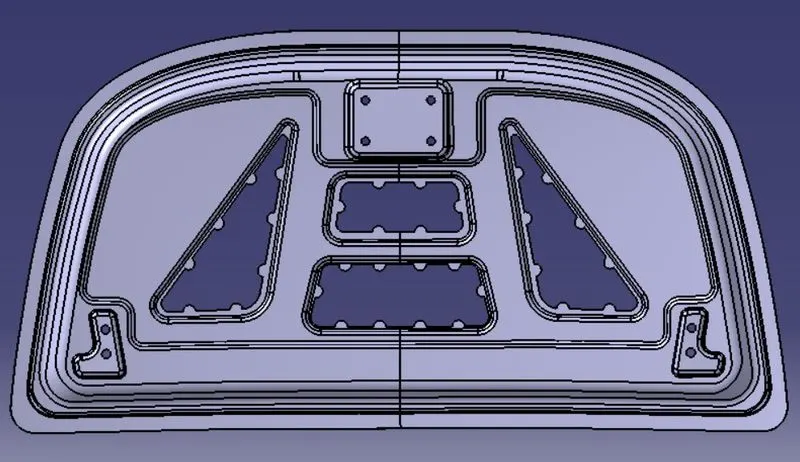
Hood Inner Panel -
Inner pannel is the part that provide rigidity and strength to the outer pannel.
Reinforcement -
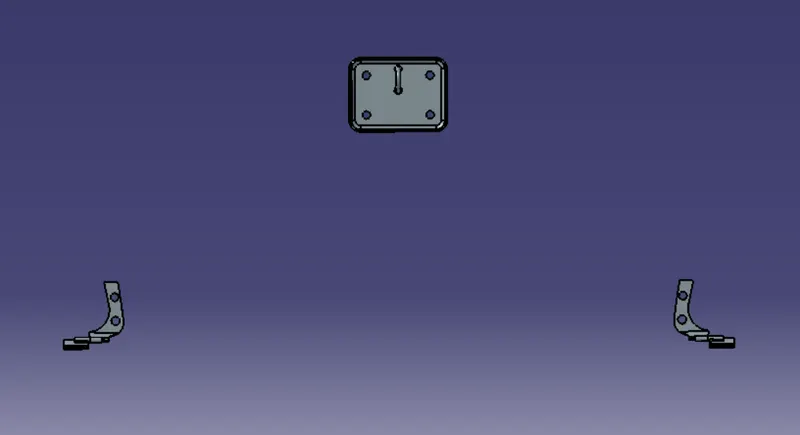
Striker Trajectory -
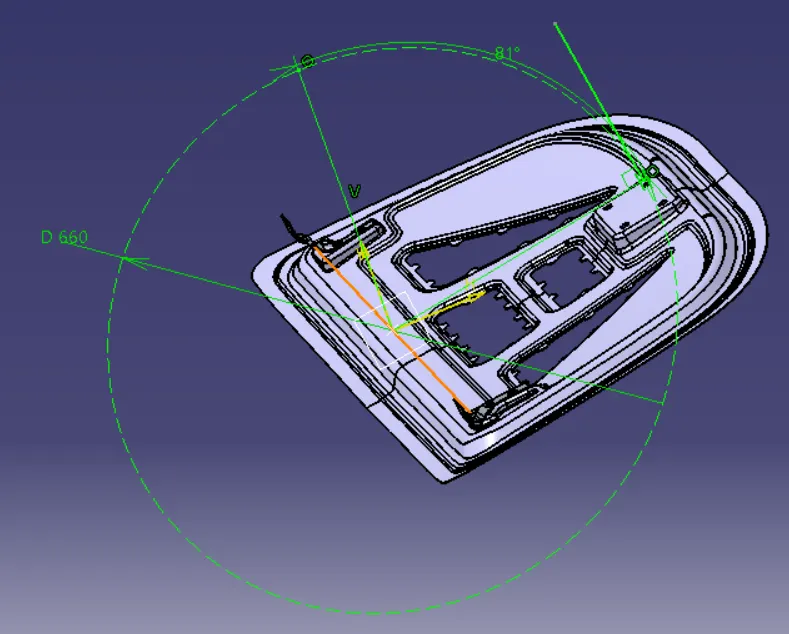
I have created one line inline with axis of two hinges then created the striker strajectory according design considerations.
after changing the angle the Striker will changes the position to proper fitting through latch.
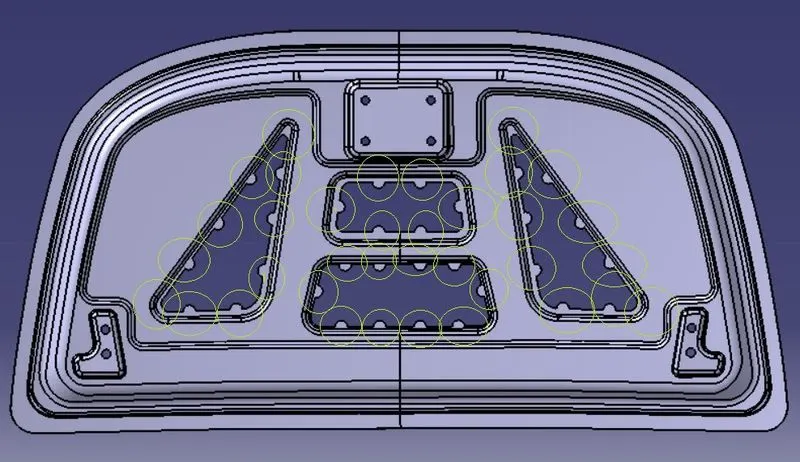
Mastic Data -
We cannot use other joining techniques like riveting, welding, etc because they effects on the outer panel which spoil its aesthetic appearance. Applications of Mastic sealants are to stick the inner surfaces of outer panel and inner panel. It is applied between the inner and outer panels at specified spots. Every mastic sealants has effects around a circular region of 80mm diameter.
Hemming -
In the hemming process also called flattening the edge of the sheet is folded over itself
Advantages -
1. Hemming increase stiffness of the part
2. Improve its appearence
3. Wliminate sharp edges
Types of Heming operation -
- Conventional die hemming
In conventional die hemming, the flange is folded over the entire length with a hemming tool.
- Roll hemming
It is the roll hemming process that is used for automotive sheet metals. Roll hemming is carried out incrementally with a hemming roller. An industrial robot guides the hemming roller and forms the flange. Roll hemming operation can also be divided into several pre-hemming and final hemming process steps. Roll hemming is very flexible to use and tool costs are significantly lower as compared to those of conventional die hemming. However, the cycle times are much higher since the hemming is realized using a hemming roller which follows a defined path.
Deep Drawing-
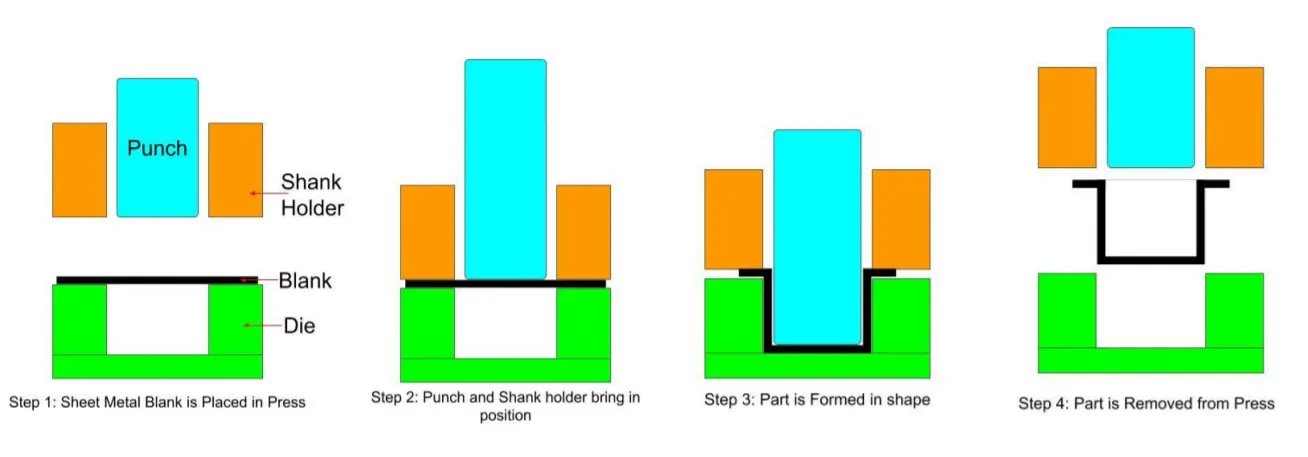
Deep drawing is the manufacturing process that is used extensively in forming of sheet metal into cup box like structure.
Stages in deformation of the work in deep drawing
1. Punch makes initial contacts with work
2. Bending
3. Straightning
4. Friction & Compression
5. Final Shape