Hood design-Week 2
CAR HOOD DESIGN
AIM:
To design the Hood or Bonet of the front driving car by using the master section and standard procedure which is used in the OEM Manufacturer's.
HOOD
Hood is the component which is placed over the engine compartment. The design of the hood is to enhance the look of the car, it also improves the aerodynamics of the car and the proper design which ensure the pedestrain safety.
Hood is used to cover the components like, engine, radiator, battery, etc., from outer environment.
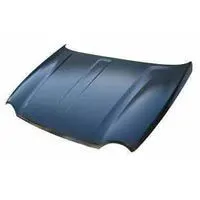
Car Hood has the following components:
- Outer Panel
- Inner Panel
- Striker assembly
- Hinge assembly
- Striker and hinge Reinforcement
- Hood Support
- Mastic's
Sheet Metal Operations done on manufacturing hood:
- Hemming
- Embossing
- Deep Drawing
- Piercing
Provided master section:
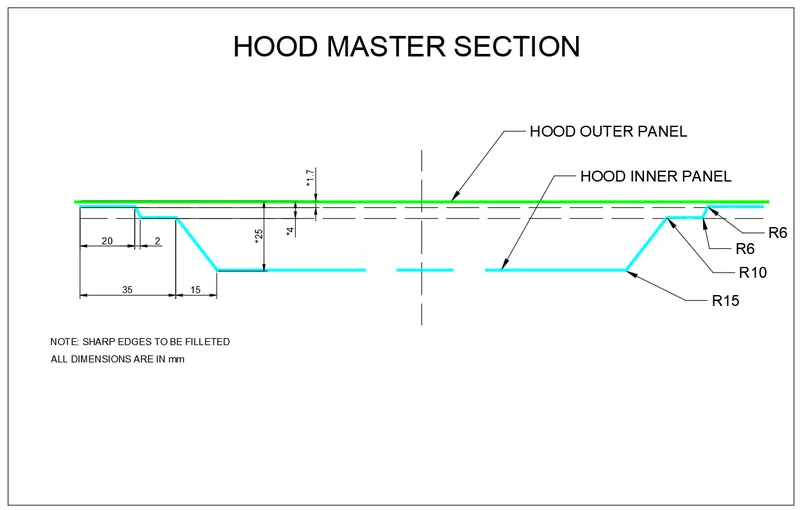
The design has been done based on the master section provided.
Designing the components of the hood:
1) Hood outer panel:
- Outer Panel is the most important part of the hood to makes the car in a very good aesthetic proportion.
- So that the Outer panel is perfectly made in the sense to achieve the aesthatic requirement.
- So that, the sheet metal operation result which is visible on the outer panel or it reduces the aesthatic value means, those operations are strictly not to be followed to make the outer panel.
- That's why the hemming process is used to join the outer panel with the inner panel, instead of using spot welding method.
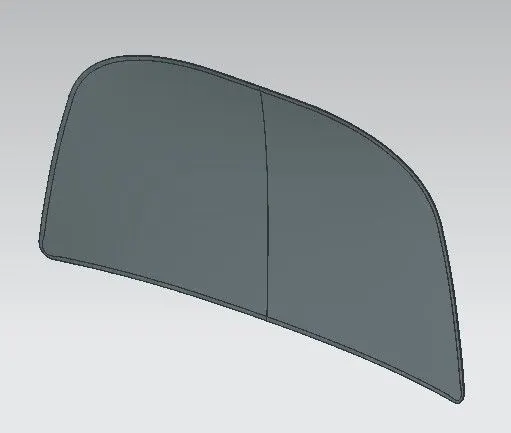
Hood ouiter surface is provided for the design.
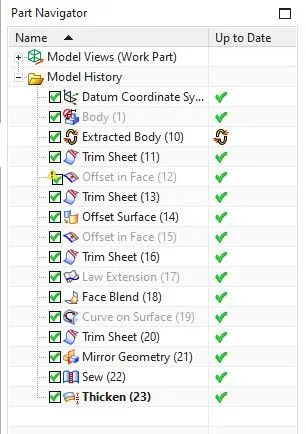
The hood outer panel is thickened to a thickness of 0.75mm
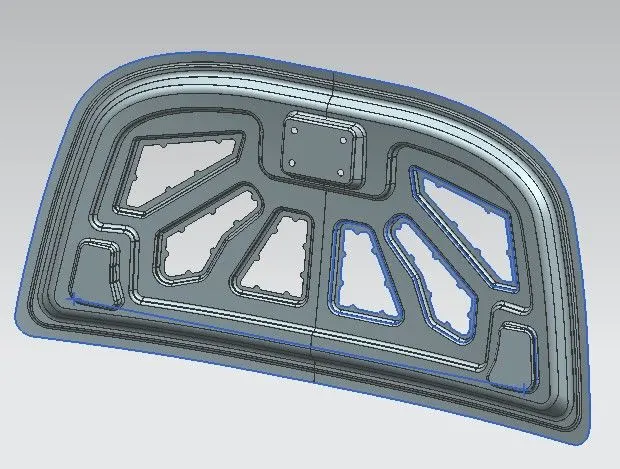
2) Hood inner Panel:
- Inner Panel is the major part that ensures the rigidity of the hood and it is used to diverts the impact to towards the hinge support of the hood however possible when the collision occurs. It is can be achieved by the good inner panel design and the emboss direction in the inner panel.
- Lot of design changes and researches are done and being carried out in the inner panel only to achieve the pedestrain safety and the passenger safety to meet up the standards.
- In this inner panel, the required holes are made to transport the hood from one station to other and fix the hood in fixture by using this hole as budding holes. Also the inner panel has the embosses and mastic points.
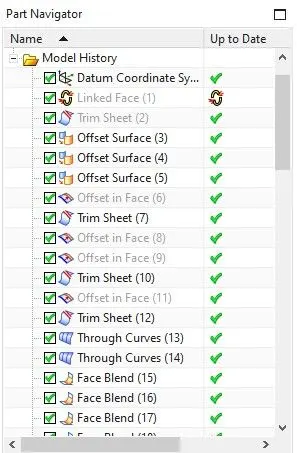
The inner panel is designed by offsetting the outer panel based on the master section.
Blends are provided at yhe sharp edges as it affects the manufacturing process.
Primary and secondary embossing are done as of our opinion without exceeding the design considerations.
Hinge and striker emboss are also made.
The inner panel is trimmed upto 2mm athe the egde in order t fit it in the outer panel during hemming.
By considering the given Inner Panel thickness(0.75mm) and offseting the outer panel styling surface with the given in the master section, the Inner Panel has been made with the embosses and mastic point.
3)Hinge Assembly
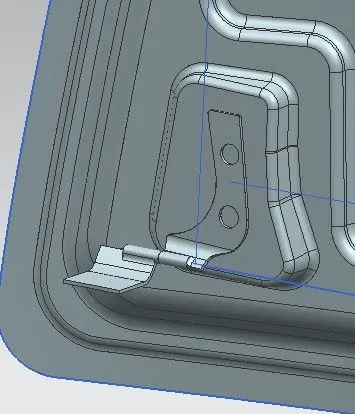
- It is used to fix the hood to the engine compartment.
- For any component has to be open and close with an axis, then hinge plays a major role.
- It has two simple parts(one is hood side hinge, another one is engine compartment side hinge) and assembled with the single axis.
- Hinge Assembly is attached at the each outwards end of the hood and the engine compartment.
The hinge is assembelled to the inner panel by using touch and parallel constraints.
4) Striker assembly
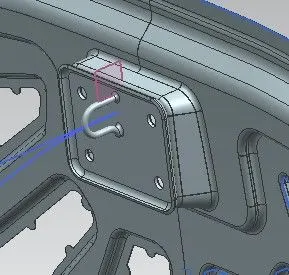
- Striker is the part which is used to hold the hood with the engine compartment by using the latch which it is attached in the engine compartment, when the hood not require to open up.
- The striket is attached to the bottom of the inner panel and it hits the latch and locked with it, when the hood is dropped down.
- There is lever which is provided inside the cabin to the driver to release the latch pressure. Once it can be done, the hood will opens up in a inch, then we can able to open the hood more.
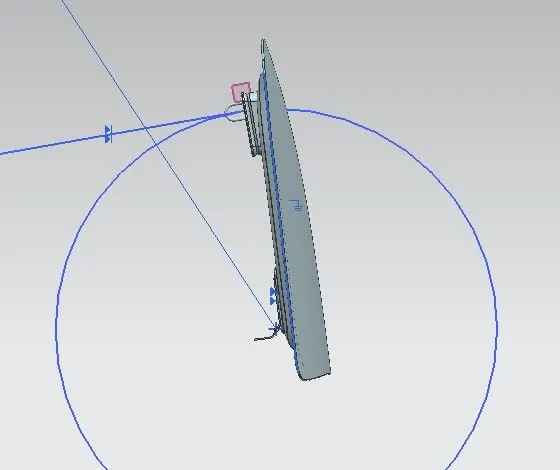
Latch trajectory:
- Latch trajectory is the path in which the striker and latch will move while opening and closing of hood.
- As the hood is opened and closed on the basis of hinge axis so a circle is created as hinge asis as centre.
- A tangent is made on the circle, the perpendicular axis of striker and latch is alinged with the tangent of the circle using alingment contraints.
Mastic's:
- Mastics are the kind of sealant which is used to combine the outer panel of the hood to the inner panel of the hood by applying between them.
- It will expands 80mm radially on application of heat.
- When in applying condition it is in the form of liquid substance with high viscosity like paste, then it is placed in worm condition, it turn into rubber like solid state.
- So that it can be the damping resistance and reduces the noises and in additional it will holds the outer and inner panel together.
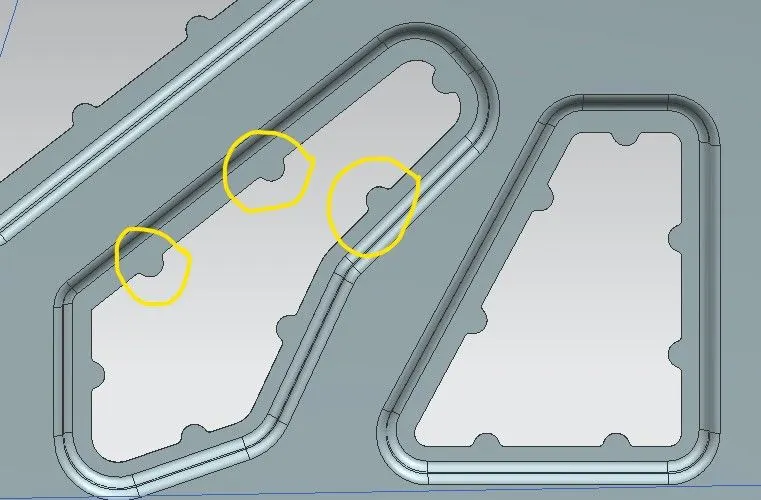
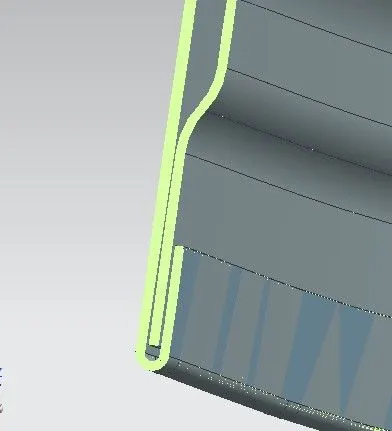
Hemming
- In Hood, the outer panel is subjected to the hemming operation which means that the outer panel edges is folded and roll it back to the underneath of the inner panel.
- The corner of the outer panel edge has to be trimmed, Because while hemming process the roller transfer pressure to the outer panel edge to fold it and roll it back, so that it may cause the problem that the sheet metal may break.
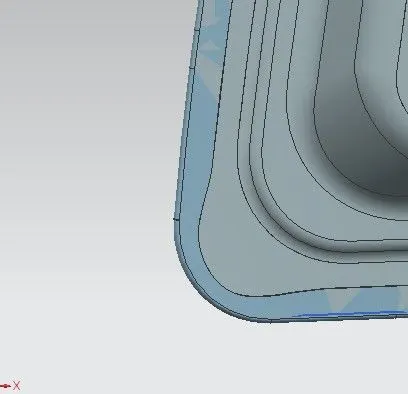
Egde relief at emboss
At the edges of the hemming in order to reduce the stress during hemming a tangential cut is a made at the edge.
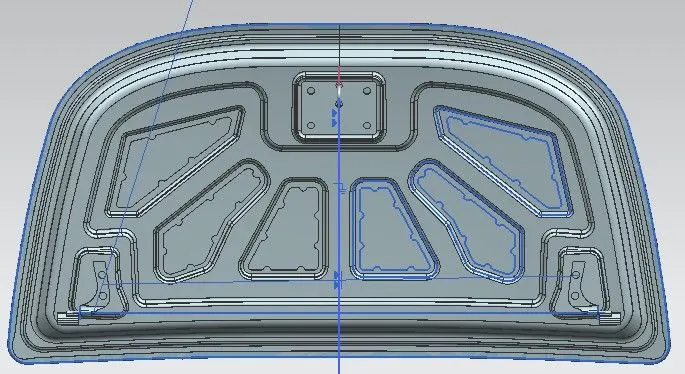
Hood assembly
Conclusion:
Finally, the hood design has been completed by considering the criteria, dimensions, procedures and standards. By the process of this design, have learnt about the hood mountings, sheet metal operations like hemming, embossing, deep drawing, piercing, Pedestrain safety and its ratings.