Hood design-Week 2
Designing of Hood by using NX CAD
Objective:
Design of Hood outer panel, Inner panel and the necessary reinforcement with the given skins (hood, striker and hinge) by following the master Section. The main objective of this project is to understand the hood design development and its safety features as per the design consideration.
Software Used: NX CAD
Master section:
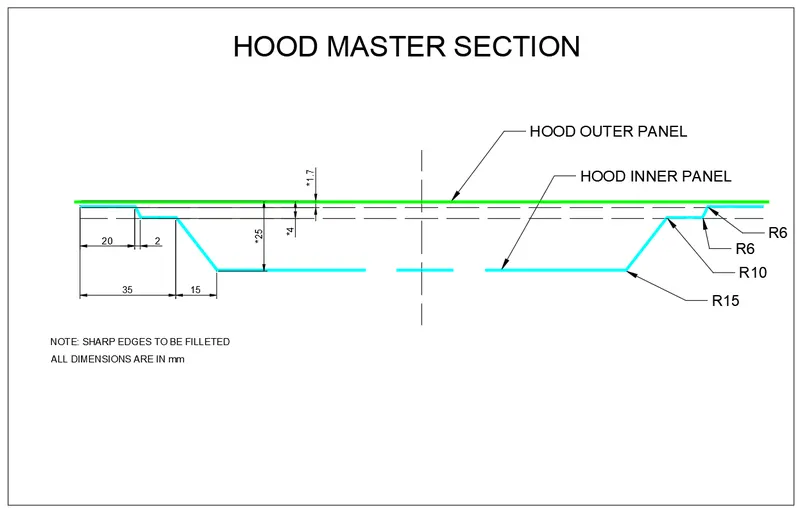
Data to be used:
Hood Thickness Information
- Outer Panel Thickness = 0.75mm
- Inner Panel Thickness = 0.75mm
- Reinforcement Thickness = 1.5mm
Introduction:
A car hood, also referred to as a “bonnet” in some countries, is the hinged cover that rests over the engine bay of a front-engine vehicle. The car hood protects the engine and connected parts from the elements while providing easy access for repairs and maintenance.
Parts of hood and its Function:
- Hood outer panel
- Hood inner panel
- Striker
- Hinge Assembly
The above mentioned parts are the major components of a hood. In hood hinge and striker mechanism is used to open and close the hood. To hold on a open condition there are two type of support mechanisms is used.
They are given below:
- Supporting Rod
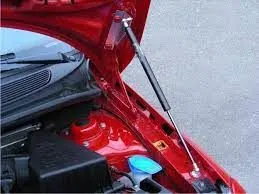
- Gas Stay
Supporting Rod:
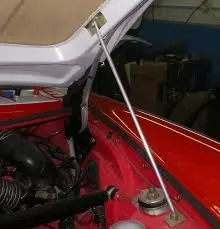
This is the system widely used in cars. In supporting rod system we have lift the hood by manually and fix rod to the striker. This is a cylindrical rod, which is designed in various profile to obtain the strength of rod. In hood closed condition the rod is rest in space provided in the engine compartment. This is cost effective and simple mechanism compared to Gas stay.
Gas Stay:
Hood Outer Panel:
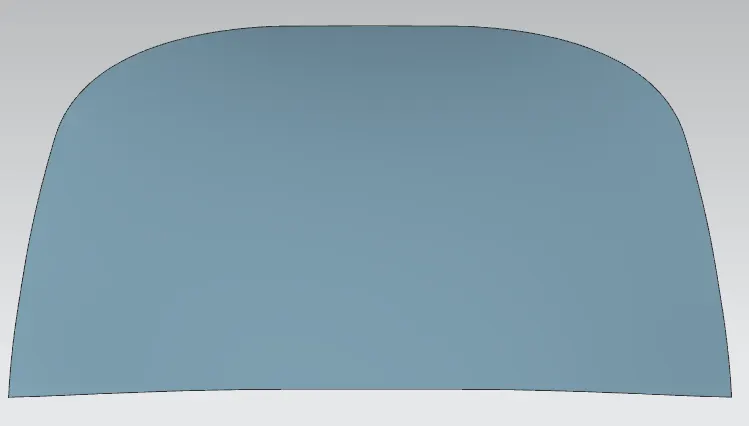
This is the given skin of hood outer panel. We have to design the hood inner panel by using the outer panel skin. During the Design of hood outer panel we have consider the pedestrian safety norms. The outer panel prevent the engine and some cars parts from externally.
Hood Inner Panel:
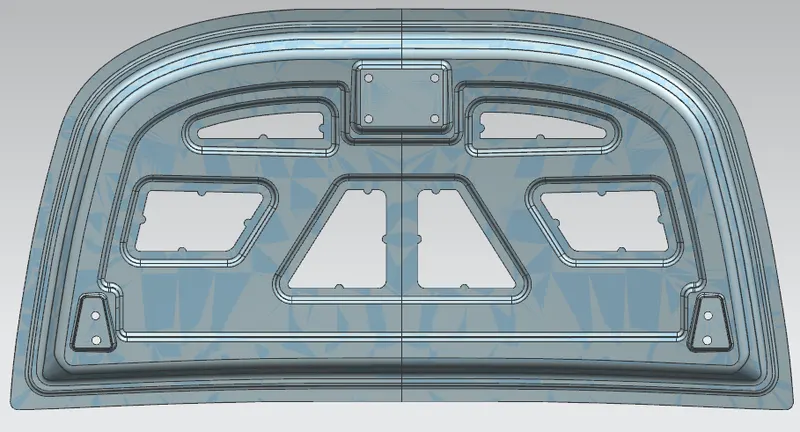
This is the hood inner panel which is designed by using the skin given. Inner panel which gives the strength and rigidity to the outer panel. Hood inner panel having some emboss and mastic points to achieve more strength. The thickness of the inner panel is 0.75mm. We have to design the as per the pedestrian safety norms.
Emboss:
Embosses are provided in the inner panel of the hood. This helps in weight reduction of the hood and also to dissipate the force. Embosses are mostly designed to divert the force towards the hinge assembly and the passenger. The below given images are shown detailed.
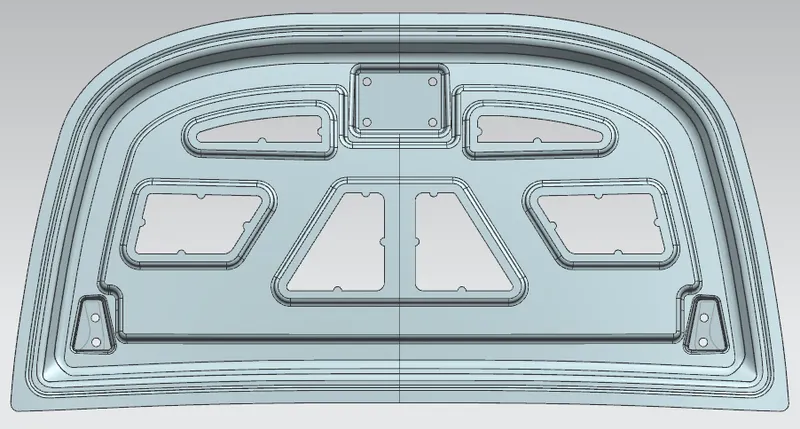
Mastic:
Mastic points are provided at the inner panel which the mastic sealents are placed. There is a gap between the hood outer panel and the inner panel. The mastic sealent is applied to joining the inner panel to the outer panel.
Latch and Hinge Assembly:
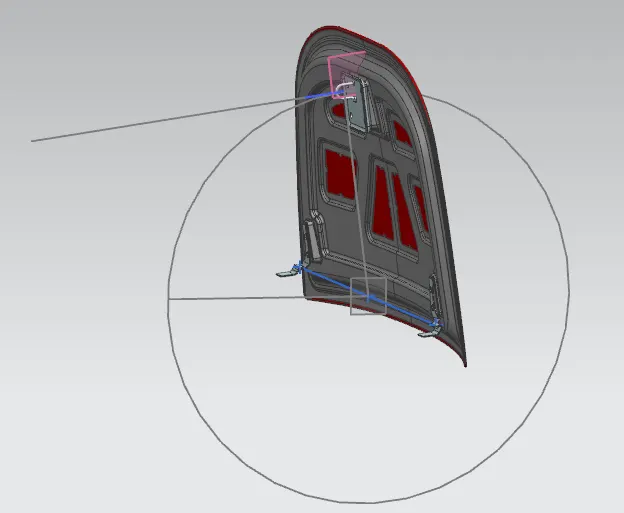
This part plays an important role in the hood assembly, which helps in the opening and closing of the hood. The position of the hinge assembly should be perpendicular to the trajectory, through which we can achieve the proper positioning of the hinge.
Reinforcement:
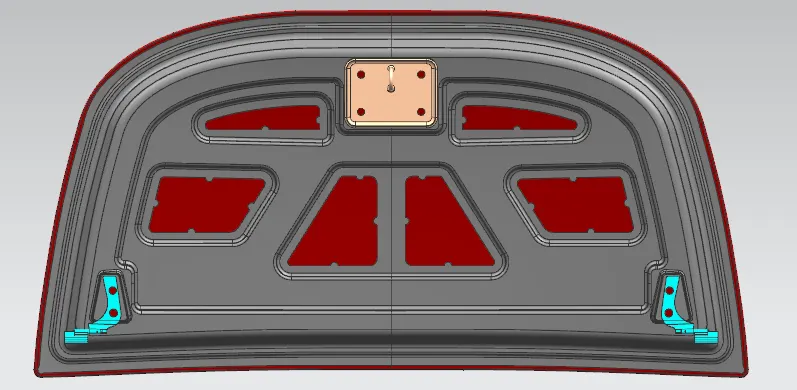
This can be done to give extra support to the movement parts such as hinge, support rod and the latch and striker mechanism.
Hemming:
The Hood inner panel and outer panel is joined together by using hemming process. It is the process of wrapping outer panel with inner panel which makes the assembly rigid and strong. Riveting and the spot welding process cannot be used here which spoils the asthetic look of car.
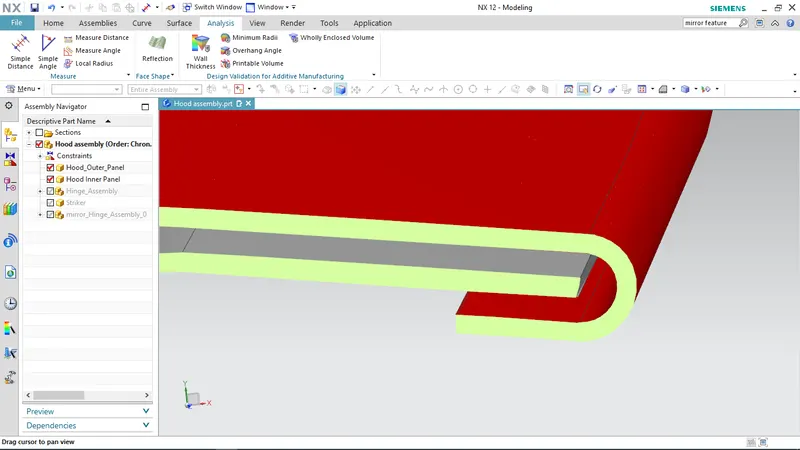
Front Relief Section:
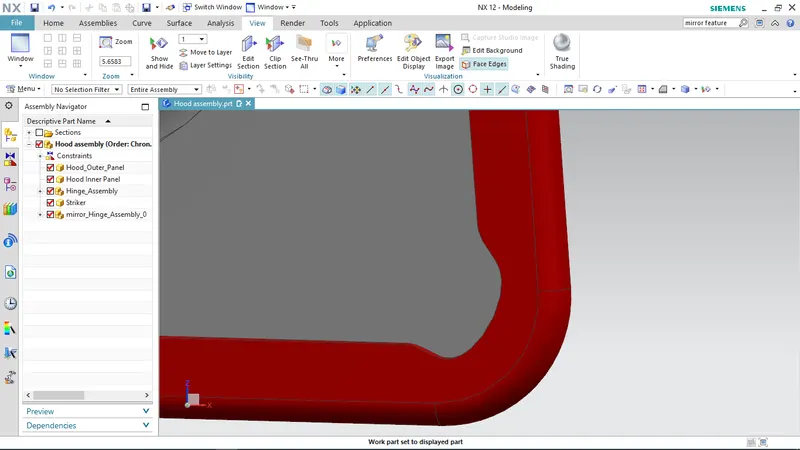
Rear Relief Section:
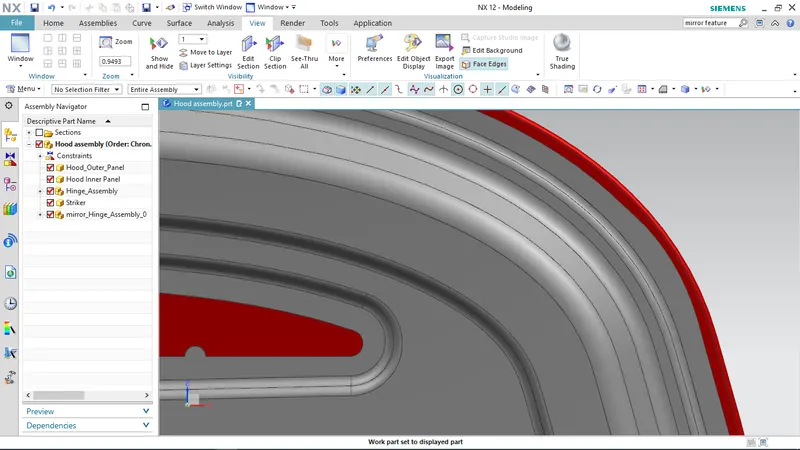
Conclusion:
Thus the car hood design is completed by following master section and as per the design consideration in NX CAD.