Hood design-Week 2
HOOD DESIGN (FRONT)
A Car hood is the Metal part that covers the engine of an automobile. Hood is constructed from steel and sometimes from aluminum, where steel is cheap and easy availability where as aluminum is higher cost than steel but it reduces the weight of the component and increases the strength along with reinforcements. Hoods can be constructed from various other materials like carbon fiber, fiberglass or dry carbon etc. So basically hood consist of two parts within it the outer panel and inner pannel.The inner pannel provides strength while outer panel functions as metal cover. Hood plays major role in safety of passengers and driver in such a way it is designed. Hood can be opened by release hatch in the car and the entire component gets hold by rod or gas stay. So these are the basic things to know about the hood.
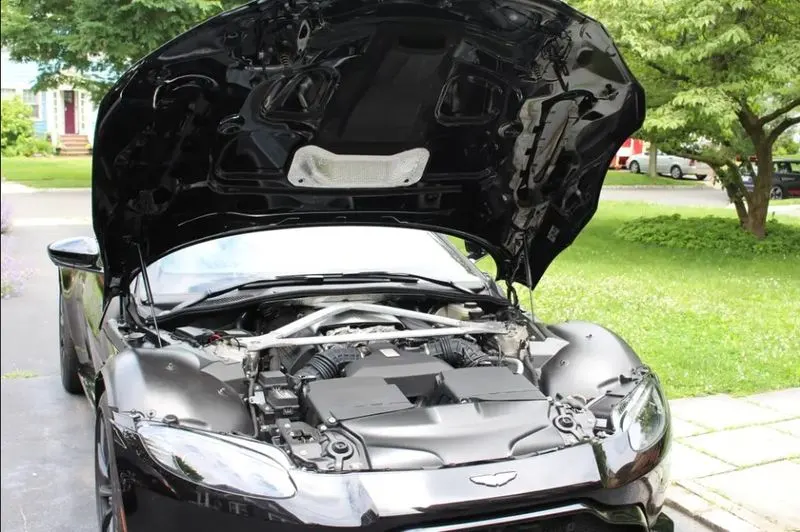
Image 1: Aston Martin Hood
Hood Design Consideration
A car's hood is regarded as a frontal BIW enclosure component. The purpose of bonnets (unique shape molds) is to reduce air resistance as it flows around the car. On adding to this, bonnets are made to meet a number of other specifications. In the case of a collision, they play a significant role in protecting both the car's occupants and the pedestrians. It serves as the engine's cover as well.
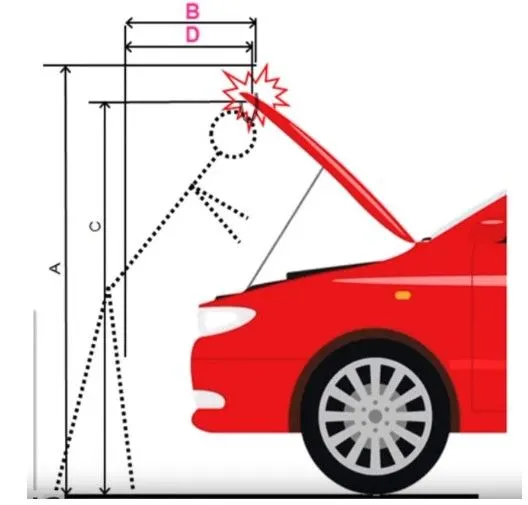
Image 2 : Height Consideration.
Before the hood enters the designing phase, there are several other factors to be taken into account. As the average person's height varies from place to place, the height of the hood is created using national standards. The material consideration, which should be affordable to produce, is also necessary. For pedestrian safety, the hood should be made of lightweight material so that when someone is struck by it, their injuries won't be severe.
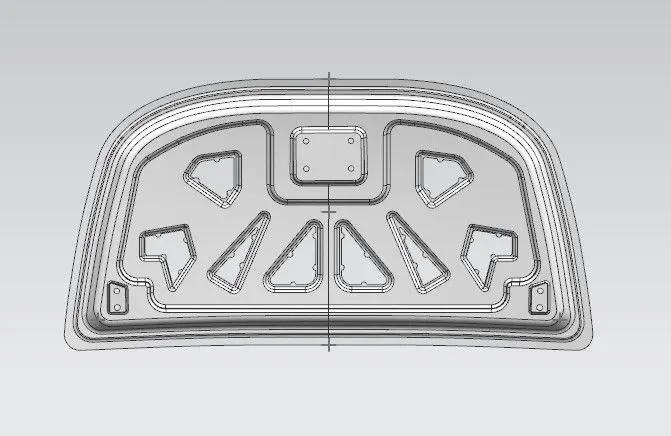
Image 3: Inner Panel Hood
We can use the above image for the concept explanation so the top of the component in the image 3 is front end of the hood and the bottom of the component where hinges are places on the embossed surface of the inner panel at two corners. Talking about the force or wind blast that's entering from front the shape moulds present in the inner panel the force during an impact or the wind blast happens, it doesn't let come in straight but instead of that it deviates away, while during the crash the engine compartments gets fully crashed and prority is given to human life.
Clip 1: Hood Crash Case-1
what if a car hits a human and what will happen then? well the NCAP (New Car Assessment Programme) in europe performs assessment program whic has devloped test specifications and rating system for assessing pedestrain inhuries during the impact of vehicle.
They depict a scenario in which a car strikes the pedestrian's leg first while he is standing laterally. Tests are done on the lower leg, higher leg, and most crucially the head because head trauma is the most frequent cause of fatalities.
Therefore, the high impact region for adults and children is exposed to decreased thickness in order to prevent serious head injuries. Additionally, there shouldn't be any reinforcement there since if there is a head accident, the hood will absorb the stress, causing it to collapse and preventing serious head injuries.
The safety of the car's occupants in the event of a frontal collision is another crucial factor in hood design. The hood's design should be such that, in the event of a collision, the force is directed upward through the embosses and toward the body of the car. thereby defending those who are within.
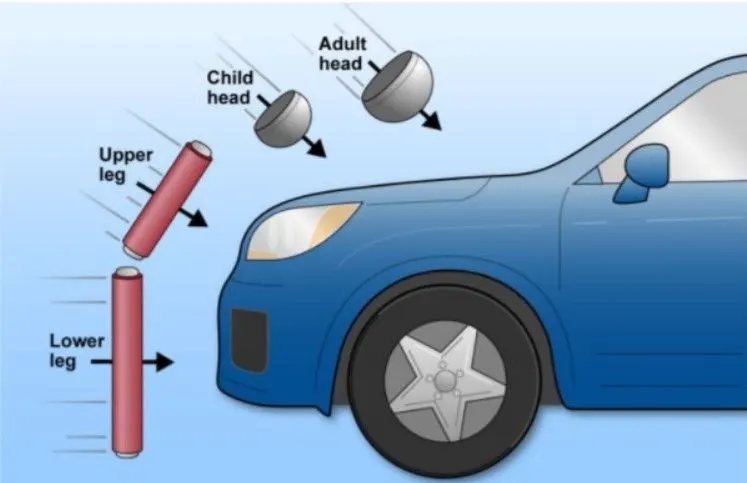
Image 4: Pedestrain incident case 2.
The Model is built using NX12 or Siemens NX software.
For this report's hood assembly, the following components are used:
- Hood outer panel
- Hood inner panel
- Hinge assembly
- Striker assembly
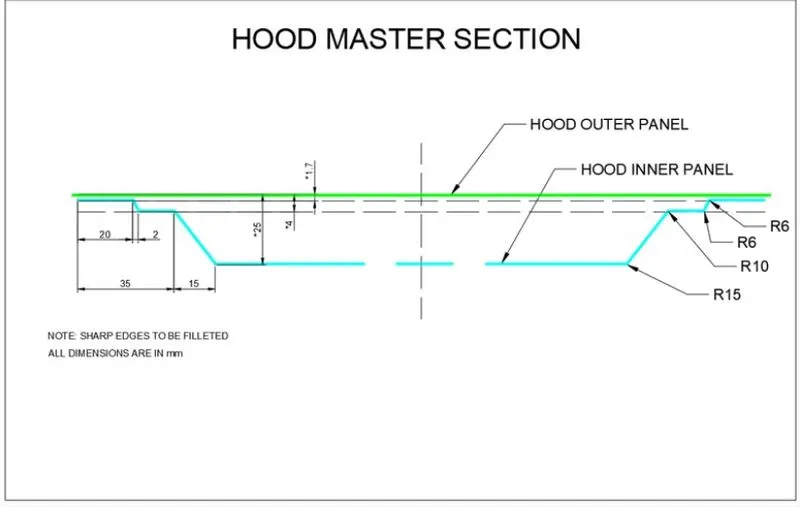
Image 5: Hood Master Section.
Hood Outer Panel
It is also known as the inner panel's cover. It is the component that gives the hood or bonnet a posh appearance. A car's exterior appearance is ruined if the outer and inner panels are joined using a welding procedure like spot welding or riveting. In most cases, the prototype design is used to extract the outer panel model.
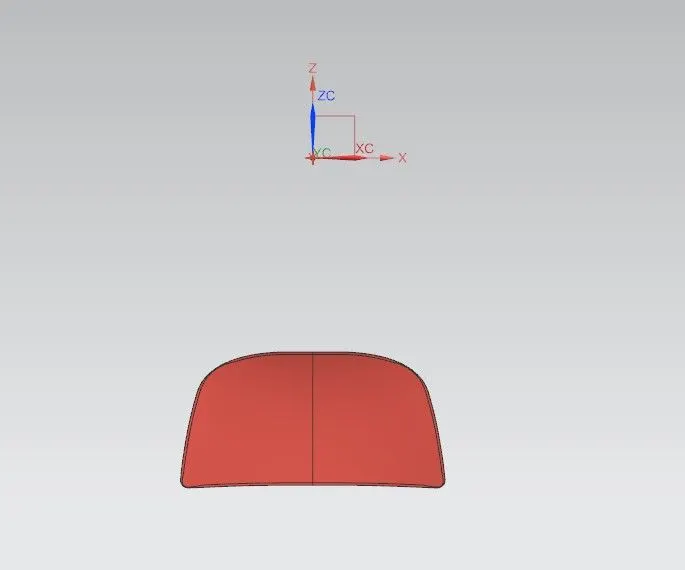
Image 6: Front View Outer Panel.
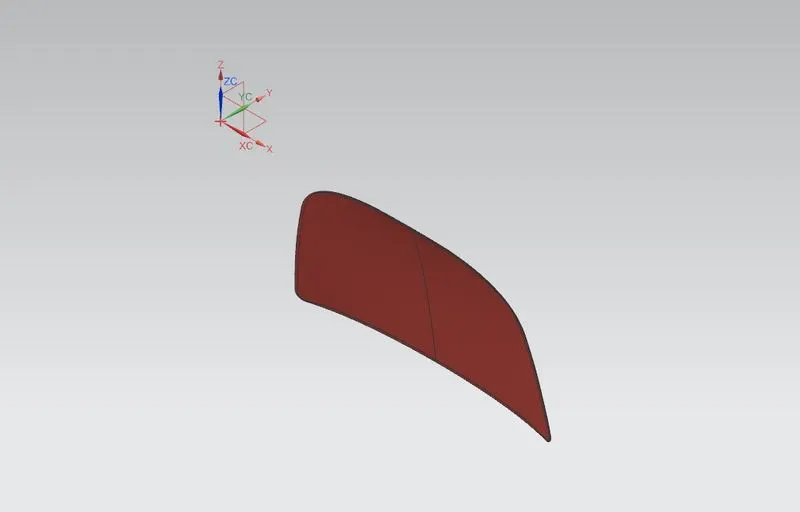
Image 7: Isometeric View Outer Panel.
So tools used in this parts are datum plane,trim sheets, offset in face, offset surface, law extension,face blend, curve on surface, mirror geometry, sew and thicken.
So I used datum plane to set my plane and made sure that i have kept the coordinates at its requirements. so here in the part navigation image of outer panel, we can see a feature called extracted body, it is to replicate the model and make sure there not changes occurs in the parent file, so that there won't be any changes in existing file and can easily work on the model. Trim sheet feature can cut any component according to curves according to the requirement. offset in face is a tool which allows to duplicate the existing tangent curve of the model, so that it will be easy to construct further process. offset face feature selects the face of the model and project the face of the model as other object according to direction given. law extension allows to extend the line as surface according to the direction and angle given. face blend smoothens the edges of the selected face in the model. curve on surface used to create points breaks the edges of existing curve and create smooth flow hand sketch curve according to requirements. mirror geometry allows to replicate the model on the basis of axis. sew helps to wraps up differents parts into one single compound. Thicken helps to increase or thicken the model.
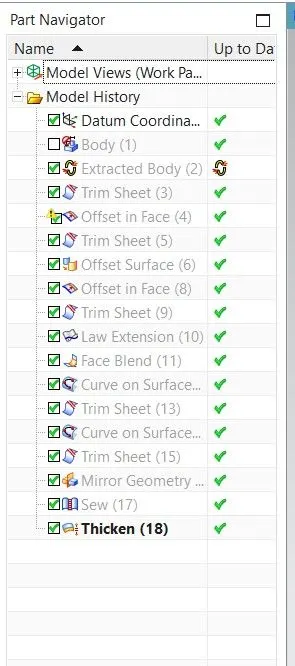
Image 8: Part Navigator of Outer Panel
HOOD INNER PANEL
Only inside the inner panel are we able to conduct research and put pedestrian and motorist safety into practise. Only in this panel can the reinforcing, embossing, mastic points, etc. be attached. The goal of the current invention is to create an inner hood panel that can reduce response force even when the degree of hood deformation increases while maintaining an adequate energy absorption capacity.
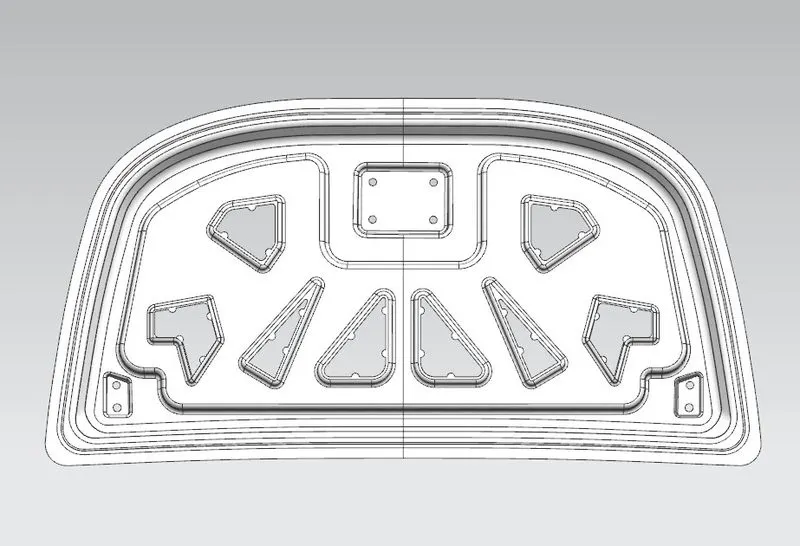
Image 9: Hood Inner Panel Back View.
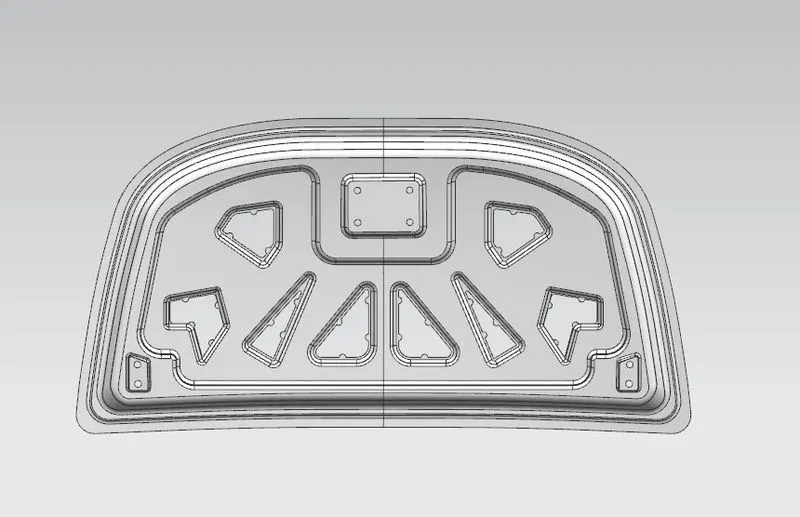
Image 10: Hood Inner Panel Front View.
The Tiny Semi-circle can be seen in the model those are called Mastic Points. So the mastic points are constructed in 10mm in diameter and the purpose of these points are that they strengthen thier surronding upto 80mm diameter. The main function is to reduce NVH (Noise, Vibration and Harness). The more number of Mastic points the better the performance is produced.
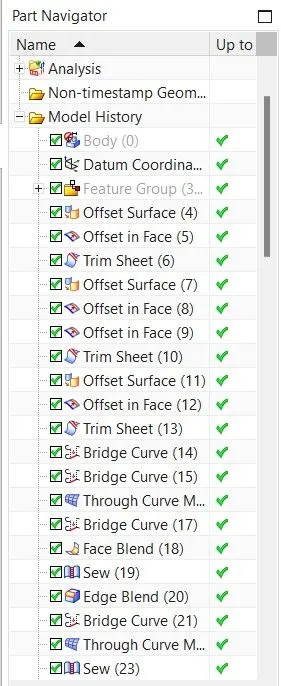
Image 11: Part Navigator of Inner Hood Panel 1.
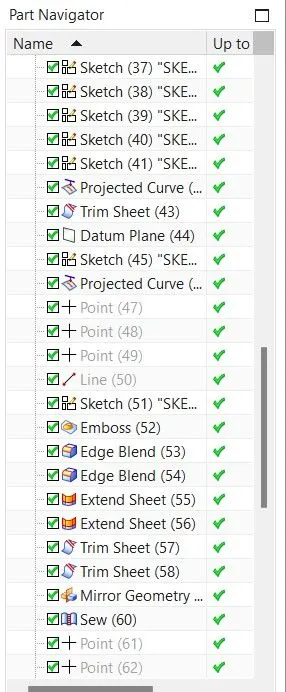
Image 12: Part Navigator of Inner Hood Panel 2.
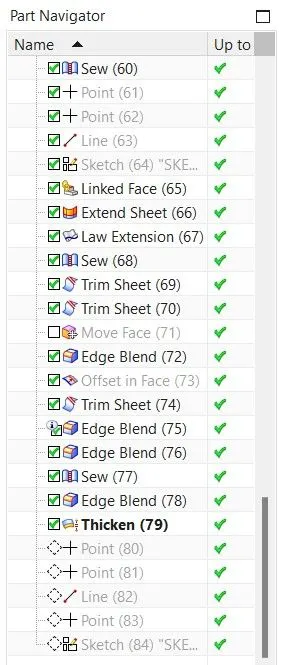
Image 13: Part Navigator of Inner Hood Panel 3
HEMMING
The procedure of hemming involves attaching the outer and inner panels together. In order to hold the inner and outer panels of the hood securely together, this procedure rolls and wraps them.
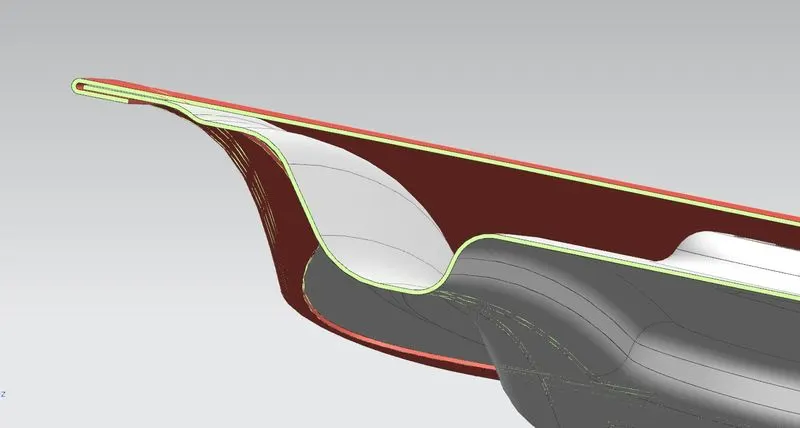
Image 14: Hemming Section.
LATCH & STRICKER DESIGN
- It is applied to secure the car's hood to the body.
- In this case, the striker perfectly encloses the opening in the car's body.
- Several fasteners and reinforcements are used to fix the latch and striker to the inner panel of the hood.
- These reinforcements have a 1.75 mm thickness.
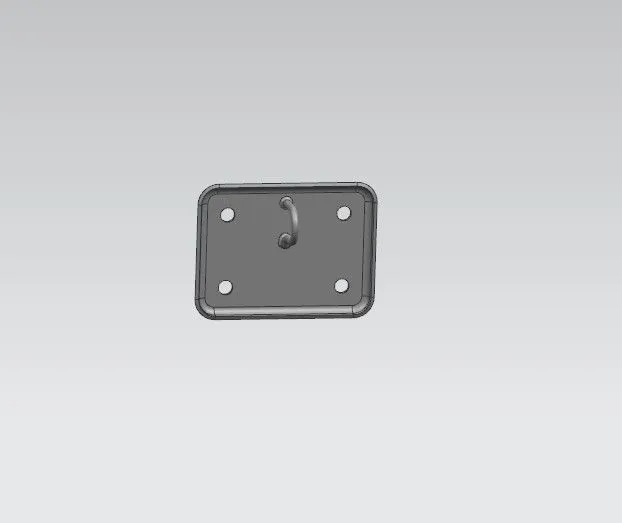
Image 15: Front View of Striker.
HINGE DESIGN
- An automobile's bonnet and cowl panel are connected by hinges.
- It makes it possible for the hood to swing open and shut.
- Typically, hinges are positioned such that the striker fits into the corresponding hole.
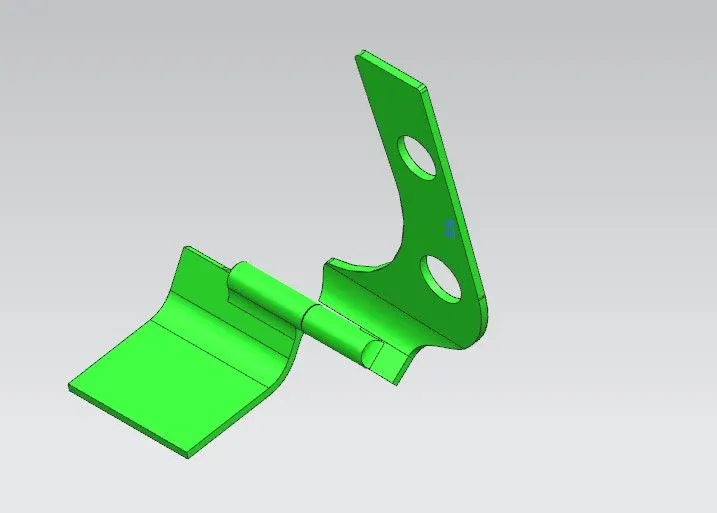
Image 16: Isometric View of Hinge.
FINAL ASSEMBLY OF HOOD
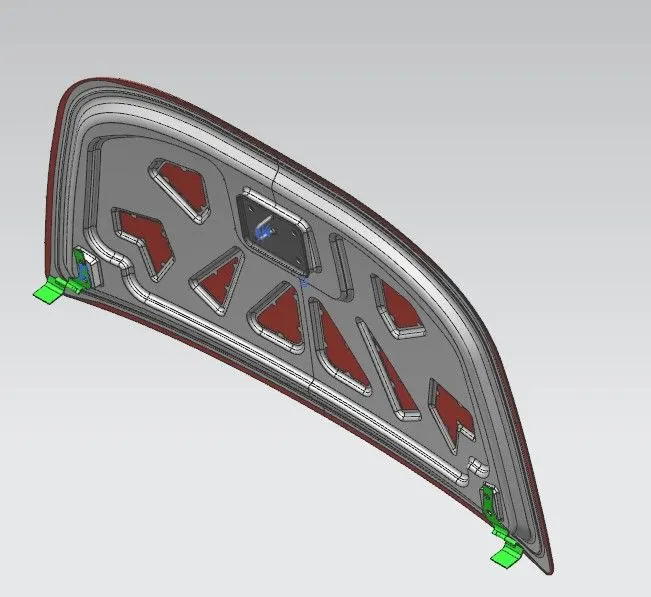
Image 17: Isometric View of Hood.
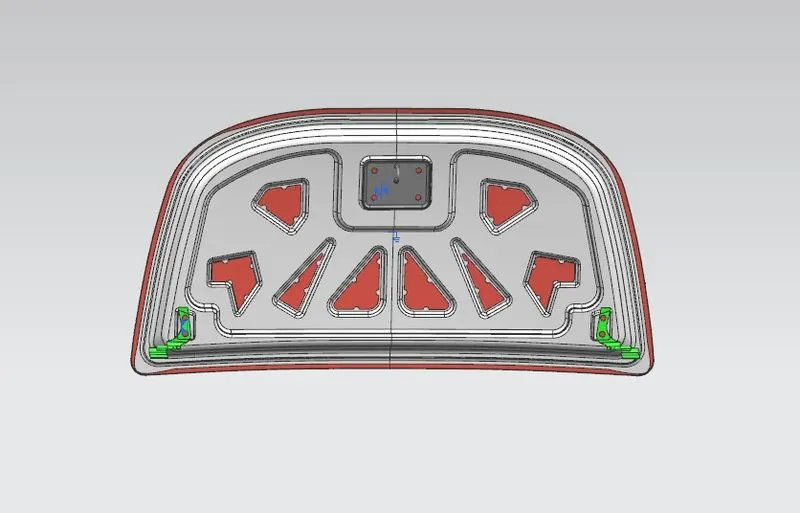
Image 18: Final Assembly of Hood.
CONCLUSION
Thus, the entire hood of a car was developed in accordance with industrial manufacturing standards while adhering to EURO NCAP Standards.