Hood design-Week 2
HOOD
The hood or bonnet is the hinged cover over the engine of motor vehicles which can open to allow access to the engine compartment for maintenance and repair. On front-engine cars, the hood may be hinged at either the front or the rear edge, or in earlier models (e.g. the Ford Model T) it may be split into two sections, one each side, each hinged along the centre line. A further variant combines the bonnet and wheel arches into one section and allows the entire front bodywork to tilt forwards around a pivot near the front of the vehicle (e.g. Triumph Herald)
MATERIALS USED FOR HOOD
Hoods are typically made out of the same material as the rest of the body work. This may include steel, aluminium, fiberglass or carbonfibre. However, some aftermarket companies produce replacements for steel hoods in fiberglass or carbon fibre to make the vehicle lighter.
Amid the raging debate on the suitability of aluminum as a replacement for steel in BiW, a major transformation has occurred in the form of the entire BiW being made up of carbon-fiber-reinforced plastics (CFRPs) in BMW’s i3 model, a fully electric car.
TYPES OF HOOD
- Inlaid Hood or Built In Type: There is a gap between the hood and the car body as shown below. Here the end point or the side reference line of the car lies on the fender, which uses more damage to the pedestrians and hence affecting their Euro-NCap ratings.
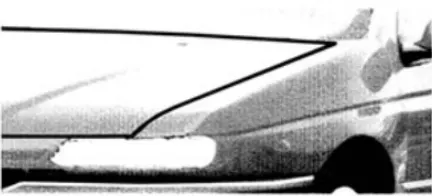
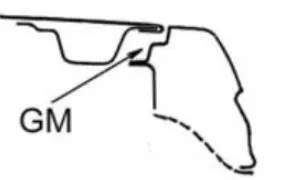
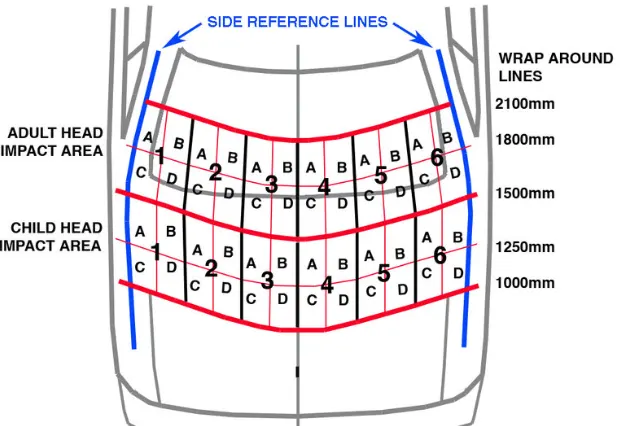
2) Wrap Around Hood: These types tend to wrap around the car body as shown below. Here the side reference line of the car lies on the Hood itself. This reduces the head impact zone and therefore can be able to achieve higher Euro-NCap ratings.
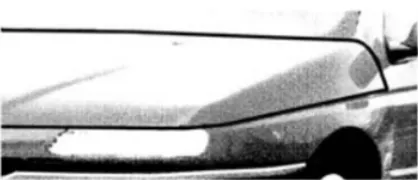
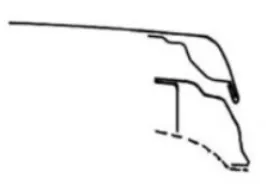
SIDE REFERENCE LINE – an imaginary line taken till the end point of the car which is at an angle of 45 degrees from the horizontal axis or the ground. This line is necessary to follow pedestrian Euro N-Cap assessment.
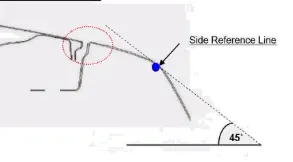
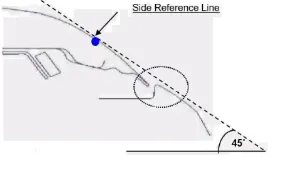
Side reference line on inlaid hood Side reference line on wrap around hood
HOOD STAY
A hood stay is an assembly that keeps your hood open. There are soom that attaches to the vehicle body whereas others that attach to the hood itself. Hoods are also classified on the basis of different types of hood stays.
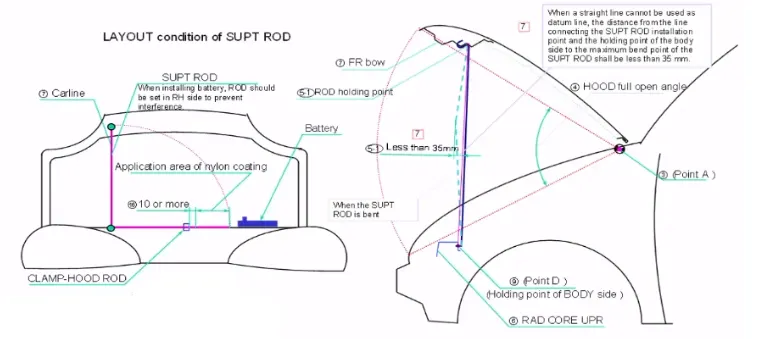
- Support rod hood type- this is the most basic and common type of hood stay and is used in most of the mid-range cars since it is economical. This is simply a bent rod, as shown below, that keeps a hood in an open position if and when applied. The bent shape of the rod is intentionally given so as to provide it with strength and rigidity in order to hold the hood effectively and safely.
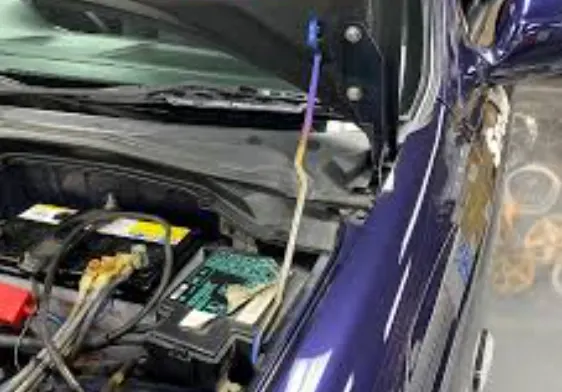
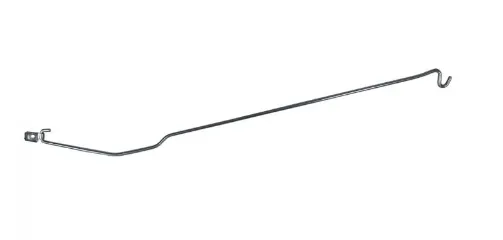
The maximum distance a rod can be bent is less than 35mm. Also the hood support rod should be fixed at the opposite end of the battery compartment enabling the ease of operation near the battery area. Gromets are used to fix the support rod.
- Gas stay hood type or gas strut- this hood support does not require much man power and is very useful in case of very heavy hoods. This is mainly seen in bigger cars and is also expensive. Almost all the back doors of the car segments are installed with this type of hood stay.
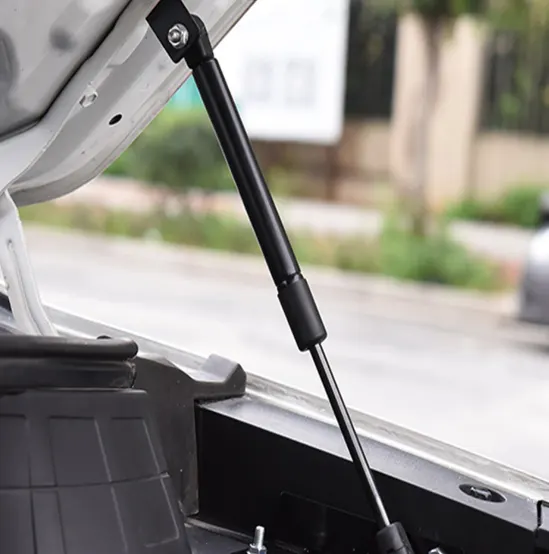
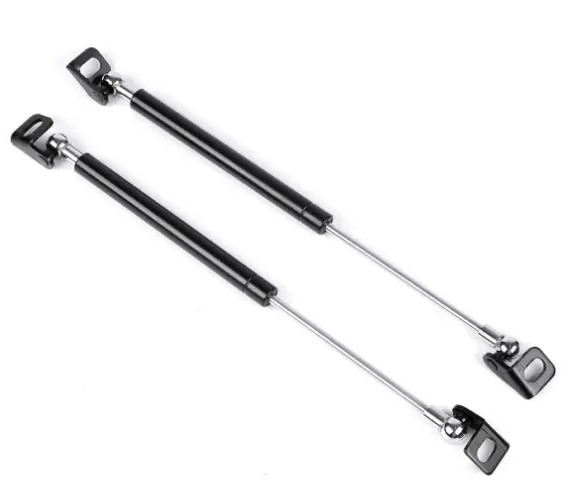
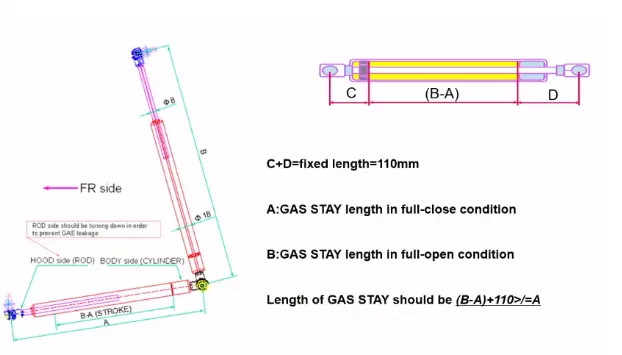
It has two ends where one end is fixed to engine compartment and the other to the hood itself. The length C & D is kept constant and only the (B-A) length is varied. We could say that if the length of the Hood increases, (B-A) length also increses. Stud ball is used to fix the gas stay support.
COMPONENTS OF THE HOOD
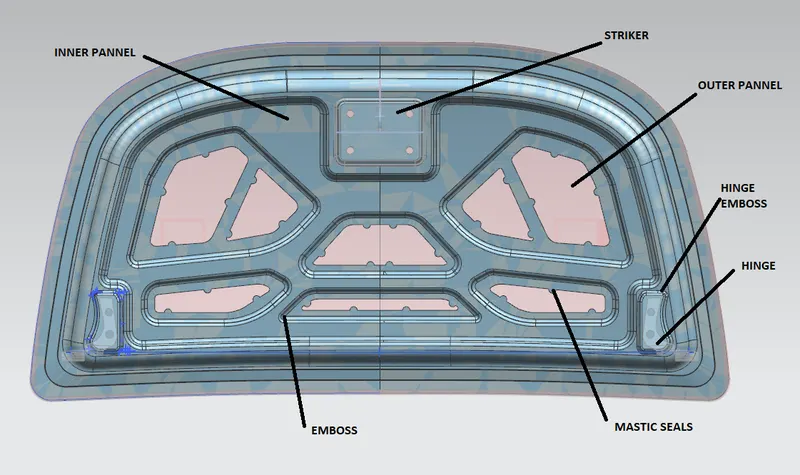
1) Hood outer pannel- the outer panel of the hood is the part that is visible to the eye in its closed position. It basically hides all the ugly technical area of the vehicle. It is a smooth surface with no markings and adds up to the aesthetic of the vechicle.
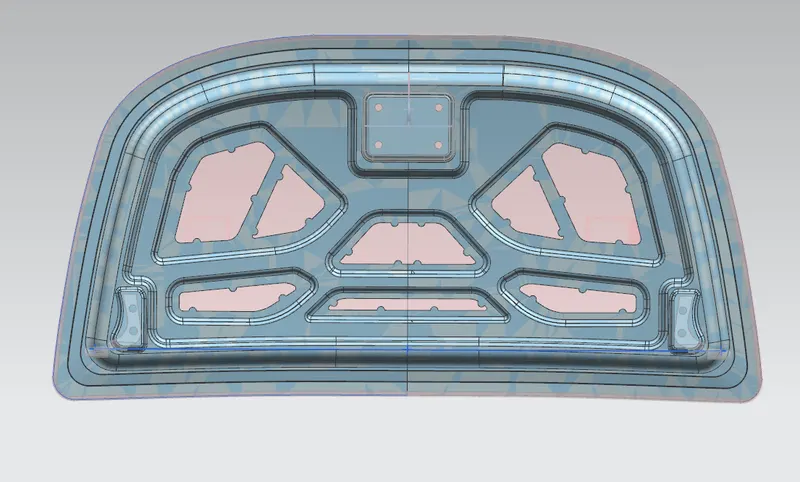
2) Hood Inner Panel- the inner pannel is the part of the hood that lies on the inside of the outer panel. It is the inner pannel that holds all the other design considerations and requirements, is equipped with embosses, striker and latches etc. and it also strengthens the outer panel of the hood. It is designed using a master section and all the other parameters explained later in the report.
3) Embosses- embosses are made on the inner panel of the hood and are put in place to protect the driver in case of a crash. These are made in V and Y shapes and their major fuction is to direct the force coming from the front towards the hinges or outwards, thus reduces the incoming force before it reaches the passenger compartment. Embosses also improve vehicles traction and also the phenomenon of heat dissipation.
4) Striker- it is the lock that locks the bonnet.
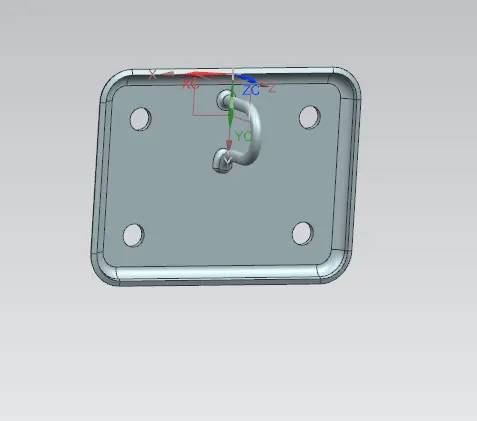
5) Latches- When it comes to hood assembly, there are two latches provided which acts as a lock to open and close the hood. The first latch is in the driver compartment, pulling which the hood partially open to about a gap of 15mm. Then to completely open the hood, the driver needs to manually access the second latch from the 15mm gap that the first latch just made.
6) Hinges- the two hinges provided at the two ends of the hood help in its opening and closing along a fixed axis.
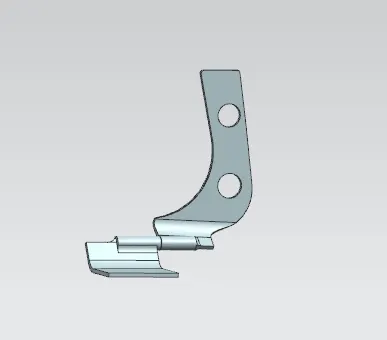
7) Reinforcements- In order to accommodate latch-and-striker and hinges in a hood assembly, some material needs to be removed which in turn reduces the strength of the material locally. Thus, to improve this lost strength, reinforcements are provided. Latch and striker reinforcements and the hinge reinforcements are the ones provided in the latch and striker area and the hinge area respectively. The following figures show striker and latch reinforcements and their cross sections respectively.
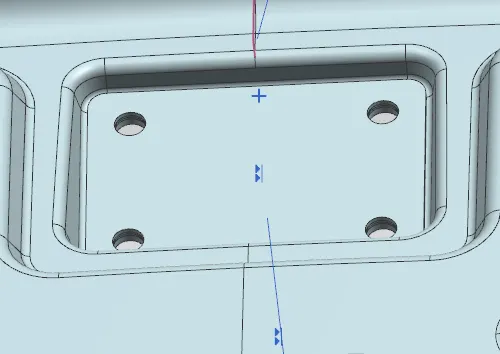
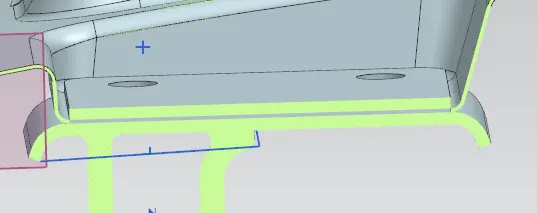
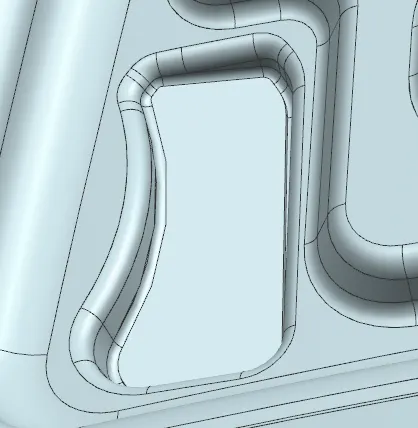
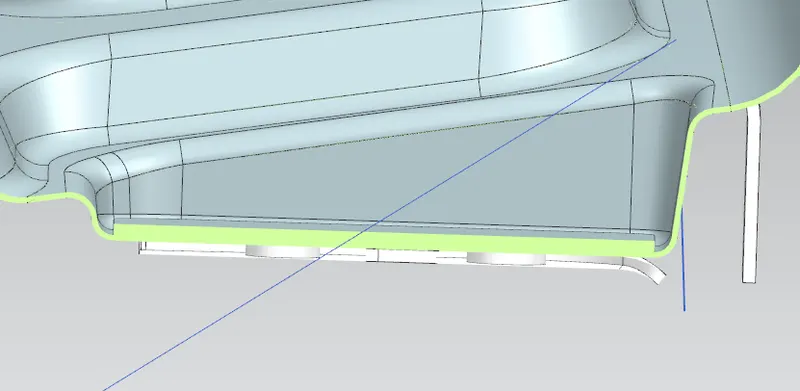
8) Stiffner pads- When the vehicle is in motion, vibrations are caused. Stiffener pad is kind of a hard sponge placed between the outer and inner panel that not only reduces these vibrations and hence the NVH (noise, vibrations, harness) levels but also provides strength.
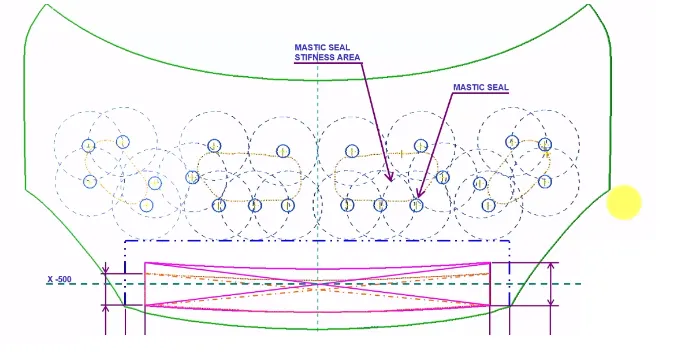
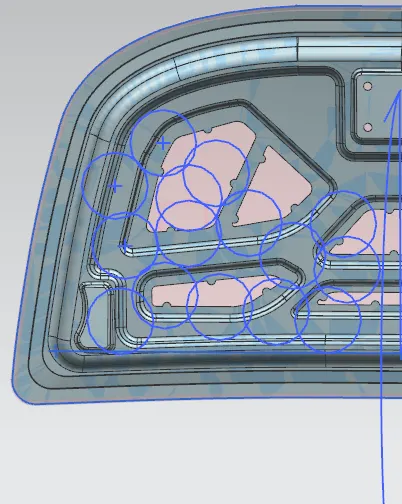
9) Mastic seal- these are seals that are made up of rubber or sponge kind of a material and improves strength locally to about 80mm of diameter. these seals are placed between the inner and outer panel of the hood and helps to hold them together.
DESIGN CONSIDERATIONS FOR HOOD
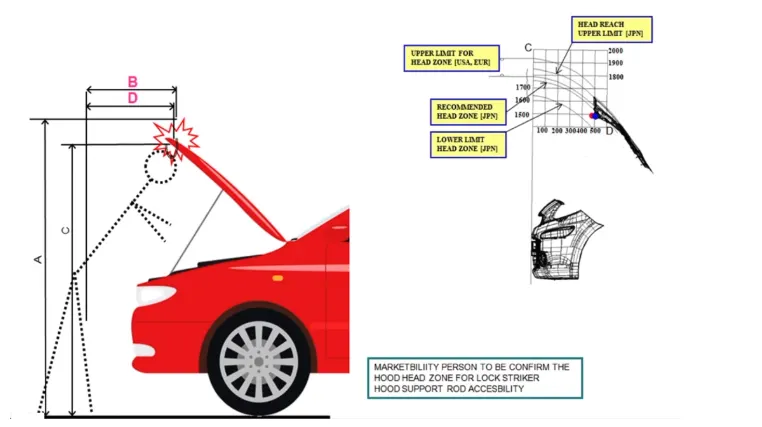
(1) Hood Head Zone for Lock Striker (or) Hood Opening Angle- based upon the height of the average people living in a region or country, the hood is set to open up at a particular region, thus reaching a height so as to not bump the drivers head when the hood is opened. The measure of this particular reading might be different for different countries and thus depending upon the market research of a particular target area, a measure is set.
(2)Paedestrian Safety-
a. HIC Criteria :
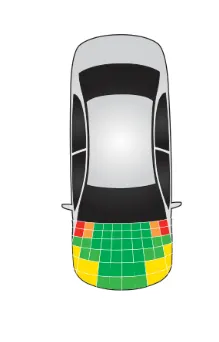
= or < 1000 (Rating : Green)
1000 ~ 1350 (Rating : Orange)
= or > 1350 (Rating : Red )
More the Green zones, Better will be the Ratings for the car.
b. Wrap Around Distance
It is the point from the ground to the end point of the hood.
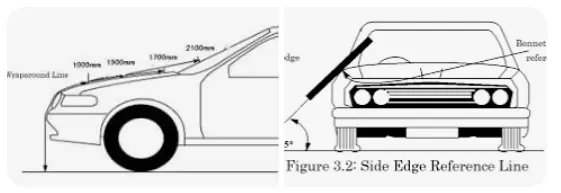
(3) Euro - NCap ( The European New Car Assessment Programme )- Euro-Ncap makes rates a vehicle on the padestrial safety that it provides. The higher the rating, the safer is the car. This rating thus also increases the value of the car in the market. In simpler words, this reading tells us how safe a car is. Various zones are provided and tests are performed to reach a rating for a particular car. Differernt measures are taken to improve this rating. Materials in the hood are removed in order to make the hood softer, so that if and when a person hits it, the impact is not hard, infact the hood material and design is chosen and formed suh that in case of a collision, the hood crumbles and not in some cases, small deformable brackets are given inside fender assembly to improve green zones.
(4) Position of Support Rod and its design considerations-
The support rod is placed such that in close position of the hood, it gets enough clearance to lay down without creating any rattling noises while the vehicle is in motion.
The support rod is given a slight deflection to further increase its strength. When in use, due to the heavy weight of the hood that it carries, the rod might wobble. To avoid this a deflection of not more than 35mm is given anywhere along the rod.
It is always placed in the opposite direction from the battery to avoid any contact of the two.
(5) Hood- in case of an accident, the hood should not crush but crumble. For doing so, embosses are given leaving X-Y shaped crevices in between them so that in case of an impact, the force is dissipated towards the hinges and not directly to the drivers compartment.
(6) NVH Value- The Noise Vibration and Harness value of a vehicle is tried too be mainted at a low. VArious design considerations are put into practice for doing so. Some examples of these consideration inclue, support rod position, placement of mastic sealants etc.
The definition of NVH target values for a powertrain is a pre-condition for realising the desired vehicle noise and vibration behaviour. Such target values are no longer only defined for noise and vibration levels of an engine but in respect to the vehicle sound quality and interior noise.
MANUFACTURING PROCESSES
1) Deep Drawing-
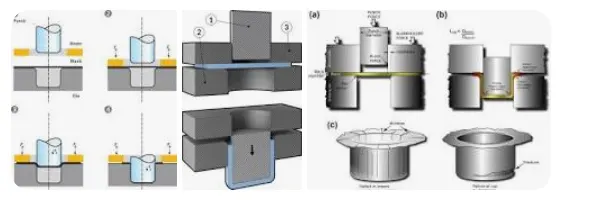
- Deep drawing is a manufacturing process that is used extensively in the forming of sheet metal into a cup or box-like structures. Pots and pans for cooking, containers, sinks, automobile parts, such as panels and gas tanks, are among a few of the items manufactured by sheet metal deep drawing.
-
A deep drawing of sheet metal is performed with a punch and die. The punch is the desired shape of the base of the part, once drawn. The die cavity matches the punch and is a little wider to allow for its passage, as well as clearance. For many calculations, the sheet metal thickness is assumed to remain constant. However, there are changes in thickness in certain areas, due to the forces involved.
2) Hemming-
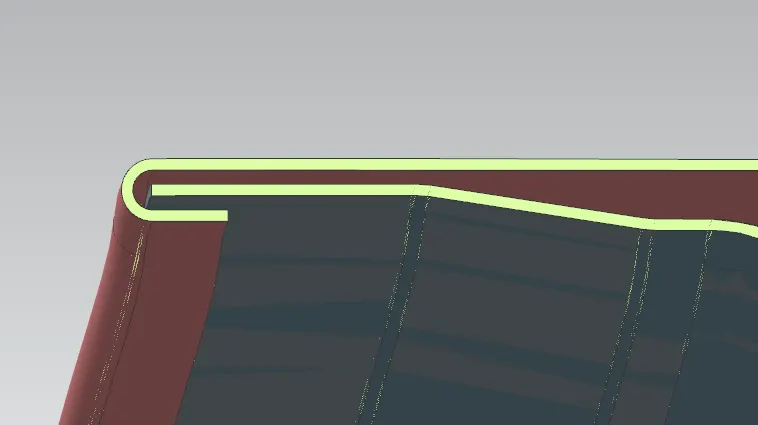
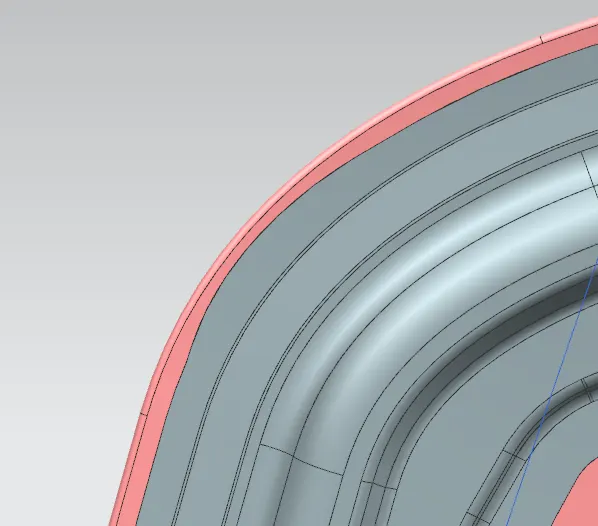
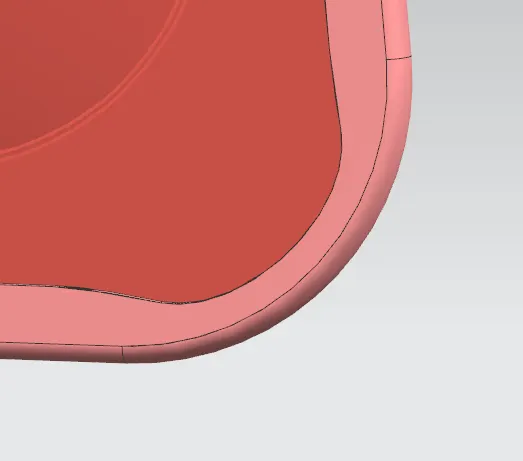
- Hemming is a sheet metal forming process in which sheets are joined by bending it usually to 180°. Automotive body panels and automotive parts such as deck-lids, trunk-lids, doors, hoods, and tailgates are formed by hemming processes.
- Roll hemming is carried out incrementally with a hemming roller. An industrial robot guides the hemming roller and forms the flange. Roll hemming operation can also be divided into several pre-hemming and final hemming process steps.
- If weld or bolts were used to join the hood panels then the design and the aerodynamic features would get damaged so hemming is more significant to use.
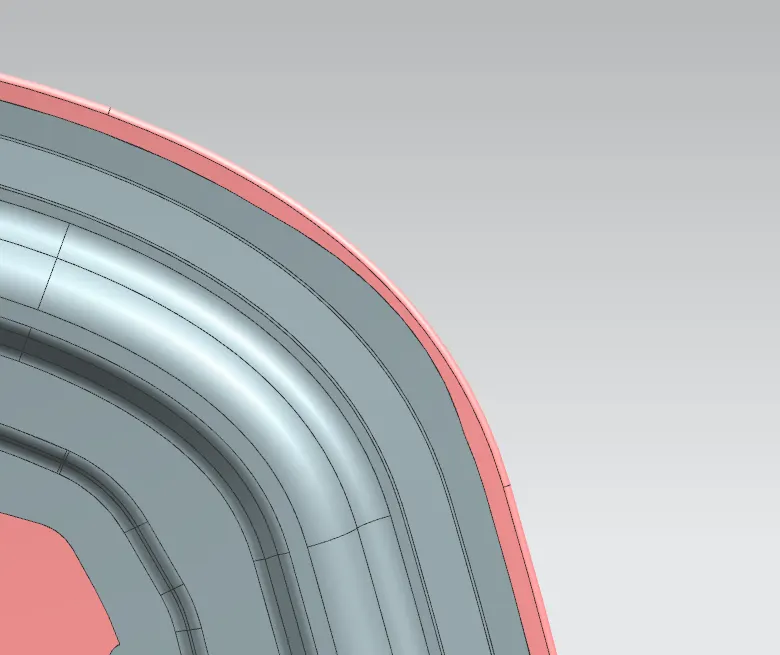
During the process, a relief angle is formed as a product of hem when attaining at the corner of the sheet metals
OTHER TECHNICAL TERMS
LATCH TRAJECTORY
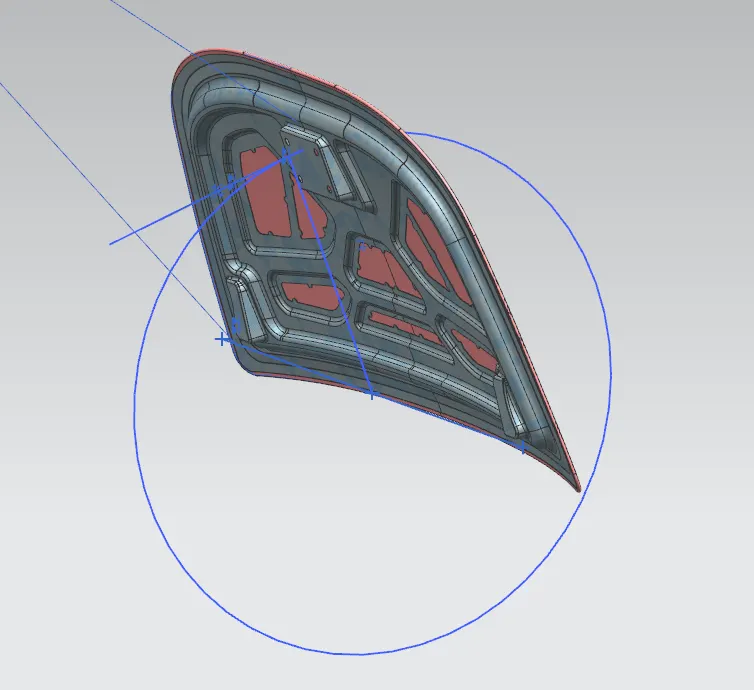
while opening or closing the hood, the latch must be perfectly aligned to the fixing or striker point. For that, the latches trajectory must be perpendicular to the hinge axis.
MASTIC DATA
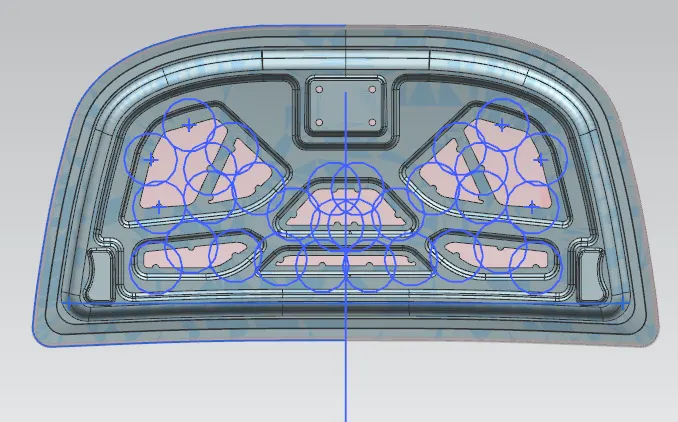
A mastic sealant data is used to fix or combine the hood outer panel and hood inner panel.
- A sealant has three basic functions: It fills a gap between two or more substrates; it forms a barrier through the physical properties of the sealant itself and by adhesion to the substrate; and, it maintains sealing properties for the expected lifetime, service conditions, and environments. The sealant performs these functions by way of correct formulation to achieve specific application and performance properties.
- These sealants also lower the vehicle's NVH levels.
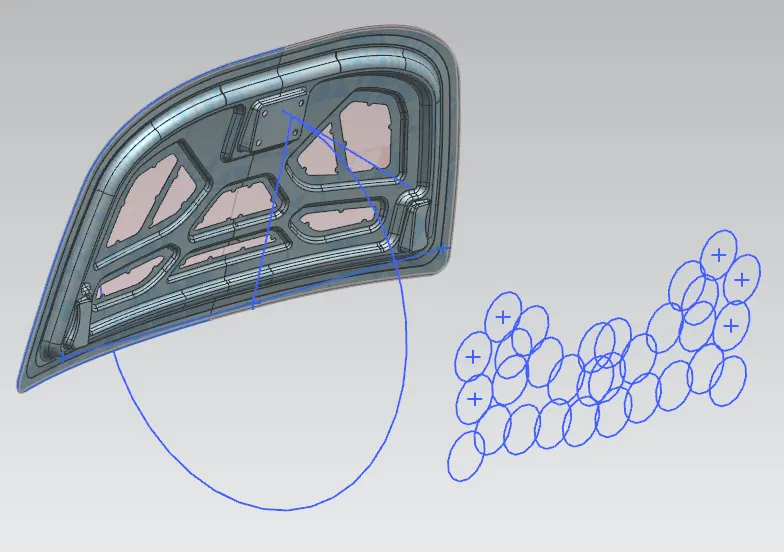
- mastic seals are typically of 10-15mm in diameter and can provide strength upto 80mm diametric circle
IMPACT FORCE DISTRIBUTION
the inner pannel of the hood is provided with such a design so as any force impacting from the front is directed towards the hinges and not completely crumple the frontal of the vehicle and thus protecting the driver's compartment.. This design consideration decreases the risk for the driver and the passenger in case of an impact. such design is provided usually in X or Y shapes.
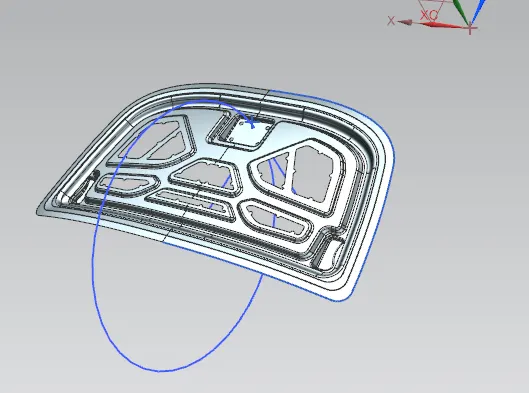
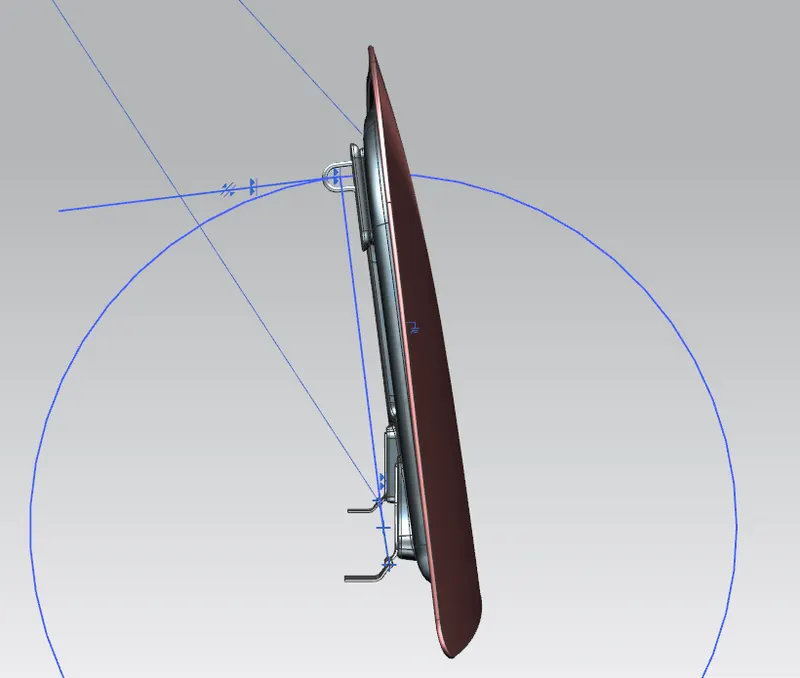
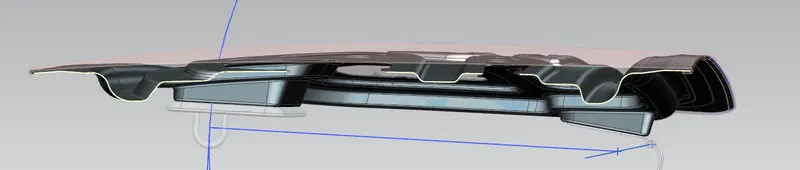
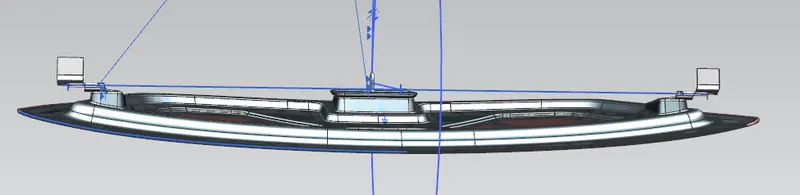
FINAL HOOD DESIGN
CONCLUSION
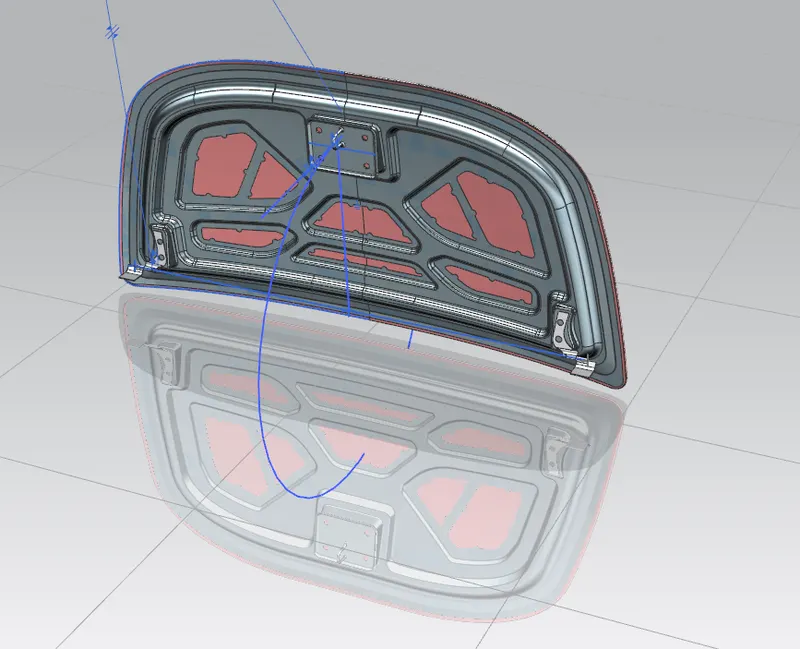
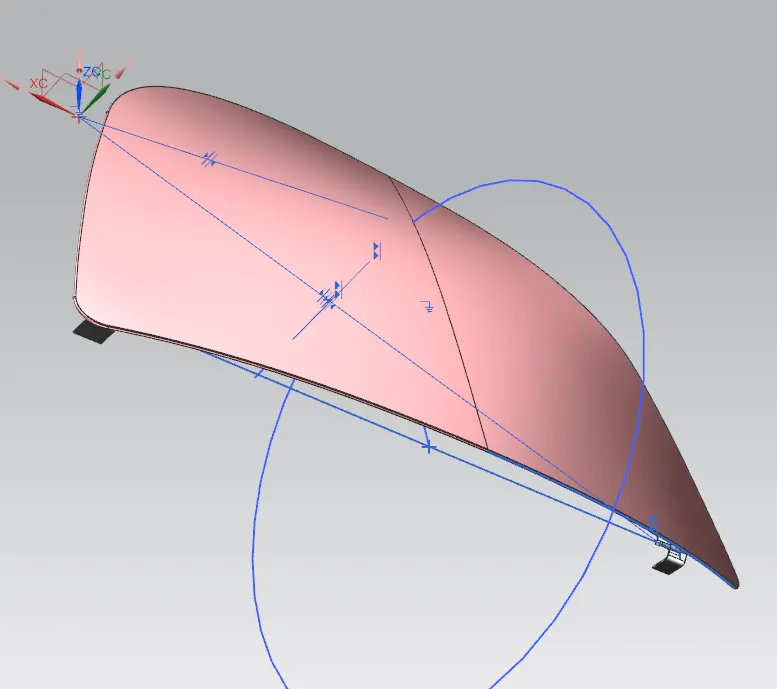
Hence the design of hood was finished with all the necessary contraints and considerations.