Hood design-Week 2
HOOD DESIGN
AIM:
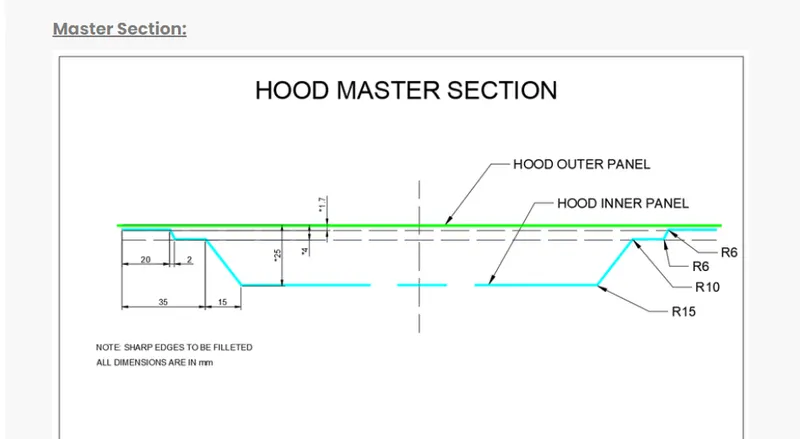
Design Hood Outer Panel, Inner Panel, and the necessary reinforcements by following the Master Section mentioned with the Design parameters
OBJECTIVE:
To understand the design strategy and consideration under designing and developing an automotive hood to achieve maximum safety for everyone in and around the vehicle.
DESIGN PARAMETERS:
Hood Thickness Information
- Outer Panel Thickness = 0.75mm
- Inner Panel Thickness = 0.75mm
- Reinforcement Thickness = 1.5mm
OUTER PANEL:
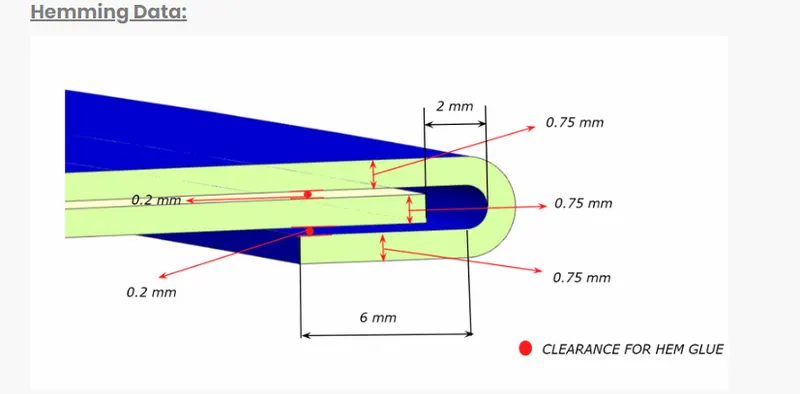
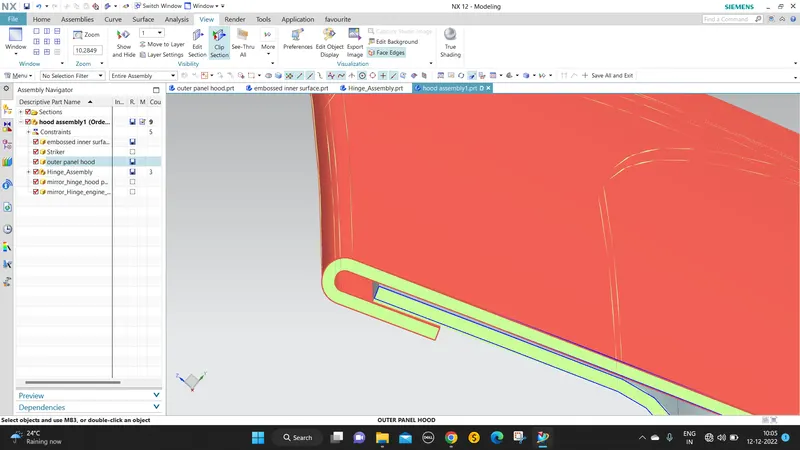
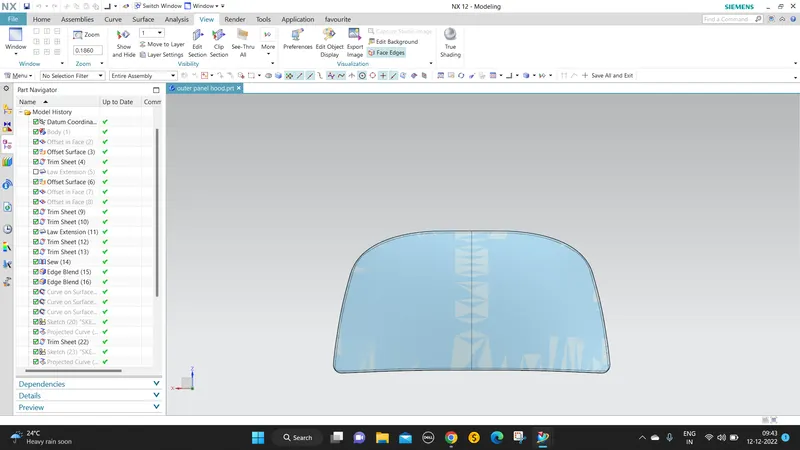
Outer panels are the aesthetic elements of a car. The outer panel covers the inner panel. The hood's shape, position, and size should satisfy the safety norms. The outer panel is attached to the inner panel by hemming. So, it is necessary to provide the required hemming flange and reliefs for the hemming operation. We also offer mastic sealants between the outer panel and inner panel to reduce vibration.
INNER PANEL:
the inner panel gives strength and rigidity to the outer panel.
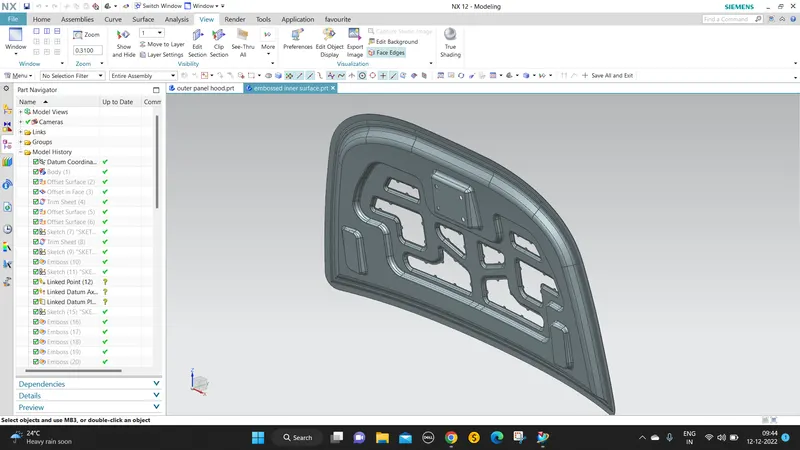
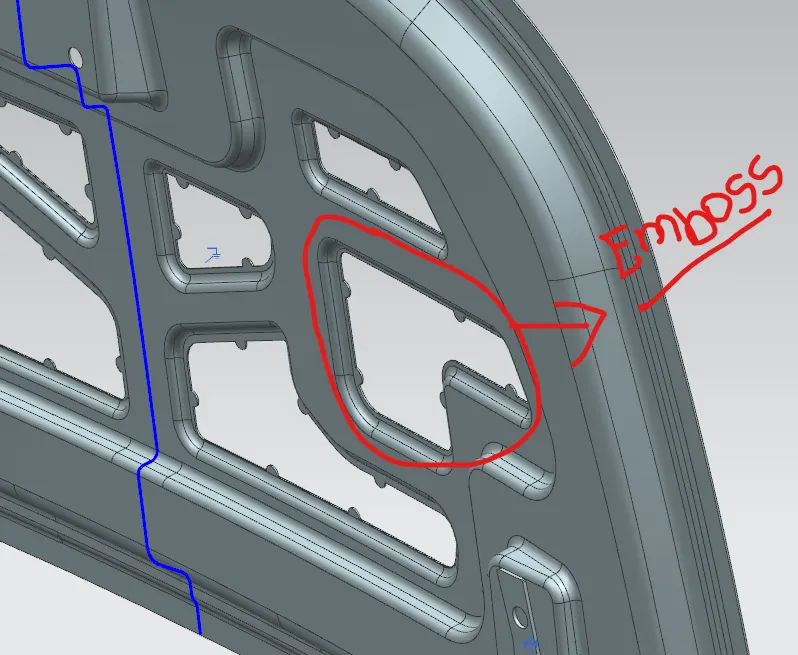
The master section represents the initial embossed shape and size.
Then we provide the emboss for the latch and hinge elements after fixing the location.
Reinforcement:
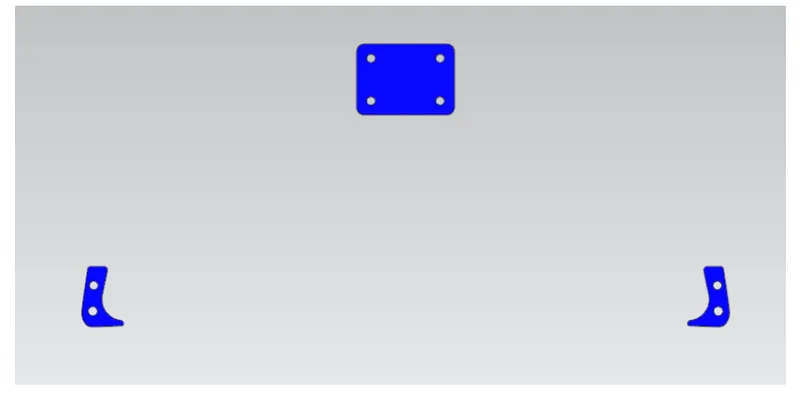
It is provided according to the design requirements. Mainly it is provided at the hinge and latch regions to improve the strength locally. Usually, the thickness of reinforcements will be higher than that of the inner panels and the value varies according to cost and requirement. According to the design requirement here, it is given 1.5mm thickness to both hinge and latch reinforcements.
ASSEMBLY:
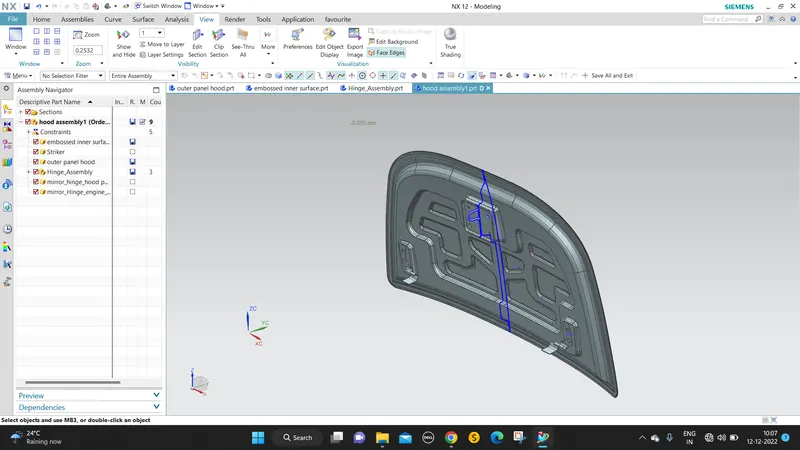
the outer panel, inner panel, latch, and hinge assembly are assembled together.
Latch Trajectory:
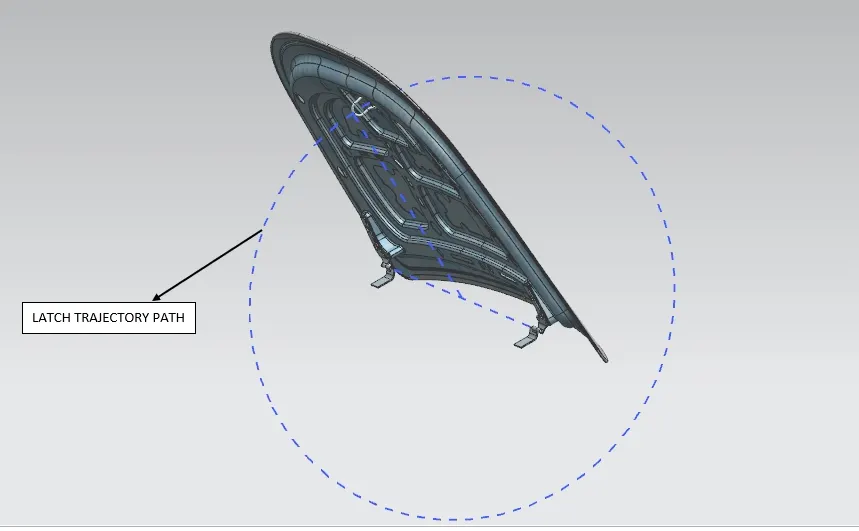
While assembling the latch with the hood panel it is strictly recommended that the position of the latch striker should be placed such that the latch striker exactly fit into the lock hole in the engine compartment. Keeping this in mind, the latch striker is placed on the inner hood panel using a latch trajectory path. This path is created using the hinge axis taken as a reference to draw a big trajectory path.
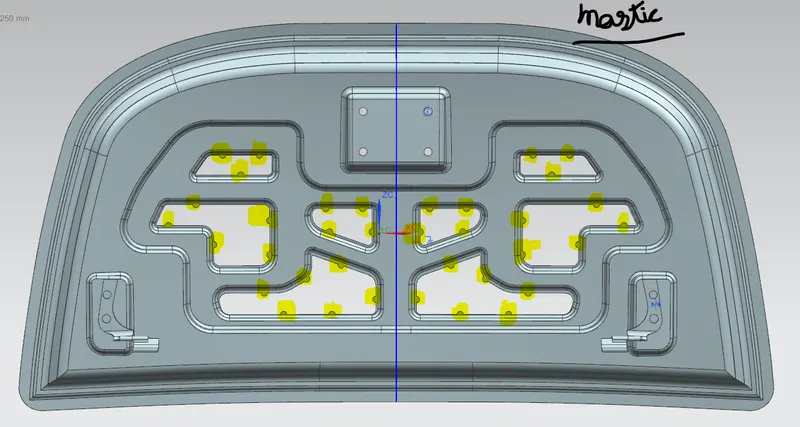
Mastic Data:
- Mastic seals are used as a bond between the outer and lower panels.
- It improves the stiffness of the area.
- It also plays a vital role to reduce NVH.
- Mastic sealants are elastic compounds that behave like rubber.
- The mastic points are arranged in such a way that covers the area away from the hemming which are more vulnerable to vibrate.
- Every mastic sealant point has a tendency to provide local strength around 80 mm in diameter.
Emboss Definitions:
The embossed surface plays an important role in the car hood panel while crashing or accident of car Because during the collision, the hood is the most affected part which sustains all the impact forces while crashing.
most of the impact forces are direct flows in the direction of collision & thus can harm the driver sitting under the car. To overcome this problem generally, V or Y-shaped embosses are given in the inner hood panel.
so that, the impact forces coming in the direction of collision are diverted toward the corner point of the hood & the driver couldn't be harmed.
Deep-Drawing:
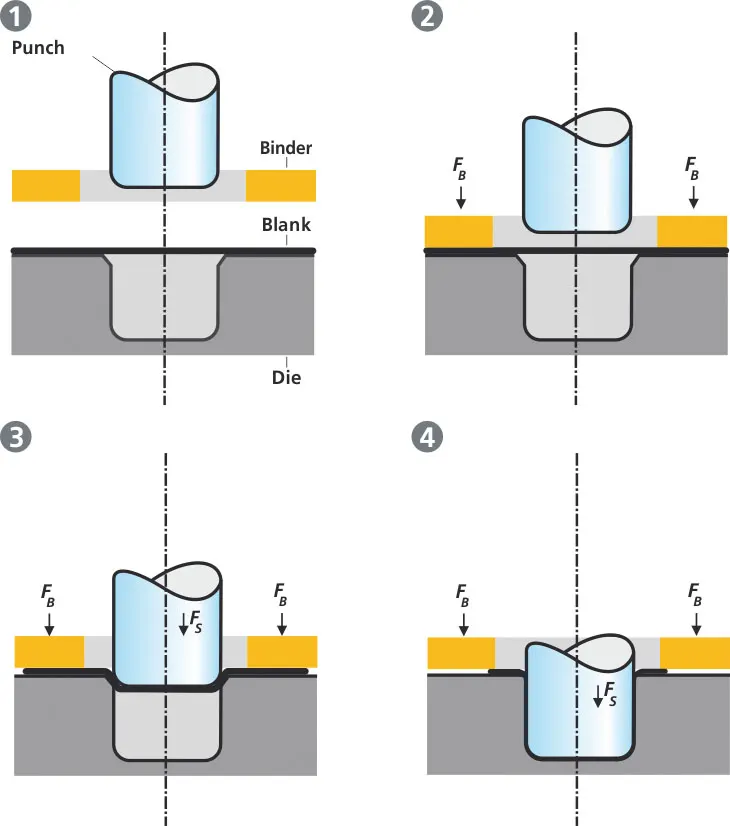
It is a shape transformation process with material retention.
Deep drawing is a sheet metal forming process in which a sheet metal blank is radially drawn into a forming die by the mechanical action of a punch.
Hemming:
In hood design, hemming is used to cover or closed the hood's inner panel.
Hemming is the process in which the edge is rolled flush to itself, while a seam joins the edges of two materials.