Hood design-Week 2
DESIGN OF HOOD
OBJECTIVE - Design Hood outer panel, inner panel and the necessary reinforcements by following the Master section mentioned with the design parameter .
INTRODUCTION-
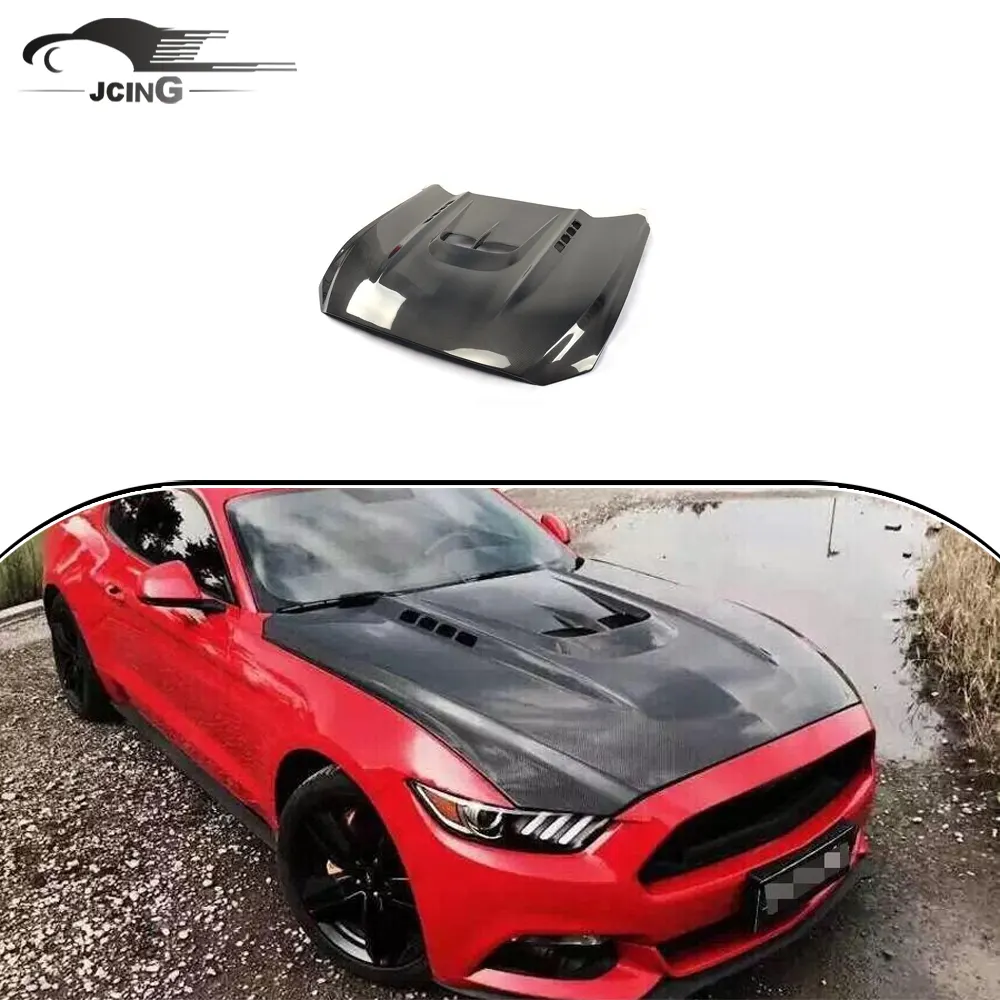
The hood is the hinged cover that covers the engine in a front engine vehicle whereas it acts as a door for the front trunk in a rear engine vehicle . hood can open up to allow access to the engine compartment . hood is an important component of a vehicle considering the frontal crash and pedestrian safety requirement . the hood design also affects the overall aerodynamics of the car .the hood consist of outerpanel , innerpanel , stryker and hinge , their reinforcements . the outerpanel functions as a metal cover , while the inner panel provides overall strength to the component .
DESIGN CONSIDERATIONS -
1. Head clearance zone -
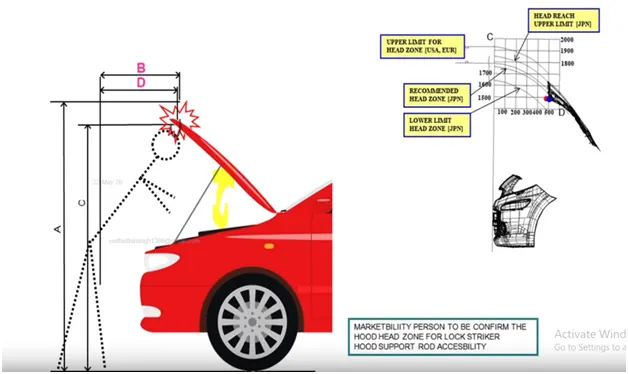
Head clearance zone is the clearance such that when the hood is in fully open condition it does not hurt the head of the person that is standing next to the hood . this is controlled by the opening angle of the hood . the opening angle of the hood is decided for the region the car is manufactured . some region may have people with average height of 5.5 ft and another region may have people with average height of 6 ft . so deciding the right opening angle for the hood is an important criteria. .
A hood stay is an device which is used to keep the hood in an open position . there are two types of hood stays which are given below -
- Support rod -
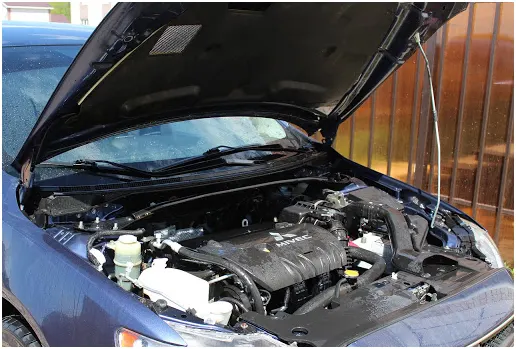
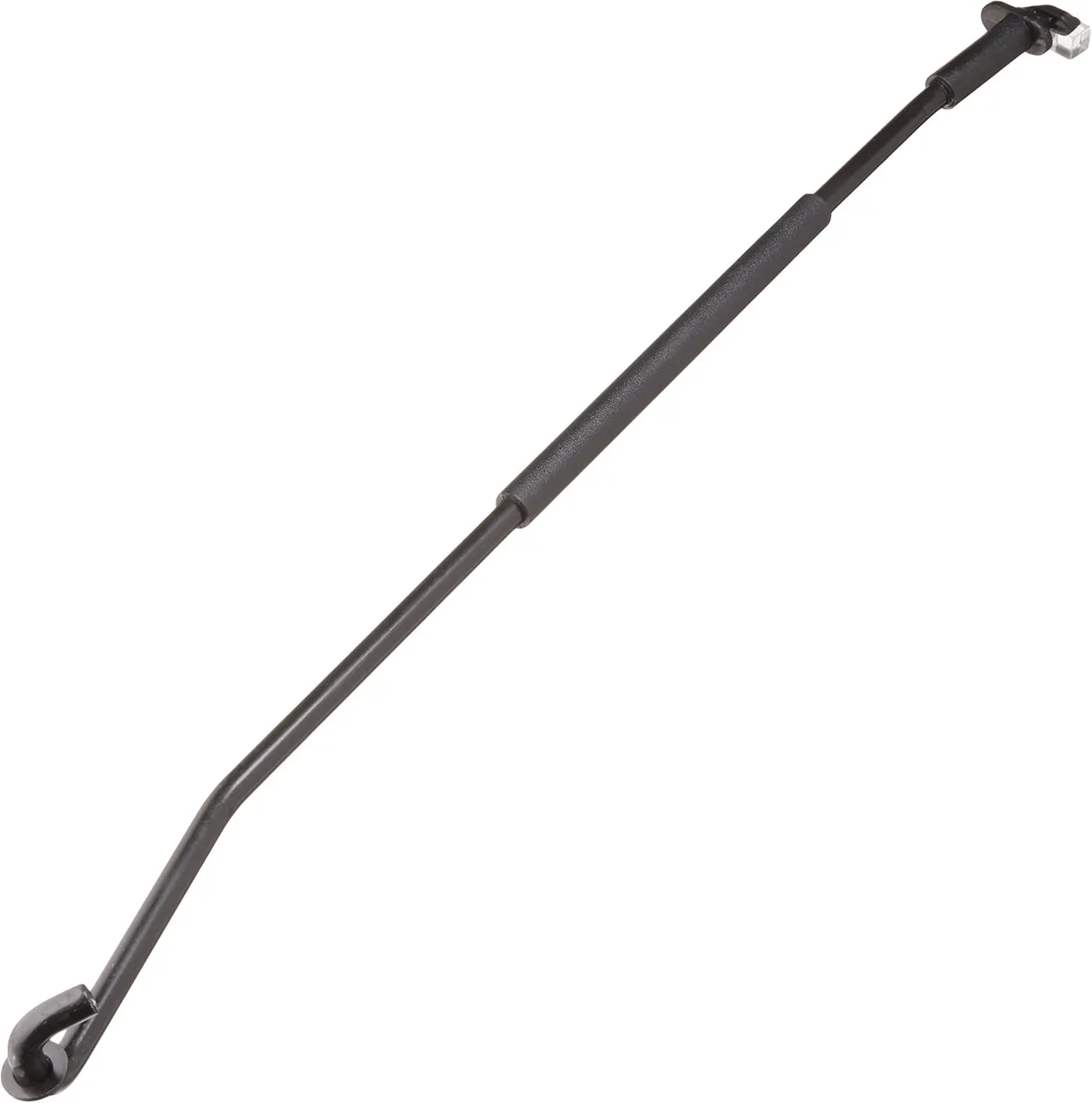
Support rod is usually inside the engine compartment , when we open the hood and keep it in open condition , one end of the support rod attaches to the hood and supports it . this support rod has to be fixed manually onto the hood . design of support rod is not linear but it should have some bends to increase the rigidity and strength of the rod . the support rod shoud be mounted such that it does not collided with other parts , also the support rod should be mounted on opposite side of battery to avoid interference with each other .
- Gas stay -
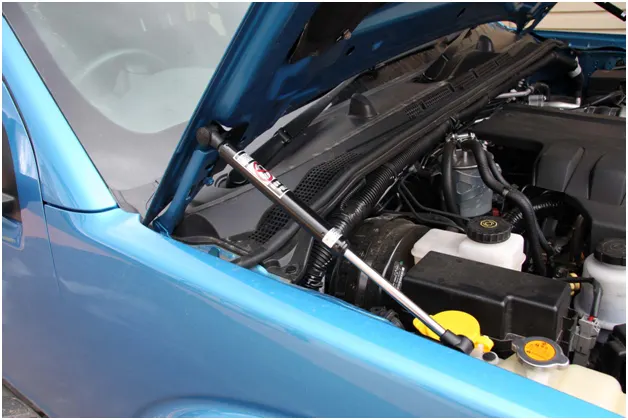
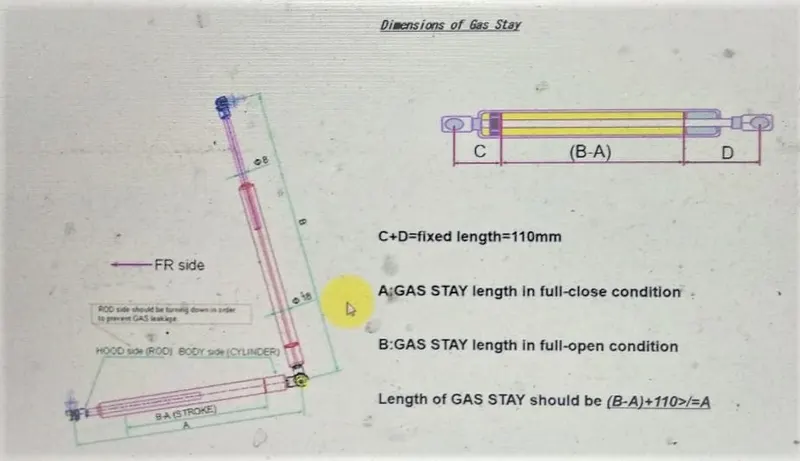
A gas stay is used to open the hood , keep it in a opened state and then closing the hood . this is a automatic process , that is the gas stay uses an actuator to open and close the hood . one side of gas stay is mounted on body side and other side is mounted on the hood . gas stay for the front hood are mainly used in high end performance cars .
2. Noise Vibration Harshness (NVH) -
NVH plays an important role in car design . the noise and vibration produced by the car should be minimized. in the hood , to avoid vibrations stiffner pads are provided . mastic sealants also reduce the nvh . stiffnerpads and mastic are added between inner and outer panel of the hood .
3. Pedestrian safety -
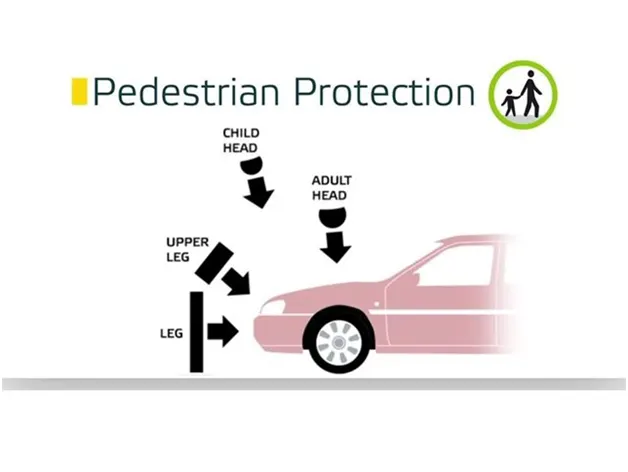
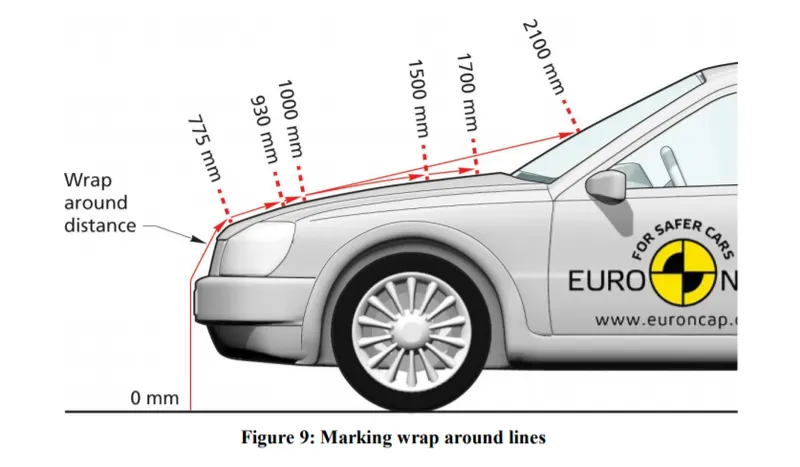
Pedestrian safety is also another important factor that is to be considered while designing a hood .EURO NCAP (New Car assesement programme ) has devised some regulations . It carries out test on the car to check if it passes those regulations.
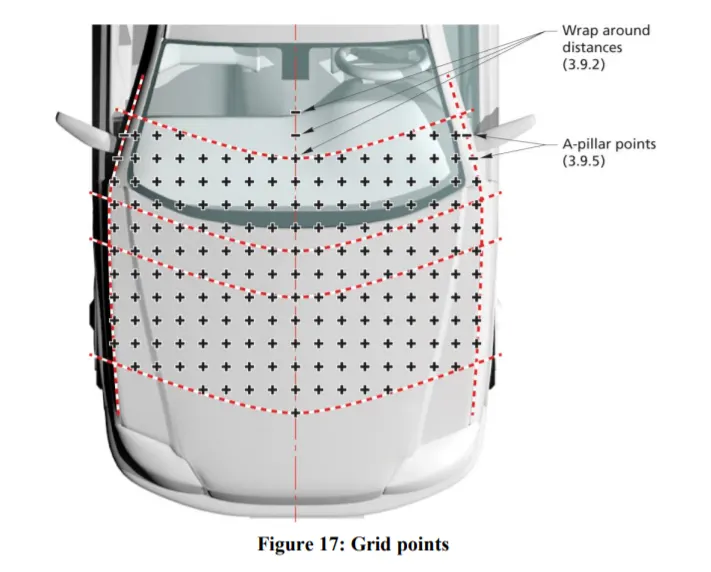
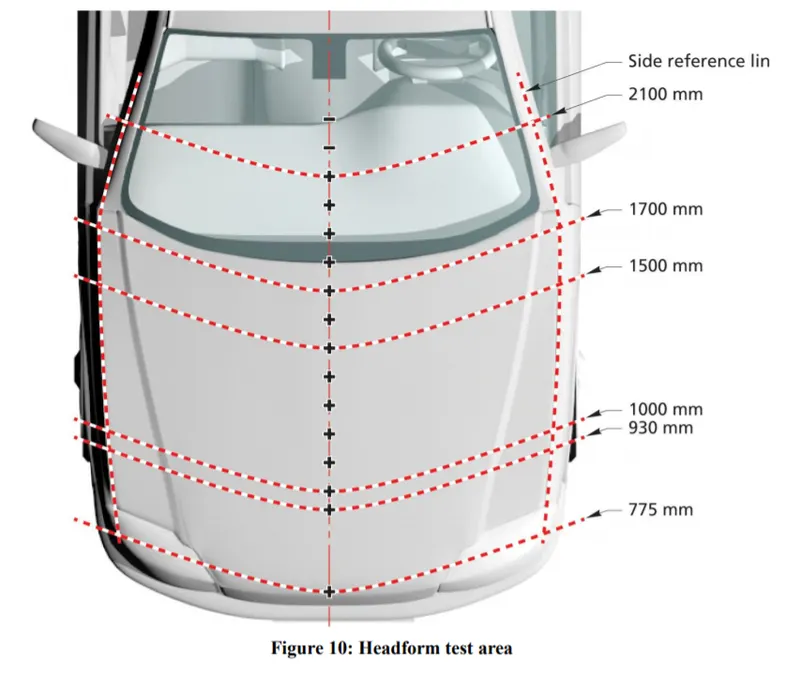
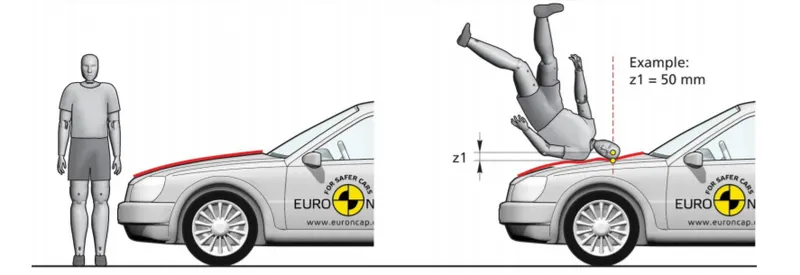
So , in the above image it can be seen that there are some points marked on the hood of the car , so this are the regions of head impact area of a pedestrian on the hood of car . if the pedestrian gets hit very badly , he may cause a very terrible or a fatal concussion on head , this can even lead to the pedestrians demise . so our hood is designed in a way such that it has some cutouts on structure of inner panel of hood where there is high possibilty of pedestrian head hitting on the hood .
DESIGN PROCEDURE -
1 - Outer panel -
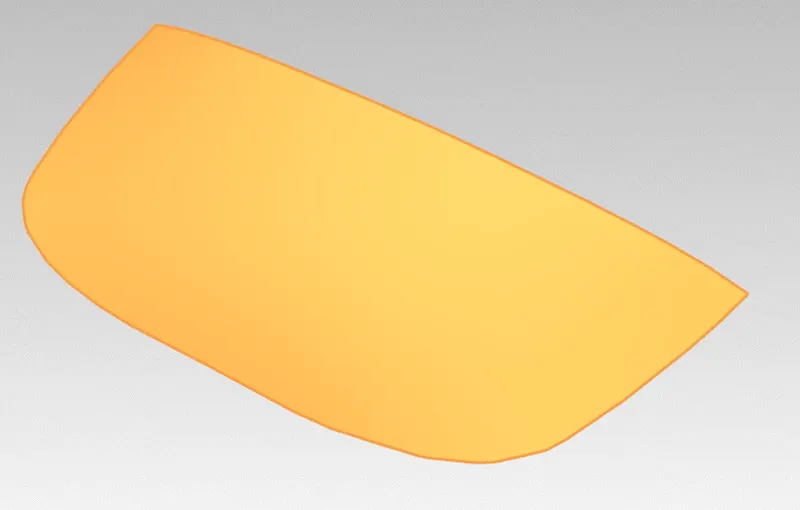
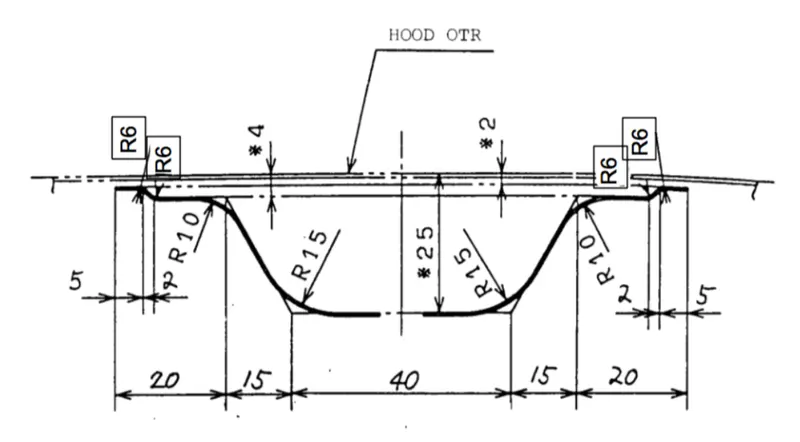
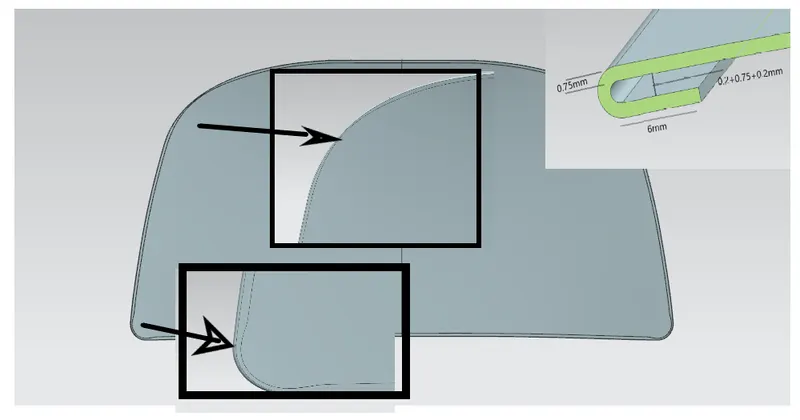
We receive the outer panel skin as our input and a master section .so we create outer panel with a thickness of 0.75mm and with hemming length of 6mm and providing corner reliefs on the corners of panel .
2 - Inner panel -
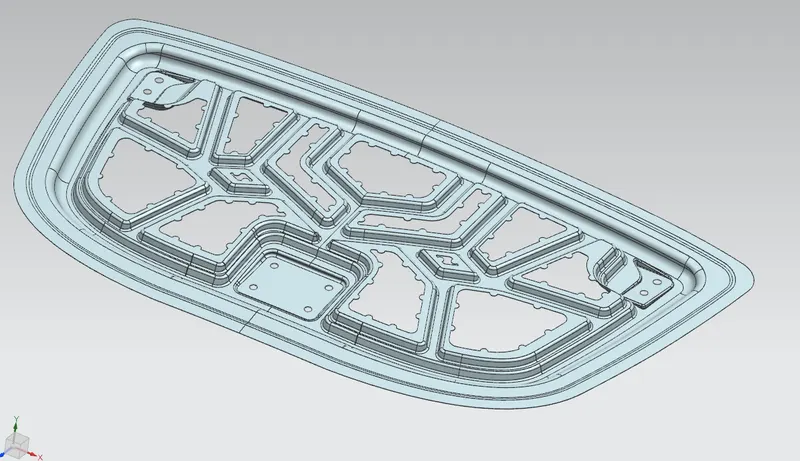
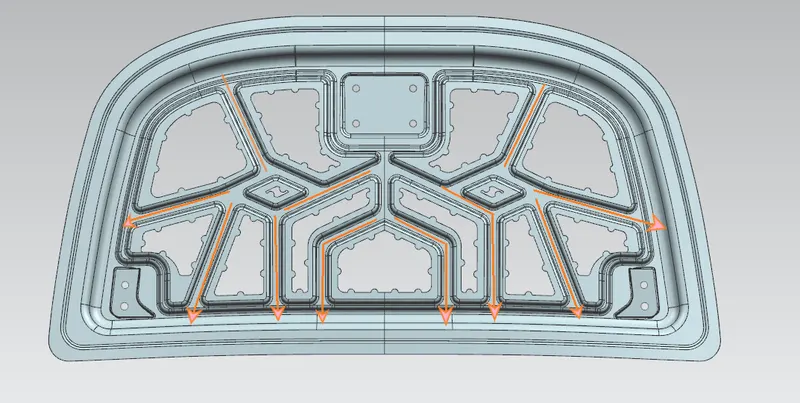
The inner panel is created with the help of master section provided . we then create emboss on it . this emboss is created to increase the strength of part . the embosses are created such that the forces move towards the hinge or outside of panel . the inner panel thickness is kept as 0.75mm . the cutouts in panel are created such that it makes the panel light weight also it makes the panel cause less damage to pedestrian in case of accident .
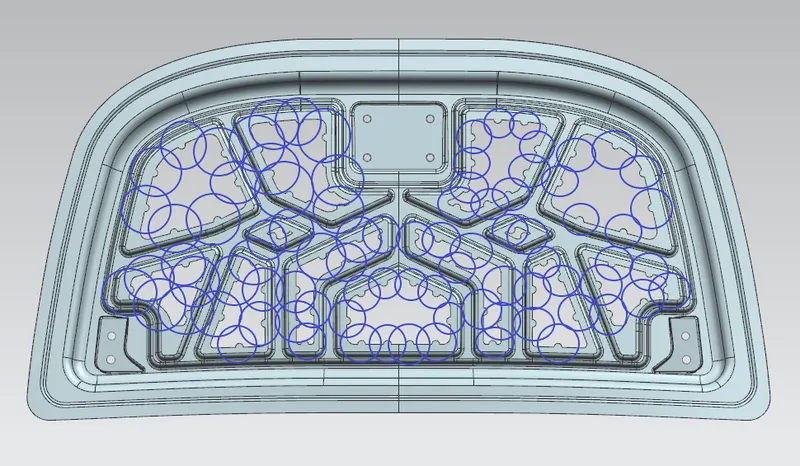
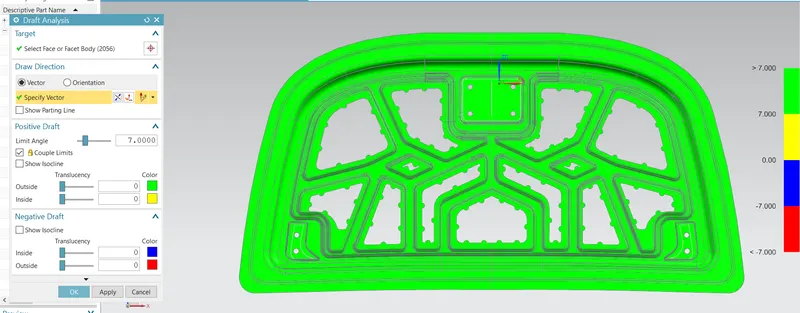
provisions are made on the inner panel for the application mastic sealants so that it acn be joined to the outer panel . also below is the draft analysis done on the inner panel . draft analysis is done to check whether the part can form in the tooling direction . as our part is green in colour , which means it clears in the tooling direction .
3 - Hinge and latch -
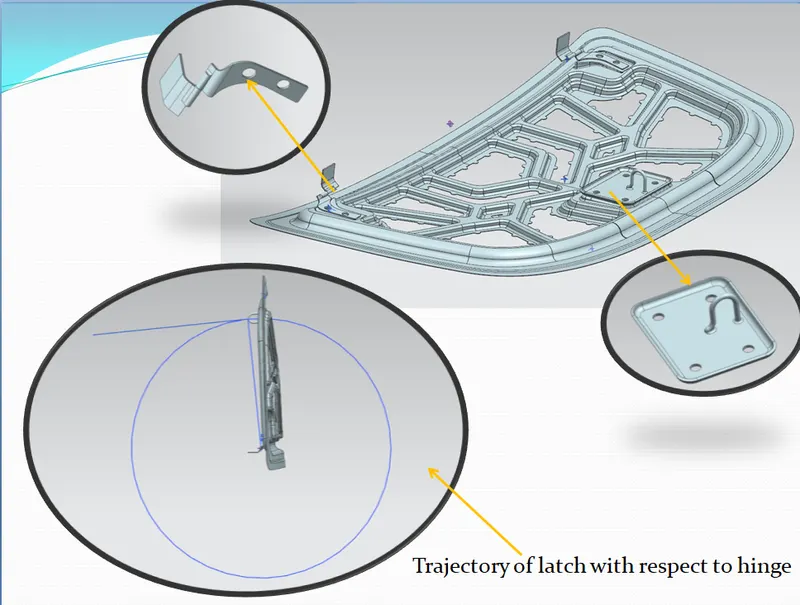
The hinge and latch is then assembled to the inner panel . first the hinge is assembled on the emboss then with create a trajectory for the latch with respect to the axis of hinge .the line which is originated from tip of latch has to be tangent to the circle . after determining trajectory we will assemble the hinge onto the inner panel .
4 - Hinge and latch reinforcements -
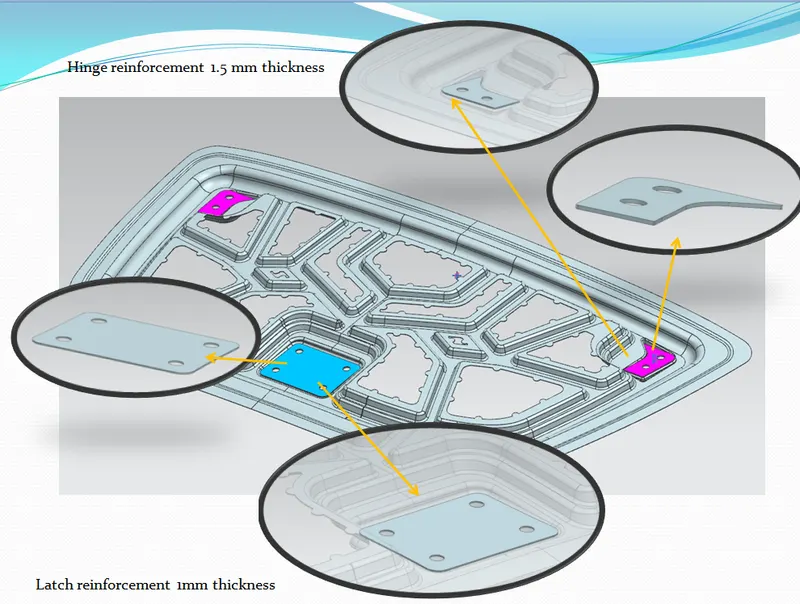
we create reinforcements for hinge and latch . the reinforcement for hinge will be 1.5mm and for latch it will be 1mm thickness .this reinforcements are created to give support to the hinge and latch .
5 - Full assembly -
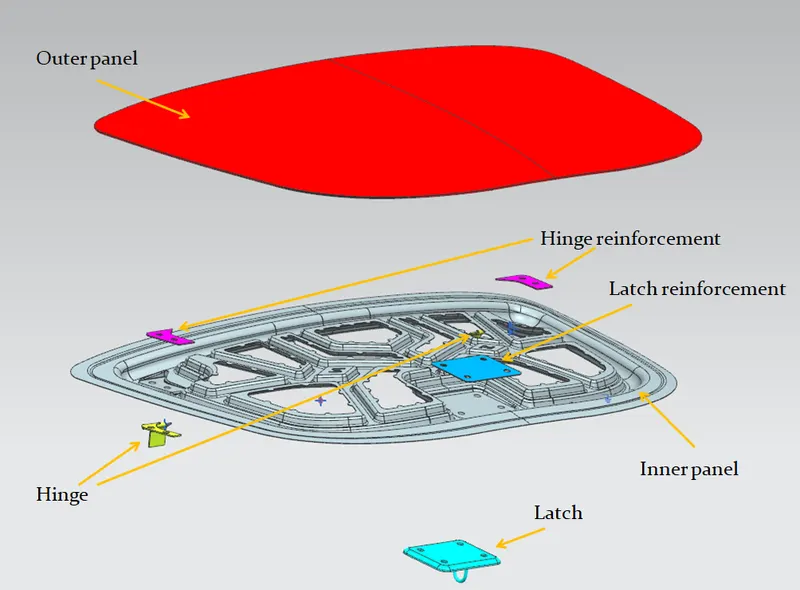
MANUFACTURING METHOD -
1 . Material -
Hood outerpanel and inner panel is made of steel , aluminium , or carbonfibre .
2 . Blanking -
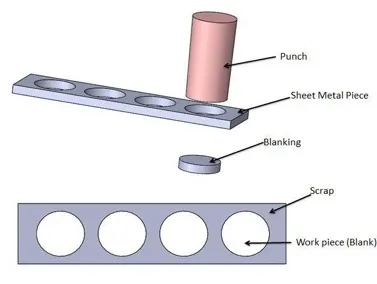
Blanking is a shearing process in which a punch and a die is used to produce parts from the sheet metal . blanking produces the outside feature of the component .
3. Deep drawing -
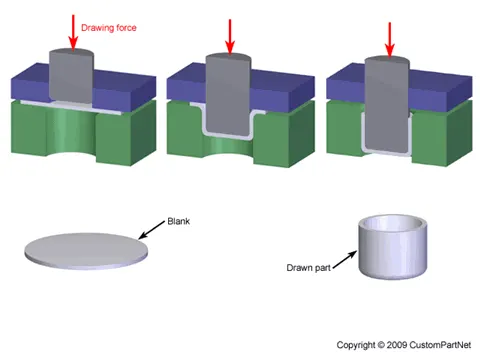
Deep drawing is most widely used process in automobile industry . this process occurs under a combination of tensile and compressive conditions . a flat sheet metal blank is formed into a hollow body in deep drawing process .
4 . Trimming -
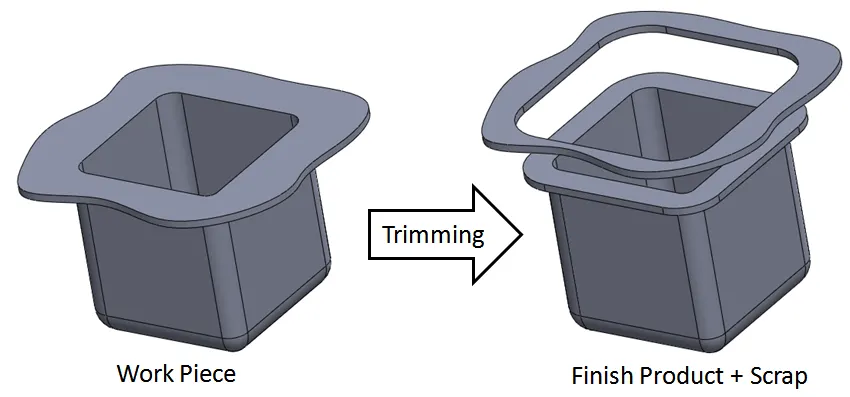
In this process , the excess material which is not required is removed .
5 . Hemming -
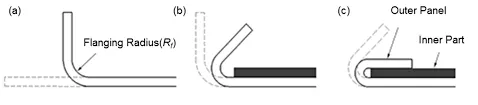
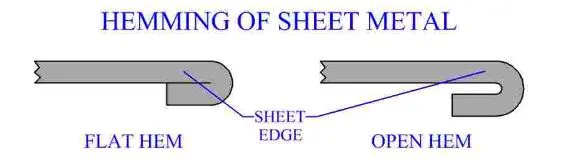
Hemming is the metal working process in which sheet metal edge is rolled onto itself . hems are used to reinforce the edge, hide burrs and rough edges and imprrove apperance . there are two types of hems open loop hem and closed loop hem . open loop hems have a flush while the closed loop hem are closed with no gap between them . the process of hem starts by bending the flange to acute angle and then a flattening die is used to flatten the hem .
CONCLUSION -
We have designed the outer panel and inner panel following the mastersection and the skin provided to us . we have also created reinforcements for the hinge and latch .