Hood design-Week 2
HOOD DESIGN- CHALLANGE
OBJECTIVE: The aim is to design components of the hood / bonnet of a car and assemble them together.
Introduction :-
Hood is main component of a car at the front portion It is used to decorate the car & add luxurious look. The shape of the bonnet is made aerodynamic in order to minimize the air effect.
A car hood also referred to as a bonnet in some other countries is the hinged cover that rests over the engine of a front engine vehicle. its purpose is to provide access to the engine for repair and maintence. Car hoods are typically aonstructed from steel and sometimes from aluminum.
HOOD DESIGN CONSIDERATION:-
The hood of a car is considered as the frontal BIW enclosure component. Bonnets are designed to reduce air resistance as the air flow around the car. Apart from this,bonnets are also designed to meet several other requirements. They serve a great deal of purpose in protecting the passengers inside the car & the pedestrains in the event of an accident. It also acts as the cover for the engine.
Types of hoods support:
There are two types of support avaliable for the hood support
1.Gas Stay
2.Support Rod
Gas stay:
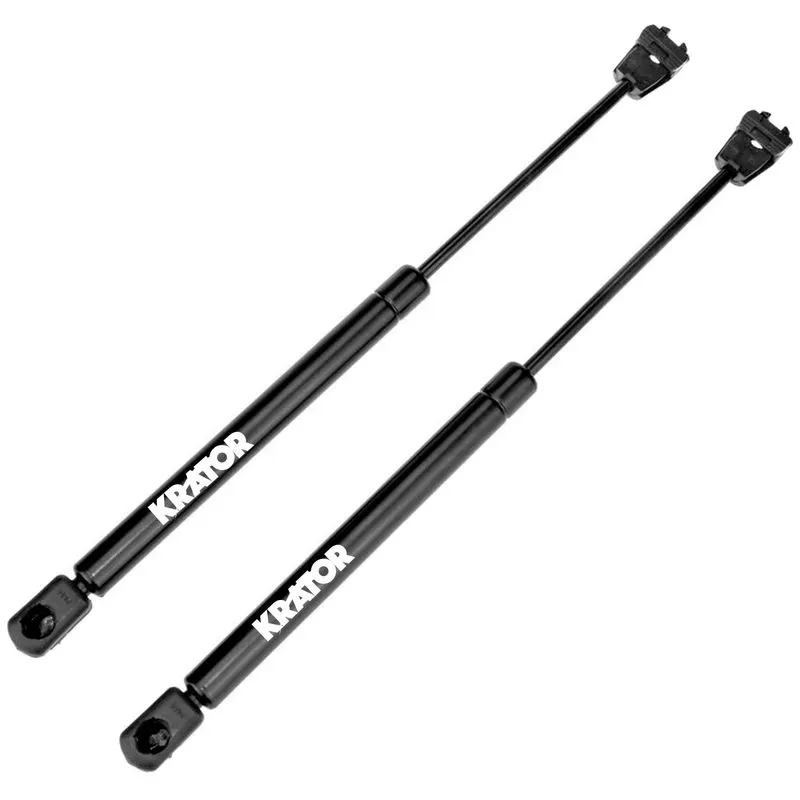
Gas stay is the device for supporting the engine hood of a motor vehicle in its open positing using an actuator activated by gas. This is mainly used when the car hood is heavy. In this, no men's power is required. Spring satys are designed to be used on upwards lifting doors, once the doors, once the door is open slightly, the spring will push the entrance to the fully open position. Euro fits stock various size springs depending on the door size requirement.
Support Rod:
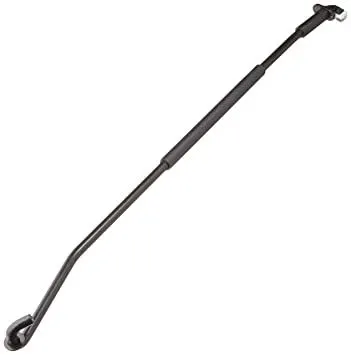 A support rod is a device for supporting the engine hood of a car in its open position using a rod. This is mainly used where the car bonnet weight is negligble. we have to lift the hood ourselves and place the support provided either in the hood or the engine component.
Car Hood has the following components:
1. Outer Panel
2. Inner Panel
3. Striker and Hinge asm Reinforcement
4. Hood Support
5. Mastic's
Car Hood Components:
Outer Panel:
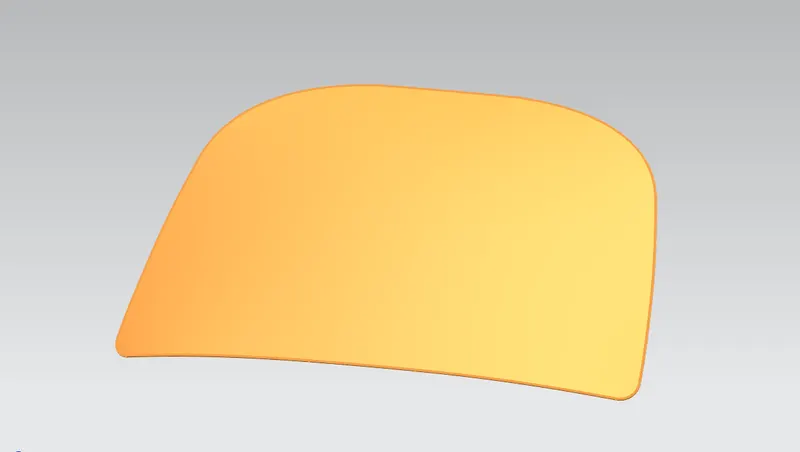
Outer Panel is the most important part of the hood to makes the car in a very good aesthetic proportion. So that the outer panel is perfectly made insense to achieve the aesthetic requirement. So that the sheet metal opertion result which is visible on the outer panel or it reduces the aesthatic values means, those opertions are strictly not to be followed to make the outer panel. That's why the hemming process is used to join the outer panel with the inner panel, instead of using welding methods.
By considering the given outer panel thickness (0.75mm) and using the outer panle styling surface the outer panel has been made as below.
Inner Panel:
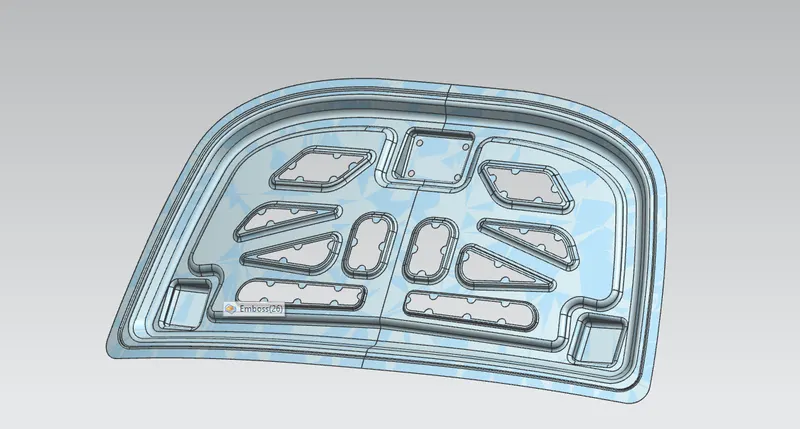
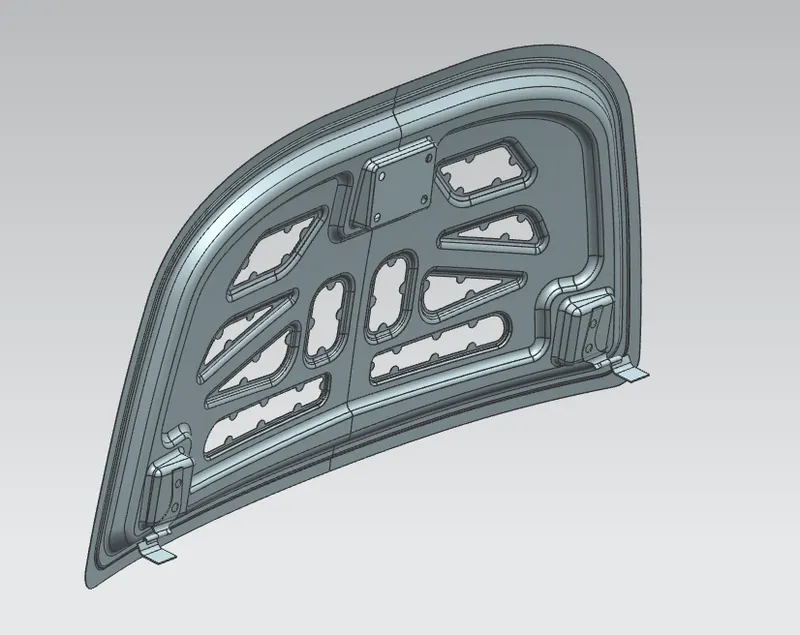
Inner Panel is the major part that ensures the rigidity of the hood and it is used to diverts the impact to outwards of the hood however possible when the collision occurs. It is can be achived by the good inner panel design and the emboss direction in the inner panel
Lot of design changes and researches are done and being carried out in the inner panel only to achieve the pedestrain safety and the passenger saftey to make the standards.
Striker and Hinge asm Reinforcement
The striker and Hinges are attached at the lower side of the inner panel. It can be done by directly then more stress can act at particular area in the inner panel, it may causes deformation of the inner panel at that particular region. So that the reinforcement comes in and placed between the striker and the hood, hinge and the hood . It can be able to reduce to deformation and strengthening the inner panel at the particular region.
Striker - Latch
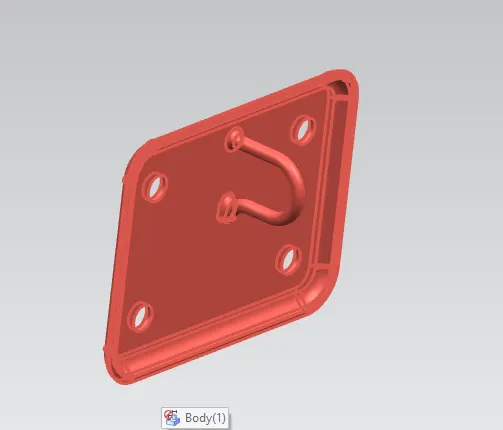
Striker is the part which is used to hold the hood with the engine compartment by using tha latch which it is attached in the engine compartment, when the hood not require to open up. The striket is attached to the bottom of the inner panel and it hits the latch and locked with it, when the hood is dropped down.
There is lever which is provided inside the cabin to the driver to release the latch pressure. Once it can be done, the hood will open ups in a inch, then we can able to open the hood more.
Hinge Assembly:
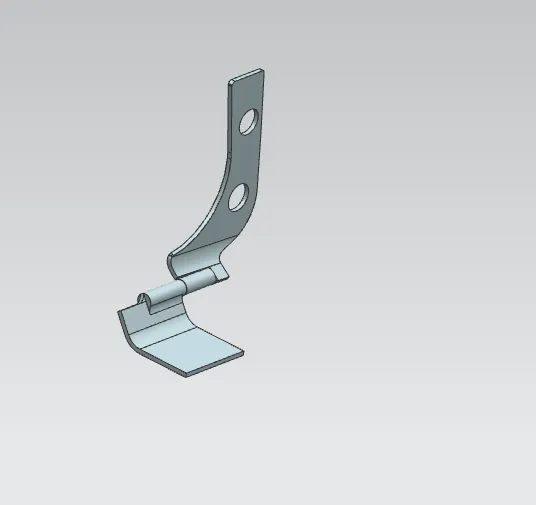
It is used to fix the hood to the engine compartment.
For any component has to be open and close with an axis, then hinge plays a major role. It has two simple parts( one is hood side hinge, another one is engine compartment side hinge ) and assembled with the single axis
Hinge assembly is attached at the each outwards end of the hood and the engine compartment.
Sheet metal operations:
Blanking & Piercing: Blanking and piercing are shearing processes in which a punch and die are used to produce parts from coil or sheet stock. Blanking produces the out side features of the component, while piercing produces internal holes or shapes. The web is created after muliple components have been produced and is considered scrap material. The slugs produced by piercing and punching can be used interchangeably.
Deep Drawing: Deep drawing is a sheet metal forming process in which a sheet metal blank is radially drawn into a forming die by the mechanical action of a punch. It is thus a shape transformation process with material rentention. The process is considered " deep" drawing when the depth of the drawn part exceeds its diameter.
Embossing: Sheet metal embossing is a stambing process for producing raised or sunken designs or relief in sheet metal. This process can be means of matched male and female roller dies, or by passing sheet or a strip of metal between rolls of the desired patteren.
Hemming: Hemming is a forming operation in which the edges of the sheet are folded or folded over another part in order to achieve a tight fit. Normally hemming opertaions are used to connect parts together, to improve the apprence of a part and to reinforce part edges.
Mastic Points: These are the spots where the inner panel and the outer panel of hood are joined or can say sealed together using a mastic glue. To fix the outer panel, if process lie bolting, riveting or welding is used, it will lose all its aesthetics. So, mastic sealant is used which is elastic compound and acys like rubber. It is placed between both the panels. Intially it is in paste form and after hot furnace bath it gets solidify and gives strength to the panels together. One spot normally has influence over diameter of 80 mm.
Conclusion : Finally, the hood design has been completed by considering the criteria dimensions, procedures and standards. By the process of this design, have learnt about the hood mountings, sheet metal operations like hemming, embossing, deep drawing, piercing,pedestrain safety and ts ratings.