Hood design-Week 2
The intent of the project is to learn the design idea behind the development of automobile hoods and the overall hood assembly.
What is a hood?
A car hood also referred to as a bonnet in some other countries is the hinged cover that rests over the engine of a front-engine vehicle. Its purpose is to provide access to the engine for repair and maintenance. Hoods are usually made from the same material as the rest of the body. This can be steel, aluminum, fiberglass, or carbon fiber.
The bonnet is designed in such a way that it reduces air resistance, provides a structurally protective cover to the underbody components, and provides attractive looks to convince the customer to buy.
Parts:
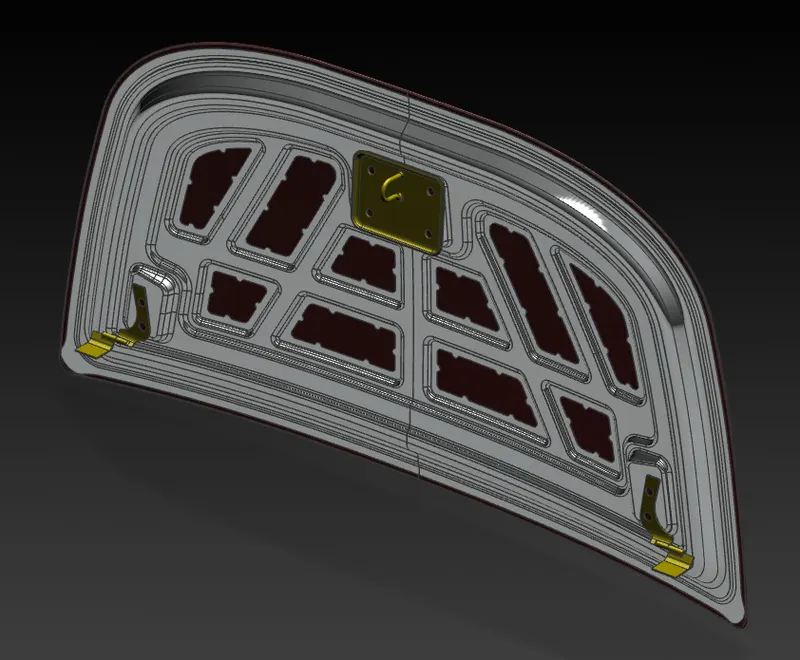
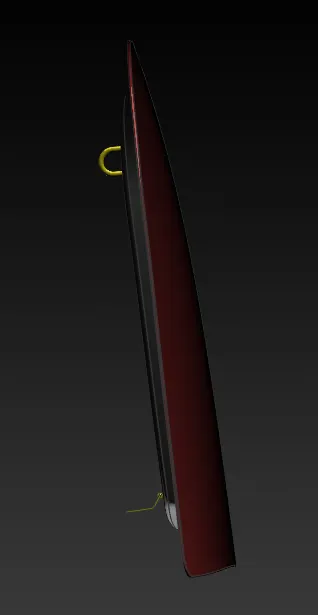
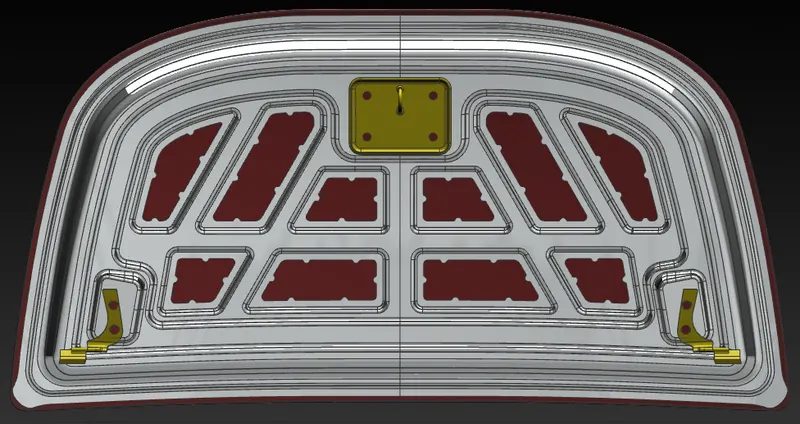
1. Hood inner panel
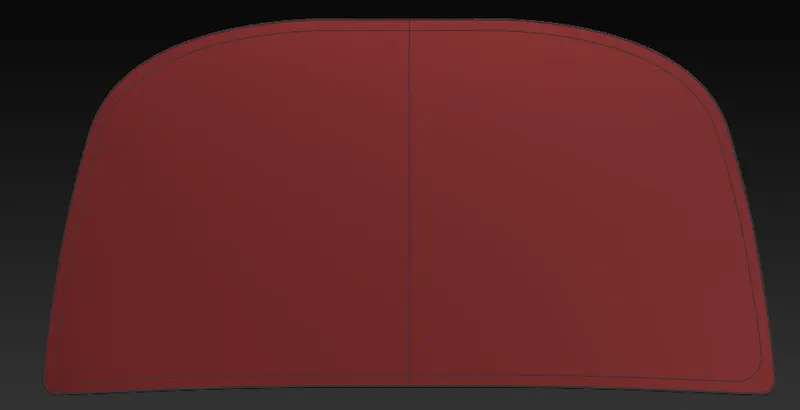
2. Hood outer panel
3. Striker
4. Hinge support
5. Support rod/ gas stay
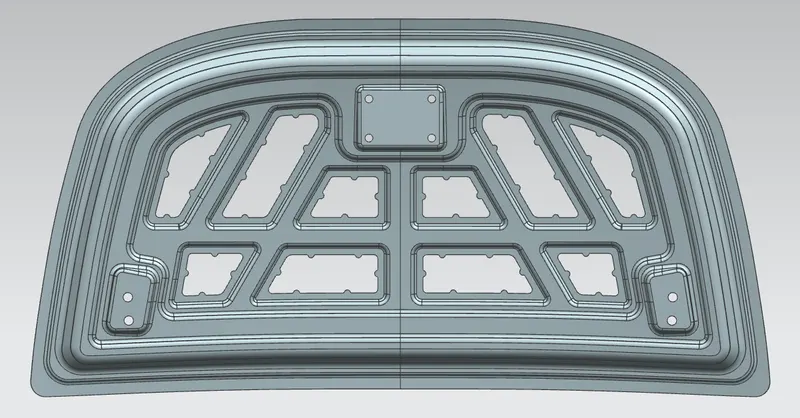
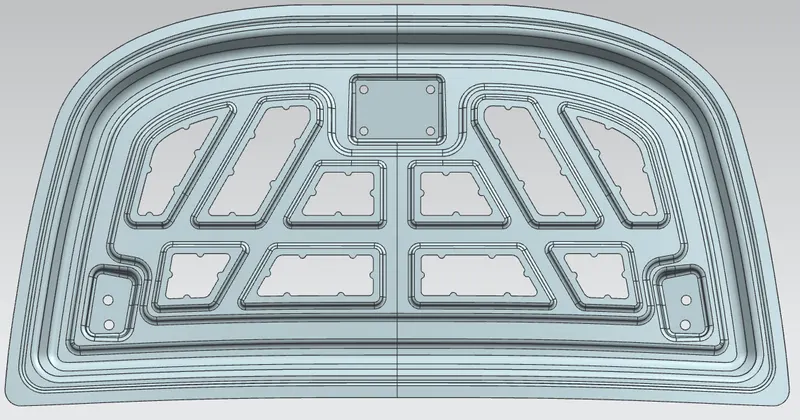
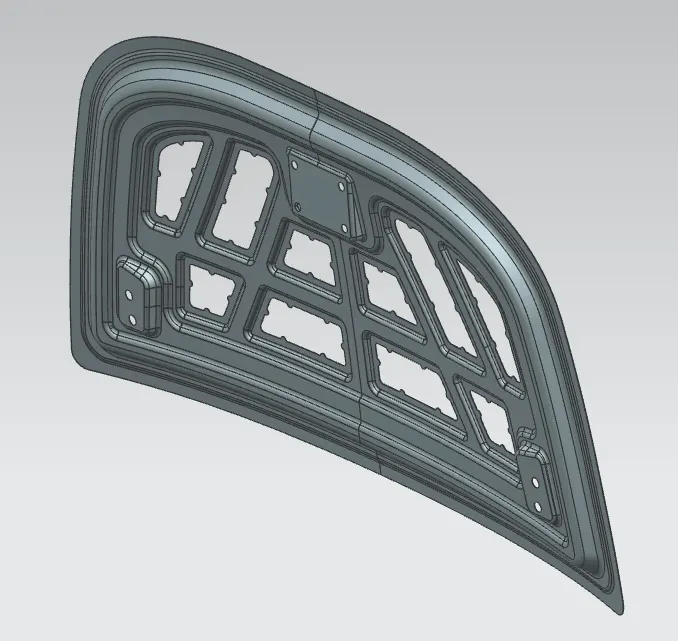
Hood inner panel:
It is the structural member that provides stiffness, rigidity, and durability as well as dissipates energy towards hinges. It is also designed to follow the pedestrian protection performance by comprising a composite structure. The inner panel is designed with a lot of embossed features which makes sure that the hood is rigid enough to take an impact and to distribute the load equally across the hood to make it free from failure.
Hood outer panel:
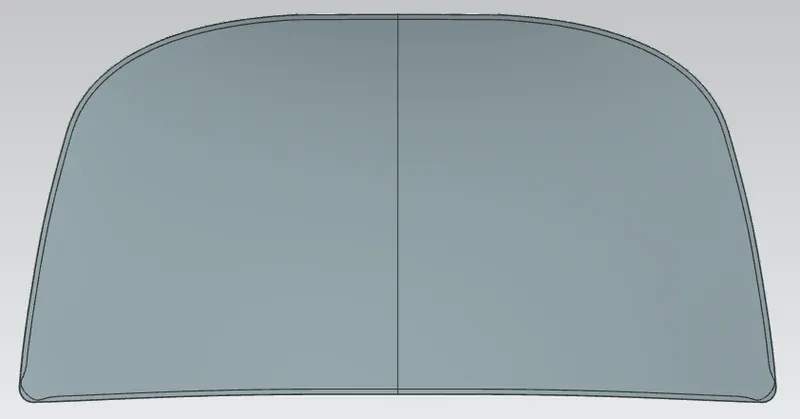
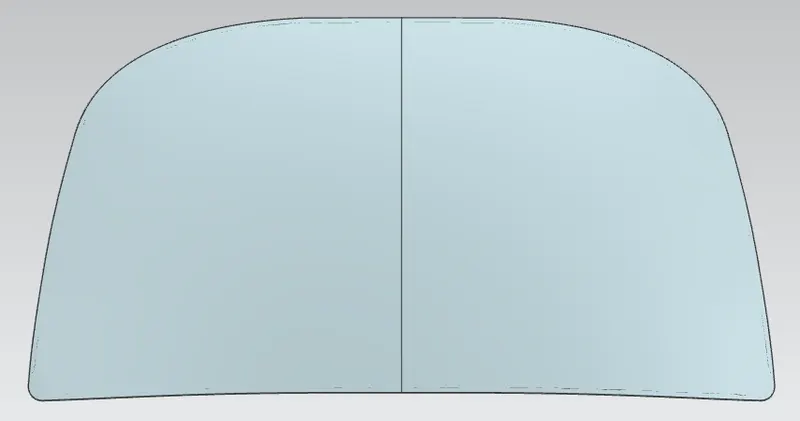
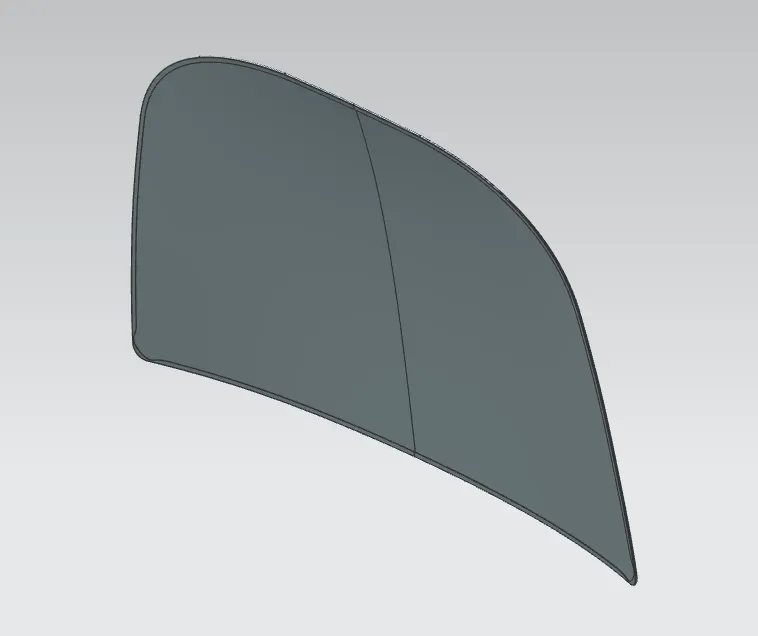
The outer panel has the aesthetic look to it but on its own is very weak and not capable of handling force during impact.
Most automobile hood outer panels are made of traditional steel plates, and their quality does not meet the needs of lightweight development. For this reason, it is necessary to obtain lightweight effects through the application of automotive aluminum sheets. The most widely used car aluminum alloys in the market are deformed aluminum alloys 6111, 6016, and 5182.
The production process of the outer panel of the hood mainly includes blanking, deep drawing, hemming, trimming, turnup, and side turn-up. Among them, deep drawing is a key process to ensure the quality of parts.
Mastic sealant:
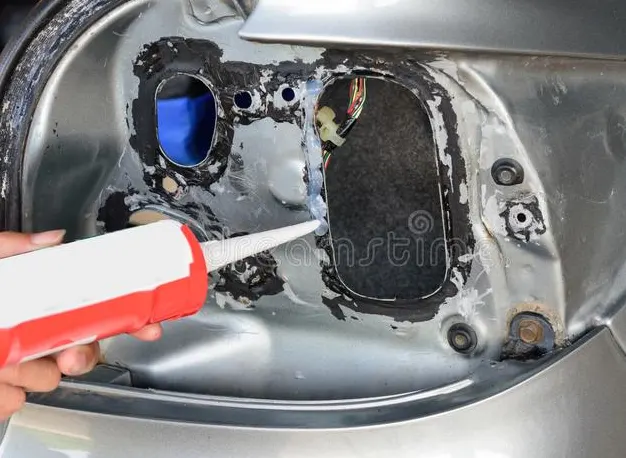
The sealant is applied around and inside the doors, hood, trunk, and front dash, and onto the exterior and interior of metal joints. It creates a strong, flexible and waterproof seal, making it ideal for sealing gaps and joints in places where it will need to resist some movement.
Hinge support:
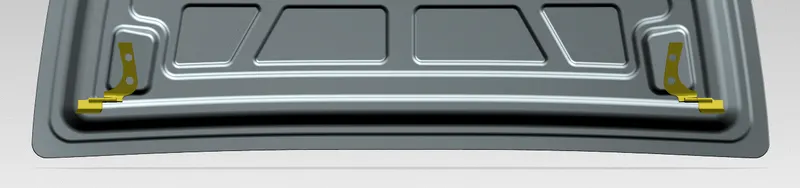
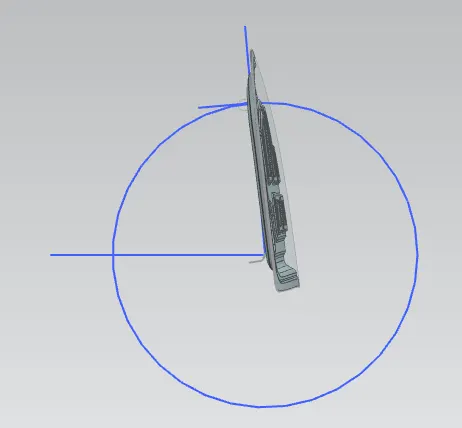
The hinge is the part that enables the axis of rotation on the hood. The placement of the hinge is the design intent and location of the striker. The hinge assembly is positioned at either end and their axis of rotation should be collinear to enable proper axis of rotation of the hood.
Striker:
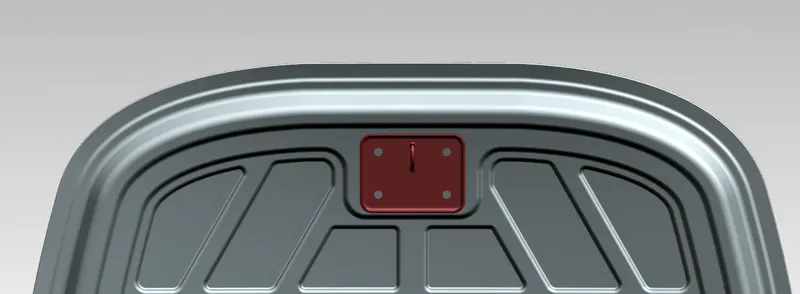
The striker is the part that locks the hood assembly to the chassis structure. The locking and unlocking of the hood are delivered through the striker. The hood is lifted based on the hinge assembly axis positioned at both ends and the striker is positioned perpendicular to the rotating axis. This ensures proper locking of the striker to the mating part.
Support rod/ Gas stay:
For opening the hood, there needs a support system to keep the hood in an elevated position, so that, one can access & work on the engine & other parts. For serving this purpose the support rod is assembled in the system to hold the hood in position.
There are two types of support rods
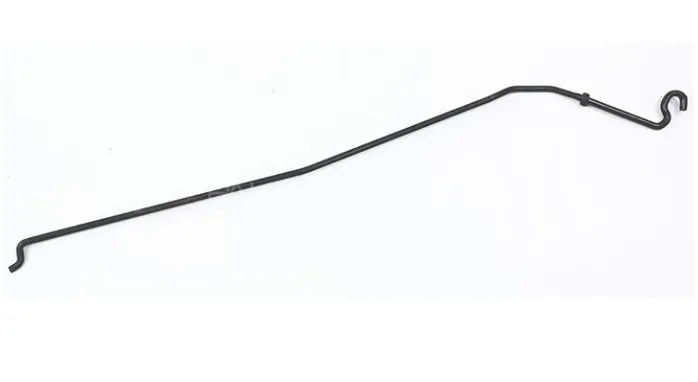
Support rod: This is a mechanical component that needs human support to place the rod while opening. Simpler operation and cost-effective.
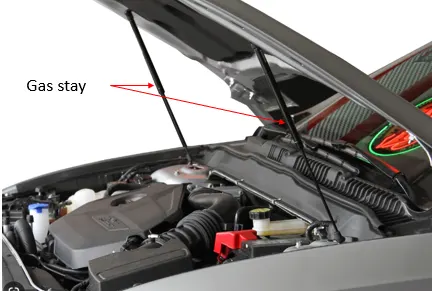
Gas stay: It is a hydraulic operation that holds the hood once unlocked without human interference. It is costlier.
Manufacturing process involved:
The manufacturing process involved in the design of the hood includes the following.
Hemming:
Hemming is widely used in the automotive manufacturing industry to assemble an outer closure panel and an inner closure panel by folding the flange of the outer panel over the edge of the inner panel. This process is performed by material that suffered a plastic deformation. The neat and compact combination of these methods that do not show up to join the resistance welding. Sometimes used special adhesives to improve strength.
The purpose of Hemming projects is to fold and fold the outer sheet metal panels on the inner sheet metal panels in various parts, such as the vehicle's door, engine hood, and trunk lid, usually composed of two sheet metal panels, and to join the two panels together.
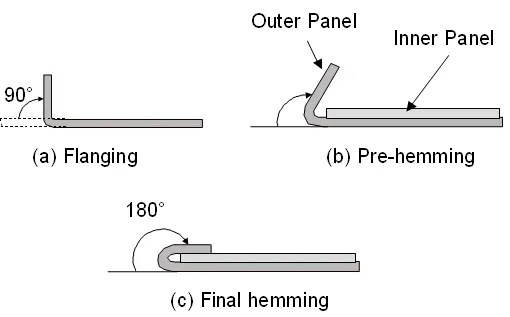
Hemming Stages
1. Before Hemming:-
The production process of a system starts with the method of deep tensile on the press lines of its components. After the component is formed on the press lines, the outer sheet is crimped to the edges to be hemmed. This process is called flanging
2. Bonding Process:-
Bonding is the joining process by applying adhesive to the inner panel or the outer panel with various chemical properties before joining by the hemming method. The purpose of the bonding process is to strengthen the consolidation process, prevent corrosion problems by providing tightness, and during the use of the vehicle.
3. Marriage Process:-
The marriage process is to bond the inner sheet and outer sheet together after bonding. The marriage process can be done by the operator or by robotics. Depending on the need of the process, additional spot welding can be done after the marriage process. After completing the marriage process, it goes to the hemming phase
Deep drawing:
The deep drawing process is a forming process that occurs under a combination of tensile and compressive conditions. A flat sheet metal blank is formed into a hollow body open on one side or a hollow body is formed into a hollow body with a smaller cross-section.
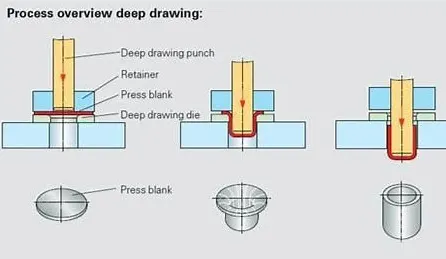
The rigid tools consist of a punch, die, and binder. In deep drawing, the plate holder closes after the metal sheet blank has been inserted.
Next, the sheet is clamped between the die and the binder. This process slows down the flow of the sheet while it is being drawn and thereby prevents wrinkles from forming under the binder. The punch stretches the sheet over the die radius and forms it in the die.
When drawing complex car body parts in practice, there is usually a combination of stretch and deep drawing involved. It is necessary that the sheet metal is stretched as well as possible without reaching the material’s limits.
Blanking and Punching:
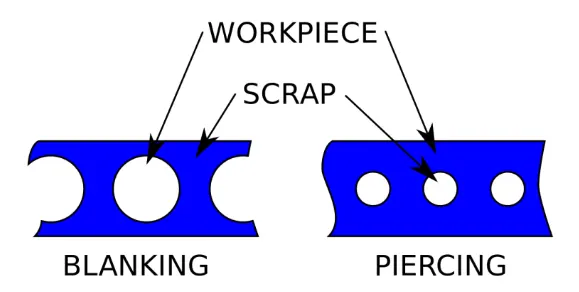
Blanking is a metal fabrication process where the final product is removed from the larger metal sheet, and the remaining material is discarded as scrap, whereas punching is a metalworking process that involves creating holes in a metal workpiece.
Embossing:
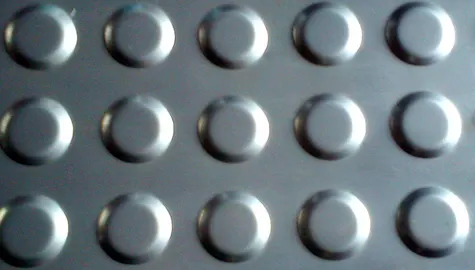
Embossing is a stamping process for producing raised or sunken designs or reliefs in sheet metal. This process can be made by means of matched male and female roller dies, or by passing a sheet or a strip of metal between rolls of the desired pattern. It is often combined with Foil Stamping to create a shiny, 3D effect.
Conclusion:
Considering all the automotive design guidelines the hood assembly of the car is designed. The design incorporated all the details specified on the hem and inner panel layout.