Hood design-Week 2
DESIGN CAR HOOD (OR) BONNET :
QUSTIONS :
Design Hood Outer Panel, Inner Panel and the necessary reinforcements by following the Master Section mentioned with the Design parameters explained in the videos.
Submit an ASSEMBLY of Hood Inner Panel, Outer Panel, Latch, Hinge and the Reinforcements.
A detailed report about the Hood Design which includes a detailed explanation about hood and its components, Latch Trajectory, Mastic Data, Emboss Definitions, Manufacturing process like Deep-Drawing and Hemming, and all the parameters followed in the design.
The report should be well-formatted and should have a good flow of content. Add all the relevant images.
AIM :
To design Hood with the following requirements.
- Design Outer Panel with the Hem
- Develop the Inner Panel
- Develop all the Necessary Reinforcements
- Mirror and position the Hinge & Striker
- Provide Mastic Data
- Provide the required Emboss definition
INTRODUCTIONS :
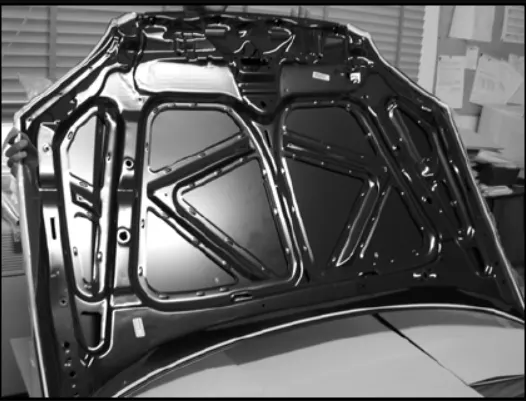
The Hood or the Bonnet of a car is considered as the frontal BIW enclosure component. Bonnets are designed to reduce air resistance as the air flows around the car. The design of the bonnet is vital since it affects the aerodynamic flow around the car. Apart from this, bonnets are also designed to meet several other requirements. They serve a great deal of purpose in protecting the passengers inside the car and the pedestrians in the event of an accident. It also acts as the engine cover.
Objective:
The main objective of this project is to understand the importance of car hood design development and its saftey features as per the design consideration.
The Following tasks are performed
- Design Outer Panel with the Hem
- Develop the Inner Panel
- Develop all the Necessary Reinforcements
- Mirror and position the Hinge & Striker
- Provide Mastic Data
- Provide the required Emboss definition.
Purpose of Hood Design :
- Safety of the passenger
- Covers all engine, radiator and other necessary components.
- Reduce air affect due to its aerodynamic shape design
- Reduce engine noise which helps for a quitter drive
- Provide access to engine maintenance
- Absorbs most of the impact forces when a frontal crash occurs
MAIN CONSIDERATION FOR DESIGNING THE HOOD :
HOOD OPENING ANGLE:
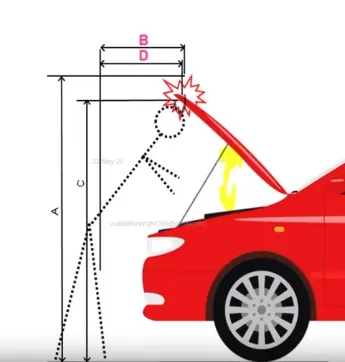
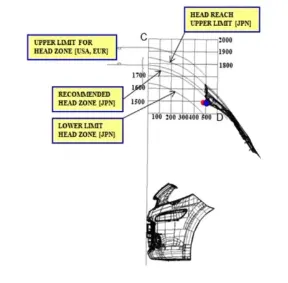
It is one of the major criteria in designing the hood of a car. The opening angle of the hood is varying from place to place and from country to country. It is designed based on the average height of the people in the country.
DATA TO BE USED THIS MODELS :
Hood Thickness Information
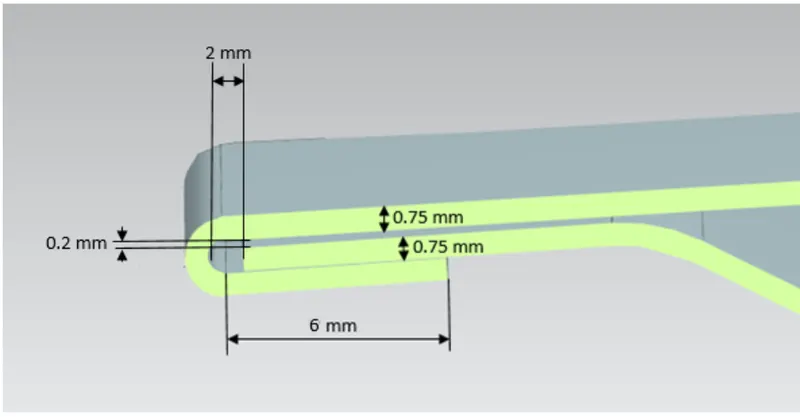
- Outer Panel Thickness = 0.75mm
- Inner Panel Thickness = 0.75mm
- Reinforcement Thickness = 1.5mm
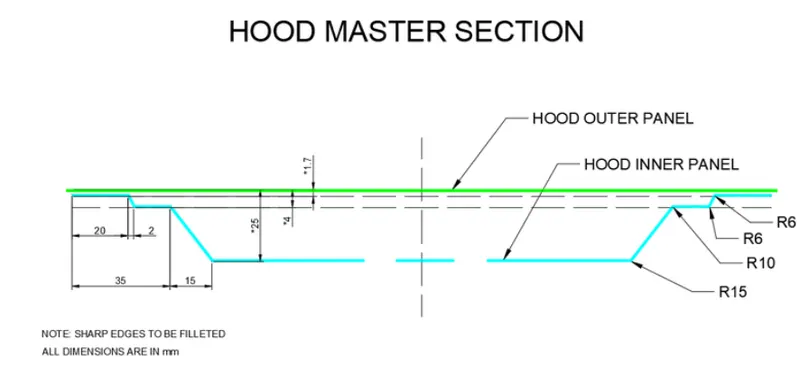
MASTER SECTION :
Functional and Safety Requirements:
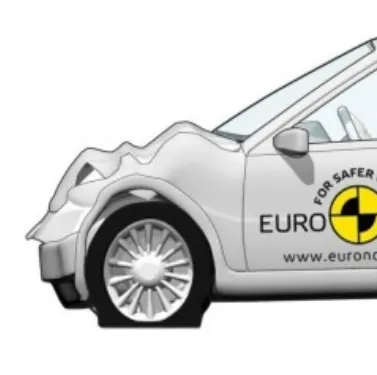
The 1st and most important safety requirement to be considered while designing the Bonnet is the frontal collision requirements.
In this image, you can see the deformation on a hood that underwent a frontal collision.
TRAJECTORY OF LATCH AND STRIKER :
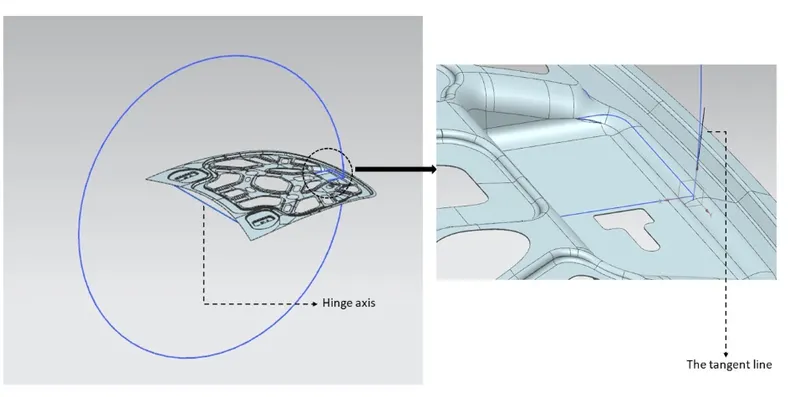
The other major functional of the hood is the opening and closing of the hood. This is done with the help of the latch and striker. To position the latch and striker effectively, we position the hinge and draw the hinge axis. Now, using the hinge axis as the center we draw a big circle to the position where we need the latch to be placed. Then, we draw a tangent line to the circle at that point and place the latch in that region.
DISTRIBUTION OF FORCE DURING COLLISION :
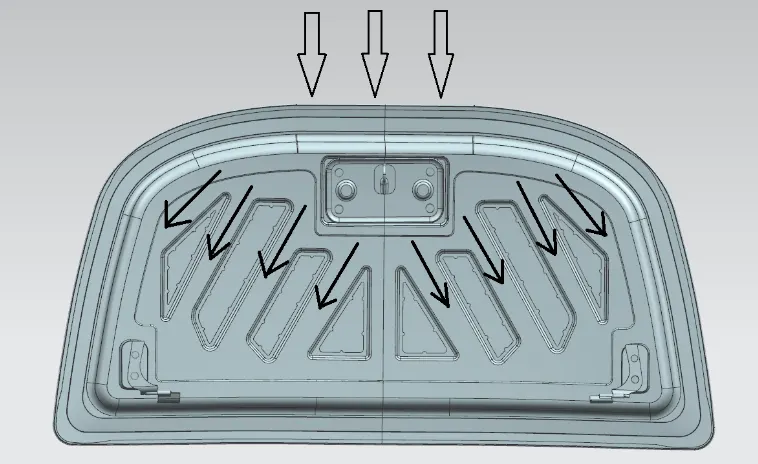
The inner panel is designed in such a way that the force produced during the collision is delivered on the outward direction so that the damage to the passenger and the driver is to be reduced.
GEOMETRY AND EMBOSS CREATION :
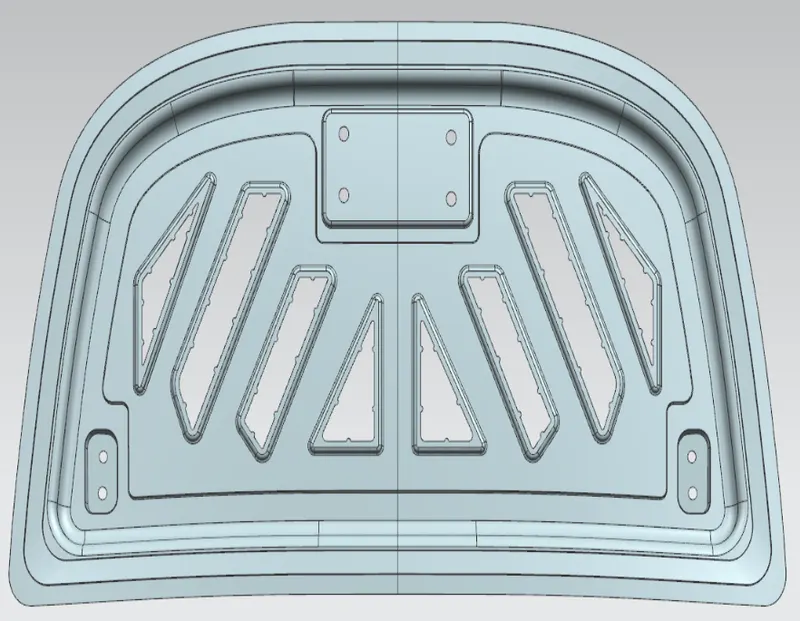
The geometry is created based on the master section that was designed above. After performing the initial stages of design, we will provide local embosses to strengthen the component. The component will be strengthened based on the master section. When a force impacts the hood from the front, it travels in an upward direction. The component is designed to divert the force away from the passengers into the hinges, as shown in the image below:
MASTIC POINTS :
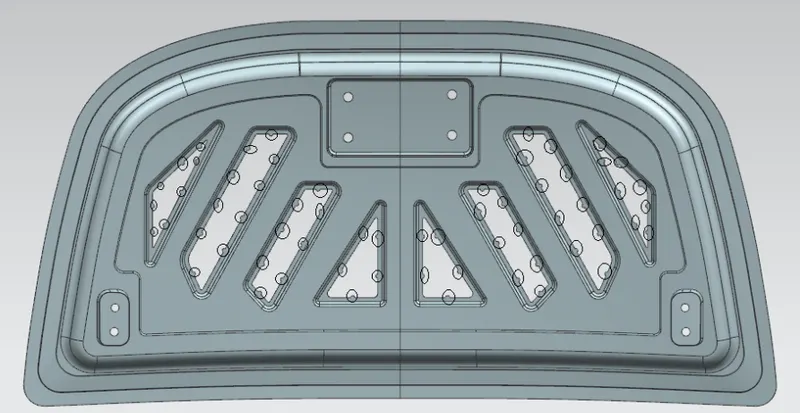
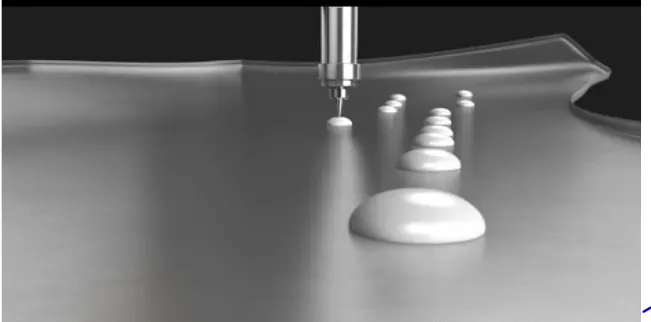
The Mastic sealant or the Mastic point is an elastic compound that behaves like a rubber. The mastic points are defined on the hood inner panel where the hood can easily deform. They help the hood outer panel to come back to its original shape after it gets deformed. The mastic has an influence area of 80mm.
HEMMING PROCESS :
Hemming is the metalworking processes in which a Sheetmetal edge is rolled over onto itself. Hemming is the process in which the edge is rolled flush to itself, while a seam joins the edges of two materials. Hems are commonly used to reinforce an edge, hide burrs and rough edges, and improve appearance.
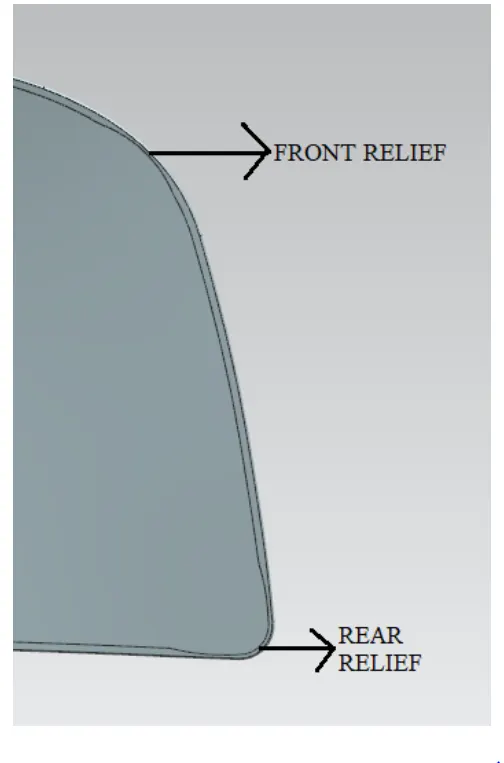
FRONT AND REAR RELIEF
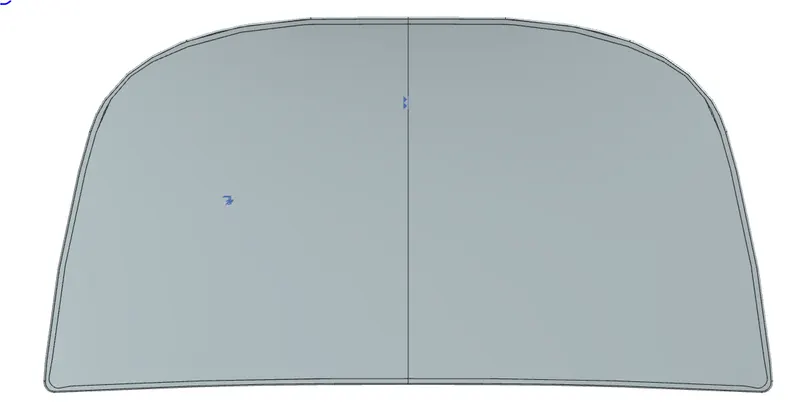
HOOD OUTER PANEL IMAGES :
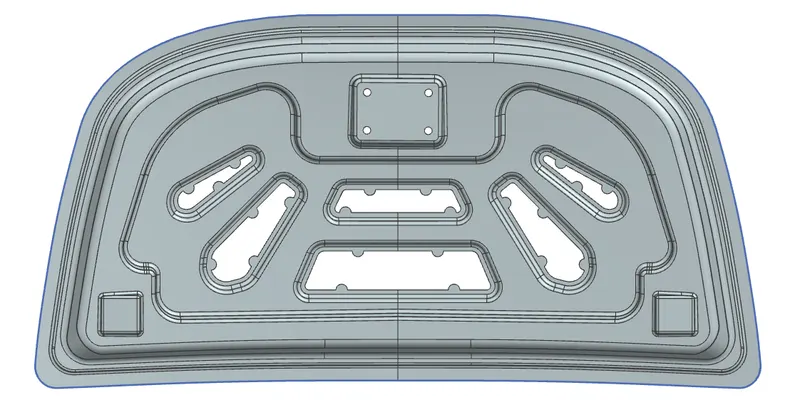
HOOD INNER PANEL:
HING ENGIN COMPONENT :
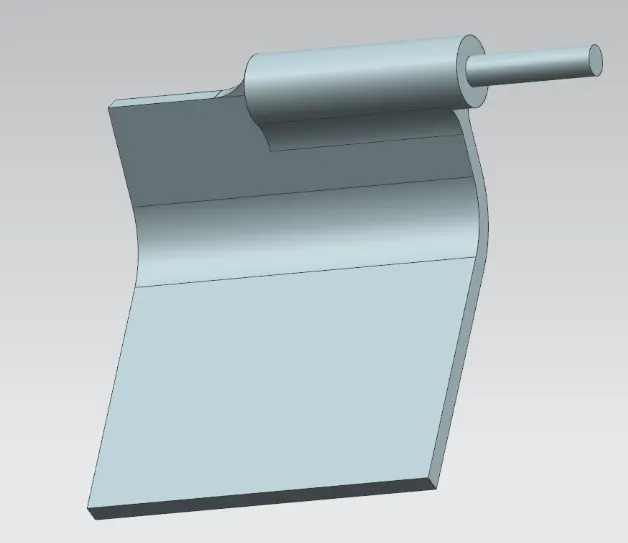
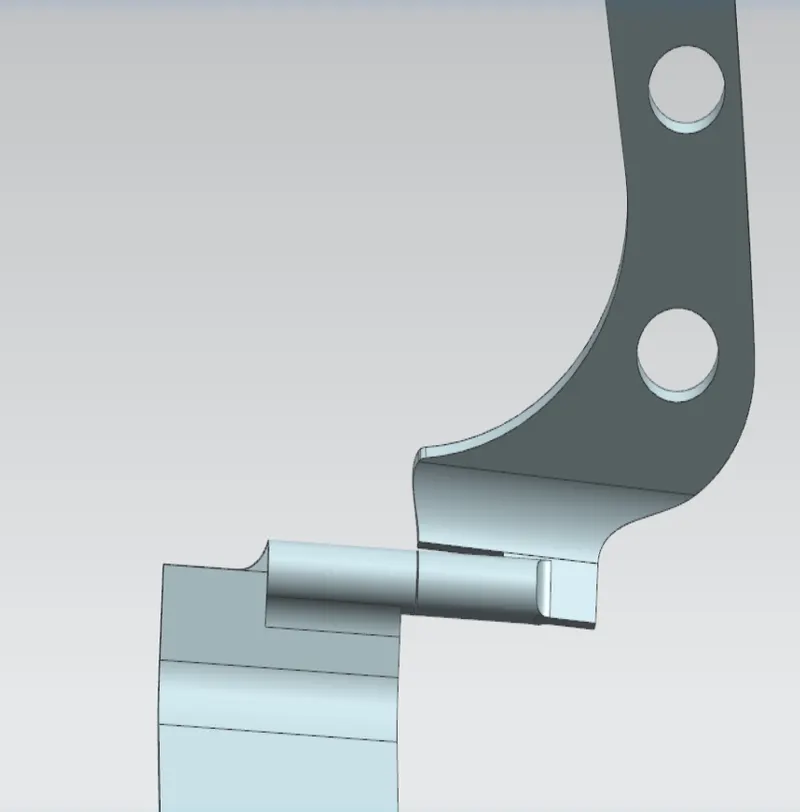
HINGE HOOD COMPONENT :
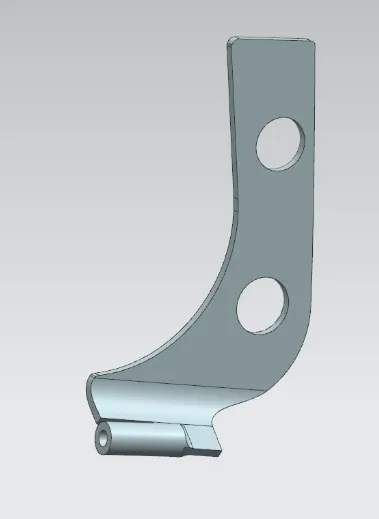
HINGE ASSEMBLYB COMPONENT :
DEEP DRAWING :
Deep drawing is one of the most widely used processes in sheet metal forming. Apart from its use in many other sectors, it is applied in the automotive industry for the manufacturing of car body parts.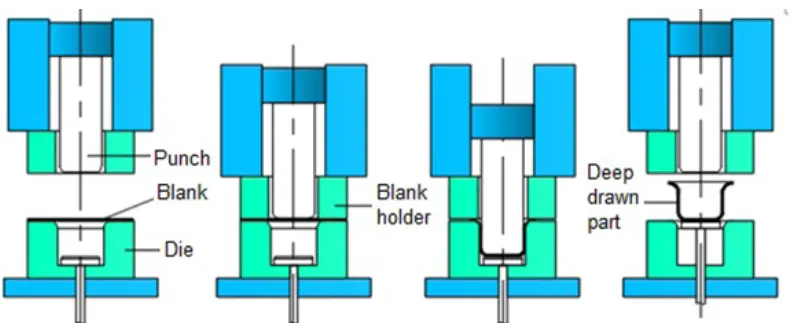
Deep drawing processes are divided into three types:
- Deep drawing with tools
- Deep drawing with active means
- Deep drawing with active energy
The rigid tools consist of a punch, die and binder. In deep drawing, the plate holder closes after the metal sheet blank has been inserted. Next the sheet is clamped between the die and the binder.
This process slows down the flow of the sheet while it is being drawn and thereby prevents wrinkles from forming under the binder. The punch stretches the sheet over the die radius and forms it in the die.
The amount of punch force necessary for forming is thereby continually increased up to the lower dead centre of the punch. Whereas in pure deep drawing there is no reduction of sheet metal thickness, forming is achieved in stretch forming purely as a result of a decrease in sheet metal thickness. Stretch forming is extensively used for the forming of only slightly curved parts with low depth of draw (e.g. roofs, doors).
DESIGN AND MANUFACTURING OF THE CAR HOOD :
The front hood has been cut from general assembly shapes of an electric prototype vehicle. The design of this it was done using CATIA V5 software. It was performed behind it based on the shape of the external surface of the model. The hood are some fixing points and reinforcements zone for its hardening this element was modelled in according with similar element from actual cars.
TOOLS USED:
- Sketch
- Offset Surface
- Offset in Face
- Law Extension
- Trim Sheet
- Face Blend
- Edge Blend
- Emboss
- Through Curves
- Trim and Extend
- Projected curve
- Mirror Geometry
- Sew Thicken
CONCLUSION:
By this challenge the design consideration and operation involved in creating the hood of the car is studied.
USE TO THIS LINK :
https://drive.google.com/drive/folders/1k_qwkQ4CCV2D8dTfLUlw3mRl5qJHmn4l?usp=share_link
https://drive.google.com/drive/folders/1Jvc5kYc1e4VIH0fRtiKH-3zlaJKtrEUF?usp=share_link