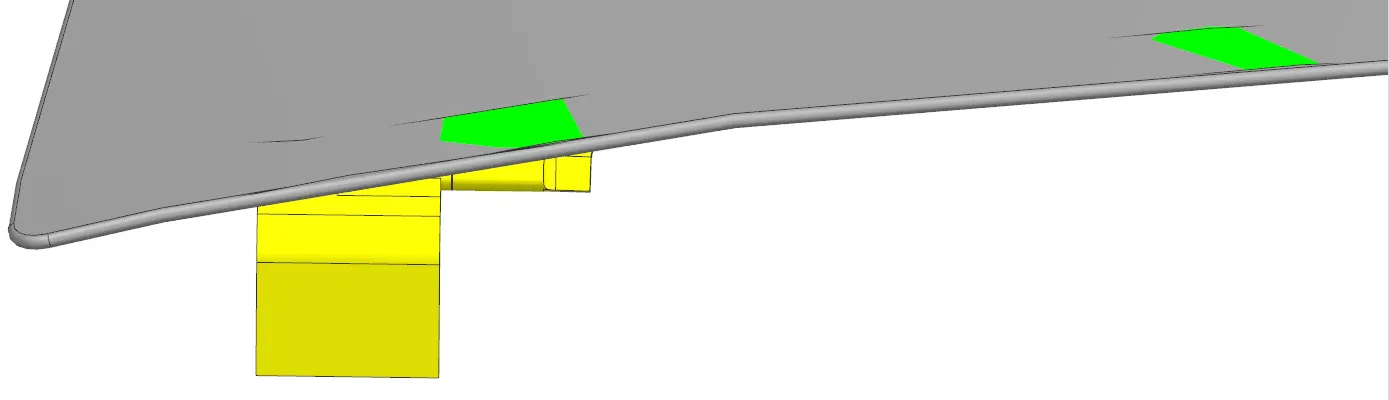
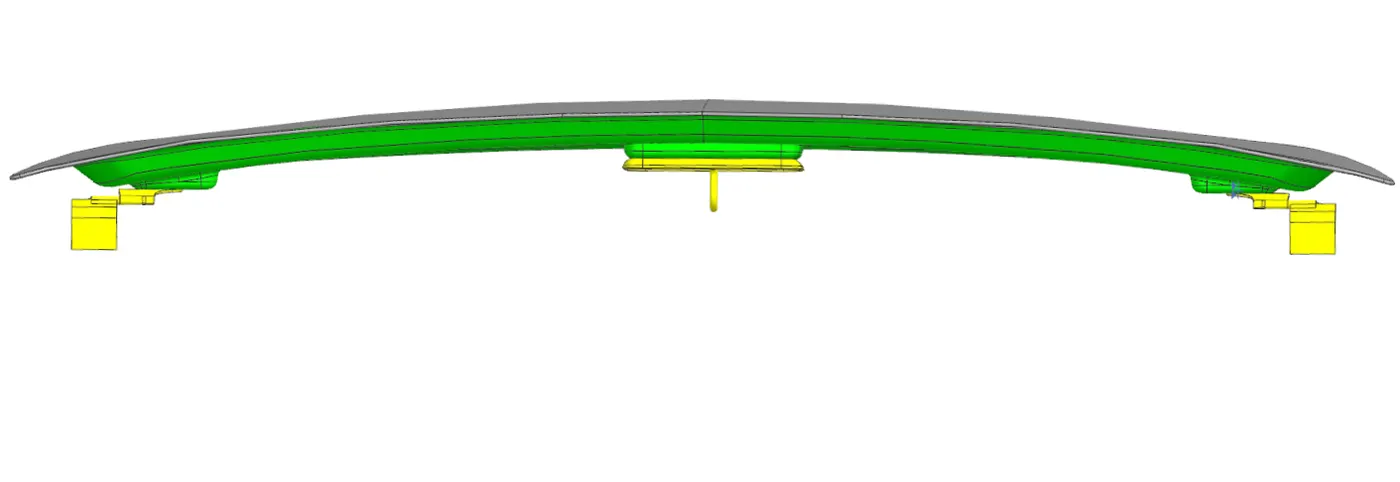
Hood design
WEEK 2 HOOD DESIGN CHALLENGE :
AS THERE IS SIZE CONSTRAIN OF 20 MB AND MY FILE SIZES ABOVE THE LIMIT, COULDNT UPLOAD THE FILE IN PROPER WAY. SO HEREBY IAM ATTACHING THE LINK OF MY GOOGLEDRIVE FOLDER OF CHALLENGE
https://drive.google.com/file/d/1oOIjreFPoEijuXZRwyEDnPmx48bb3Udj/view?usp=sharing
AIM :
Design Hood Outer Panel, Inner Panel and the necessary reinforcements by following the Master Section mentioned with the Design parameters explained in the videos.
HOOD :
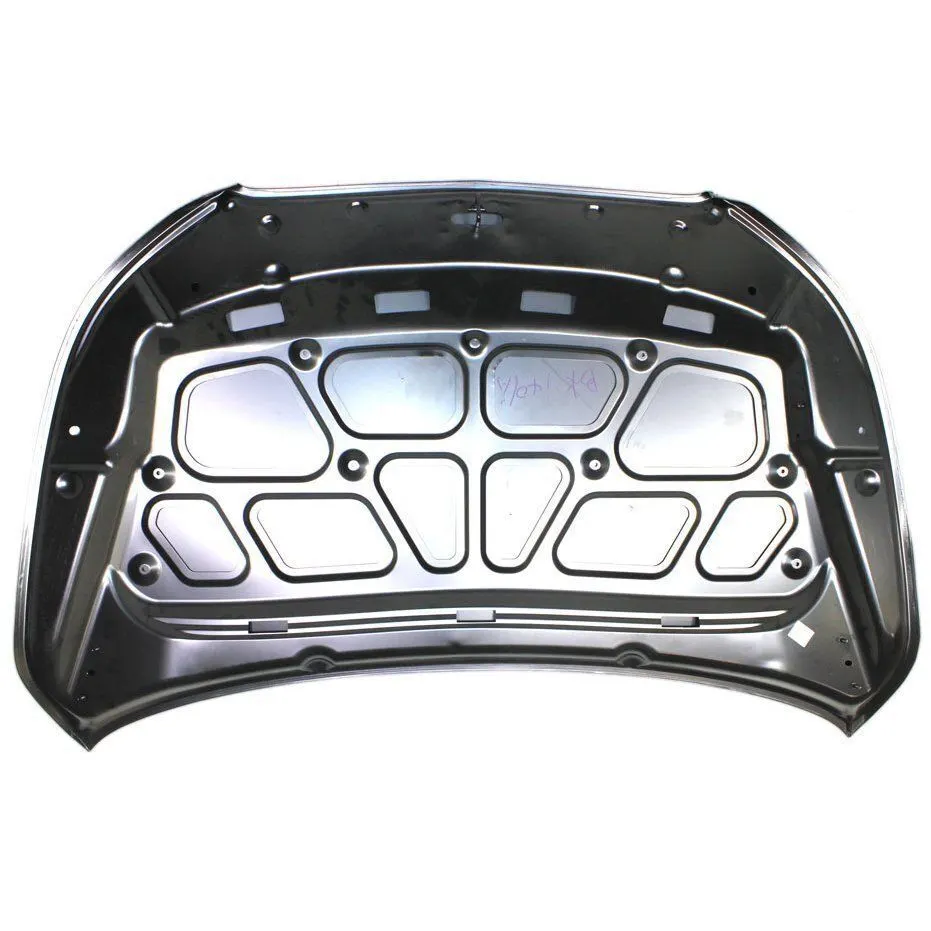
Hood is an opening body panel of a car which is situated in the front portoin of the car body. normally ,hood is used to cover engine and battery in front engine vehicles. for mid engine or rear engine vehicles it is used as a storage door.for front engine cars these hoods are the acess panel to engine compartment to enable maintenance of power train, drive belts, battery, fluid levels and lamp units.
A hood consists of inner and outer panels. outer panel is the one established to exterior and it maintains high level of surface finish and aesthetic looks. inner panel provides the strength for the hood and attachment features like hinges, striker and support rod holder. as this is the front portion of a car this part would be the one to be most subjected to crashes. so, hood design is a crucial part for safety of passengers. it dissipates energy outside the car body rather than senting it inside
HOOD COMPONENTS :
SUPPORTS FOR HOOD :
- SUPPORT ROD
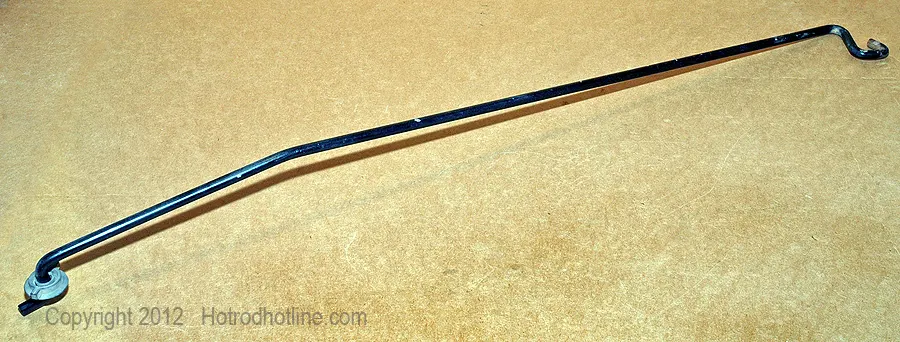
most of the support rods wont be a straight one , because there is high chance of wobbling when it is straight.
35 mm is the max limit of lateral deviation allowed for support rods from straight line
it shoudnt be colliding with any part inside engine room.enough clearance space should be provided otherwise a rattling sound may produce by colliding while car in motion
support rod and batteries should be placed in opposite to each other, other wise this support rod will foul the ease of operataion of battery installation
Gourmets are provided to keep the support rod in rest condition.
Advantages of support rod are as follows
- They are economical
- Light in weight.
Disadvantages of support rod are as follows
- When striking with the automotive body panel to leave scars which are very likely to cause rust.
- The metal rod is often too hot to be gripped by hands immidiately after the vehicle has been stopped.
- GAS STAY
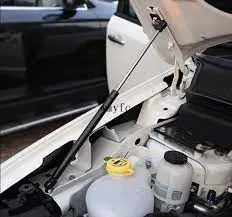
an actuater activated by gas is used for supporting hood in open position
only a slight push in the initial opening is needed then it automatically opens upto the predefined angle
Advantages of Gas stay are as follows
- No human effort is required
- Easy to operate
Disadvantages of Gas stay are as follows
- They are heavy in weight compared to support rod.
- Cost is more.
HINGES :
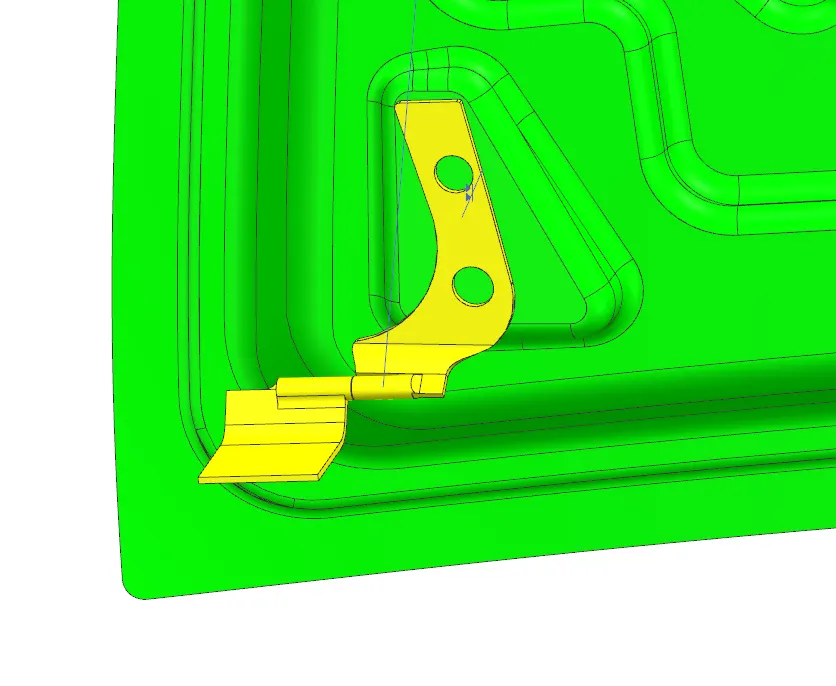
hinges are the connecting points of hood with car body. hinges holds and allows to rotate hood in its axis.hinge consists of two components,one would be connected to hood inner panel and other with car body
STRIKER :
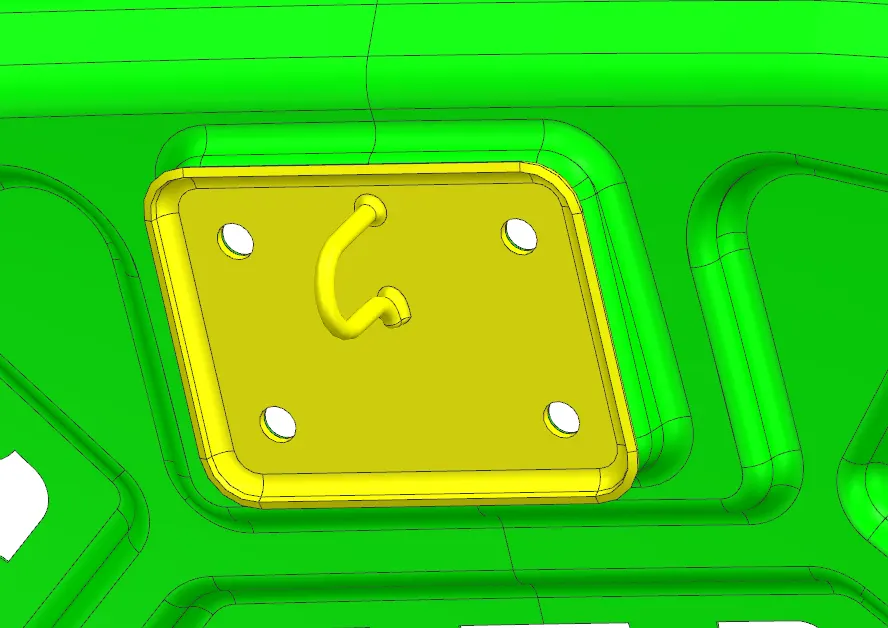
strikers are attached to the opening edge centre of inner hood panel. it consists a base plate and "C" hook. when closing the hood the striker meets with the latch in the car body thus hood locks.
REINFORCEMENT :
attaching additional features to the inner panel such as striker and hinges could reduce strength locally. so, to compensate this , additional thick plates as reinforcements are provided
HOOD DESIGN CONSIDERATIONS:
- Pedestrian Safety
- Occupant Safety
- Styling
- Manufacturibility
HOOD DESIGN PARAMETERS:
- Opening angle of Hood
- N CAP crash Test
- Wrap Around Distance (WAD)
- NVH (Noise, Vibration, Harshness)
SAFETY REQUIREMENTS :
frontal collision :
The most important safety requiremnet is regarding the frontal collision. it should withstand high collision force and divert the force in outward direction to the hinges so, the intensity of collision is reduced to the cabin

pedestrian safety :
The design of the hood should be in such a way that it reduces the injuries to the pedestrain in the event of a pedestrain vehicle collision.
Evaluation of pedestrian safety for a bonnet must be carried out in the context of its surrounding elements like Vehicle styling, size (wrap around distance “WAD”) and under bonnet clearance to other elements (considered as hard points). Local bonnet stiffness is influenced by mounting point stiffness such as hinges, bump stops and latches. This is better understood by superimposing the kinematics of a dummy onto the test conditions.
Wrap Around Distance (WAD) :
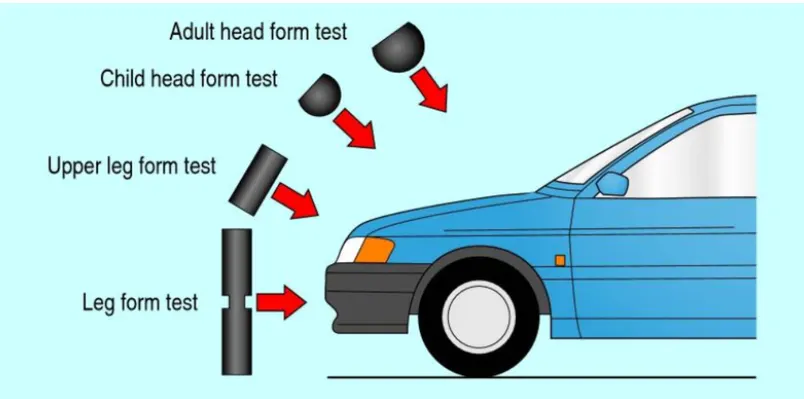
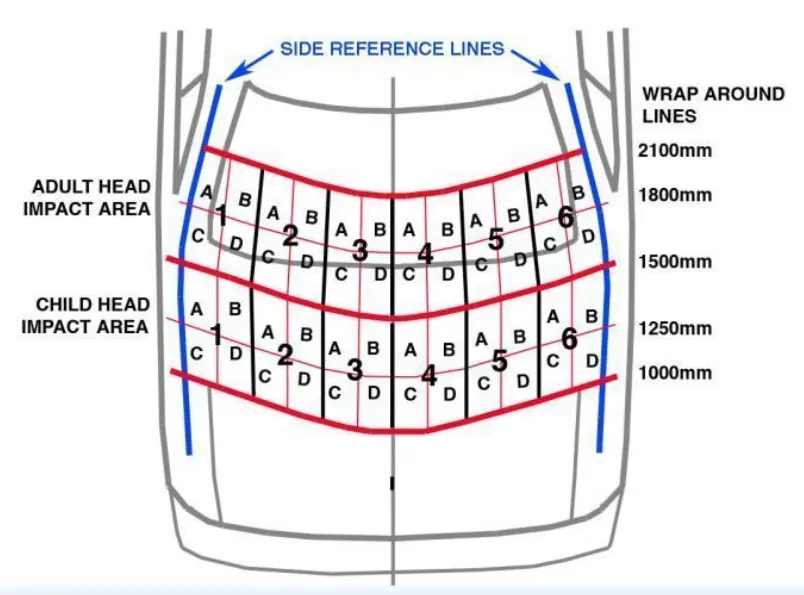
It is the geometrically traced distance from the contact point with the Ground Reference Plane, vertically below the front face of the bumper, to any point on the vehicle front structure.
Side Reference line :
The geometric trace of the highest points of contact between a straight edge, held parallel to the lateral vertical plane of the vehicle and inclined 45 deg. is traversed down the side of the front structure, and the side of the front structure.
Child Head Impact Zone :- 1000 WAD to 1500 WAD
Adult Head Impact Zone :- 1500 WAD to 2100 WAD
Besides acting as a engine compartment cover, a hood of modern vehicles acts as an safety measure to absorb the impact force of pedestrain's head in a pedestrian vehicle collision. its by the virtue of allowing the outer panel to deform under collision by providing enough underhood clearance
LATCH TRAJECTORY :
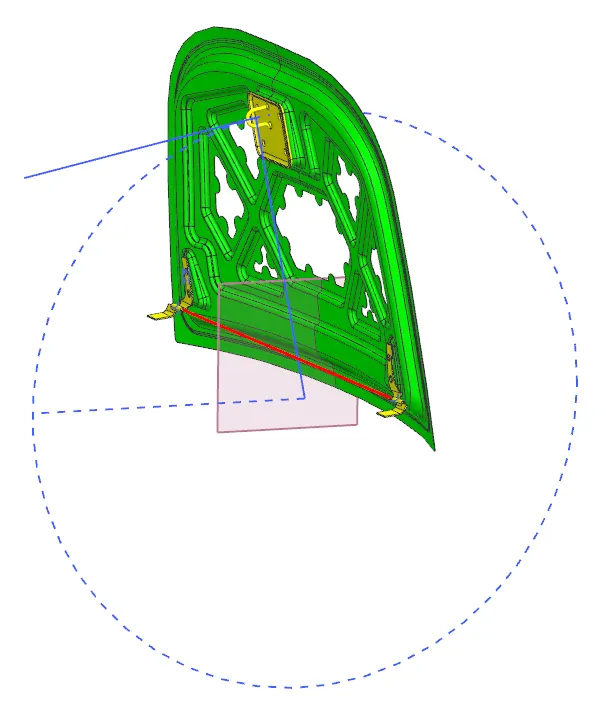
Latch trajectory is the trajectory of striker which revolves with respect to the line connecting hinge axes.this trajectory circle will be designed to be in centre of the line connecting hinge axes.
striker should be tangential to the trajectory circle,then only it will mate properly with latch
MASTIC SEALANTS :
Mastic sealants are rubber like elastic materials which are used between hood inner and outer panels to connect them together.no spot welds or rivetting can be followed to join panels as these operations will cost the aesthetic property of outer panel. there would be specified spots provided on inner hood panel to place them. mastic sealants prevents noise and vibration between panels.stiffner pads are no longer needed between hood panels as mastic sealants manages pad's job role too. every mastic sealants improves strength locally around 80 mm dia
mastic sealants gets harder in hot bathing process prior to hot furnace. inner and outer panels of hood gets joined in this hardening process.
MASTIC DATA :
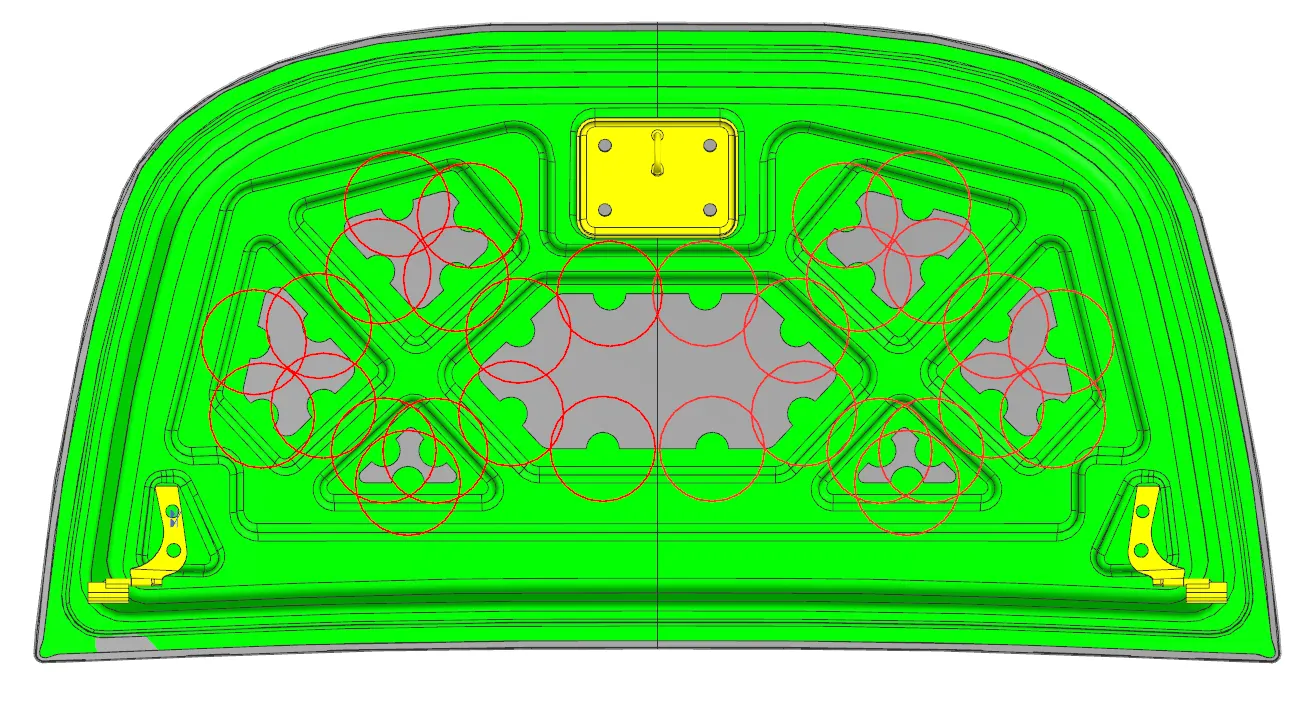
mastic strength zones
SHEET METAL OPERATIONS :
EMBOSSING:
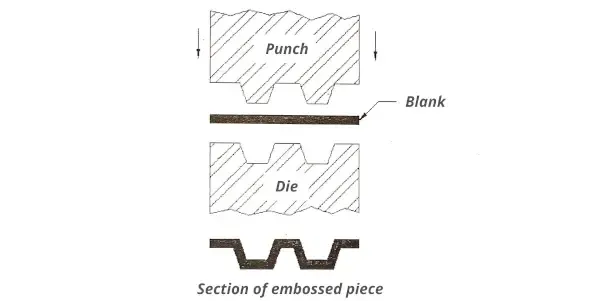
embossing is a process of producing projections in sheet metals. this is acheived by applying force between matched male and female dies with sheet metal between them or by passing sheet or a strip of metal between rolls of the desired pattern. The metal sheet embossing operation is commonly accomplished with a combination of heat and pressure on the sheet metal, depending on what type of embossing is required.
HEMMING :
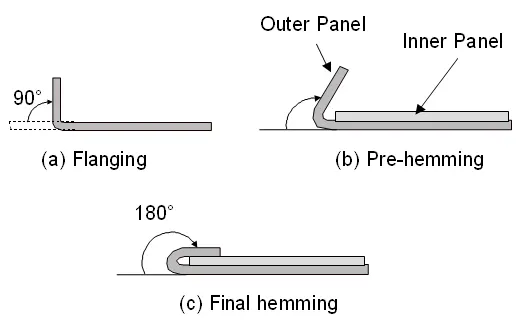
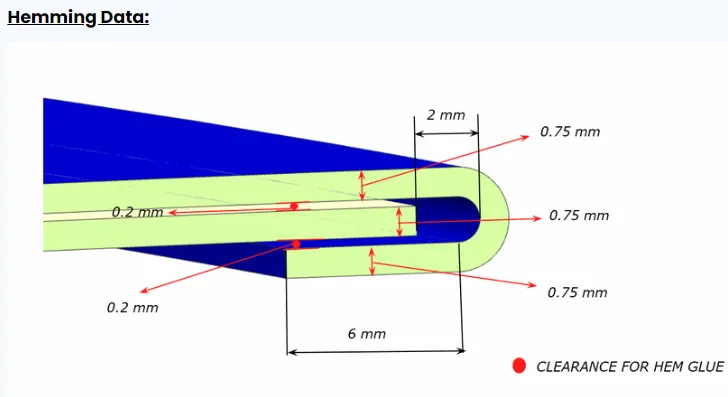
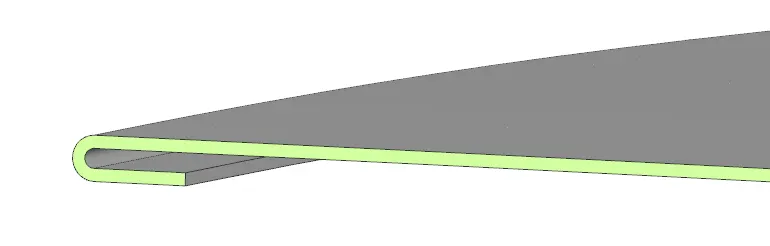
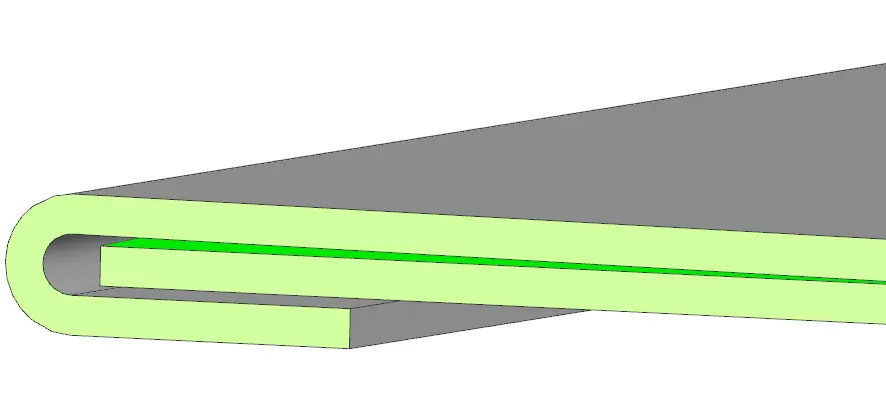
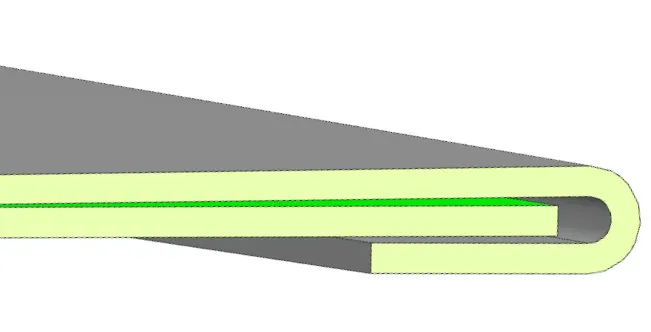
Hemming is a sheet metal joining process in which sheets are joined by bending. In this process, usually a sheet is bent with the help of inner sheet in three different stages.Hems are commonly used to reinforce an edge, hide burrs and rough edges, and improve appearance.roll hemming is the most commonly followed hemming process. Roll hemming is very flexible to use and tool costs are significantly lower as compared to those of conventional die hemming. Roll hemming operation can also be divided into several pre-hemming and final hemming process steps.
corner relief :
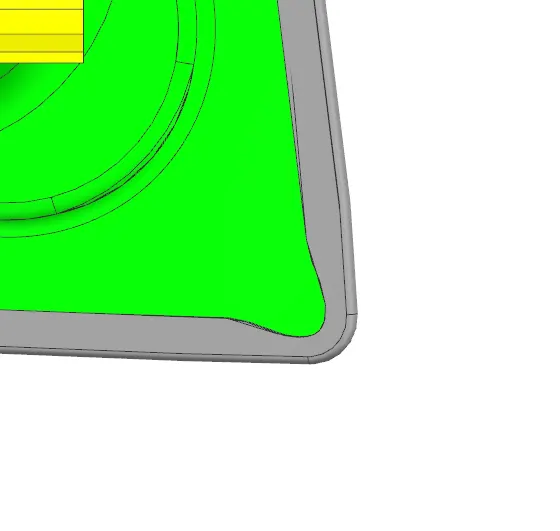
a relief is provide in the corners of hem joints to eliminate the stress concentration occuring due to the bending of sheets. these induced stress may leads to reshape the outer panel
DEEP DRAWING :
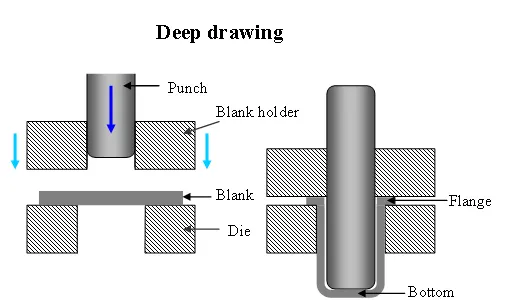
process of forming sheet metal by using a punch to radially draw the metal into a forming die. The process is considered "deep" drawing when the depth of the drawn part exceeds its diameter
HOOD CONSTRUCTION :
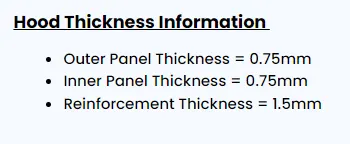
GIVEN MASTER SECTION AND DATAS:
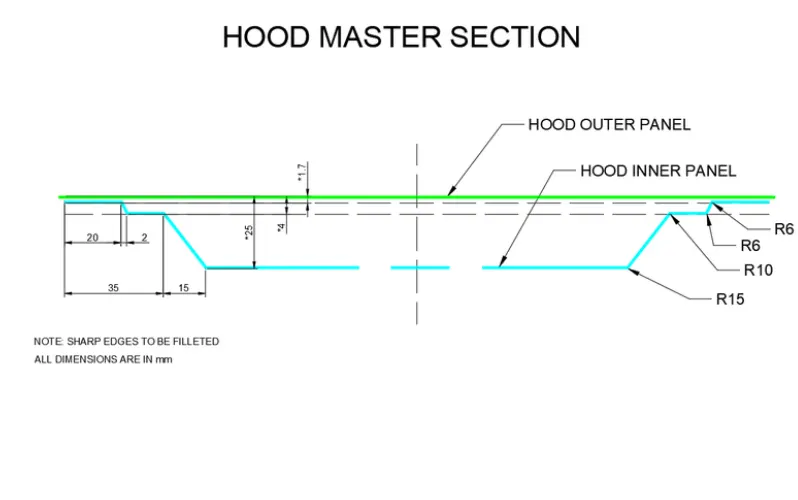
CONSTRUCTION OF INNER PANEL :
- opened the given file as assembly file
- opened another model file using new component option
- opned a copy of the given surface using wave geometry linker
- broke the link between files and trimmed the sheet into half
- drew tooling axis perpendicular to the line connecting end points of trimmed edge
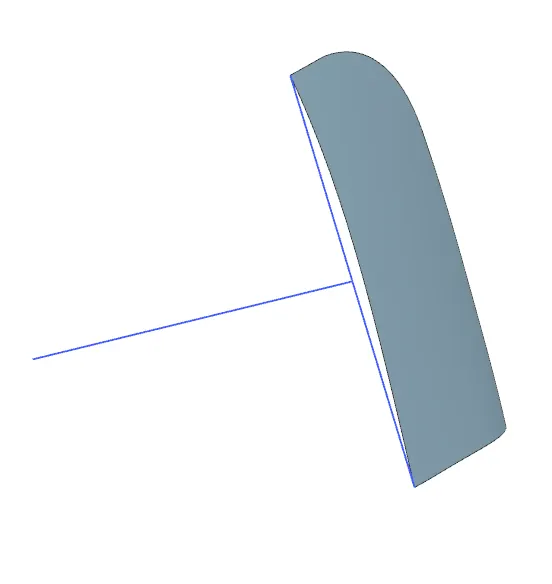
- offsetted the sheet inwards
- drew line parallel to the edge of the offsetted sheet with width provided in the mastersection ,using offset in face option in curve section
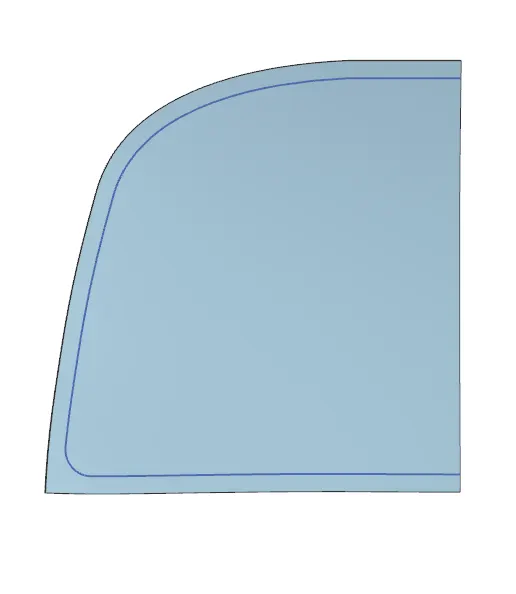
- trimmed the sheet through the drawn line
- continued the operation till the mastersection demanding
- using through curves option attained surface between offsetted surfaces
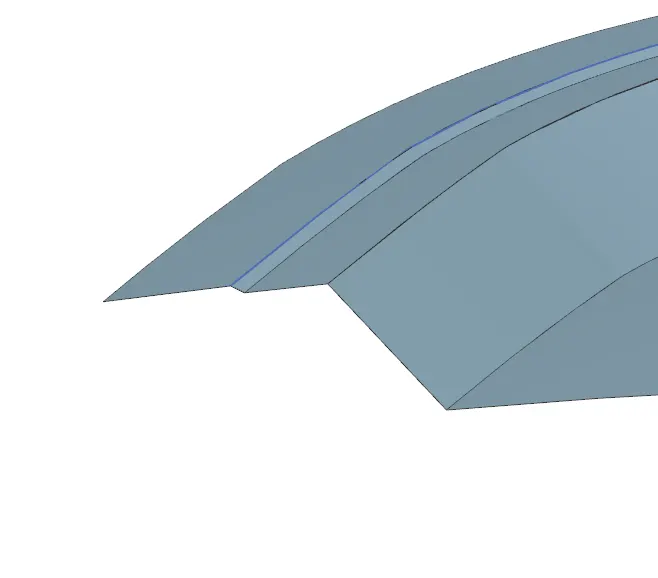
- face blended the edges
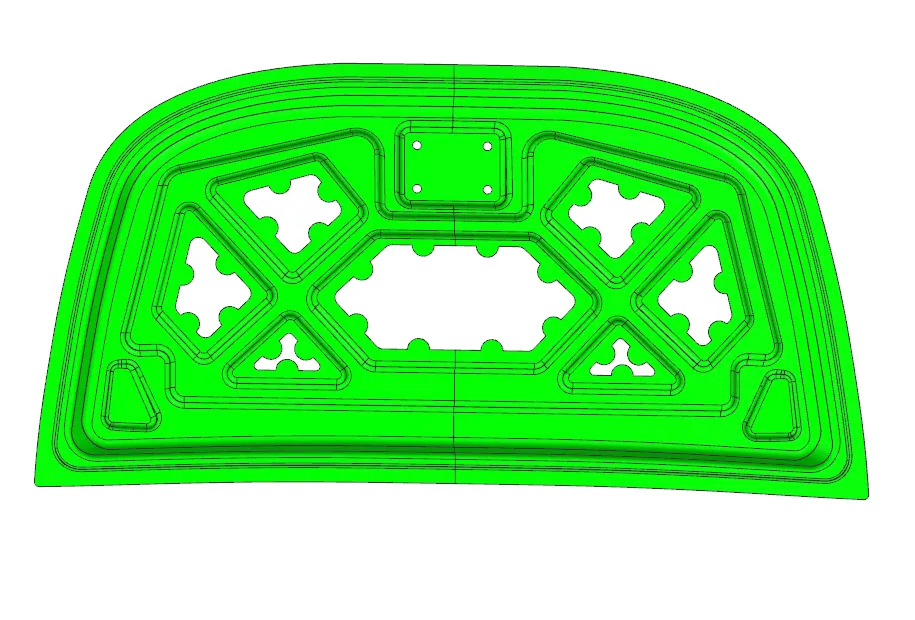
- opened a sketch and drew the design desired to be embossed on the inner surface
- projected the sketch onto the surface
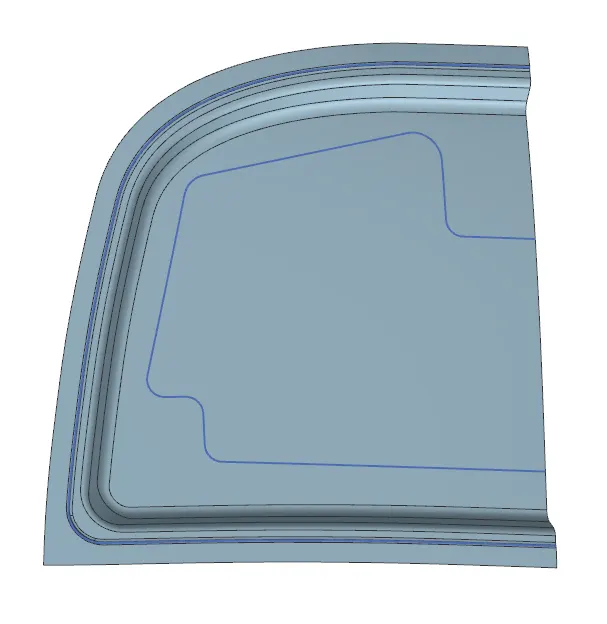
- embossed the figure selecting pulling direction as tooling axis
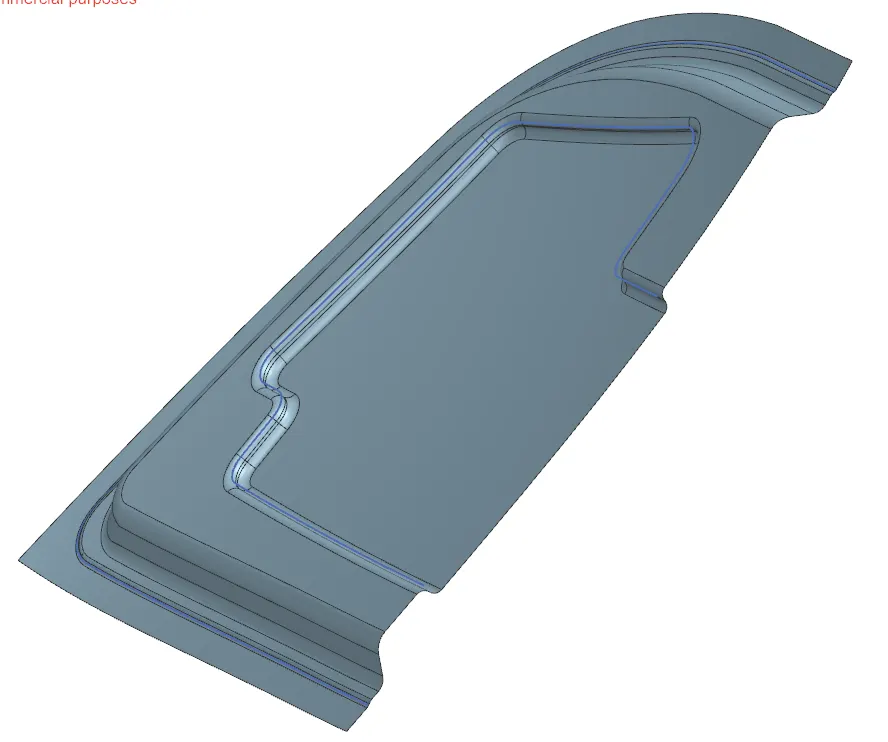
- opened another sketch and drawn the second embossing figure
- projected the sketch and embossed
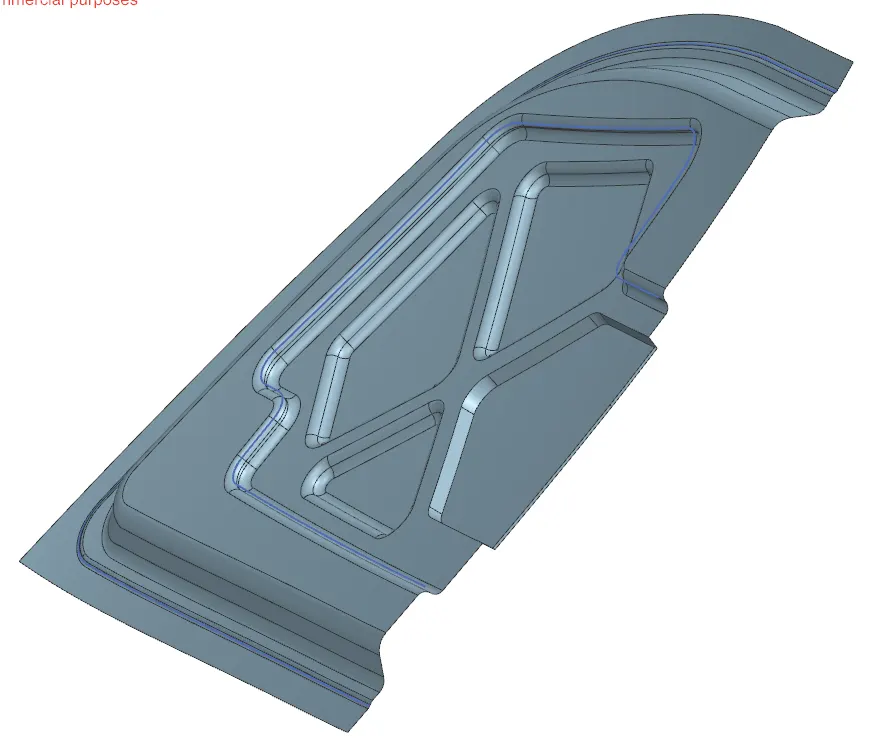
- face blended the edges
- opened a sketch and drew the figure to be trimmed off
- projected and trimmed
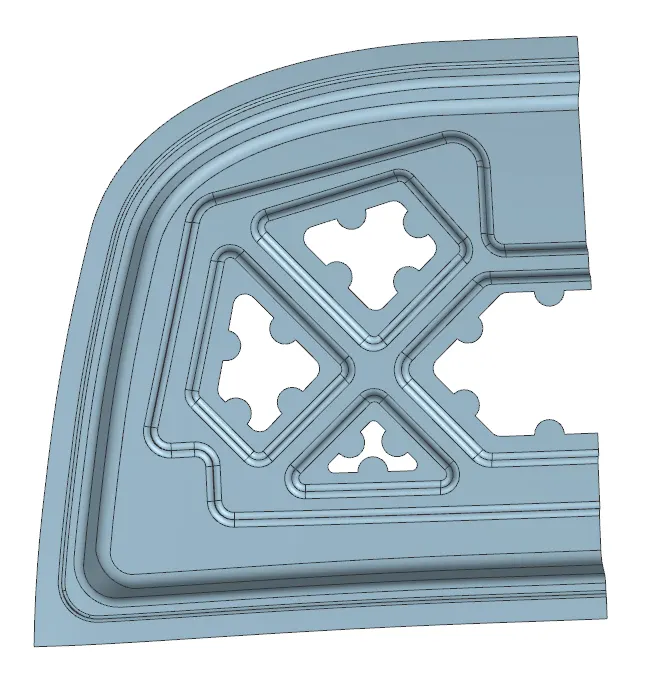
- created a datum plane at angle close to the hood
- opened a sketch and drew the figure of hinge platform
- projected the sketch and embossed,end cap as datum plane
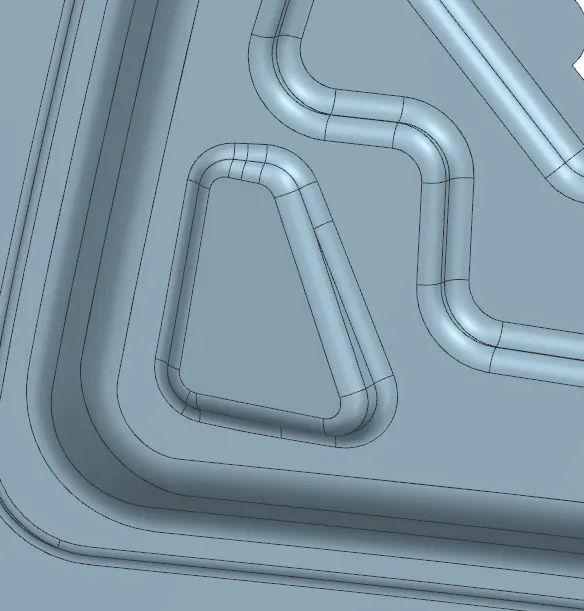
- constrained hinge to be placed on the platform
- mirrored the model using mirror geometry option
- mirrored the hinge
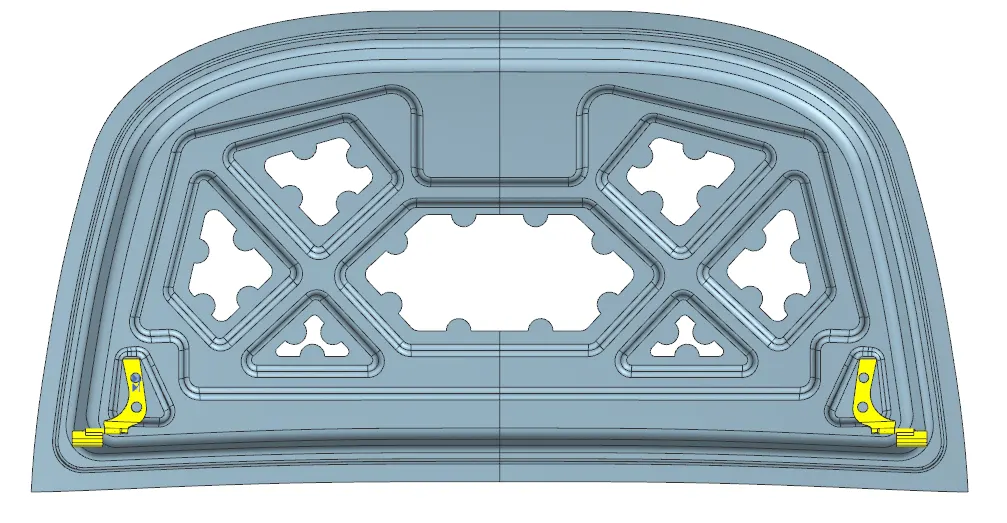
- opened a sketch and drew latch trajectoty
- constrained striker with latch trajectory
- created platform for striker and face blended
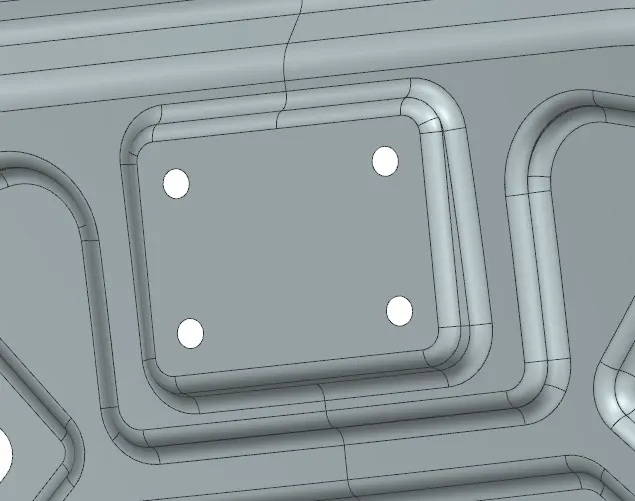
- rounded the sharp corners using bridge curve option
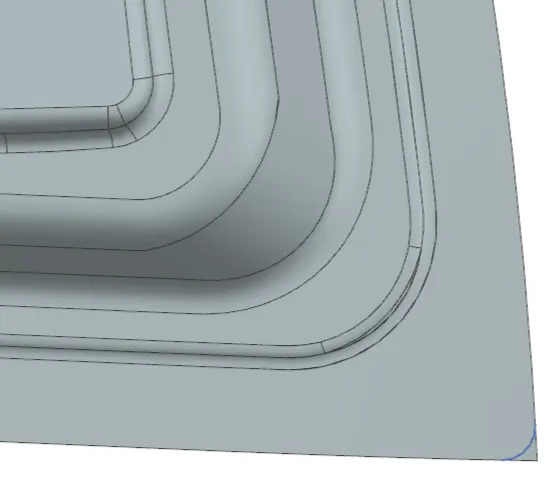
- thickened the surface upward
PROCEDURE OF HEMMING :
- rounded the sharp corners of the outer panel
- offsetted to the desired value
- trimmed into half
- drew curve parallel to edge on the face
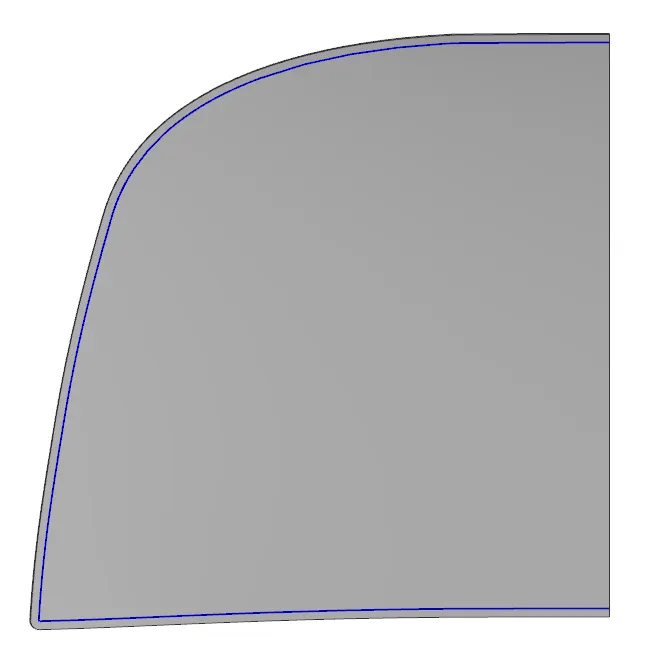
- trimed through the curve
- drew another parallel curve on face with 0.01 value to apply law extension and extended perpendicular to the face
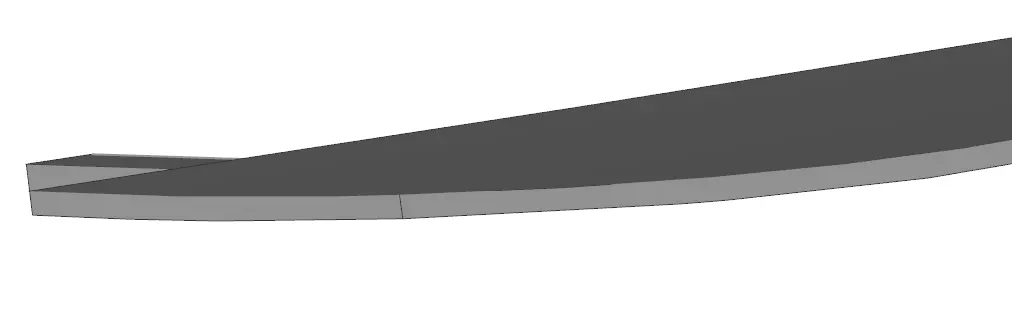
- face blended with 3 face option and created curve between surfaces
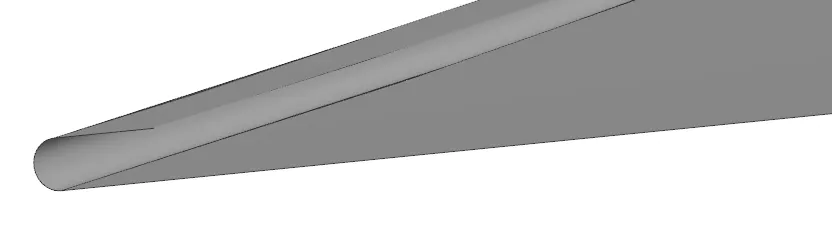
- provided corner reliefs
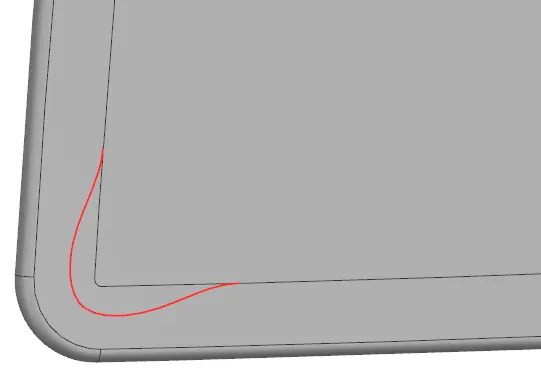
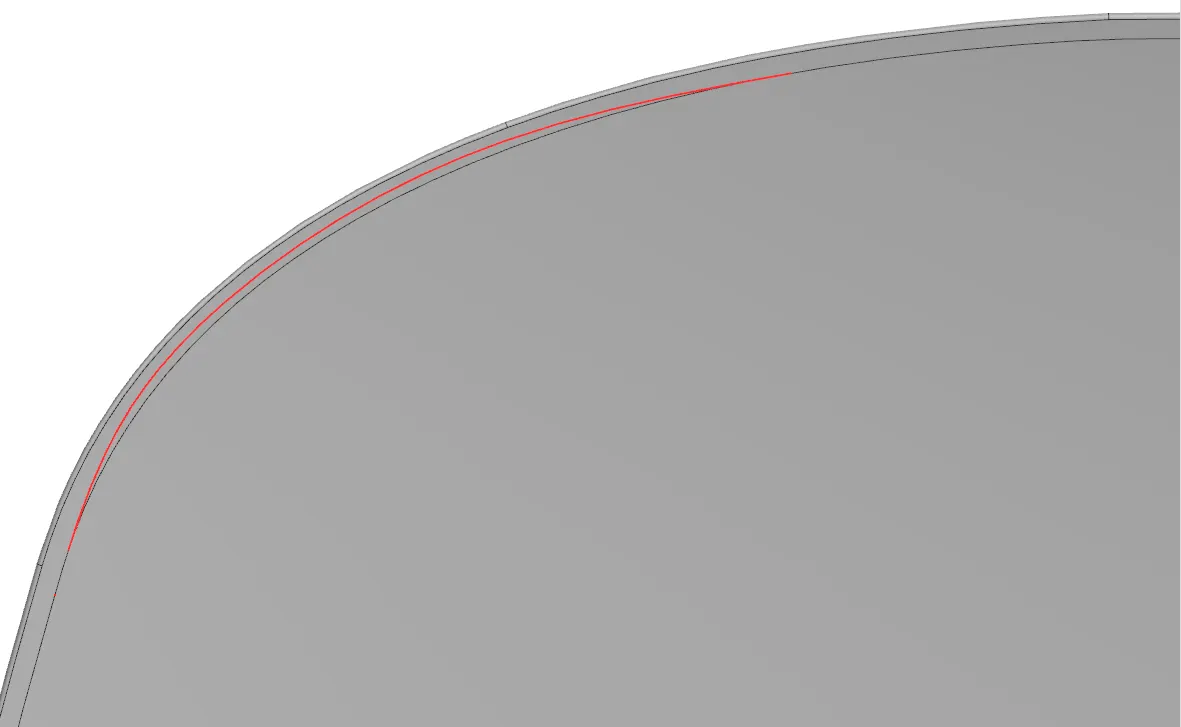
- applied mirror geometry
- and thickened the surface inward
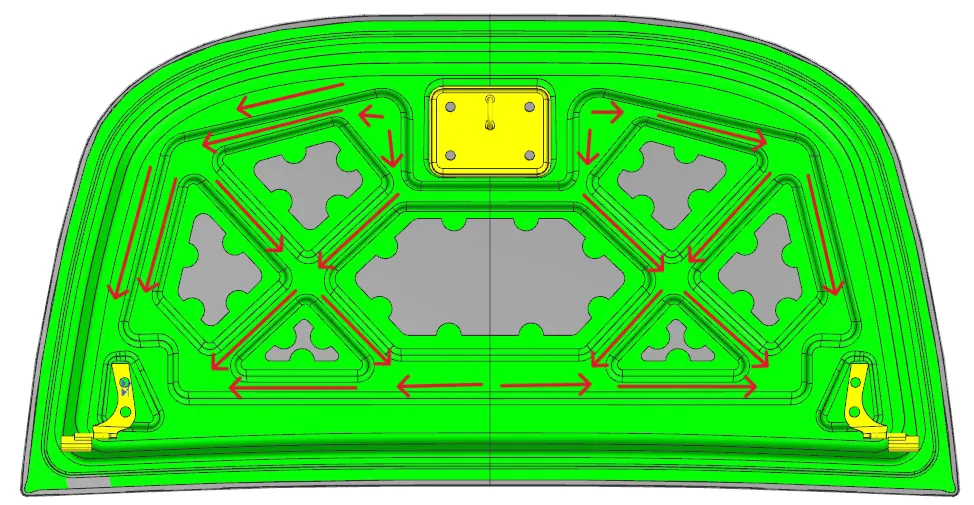
FORCE DISTRIBUTION OF HOOD :
CLIP SECTION VIEW OF HEMMED JOINT:
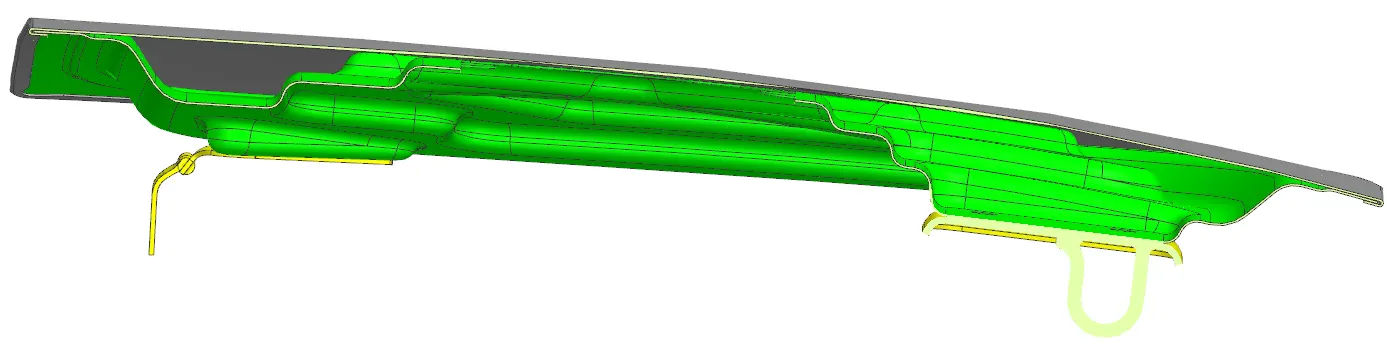
FULL VIEW OF HOOD ASSEMBLY :
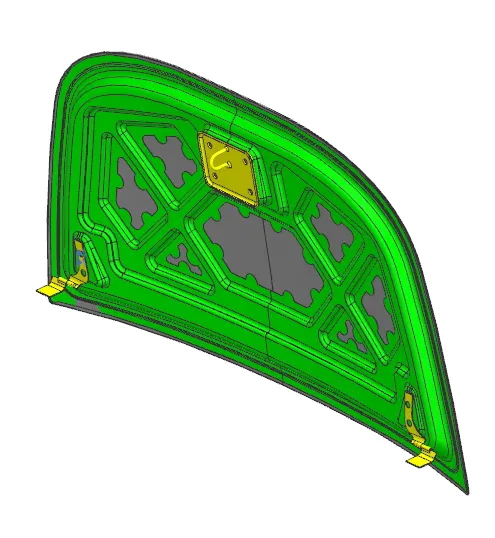
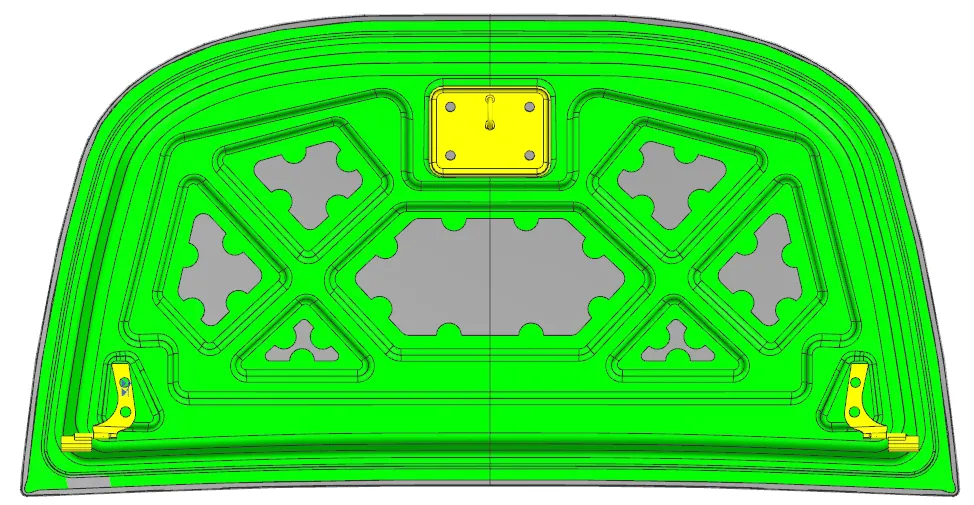
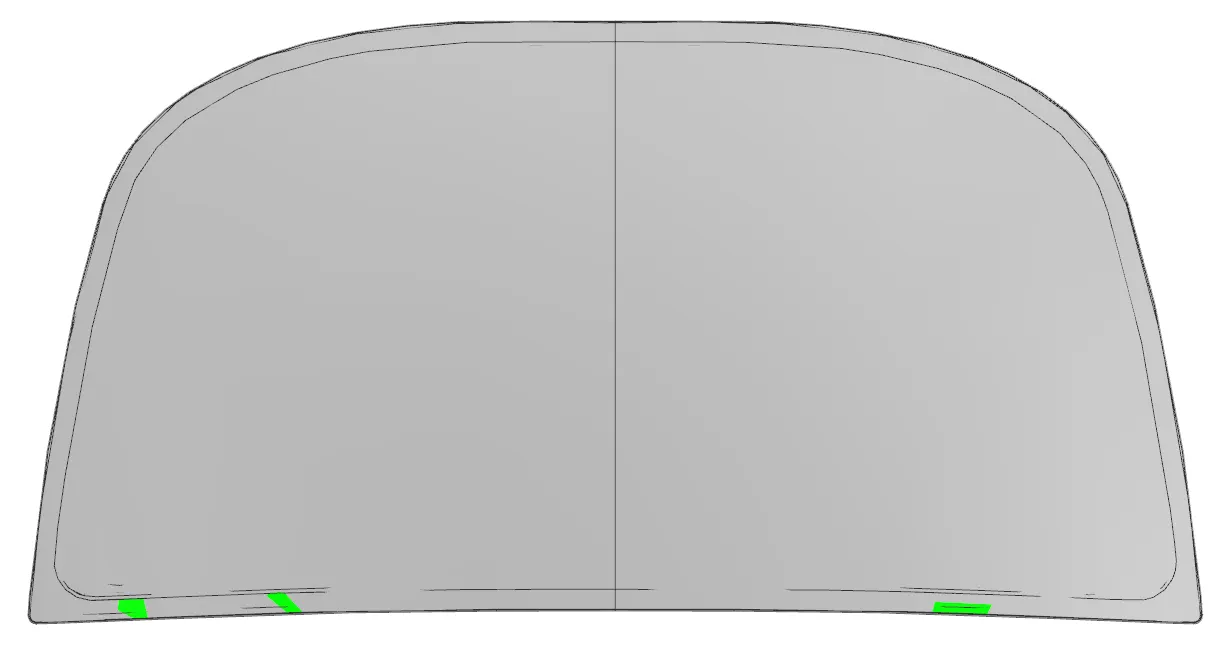
(due to graphic limitations the outerpanel doesnt performs the curvature well after thickening.this is the cause of innerhood panel projectioning in some regions)