Final Project: Electric Rickshaw modelling
Question
Create a detailed MATLAB model of an electric rickshaw (three wheel passenger vehicle) as per details below:
Rear wheels driven by PM brushed type motor
Assume efficiency points of motor controller and motor
Make an excel sheet of all input and assumed data
Results: For any three standard driving cycles show energy consumption, temperature rise of motor and controller for 100 km constant speed driving at 45 kmph.
(Note- The simulink model file should be compulsorily attached)
Your Answers
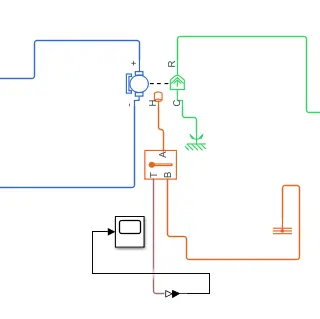
The model for the electric autorickshaw is as follows:
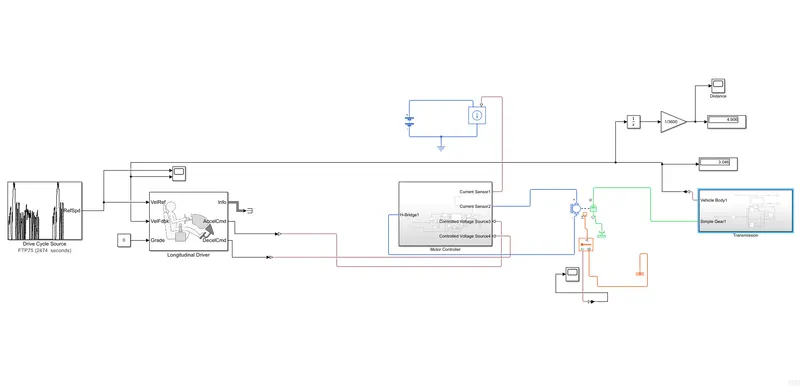
The various parts in the model are as below:
- Transmission system:
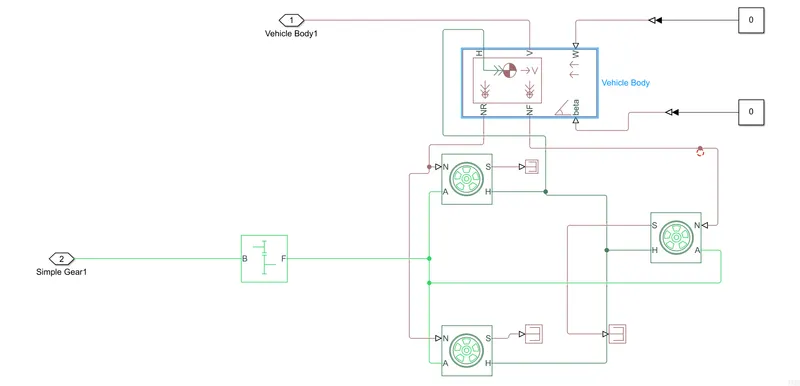
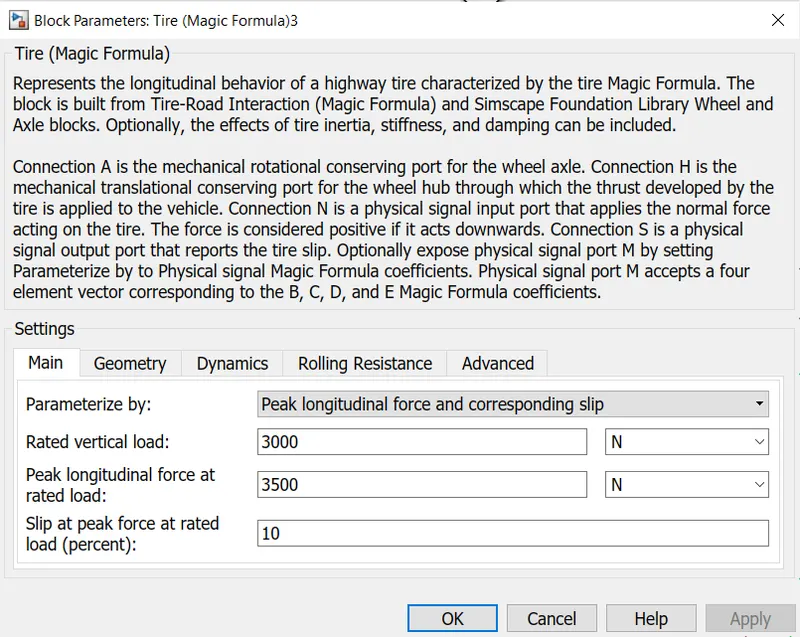
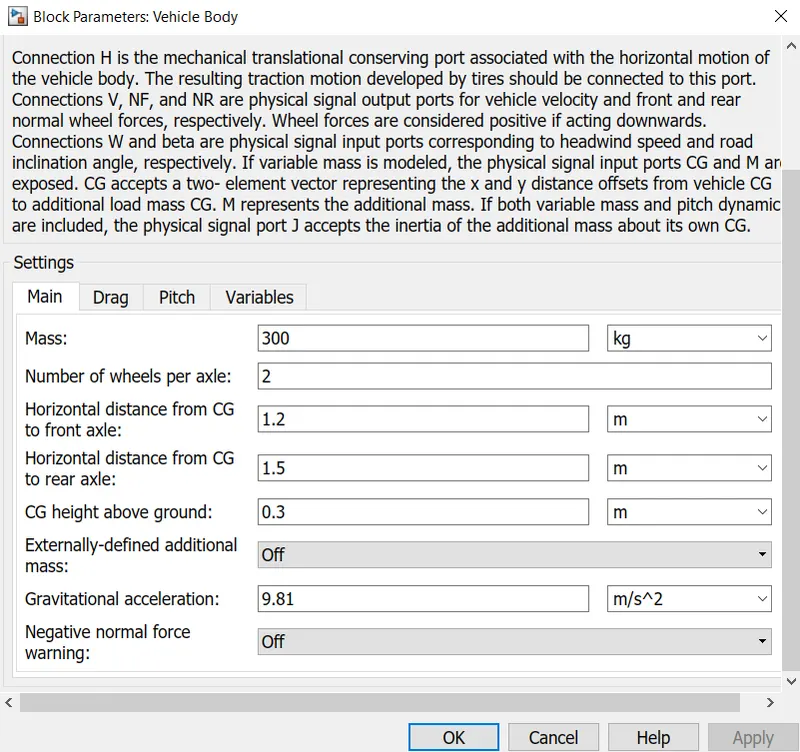
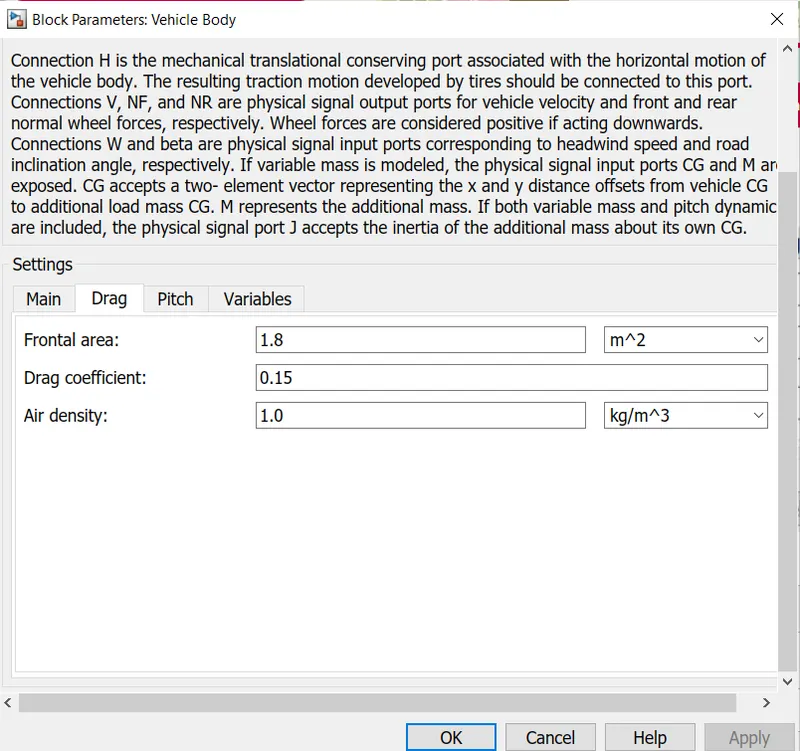
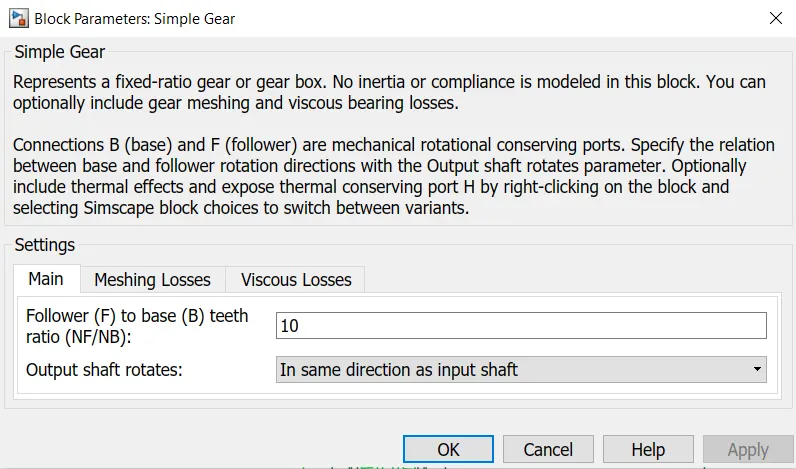
It has three tires connected on a single axle in the vehicle body. Also a simple gear is connected between the Dc motor and the shaft.The details of the tyres, vehicle body and gear is as given below:
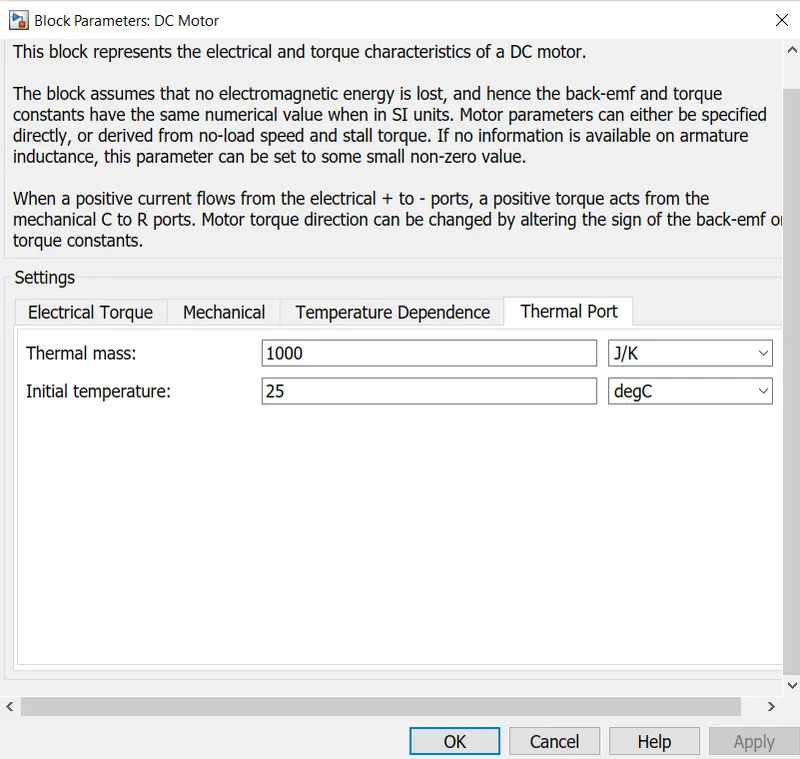
2. DC motor:
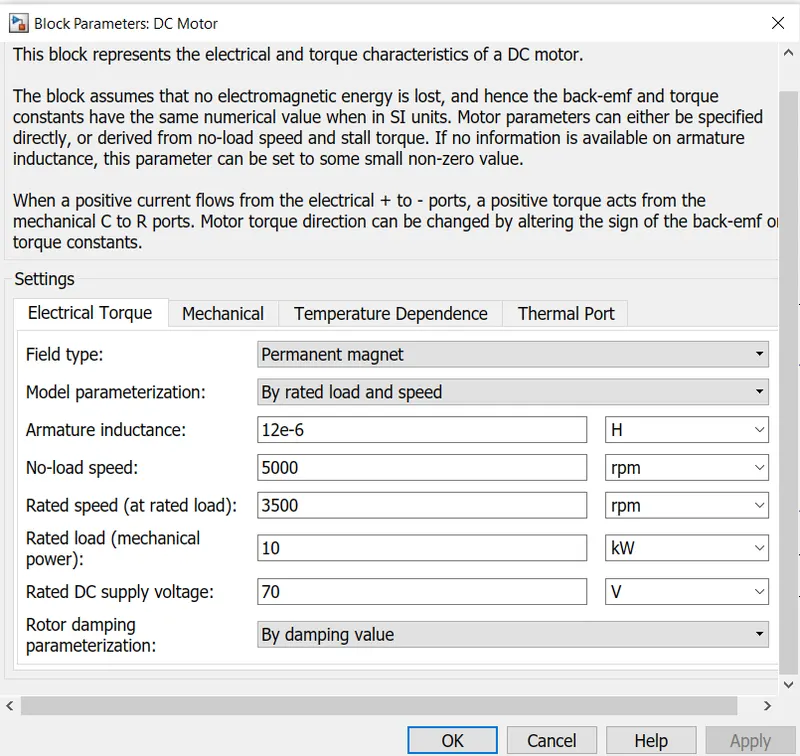
A permanent magnet brushed type DC motor is used with the following properties:
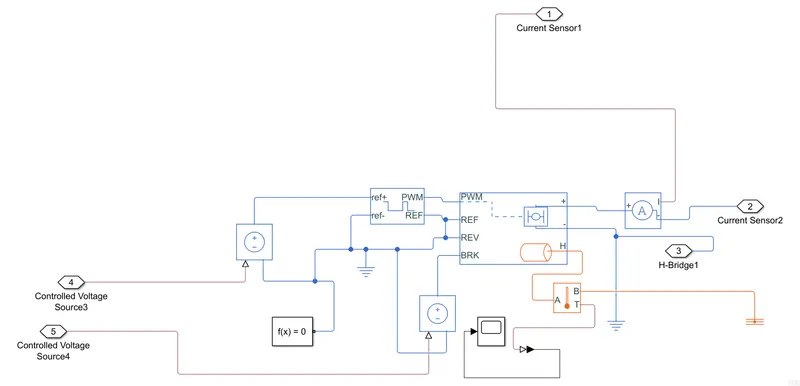
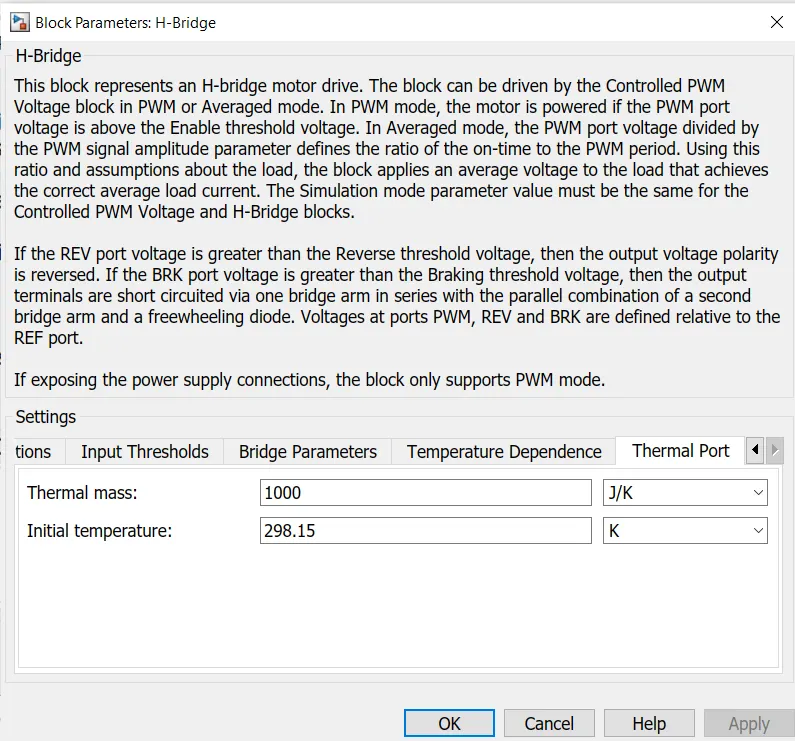
3. Motor Controller:
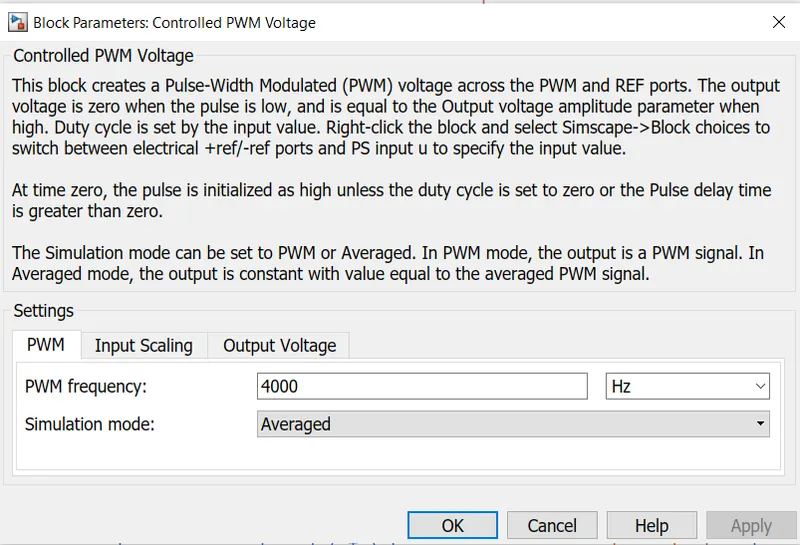
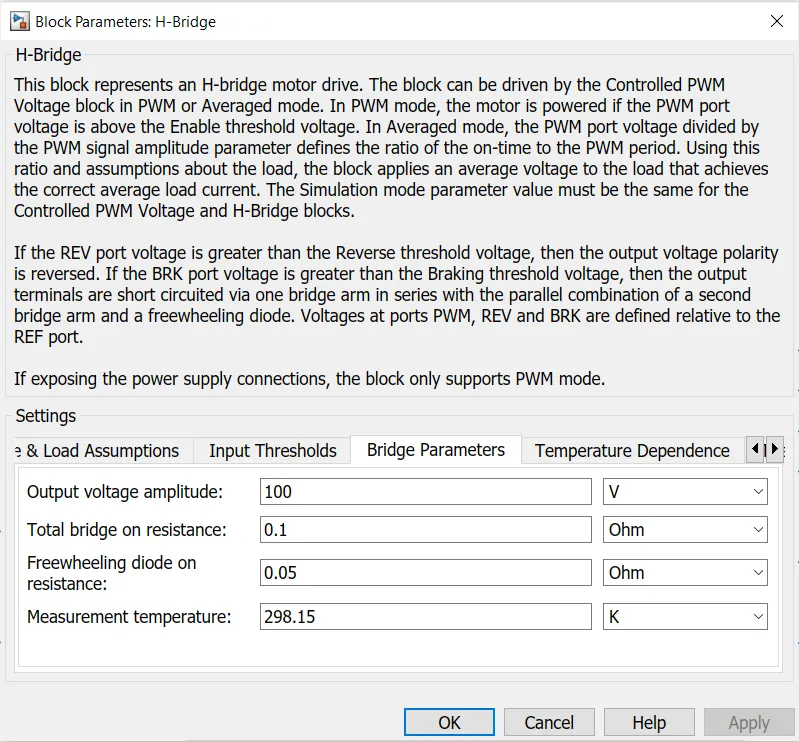
The different settings are as below:
4. Battery:
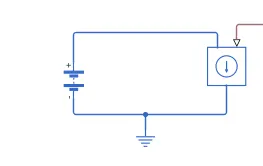
The battery voltage was set at 70V
5. Longitudinal driver:
It is a speed tracking controller that tries to follow the drive cycle accurately.
6. Drive cycle:
Three different drive cycles were used to derive our results. The first one is
- FTP75:
Lets observe the different results-
(1) Drive cycle vs Output speed
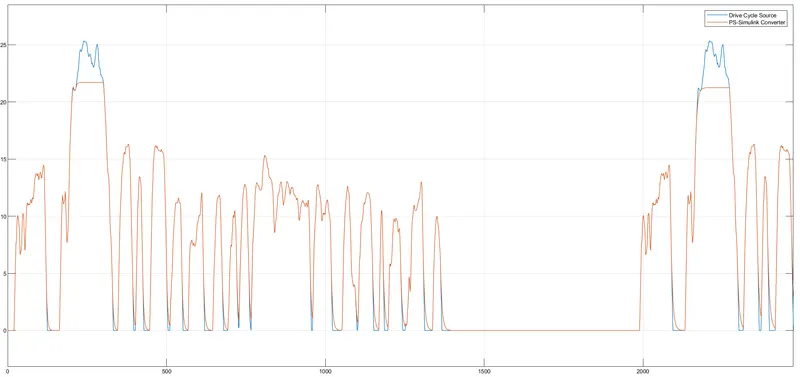
We can see that the autorickshaw is following the drive cycle well except for the top speed which is limited to nearly 22kmph.This limitation is due to the motor power and speed rating.
(2) Distance travelled
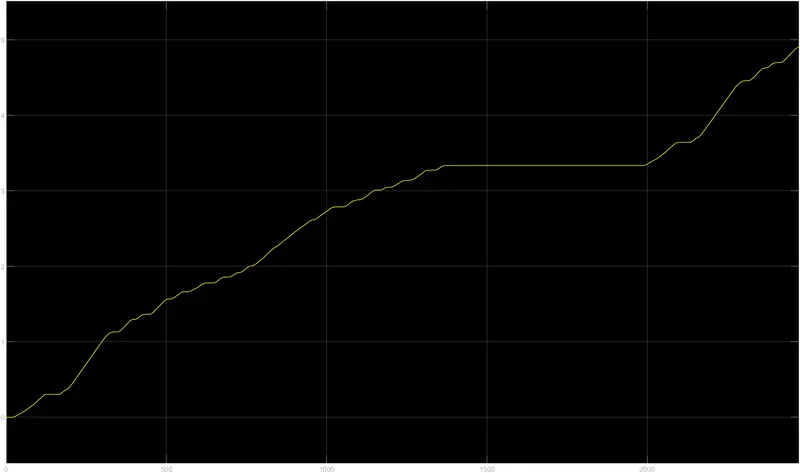
The distance travelled in 2474 seconds was 4.9km
(3) Heating graphs:
DC Motor
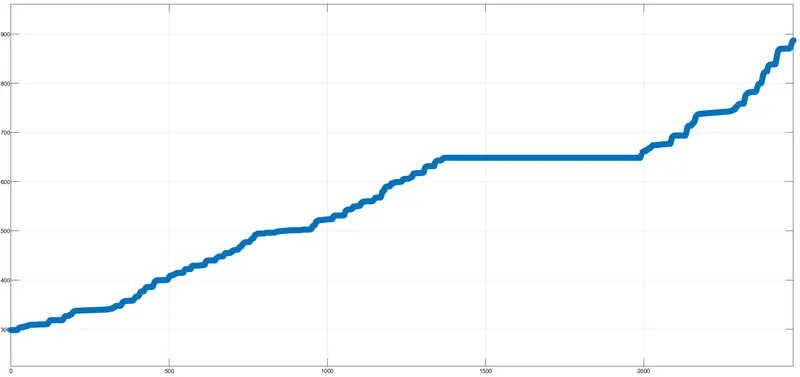
max temperature that DC motor reaches is around 890 degree Kelvin and as the thermal mass is 1000J/K, the heat dissipated would be 890kJ
PWM controller:
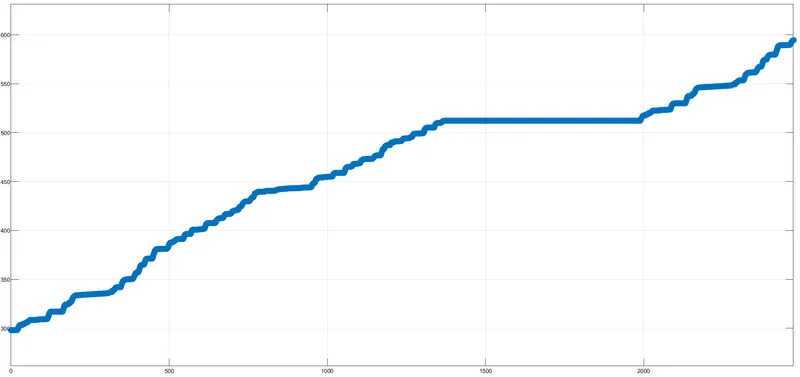
The controller has max temperature as 595 Kelvin and the energy dissipated would be 595KJ.
- IM240
(1) Drive cycle vs Output speed
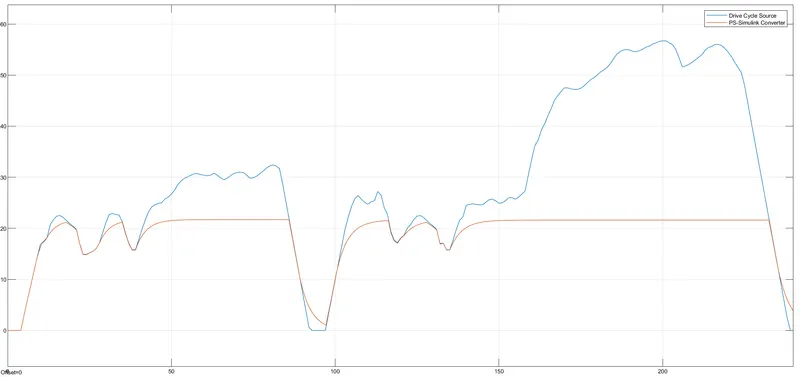
The same result can be seen here that the maximum speed is limited to 22kmph. It fails to follow this drive cycle accurately.
(2) Distance travelled:
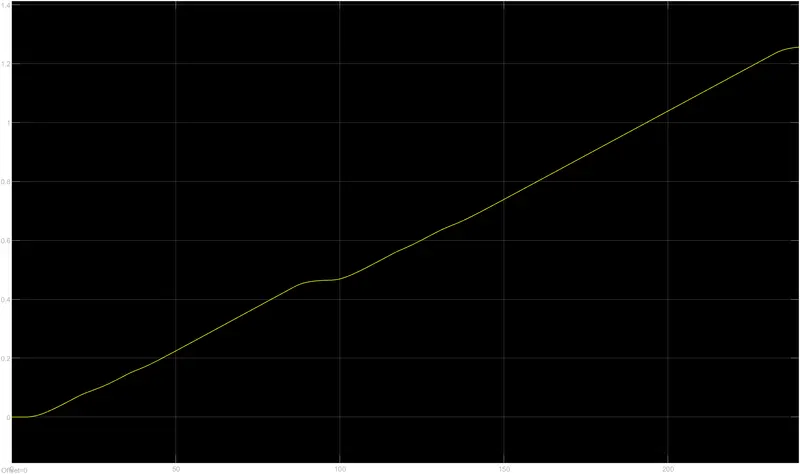
The maximum distance travelled here 1.2km in 240 seconds.
(3) Heat graphs:
Dc Motor:
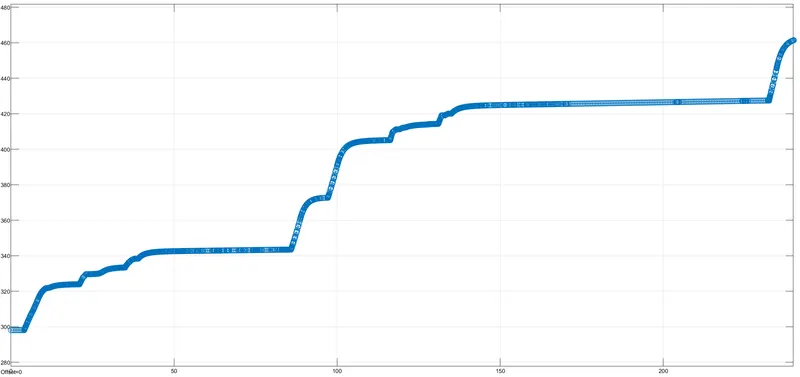
The maximum temperature reached was 465kelvin and the heat dissipated is 465 kJ
PWM controller:
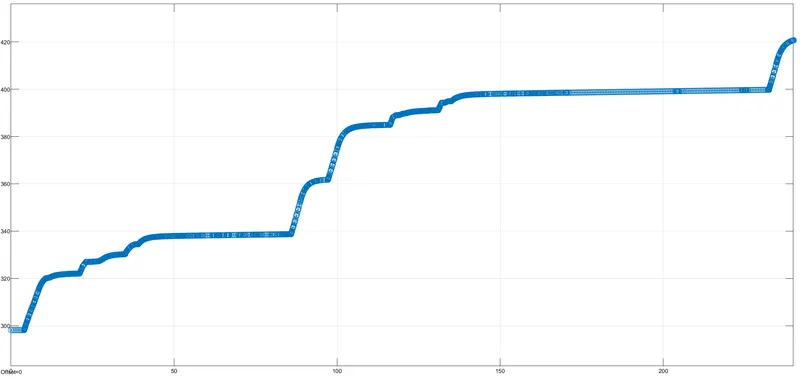
The maximum temperature reached was 420 kelvin and the heat dissipated is 420kJ.
- Constant 45kmph for 100km
(1) Drive cycle Vs output speed
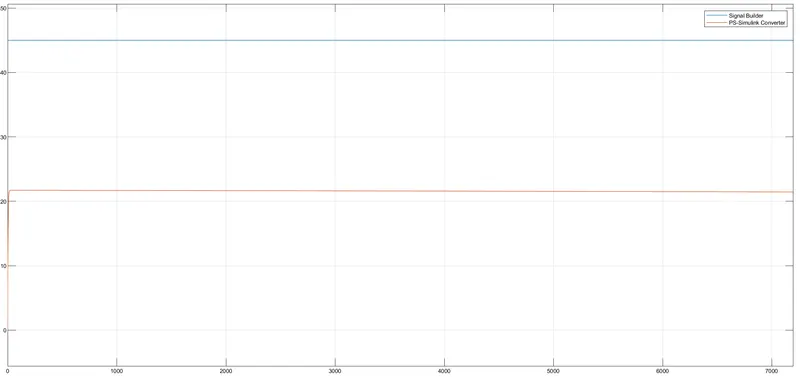
The same result can be seen where speed is capped at 22kmph.
(2) Distance travelled:
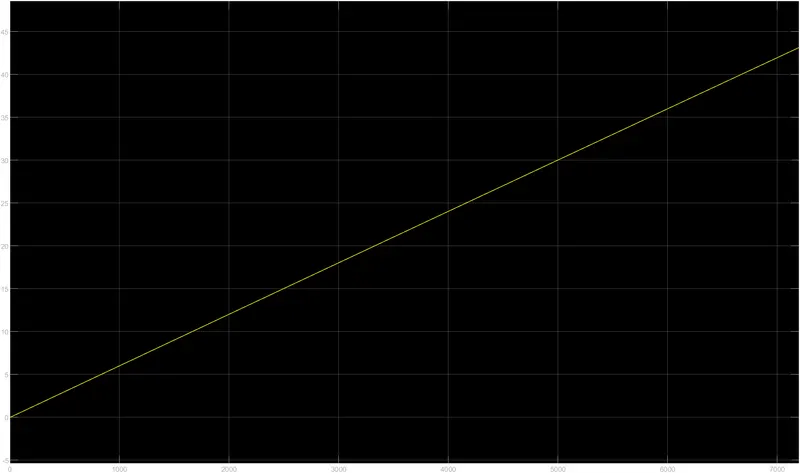
The maximum distance covered at constant top speed for 7200 sec was 43.16km
(3) Heating graphs:
DC motor:
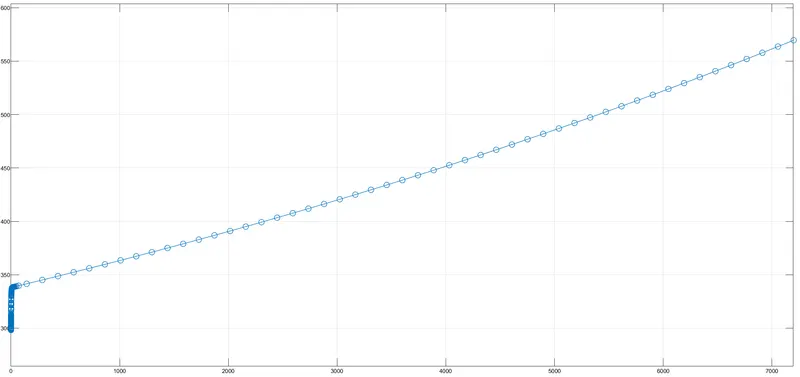
The maximum temperature reached was 570 kelvin and the heat dissipated is 570kJ.
PWM controller:
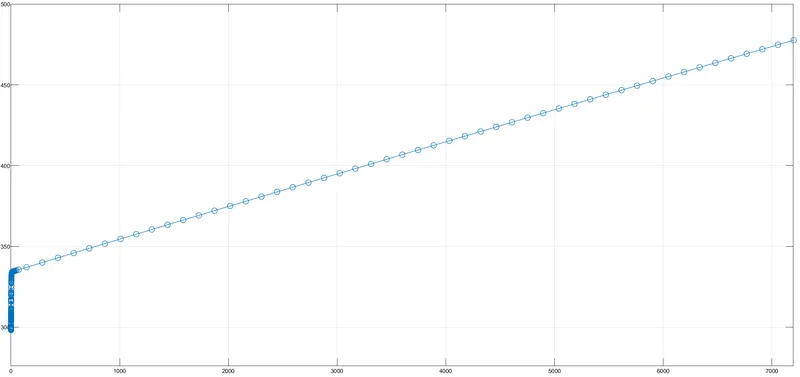
The maximum temperature reached was 470 kelvin and the heat dissipated is 470kJ.
Inference:
From all the three drive cycles we could make the follwong observations:
- Top speed of vehicle was capped at 22kmph
- The DC motor has more heating than the PWM controller by 100 KJ