Final Project: Electric Rickshaw modelling
Create a detailed MATLAB model of an electric rickshaw (three wheel passenger vehicle) as per details below:
Rear wheels driven by PM brushed type motor
Assume efficiency points of motor controller and motor
Make an excel sheet of all input and assumed data
Results: For any three standard driving cycles show energy consumption, temperature rise of motor and controller for 100 km constant speed driving at 45 kmph.
(Note- The simulink model file should be compulsorily attached)
Answer:
INTRODUCTION
Electric E-Rickshaw is also known as electric tuk-tuk, e-rickshaw and auto which are going more popular after 2018 in Indian market. This E-rickshaw is best alternative of petrol/ CNG auto rickshaw and human or horse pulled rickshaws because of their low fuel cost, zero emissions and less human efforts.
The electrical system used in Indian version is 48VDC can run 90-100 km/full charge, top speed 25 km/hour and this electric motor power ranging from 650-1400 Watts; the battery takes 8-10 hrs to become fully charged. Basic seating capacity is driver plus 4 passenger total 5 persons.
Here basically, e-rickshaw is designed in CREO and MATLAB Simulink. In the designed electric rickshaw main blocks are battery, drive cycle, controlled, DC Motor, Vehicle body and transmission system. Drive cycle is the input of human effort that how he is going to drive his actual cycle. We can use drive cycle like FTP75, WOT or by using Excel.
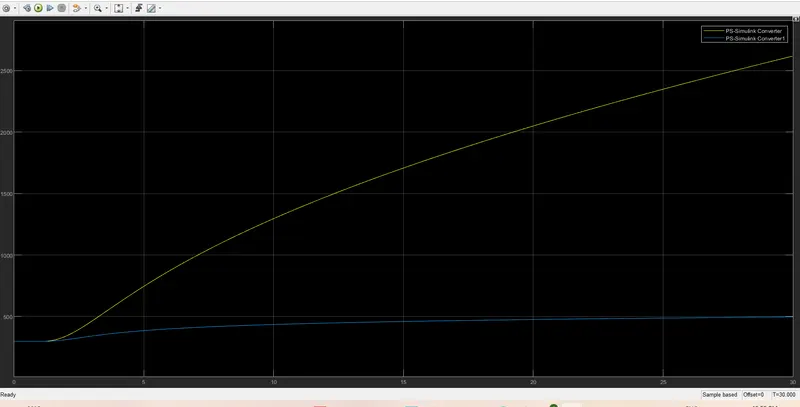
The main objective of this project is to obtain speed by driver, to estimate the temperature of motor and controller, to estimate the state of charge (SOC) and distance travel by the vehicle. There is a SOC block that will estimate the state of charge of battery, distance is calculated by speed and time parameter for all the three Drive cycle.
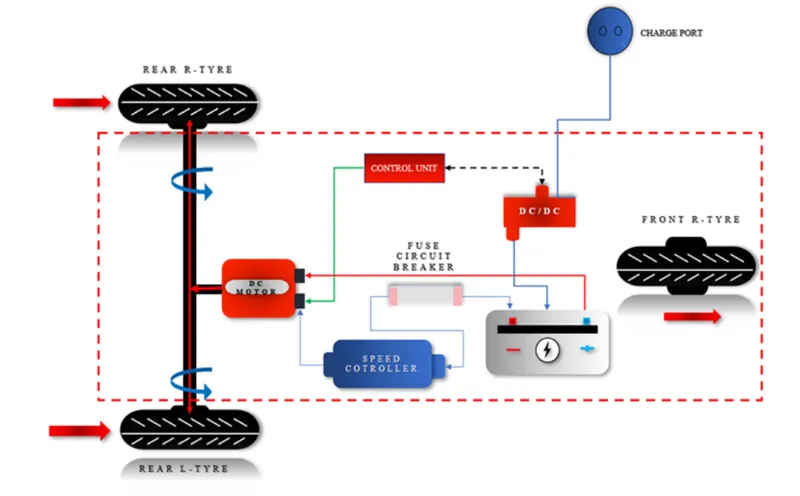
General detail of E-Rickshaw
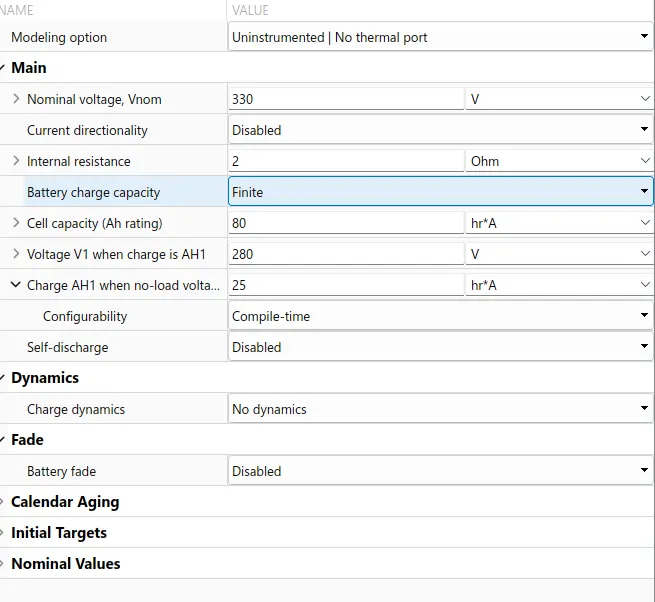
Battery Type Lithium Ion 60.8 V 160
Vehicle kerb weight 260 kgs
Load capacity 340 kgs
Vehicle speed 7 kmph
Driving range 140 km (160 Ah)
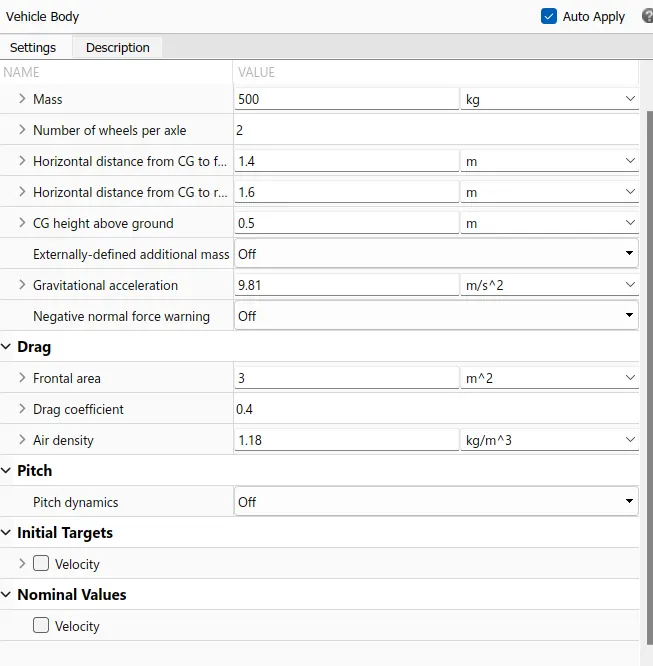
No of wheels per axel 2 • Frontal Area 91m²
Drag coefficient 5
Wheel radius 306m
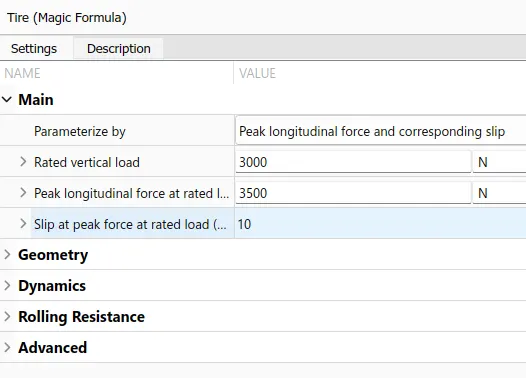
Vertical load 3000 N
Nominal Voltage 8 V
Rated Capacity 160 Ah
Initial SOC % 100
Internal Resistance 5 ohm
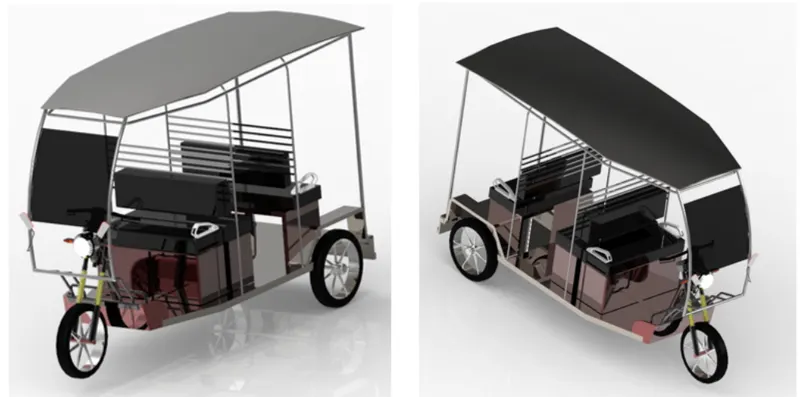
A CAD model of Electric rickshaw is shown below.
- Electric Motor: PM brushed DC Motor type 650-1400W & 48V (Input) motor is used. It is controlled via an electronic controller.
- Electronic Motor Controller: The controller includes a manual or automatic switch turning the motor on/off, selecting forward or reverse motion, selecting and regulating speed, regulating or limiting torque and protecting against overloads.
- It is connected to battery pack and controller feeds the input to the motor, lamp, AC/DC converter and Speedometer/Indicator.
- Battery: Set of four 12V deep cycles /Li-ion batteries are used since the required voltage is 48V. These batteries are connected in series to the controller unit.
- Front Shock Absorbers: Helical Spring with dampener with hydraulic telescopic shock absorbers are used. • Rear Suspension: Leaf spring carriage spring with rear shocker
- Brakes: Drum brakes, actuated internally, expanding shoe type are used. Brakes are mounted on the chassis (Pedal brakes), so on pressing the pedal, the brakes will engage stopping the rear wheels.
- Speedometer/Indicator: Speedometer generally used have analogue dials. The one the left side indicates vehicle speed and one on the right side indicate battery charge level. It is connected to the controller unit.
- Steering: Handle bar type steering is used.
- Miscellaneous Spare parts: Centre locking, Alloy wheel, Rear light, Front glass, Front Indicator, Headlight, Ignition switch, Charger, Converter, left-right switch, Tyre, Wirings, Throttle set etc.
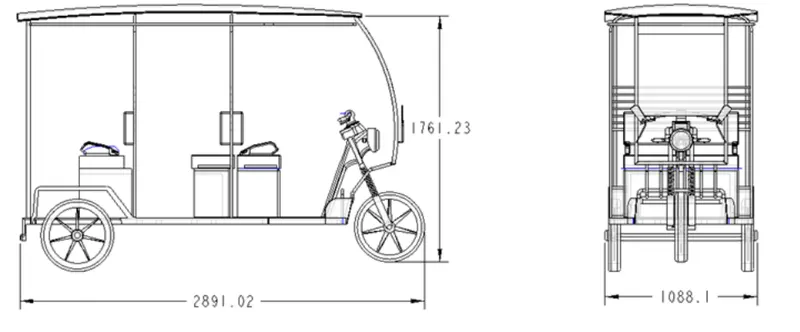
Dimension:
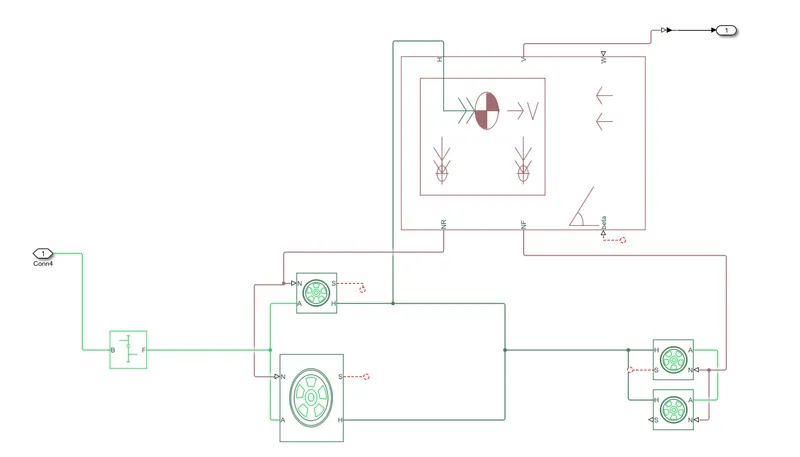
Simulink Model of E-Rickshaw:
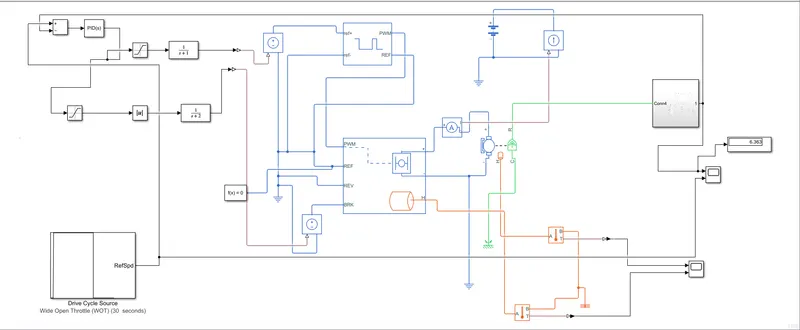
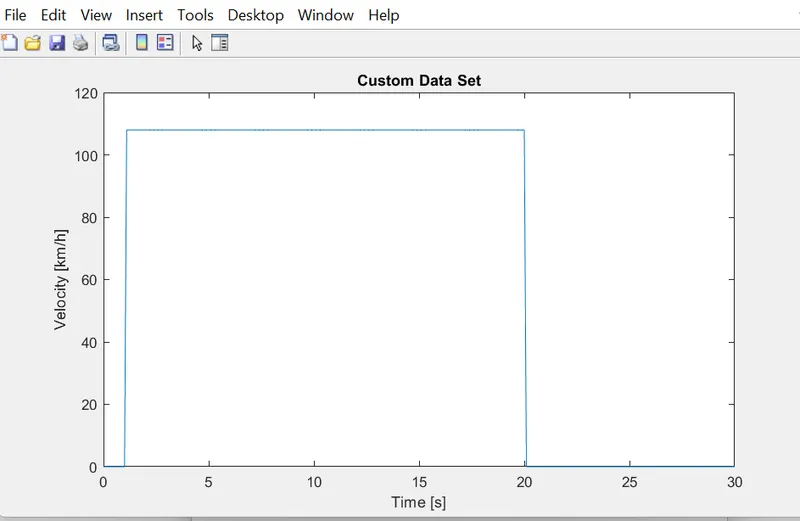
With wide open throttle
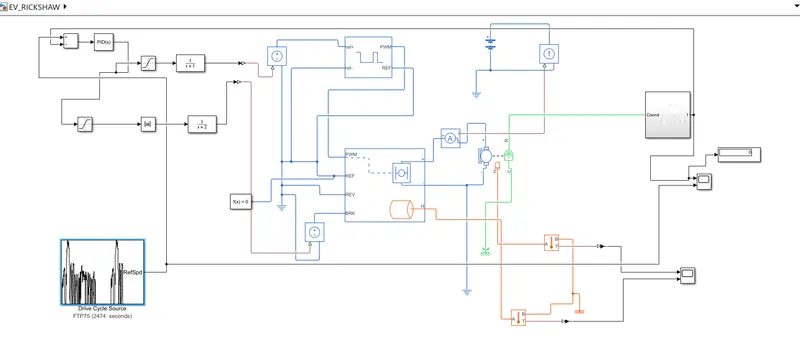
with FTP75 drive cycle
Rear wheels driven by PM brushed type motor
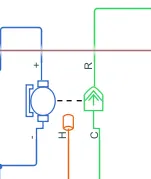
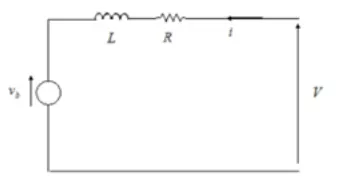
The DC Motor block represents the electrical and torque characteristics of a DC motor using the following equivalent circuit model:
Here in this system, the positive terminal is connected with the current sensor negative terminal and negative terminal is connected with the negative terminal of H-Bridge.
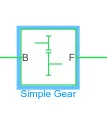
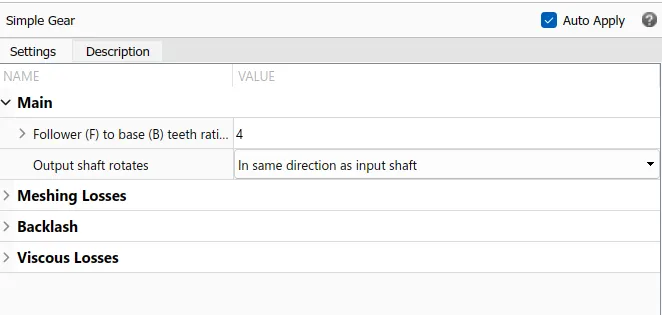
R is DC motor rotor which connected with mechanical rotational port i.e. simple gear whereas C is DC motor case and it is connected with mechanical rotational reference.
A basic configuration of the DC motor is as follow:
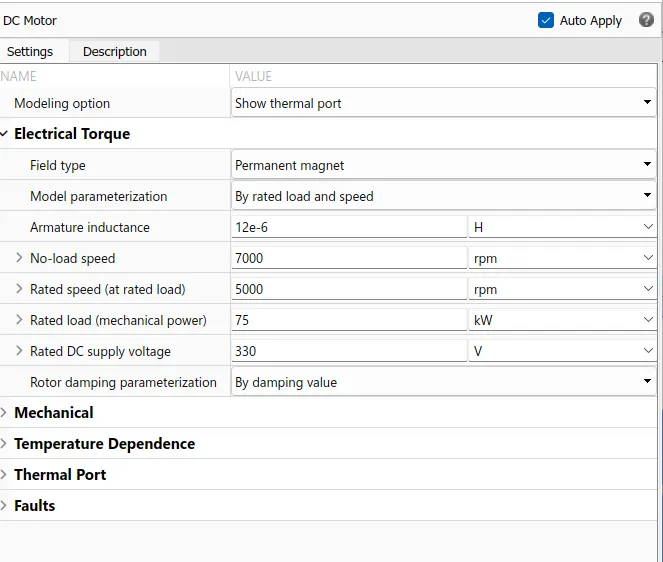
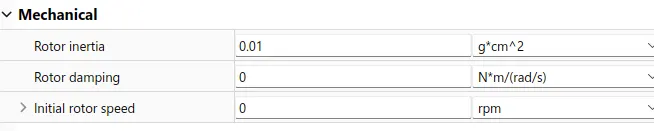


Assume efficiency points of motor controller and motor
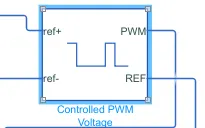
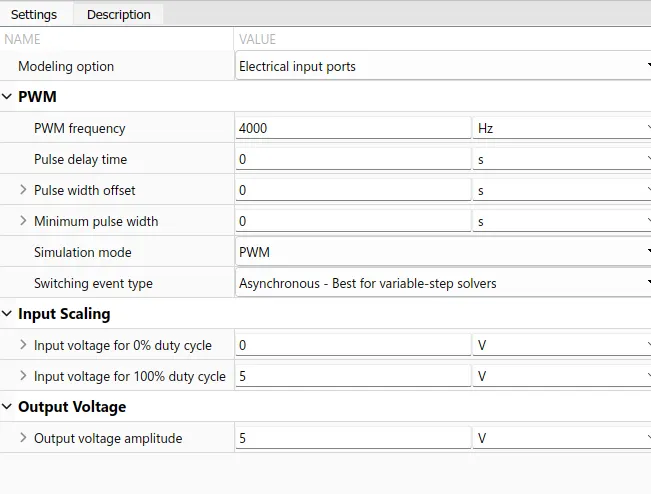
The value of the Output voltage amplitude parameter determines amplitude of the output voltage.
The Controlled PWM Voltage block represents a pulse-width modulated (PWM) voltage source.
• Electrical input ports - The block calculates the duty cycle based on the reference voltage across its ref+ and ref- ports. This modeling variant is the default.
• PS input - Specify the duty cycle value directly by using an input physical signal port.
where
Vref is the reference voltage across the ref+ and ref- ports.
Vmin is the minimum reference voltage.
Vmax is the maximum reference voltage
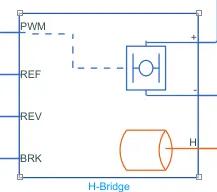
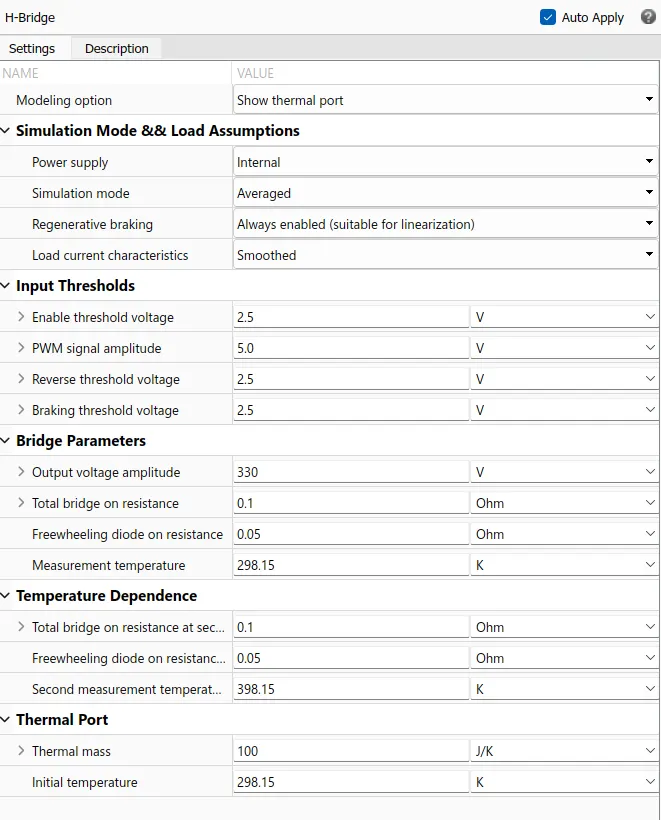

Here in this system, the positive terminal is connected with the current sensor negative terminal and negative terminal is connected with the negative terminal of H-Bridge.
R is DC motor rotor which connected with mechanical rotational port i.e. simple gear whereas C is DC motor case and it is connected with mechanical rotational reference.
A basic configuration of the DC motor is as follow:
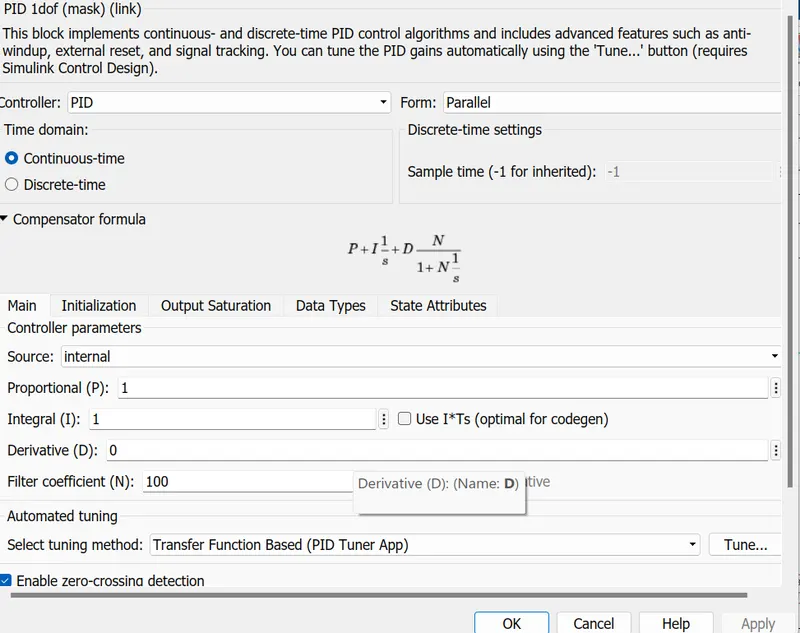
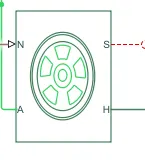
Vehicle Body:

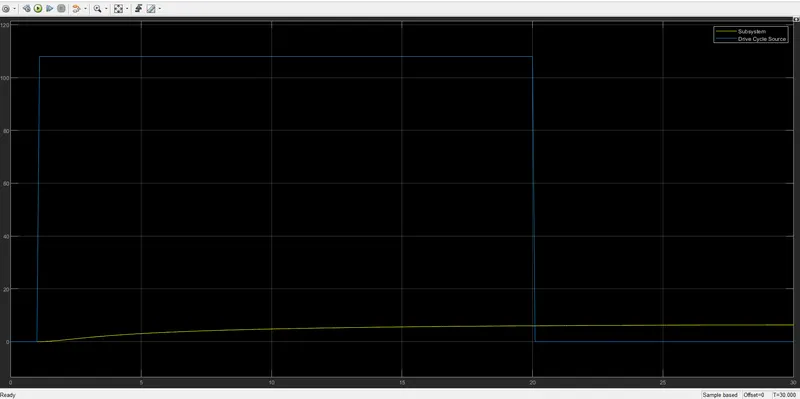
Result:
Motor :
Tempreture :
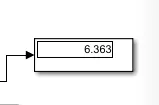
Distance cover by vehicle:
Result:
From the obtained vehicle speed performance we can conclude that vehicle has attained its maximum speed and there is very slight delay in the de accelaration but the accelaration and top speed were performed very well by the vehicle.
Rickshaw has obtained an output according to the WOT drive cycle and it can be tested for many drive cycle by selecting in the drive cycle block.it has travelled 6.363 km by the present 70V battery capacity if we increase battery capacity to higher levels we can travel more distance.