Final Project: Electric Rickshaw modelling
ABSTRACT:
In this project, we are going to build the MATLAB model of the ELECTRIC RICKSHAW by using a PM brushed type DC motor and a suitable Lithium-Ion battery for the motor. Before that, we will know about what is Electric RICKSHAW, how it's works and the benefits of EV RICKHAE. Then we make an actual EV RICKSHAW model in SIMULINK with suitable blocks from the powertrain block set. My main motto is to check "how my RICKSHAW performs for any three standard driving cycles showing energy consumption,
OBJECTIVE:
- To make the simple and low run-time vehicle model using the individual component model.
- To check out performance parameters: Speed, SOC, current, the temperature of motor and H-bridge, etc. with various drive cycles.
- To play with Motor power, vehicle body (Rolling resistance, Air drag, weight) inputs.
- To know the MATLAB model and their configuration to match with the actual vehicle.
THEORY:
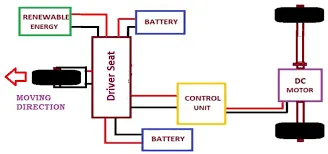
Electric rickshaws (also known as electric tuk-tuks or e-rickshaws or toto or e-tricycles) have been becoming more popular in some cities since 2008 as an alternative to the auto-rickshaws and pulled rickshaws because of their low fuel cost, and less human effort compared to pulled rickshaws. They are being widely accepted as an alternative to petrol, diesel, CNG auto-rickshaws. They are three-wheelers powered by an Electric motor ranging from 650 to 1400 Watts. They are mostly manufactured in India and China, only a few other countries manufacture these vehicles. Battery-run rickshaws could be a low-emitter complimentary transport for the low-income people, who suffer most from a lack of transport facility if introduced in a systematic manner according to experts.
Design and Construction:
These rickshaws have an M.S(Mild Steel) tubular chassis, consisting of three wheels with a differential mechanism at the rear wheels. The motor is a brushless DC motor manufactured mostly in India and China. The electrical system used in the Indian version is 48V and in Bangladesh is 60V. The body design from the most popular Chinese version is of very thin iron or aluminum sheets. Vehicles made in fiber are also popular because of their strength and durability, resulting in low maintenance, especially in India. The body design is varied from load carriers, passenger vehicles with no roof, to full body with windshield for drivers comfort. It consists of a controller unit. They are sold on the basis of voltage supplied and current output, also the number of MOSFET (metal oxide field-effect transistors) used. The battery used is mostly a lead-acid battery with life of 6–12 months. Deep cycle batteries designed for electric vehicles are rarely used. The weight of the electric car has also been a recurring design difficulty in them.
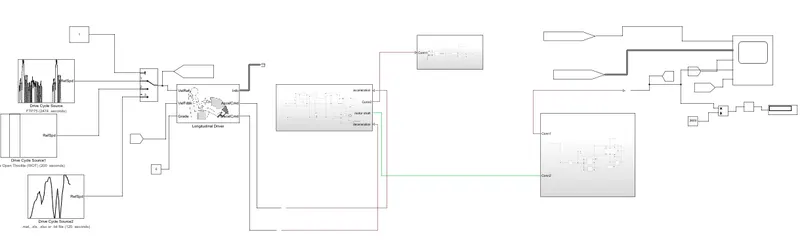
Simulink for the electric rickshaw model-
Vehicle system-
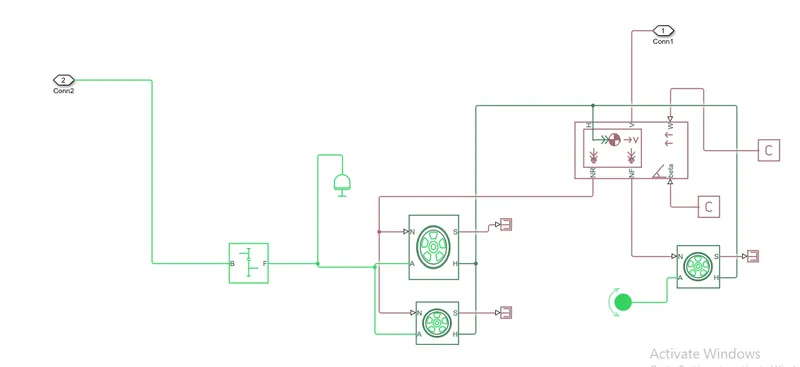
In the above diagram it's clearly seen shaft is just is attached to the rear of vehicles and power supply is done to the rear wheels,And the front tire is rotataional freed( with the help of rotataional free end)
parameters-
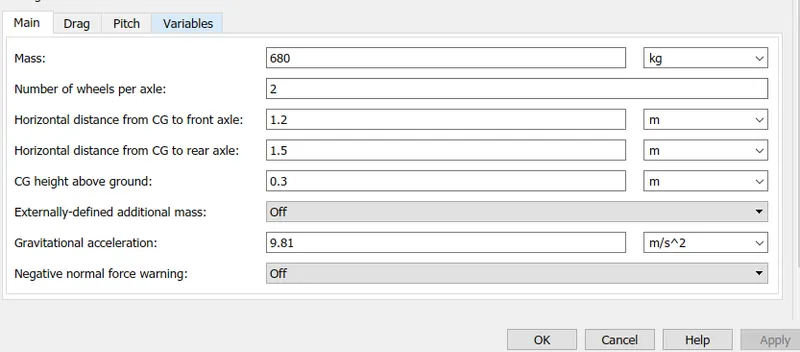
(vehicle body)

Tire-
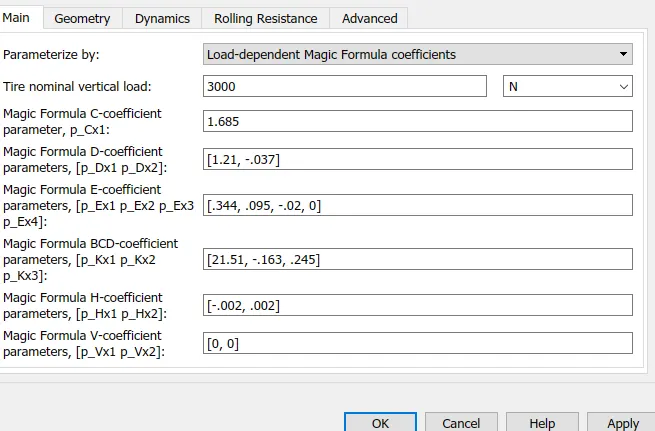
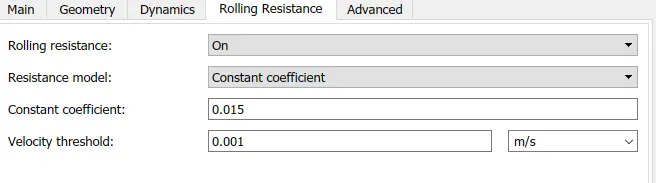
The tire is facing a normal load of 5000newton from the ground and the tire is facing a rolling resisitance of 0.015 which is acting between the road and the tire.
Simple gear train-
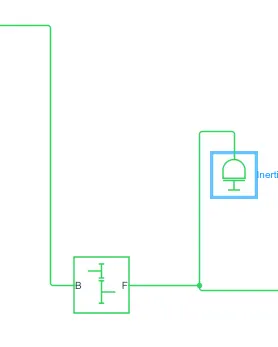
Gear train mechanism helps in reduction of the speed from the motor and helps in additional of torque.
Electrical system-
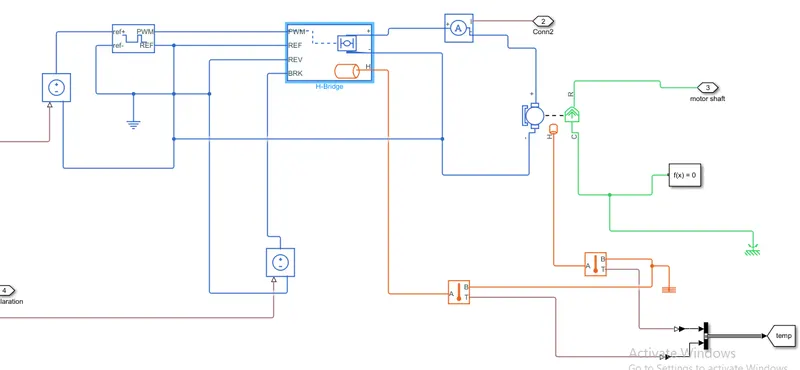
the drive cycle sends the signal to the pwm with the help of control voltage source and the pwm sends the signal to h bridge which helps in driving the dc motor.
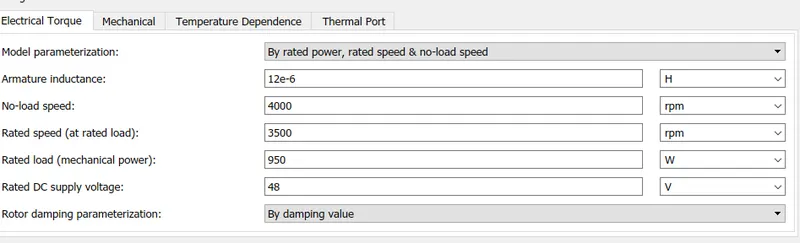
Dc motor values-

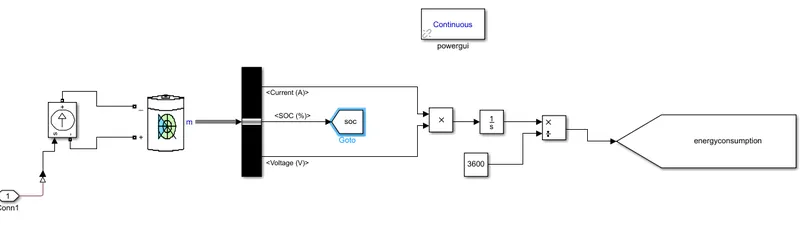
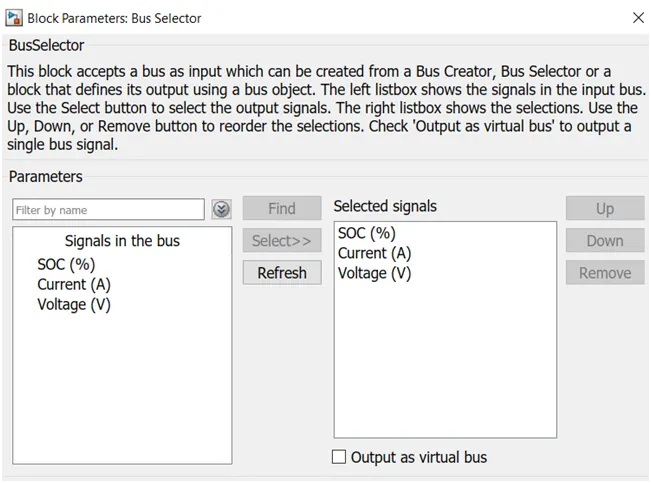
Battery-
Battry parameters-
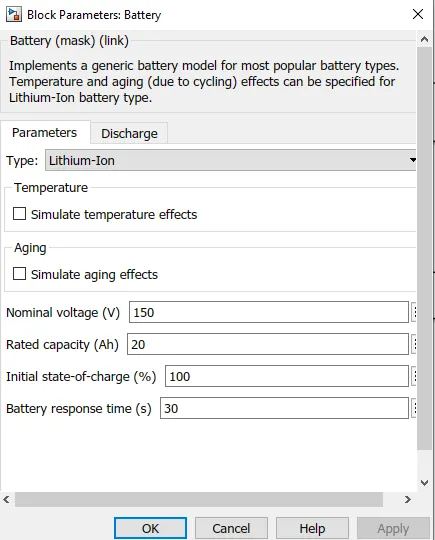
The battery is required to power the controller and motor. The controller uses the battery power according to produce the input given by the motor to obtain maximum speed. The battery is also used to power every electrical component in the vehicle. The battery has two stage one is charging and another one is discharging state. The battery is of 5.4Ah capacity.
What is state of charge-
State of charge (SoC):
SoC is the percentage or level of battery presents after certain travel or consumption of battery charge by the vehicle. In the designed vehicle battery charge or SOC is calculated by the giving it to the rate transition and then to gain where 1/(nominal battery capacity) then to a discrete-time integrator and it will get minus from the 1 as it is considered a 100% of battery and it is multiplied with 100 to get percentage of battery.
The majority of blocks are simscape blocks where physical to simulink converter is used to convert the physical signal from simscape block to simulink signal.
Drive cycle(1)-
Results-
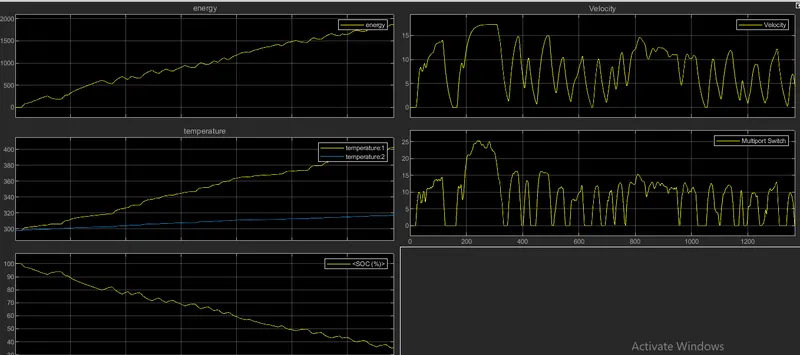
- The actual Speed is approximately followed the 75% of reference Drive cycle.
- The SoC% of the battery is reduced to ≈55percent
- The Temperature of Motor is increased to 320c
- The Temperature of Controller is 400c.
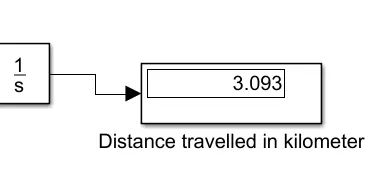
- distance travelled-
Drive cycle(2)-
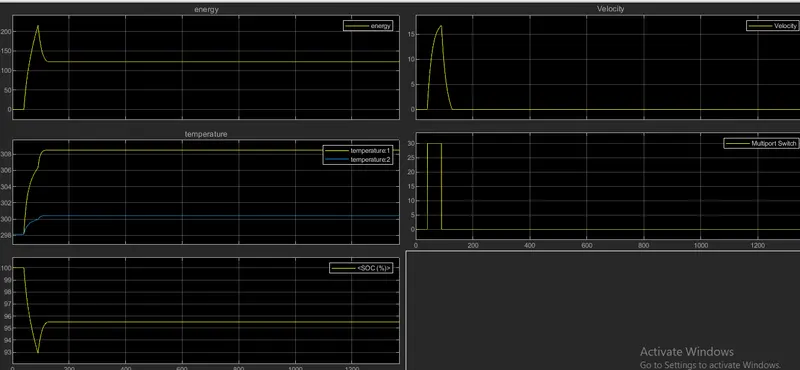
- The actual Speed is approximately followed the 75% of reference Drive cycle.
- The SoC% of the battery is reduced to ≈95.5percent
- The Temperature of Motor is increased to 308c
- The Temperature of Controller is 300c.
Drive Cycle(3)-
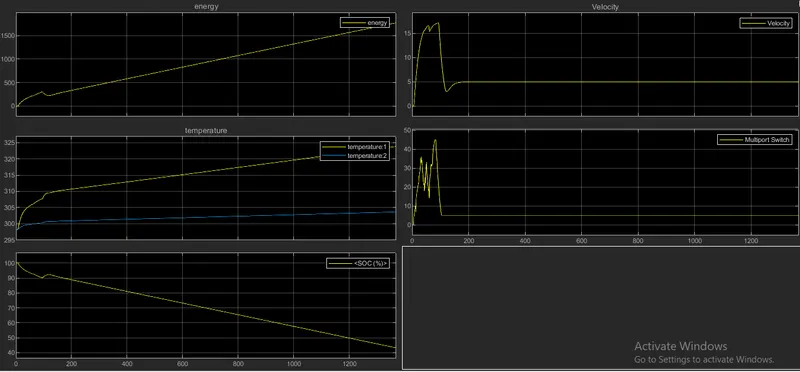
- The actual Speed is approximately followed the of reference Drive cycle.
- The SoC% of the battery is reduced to ≈600percent
- The Temperature of Motor is increased to 300c
- The Temperature of Controller is 320c.
All three drive cycles have put in the velocity of the cycle the battery percentage and the temperture are clculated across motor and the controller as there was no cooling system the temp rose abruptly.
The excel file-
conclusion-
- Here I have compromised with the temperature of Motor and controller to achieve vehicle speed is near to reference speeds.
- In the real time application, the motor, battery & controller temperature is controlled by air cooling. Hence, the temperature of this components is not increased to this extent.
- Hence, Created a MATLAB model of an Electric Rickshaw (three wheel passenger vehicle) by using Li-ion battery, PM Brushed DC Motor.
- Detremined the variations of Temperature of Motor and controller, SoC% and Energy consumed by the by vehicle for all the three Reference Drive cycles (i.e.; FTP75, WOT, Manually prepared).
- This Battery powered Rickshaw will be the most popular mode of transport in the future.