Final Project: Design of an Electric Vehicle
ELECTRIC VEHICLE
An EV is a shortened acronym for an electric vehicle. EVs are vehicles that are either partially or fully powered on electric power. Electric vehicles have low running costs as they have less moving parts for maintaining and also very environmentally friendly as they use little or no fossil fuels (petrol or diesel).
MAIN COMPONENTS
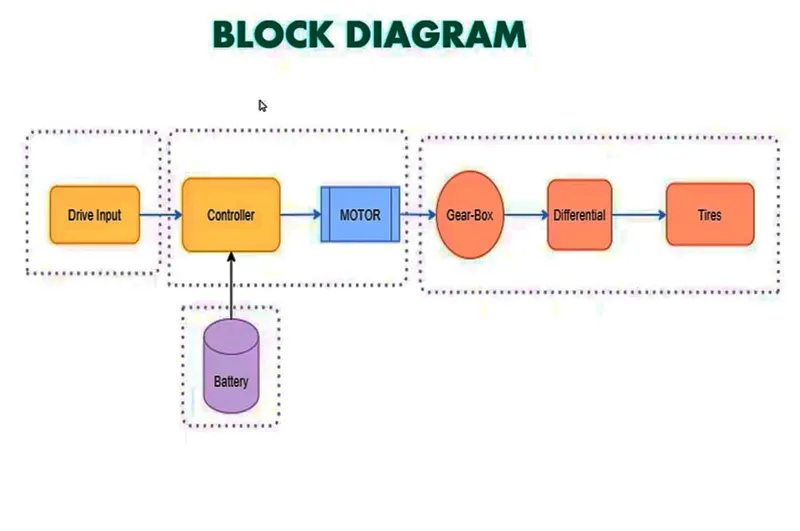
- BATTERY
- MOTOR CONTROLLER
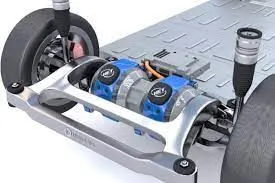
- ELECTRIC MOTOR
BATTERY
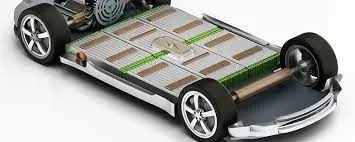
An electric-vehicle battery (EVB) (also known as a traction battery) is a battery used to power the electric motors of a battery electric vehicle (BEV) or hybrid electric vehicle (HEV). These batteries are usually rechargeable (secondary) batteries, and are typically lithium-ion batteries. These batteries are specifically designed for a high ampere-hour (or kilowatt-hour) capacity
Recent EVs are using new variations on lithium-ion chemistry that sacrifice specific energy and specific power to provide fire resistance, environmental friendliness, rapid charging (as quickly as a few minutes), and longer lifespans. These variants (phosphates, titanates, spinels, etc.) have been shown to have a much longer lifetime, with A123 types using lithium iron phosphate lasting at least more than 10 years and more than 7000 charge/discharge cycles, and LG Chem expecting their lithium-manganese spinel batteries to last up to 40 years.
Recharging time
Electric cars like Tesla Model S, Renault Zoe, BMW i3, etc., can recharge their batteries to 80 percent at quick charging stations within 30 minutes. For example, a Tesla Model 3 Long Range charging on a 250 kW Tesla Version 3 Supercharger went from 2% state of charge with 6 miles (9.7 km) of range to 80% state of charge with 240 miles (390 km) of range in 27 minutes, which equates to 520 miles (840 km) per hour.
Travel range before recharging
- Lead-acid batteries are the most available and inexpensive. Such conversions generally have a range of 30 to 80 km (20 to 50 mi). Production EVs with lead-acid batteries are capable of up to 130 km (80 mi) per charge.
- batteries have higher specific energy than lead-acid; prototype EVs deliver up to 200 km (120 mi) of range.
- New lithium-ion battery-equipped EVs provide 320–480 km (200–300 mi) of range per charge. Lithium is also less expensive than nickel.
- are cheaper and lighter than They are also cheaper than (but not as light as) lithium-ion batteries.
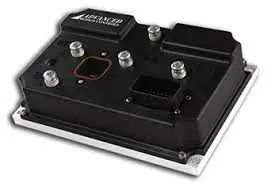
MOTOR CONTROLLER
Motor controller is a combination of Power electronics and embedded micro-computing elements which make the efficient conversion of energy stored in batteries of an electric vehicle to generate motion.
All 4QD controllers work by switching the battery connection to the motor on and off around 20,000 times a second using a technique called pulse width modulation [PWM].The voltage at the motor looks like this….. The motor averages these pulses out, as this rate of switching is too fast for the motor to detect.
ELECTRIC MOTOR
- DC Series Motor
- Brushless DC Motor
- Permanent Magnet Synchronous Motor (PMSM)
- Three Phase AC Induction Motors
- Switched Reluctance Motors (SRM)
SIMULINK MODEL
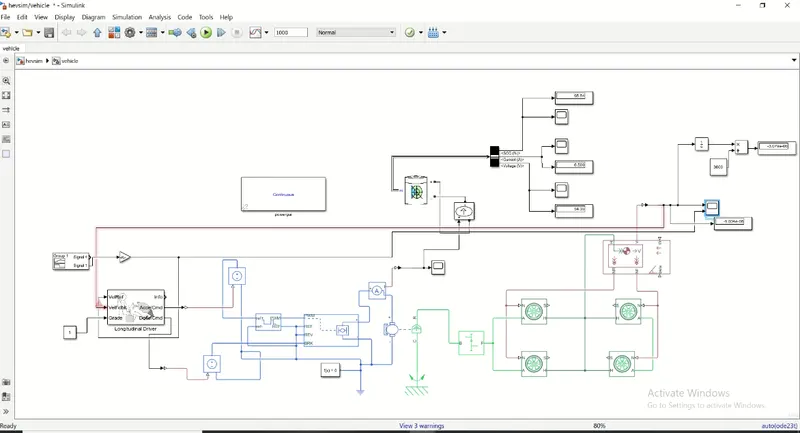
MODEL SUB SYSTEMS:
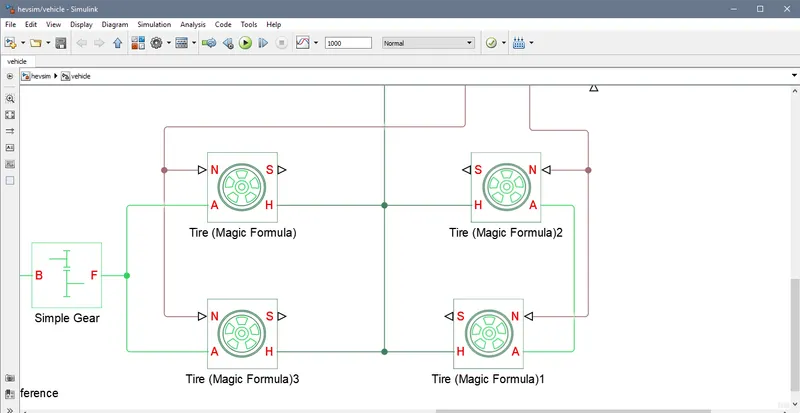
TYRE
HERE
- N pole is consider as normal reaction
- S pole is consider as slip
- A pole is consider as a mechanical rotational conserving
- H pole is mechanical translational conserving
VEHICLE BODY
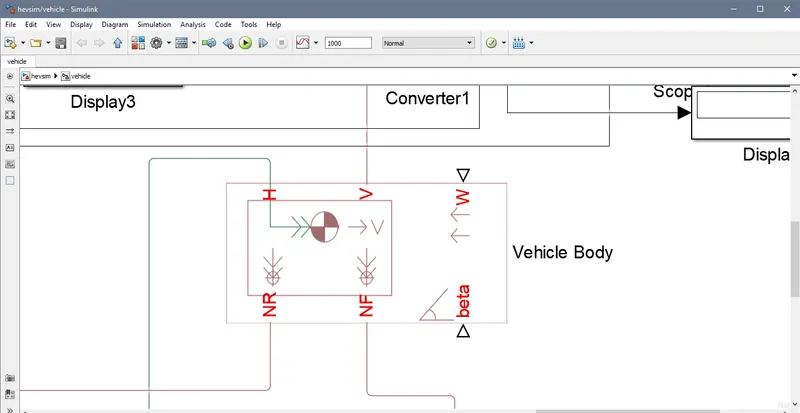
HERE
- tyre H pole's are connected to vehicle body's H pole.
- 2 tyre N pole is connected to NR(rear wheel)
- 2 tyre Npole is connected to NF(front wheel)
- V is represent as output (velocity).so it is connected to scope.
DC MOTOR
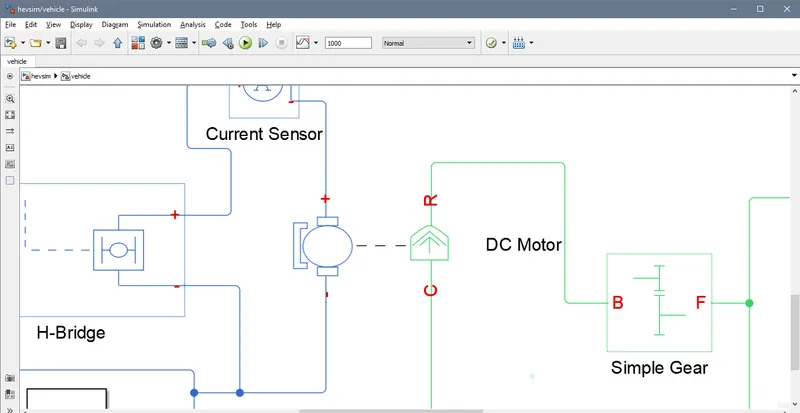
here
- R is consider as rotor so it is connected to gearbox
- c is consider as case. it is connected to motor rotational reference
- here green is reprecent mechanical work and blue is reprecent electric work.
H-BRIDGE
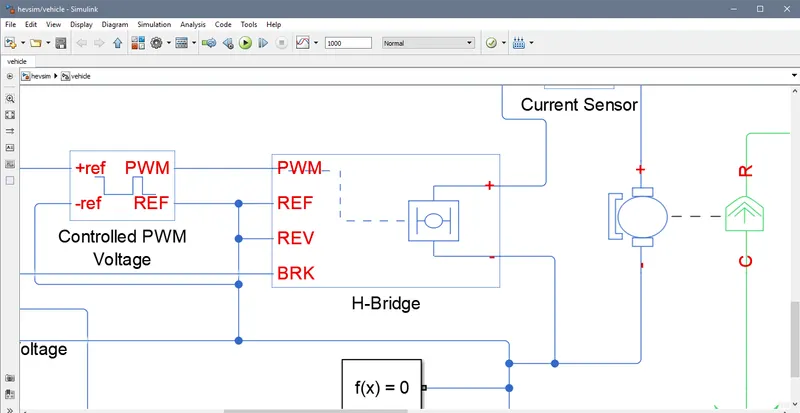
here
- h-bridge works as a controller
- PWM is connected with puls input
- REF is reference input.
- REV is reverse motion of the motor(backward motion of vehicle)
- BRK is braking of the motor
LONGITUDINAL DRIVER
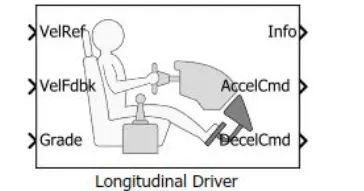
HERE
- Velref is reference velocity port
- velFdbk is feedback velocity
- grade is correspondinf as grade angle
- AccelCmd is acceleration Command
- DecelCmd is deselaration command
BATTERY
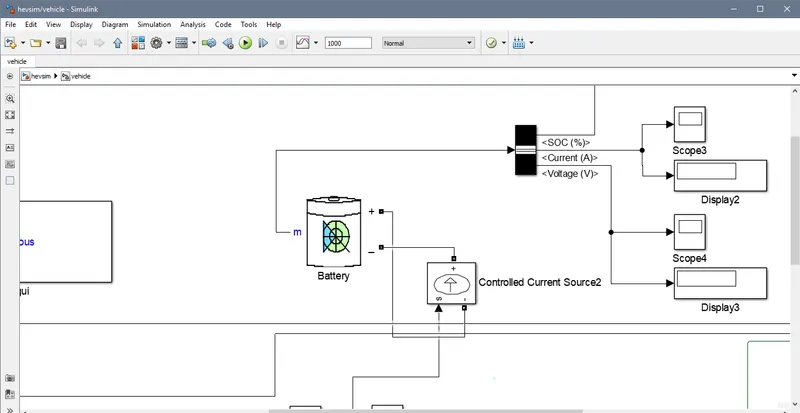
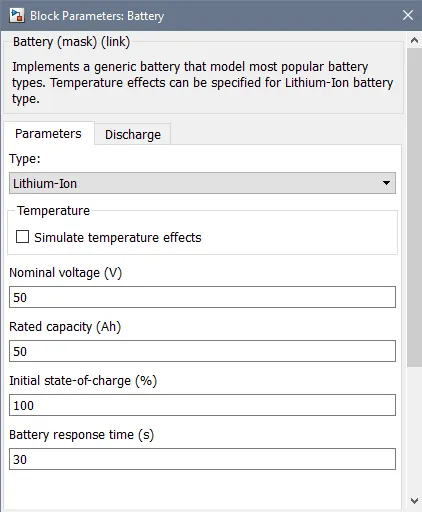
HERE
- normal voltage is 50v
- amphere hour rating is 50
- battery terminals are connected with controlled current source
OUTPUT:
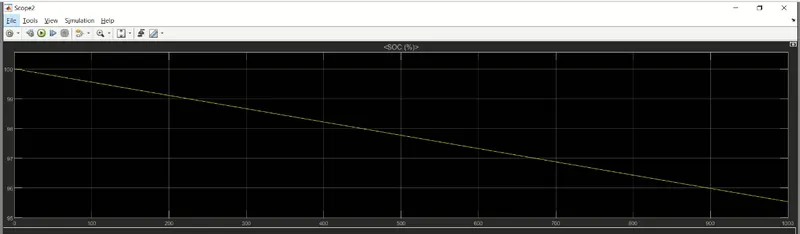
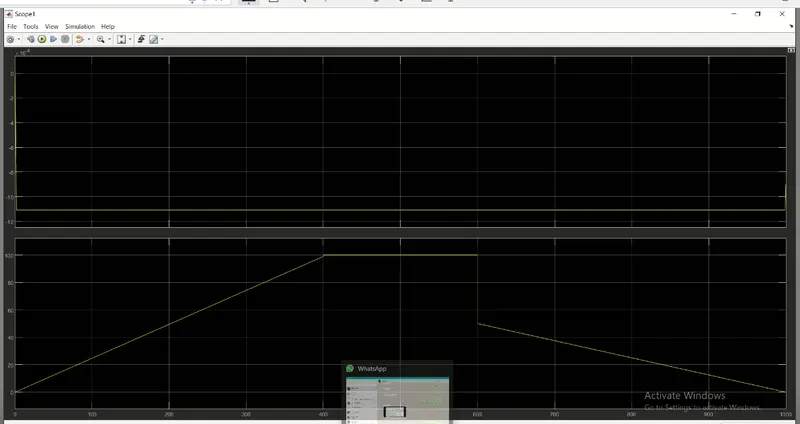
battery state of charge is 96.5%.