FINAL INDEPENDENT PROJECT
Motorcycle Suspension:
A motorcycle's suspension serves a dual purpose: contributing to the vehicle's handling and braking and providing safety and comfort by keeping the vehicle's passengers comfortably isolated from road noise, bumps, and vibrations.The typical motorcycle has a pair of fork tubes for the front suspension, and a swingarm with one or two shock absorbers for the rear suspension
Different Types Of Rear Motorcycle Suspension
- Mono Suspension
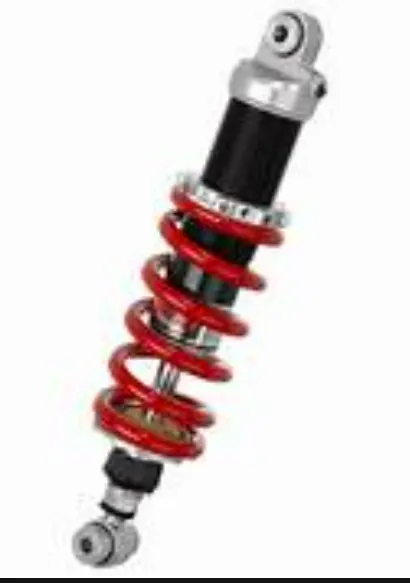
There are different types of suspension available for both side of a motorcycle. In that mono, the suspension is included. On a motorcycle with a mono-shock rear suspension, a single shock absorber connects the rear Swingarm to the motorcycle's frame. Typically this lone shock absorber is in front of the rear wheel and uses a linkage to connect with the swing arm such linkages are frequently designed to give a rising rate of damping for the rear. Mono-shocks are said to eliminate torque to the Swingarm and provide more consistent handling and braking. That’s why these suspensions are very useful at the roads
- Single Shock Absorber
On a motorcycle with a single shock absorber rear suspension, a single shock absorber connects the rear swingarm to the motorcycle's frame. Typically this lone shock absorber is in front of the rear wheel and uses a linkage to connect to the swingarm. Such linkages are frequently designed to give a rising rate of damping for the rear
- Twin Shock Absorber
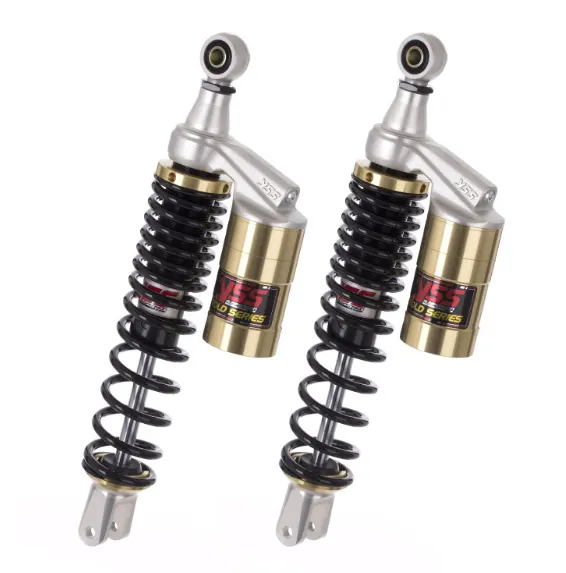
Twin shock refers to motorcycles that have two shock absorbers. Generally, this term is used to denote a particular era of motorcycles and is most frequently used when describing off-road motorcycles.
- Swingarms
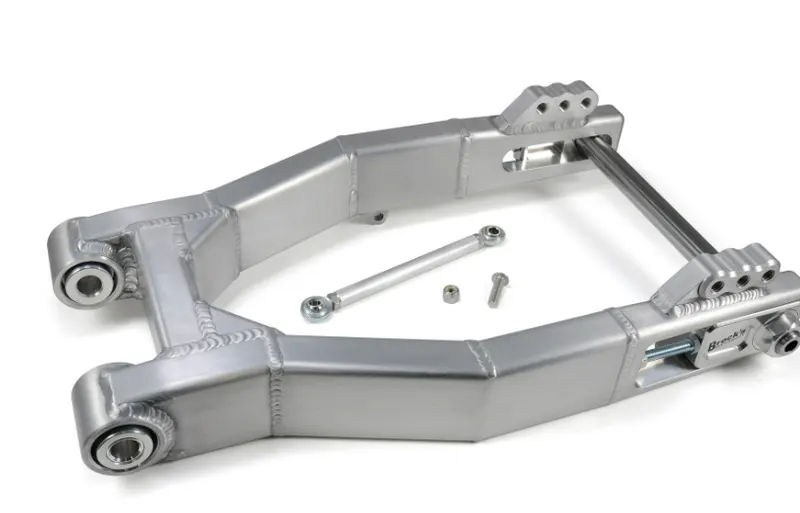
The basic motorcycle swingarm is a quadrilateral, with one short side connected to the motorcycle's frame with bearings so that it can pivot. The other short side is the rear axle around which the rear wheel turns. The long sides are connected to the motorcycle's frame or rear sub-frame with one or two shocks with coil-over springs.In production motorcycles, swingarms are not exactly rectangular, but their function can be more easily understood by thinking of them as such.
- Early Rear Suspensions
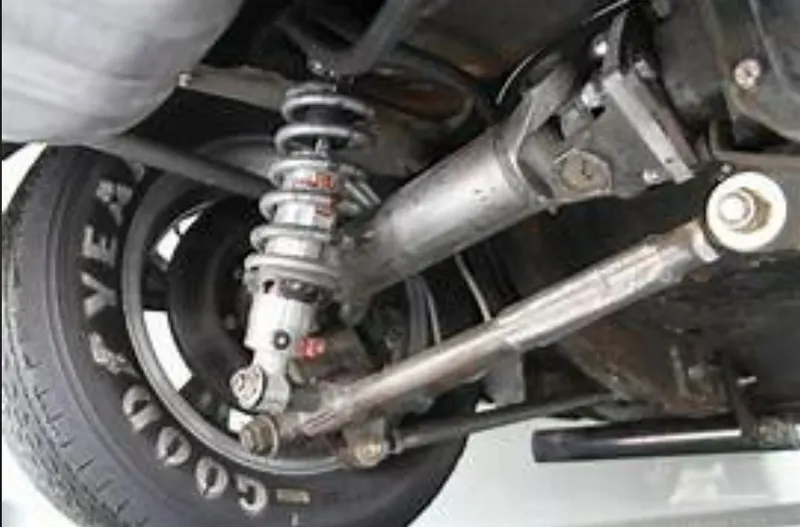
While front suspensions were almost universally adopted before World War I, several manufacturers did not use rear suspension on their bikes until after World War II. However, motorcycles with rear suspension were offered to the public before World War I. Notable among these are the 1913 Indian Single with a swingarm suspended from a leaf spring and the 1913 Pope with wheels supported on a pair of plungers which were each suspended by a coil spring.
- Plunger Suspension
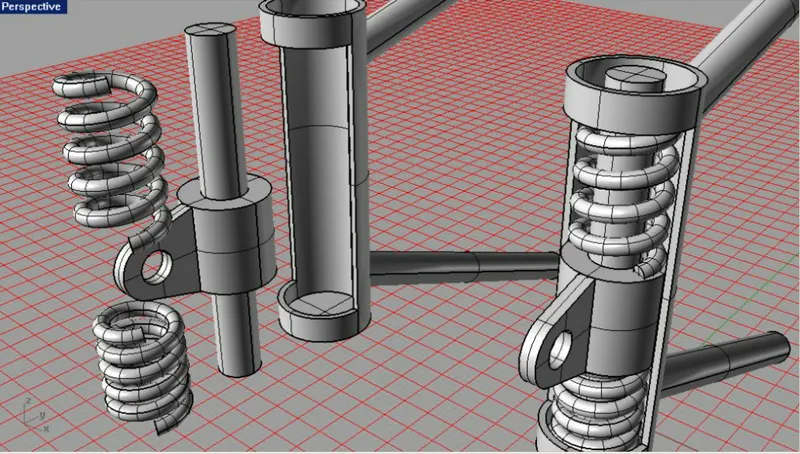
Several motorcycles before and immediately after World War II used plunger suspension in which the vertical movement of the rear axle was controlled by plungers suspended by springs.Notable manufacturers of bikes with plunger suspension include Adler, Ariel, BMW, BSA, Indian, MZ, Saroléa, Norton, Cossack/Ural and Zündapp.Although plunger suspension could be sophisticated, with springing and damping in both compression and rebound, it had three disadvantages (compared to the almost universal swingarm that succeeded it), as follows:
(i) wheel travel was limited,
(ii) (ii) the wheel could move out of the required vertical axis, and
(iii) (iii) it was more expensive to produce and maintain.
Explain of Suspension:-
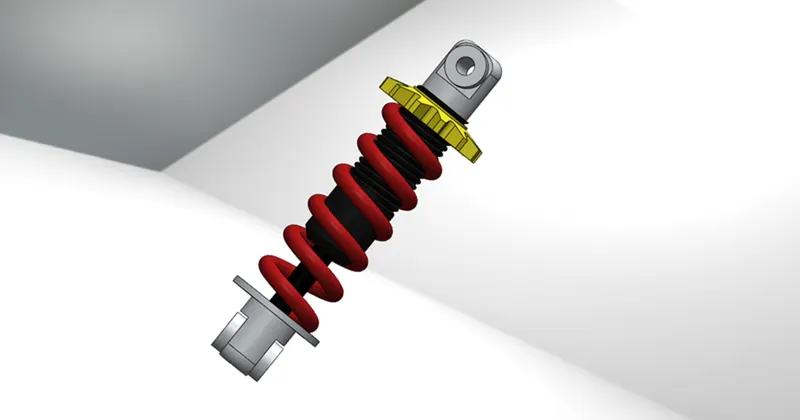
1.BASE:-
BASE independent suspension drive axle is outperforming its competitors considering tight turning radius and best-in-class ground clearance. Furthermore, BASE are light driven by aluminum differential housing.BASE independent suspension drive axle has proven its performance via travelling in harshest field conditions with well-known vehicles
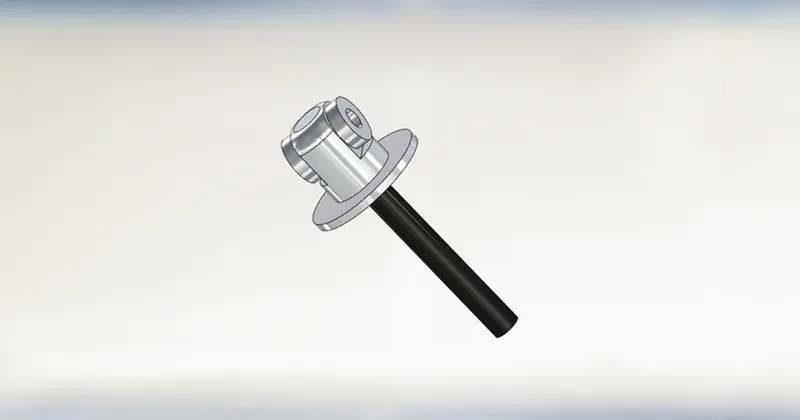
2.NUT:-
Suspension bolts provide crucial support for your vehicle’s chassis and body components. Without them, your car would not be able to handle high speeds or cornering forces safely. Additionally, they help keep your tires firmly planted on the road surface during hard braking and acceleration manoeuvres. In short, if you want your vehicle to perform as it should then it is important that you have strong and reliable suspension bolts installed on your car.
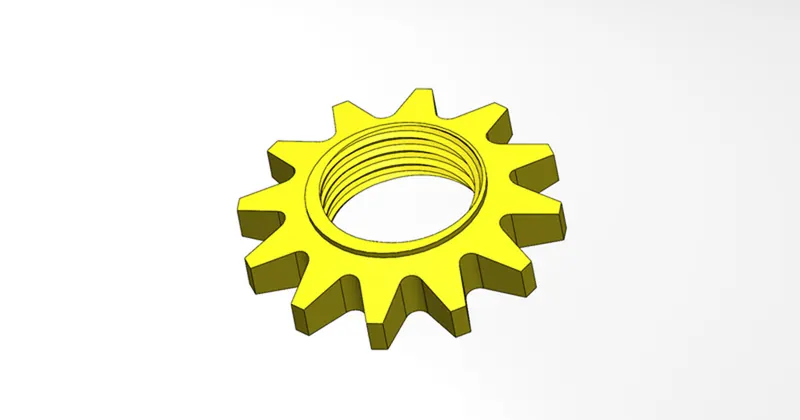
3.SHOCK ABSORBER:-
In their simplest form, shock absorbers are hydraulic (oil) pump like devices that help to control the impact and rebound movement of your vehicle’s springs and suspension. Along with smoothening out bumps and vibrations, the key role of the shock absorber is to ensure that the vehicle’s tyres remain in contact with the road surface at all times, which ensures the safest control and braking response from your car.It is what we call the Monroe Safety Triangle, encouraging motorists to check tyres, brakes and shock absorbers with every service to ensure optimum stopping, steering and stability.shock absorbers are basically oil pumps. A piston is attached to the end of a piston rod and works against hydraulic fluid in the pressure tube. As the suspension travels up and down, the hydraulic fluid is forced through orifices (tiny holes) inside the piston. Because the orifices only allow a small amount of fluid through the piston, the piston is slowed which in turn slows down spring and suspension movement.
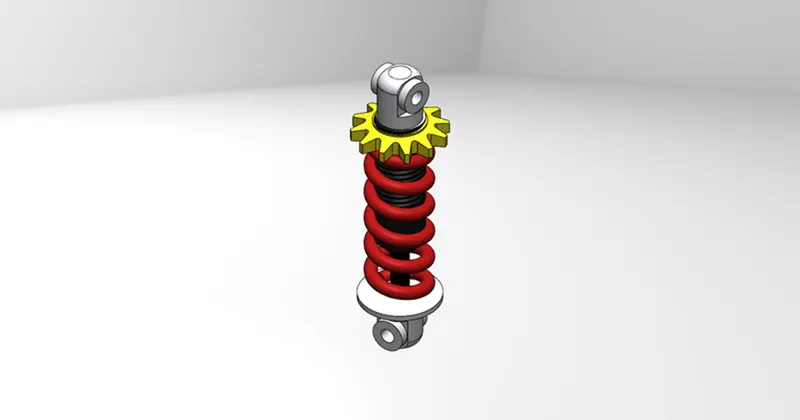
4.SPRING:-
Springs are resilient members and as such act as reservoirs of energy. They store the energy due to the sudden force which comes when vehicle encounters a bump or a ditch. This energy is released subsequently and with the action of damper, the energy is converted into heat and bounce is avoided.
Types of Suspension springs:-
- Leaf springs
- Coil spring
- Torsion spring
- Airbags
- Rubber spring
2. Helper Spring
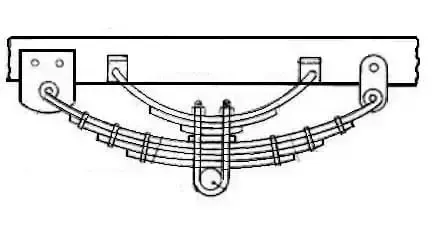
Helper spring is just like a semi-elliptical spring but without eyes at the ends. It is fitted with the main springs particularly on the rear axle of the truck to carry the heavy load. The ends of the helper spring touch the brackets fitted on the frame when the truck is heavily loaded.
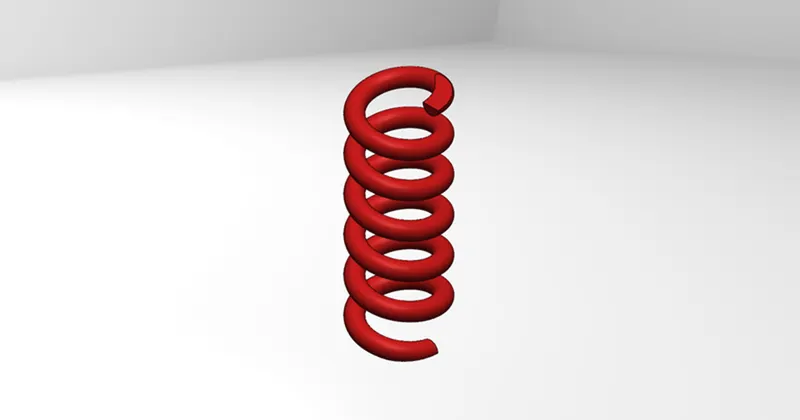
3. Coil Springs
Coil springs are made of spring steel. These are described with the independent suspension system.
While providing a wide variety of spring rates, they can be accommodated in all type of confined spaces. As compared to leaf springs they weigh only half the weight required for doing the same job.
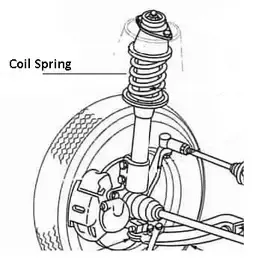
They can also store twice the energy per unit volume in comparison to leaf springs but to control the accelerating, braking and cornering, anti-roll bars or radius roads should be provided. The pan-shaped brackets or spring seats attached to the rear axles are used to seat the coil spring. Spring seats incorporated into the frame are similarly used for compressing springs against them.
The suspension is also used in combination with torque tube or torque rod drive. As regards energy storage i.e. energy stored in a given weight of spring, coil and torsion bar springs are superior to the leaf springs.
4. Torsion Spring
A torsion spring is also used in an independent suspension system. Torsion suspension spring has a rod which acting under the torsion by taking shear stresses.
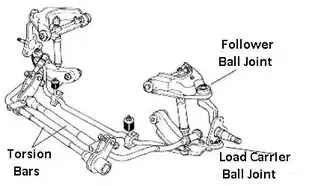
One end of the bar is connected to the frame and another end is connected to the wheel arm and supported in the bearing. The end of the wheel arm is connected to the wheel hub. When the wheel hits a bump, it starts vibrating up and down, thus a torque on the torsion bar start acting as a spring.
5. Air Bags
The airbags and rubber springs are used in foreign cars. Air suspension, hydraulic suspension and hydrogen gas suspension systems are also used in foreign vehicles.
6. Rubber Springs
The rubber springs are used in suspension because it saves greater energy per unit weight than the steel.
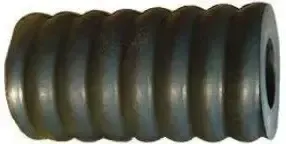
So rubber springs are more compact than other springs. The main advantage of using a rubber spring is that it does not suddenly fail like steel so there is less risk. And also has excellent vibration damping properties.
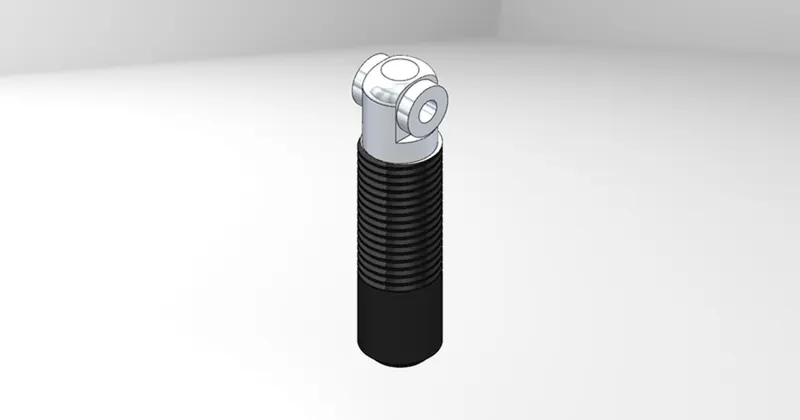
5.TOP ROD:-
Advantage:-
- Improved handling – Suspension systems allow vehicles to move smoothly over rough or uneven terrain, improving handling and ride comfort.
- Increased stability – Suspension systems help to keep the vehicle’s wheels in contact with the ground, improving stability and reducing the risk of accidents.
- Enhanced traction – Suspension systems can help to distribute the weight of the vehicle evenly over the wheels, improving traction and braking performance.
- Enhanced performance – Suspension systems can improve a vehicle’s performance by allowing it to corner and accelerate more smoothly.
- Improved fuel efficiency – Suspension systems can reduce the amount of energy required to move a vehicle, improving fuel efficiency.
Disadvantage:-
- Maintenance – Suspension systems require regular maintenance to ensure they are functioning properly, which can be time-consuming and costly.
- Cost – Suspension systems can be expensive, particularly if they require repairs or upgrades.
- Complexity – Suspension systems can be complex and may require specialized knowledge and training to repair or modify.
- Weight – Suspension systems can add weight to a vehicle, which can negatively impact performance and fuel efficiency.
- Limited customization – Suspension systems may not offer a wide range of customization options, so it may not be possible to achieve certain performance goals.
Conclusion:-
successfully completed the motorcycle's suspension in solidworks.