Fender Design - Wheel Arch Challenge
REPORT FOR CALCULATING THE WHEEL ARCH GAP RESPECT TO EUROPEAN STANDARD
Aim :
To calculate the wheel arch gap at required points and check whether the car passes the European standard.
Objective :
- Study about the different wheel arch gap standards.
- Draw the lines at the required angle and points for the European standard.
- Measure the distance at each angles and mention given model is pass or fail.
Introduction:
Fender:
Fender is a BIW component in vehicle, its a part of a vehicle body that frames a wheel well (the fender underside). Its primary The purpose of a fender is pretty simple. That is to prevent mud, rocks, and other road debris from being thrown around by the tires. In other words, the fender is a housing for the wheels that keeps road debris contained. If there was nothing covering the wheels, all kinds of debris would be kicked up by the rotating tires.. Fenders are typically rigid and can be damaged by contact with the road surface. However, fenders are also able to absorb impact from minor collisions. In this way, the fender can act as an extension of the bumper in terms of its ability to absorb the energy from a collision. The modern-day automobile has got fenders designed to meet aerodynamic purposes as well to reduce drag, thereby improving the performance of the vehicle. Usually, front fenders are fastened to the body using hardware. The free distance available for fender crushing under pedestrian impact should be, according to standards
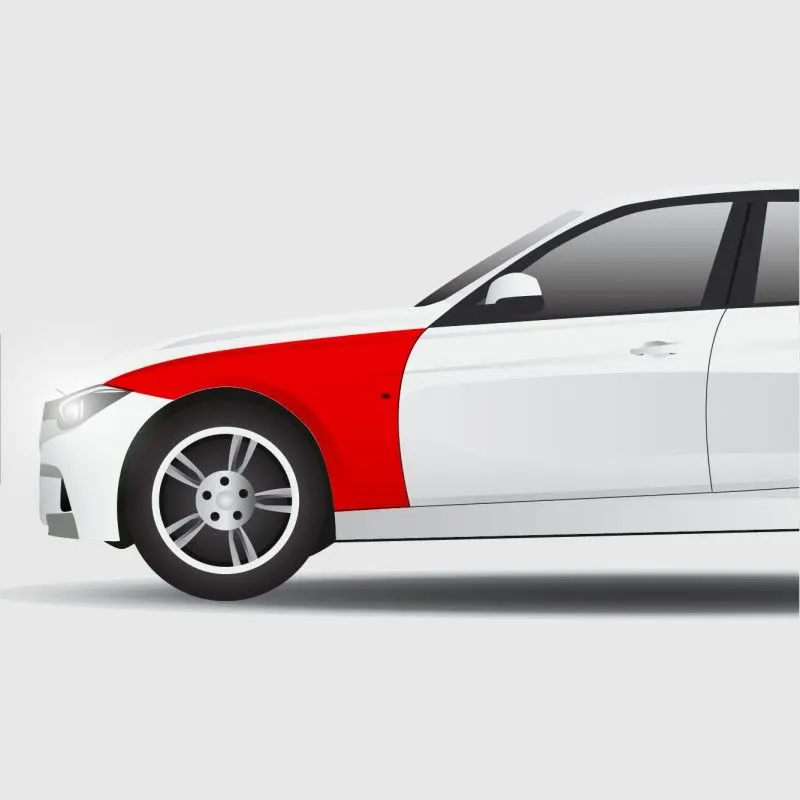
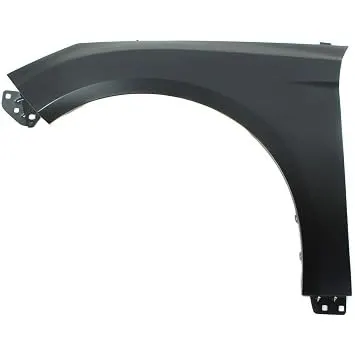
Wheel Arch:
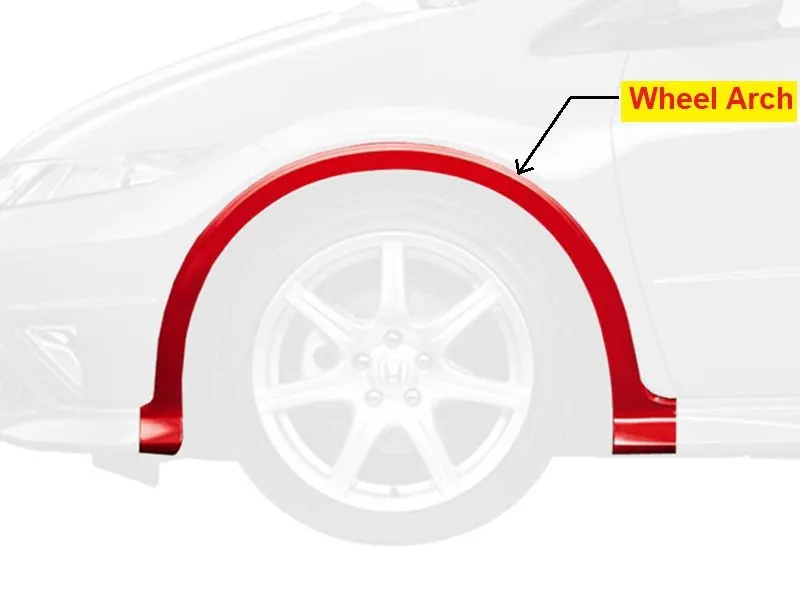
It is a semicircular profile above wheels designed for enclosing tire within the fender. The wheel arch is designed considering all possible motions the tire undergoes while the vehicle is in motion. The wheel arch also ensures stopping any debris that could possibly fly outside the wheel well and hit pedestrians.
The highlighted part in the below image is wheel arch:
Fender Wheel Arch Standards:
European Standard:
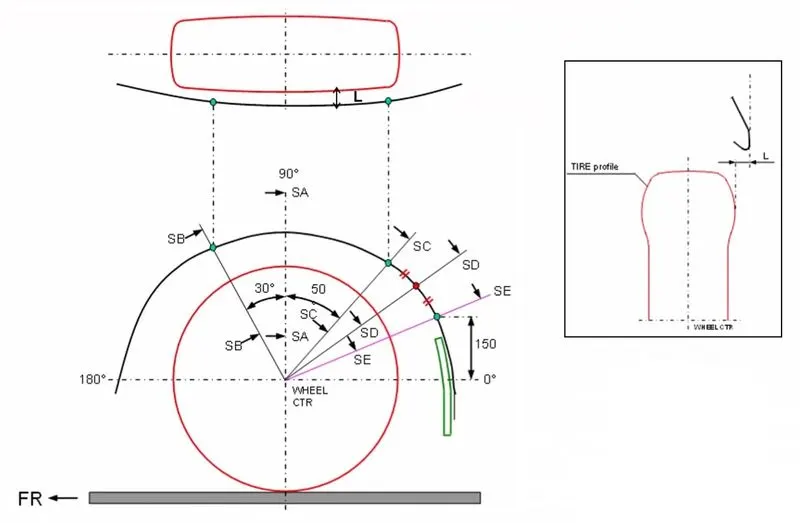
There are few standards criteria defined for designing the wheel arch. The profile has to pass through the following conditions to meet the expectations.
- There are 5 checkpoints on the sections SA, SB, SC, SD & SE as shown.
- In all these checkpoints the clearance “L” should be greater than 10 mm
- Wheel guard requirement: the value of "L"shall be more than 10mm at a line 30 degree left and 50 degree right from the central vertical axis of wheel.
PROCEDURE:
- According to the European standards,the designed fender and wheelarc should pass the wheel guard requirement proced
- To start the test, first create a plane with origin as center of the wheel plane.
- Then sketch using lines along with given dimensions as SA,SB,SC,SD and SE.
- After sketching project the intersection points on to the fender
- Then use measure distance tool and calculate the clearance between sketch lines and wheelarch.
Result:
Clearance analysis result from wheel to the fender wheel arch gap as per European standard
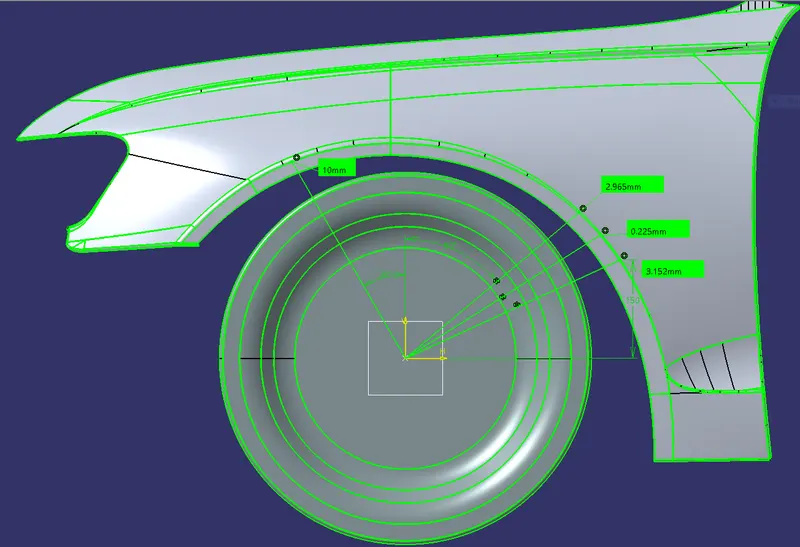
| Region | Required Clearance | Actual Clearence | Result |
| SB | 10mm | 10 mm | PASS |
| SC | 10mm | 2.965mm | FAIL |
| SD | 10mm | 0.225mm | FAIL |
| SE | 10mm | 3.152mm | FAIL |
CONCLUSION:
From the above results it can be conclude that the fender does not pass the European standard,as the clearance "L" between the fender wheel arch and wheel for vehicle and pedestrian safety is 10mm and this design does not meet the requirement. So the Class A styling engineers need to be redesign the Class A Surface as per the European Standard to meet the requirements.