Fender Design - Wheel Arch Challenge
Objective: Performing Wheel arch calculation with an European Standards and prove whether the car is passed for standard or not.
Introduction
Wheel Arch:
The wheel arch is an arch-shaped cavity in the body of a vehicle, which houses a wheel. It has two important functions. It serves for the safety of pedestrians and other cars because the wheel is situated in the body of a vehicle. The second function is to protect the car from the sticky materials, such as mud, may adhere to the smooth outer tire surface, while smooth loose objects, such as stones, can become temporarily embedded in the tread grooves as the tire rolls over the ground. These materials can be ejected from the surface of the tire at high velocity as the tire imparts kinetic energy to the attached objects. For a vehicle moving forward, the top of the tire is rotating upward and forward and can throw objects into the air at other vehicles or pedestrians in front of the vehicle.
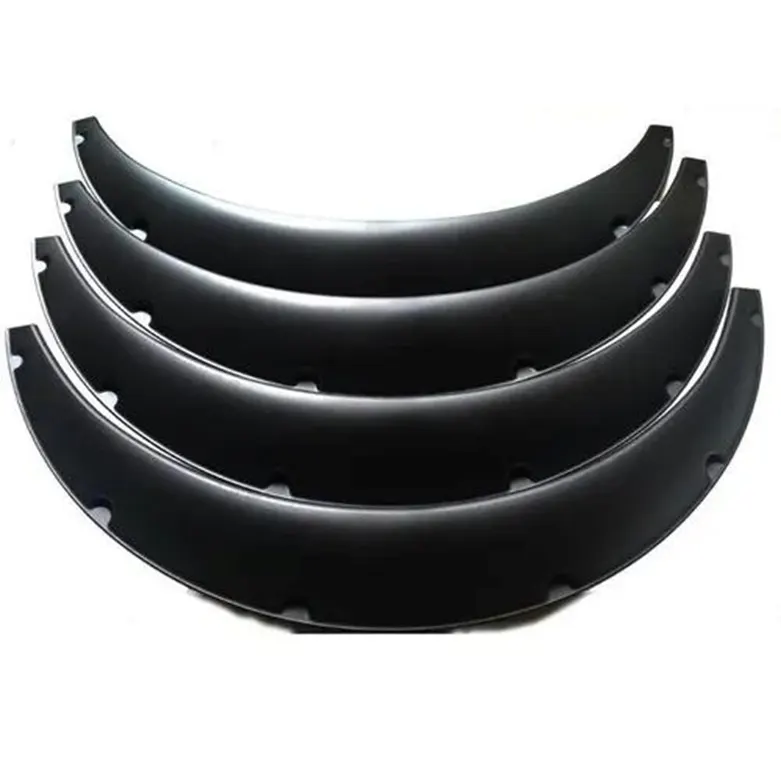
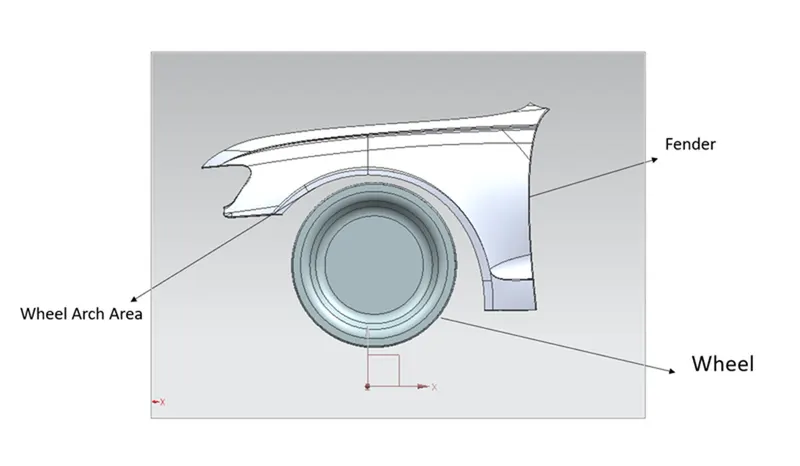
FENDER -
Fender is the part of a car that protects and frames its wheels and keeps mud from splashing it. Most modern vehicles have fenders on their front wheels. It is the part of a car, truck or motorcycle that surrounds the wheel sell. The primary function of a fender is to prevent dirt and debris from being thrown into the air by the tire. The fender is located over the wheels of the vehicle. As such, there are four fenders on a typical vehicle: front right, front left, rear right and rear left.
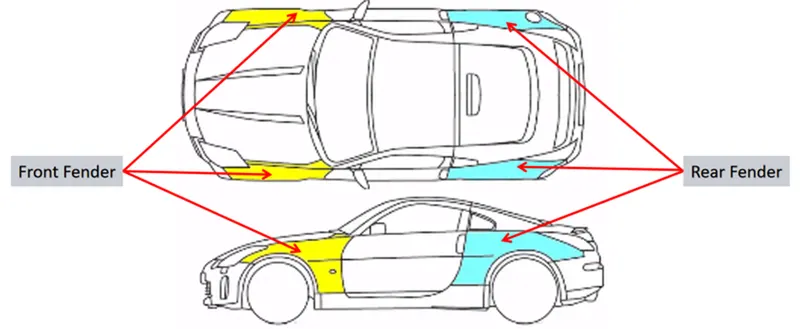
TYPES OF FENDERS -
- FULL BUMPER TYPE -
Full bumper type is traditional type of fender where more material consumption is observed. This type is used in old design of automobiles where it increases the overall weight and thus reduces performance. The maintenance also relatively more due to more surface.
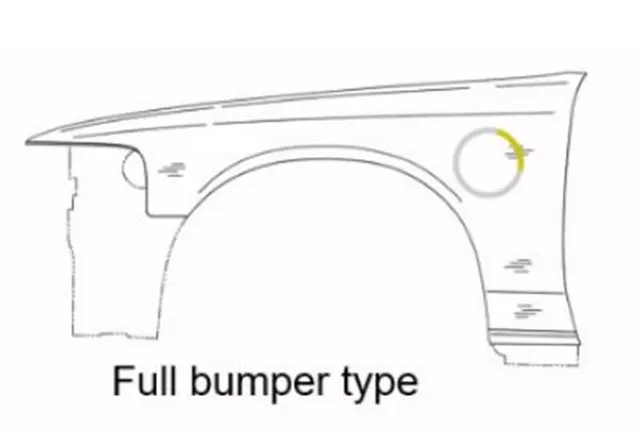
- HALF BUMPER TYPE -
Half bumper type is modern design where less material consumption is observed, so productivity increases by reducing size of blank and thus providing more The maintenance also relatively low compared to full bumper type.
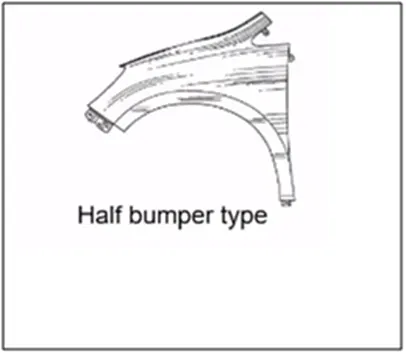
Types of Fender Wheel arch Regulations and standards:
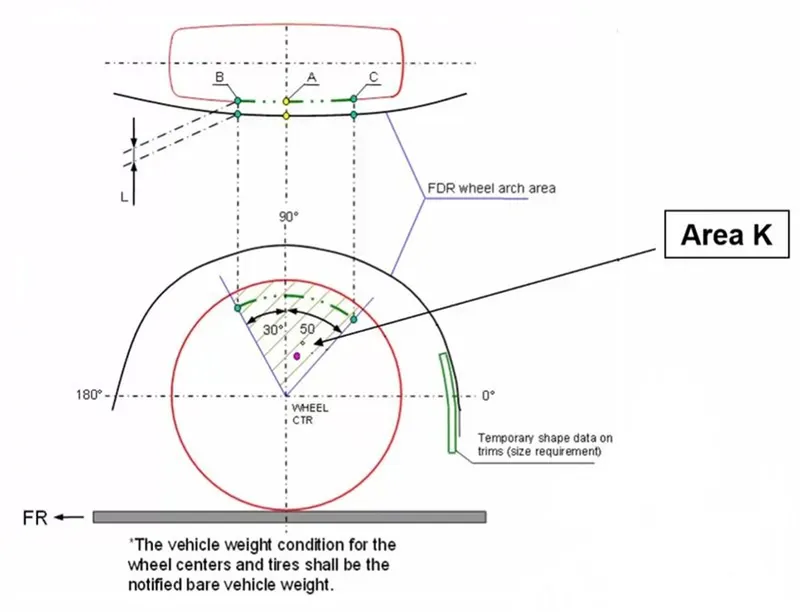
JAPAN REGULATIONS:
- Measure clearance L of tire, hub, cap & fender in three different positions within area K and produce clearance check chart to validate.
- Clearance must be greater than 5 mm in all the three positions.
- Wheel guard requirement: The value a shall be more than 5 mm at a line 30degree forward and 50degree rearward from the central vertical axis of axis of wheel.
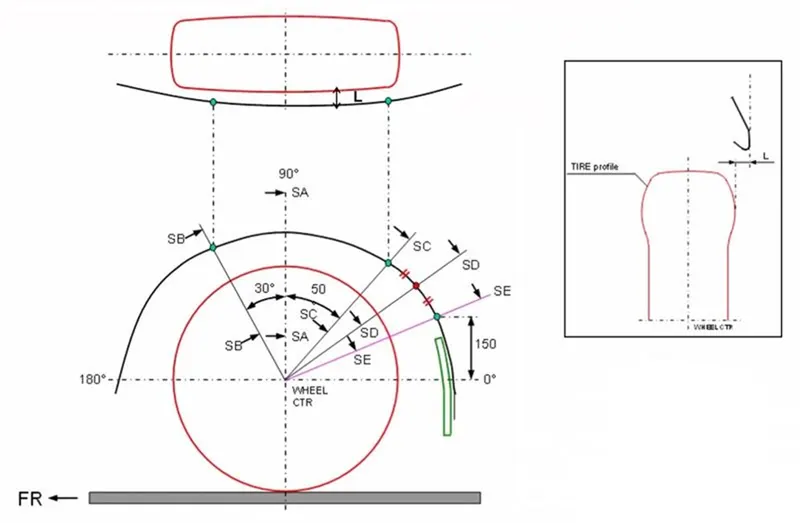
EUROPEAN REGULATIONS:
- Measure CL L at sections SA-SA SB-SB SC-SC SD-SD SE-SE and produce CL check chart to validate.
- At all five sections the CL L value should be greater than 10 mm to satisfy the European regulations.
- Wheel guard requirement: The value of a shall be more than 5 mm at a line 30degree forward and 50degree rearward from the central vertical axis of axis of wheel.
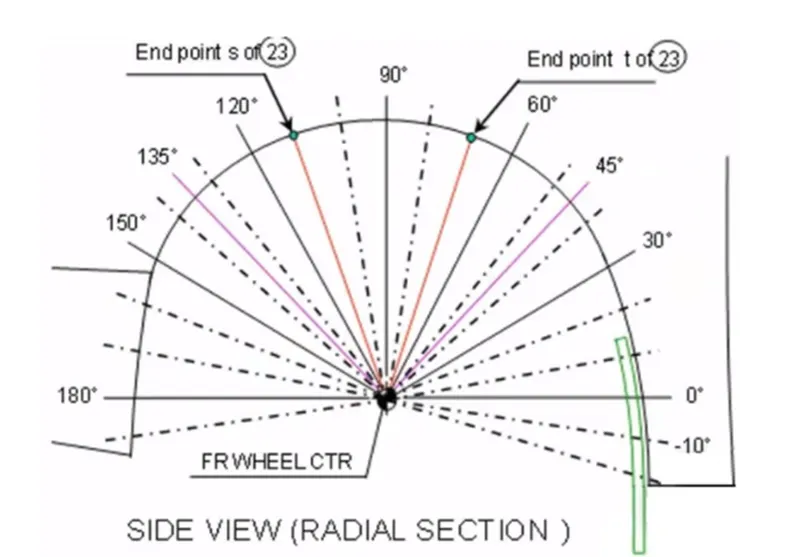
US REGULATIONS:
- Make clearance check details on all positions from -100degree to 100degree & make the clearance check table.
- All values should be greater than 5 mm to satisfy the regulations. The value of 'a' shall be more than 5 mm at a line 30degree forward and 50degree rearward from the central vertical axis of axis of wheel
-
 PROCEDURE:
- According to the European standards, the design fender and wheel arch should pass the wheel guard requirement procced.
- To start the test, first create a plane with origin as centre of the wheel plane.
- Then sketch using lines along with given dimensions as SA, SB, SC, SD and SE.
- After sketching project the intersection points on to the fender
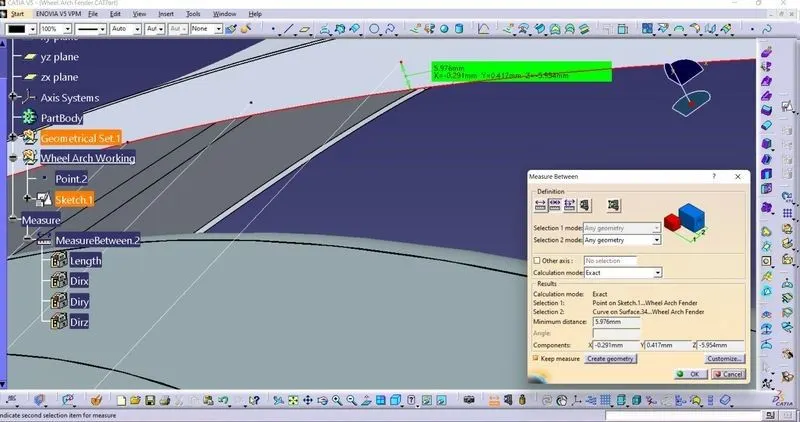
- Then use measure distance tool and calculate the clearance between sketch lines and wheel arch
- This Image Shows Wheel Arch point sketches, Points SA, SB, SC, SD & SE
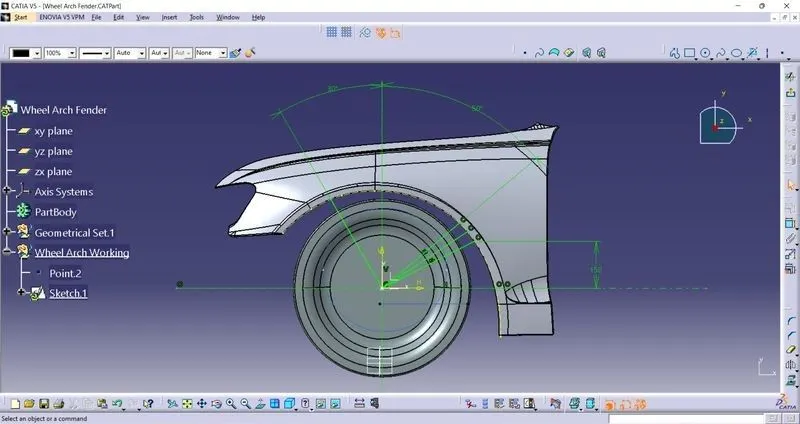
- This Image Shows Wheel Arch point sketches, Points SA, SB, SC, SD & SE
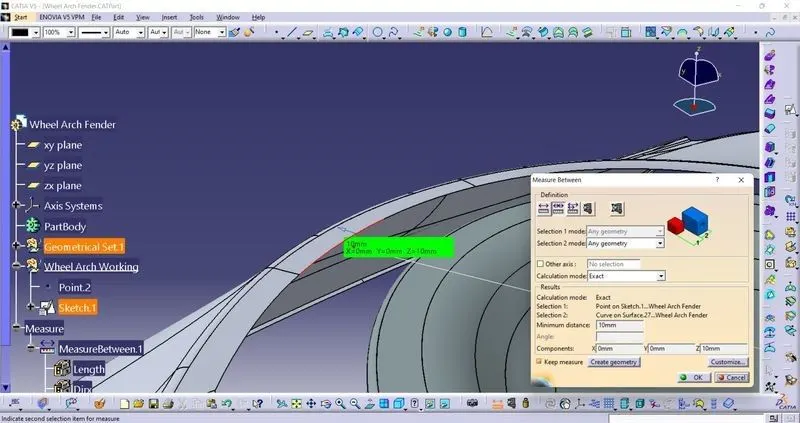
- Above Image Shows SB Value 30Deg, It has L=10mm it satisfied European Requirement
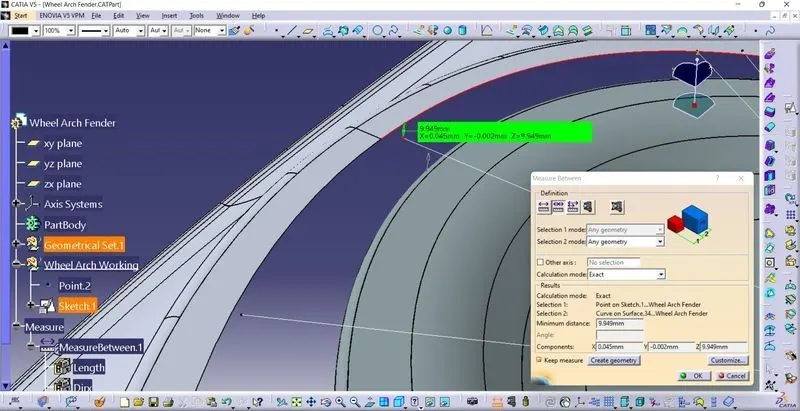
- Above Image shows SA-90Deg, It has 9.949mm between wheel & fender. It is <10mm so It's not satisfied European Requirement
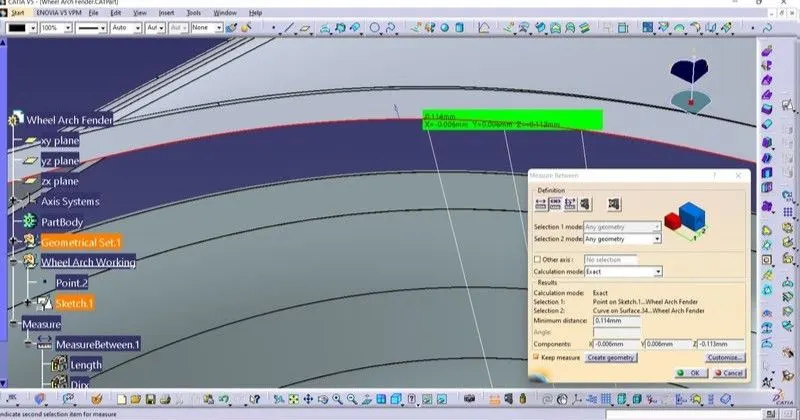
- Above Images Shows SD-50Deg, It Projected Outside from wheel center. It's not Satisfied
-
Above Images Shows SE 150mm from Horizontal Line, This Point area also projected outside from wheel.
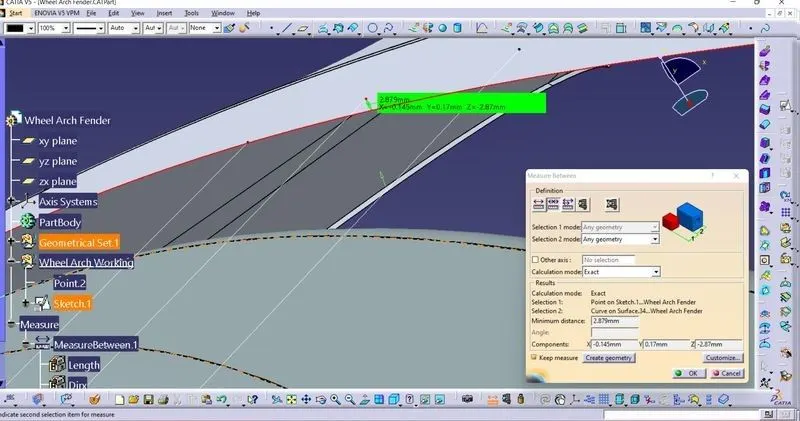
- Above Image Shows SD Value Between Point of SC & SE. Projected Outside from Wheel Arch
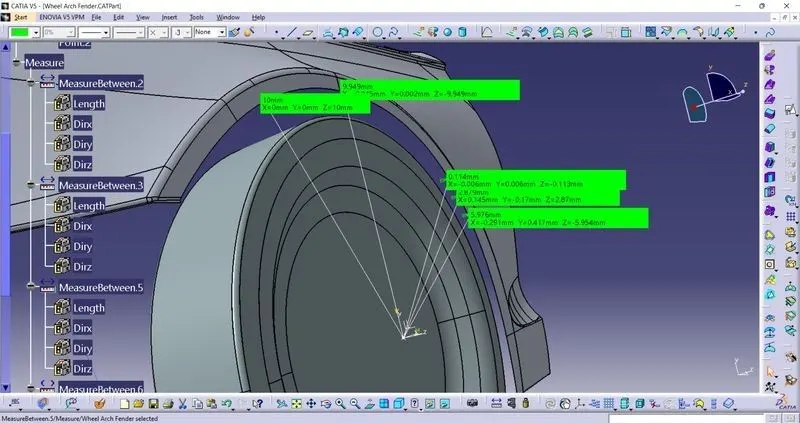
RESULTS TABLE:
POINTS
DEGREE
LENGTH(L)
STATUS
SA
90
10MM
PASS
SB
30
9.949
FAIL
SC
50
0.114
FAIL
SD
150MM FRON HZ LINE
5.976
FAIL
SE
BETWEEB SC & SD
2.879
FAIL
CONCLUSION:
- Wheel Arch Fender Surface Checked It's Good Surface or Not Good
- Most of points are not good value for given surface, so need to change curvature of the fender surface
- Finally the Results are Communicated to A class Designer for Change the fender surface.