Fender Design - Wheel Arch Challenge
Introduction
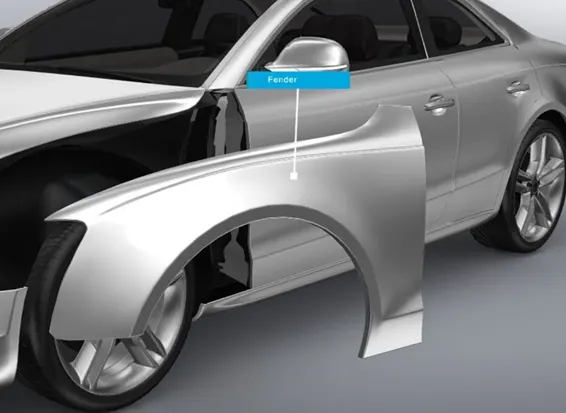
- Fenders are part of body panel installed on left and right side over and around each wheel of vehicle, rear fenders are commonly called quarter panels.
- Its basic function is to protect the engine compartment, occupants, pedestrians, and other alongside vehicles and road users from mud, Pebbles, and liquids which is thrown by rotating wheels while driving.
- They are designed to minimize air resistance and improve aesthetics of vehicle.
Types of fenders
Fender are basically of two types
- Full Bumper type fender
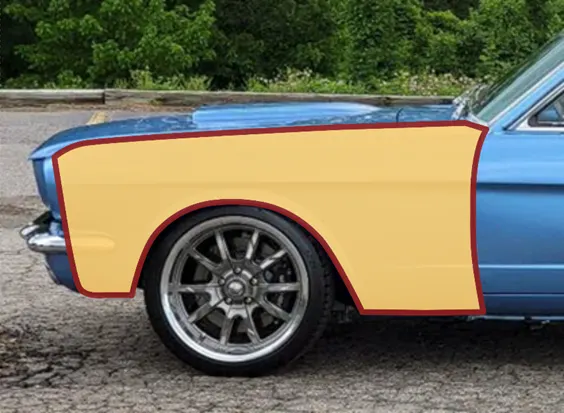
- Material used for making full bumper type fender is more, hence it produces high wastages/scrap to make a single bumper when compared to half bumper type fender.
- Half Bumper type fender
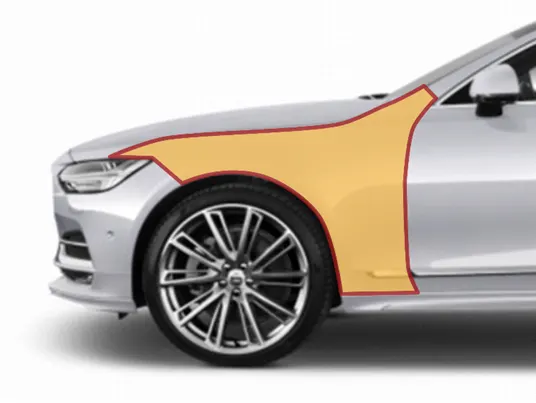
- A single sheet can be used to make two fenders, hence less amount of scrap is generated.
- This method allows less material (i.e.: Steel sheet) consumption which affects positively on following important parameters,
- Cost per piece is reduced.
- Weight reduction.
Fender wheel arc:
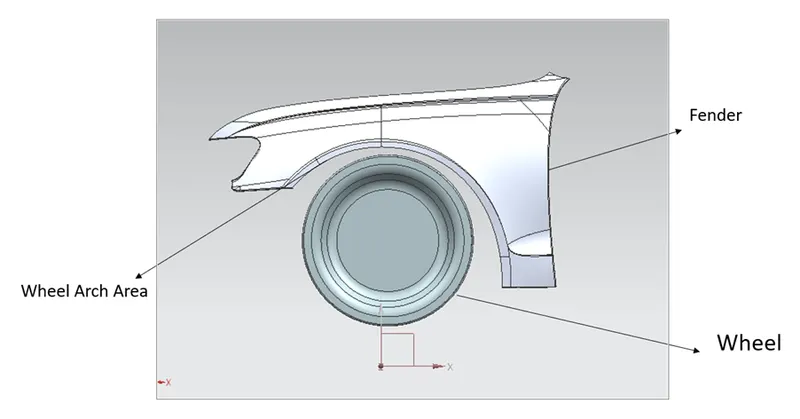
- Wheel arch is the semi-circular curved portion of fender covering wheel which will protect any kind of chipping and liquid splash towards vehicle and other road users.
- Considering safety of pedestrian and vehicle abrasion, wheels of a vehicle must be located inside wheel arch area.
- Depending on region to region there are different safety regulation requirements for Wheel arch area, some of them are discussed in this report.
Japan regulation requirements:
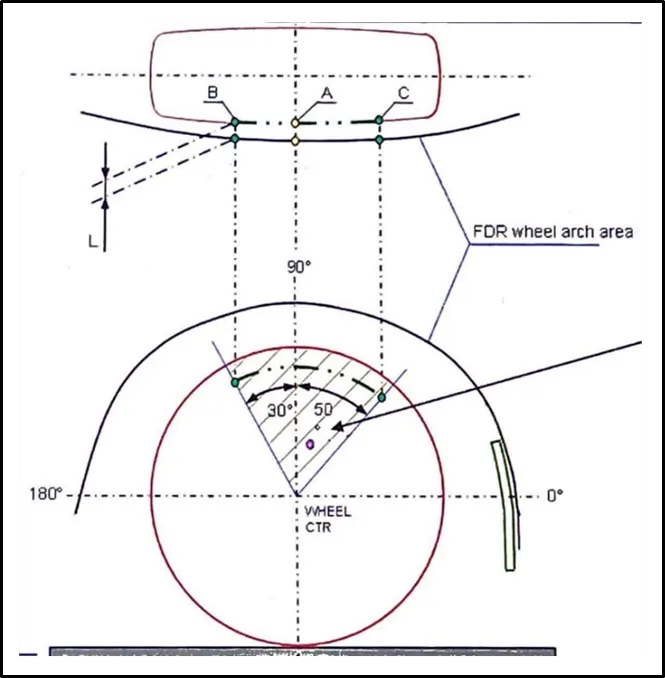
- Create centre lines from the centre of wheel as Vertical and Horizontal references.
- Make a 30 degrees line towards front and a 50 degrees line towards rear from vertical reference line.
- Take intersection points on wheel circumference and project them on top view up to the fender as shown in the figure.
- Extend these projections towards edge of tyre, clearance L must be greater than 5mm on all three points.
European regulation requirements:
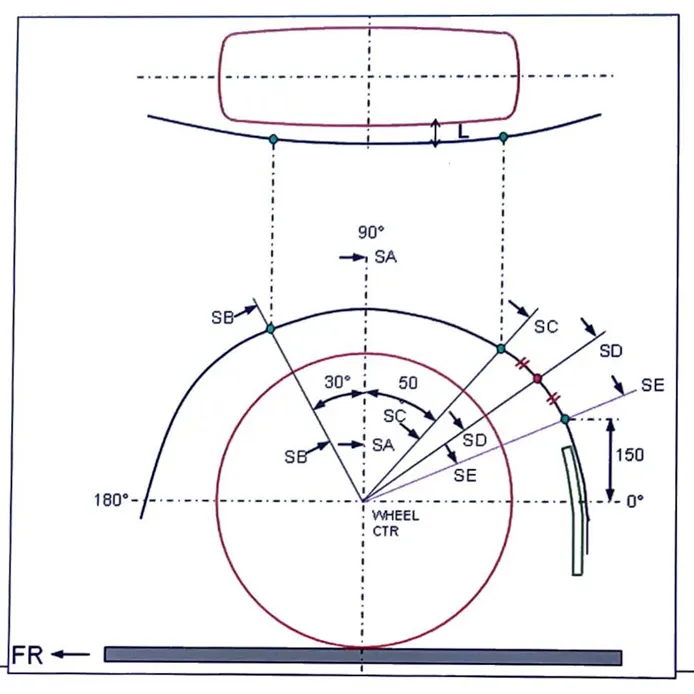
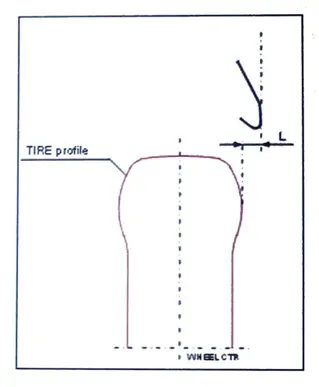
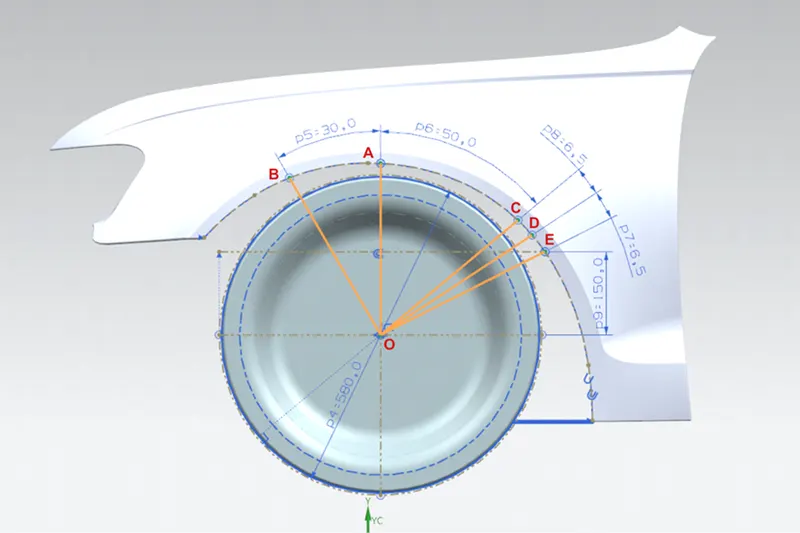
- To create first and second intersection points on fender follow Japan regulations mentioned above.
- Next intersection point on wheel arch is taken at 150mm above Horizontal centre axis.
- By bisecting second and third intersection from centre of wheel Fourth intersection point is created.
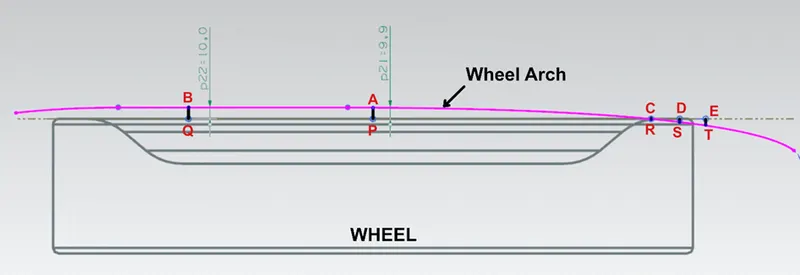
- Project these intersection points on top view up to the fender as shown in figure.
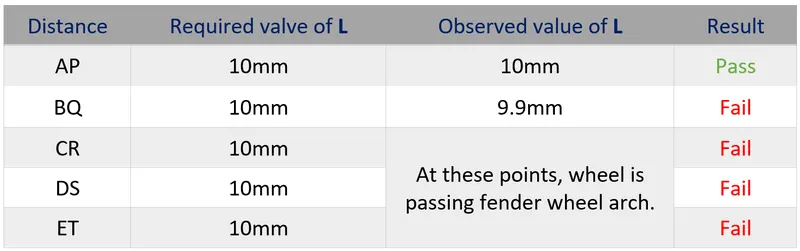
- Distance L must be a minimum of 10mm for each intersection.
US regulation requirements:
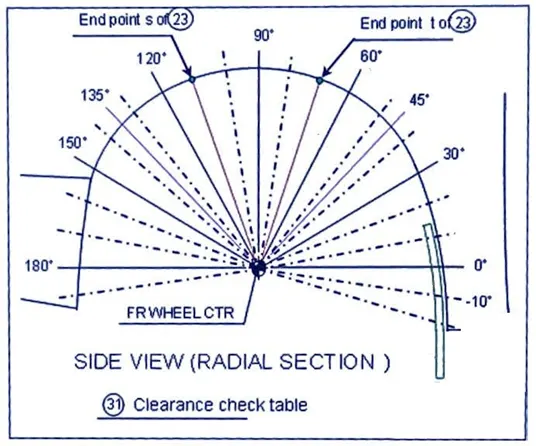
- As per US regulation to create an intersection point on wheel arch, reference lines must be stretched from the centre of wheel every 10 degrees starting from -20 degrees to +180 degrees.
- Distance L must be minimum 5mm for each intersection.
Aim:
- Inspection of the Wheel Arch gap and check whether it passes European Standards.
Inputs:
- Skin data (CAD Surface model) of half bumper type fender.
Front View
Top View
Conclusion:
- Minimum clearance between fender wheel arch and wheel for vehicle and pedestrian safety is L=10mm
- Finally, we can conclude that the given data for Fender wheel arch does not full fill European regulation requirements.