Fender Design - Wheel Arch Challenge
Aim:
Design the wheel arch of the fender.
Objective:
To examine the given fender wheel arch design and to verify if the wheel arch of the fender meets the European standards.
Introduction:
Fender wheel arch:
- Fender wheel arch is the semi-circular part positioned above the wheel of the vehicle.
- The most important body change was the front wheel arch higher into the front fender.
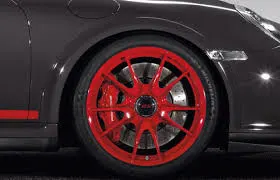
Fig01: Wheel arch region of the fender.
Fender safety:
- The fender is a part of the car, it is also used as a protecting the side of the engine compartment.
- Pedestrian safety is also considered while designing a wheel arch in a fender since the debris in the wheel shouldn't hit them in the motion of the car.
- Fender also reduces seriousness of injuries to pedestrians.
Fender Design considerations:
A. Drip area.
B. Wheel arch.
C. Battle and ORVM mount area.
D. Frontal crash regulations and requirements.
Standards for designing wheel arch of the front fender:
01.
European standards:
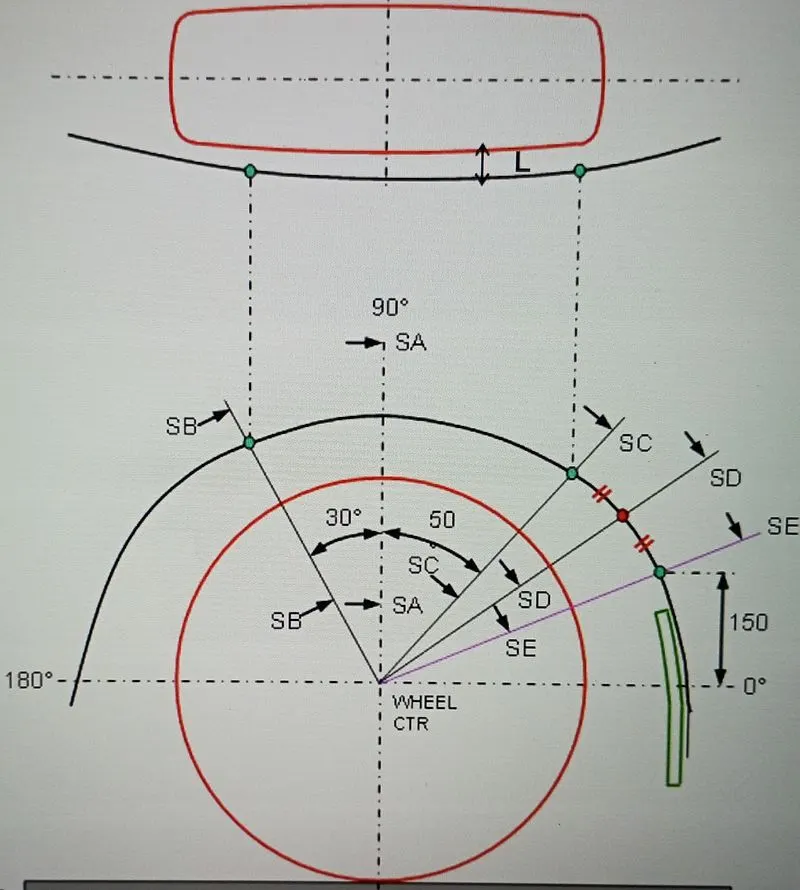
Fig02: European standards for wheel arch region of the fender.
- Measure CL L at sections SA-SA, SB-SB, SC-SC, SD-SD, SE-SE and produce CL check chart to validate.
- At all five sections the CL L value should be greater than 10 mm to satisfy the european standards.
- Wheel guard requirements: The value of 'a' shall be more than 5 mm at a line 30° forward and 50° rearward from the central vertical axix of wheel.
02.
Japanese standards:
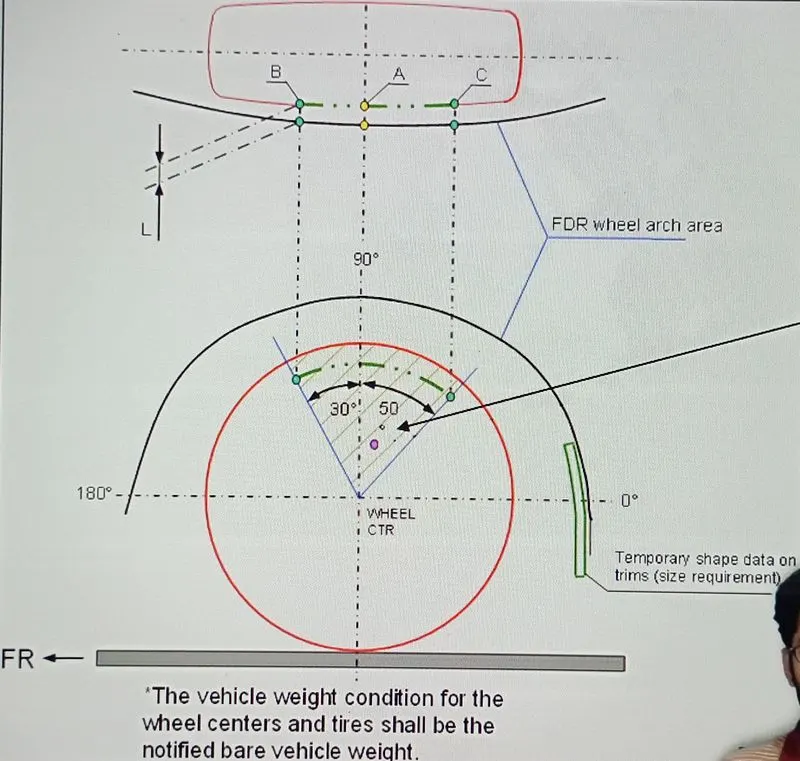
Fig03: Japanese standards for wheel arch region of the fender.
- Measure clearance L of tire, hub, cap and fender in three different positions within area K and produce clearance check chart to validate.
- Clearance must be greater than 5 mm in all the three positions.
- Wheel guard requirements: The value of 'a' shall be more than 5 mm at a line 30° forward and 50° rearward from the central vertical axis of the wheel.
03.
US standards.
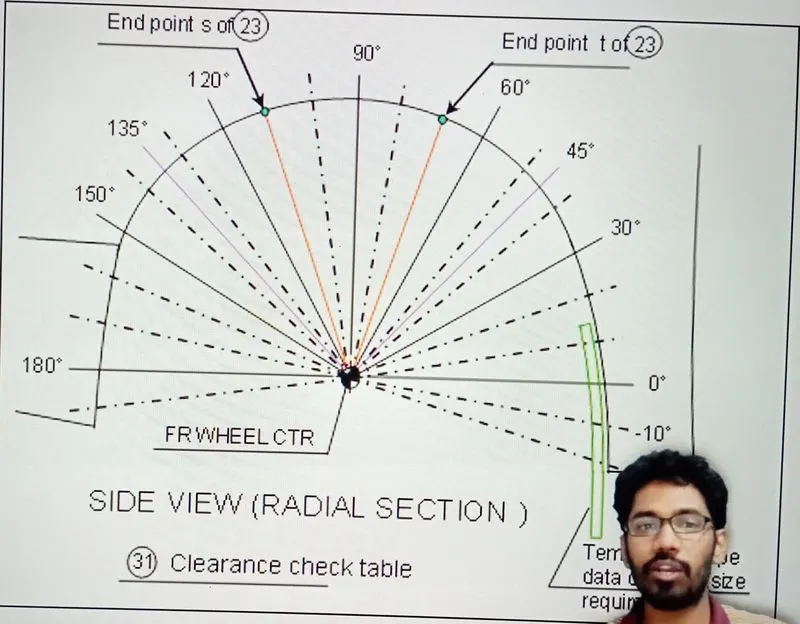
Fig04: US standards for wheel arch region of the fender.
- Make clearance check details at every position of 10° from -20° to 180° and produce clearance check chart to validate.
- All values should be greater than 5 mm to satisfy the regulations.
While designing fenders for global markets we cannot have two different fenders for one model of a car. So we consider the maximum deviation value and use it for all the cars of different markets.
Therefore for global markets, the clearance value of 10 mm is taken into consideration at every 10° from -20° to 180° of the the wheel arch region of the fender.
Problem statement:
Calculate the Wheel Arch gap at required points and check whether the car passes the European standard.
Fig05: Model of wheel arch region of the fender along with the wheel.
Solution:
Now let's sketch the lines at specified angle in order to obtain the points A,B,C,D and E on the outermost edge of the wheel arch area of the fender.
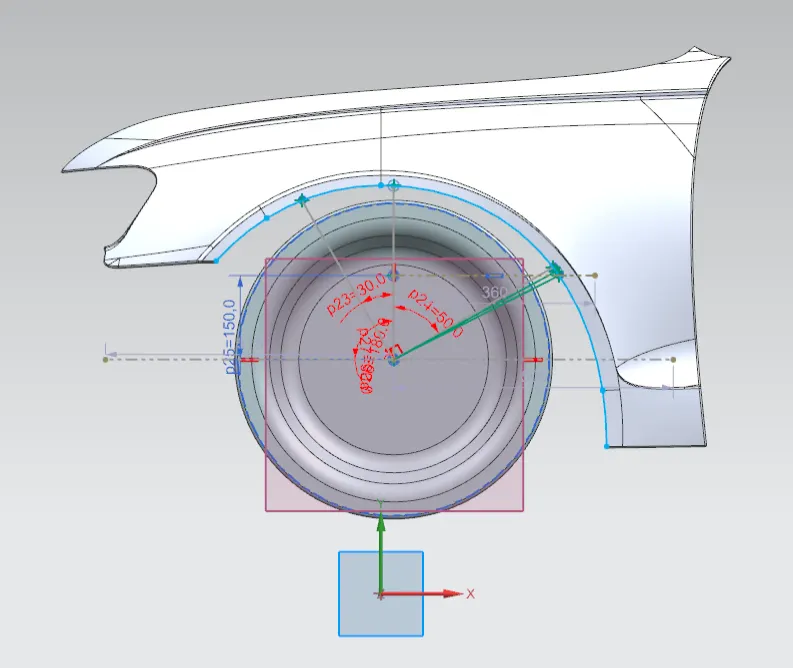
Fig06: Model of wheel arch region of the fender along with the wheel and the sketch to obtain points A, B, C, D and E.
Firstly we'll get the points on the datum-sketch which is created on the flat outermost flat surface of the wheel and later we'll project these points on the outermost edge of the wheel arch area of the fender.
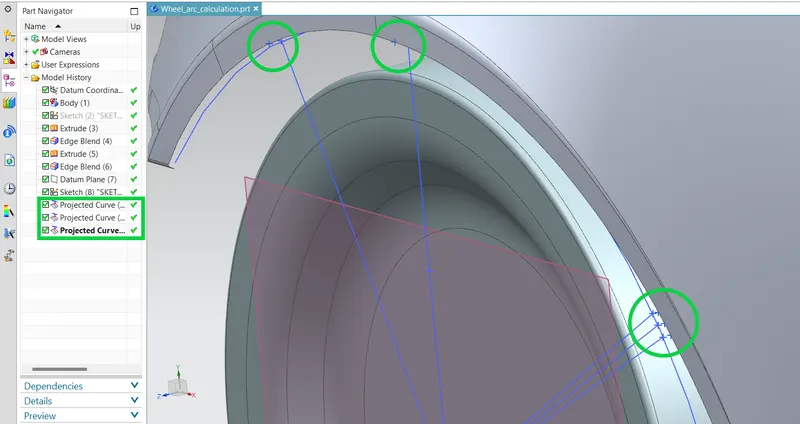
Fig07: Projected points A, B, C, D and E on outermost edge of the wheel arch area of the fender.
Now we'll measure the distance from wheel arch to the wheel tyre at each point and verify them for the european standards:
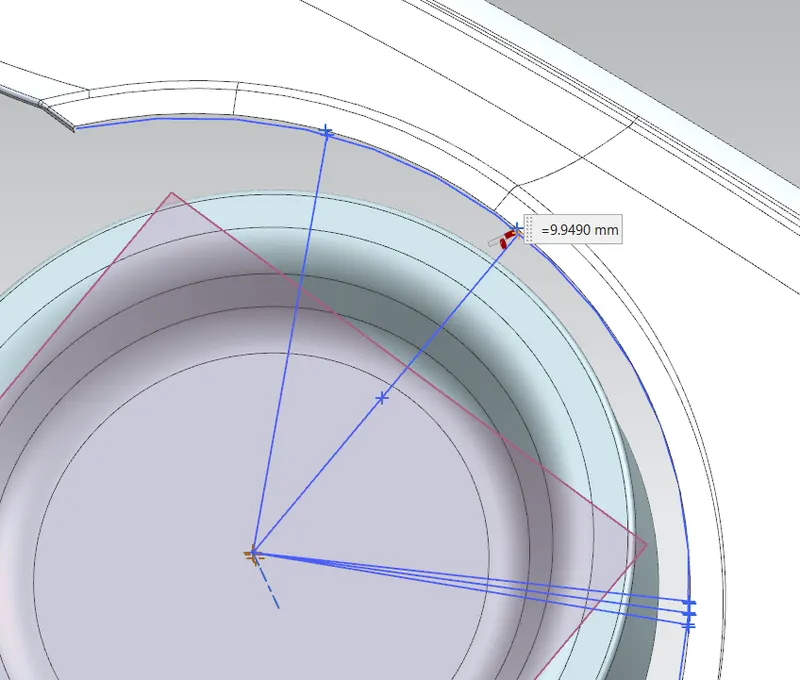
Fig08: Measuring clearance for SA.
SA = 9.9490 mm.
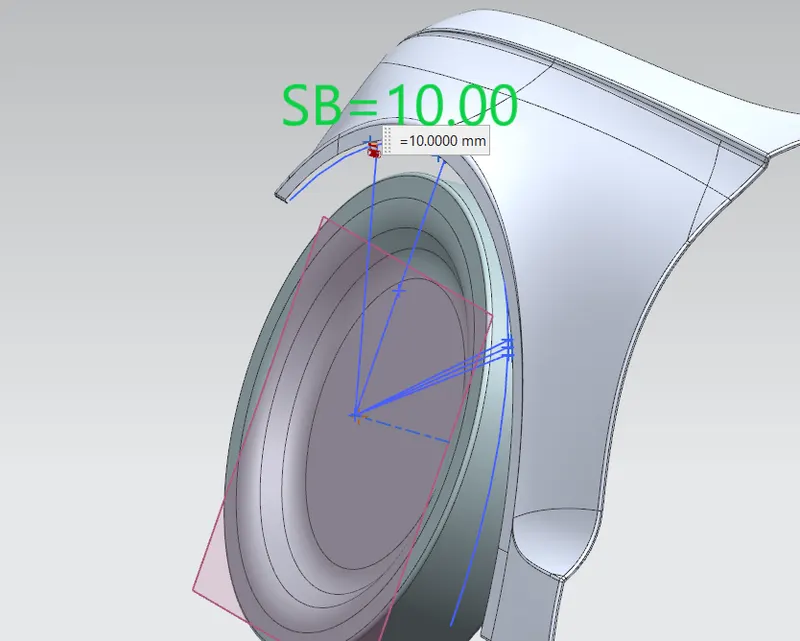
Fig09: Measuring clearance for SB.
SB = 10 mm.
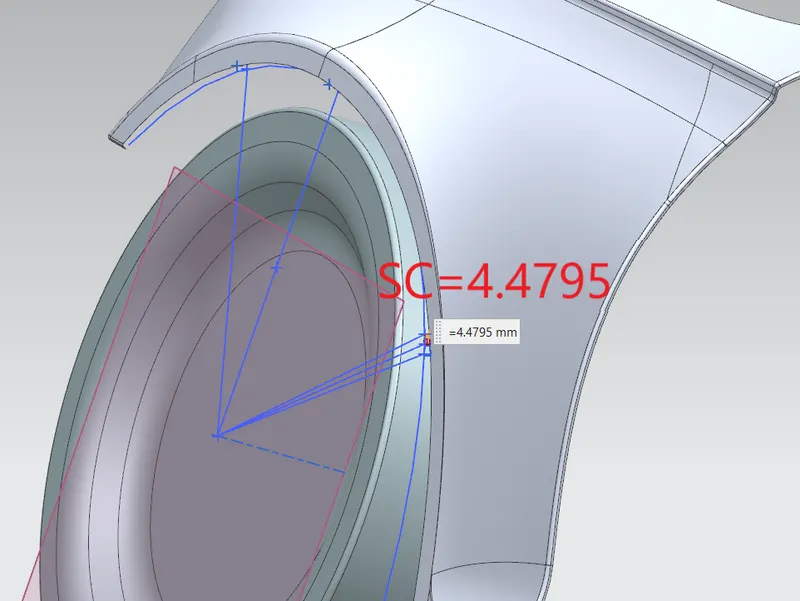
Fig10: Measuring clearance for SC.
SC = 4.4795 mm.
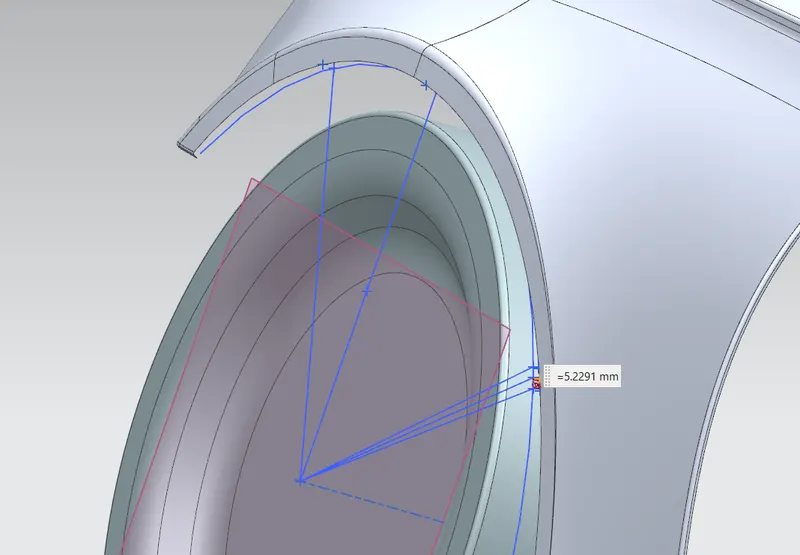
Fig11: Measuring clearance for SD.
SD = 5.2291 mm.
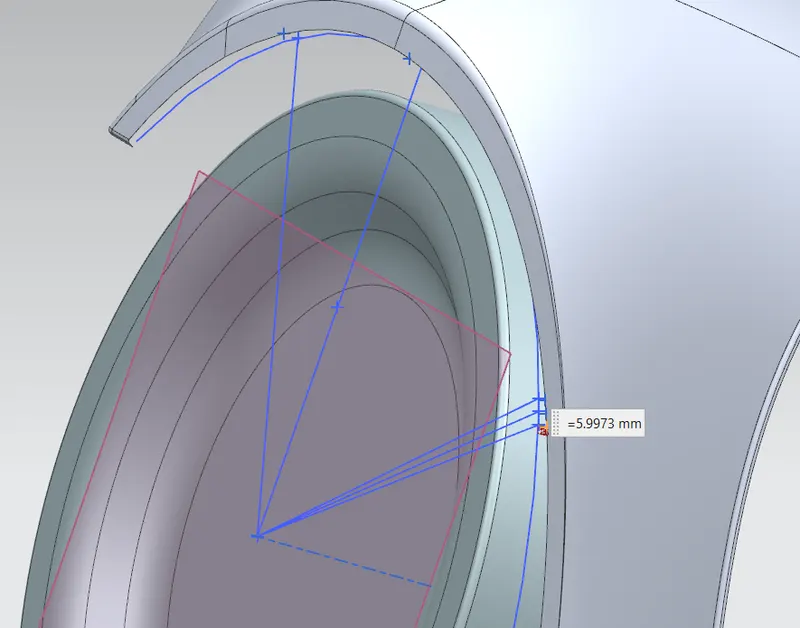
Fig12: Measuring clearance for SE.
SE = 5.9973 mm.
Results:
| Position | Required Clearance Value | Observed Clearance Value | Remark |
|
SA |
10 | 9.9490 | Fail |
| SB | 10 | 10 | Pass |
| SC | 10 | 4.4795 | Fail |
| SD | 10 | 5.2291 | Fail |
| SE | 10 | 5.9973 | Fail |
Conclusion:
In this study we observed that the distance for the points A, C, D and E are not within safe deviation of 10 mm as per the european standards so we need to make some changes in the design of the fender i. e. changing the curvature of the outermost curve of the wheel arch area, in order to achieve the requirements as per the standards.