Fender Design - Wheel Arch Challenge
Wheel Arch Calculations
Challenge:
Calculate the Wheel Arch gap at required points for the given part file and check whether the car passes the European standard or not.
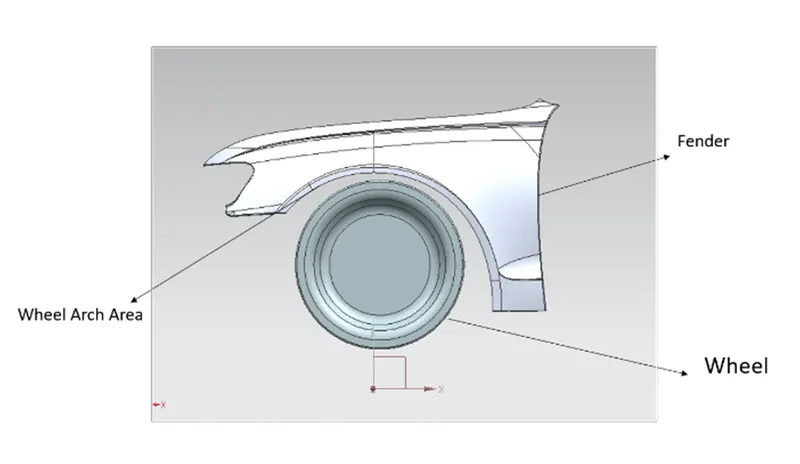
To understand the above details, we need to know what is fender, what wheel arch area is and what are the types of standards or regulations are used to calculate the wheel arch gap.
Fender:
Fender is a curved panel over the wheels made up of plastic, metal or rubber material on the side of a car. The important function of fender is to prevent the dirt, mud, debris and liquid particles thrown outside due to the wheel rotation. While during this rotation, chipped out particles from the tyre may affect the pedestrians or it may affect underside of the car and engine chambers. To prevent this fender should be installed in a car.
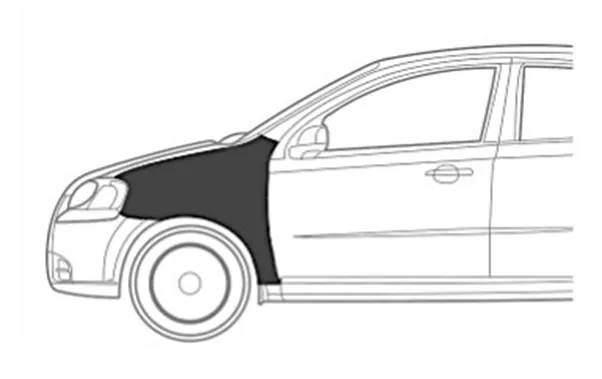
Fenders are of two types:
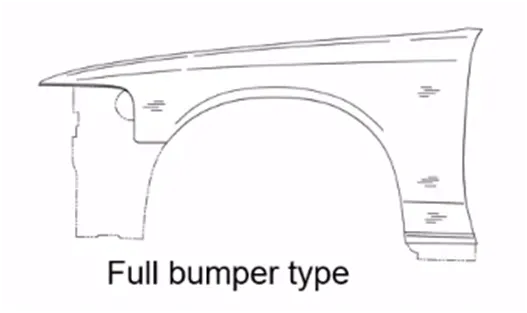
- Full bumper types are conventional bumper types consumes more material and these types of fenders are not in used nowadays. These full bumper type vehicles will have less performance when compared to half bumper type.
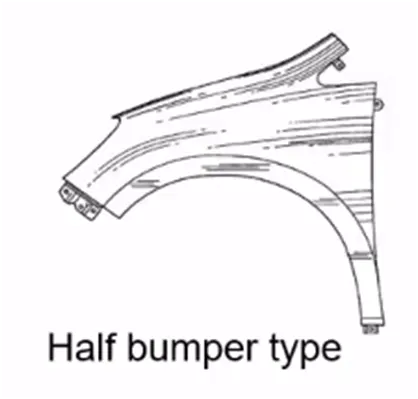
- Half bumper types are modern bumper types which consumes nearly half of the material than the full bumper type. Due to this reason, performance of the vehicle increases and cost also get reduces.
Wheel arch area:
Wheel arch area is a semi-circular arc like shape above the wheel mounted to the fender. There should be a minimum gap from tyre to the wheel arch area by preventing the tyre to hit the wheel arch area during suspension. Those minimum gaps are maintained in standard based upon road conditions.
Types of Standards or Regulations:
For the wheel arch calculations, there are some standards to be followed which are adopted by the regions based on their conditions. Few types of standards are
a. Japanese Standards:
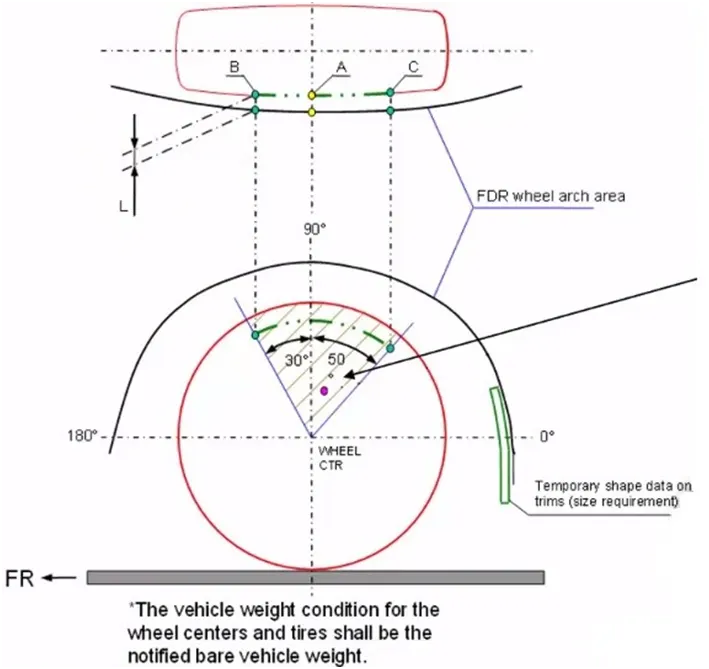
As per Japanese Standards, by considering side view of the wheel along with fender and project the top view above the side view exactly. Now divide the wheel circle into two sectors by taking 50deg in clockwise direction from 90deg for 1st sector and 30deg in anti-clockwise direction from 90deg. Now the intersecting portion of both sectors with wheel to be projected on the top view towards the wheel. Mark those points as A, B and C on the wheel. Now the clearance length between wheel and fender is L and it should be of minimum of 5mm as standard for Japanese condition. If this condition is achieved, then the Wheel arch calculations for Japan can be considered as standard.
b. European Standards:
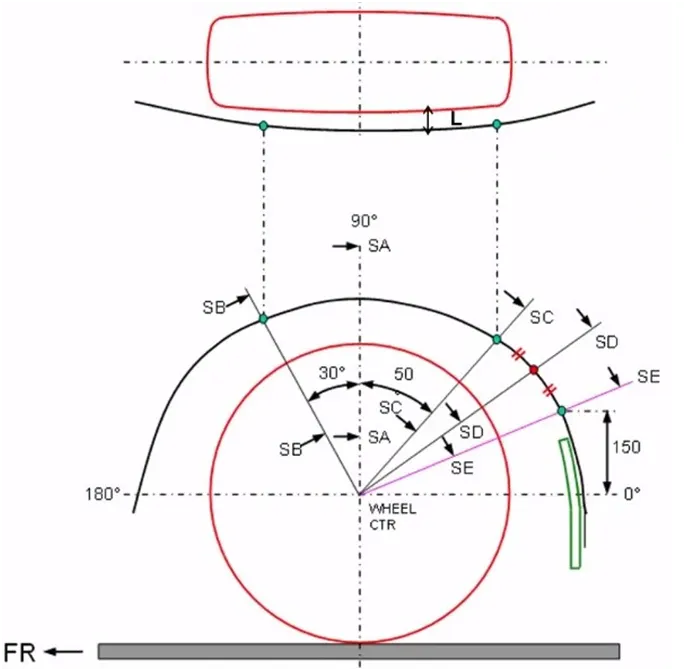
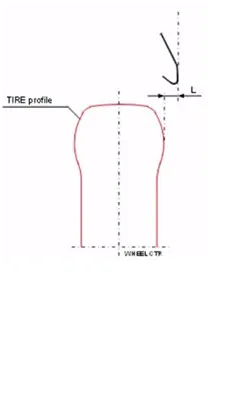
As per European Standards, by considering side view of the wheel along with fender and project the top view above the side view exactly. Now add two lines from the centre of the wheel circle by taking 50deg in clockwise direction from 90deg for 1st sector and 30deg in anti-clockwise direction from 90deg for 2nd sector. For European standards an additional 2 sectors to be added by offsetting the horizontal line from centre of the wheel for 150mm. Now add a line from centre of the wheel to the intersection point of the fender. In addition to that take a mid-point of the arc from 50deg and 150mm line and add a line from centre of the wheel and to the mid-pont. Now those five lines should be taken as SA-SA, SB-SB, SC-SC, SD-SD & SE-SE. Now the length between wheel profile end and outer edge of fender is L and it should be of minimum of 10mm as standard. If this condition is achieved, then the Wheel arch calculations for Europe can be considered as standard.
c. American Standards:
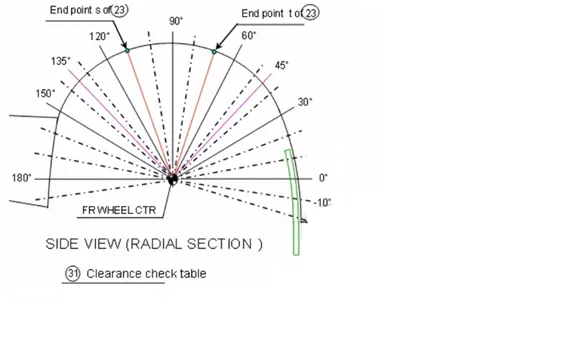
For American Standards, it should be same as European but the clearance L should be checked for every 10deg in anticlockwise direction from -20 deg to -170deg. Now the length between wheel profile end and outer edge of fender is L and it should be of minimum of 5mm as standard. If this condition is achieved, then the Wheel arch calculations for America can be considered as standard.
Wheel arch calculations as per European Standards:
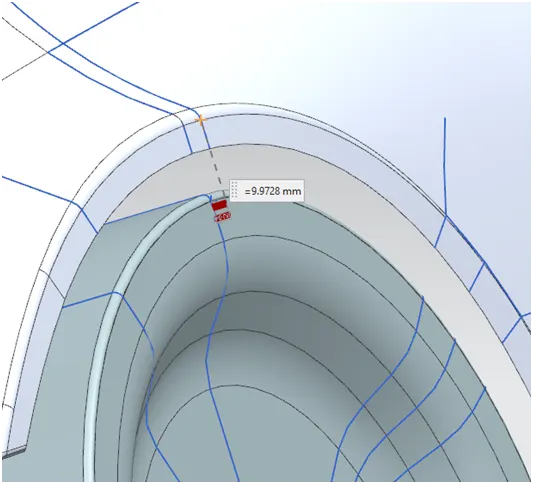
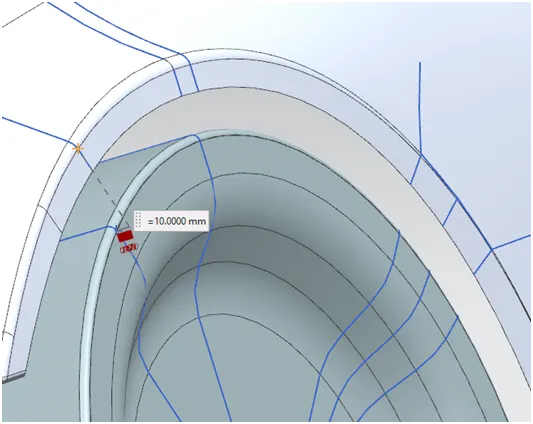
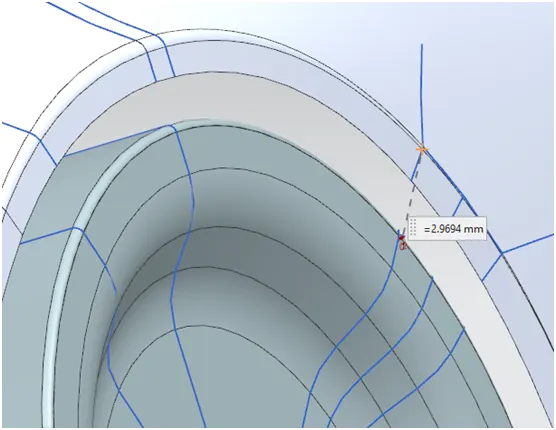
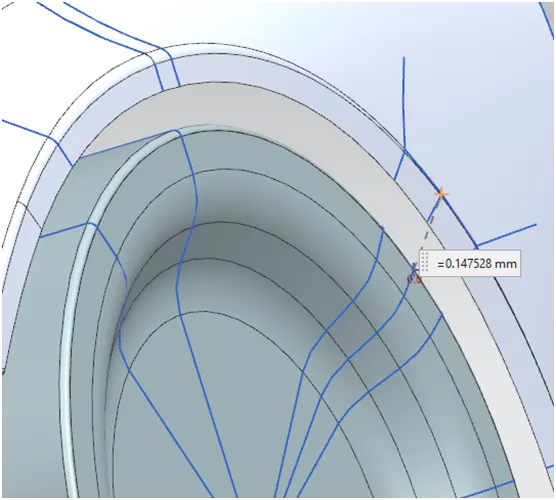
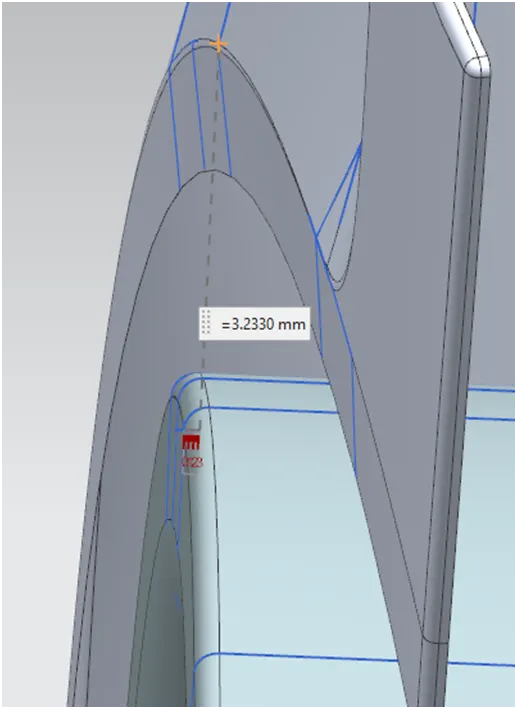
By having a knowledge on above type of standards, we need to calculate the wheel arch for the provided input is standard or not. As per European Standards, We projected SA - SA, SB - SB, SC – SC, SD – SD & SE – SE lines into tyre profiles and fender of the given cad. Now we measured the clearance L for all the above five lines. Kindly refer the length of those lines in the below images.
SA – SA = 9.97mm < 10mm
SB – SB = 10mm = 10mm
SC – SC = 2.97mm < 10mm
SD – SD = 0.15mm < 10mm
SE – SE = -3.23mm < 10mm
Conclusion:
From the above measurements, we can clearly say that except SB – SB = 10mm, the other clearances not achieved the European Standard. So the input fender failure detail should be informed to the styling team for the modification of fender as per European standard. Refer below Table for details.
|
Clearances |
SA – SA |
SB – SB |
SC –SC |
SD – SD |
SE - SE |
|
Standard Length (European) |
10mm |
10mm |
10mm |
10mm |
10mm |
|
Measured Length |
9.97mm |
10.00mm |
2.97mm |
0.15mm |
-3.23mm |