Fender Design - Wheel Arch Challenge
Fender:
Fender is the American English term for the part of an automobile, motorcycle, or other vehicle body that frames a wheel well (the fender underside). Its primary purpose is to prevent sand, mud, rocks, liquids, and other road spray from being thrown into the air by the rotating tire. Fenders are typically rigid and can be damaged by contact with the road surface.
Sticky materials, such as mud, may adhere to the smooth outer tire surface, while smooth loose objects, such as stones, can become temporarily embedded in the tread grooves as the tire rolls over the ground. These materials can be ejected from the surface of the tire at high velocity as the tire imparts kinetic energy to the attached objects. For a vehicle moving forward, the top of the tire is rotating upward and forward and can throw objects into the air at other vehicles or pedestrians in front of the vehicle.
Fender Wheel Arch Regulations:
Japan standards:
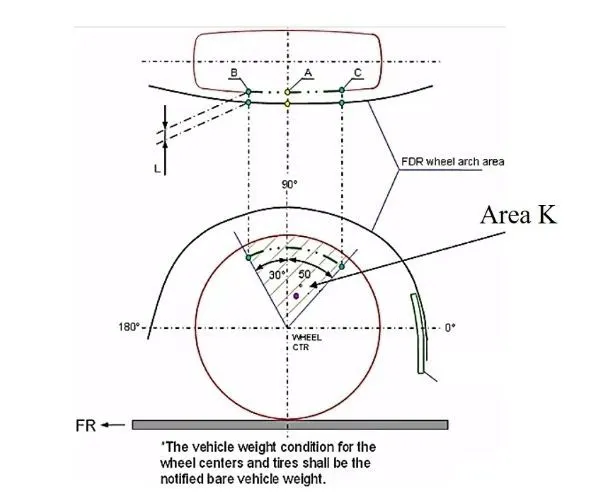
The Japanese regulation states that the clearance between tyre and fender must be greater than 5mm and the projected points to be measured are at an angle of 30° forward & 50° rearward respectively.
US standards:
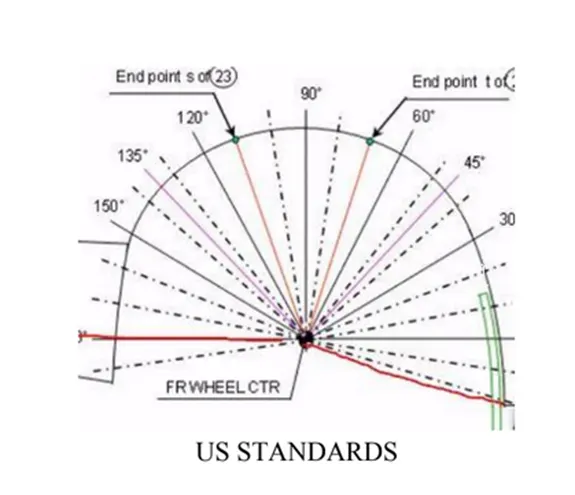
According to US regulations, the clearance between the tyre and the fender must be greater than 5mm. The projected spots that need to be measured are at angles ranging from 0° to 100°, respectively. Each position is divided into 10° as a result. Thus, the anticipated distances are measured at around 21 different points.
European standards:
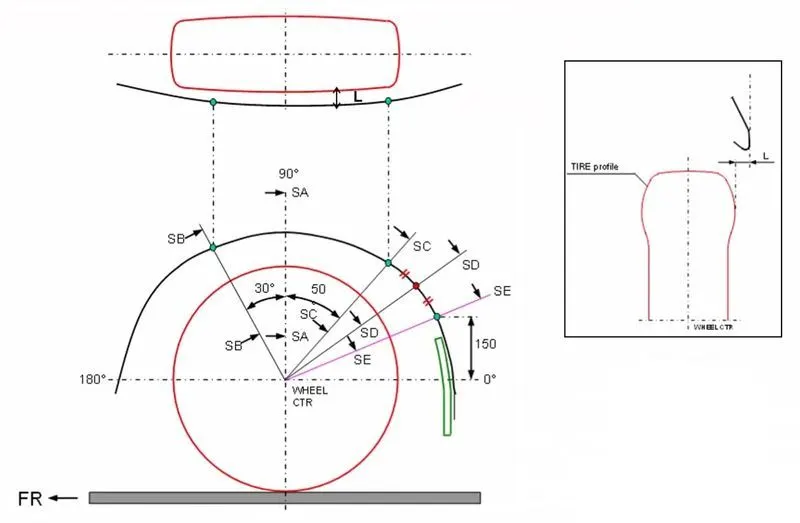
As per European regulation, the clearance value between the fender and tyre profile must be greater than 10mm. The value is measured in projected point at an angle of 30° forward and 50° rearward respectively.
Case study
Sketch
The lines are drawn as exactly depicted in the European standards picture.
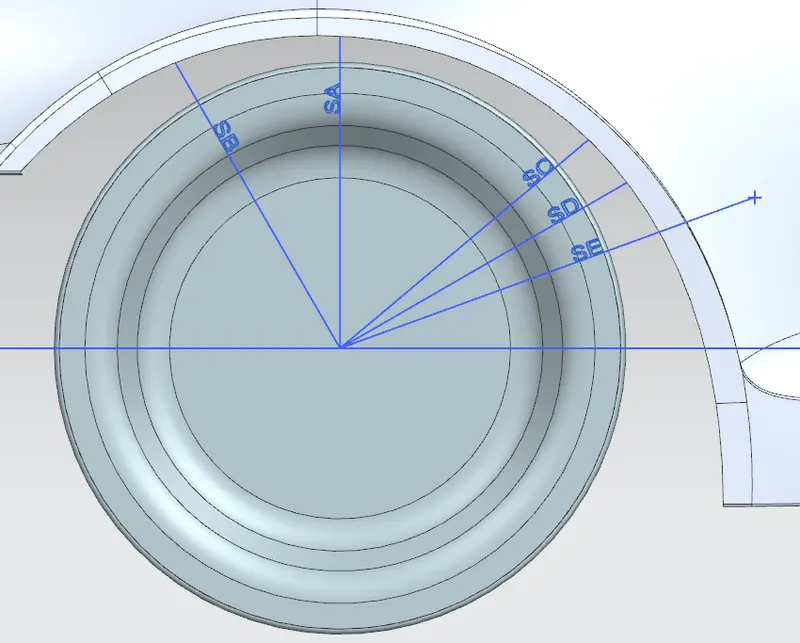
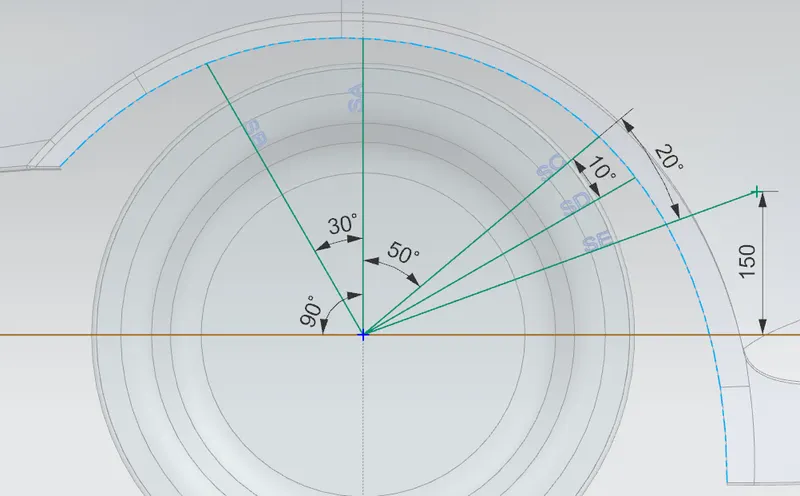
The clearances are measured in the horizontal direction with the fender wheel arch.
1. Clearance 'L' at SA
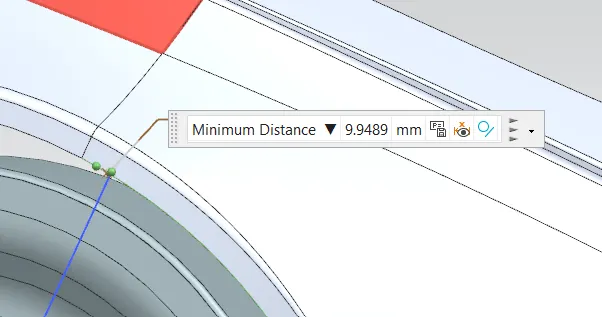
2. Clearance 'L' at SB
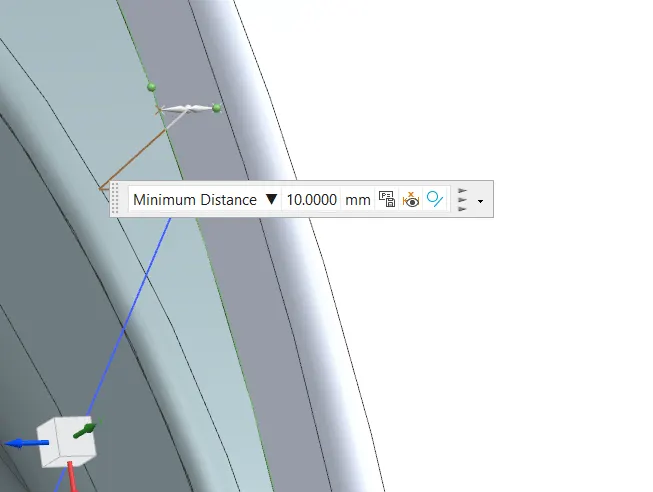
3. Clearance 'L' at SC
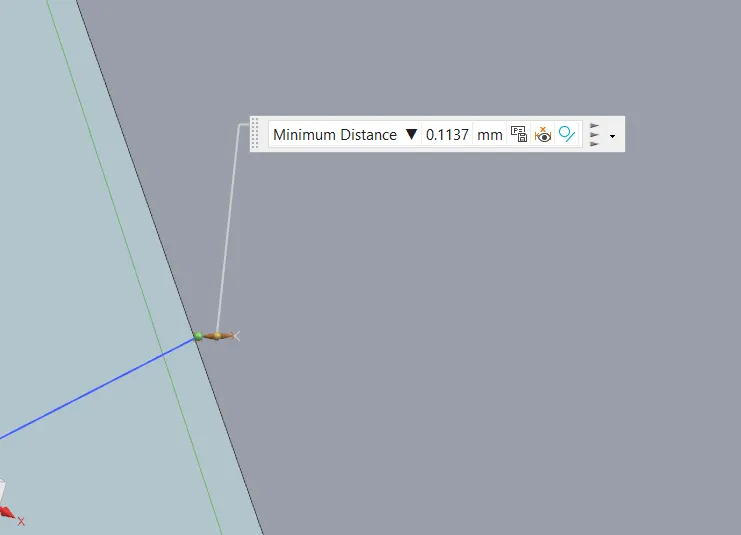
4. Clearance 'L' at SD
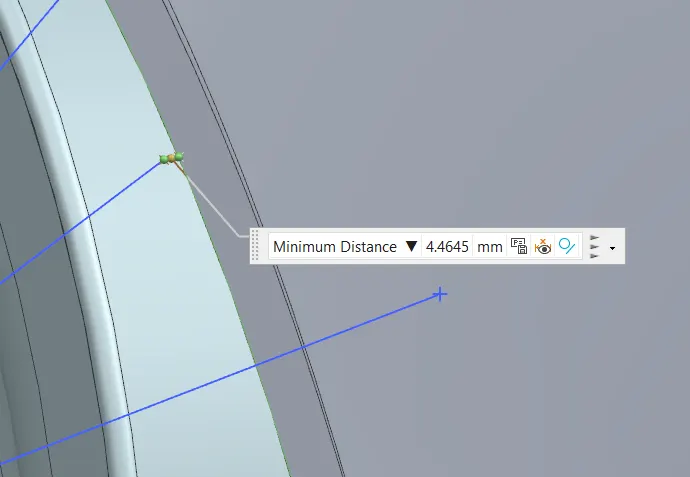
5. Clearance 'L' at SE
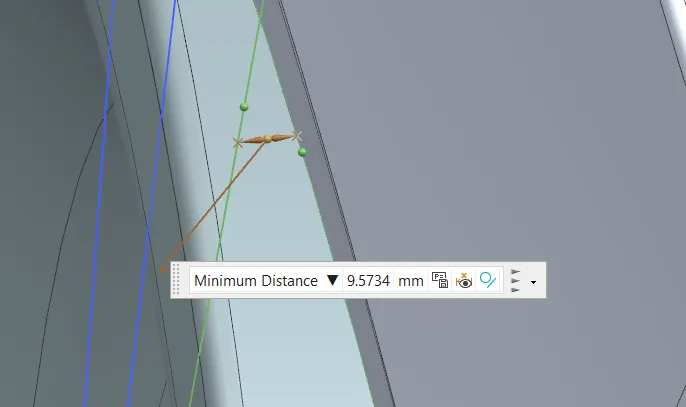
This distance is negative as the wheel is coming out of the fender.
Conclusion:
|
Line |
Clearance ‘L’ mm |
Result |
|
SA |
9.9489 |
Fail |
|
SB |
10 |
Pass |
|
SC |
0.1137 |
Fail |
|
SD |
4.4645 |
Fail |
|
SE |
9.5734 |
Fail |
From the above results, we can conclude that the Fender design did not pass European standards as the clearance for most of the lines is less than 10mm.