Fender Design - Wheel Arch Challenge
Fender Design - Wheel Arch
Aim:
To Calculate the Wheel Arch gap at required points and check whether the car passes the European standard.
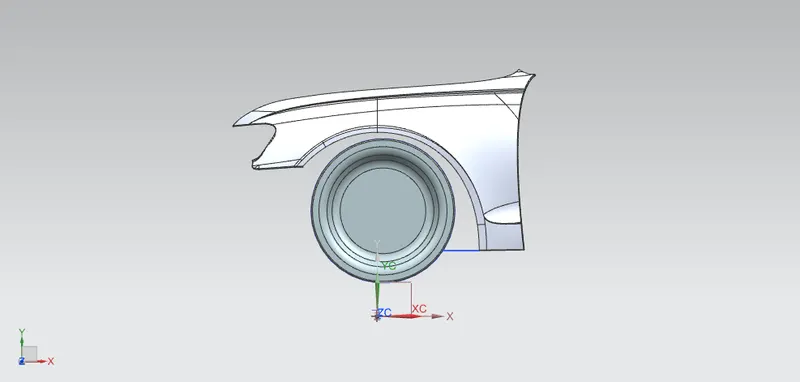
FENDER ARCH
- A fender arch is another term used to refer to a wheel arch or wheel well, which is the space surrounding a vehicle's wheel where the fender or bodywork curves to accommodate the wheel's movement. The fender arch is a critical part of a vehicle's design, as it not only protects the bodywork from damage caused by road debris, but also helps to direct airflow around the wheel and improve the vehicle's aerodynamics.
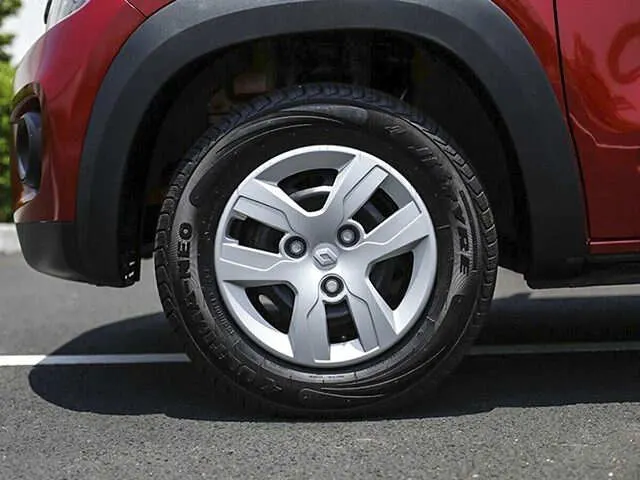
- In addition to their functional purpose, fender arches can also be a design feature of a vehicle. Some manufacturers incorporate unique shapes and designs into the fender arches to give the vehicle a distinctive look. Similarly, car enthusiasts may modify the fender arches to achieve a certain aesthetic or performance goal, such as fitting larger wheels or lowering the vehicle's suspension.
- Overall, the fender arch is an important component of a vehicle's design and serves both functional and aesthetic purposes.
DIFFERENT FENDER REGULATIONS
- European regulations:
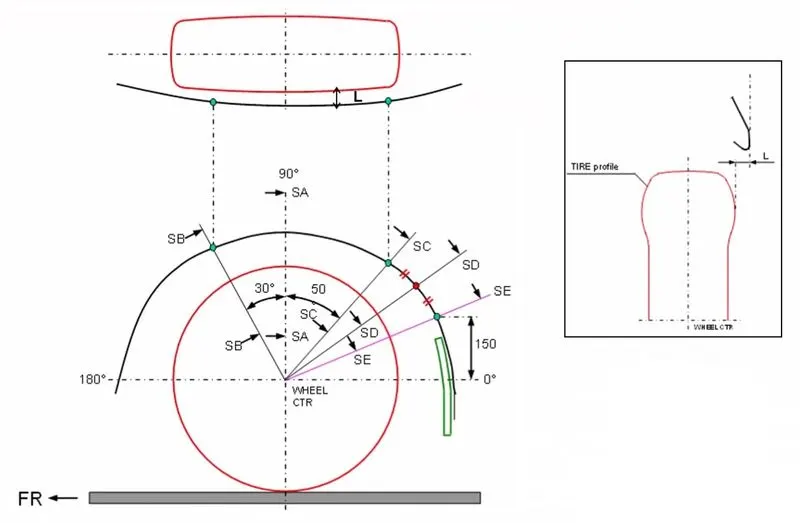
- Sections SA-SA, measure CL L SB-SB Produce a CL check chart to verify SC-SC SD-SD SE-SE.
- To comply with European regulations, the CL L value at each of the five sections must be higher than 10 mm.
- Wheel protection regulations The value of "a" must be greater than 5 mm at a line 30 degrees in front of and 50 degrees behind the centre vertical axis of the wheel.
- Japan regulations:
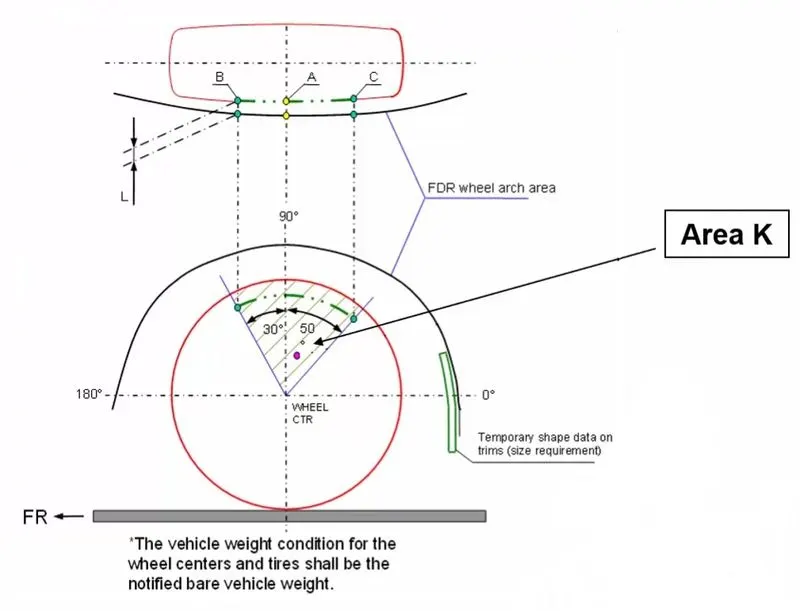
- Measure the space between the tire, hub, cap, and fender in three separate locations inside of area K, then create a clearance check chart to confirm.
- The clearance in each of the three positions must be higher than 5 mm.
- Required wheel guard: The value of an at a line 30" forward and 50" back from the centre vertical axis of the wheel must be greater than 5 mim.
- US regulations:
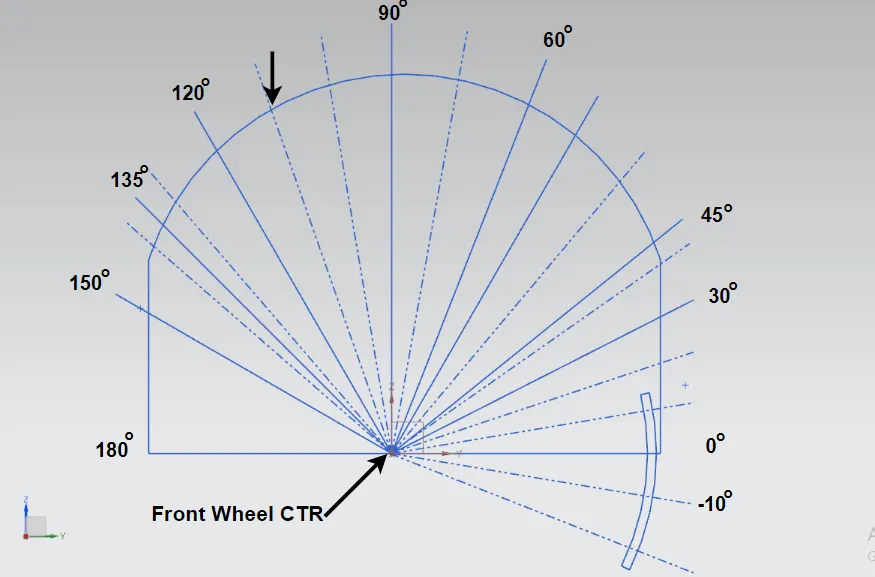
- Create the clearance check table and create clearance check details for all positions between -100* and 100*.
- For all values to be compliant with the rules, they must all be larger than 5 mm.
- The value of "a" must be greater than 5 millimetres at a line 30 degrees forward and 50 degrees back from the vertical centre of the wheel.
ANALYSIS USING EUROPEAN REGULATIONS:
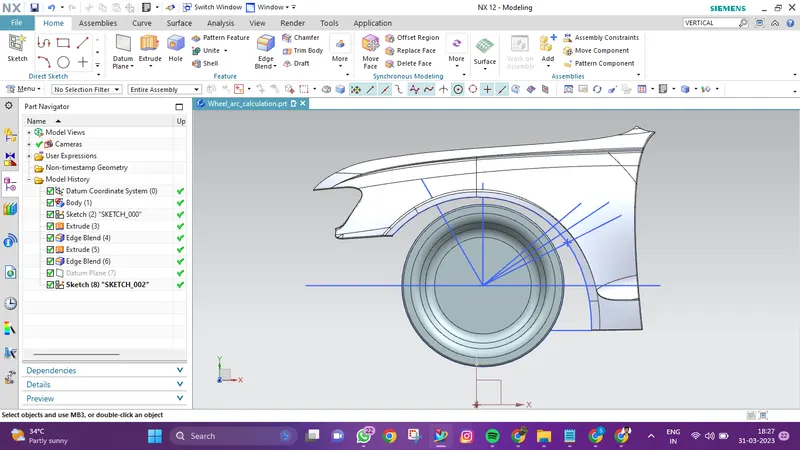
- At the wheel's outermost edge, a datum plane is Created.
- On the new datum plane, the drawing is made.
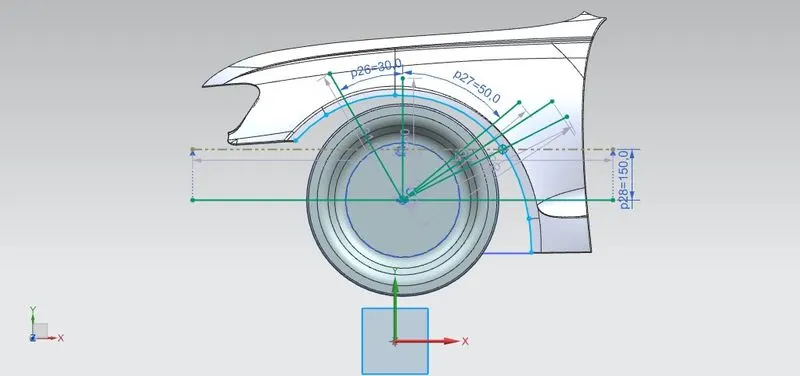
- The centre of the wheel is crossed by a straight line.
- The centre of the wheel is lowered with a perpendicular line SA.
- At an angle of 30 degrees from SA and 50 degrees from SA, respectively, two lines are formed: SB and SC.
- 150 millimetres vertically above the centre line, a point is formed.
- From the centre of the wheel, a line SE is drawn that passes through the newly formed point.
- In the midst of lines SC and SE, another line SD is drawn starting from the wheel's centre.
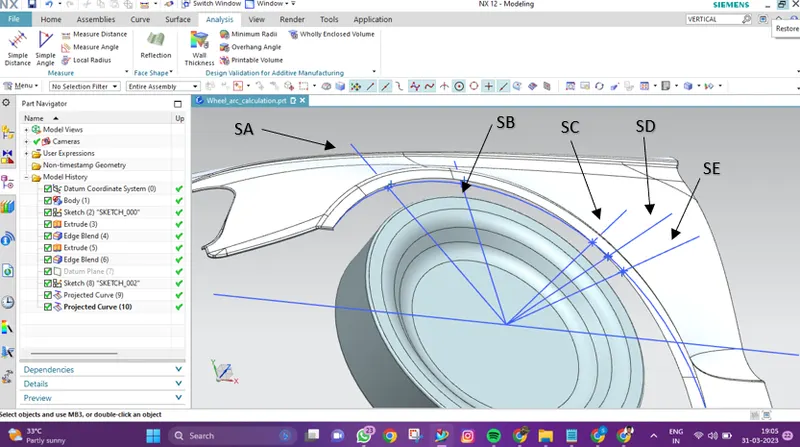
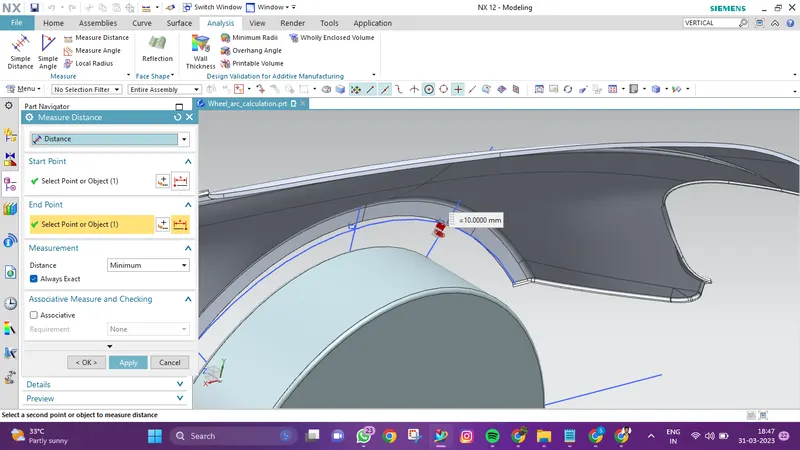
Clearance 'L' Value at Section SA: 10mm
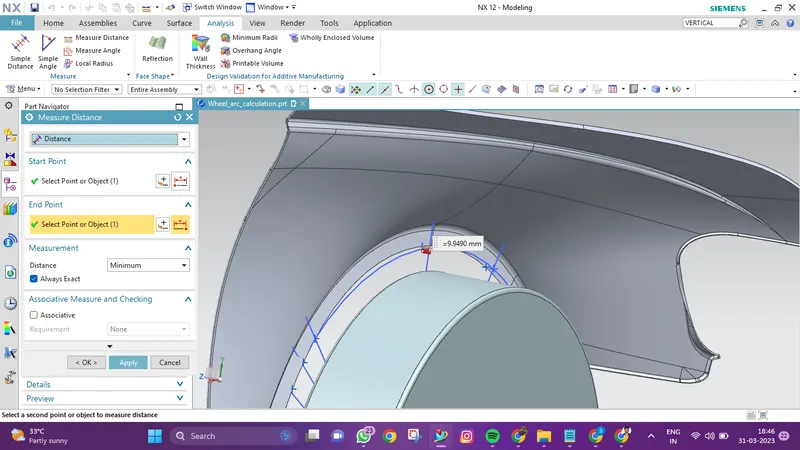
Clearance 'L' Value at Section SB: 9.9490mm
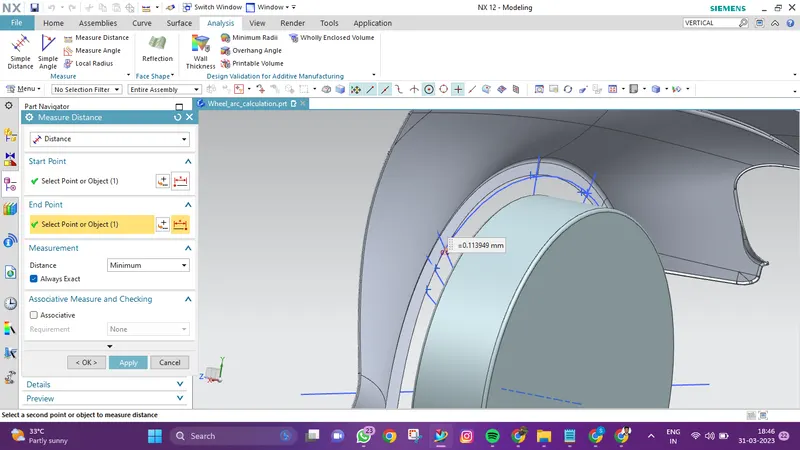
Clearance 'L' Value at Section SC: 0.113949mm
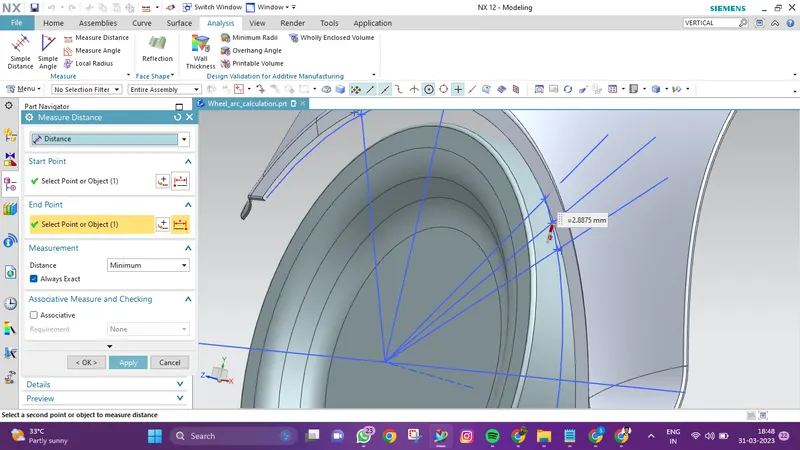
Clearance 'L' Value at Section SD: 2.8877mm
Clearance 'L' Value at Section SE: 5.9973mm
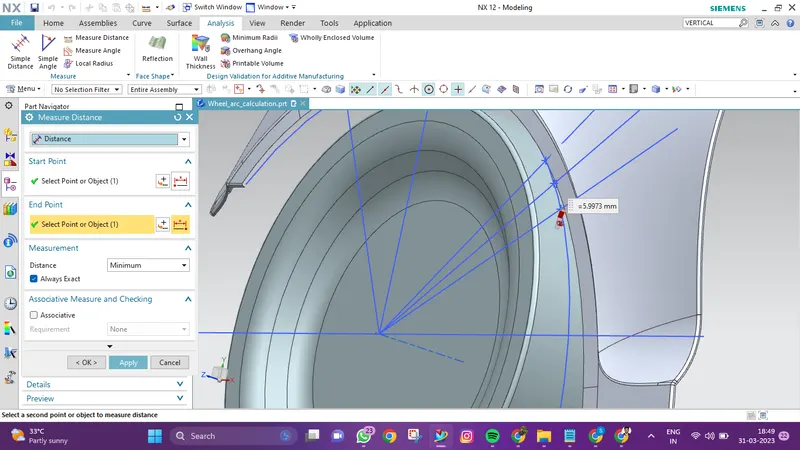
| REGION | ACTUAL CLEARANCE | REQUIRED CLEARANCE | FINAL RESULT |
| SA | 10mm | 10mm | Pass |
| SB | 9.9490mm | 10mm | Fail |
| SC | 0.113949mm | 10mm | Fail |
| SD | 2.8877mm | 10mm | Fail |
| SE | 5.9973mm | 10mm | Fail |
CONCLUSION:
From the aforementioned findings, we can infer that the fender does not meet the requirements of the European Regulations because the design does not comply with the requirement that there be a minimum of 10 mm between the fender arch wheel and the outermost wheel.