Fender Design Challenge
Mounting points of a front Fender
Mainly there are 5 mounting points on a Front Fender
1.Drip Mounting point
This is the important mounting unit, connecting the fender with engine compartment. Some of the drip mounting design of different cars are given below,
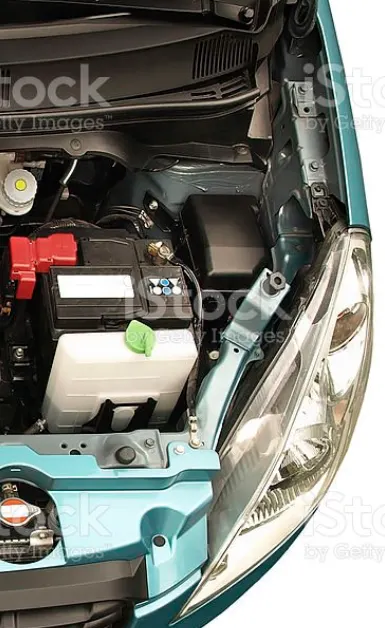
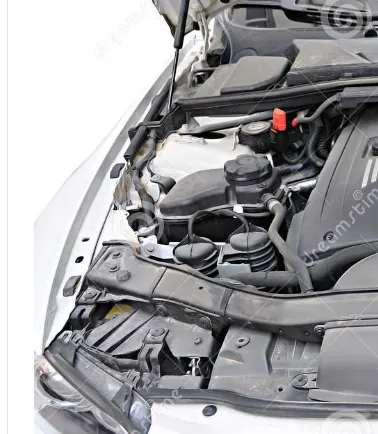
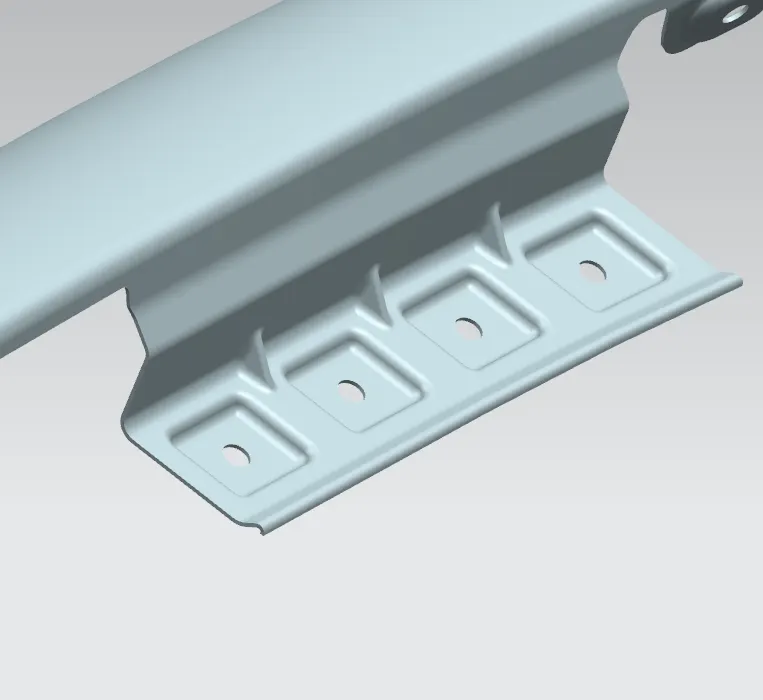
here below is the design for the drip area of our fender
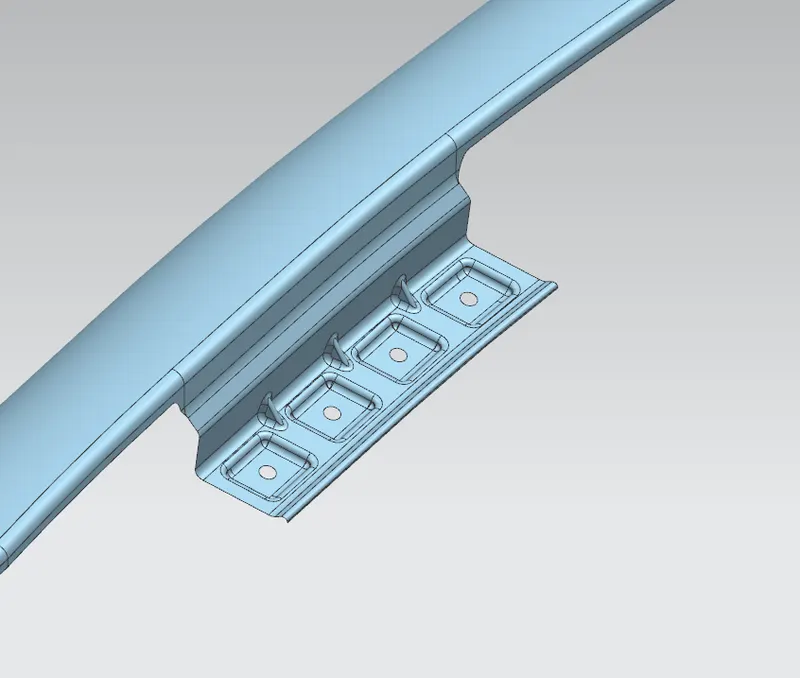
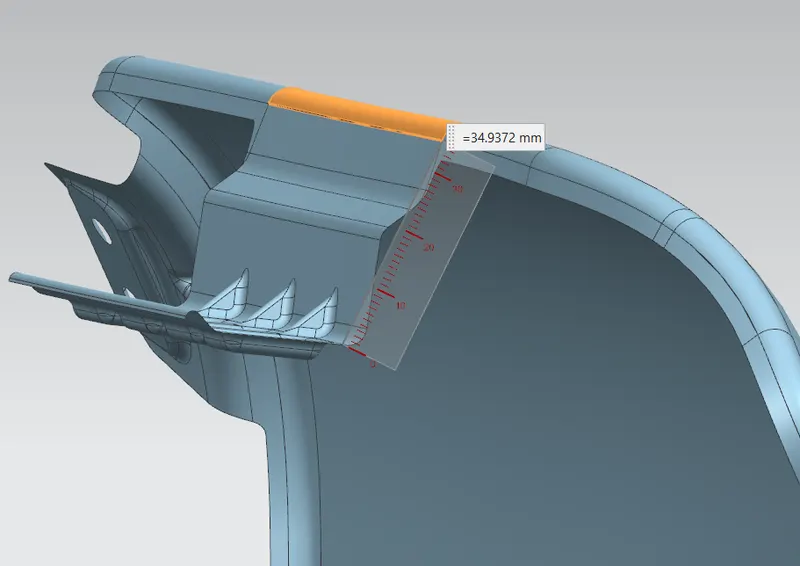
We should keep the minimum gap of the drip area and the engine compartment. Also we have to keep a distace of 150mm from the front bumper side to the drip area for the housing unit of the head lamp. To avoid the spring back effect and vibration we have to keep the height of the drip are below 40mm.
2.Sill Mounting point
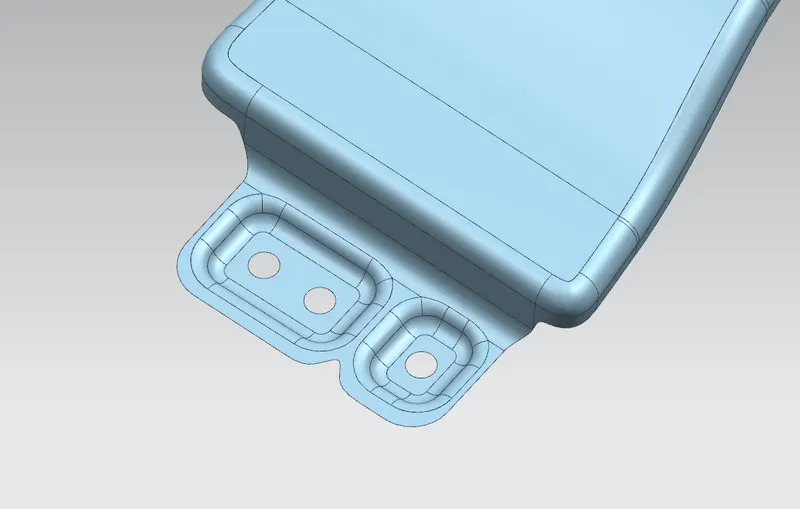
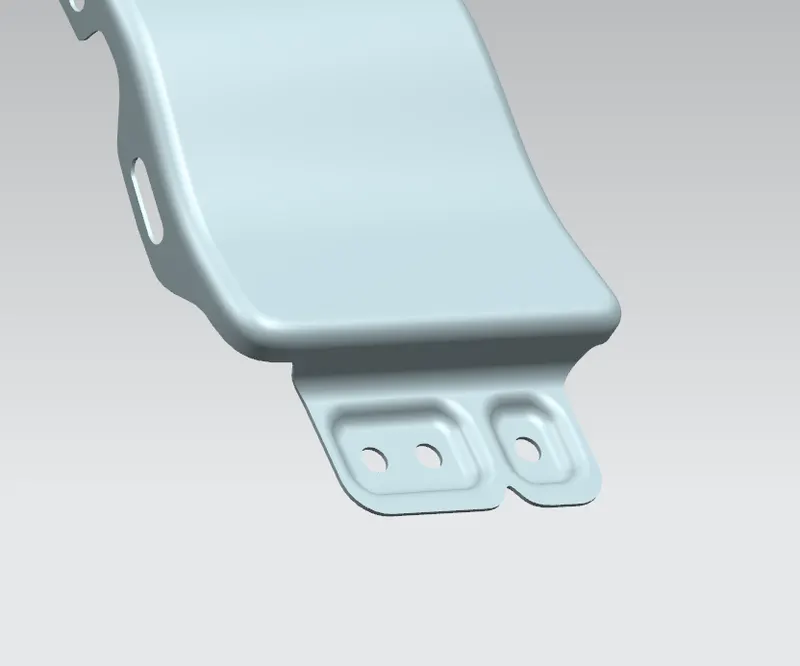
Here is the design of our sill mounting area.
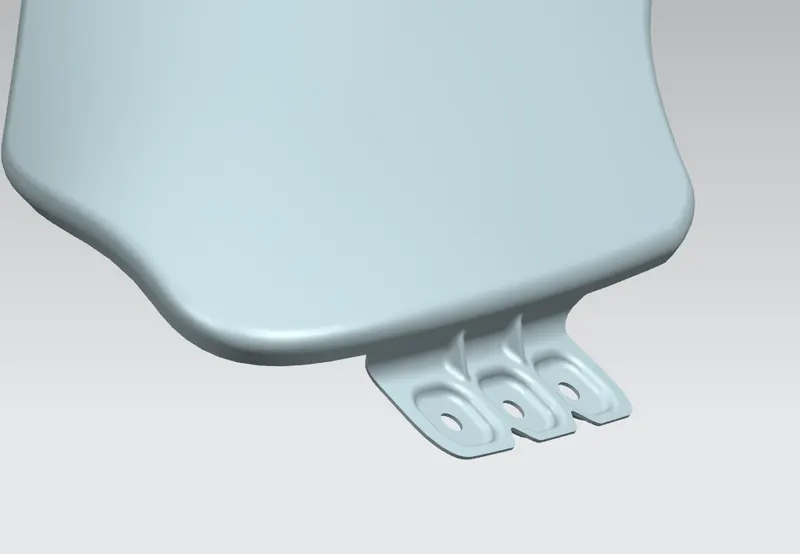
3.Bumper Mounting point
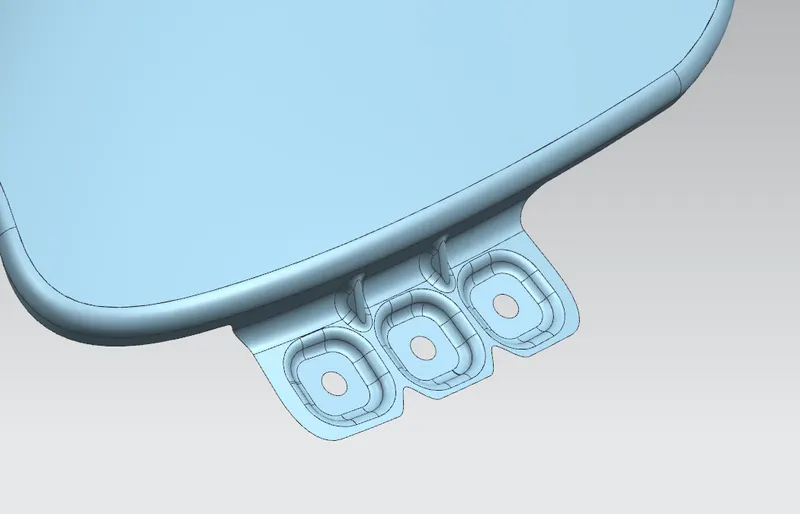
Bumper mounting connects the bumper and the fender
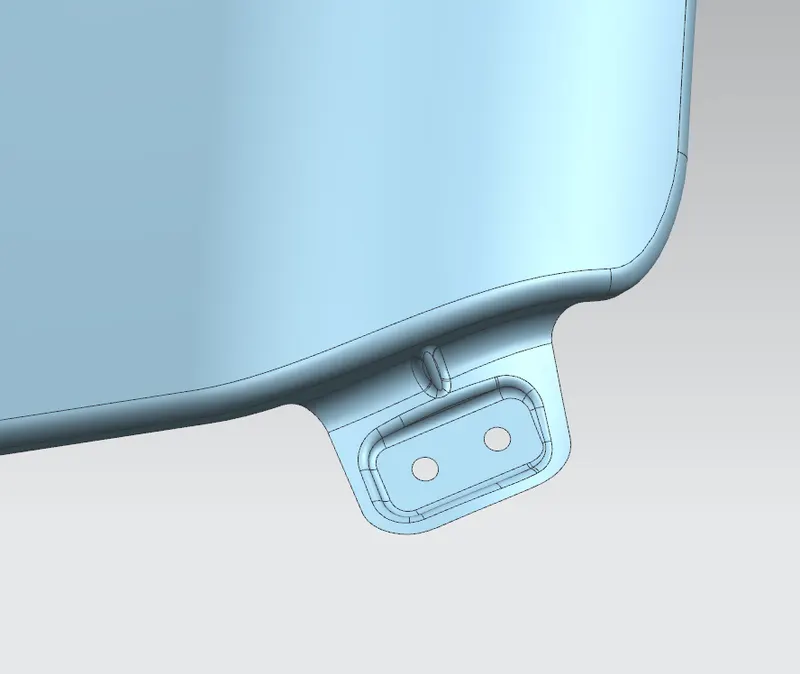
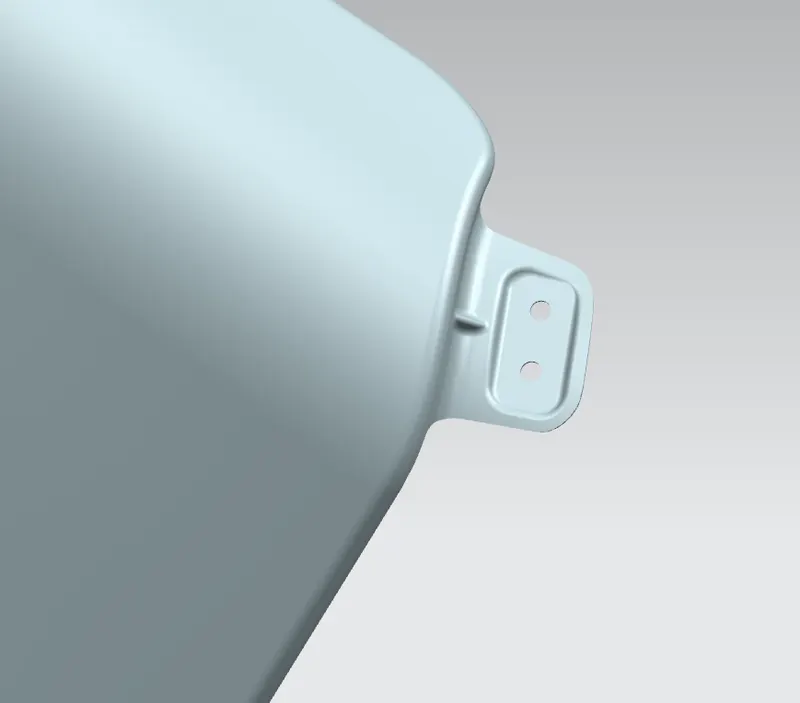
4.A-pillar Mount
A-pillar mounting or body mounting it connects the upper side of the fender to the body.
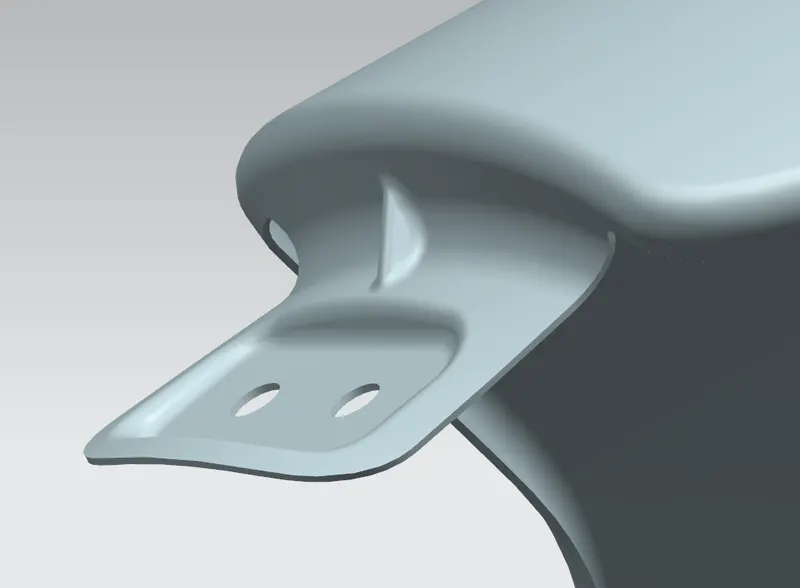
5.Baffle Mounting area
Here the plastic part(baffle) is fitted on the wheel arch
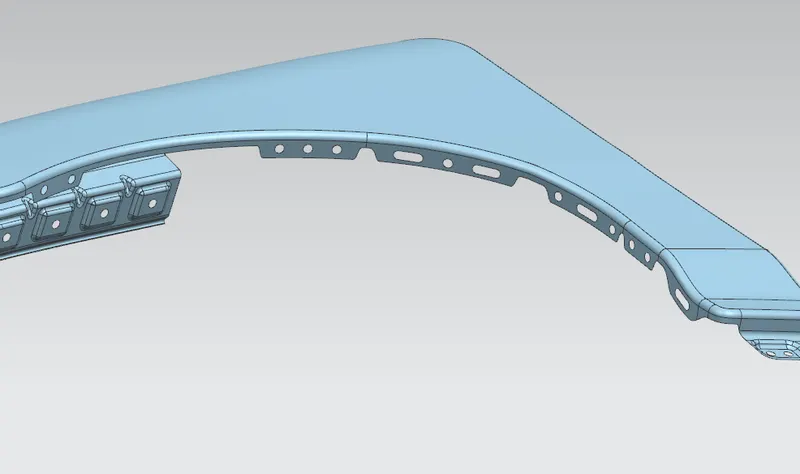
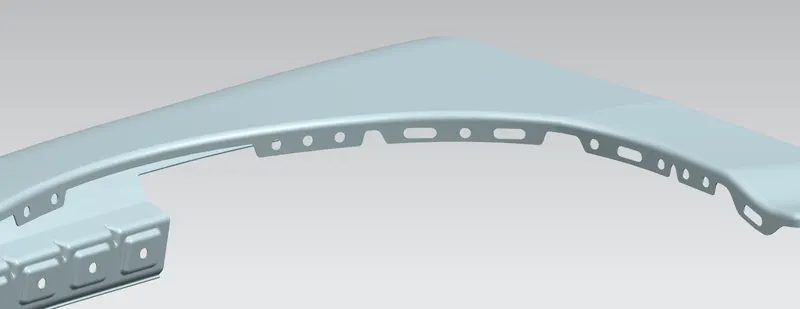
Final Fender View
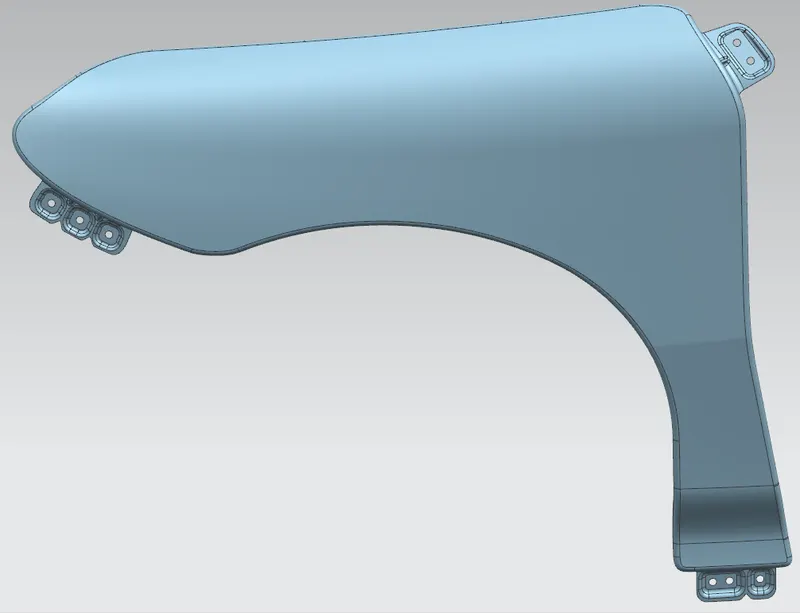
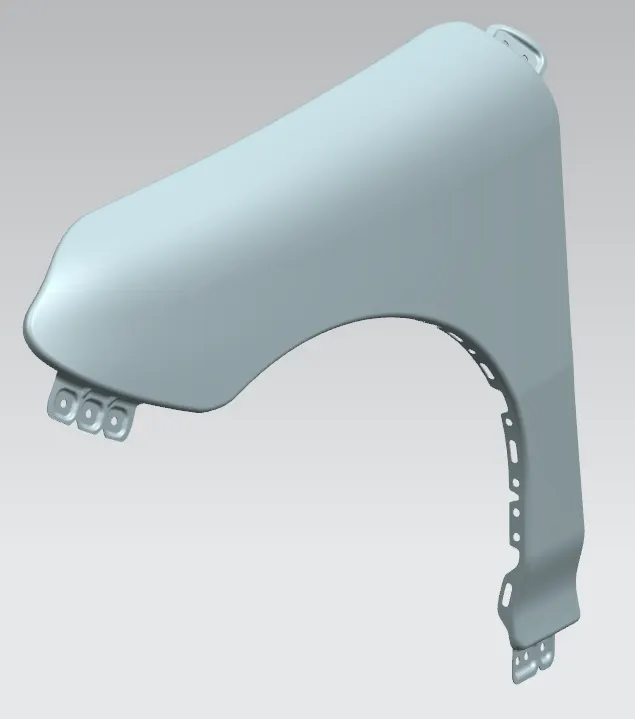
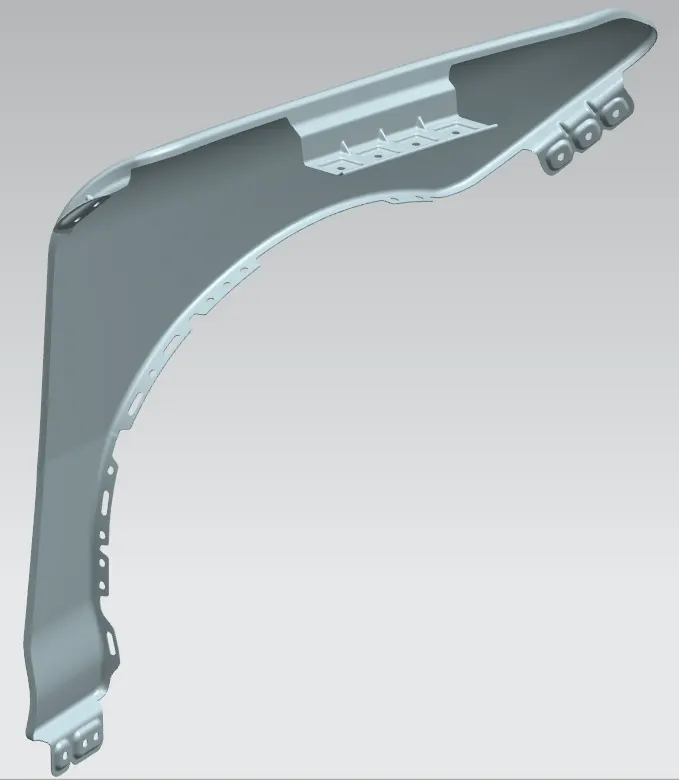
Fender Design Different mounts of Fender
- The main purpose of the fender in vehicles is to prevent sand, mud, stones, liquids and other small particles that thrown into the air by the rotating tyre.
- So the Fender keeps tyre not making harm to the surroundings.
- Considering the Environmental structure of different region, Every country has their own design standards and regulations.
- When designing a fender to a particular country, the fender design should pass the design standards of that region.
- Example: when we are designing a fender for the european countries the tyre should be inside the fender and there should be a wheel arch gap of more than or equal to 10mm.
- And this wheel arch measuring method is different in every region.
- In European Countries they mainly consider 5points in the fender edge,
- intersection point of a vertical line from the centre of the tyre and edge of the fender.
- Intersection point of 30 degree inclined line to the left of the vertical line through the centre and fender edge.
- Intersection point of 50 degree inclined line to the right of the vertical line through the centre and fender edge.
- Intersection point of a horizontal line drawn at a vertical distance of 150mm from the centre of the tyre and fender edge.
- Intersection point of the fender edge and bisecting line created by the 50 degree inlined line and the line joined by the 4th point and centre of the tyre.
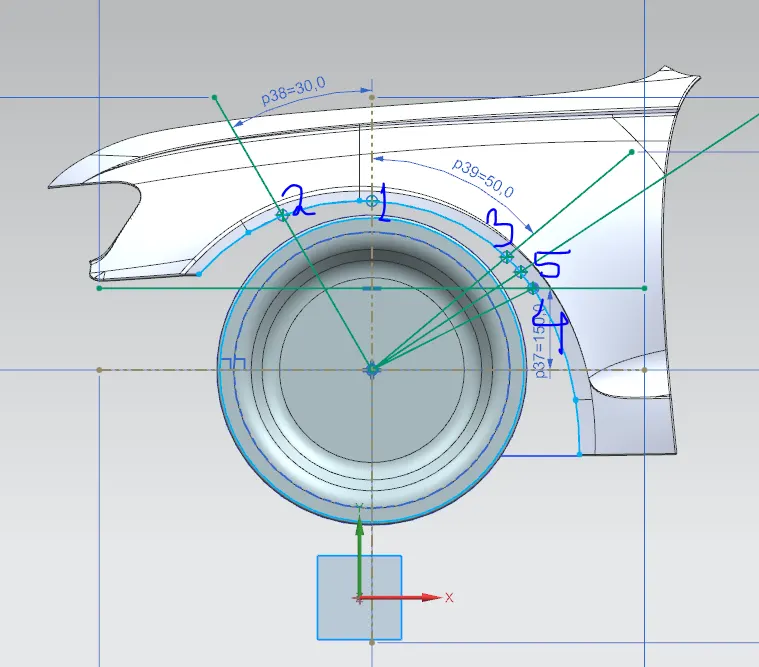
- From all these points the wheel arch gap should be equal or more than 10mm, then only the will pass the european standards.
- As per the US regulation the wheel arch gap is checked in every 10 degree, from -100 to 100 from the vertical line through the centre of the tire.
- The minimum wheel arch gap in US is 5mm.
- Like this every country has their own regulations by considering the road conditions of that region.
- The main area to concentrate when designing a front fender is the drip area and wheel arch area. These are designed as per the master section given to us.
- When creating the drip area we have to make sure the gap for the head light fitting, about 150mm length we have to spare from the headlight area.
- And considering the pedestrian safety and for a good aesthetic look we will provide a minimum fillet radius of 2.5mm in every area.
- In olden days we have used full bumper type fenders, but now we are using the half bumper type fenders through this we can reduce the wastage of materail and weight of the body.
Manufacturing Process and its Design Parameters
The car fenders are mainly made of steel, fibre glass and other materials. For the survival of the passengers these are designed to crumple in a crash, the impact of the crash will distribute across the body, so the occupants will have safety.
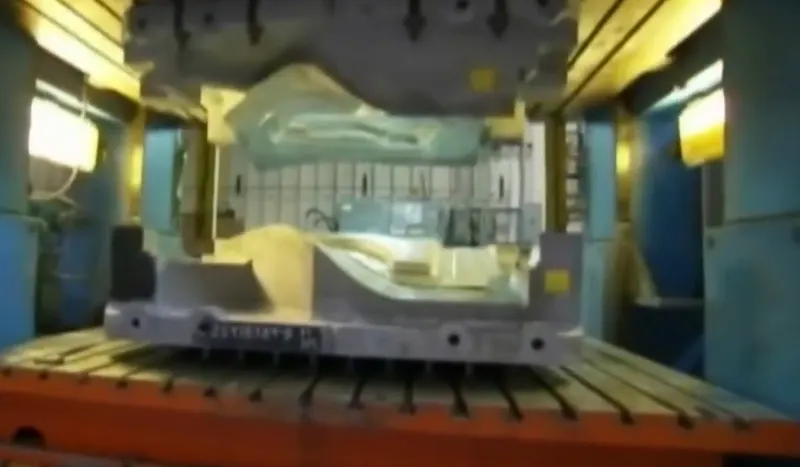
Car fenders are commonly manufactured by stamping process. Stamping press is used with series of dies to cut and form metal into various shapes. The thin sheet metal is put into the die and stamped.In the figure shown below we can see a thin sheet is placed on a die. the stamping press will apply high pressure on the thin sheets.
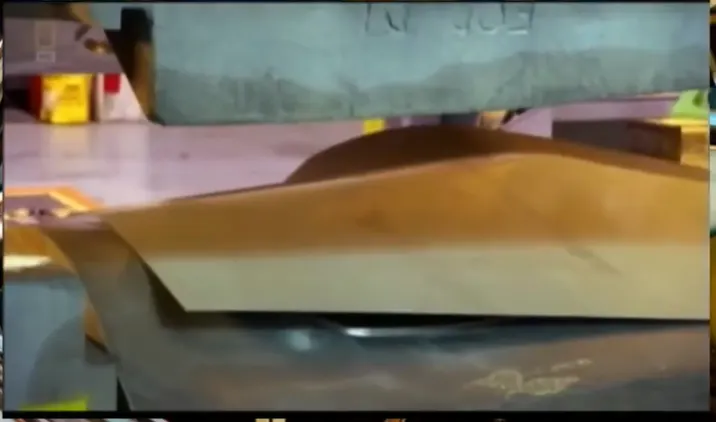
And now the thin sheet is stamped and achieved the shape of the die(shape of the fender).
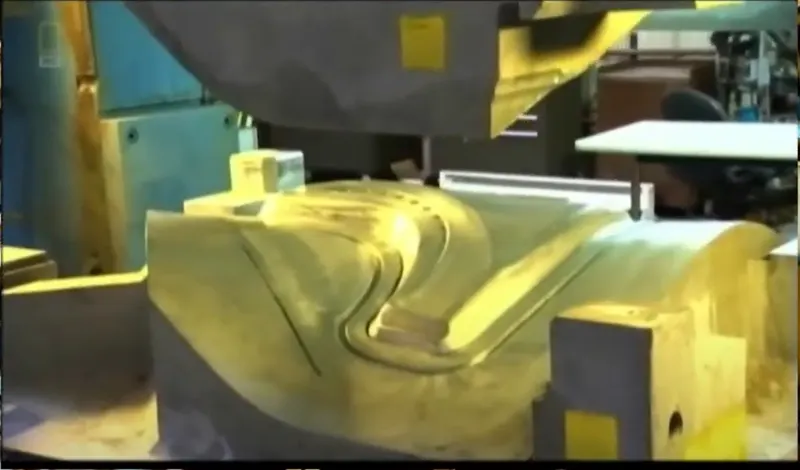
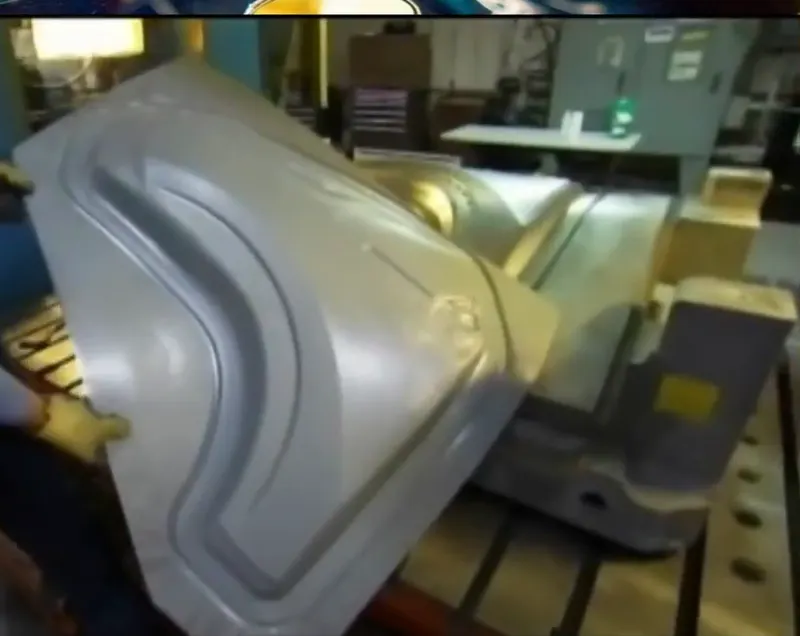
The unwanted parts will cut off from the part. and hemming process will be done for a good look of the edges and surface.
various other methods also used for manufacturing the fender. By moulding process also the fenders are manufactured.