Fender Design Challenge
FENDER DESIGN
Objective: The main objective of this project is to design a car fender using a new age design software - NX – CAD.
Introduction: Design of any product starts from a requirement. The design engineer sketches the product based on the requirement. Then the 2D sketch with the proper dimensions is converted into the 3D model using the advanced CAD software’s. Another important thing in the design is that, every product that is designed should be able to manufactured. So, the role of the design engineer is to design the product that can be easily manufactured and with less cost effective. This is the place where the Design for manufacturing [DFM] and Design of assembly [DFA] takes a role while developing any product. The process of development of design carries on until the design satisfies the customer needs. Here in this project the product that we are going to develop is a car fender.
What is Fender?
- Fender is the US English term for the part of an automobile (vehicle body) that frames a wheel well (the fender underside).
- Its primary purpose is to prevent sand, mud, rocks, liquids, and other road spray from being thrown into the air by the rotating tire.
- When vehicle is moving, tires pick up stones and others and hurl them in all directions. Fenders are basically present to prevent any injuries to pedestrians and contain the motion of these particles
- Most passenger automobiles have four fenders, one over each wheel. For vehicles with a narrow car body that exposes the tire, the fender is an exposed curve over the top of the tire. For wide body vehicles that cover the tire, the fender forms the wheel well surrounding the tire, and is not directly visible from above the car body.
- Wheel wells tend to be much larger than the diameter of the tire, because they do not move with the tire suspension and consequently must be large enough to allow the full range of tire motion on the suspension without touching the interior of the wheel well.
- More elaborate designs include fender skirts for enclosing the outside edge of the wheel well, and stylized pontoon fenders for exposed fenders.
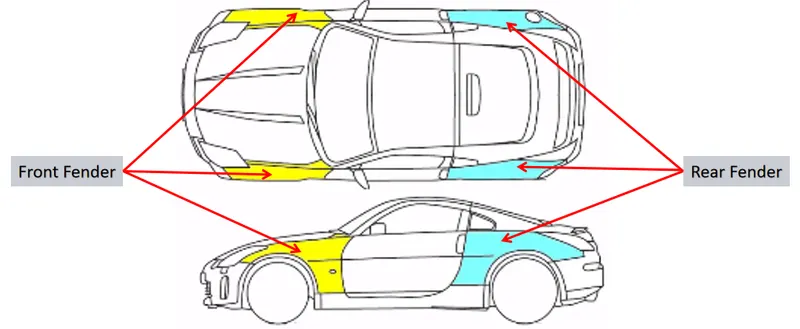
Types of Fenders:
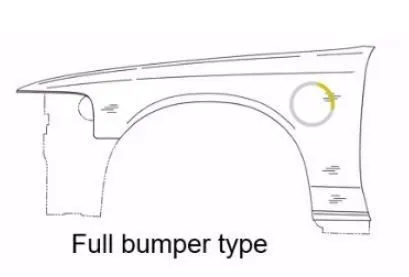
- Full Bumper Type:
Full fender type is traditional type of fender where more material consumption is observed. This type is used in old design of automobiles where it increases the overall weight and thus reduces performance. The maintenance also relatively more due to more surface.
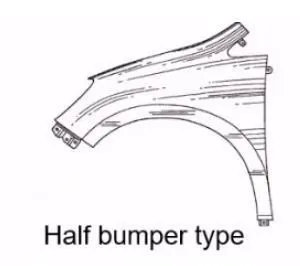
- Half Bumper Type:
Half fender type is modern design where less material consumption is observed, so productivity increases by reducing size of blank and thus providing more performance. The maintenance also relatively low compared to full bumper type.
Mounting Regions on Fender:
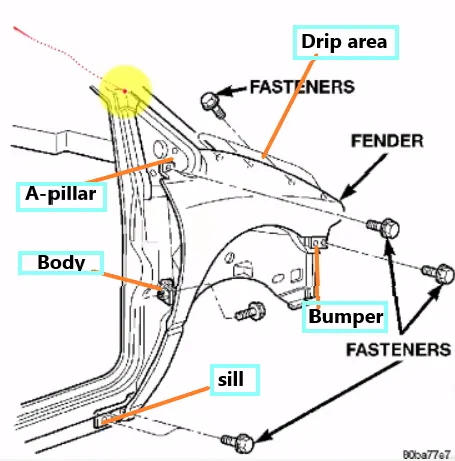
There are some mounting regions on the fender, they are;
- A-Pillar Mounting
- Body Mounting
- Sill Mounting
- Bumper Mounting
- Drip Mounting
- Baffle Mounting
Design Methodology:
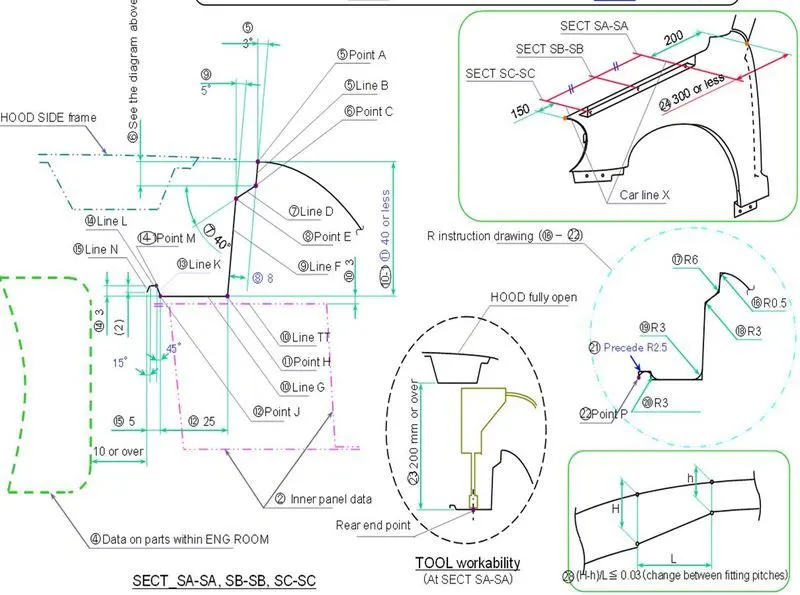
Given Data: Master Section
Design of Drip Area Mounting:
- It is the important mounting unit of the fender. It is connected with the engine compartment. Therefore, the lot of design constraints are to be followed while designing the fender.
- While designing the drip area we have to initially leave 200-300 mm for cowl top.
- For placing the headlamp, we have to leave at least 150 mm at the front while designing the fender.
- Cowl top part consists pf wiper motor and its instruments.
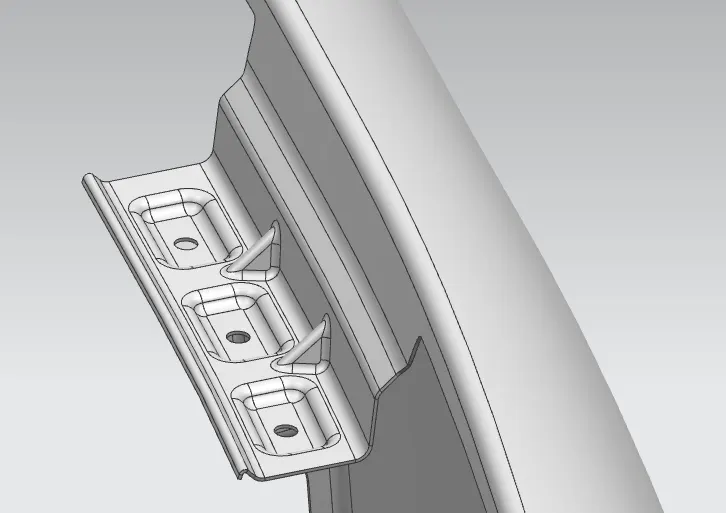
- Two darts are added on the longer side of the drip area in order to provide the stiffness and adds strength to the part. This helps the fender to not to vibrate and impact the forces outside of the fender during motion of the vehicle.
- Embossing is provided on the mounting to strengthen them during fastening.
Design of Sill Mounting Area:
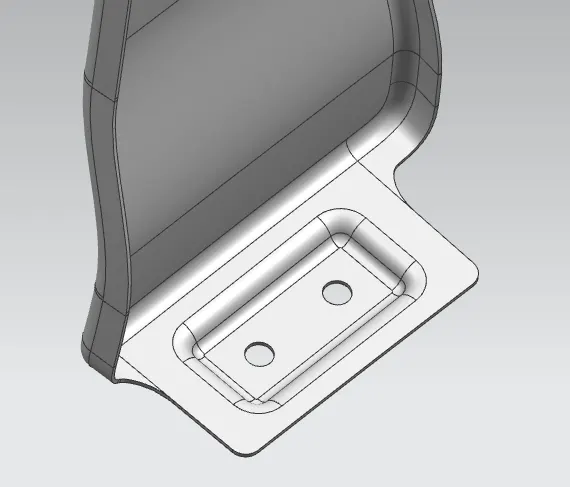
Sill is the panel directly below the bottom of the door supporting the floor and may be used to combine the floor and the body. The bottom end of the fender is mounted on the sill body for reinforcement of the fender panel, thus the sill mounting position is designed with holes and emboss. M5 fasteners are used to fix the fenders on the sill body.
Design of Bumper Mounting Area:
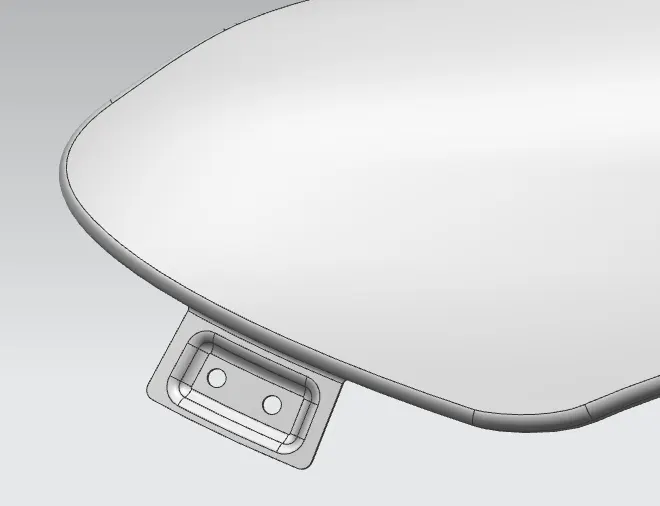
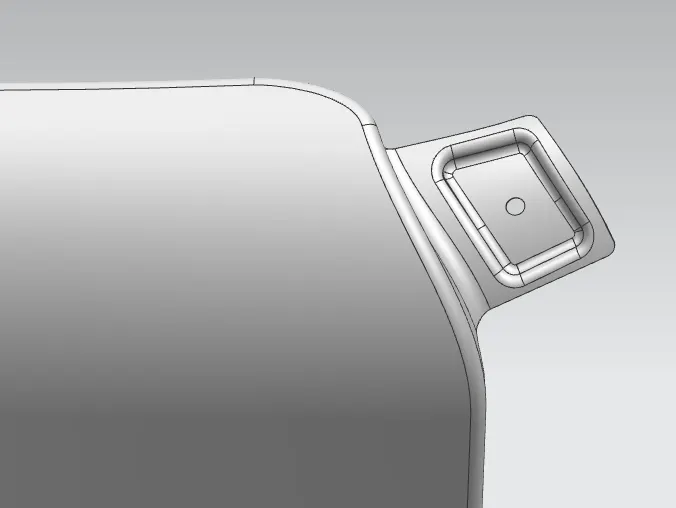
Bumper mounting area is used to fix the plastic bumper to the fender with the help of the fasteners.
Design of A-Pillar Mounting Area:
The A -pillar is the structural pillar that combines the body to the roof. This makes the sides of the windshield rest. Front fenders are fastened to the A -pillar to form a robust structure.
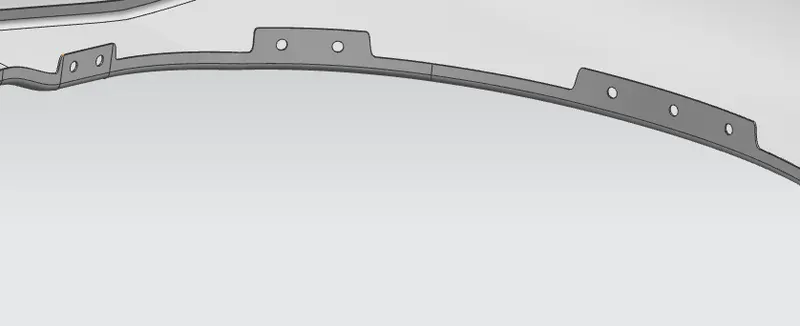
Design of Baffle Mounting Area:
Baffle mounting or mudguard are clip fit type of mounting on the inner side of the fender arch over the tire. It protects the car engine compartment and pedestrians from causing injuries from chip out debris on the road when the car is in motion. They are mounted on the fender using a special type of locking clips which are made up of plastics.
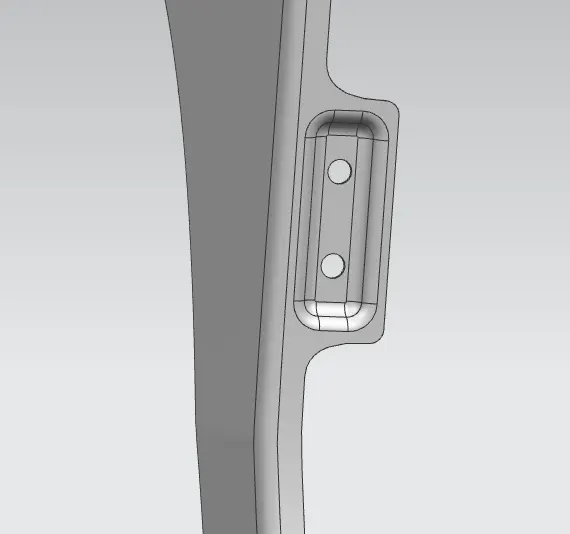
Design of Body Mounting Area:
Another mounting point is created for the body side on the fender. This mounting is created such that it can be mounted on the body of the car. It may consist of one or two bolting holes.
Applying of Thickness to the surface: The thickness of 0.75 mm inward on the final sewed surface of the fender to the sheet metal parameters.
Different views of Fender:
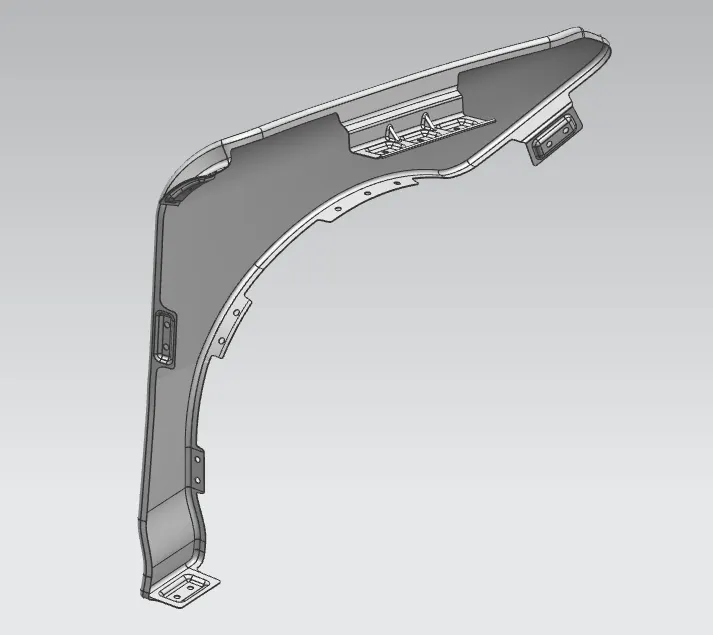
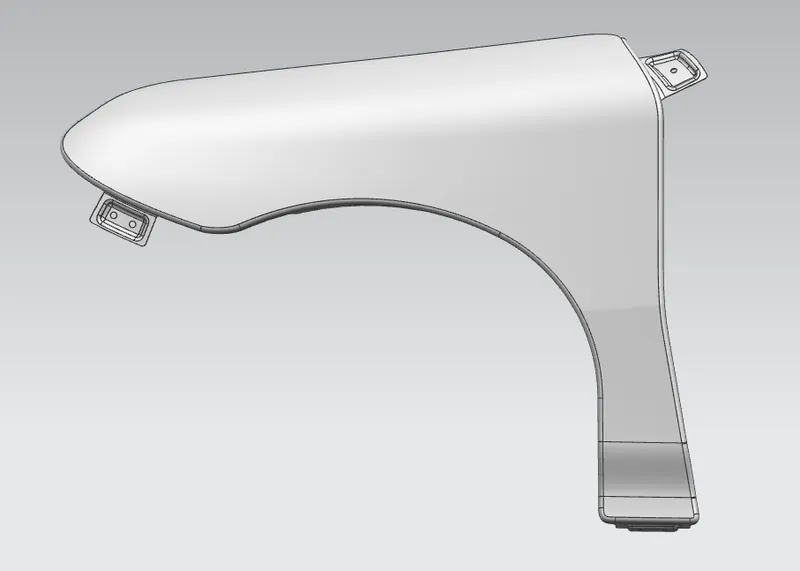
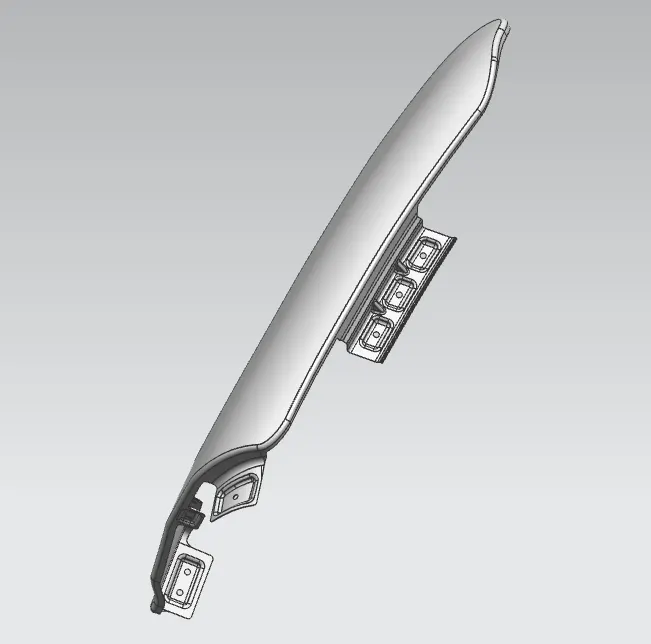
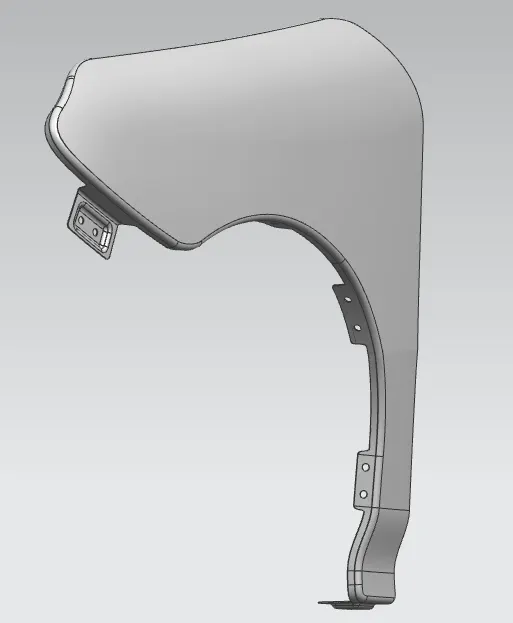
Conclusion: Finally design of car fender is done with the help of NX-CAD software by following the given master section.