BiW Design of the Hood of a car
Hood Design
Components in Hood Design:
The components in the Hood Assembly are as follows:
- Hood inner panel
- Hood Outer panel
- Hinge sub assembly
- Latch and striker
Emboss in Hood:
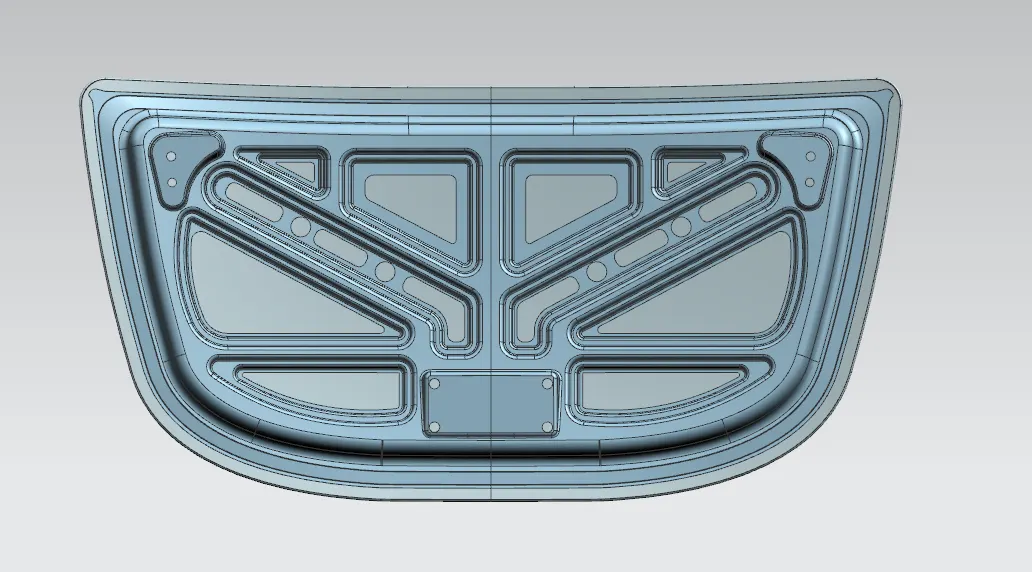
Figure 1: Embosses in the Hood
The various embosses in the hood are shown in the above figure. These embosses are symmetric about the centre plane and are designed in such a way that the forces are transmitted outwards upon collision.
Each emboss feature has 2 embosses at a drawing angle of 25degress and a height of 5mm.The function of the emboss at the hinge and latching area is for additional strength.
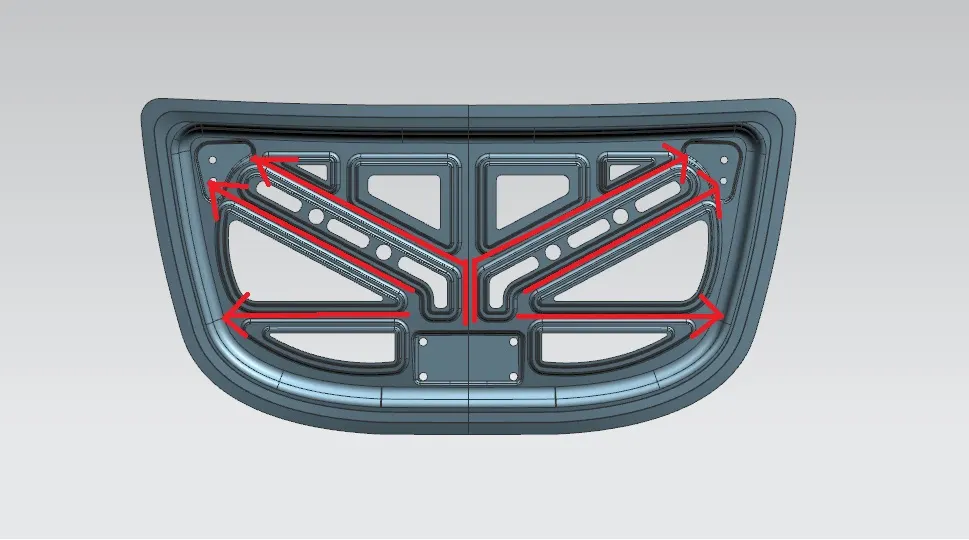
Figure 2: Force resolving
Figure 2 shows the resolving of forces into directions away from the vehicle and towards the hinges upon impact.
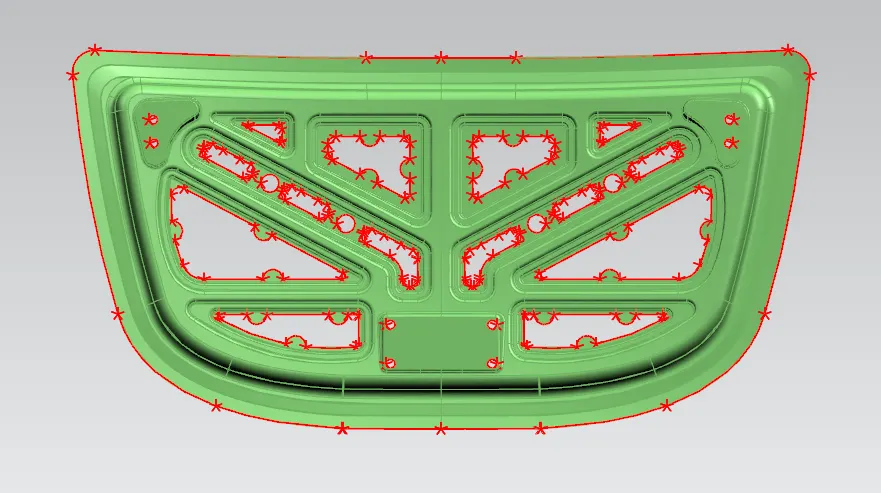
Figure 3: Examine Geometry
The examine Geometry feature of NXCAD applied to the Hood model shows the sheet metal boundaries defined and does not indicate the centre meaning there is no overlap or a gap between the two halves, one of which is mirrored. Also, the model has passed the smoothness filter.
Mastic data:
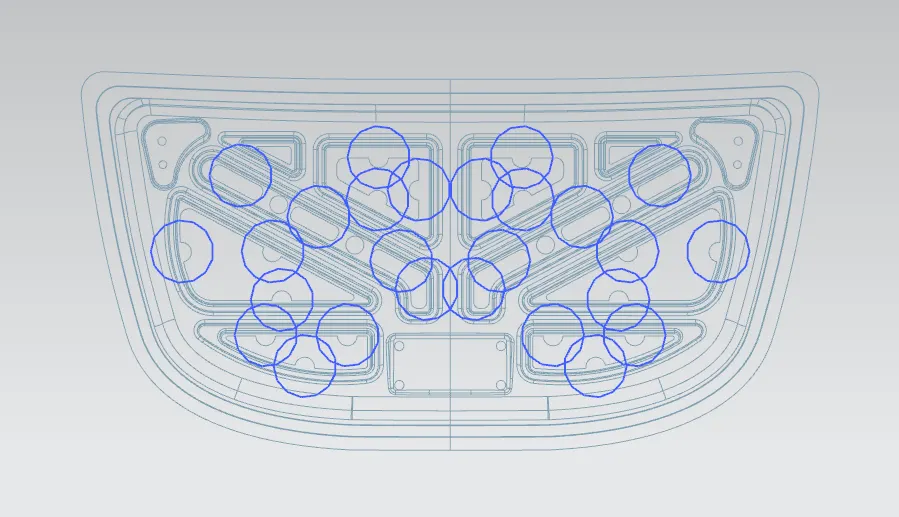
Figure 4: Mastic Data
Mastic points on the hood inner panel indicate the points where the inner panel is attached to the outer panel. The points are of 25mm diameter and are positioned such that their effective diameter of 80mm together covers the hood and the mastic points are spread throughout.
Latch Trajectory:
Figure 5 shows the trajectory curve drawn with the distance between the hinge and latch as the radius.
The angle between the radius and the line drawn perpendicular to the latch is 91degrees, almost tangent to the trajectory circle.
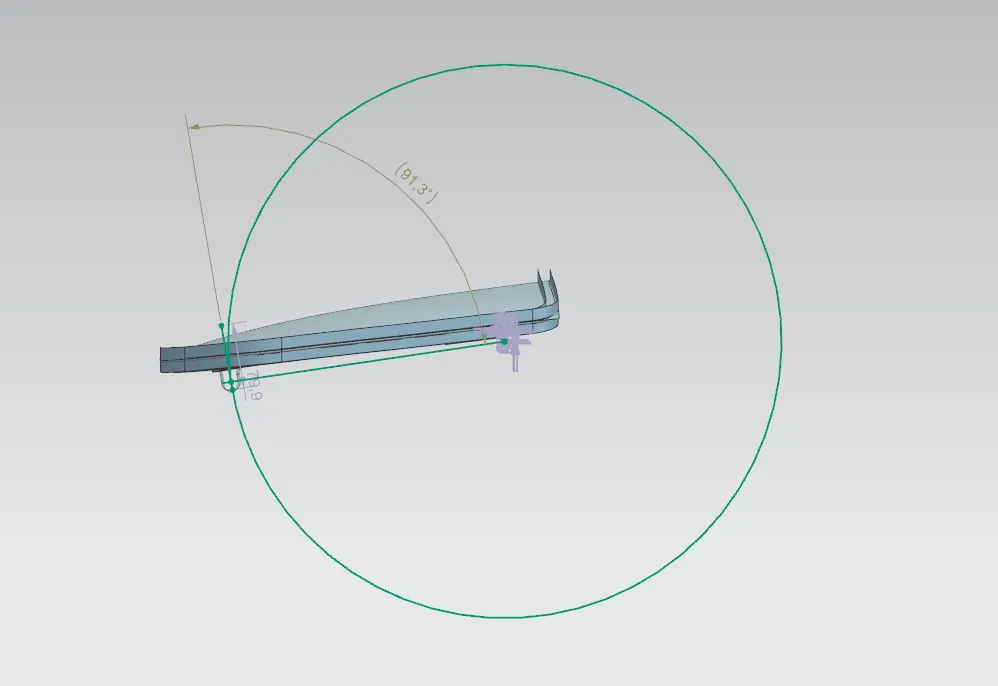
Figure 5: Latch Trajectory
Manufacturing Process:
Hemming:
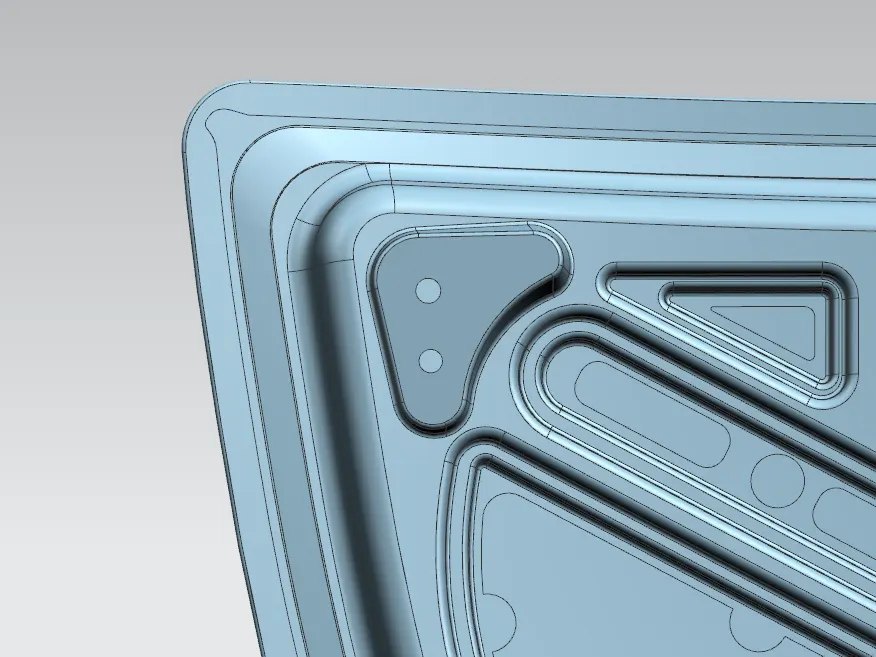
Figure 6: Hemming
Hemming is the process in which one sheet is folded over another by rollers, for a tight fit thus connecting them without loss of aesthetic quality.
The above figure shows the hem and the corner reliefs where the area of sheet folded is less to prevent stress concentration.
Deep drawing Process:
Deep drawing is a metalworking process applied to sheet metals using dies in one direction to change the shape of the sheet with material retention. This process is used in manufacturing of automotive components such as hood inner panel and to draw embosses in roofs and fenders.
The term deep drawing is used when the depth od drawing is more than its diameter.
The drawing angle must always be positive, so that the die can reciprocate the punching action easily without any damage to the sheetmetal.