Car Front Fender Design
CAR FRONT FENDER DESIGN
Fender:
Fender is a part of an automobile, motorcycle or other vehicle body that frames a wheel well. It is one of the side body panels of the engine compartment. Its primary purpose is to prevent sand, mud, rocks, liquids, and other road spray from being thrown into the air or inside the car by the rotating tire. It also helps in avoiding chipping inside engine compartment. It also covers the engine compartment so that undesired(ugly) region of the engine compartment is not visible from outside.
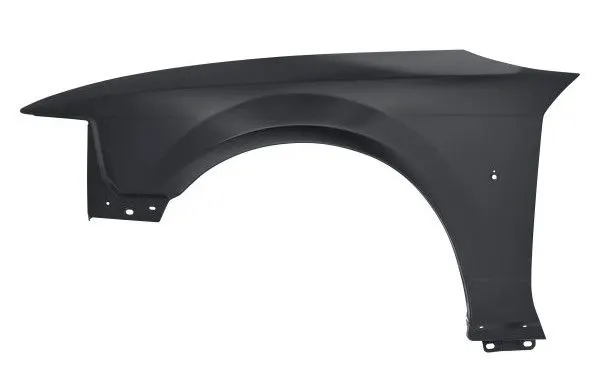
Fig.1 Front Fender
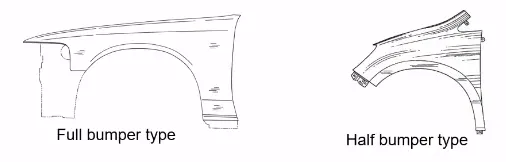
Fig.2 Types of Fender
We have 2 types of fenders, full bumper type and half bumper type fender. Now a days half bumper type fenders are used. This is because, it reduces material usage and reduce the scrap in blanking as 2 fenders can be produced in blanking in case of half bumper type fender which may not be possible in case of full bumper type fender. Given the smaller size, half bumper type fender also allows us to use more plastic material on the bumper resulting in vehicle weight reduction and thus contributing to improvement in vehicle performance.
Mounting Points:
Mounting points are the points where either other parts are mounted on a body, or using which the part itself is mounted on the body. Generally, mounting points are provided with holes or slots to fit a part using nut and bolt. The mounting points on the fender are as follows,
- Drip mounting
The drip area is the connection between fender and the engine compartment. It is used to mount the fender on the engine compartment. It is important to maintain the clearances at front and rear in case of drip mounting design.
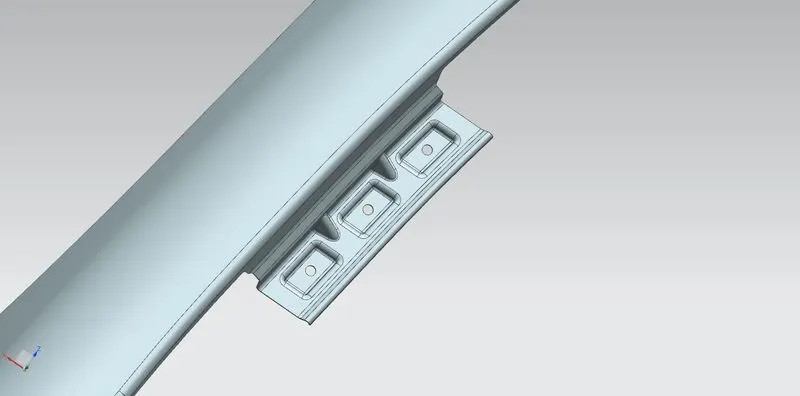
Fig.3 Drip mounting
- A-pillar mounting
It is where the fender is mounted on the A-pillar of the car. The references for this mounting are taken from the A-pillar.
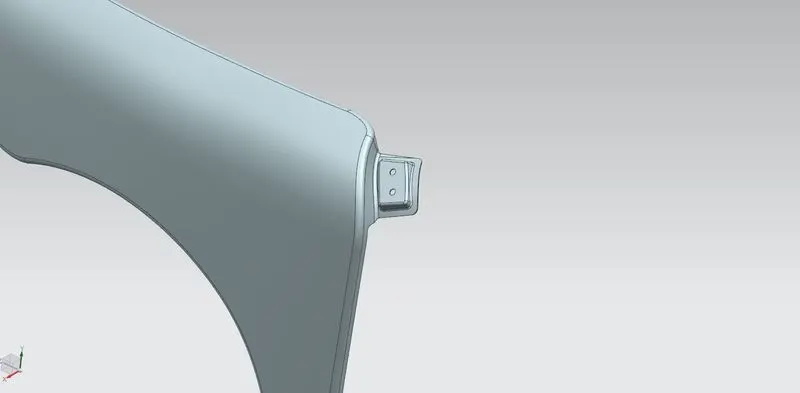
Fig.4 A-Pillar mounting
- Sill mounting
Through sill mounting, the fender is connected to the sill of the car.
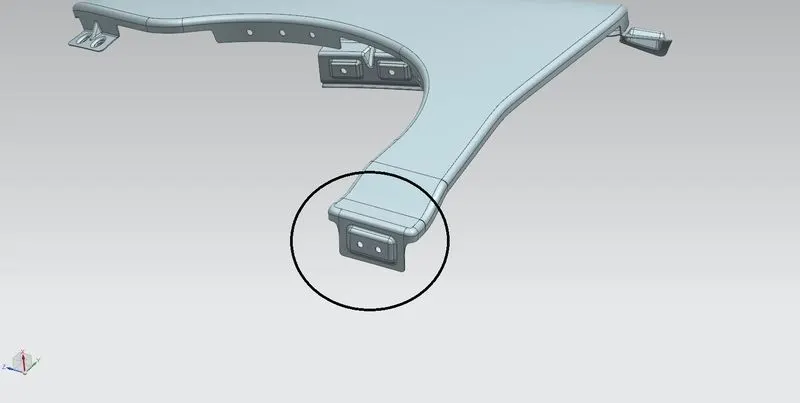
Fig.5 Sill mounting
- Bumper mounting
The bumper mounting is where the fender is connected to the bumper. The references for the bumper mounting are taken directly from the bumper design.
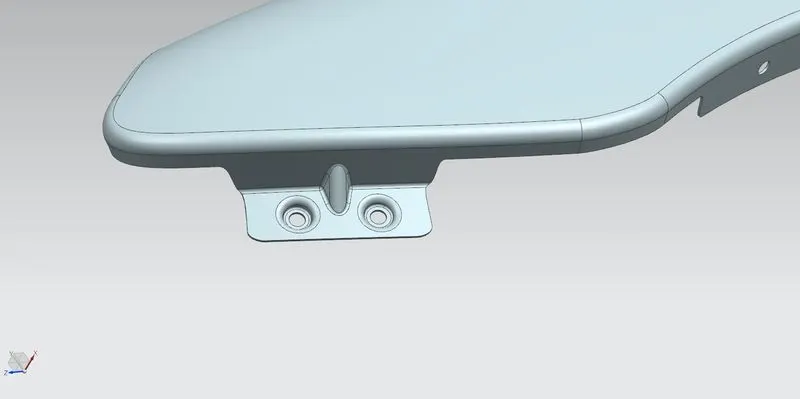
Fig.6 Bumper mounting
- Baffle mounting
Baffle mounting is where the baffle is mounted on the fender.
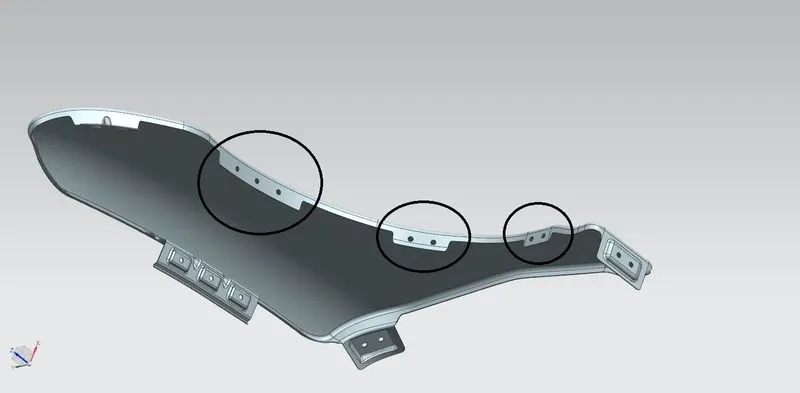
Fig.7 Baffle mounting
Manufacturing:
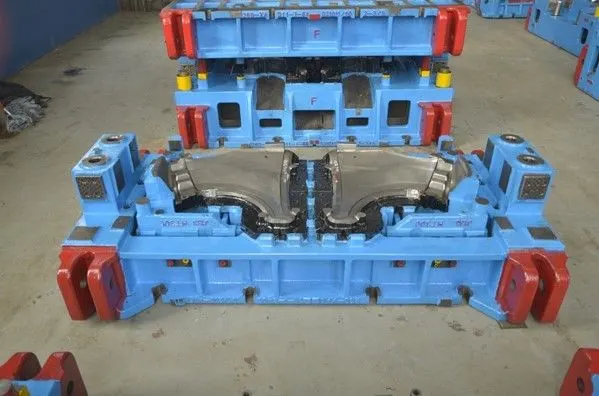
Fig.8 Fender Stamping
Fender manufacturing is a sheet metal stamping process. Hot rolled as well as cold rolled sheets may be used in fender manufacturing based on the requirement. In case of plastic materials, injection molding may be used for producing fenders.
Design Methodology:
For design of fender, we are provided with the fender skin data. Using that, and based on the provided requirements and design parameters, we design the various mounting points.
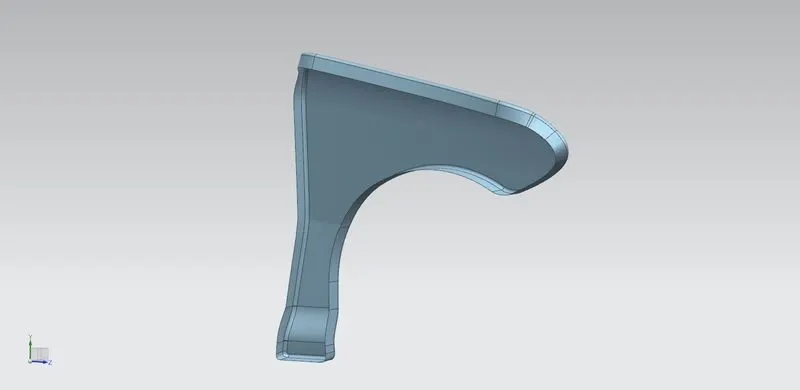
Fig.9 Fender skin
The design parameters and considerations under which the fender needs to be designed are given as in the following image.
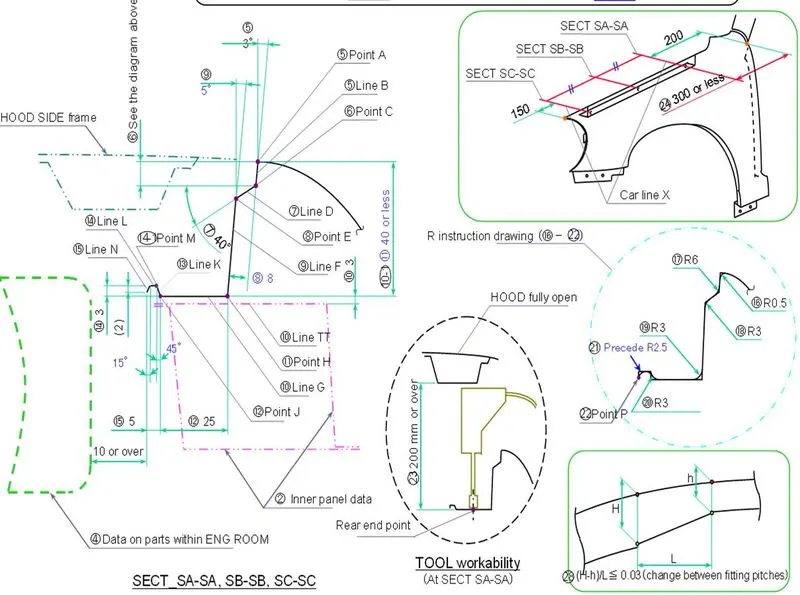
Fig.10 Design parameters
Based on the given dimensions and range values, we design the various mounting points.
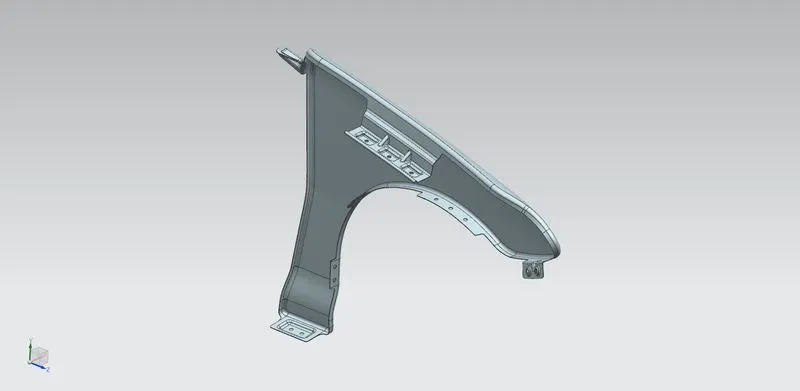
Fig.11 Final Fender view 1
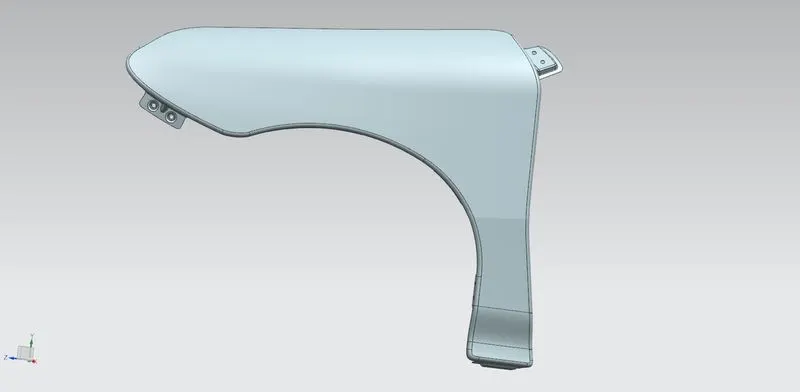
Fig.12 Final Fender view 2
Important commands and features:
Some of the important commands and features used in fender design are as follows,
- Offset in face
- Curve on surface
- Trim sheet
- Intersection curve
- Law extension
- Face blend
- Edge blend
- Projected curve
- Emboss
- Extend sheet
- Bridge curve
- Sew
- Dart
- Thicken
Conclusion: Car fender was designed successfully using NX under the given parameters and design considerations.