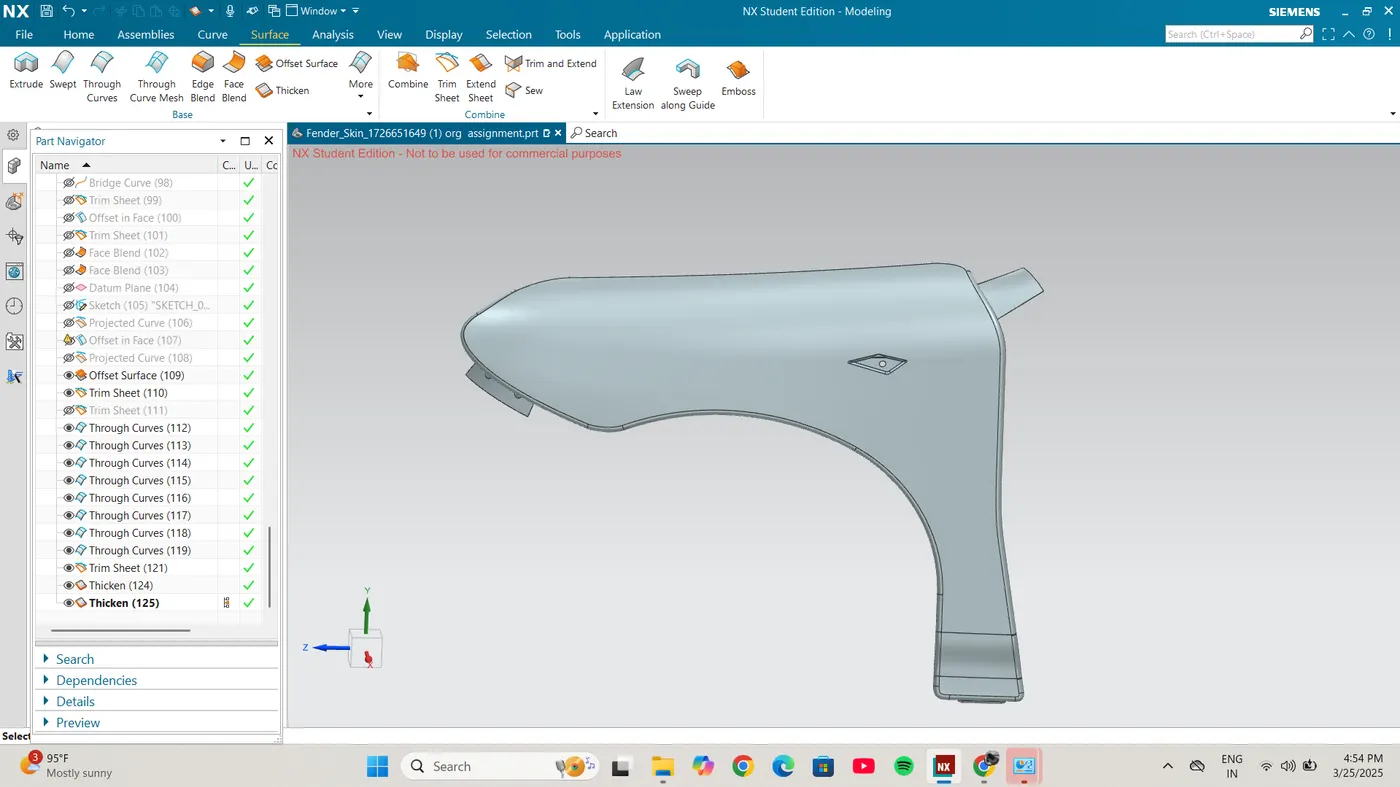
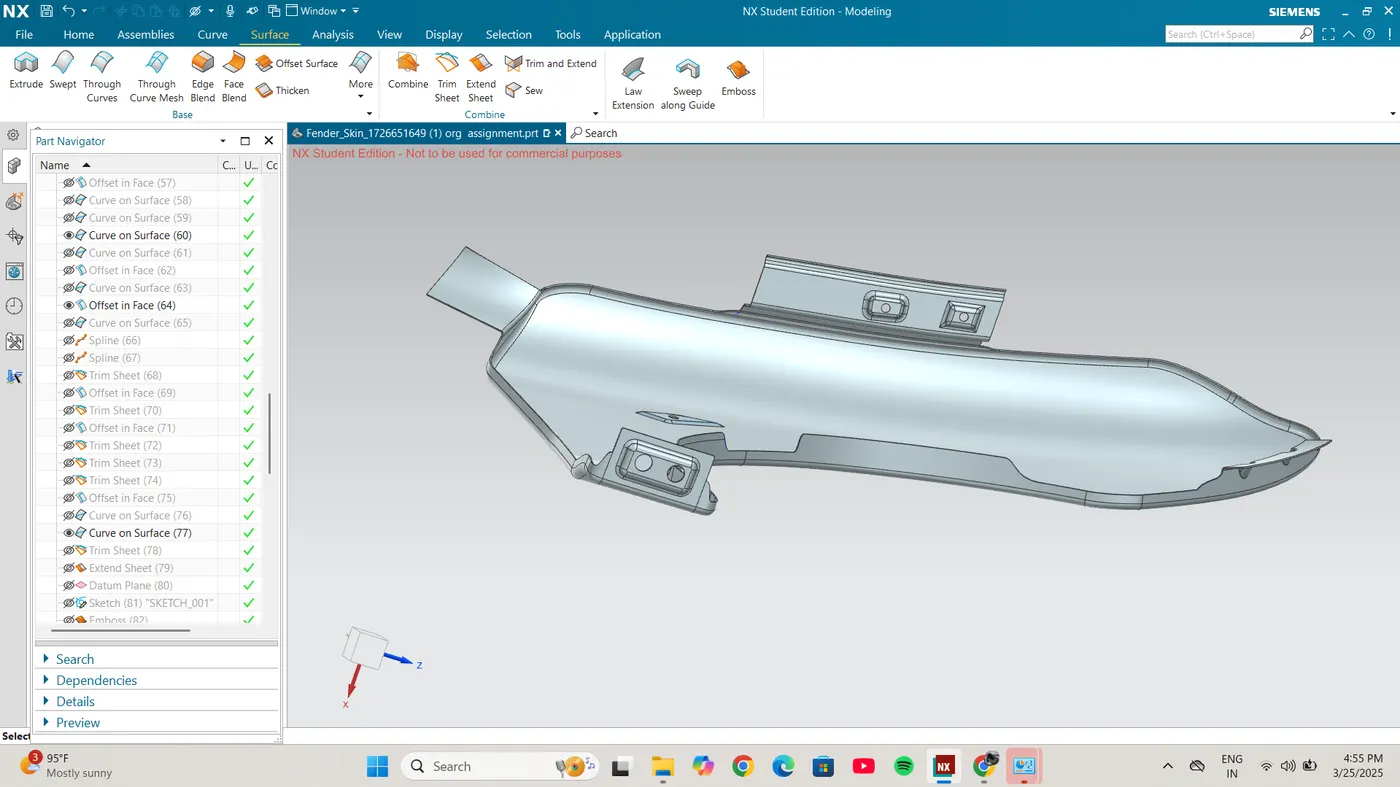
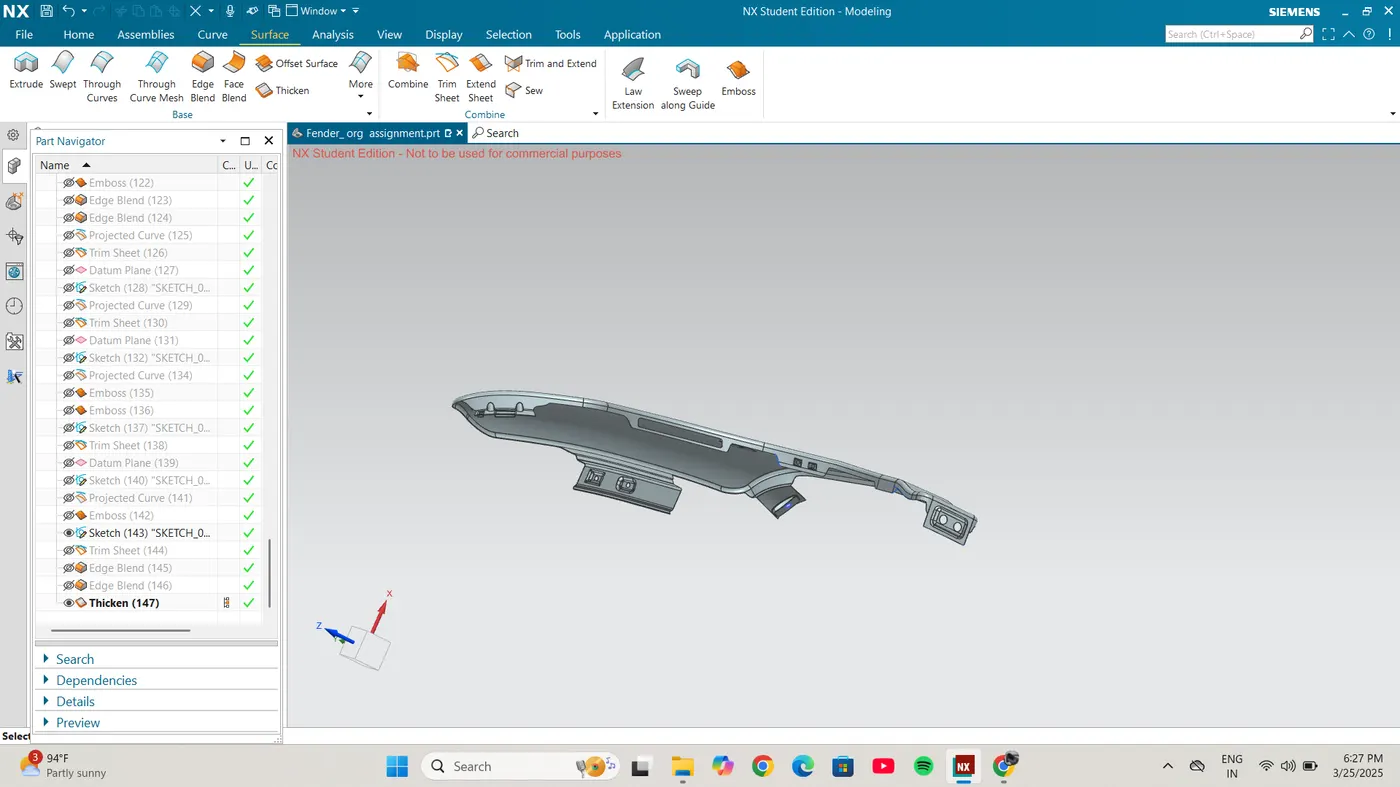
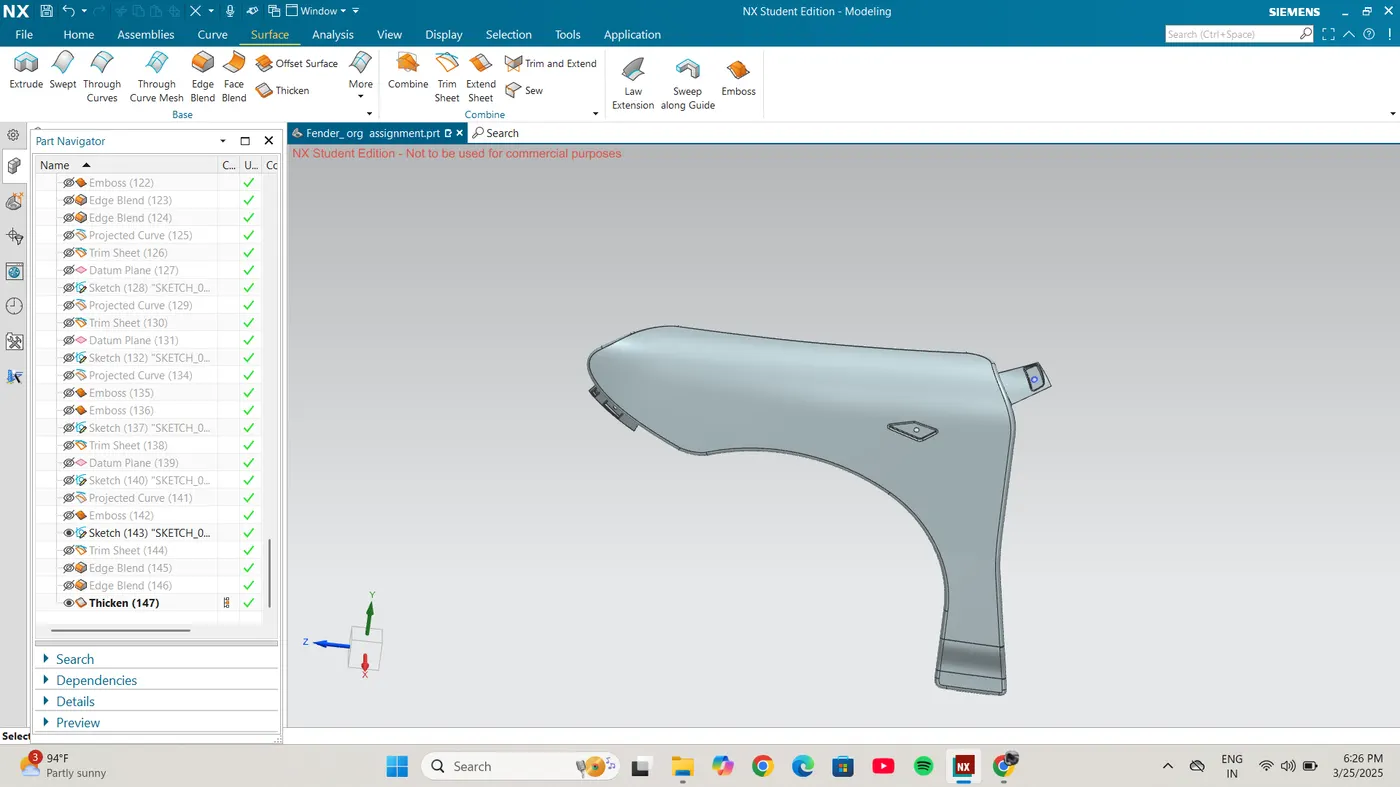
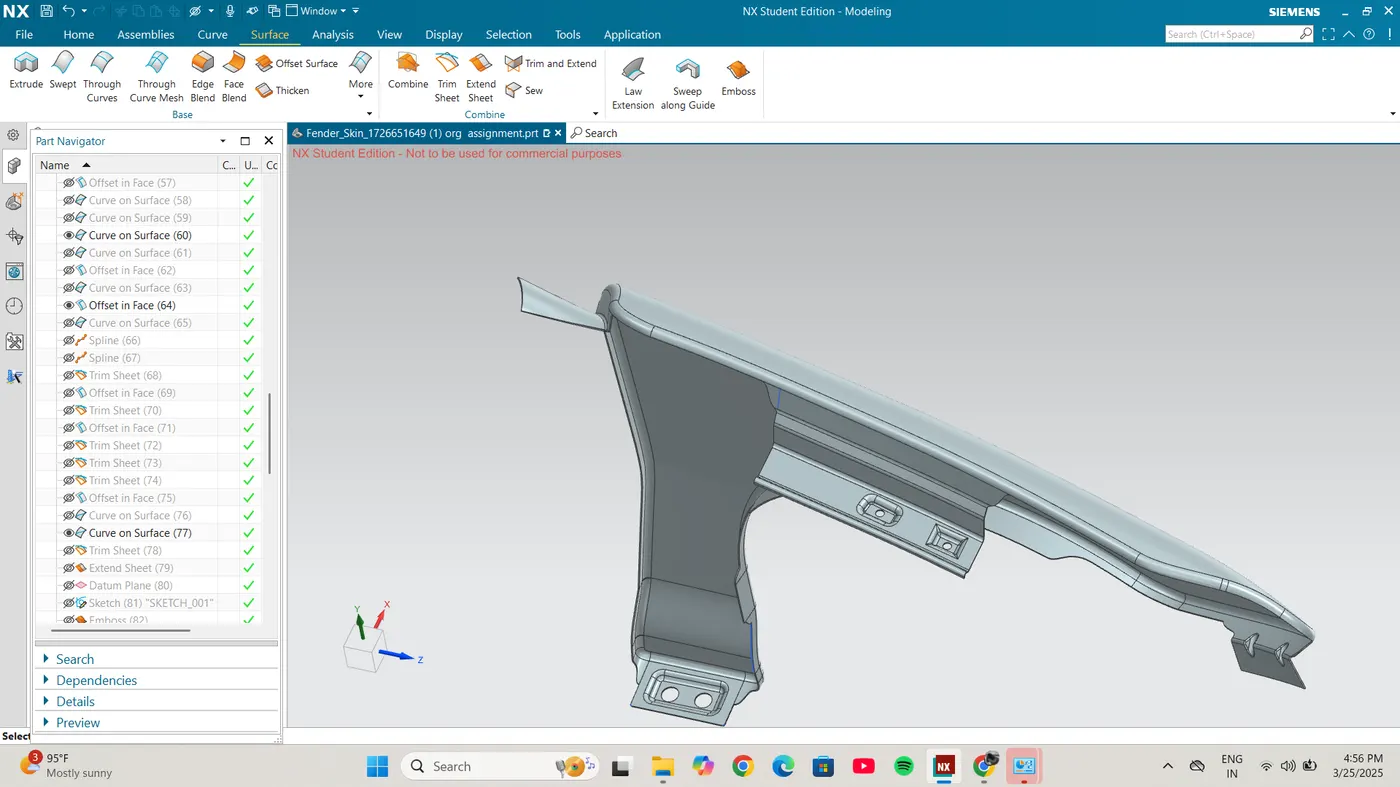
Fender Design
REPORT ON FENDER DESIGN, MOUNTING TYPES, MANUFACTURING PROCESS, AND DESIGN PARAMETERS
INTRODUCTION
A fender is a crucial part of an automobile that keeps water, mud, and debris from being flung into the air by the wheels. Additionally, it enhances the vehicle's structural integrity, aerodynamics, and appearance. The fender design process, various mounting options, production techniques, and important design factors are all covered in this study.
FENDER MOUNTING TYPES
Different attachment positions are used to secure the fenders to the vehicle, guaranteeing stability, resistance to vibration, and simplicity of installation.
DRIP MOUNTING
-Located close to the hood at the upper border of the fender, it is fastened to the vehicle's upper body structure using bolts or clips.
-Offers more stiffness and correct panel alignment.
-Common in Passenger cars and SUVs
A-Pillar Mounting
- This fastens the fender to the A-pillar, which is the structural support between the front door and windshield
-It guarantees correct fender alignment and offers lateral stability.
-It fits seamlessly using bolts or adhesive mounts. It is frequently found in sedans, hatchbacks, and crossover cars.
Sill Mounting:
-This part is situated close to the rocker panel (side sill) on the lower part of the fender.Helps keep the fender from moving too much
-Rubber or plastic spacers are frequently used to absorb vibrations.
-common in Off-road vehicles and commercial trucks.
Bumper Mounting
- The front bumper or bumper reinforcement area is where the fender is attached.
-It guarantees that the bumper and fender are aligned smoothly.
-For simple assembly and removal, fasteners or integrated clips are used.
Baffle Mounting
-The fender is fastened to internal baffles or shields within the wheel well
-It aids in airflow direction and offers extra support.
-Prevents the ingress of debris and lowers vibrations and noise.
-Common in trucks, luxury cars, and sports cars.