Fender Design
Fender Design Report
Introduction to Fender Design
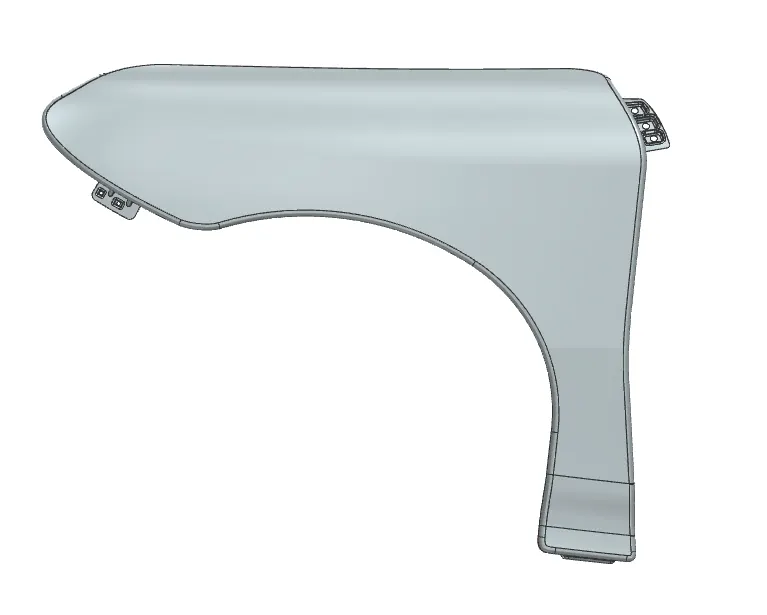
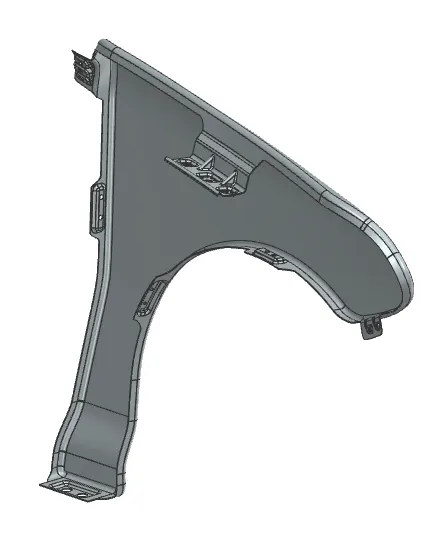
The fender is a crucial component of an automobile, primarily designed to prevent sand, mud, rocks, liquids, and other road debris from being thrown into the air by the rotating tires. Besides providing protection, it also enhances the vehicle's aesthetic appeal and contributes to its aerodynamics. A well-designed fender must align with both functional and stylistic requirements.
Types of Fenders
- Full Bumper Type: Extends to cover the entire front part of the wheel arch and integrates with the bumper.
- Half Bumper Type: Covers only the top portion of the wheel and leaves the bumper separate.
For our design we have used an Half Bumber fender as it reduses our cost and gives an asesteticaaly pleasing look.
Mounting Points of a Fender
To secure the fender effectively, various mounts are incorporated during the design process:
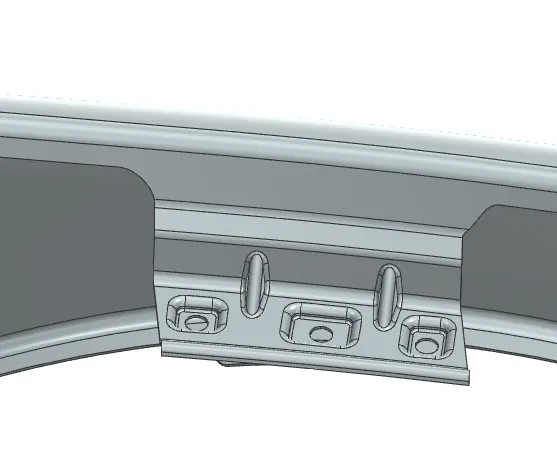
1. Drip Mounting
- Function: Attaches the fender to the vehicle body near the engine bay.
- Design Considerations:
- Adequate clearance for hood opening and wiper mechanism (typically 10 mm).
- Reinforcement ribs to enhance strength.
2. A-Pillar Mounting
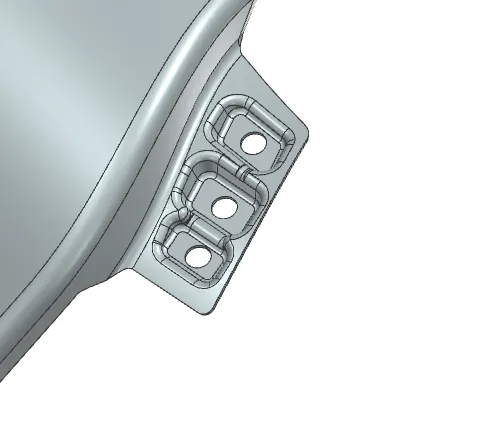
- Function: Connects the fender near the windshield and front door area.
- Design Considerations:
- Precise alignment with the A-pillar structure.
- Minimized gaps for aesthetic continuity.
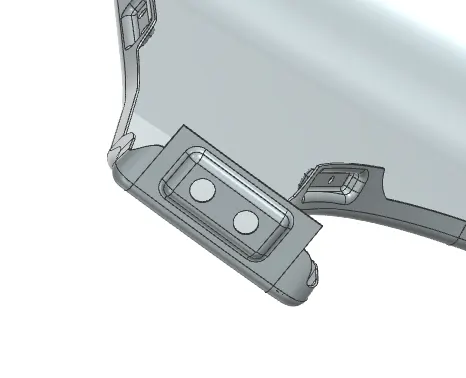
3. Sill Mounting
- Function: Secures the fender at the lower body near the vehicle’s door sill.
- Design Considerations:
- Robust mounting to resist vibrations.
- Easy accessibility for assembly and maintenance.
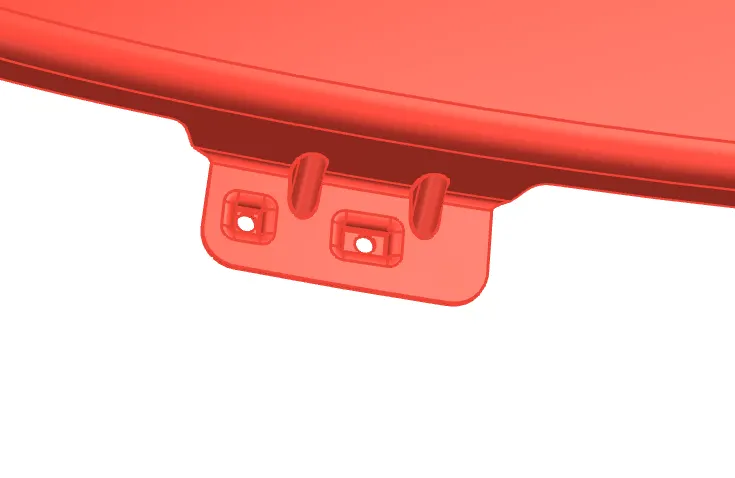
4. Bumper Mounting
- Function: Ensures proper integration with the front bumper.
- Design Considerations:
- Flush alignment with the bumper to maintain aesthetics.
- Provisions for fasteners and clips.
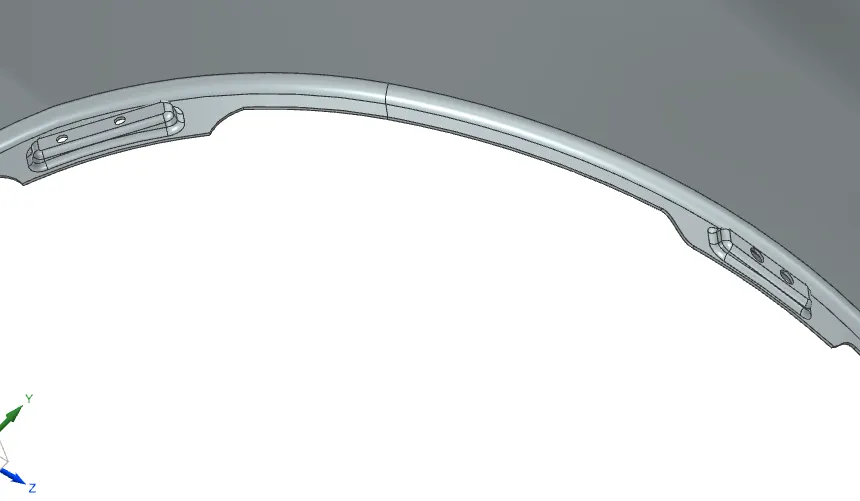
5. Baffle (Splash) Mounting
- Function: Provides a secure connection for splash baffles or mudguards.
- Design Considerations:
- Adequate coverage to prevent debris entry.
- Reinforced regions to withstand frequent impacts.
Manufacturing Process of a Fender
1. Material Selection
- Steel: Commonly used for durability and cost-effectiveness.
- Aluminum: Preferred for lightweight and corrosion resistance.
- Plastic/Composite: Used in modern vehicles for weight reduction and flexibility in design.
2. Processes
- Stamping:
- Used for sheet metal fenders.
- Dies and presses shape the material into the desired form.
- Injection Molding:
- Used for plastic fenders.
- Heated plastic is injected into molds to create complex shapes.
- Surface Treatment:
- Processes like electrocoating (e-coating) and painting protect against corrosion and enhance aesthetics.
Design Parameters of a Fender:
Mounting curvature analysis
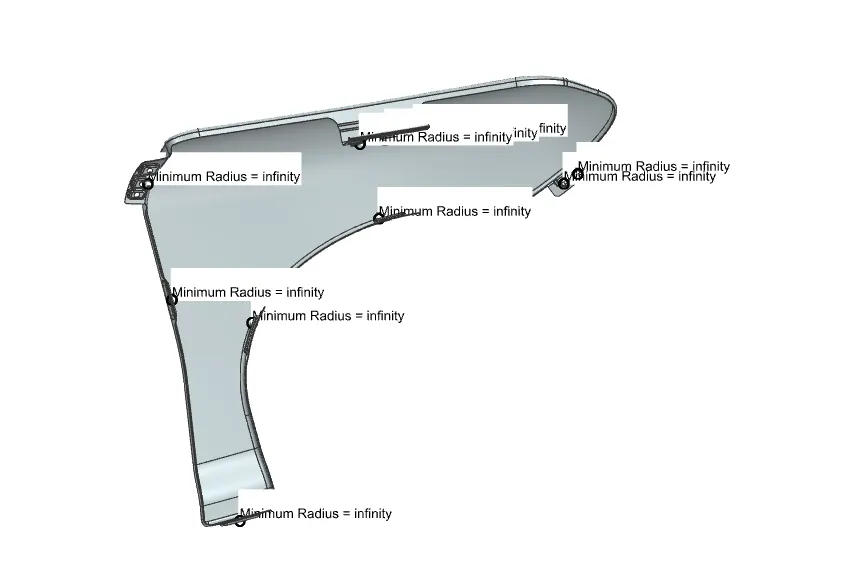
For our mountings we need a flat surface which we created using Embosse command.
-
Clearance:
- Maintain sufficient clearance from tires to avoid contact during motion or suspension travel.
-
Offset Values:
- Inner panel offset from the skin data for strength (e.g., 0.75–1.5 mm).
-
Thickness:
- Typically 0.65–0.75 mm for steel fenders, varying based on material properties.
- We used 0.75 as thickness for our design.
-
Curvature and Bend Radii:
- Ensure smooth transitions to avoid stress concentrations and enhance aesthetics.
-
Mounting Hole Positions:
- Accurate placement as per master section specifications for ease of assembly.
-
Reinforcements:
- Ribs and beads are added to improve strength and rigidity.
-
Aerodynamics:
- Shape optimized to reduce drag and improve fuel efficiency.
Key Challenges in Fender Design
- Balancing strength with lightweight requirements.
- Ensuring manufacturability without compromising on design.
- Maintaining tight tolerances for fit and finish.
- Reducing NVH (Noise, Vibration, and Harshness) levels.
Conclusion
Designing a front fender involves integrating functional, aesthetic, and manufacturing aspects. By adhering to precise design parameters and leveraging advanced manufacturing techniques, the fender can effectively meet the demands of durability, safety, and style. Proper implementation of mounts ensures secure attachment, minimizing vibrations and enhancing overall performance.