Fender Design
FENDER DESIGN
AIM :- Design a front fender from the given skin data and the master section provided with Drip mounting, A-pillar, Sill, Bumper and Baffle (splash) Mounts.
INTRODUCTION :-
Fender is the american english term for the part of an automobile, motorcycle, or other vehicle body that frames a wheel well (the fender underside). Its primary purpose is to prevent sand, mud, rocks, liquids, and other road spray from being thrown into the air by the rotating tire. Fenders are typically rigid and can be damaged by contact with the road surface.
Sticky materials, such as mud, may adhere to the smooth outer tire surface, while smooth loose objects, such as stones, can become temporarily embedded in the tread grooves as the tire rolls over the ground. These materials can be ejected from the surface of the tire at high velocity as the tire imparts kinetic energy to the attached objects. For a vehicle moving forward, the top of the tire is rotating upward and forward, and can throw objects into the air at other vehicles or pedestrians in front of the vehicle.
The fender not only protects your car from sustaining damage from road debris but it prevents this debris from being thrown up at other vehicles on the road. This is why vehicles with large, oversized tires are often required by law to install fender flares.
TYPES OF FENDERS :-
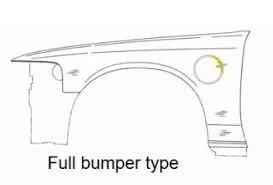
- FULL BUMPER TYPE : These types of fenders were used in earlier models of vehicles. They contribute to the major increment of the steel weight by just covering the front headlights with respect to the bumper region. The problem associated with this kind of fender is there is a lot of wastage in the blank and every inch of a material is a cost to the industry.
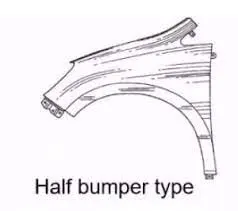
2. HALF BUMPER TYPE : These fenders are mainly used for serving the purpose of cost-cutting and reducing enough proportions of the steel wait resulting in a reduction of the weight of the vehicle slightly. They can be economically manufactured, i.e by slightly increasing the blank size, we can produce two fenders at a time
MOUNTING REGION OF FENDERS :-
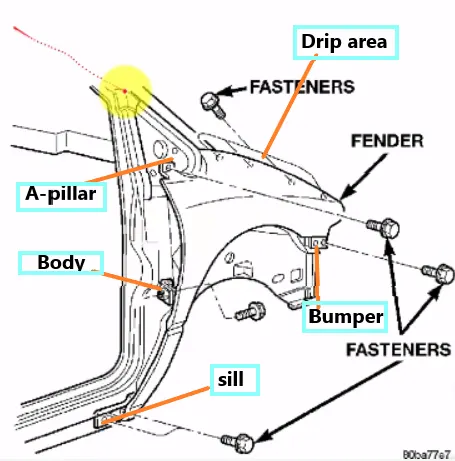
THERE ARE 5 MOUNTING REGION ON THE FENDER, THEY ARE
- BUMPER
- DRIP
- A PILLAR
- SILL
- BAFFLE
DRIP MOUNTING AREA :-
The drip area is the most important mounting in a fender, it is the point where the fender has to be attached to the engine compartment.
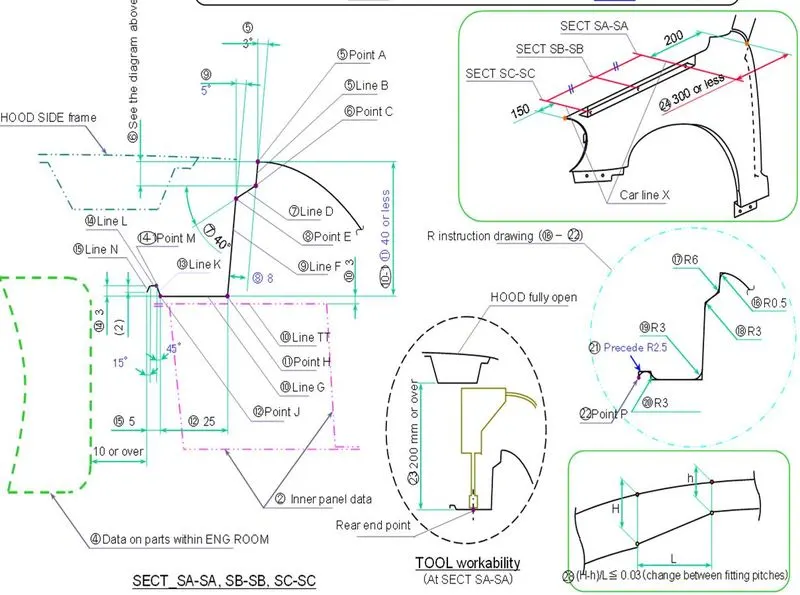
While designing the drip area we have to initially leave 200-300 mm for the cowl top.
For placing the headlamp we have to leave at least 150 mm at the front while designing the fender.
The length of the drip area depends on the length of the fender.
HERE THE MASTER SECTION OF DRIP MOUNTING AREA :-
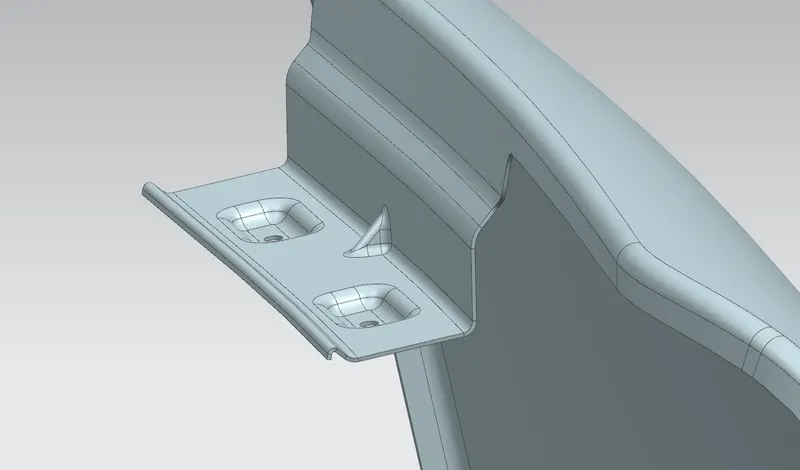
A-PILLAR MOUNTING :-
The A-pillar area mounting depends upon the A-pillar of the car the mounting can also be provided with ribs to strengthen the part. this mounting is critical in design as it has to be mounted on A-pillar properly.
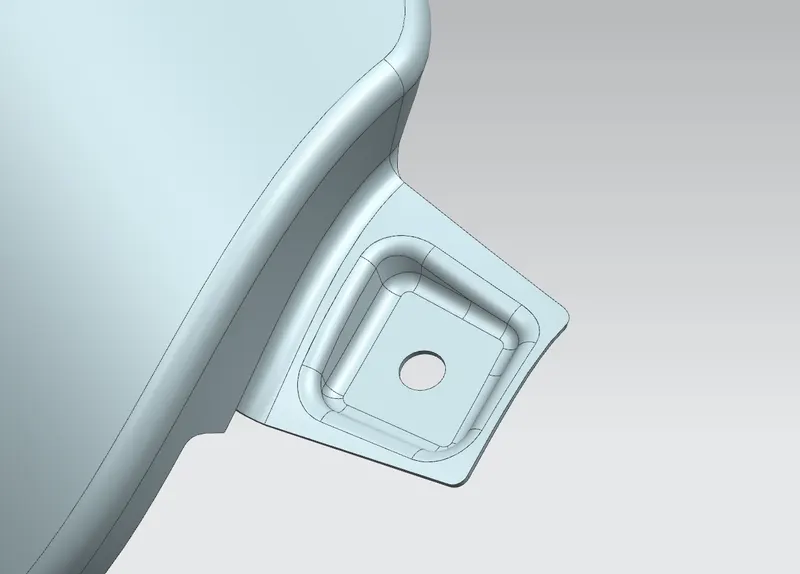
SILL MOUNTING :-
Sill area mounting is also an important mounting part .This mounting point is basically on the bottom of the fender . The mounting part should be created such that the fender is firmly attached to the sill to avoid NVH issues.
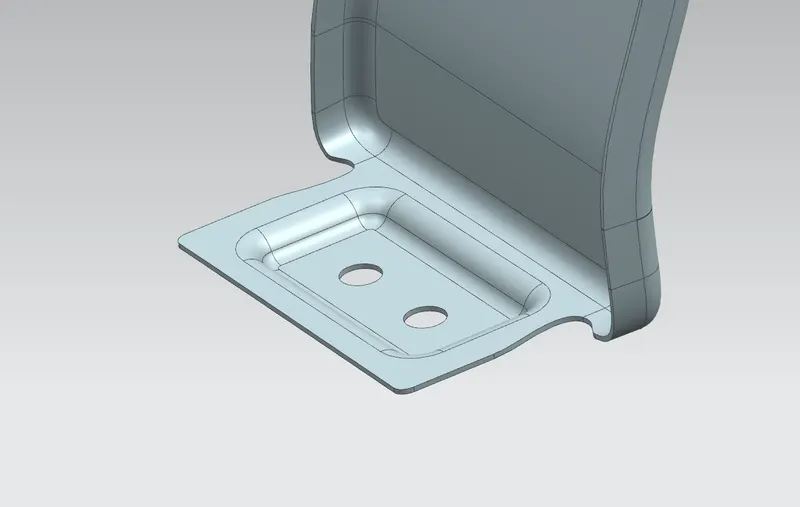
BUMPER MOUNTING :-
This mounting point is created for attaching the bumper to the fender. It should have enough strength to hold the bumper steadily.
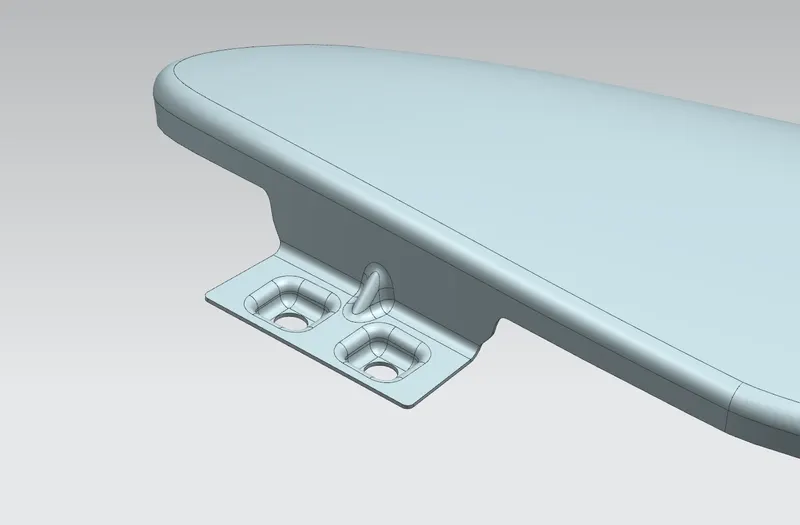
BAFFLE MOUNTING :-
These mounting points are created for attaching plastic components i.e baffle which prevents chipping inside the engine compartment.
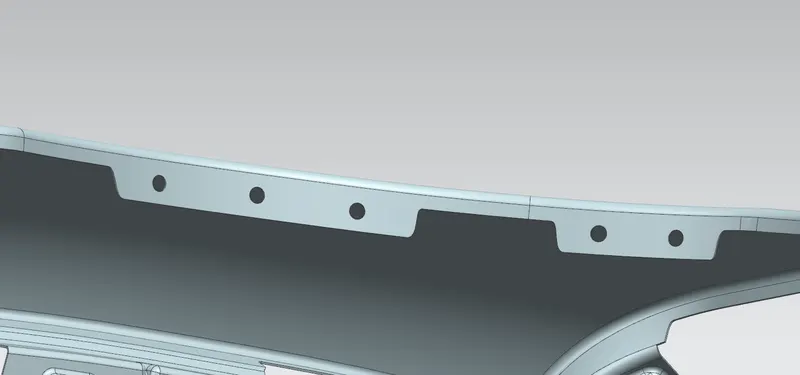
After creating all are mounting region on fender give the thickness of fender body of 0.75mm.
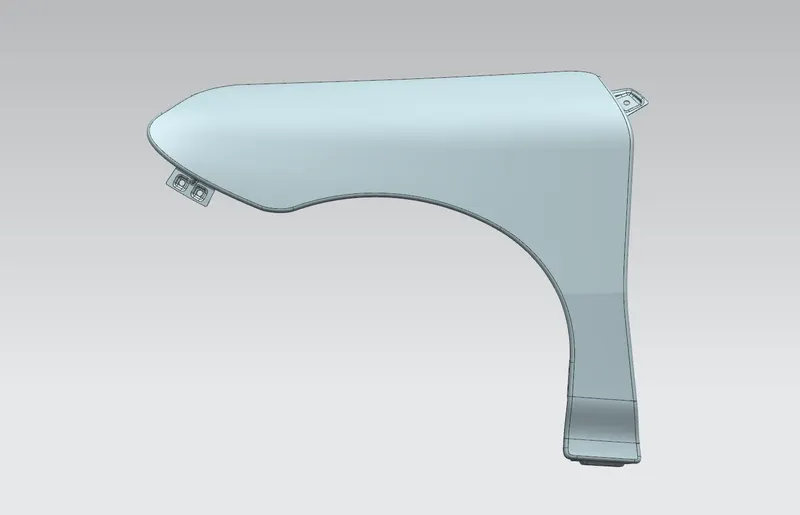
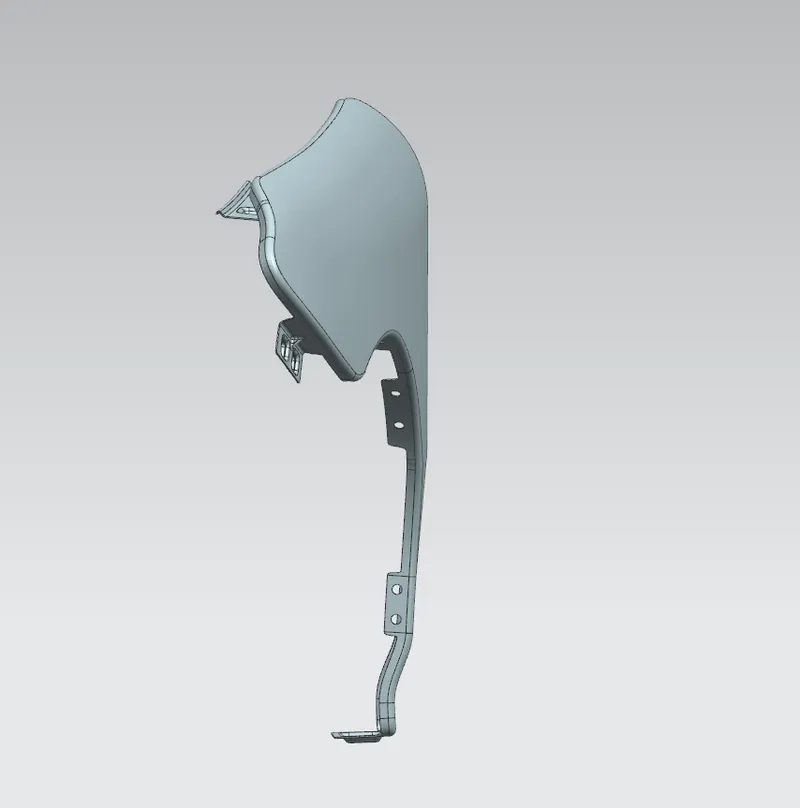
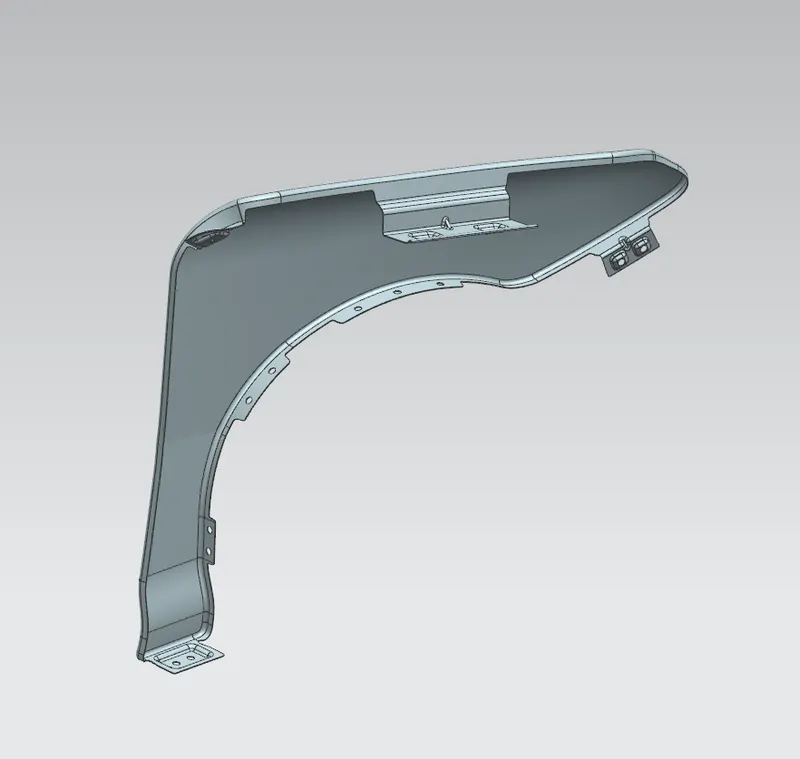
DIFFERENT VIEWS :-
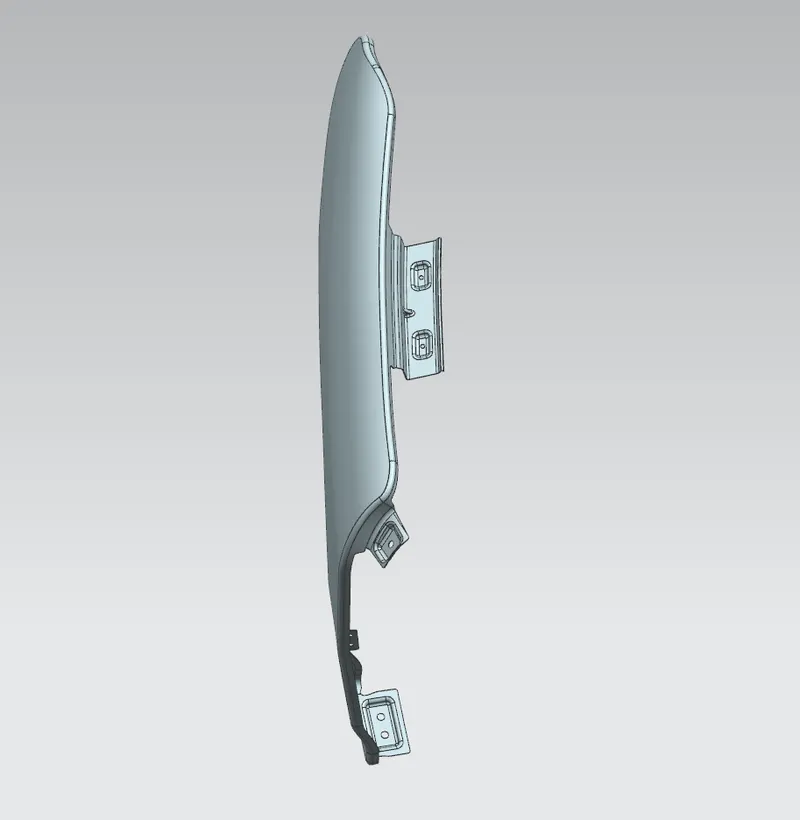
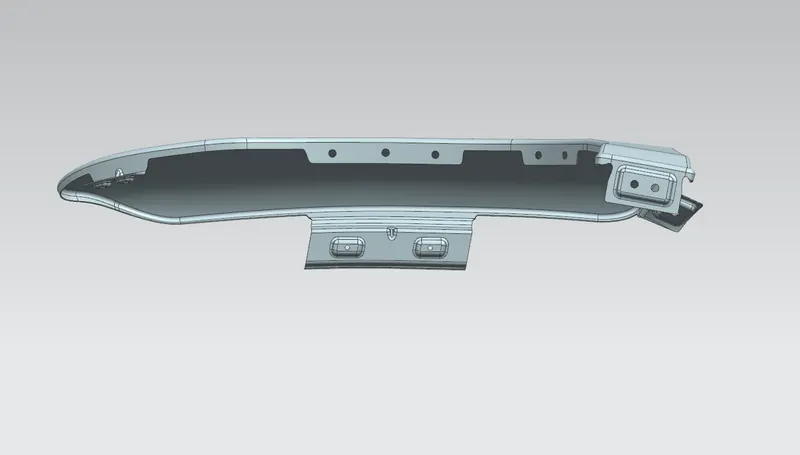
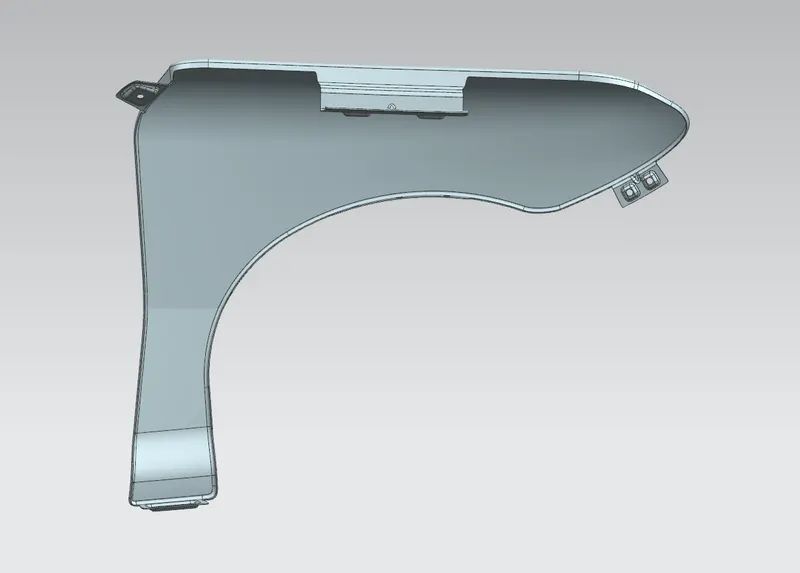
CONCLUSION :-
The fender is designed to the given skin data and the master section provided with Drip mounting, A-pillar, Sill, Bumper and Baffle (splash) Mounts in NX CAD.