Fender Design
Fender:-
In a car, the fender refers to the panel or bodywork that covers the area surrounding the wheels. Also known as the wing in some regions, the fender is typically located above each wheel and extends from the front to the rear of the vehicle.
The primary function of the fender is to provide protection for the wheels and the vehicle's body. It acts as a shield, preventing debris, water, mud, stones, and other road particles from being thrown up by the rotating tires and causing damage to the bodywork or other components of the vehicle. The fender helps maintain cleanliness and preserves the overall appearance of the car.
Apart from its protective role, the fender also contributes to the aerodynamic performance of the vehicle. It assists in directing airflow around the wheels and minimizing drag, thereby enhancing fuel efficiency and stability.
Some standards are served while creating a fender for car,such as European regulations stipulate specific requirements for the wheel arch design in relation to the tire clearance. These regulations mandate a predetermined clearance or minimum distance of 10mm that must be maintained between the fender and the corresponding tire at certain points along the tire profile. This clearance is crucial to ensure proper functionality and compliance with safety standards.
while, Japanese standards define the minimum required clearance between the fender and the corresponding tire. This clearance ensures that there is no interference or contact between the fender and the tire during normal vehicle operation, preventing potential damage or safety hazards. Fenders must be designed to withstand impacts and provide adequate protection to the vehicle's body and components. They should be capable of absorbing and dispersing impact energy in the event of a collision, minimizing the risk of injury to occupants and minimizing damage to the vehicle.
As such for USA also some rules applies. such as clearence report is made from -100 to 100 by creating table etc.
while designing a fender some important points that could be taked into consideration as follows
-
Define Design Requirements: Determine the specific requirements for the fender, considering factors such as vehicle type, intended use (e.g., sports car, SUV, sedan), and any specific design constraints or preferences.
-
Conceptualization and Sketching: Generate initial design concepts and sketches that align with the overall vehicle design language. Consider factors such as fender shape, contours, and integration with other body panels.
-
Consider Aerodynamics: Optimize the fender design for aerodynamic performance. Smooth airflow around the wheel arches to reduce drag and improve vehicle efficiency. This may involve incorporating features such as aerodynamic flares or shaping the fender to minimize turbulence.
-
Wheel Clearance and Tire Fitment: Ensure adequate clearance between the fender and the corresponding tire. Account for tire size, suspension travel, and potential tire deformation under load to avoid interference and rubbing. Optimize the fender shape to accommodate different tire sizes and variations.
-
Material Selection: Choose appropriate materials for the fender construction, considering factors such as weight, strength, durability, and cost. Common materials include steel, aluminum, plastic composites, or a combination of these materials.
-
Structural Integrity and Crashworthiness: Design the fender to provide structural support and protection to the vehicle and occupants. Consider crashworthiness requirements and integrate appropriate reinforcement structures or energy-absorbing features to enhance safety in the event of a collision.
-
Manufacturing Feasibility: Ensure that the fender design is manufacturable within the available production processes and technologies. Consider factors such as tooling requirements, assembly considerations, and cost-effectiveness.
-
Styling and Integration: Ensure the fender design harmonizes with the overall vehicle aesthetics. Pay attention to the lines, curves, and proportions, ensuring a cohesive and visually appealing appearance when integrated with other body panels.
-
Prototype and Testing: Create prototypes or virtual models to validate the design and perform testing for fitment, functionality, and structural integrity. Make any necessary adjustments based on testing results.
-
Regulatory Compliance: Ensure the fender design meets applicable safety and regulatory standards, including requirements for pedestrian safety, impact resistance, and corrosion protection.
Fender with mountings:
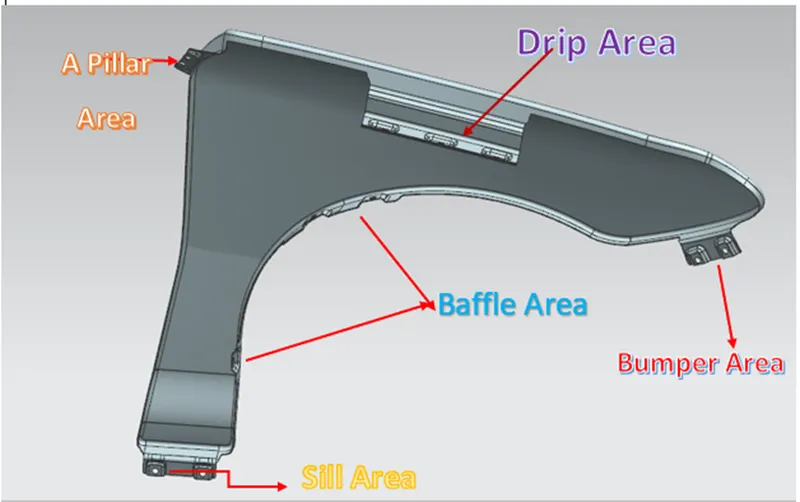
Here a surface is provided according to design and consideration, for starting with design we have to take a offset with curve and then we have to trim the surface. According to curves using curve on surface,
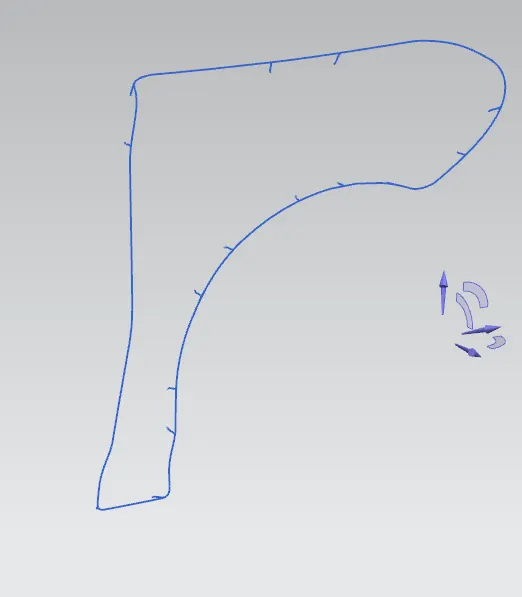
Once done with curves we can assign feature groups to all curves, then we can start by creating law extensions for all the surfaces for creaing the Sill, Bumper, Baffle, and A-Pillar mountings.
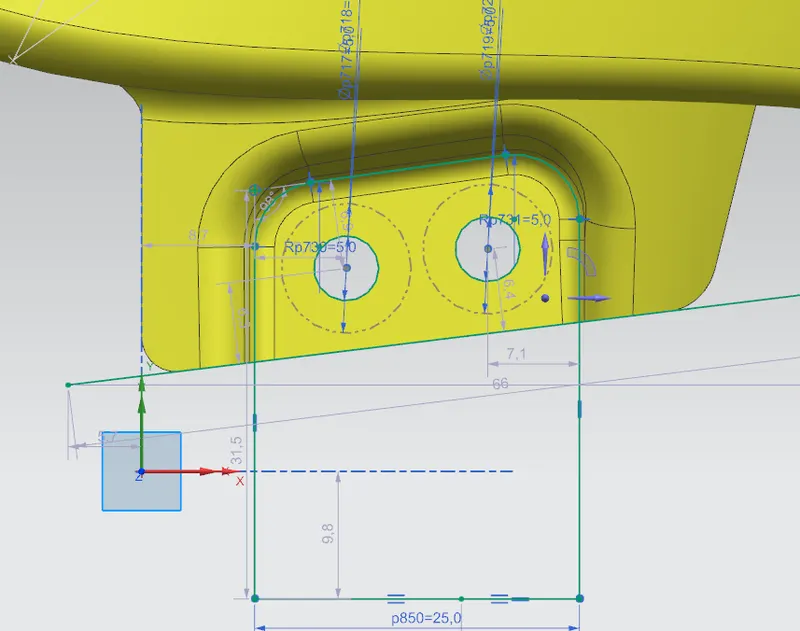
then we have to create sketches for all the surfaces to make embosses
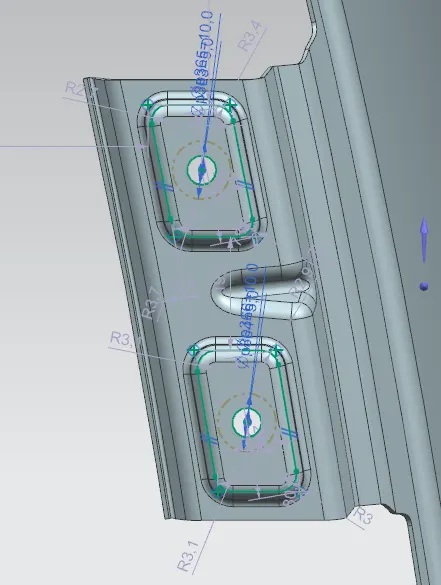
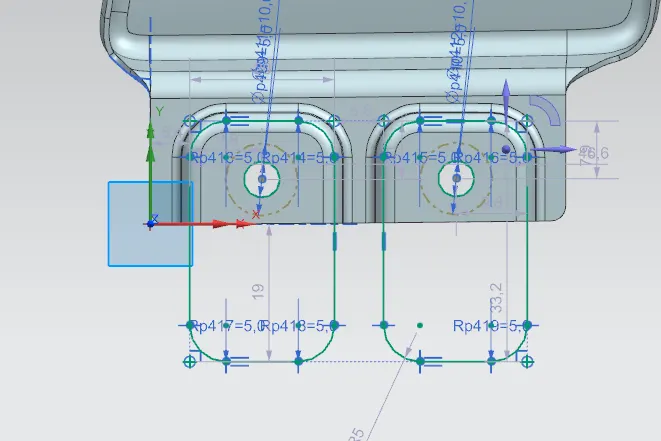
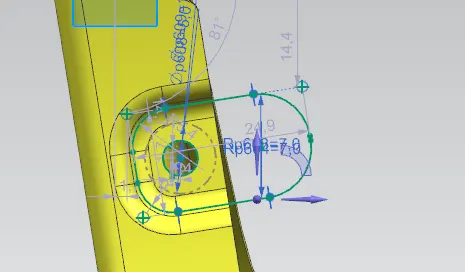
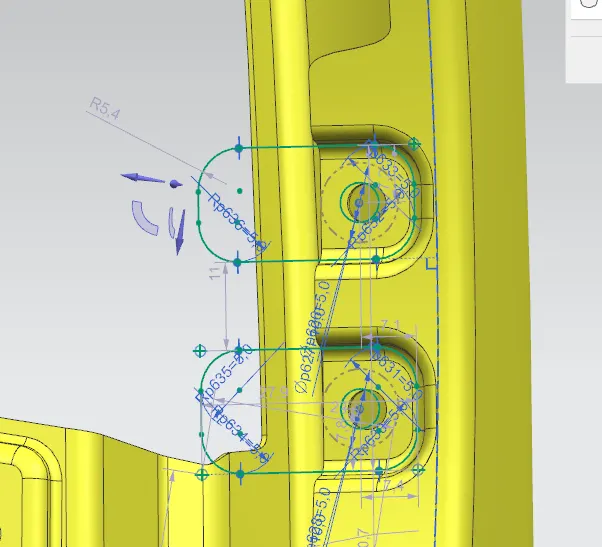
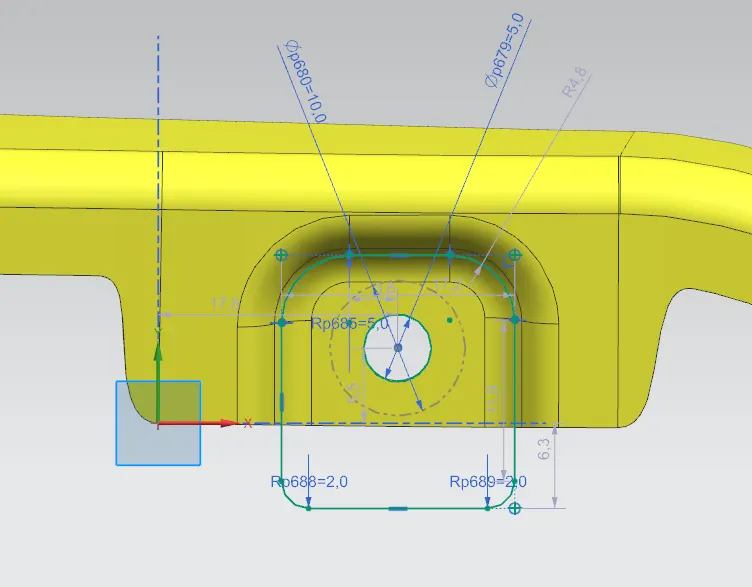
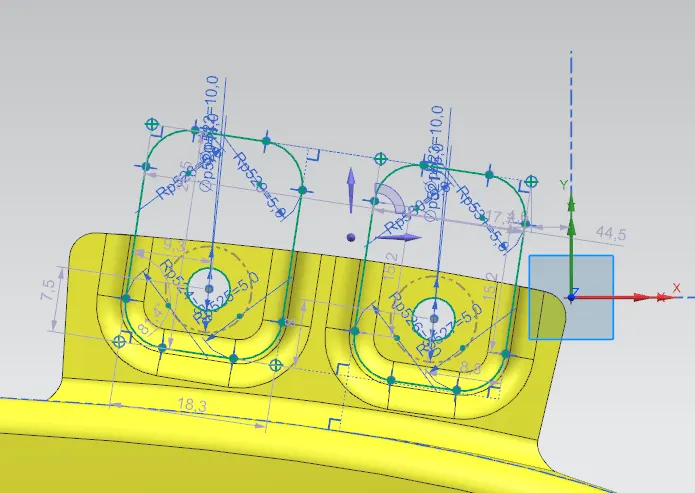
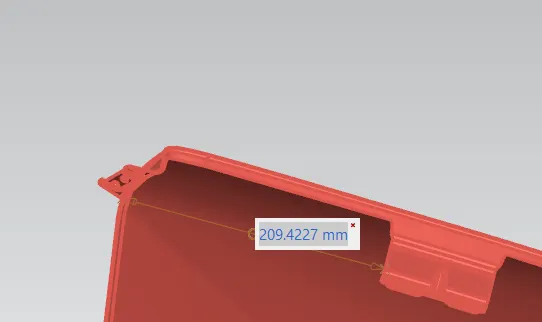
we have to make sure that the distance between "A" Pillar and drip area should be more than 200mm for ease of attachments and clearences.
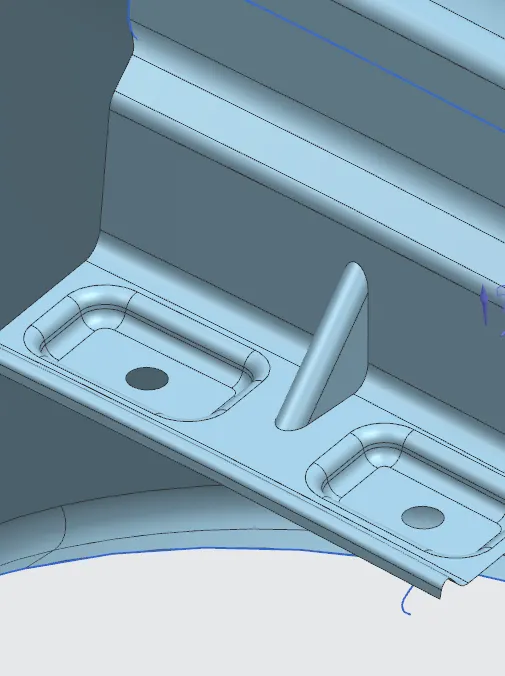
once done with the surface we can create Dart to Solve the problem of NVH Harness,
After done with surface creation we can procees to make the surface thick for about 0.75mm considering engineering standards and clearences in consideration.