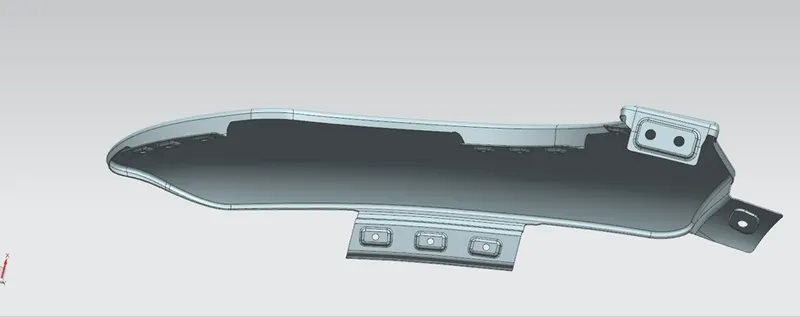
Fender Design
Fender
In the context of cars, a fender is a structural component that is typically located above each wheel. Also known as a wing in some regions, the fender serves several purposes:
- Protection: Fenders are designed to shield the wheels and the lower portions of the vehicle from road debris, such as rocks, gravel, and mud. They help prevent these materials from being thrown up by the rotating tires and causing damage to the body or other vehicles.
- Safety: Fenders play a role in ensuring the safety of pedestrians and cyclists. They provide a barrier between the wheels and people outside the vehicle, reducing the risk of contact in case of a collision.
- Structural Integrity: Fenders contribute to the overall rigidity and strength of the vehicle's body. They are typically made of durable materials, such as steel or aluminum, which can help absorb and distribute impact forces in the event of a crash.
- Aesthetics: Fenders are an important design element of a car's exterior appearance. They can be sculpted and styled in various ways to enhance the vehicle's overall look and appeal.
Fenders are often designed to be easily replaceable, as they can be susceptible to damage in accidents or other incidents. They can be bolted or welded onto the body of the car, and their shape and size vary depending on the make and model of the vehicle.
Types of fenders
There are different types of fenders used in cars, each with its own design and functionality. Here are some common types:
- Standard Fenders: Also known as traditional fenders, these are the most common type found on cars. They are typically integrated into the body of the vehicle and provide protection for the wheels and surrounding areas.
- Flared Fenders: Flared fenders are wider and more pronounced than standard fenders. They extend beyond the body of the car, giving it a more aggressive and sporty appearance. Flared fenders are often seen on high-performance or off-road vehicles.
- Bolt-On Fenders: Bolt-on fenders, as the name suggests, are designed to be easily removable and replaced. They are attached to the body of the car using bolts, allowing for easier customization or repair. Bolt-on fenders are commonly used in aftermarket modifications.
- Fender Flares: Fender flares are additional extensions that can be added to the standard fenders. They provide extra coverage and protection for larger wheels or when using wider tires. Fender flares are often used in off-road vehicles or in customization to achieve a more rugged look.
- Fender Skirts: Fender skirts are panels that cover the upper portion of the rear wheels. They are mainly used for aesthetic purposes, giving the car a sleek and streamlined appearance. Fender
- skirts were more common in older car models but can still be found on certain classic or retro-style vehicles.
These are just a few examples of the various types of fenders used in cars. The specific type and design of fenders can vary depending on the make, model, and intended purpose of the vehicle.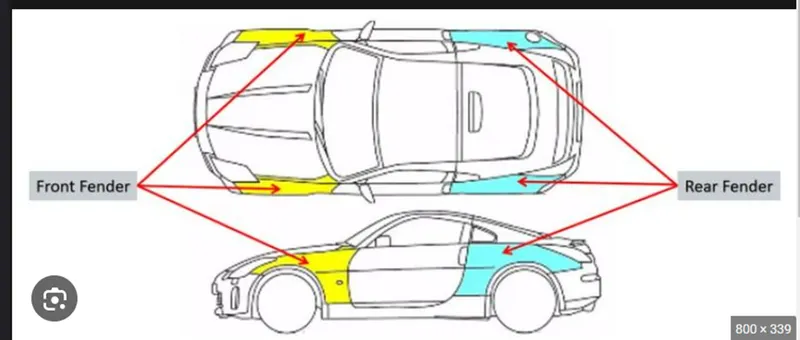
Types of fender mounding:
Fenders are typically mounted onto cars in a few different ways, depending on the specific design of the vehicle. Here are the common methods used to attach fenders:
- Welded Fenders: In some car manufacturing processes, the fenders are welded directly to the body of the vehicle. This creates a strong and seamless connection between the fender and the car's structure. Welded fenders are commonly found in unibody construction vehicles where the body panels are welded together to form the chassis.
- Bolted Fenders: Many cars have fenders that are bolted onto the body. This method allows for easier removal and replacement of the fender if it becomes damaged. The fender typically has mounting holes or brackets that align with corresponding holes or brackets on the body. Bolts or screws are then used to secure the fender in place.
- Adhesive Attachment: In some cases, particularly with lightweight materials or components like plastic fenders, adhesives are used to attach the fender to the body. The adhesive provides a strong bond between the fender and the car's surface.
- Combination of Methods: Some vehicles may utilize a combination of welding and bolting or adhesive attachment to secure the fenders. For instance, the fender may be initially welded during the manufacturing process and then reinforced with bolts or adhesive for added stability.
Given master section for the fender design are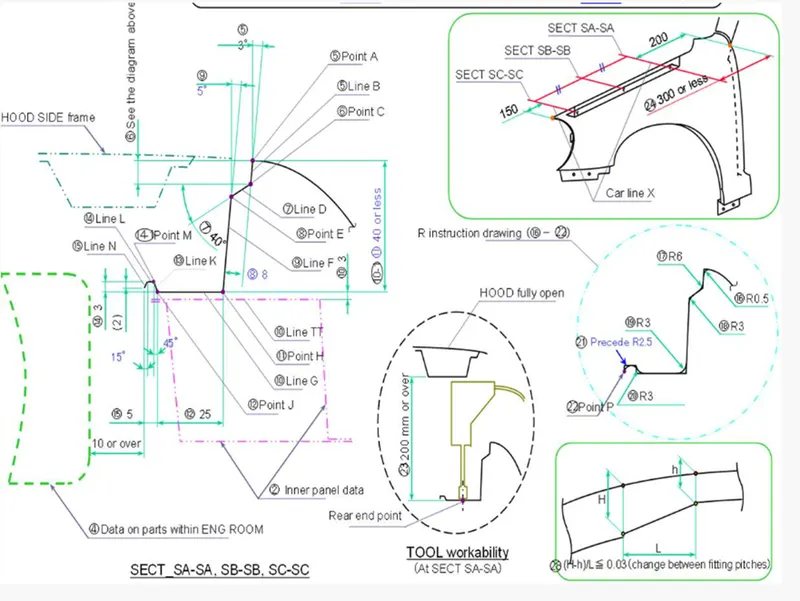
From the above master section we modify the given fender skin in to manufacturable one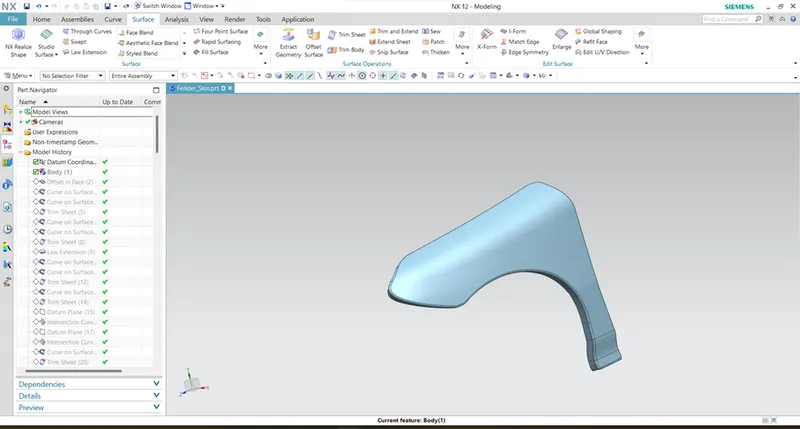
Fender mounding places
Fenders are typically fastened to specific areas of the car body to ensure a secure attachment. The exact attachment points can vary depending on the vehicle's design, but here are the common places where fenders are fastened:
- Wheel Wells: Fenders are attached near the wheel wells, which are the openings that house the wheels. The fender typically wraps around the sides of the wheel well and is secured in place to protect the wheel and its components.
- Bumper: Fenders often connect to the front or rear bumper of the car. This connection helps maintain the alignment and positioning of the fender while providing additional stability.
- Body Panels: Fenders may have attachment points along the body panels of the car. These points can be located along the side of the vehicle, near the door, or in the vicinity of other body components. Bolts, screws, or clips are commonly used to secure the fender to these attachment points.
- Hood and Trunk Lid: In some car designs, particularly in older models, the fenders may extend and connect to the hood or trunk lid. This integration provides a seamless transition between these body parts.
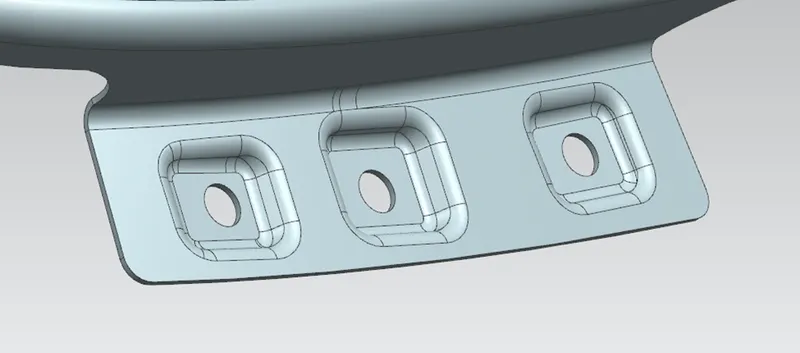
Step 1 : decide the fender mounding area and define the places where the bolt nuts are fastened.
Step 2:remove unwanted surfaces.
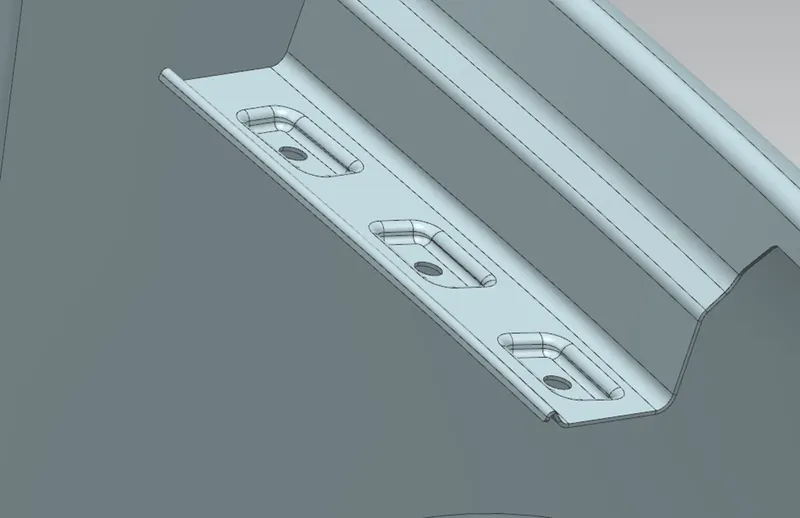
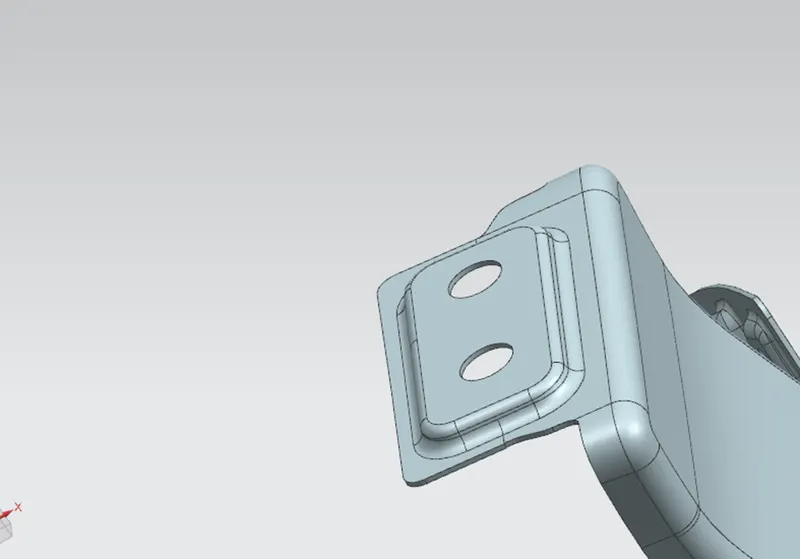
Step3: make the fender mounding areas
Step4 : make a emboss exactly flat the surfaces for mounting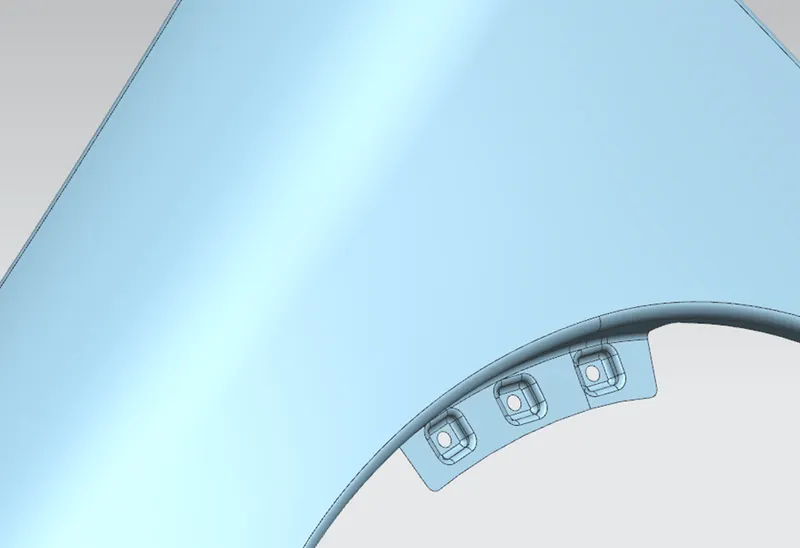
Step 5 : blend the all sharp edges.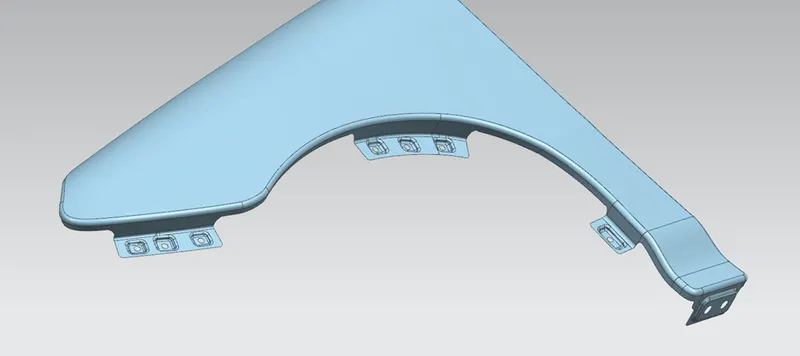
Step 6 : thicken the surface for 0.75 mm