Fender Design
FENDER:
- Fender is the part of a car that protects and frames its wheels and keeps mud from splashing it.
- Most modern vehicles have fenders on their front wheels. It is the part of a car, truck or motorcycle that surrounds the wheel sell.
- The primary function of a fender is to prevent dirt and debris from being thrown into the air by the tire.
- The fender is located over the wheels of the vehicle. As such, there are four fenders on a typical vehicle: front right, front left, rear right and rear left.
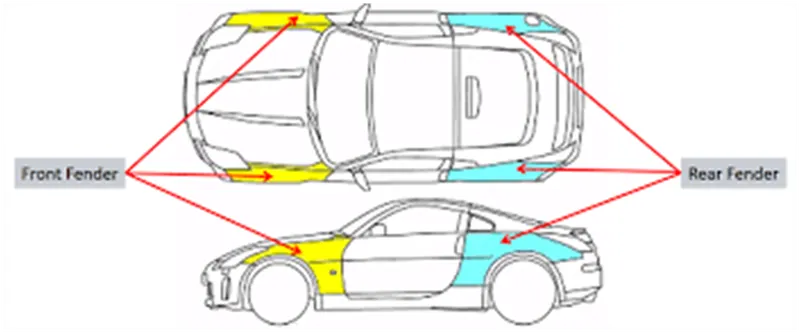
TYPES OF FENDER:
The type of fender is based upon the area covered
- Full fender type
- Half fender type
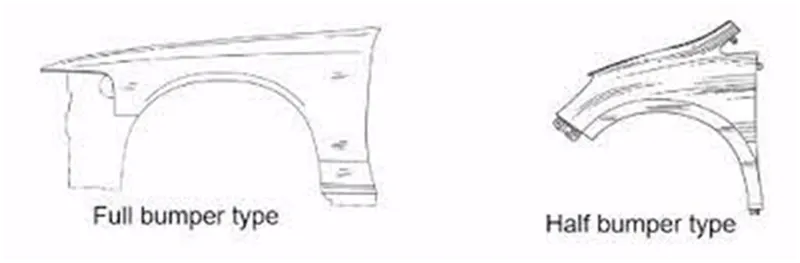
FULL FENDER TYPE:
- Full fender type is traditional type of fender where more material consumption is observed.
- This type is used in old design of automobiles where it increases the overall weight and thus reduces performance. The maintenance also relatively more due to more surface.
HALF FENDER TYPE:
- Half fender type is modern design where less material consumption is observed, so productivity increases by reducing size of blank and thus providing more performance.
- The maintenance also relatively low compared to full bumper type.
DESIGN CONSIDERATIONS
- The front fender has basically five mounting positions with respect to the other components. The mounting positions are as follows:
- Drip Area Mounting.
- A-Pillar Mounting.
- Sill Mounting.
- Bumper Mounting.
- Baffle Mounting.
- For the creation of the Drip Area Mounting, the given Master Section is followed, and the other mounting points are created by assuming appropriate positions with the respected components.
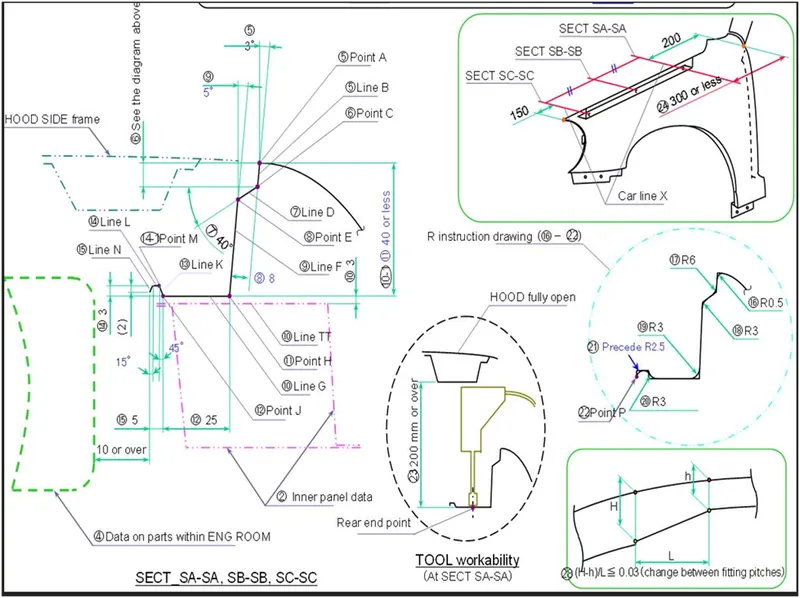
- Drip Area Mounting:
- The drip area is the most important mounting in a fender; it is the point where the fender has to be attached to the engine compartment.
- The drip area should be designed in such a way that it should be at least 150mm away from the front end of the fender to have sufficient space for mounting headlamps housing.
- Mostly the drip area starts from 200mm away from the rear end of the fender, to have sufficient space for the cowl which carries the wiper equipment.
- The length of the drip area depends on the length of the fender.
- Initially 3-degree angle and 9mm length is given while creating a drip area because the engine component should not be visible from outside.
- The depth of the drip should be between 40 to 60mm. If the depth exceeds from 60mm then forming is not feasible due to spring back and wrinkles.
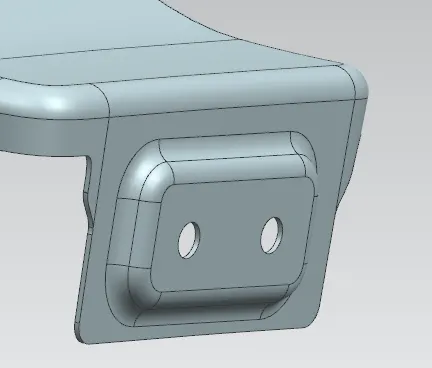
- Embosses and ribs are given to drip area to give strength. Embosses dimensions are depth 3.5mm and 15 degree of angle for all three embosses.
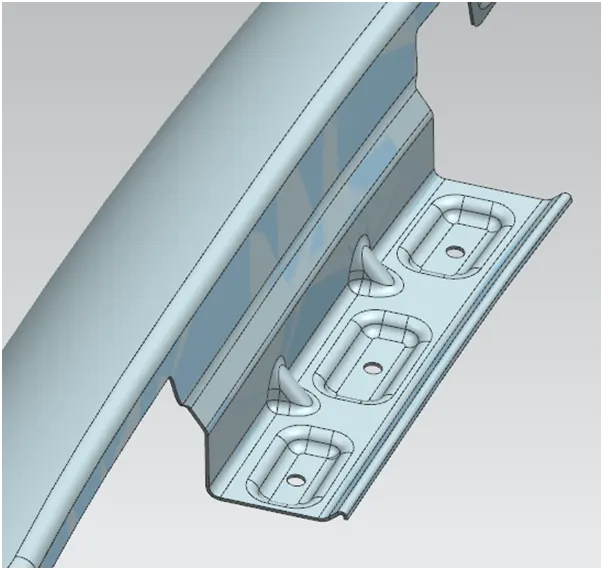
FIG : 1
- A-Pillar Mounting:
- This mounting position is created for attaching the fender to A Pillar of the vehicle.
- The mounting has to be created by taking the reference from the A-pillar of the vehicle.
- Enough clearance should be given for the easy mounting of the wiper equipment.
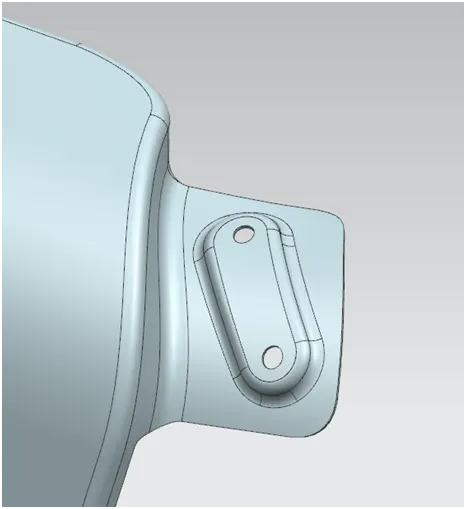
FIG : 2
3. Sill Mounting:
- Sill mounting is created on the bottom portion of the fender for attaching to the sill.
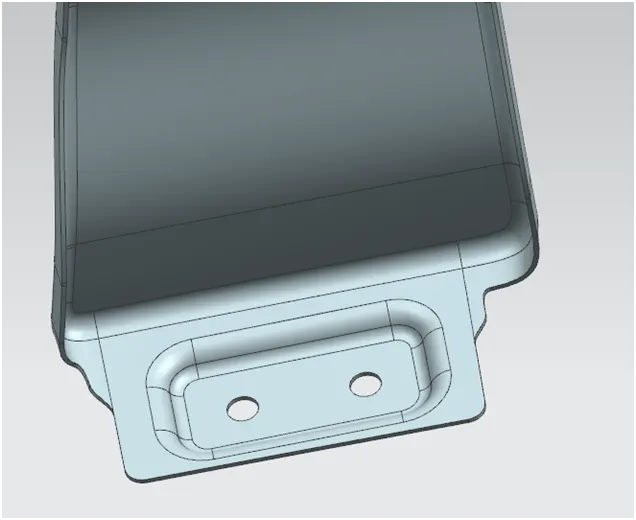
FIG : 3
4.Bumper Mounting:
- This mounting point is created for attaching the bumper to the fender. It should have enough strength to hold the bumper steadily.
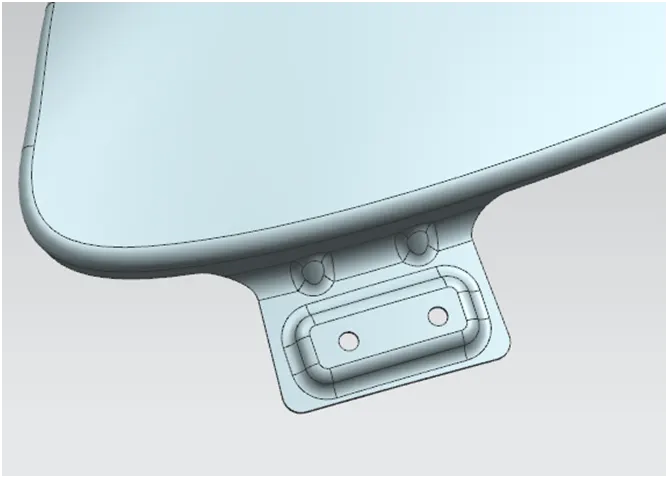
FIG : 4
5.Baffle Mounting:
- These mounting points are created for attaching plastic components i.e baffle which prevents chipping inside the engine compartment.
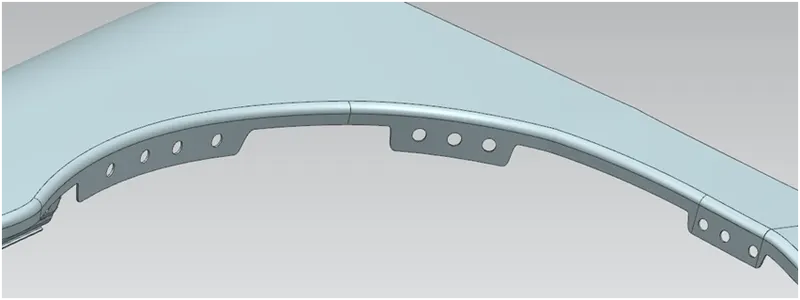
FIG : 5
Thickness Condition of the surface:
The thickness of 0.75 mm inward on the final sewed surface of the fender to the sheet metal parameters.
Commands used from NX CAD to model this fender are:
- Offset in face
- Curve on surface
- Trim sheet
- Law extension
- Datum plane
- Intersection curves
- Face blend
- Bridge curve
- Sketch
- Projected curve
- Emboss
- Edge blend
- Sew
- Dart
- Thicken
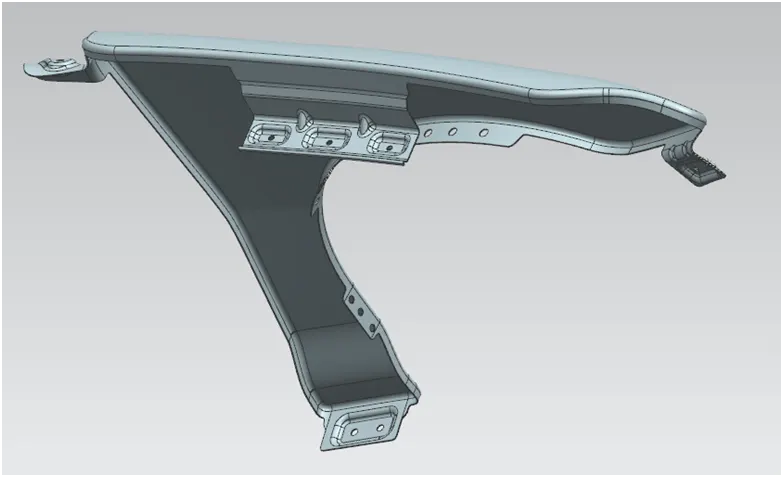
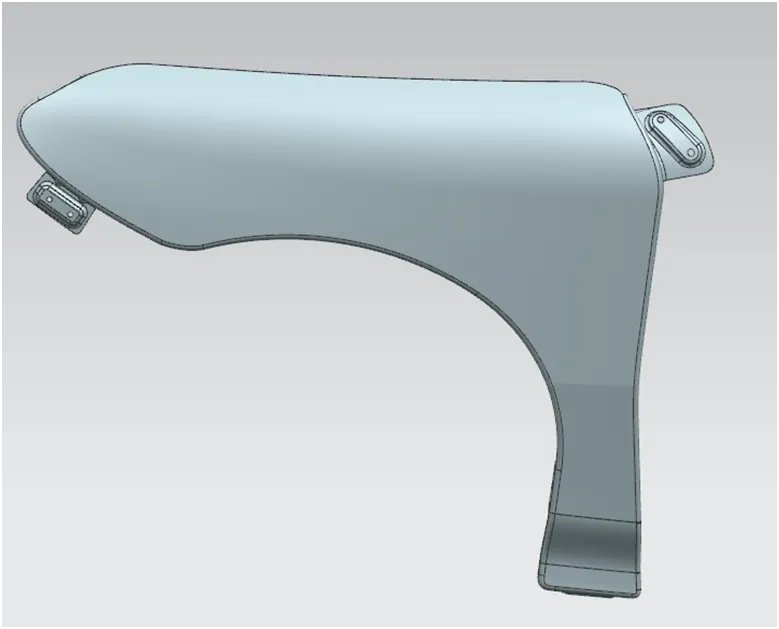
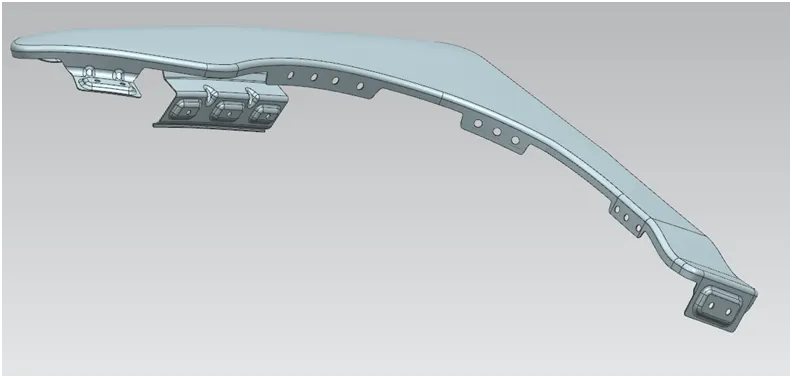
Some other views
CONCLUSION
- The front fender is designed according to the given master section and classes A Surface as per the OEM Standards.