Fender Design
AIM: To design a front fender of a car by following the given master section as per the design considerations of OEM.
FENDER
It is an aesthetic component/part of a car that frames the wheels. Prevention of sand, mud particles, and other road contaminants from being thrown into the engine compartment and also to the pedestrians by the rotating tires are the main purpose served by the fenders.
The front fenders are separate components whereas the rear fenders are integrated with the body sides.
TYPES OF FENDERS
1. FULL BUMPER TYPE:
It that cover the tire, the fender forms the wheel well surrounding the tire, and is not directly visible from above the car body. This type of fender increases the weight and scrap and reduces mielage .
These types of fenders were used in earlier models of vehicles. They contribute to the major increment of the steel weight by just covering the front headlights with respect to the bumper region. The problem associated with this kind of fender is there is a lot of wastage in the blank and every inch of a material is a cost to the industry.
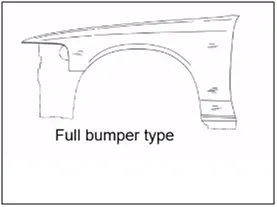

2. HALF BUMPER TYPE:
It main function is to minimise the weight and increase mileage . in Nower days Most of the OEM's manufacture Half Front Fender
These fenders are mainly used for serving the purpose of cost-cutting and reducing enough proportions of the steel wait resulting in a reduction of the weight of the vehicle slightly. They can be economically manufactured, i.e by slightly increasing the blank size, we can produce two fenders at a time.
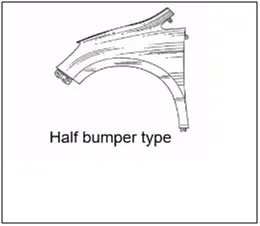
FUNCTION OF FENDER :
· Car fenders limit the exposure of your car’s body and engine to external elements that are harmful.
· Fenders flares are attached to ensure that both the body and engine have minimal contact with corrosive elements.
· Car fenders provide safety to the driver and the passengers at the time of accidents or collisions. They are manufactured in a way to provide bend during front and side collisions.
· Car fenders are designed to avoid wind resistance and make your car more aerodynamic.
· Car fenders enhance the overall look of your car. Fender flares are available in distinctive designs in the market. Mostly you find universal fender flares, but you can get customized cars fenders to fit your car wheels.

DESIGN CONSIDERATIONS
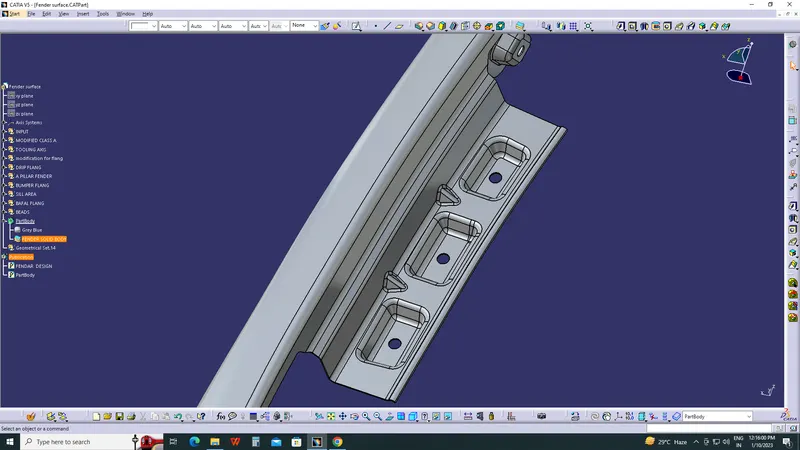
The front fender has basically five mounting positions with respect to the other components. The mounting positions are as follows:
- Drip Area Mounting.
- A-Pillar Mounting.
- Sill Mounting.
- Bumper Mounting.
- Baffle Mounting.
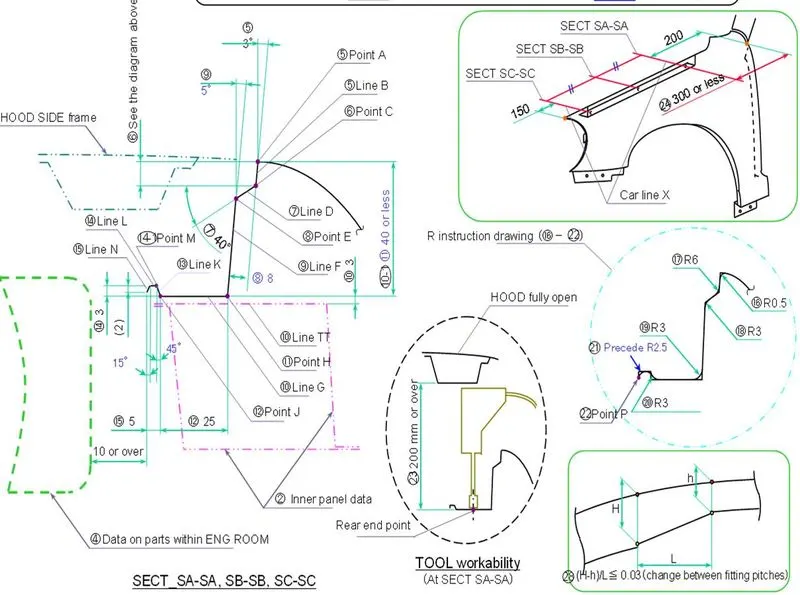
For the creation of the Drip Area Mounting, the given Master Section is followed, and the other mounting points are created by assuming appropriate positions with the respected components.
1. Drip Area Mounting:
- The drip area is the most important mounting in a fender, it is the point where the fender has to be attached to the engine compartment.
- The drip area should be designed in such a way that it should be at least 150mm away from the front end of the fender to have sufficient space for mounting headlamps housing.
- Mostly the drip area starts from 200mm away from the rear end of the fender, to have sufficient space for the cowl which carries the wiper equipment.
- The length of the drip area depends on the length of the fender.
2. A-Pillar Mounting:
- This mounting position is created for attaching the fender to A Pillar of the vehicle.
- The mounting has to be created by taking the reference from the A-pillar of the vehicle.
- Enough clearance should be given for the easy mounting of the wiper equipment.
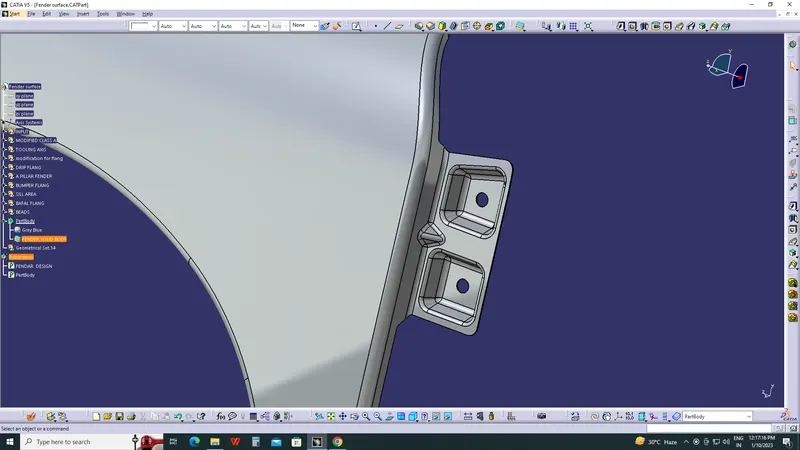
3. Sill Mounting: Sill mounting is created on the bottom portion of the fender for attaching to the sill.
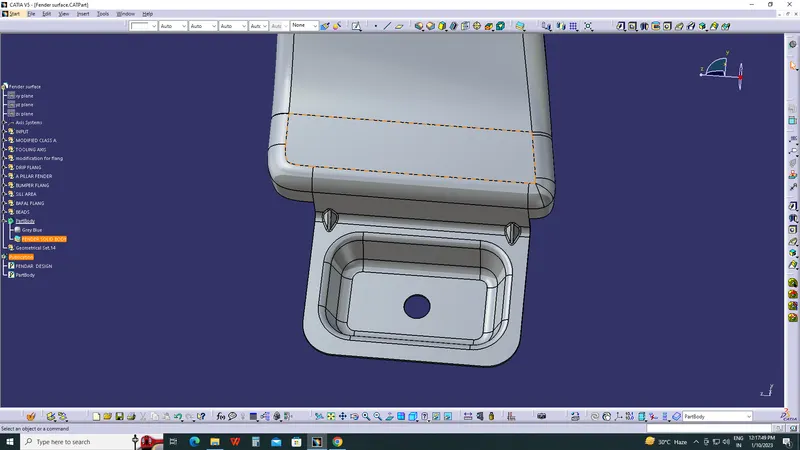
4. Bumper Mounting: This mounting point is created for attaching the bumper to the fender. It should have enough strength to hold the bumper steadily.
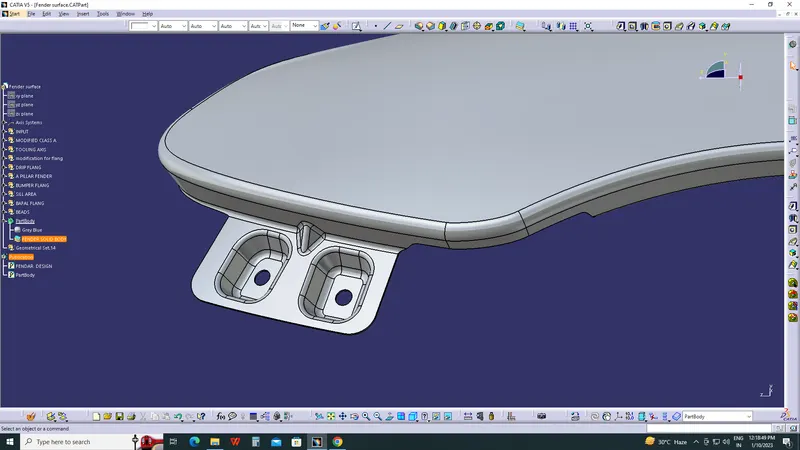
5. Baffle Mounting: These mounting points are created for attaching plastic components i.e baffle which prevents chipping inside the engine compartment.
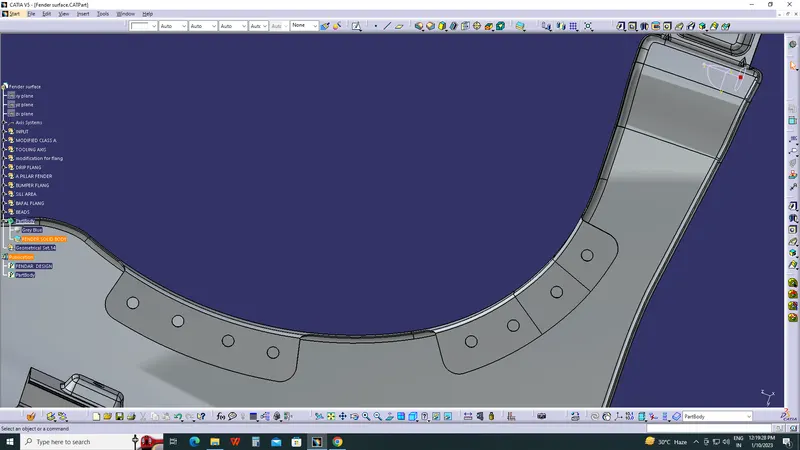
TOOLING AXIS :
for this fender i created two tooling Axis one is main tooling axis and other one is side core tooling axis
the method which i used is Normal to the surface
DRAFT ANALYSIS :
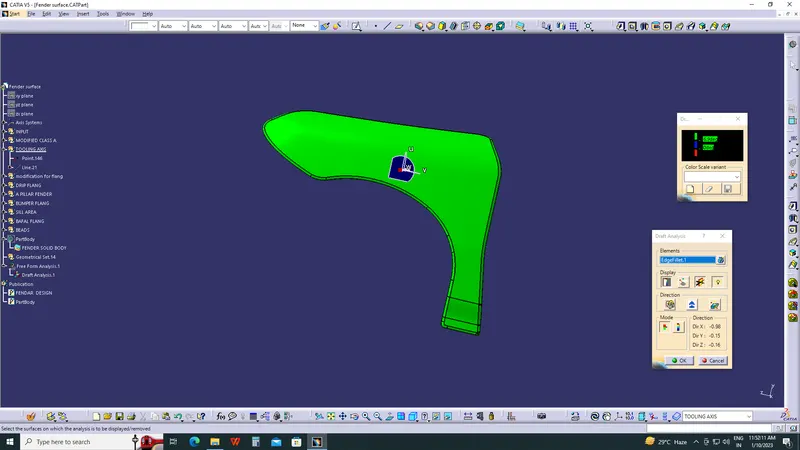
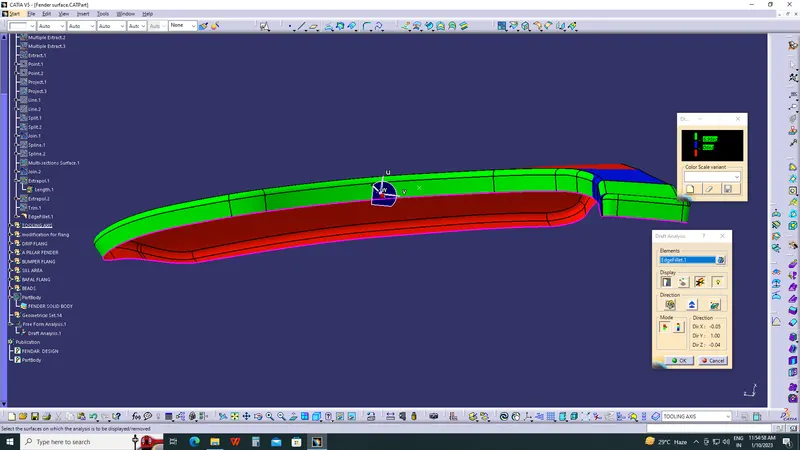
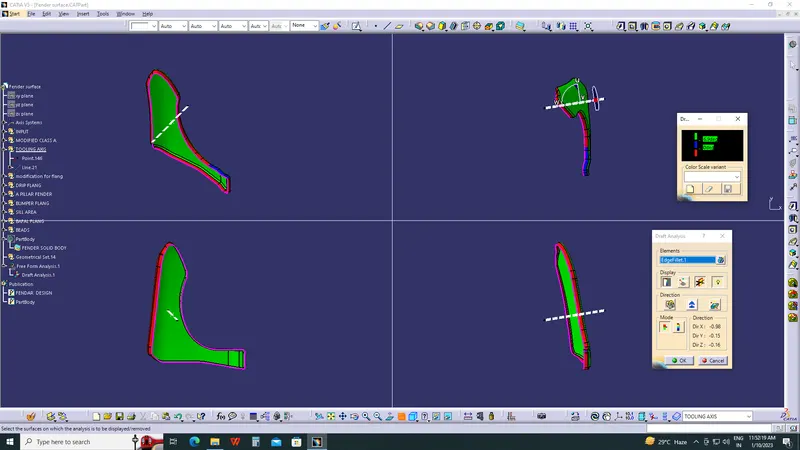
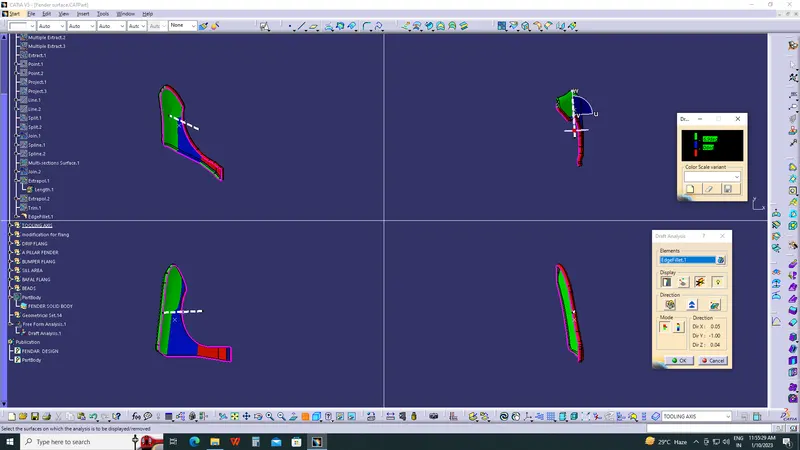
DRAFT ANALYSIS OF SOLID BODY :
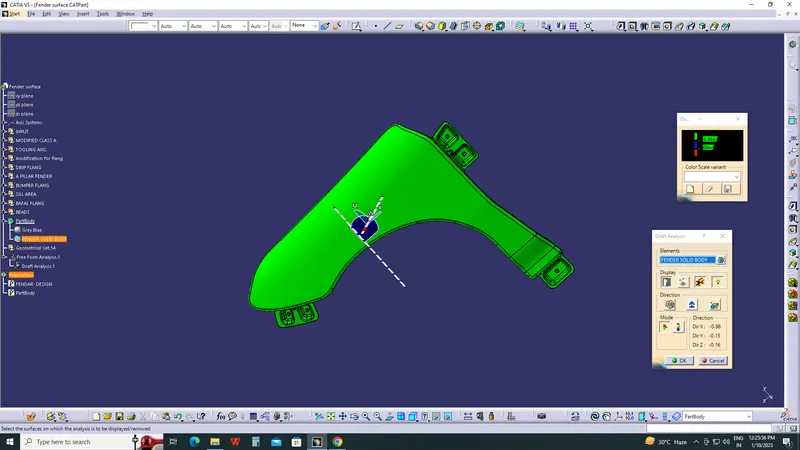
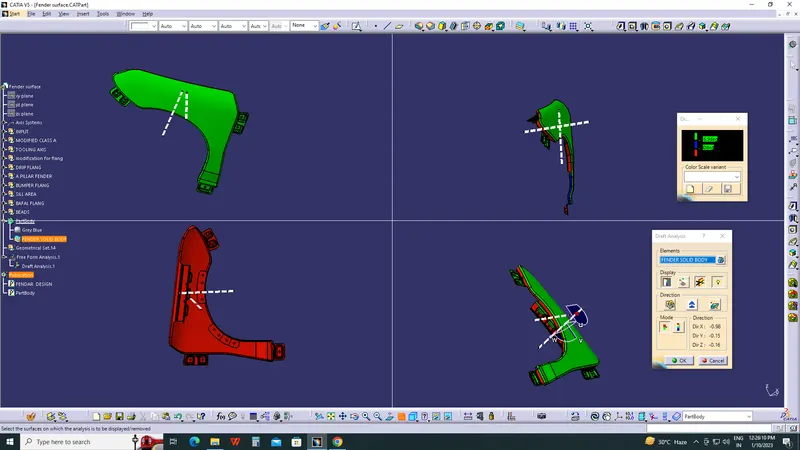
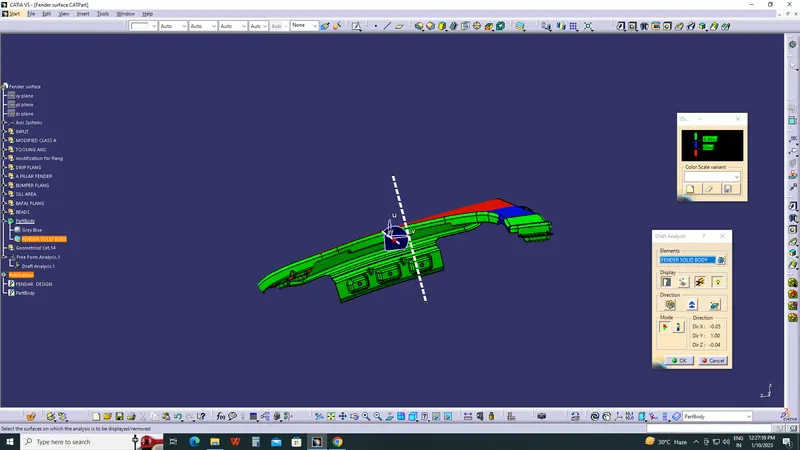
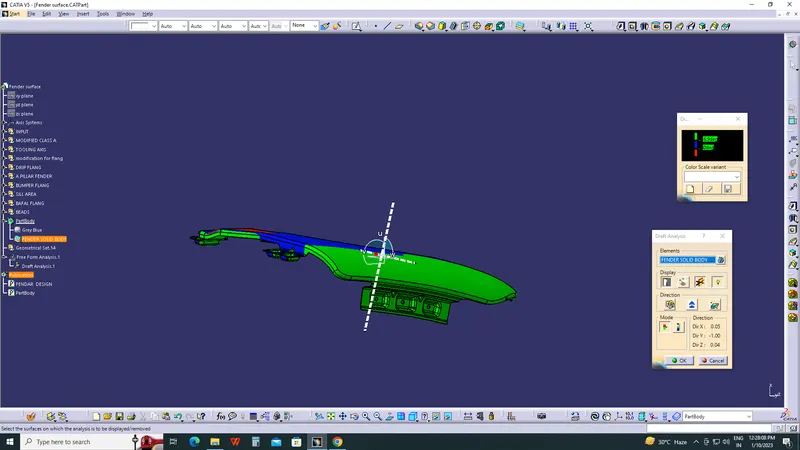
DIFERENT VIEWS
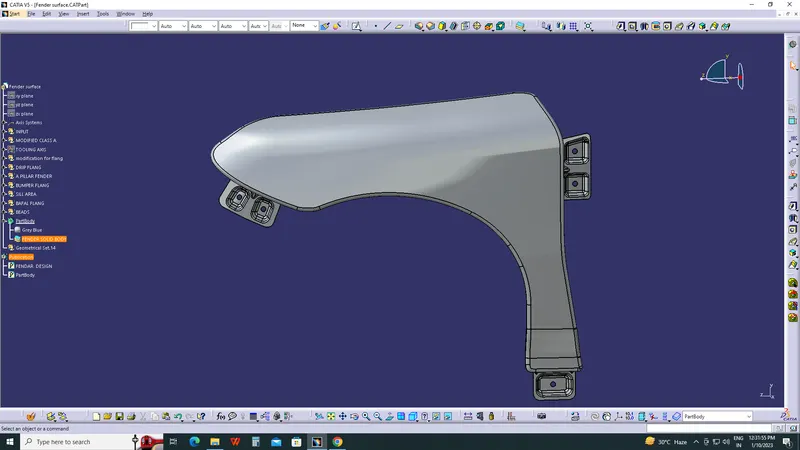
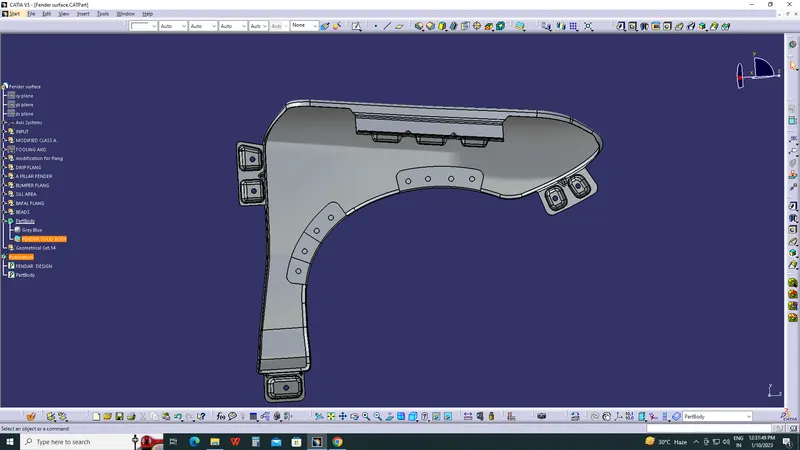
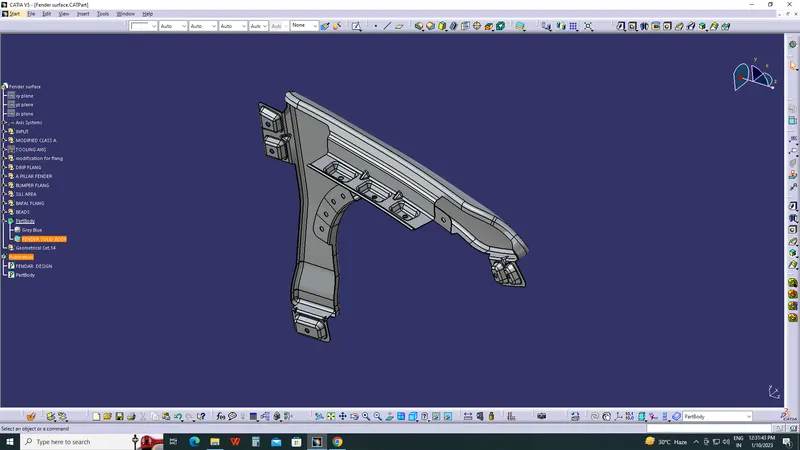
CONCLUSION
The front fender is designed according to the given master section and CLASS A Surface as per the OEM Standards.