Fender Design
Fender:
It is an automobile component that frames the wheels. The primary function of the fenders is to keep sand, dirt, and other road pollutants from being flung into the engine compartment and onto pedestrians by the revolving tyres. The front fenders are distinct from the body sides, whilst the rear fenders are merged.
Types of Fenders:
1. FULL BUMPER TYPE: These fenders were employed in previous car models. They contribute significantly to the increase in steel weight by simply shielding the front headlamps in relation to the bumper region. The issue with this type of fender is that there is a lot of waste in the blank, and every inch of material costs the business money.
2. HALF BUMPER TYPE: These fenders are mostly employed for cost-cutting and decreasing enough proportions of the steel wait, resulting in a modest weight reduction of the vehicle. They can be produced inexpensively, as we may print two fenders at a time by just expanding the blank size.
Cosnisderation for designing:
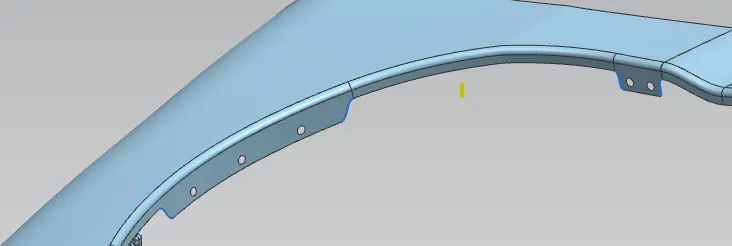
In comparison to the other components, the front fender has five attachment places. The following are the mounting positions:
- Drip Area Mounting.
- A-Pillar Mounting.
- Sill Mounting.
- Bumper Mounting.
- Baffle Mounting.
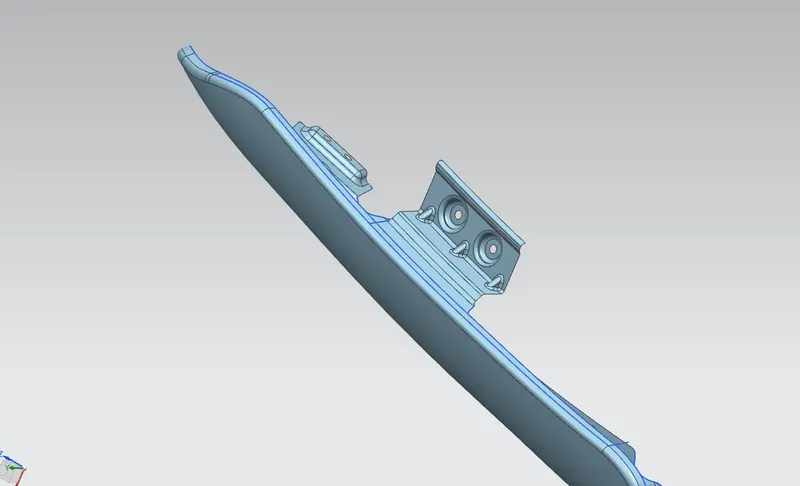
Drip Area Mounting:
The drip region is the most important location in a fender since it is where the fender connects to the engine compartment.The drip area should be built so that it is at least 150mm away from the front end of the fender to allow for the attachment of headlight housing.To allow enough space for the cowl that houses the wiper equipment, the drip area generally begins 200mm away from the back end of the fender.The drip area's length is determined by the length of the fender.
A-Pillar Support:
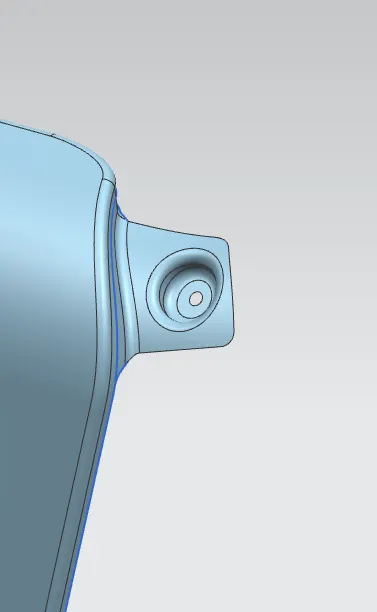
This mounting position is designed for connecting the fender to the vehicle's A Pillar.The mounting must be made by matching the vehicle's A-pillar.
Allow enough space for the wiper equipment to be easily mounted.
Sill Mounting:
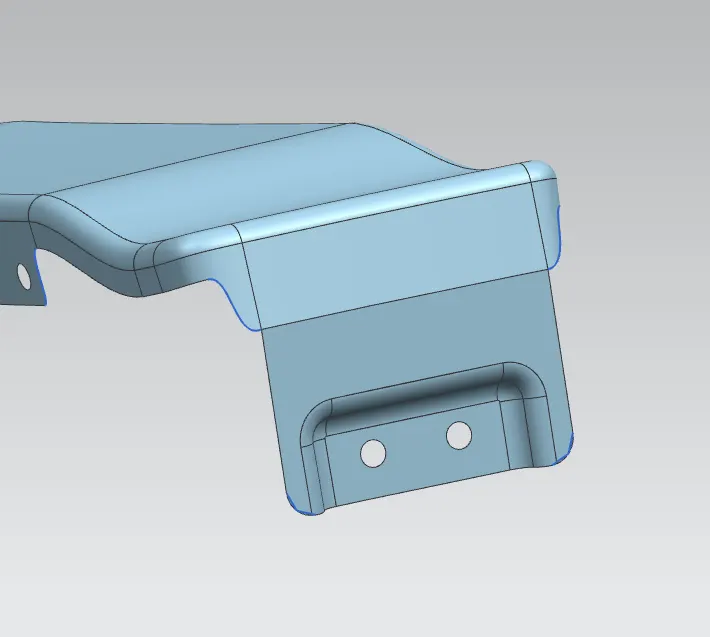
Sill mounting is a hole on the bottom of the fender that allows it to be attached to the sill.
Bumper Mounting:
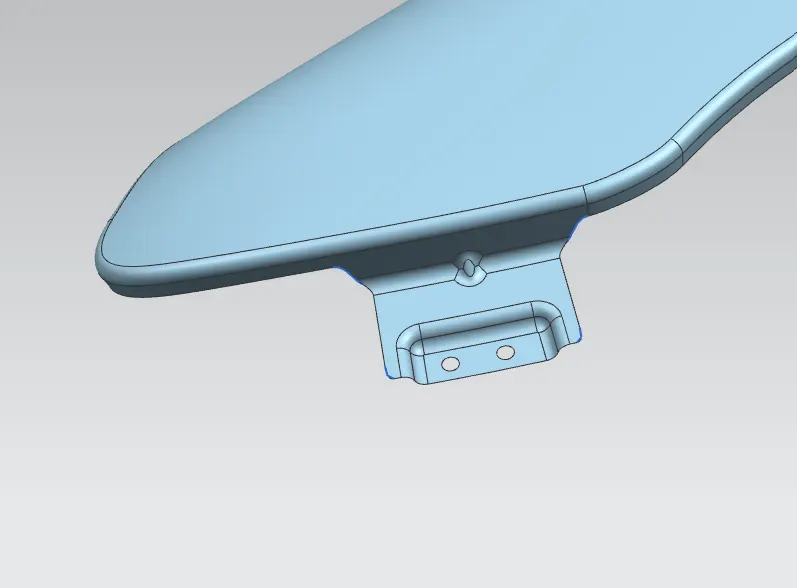
This is the location where the bumper is attached to the fender. It should be strong enough to retain the bumper firmly.
Baffle Mounting:
These mounting points are used to hold plastic components, such as baffles, in place to avoid chipping inside the engine compartment.
Conclusion:
The front fender is designed acording to the given master section.