Fender Design
STUDY REPORT ON FENDER
The car fender is one of the most essential parts of the vehicle. It might not seem like much, but the fender frames the wheel well. The car fender prevents rocks, mud, and other road debris from flying uncontrollably through the air as you drive.
Car fenders play a crucial role in driving courteously. Because of this role, they are one of the essential parts of your car.
What Is a Car Fender?
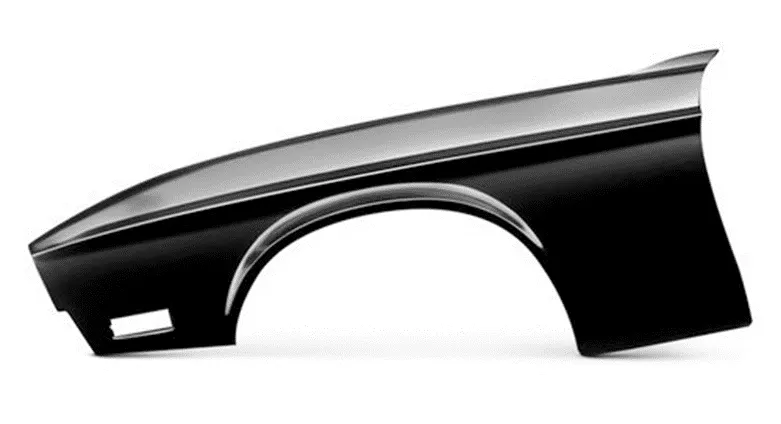
As we’ve already established, the car fender is the piece of the vehicle that houses the wheel well. Some people confuse fenders and bumpers, but these are two different things.
While the bumpers are just as crucial to the overall function of your vehicle, the fender is something completely different.
Since the 1930s, fenders have been a standard part of every automobile. There’s no telling what a car would do if there were no fenders.
What Is the Purpose of Fenders on Your Car?
The fenders on your car protect your car from road debris as you drive. They also cover other vehicles on the road from that same debris.
When tires rotate, they pick up things like loose rock, mud, and dirt along the roadway. That debris can get stuck in the tires and flung across the road.
At high speeds, loose rocks can severely damage your vehicle or other vehicles on the road. Car fenders protect you and other cars from this damage.
The fender protects your car from sustaining damage from road debris and prevents this debris from being thrown up at other vehicles on the road. This is why vehicles with large, oversized tires are often required by law to install fender flares.
Where Are the Fenders Located on a Car?
Your car fenders are located around the wheel wells on your vehicle. That means you have two in the front and two in the back.
There was a time when all four-wheel well coverings were called fenders. However, it’s more common for the front tires only to have fenders.
The back wheel wells still protect your car and others from flying debris, but they act more as bolted corner panels than separate entities.
Can You Drive a Car with No Fenders?
Yes, you can drive a car with no fenders. Your vehicle’s fenders won’t determine whether or not the automobile is operational.
However, driving without fenders might be an incredibly foolish decision. You risk damaging other peoples’ vehicles as you go if you choose to operate without fenders.
You also risk damaging your vehicle when you drive without fenders. Since fenders offer the best protection, it is better to go with fenders.
What Is The Difference Between A Fender And A Bumper?
If you're unfamiliar with automotive terminology, there might be some confusion about the difference between a fender and a bumper. Let's clear up any confusion.
A bumper is located on the front and rear of a vehicle. The purpose of a bumper is to absorb the impact of minor collisions.
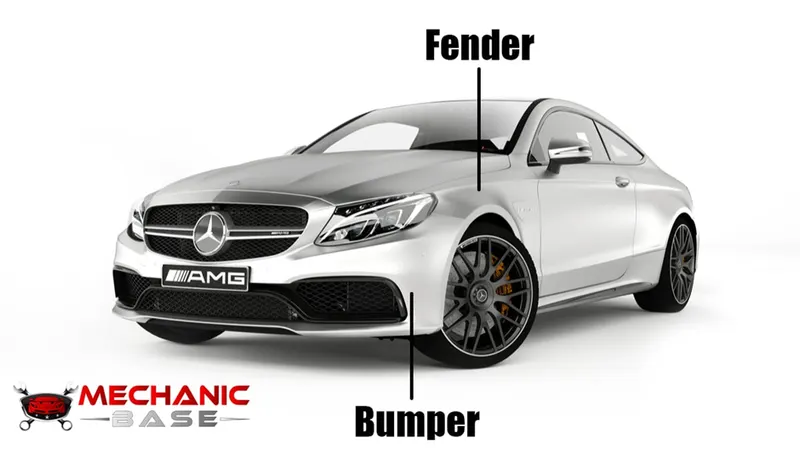
In the early days of the automobile, bumpers were a more distinct component that was noticeably separate from the rest of the car's body. But as automotive technology advanced, bumpers became more integrated with the rest of the car's body. The purpose of the modern bumper remains the same, but the bumpers on many vehicles (namely sedans and crossovers) are less visually noticeable than they once were.
As mentioned, a fender is merely a housing for the wheels that prevent road debris from being thrown up by the rotating tires. However, fenders are also able to absorb impact from minor collisions. In this way, the fender can act as an extension of the bumper in terms of its ability to absorb the energy from a collision.
What Are Car Fenders Made Of?
Early car fenders were much different than car fenders today. Cars, in general, are made differently than they were in the past.
Driving a vehicle today would feel vastly different than driving a car 30 or 40 years ago. Cars were once all heavy-duty machines that cruised down the road with a special kind of confidence.
Cars today use different materials. Often, their design gears towards being more sleek and efficient. And the other car parts, like car fenders, are made to reflect that change.
Types of fender:
The type of fender is based upon the area covered i.e. full fender type and half fender type.
Full bumper type :
Half bumper type :
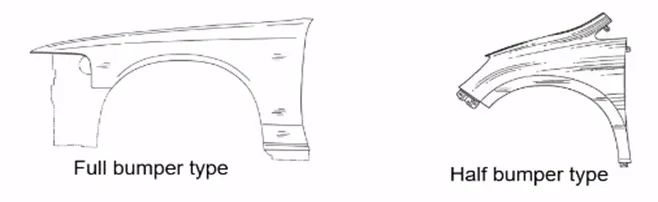
Full Bumper Type: Full Bumper Type is not used nowadays because it requires a large size of bank to produce the part and it occupies more space.
Half Bumper Type: Half Bumper Type Half bumper is used because the waste of material is less & can produce two fenders at the same time by slightly increasing the raw sheet. and to reduce the weight & cost mostly bumper fender is been produced.
Car Fender Pros
The fender is responsible for protecting the body of the car. If debris could flow freely from the moving tires, a lot more body damage would occur, requiring repairs. The fender is the shield that protects both your car and others near you on the road.
The fender also helps to keep the car from getting too messy. Because the fender blocks dust and mud from being sprayed from the tires, you will need to clean your car less frequently.
On top of that, the vehicle fenders have such a beautiful appearance, perfectly complementing the style of your vehicle. When perfectly matched, the fenders flow seamlessly with the rest of its appearance.
Master Section to design fender:
So I made the design according to the given master section And the result is below :
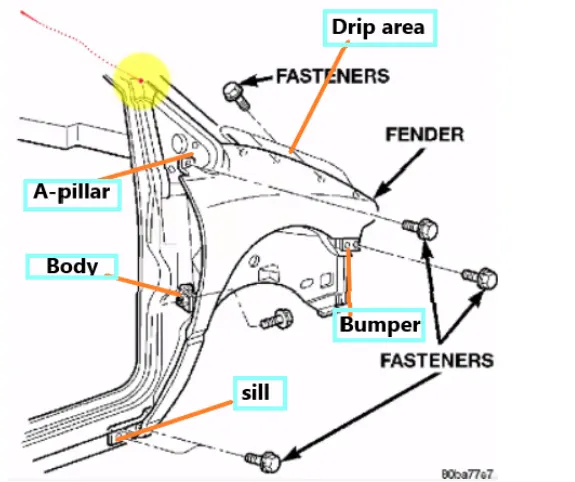
Components of front fender:
Bumper:
The bumper mounting area is used to fix the plastic bumper to the fender with the help of the fasteners.

Drip Area mounting:
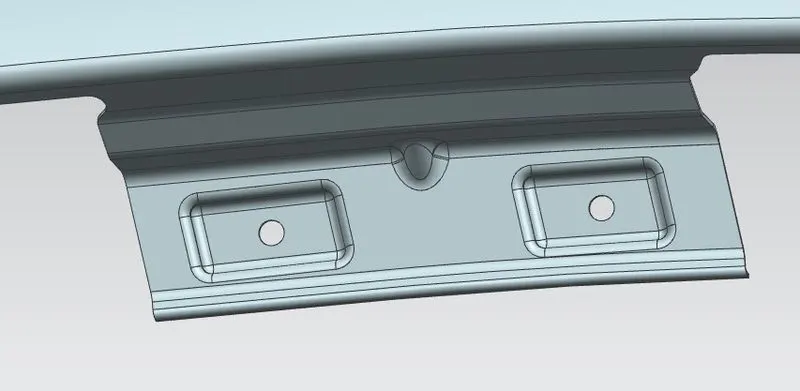
- It is the important mounting uni of the fender. it is connected to the engine compartment, therefore a lot of design constraints are to be followed while designing the fender
- While designing the drip area we have to initially leave 200-300 mm for the cowl top
- For placing the headlamp we have to leave at least 150 mm at the front while designing the fender
- The cowl top part consists of a wiper motor and its instruments
Sill mounting:
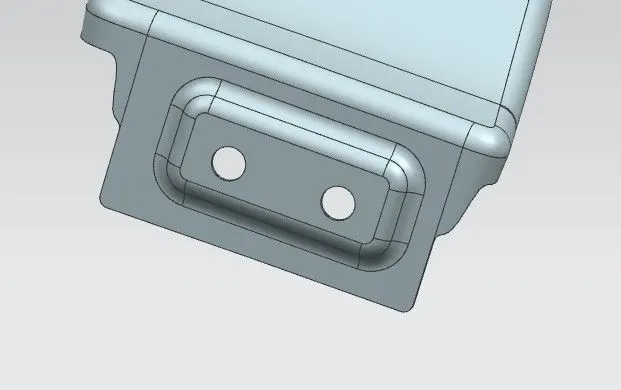
The sill is the panel directly below the bottom of the door supporting the floor and may be used to combine the floor and the body. The bottom end of the fender is mounted on the sill body for reinforcement of the fender panel, thus the sill mounting position is designed with holes and emboss. M5 fasteners are used to fix the fenders on the sill body.
BAFFLE MOUNTINGS:
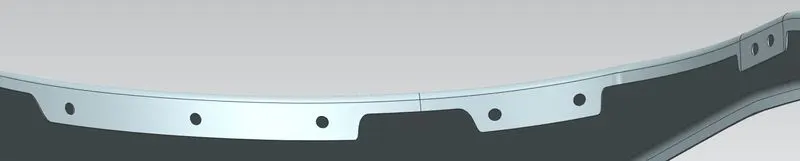
Baffle mounting or mudguard are clip-fit types of mounting on the inner side of the fender arch over the Tyre. it protects the car engine compartment and pedestrians from causing injuries from chip-out debris on the road when the car is in motion. they are mounted on the fender using a special type of locking clip which is made up of plastics.
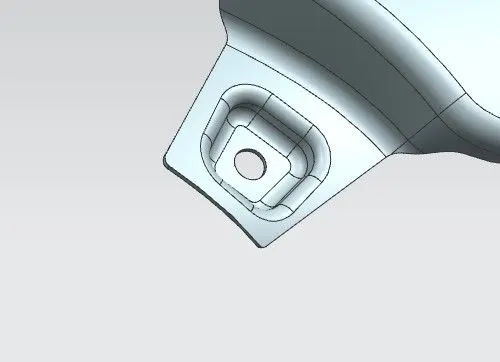
A-PILLER mounting:
The A-pillar is the structural pillar that combines the body with the roof. this makes the sides of the windshield rest. front fenders are fastened to the A-pillar to form a robust structure
CONCLUSION:
As we successfully learn about the feature and purpose of the front fender and made it in NX CAD and we have learned the tools involved in it.