Fender Design
OBJECTIVE: The main objective is to design the fender with the necessary mountings.
REQUIRED MAJOR MOUNTING AREAS:
- Drip Area
- Baffle(Splash)
- Sill
- A-Pillar
- Bumper
Theory:
Fender:
A fender is a part of an automobile that frames a wheel well (Fender underside or in a brodest sense,could say the vacant space between wheel and Fender). Its prior purpose is to prevent sand, mud, rocks and liquids etc., from being thrown into the air by the rotating tire. The fender's opening arc diameter must be much larger than the diameter of the tire because they do not move with the tire suspension and consequently must be large enough to allow the full range of tire motion so that they could not touch the interior of the wheel well.
Types of Fender:
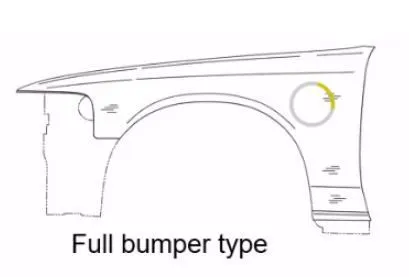
Full front fender:
A cover for Pedestrian and Vehicle saftey,an old method what automobile industries were using mostly untill Half bumper type fender introduced.The fender covers the tire, the wheel well surrounding the tire, and it is not directly visible from above the car body. It increases the weight and scrap of the component.
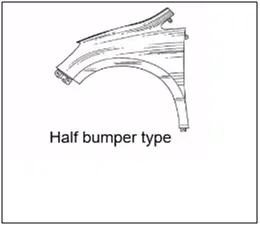
Half front fender:
A cover for Pedestrian and Vehicle saftey,It reduces the overall weight. It creates only half of what the full front fender does and the other part is created with the bumper part.Sometimes this other part is made up of plastic or metal according to situation.
STEPS TO FOLLOW:
- Specify the mounting areas:
- After Opening the File, Read and observe the model and create the mount area layouts.
- Use parallel curve option or Multiple extract tool to extract the tangent edges in a single shot, to offset the line 5mm and split tool to cut the class A to create a space for the mountings.
- Join the split surfaces excluding the top surface.
- Creating the Mount area surfaces:
- To create the mount regions, use the sweep option near the space created for the mountings.
- For baffle areas straight flanges are required so instead of using sweep or extrude we can use extrpolate surface tool to see instant effect.
- After the sweep is done as per the design model given, join the surface created.
- Creating the embosses and holes:
- After the mounts are created, we need to create embosses and holes.
- To create emboss, create a sketch with the required shape. Project the sketch or if you have more than 1 sketch then extrude sketch in the direction normal to the surface then intersect it with the class A mounting surface, but before that extract the surface so that it would be easy to make offset the surface for making emboss.
- Now, split the surface to create a hole near the projected area to create an emboss.
- Use the sweep command near the cut section. Now, offset the extracted surface.
- Trim the surfaces together and create a relief hole which is given to such that the screw is fitted into that hole.
- For the Drip Mount part, follow the details given in Master section for fender.
- To create Ribs, make the surface solid then create sketch and pad it in both direction.
- Giving the Fillets:
- Once the surface is trimmed, give the fillets near embosses.
- Creating the Solid:
- After the Surface is created, go to the part workbench and define the part body.
- Use the thick surface option to create the solid with a thickness of 1mm.
Result:
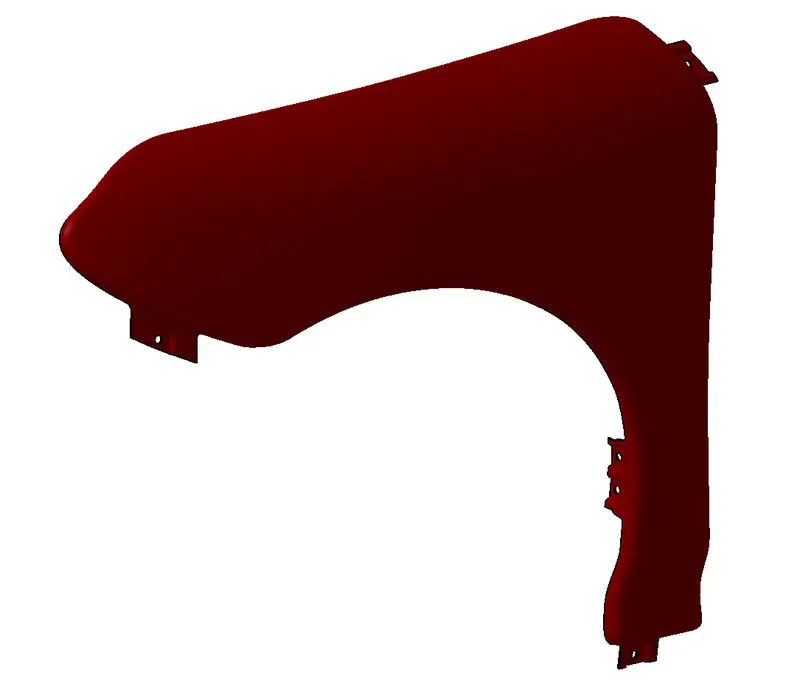
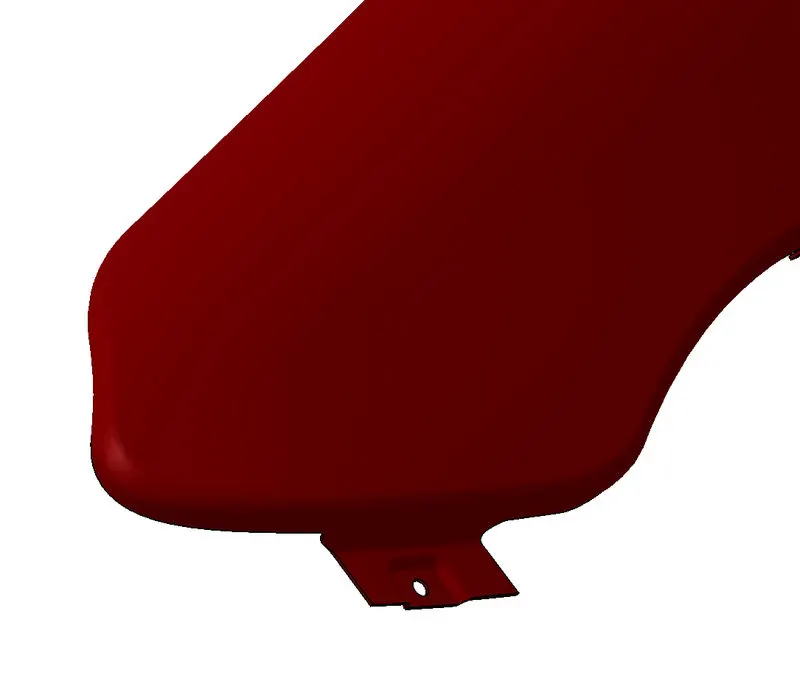
The fender model is created with a thickness of 1mm with the given mounts and embosses.
CAD DESIGN MODEL:
MASTER SECTION DETAILS:
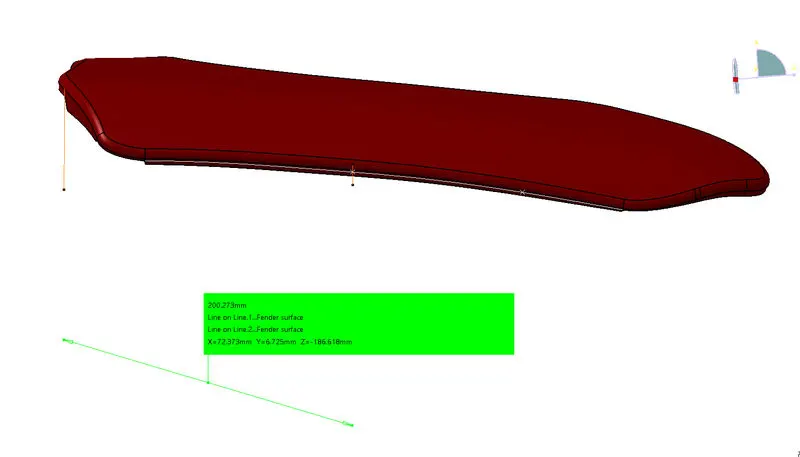
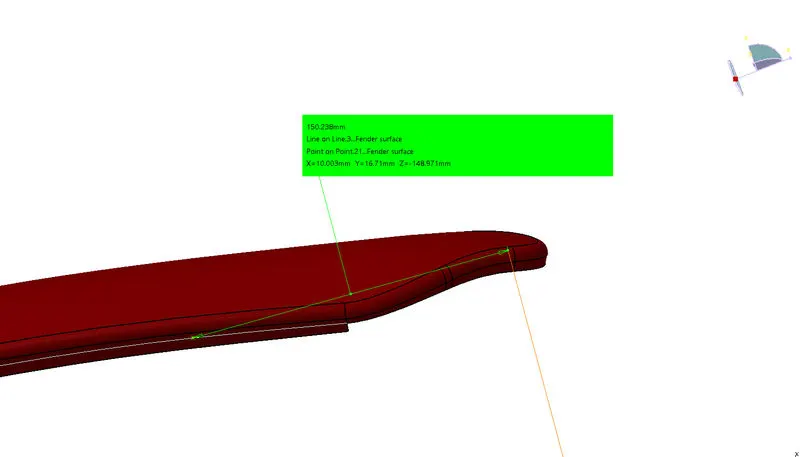
1.FOLLOWED DISTANCE
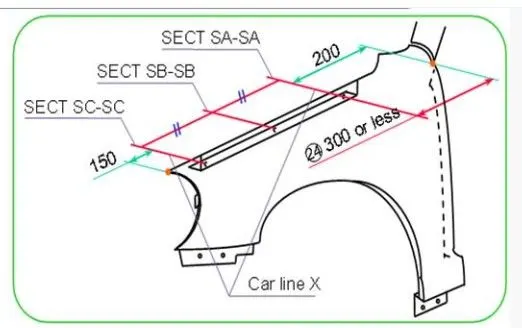
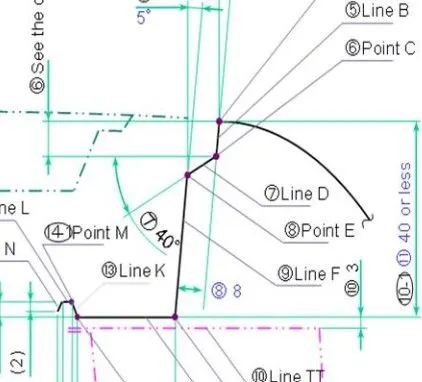
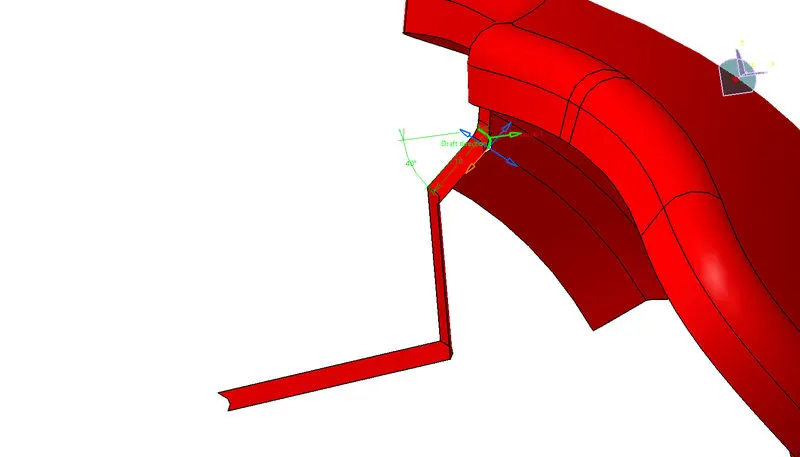
2.FOLLOWED ANGLE
DRIP AREA MOUNTING
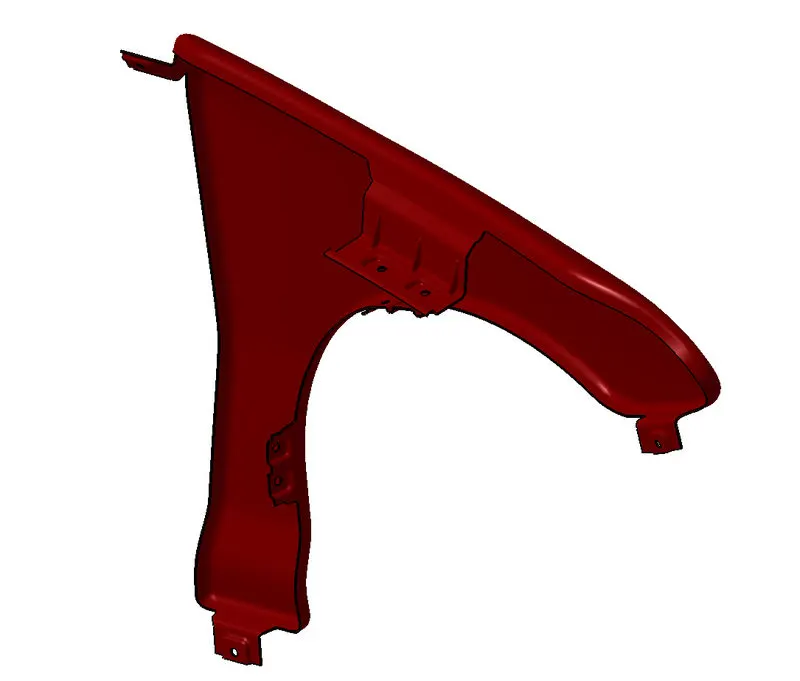
BAFFLE (SPLASH) MOUNTING:
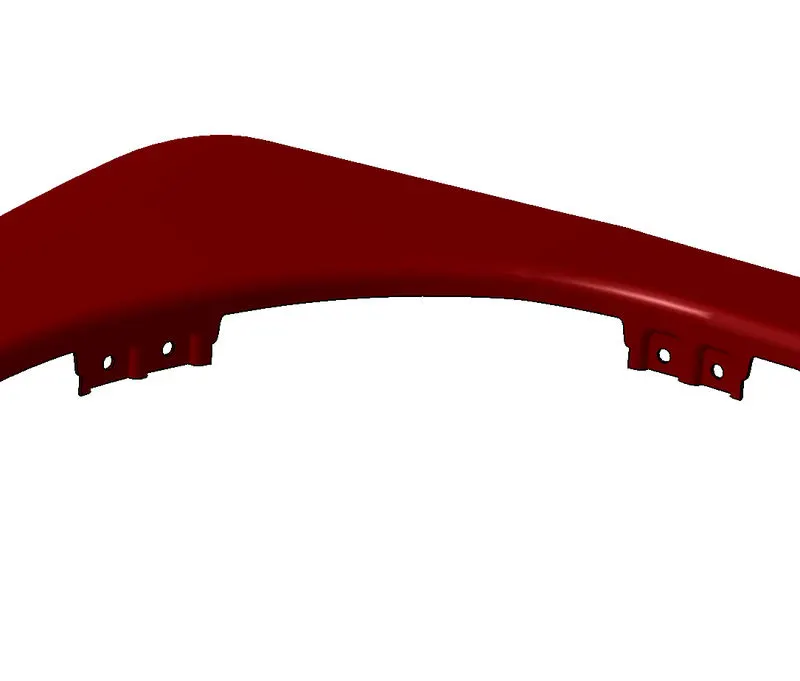
SILL MOUNTING AREA
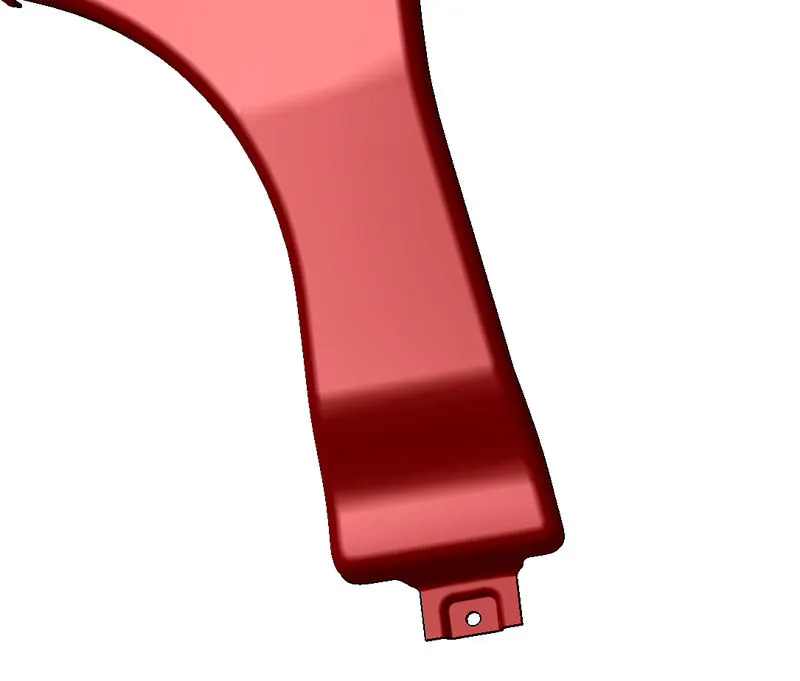
A-PILLAR MOUNTING AREA
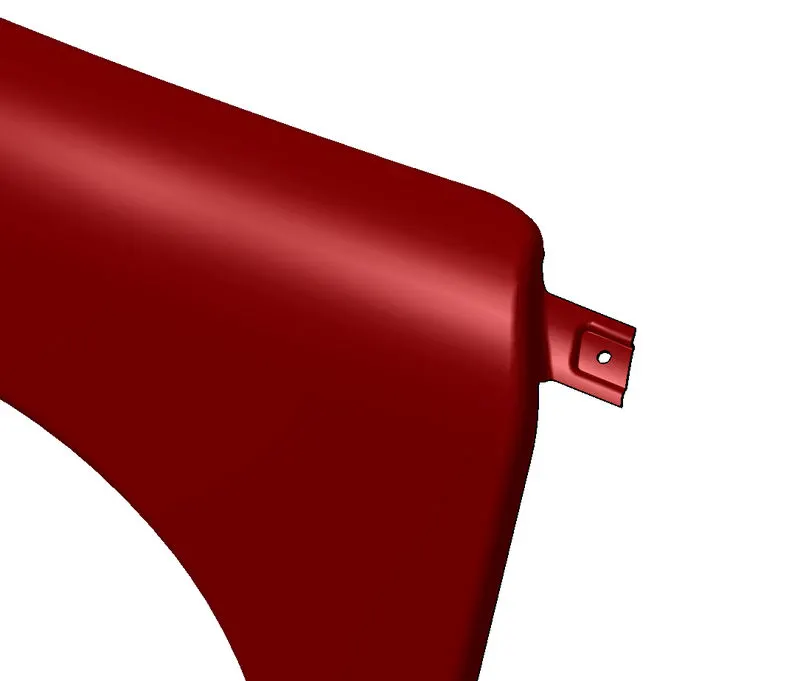
BUMPER MOUNTING AREA
TERMINOLOGIES USED
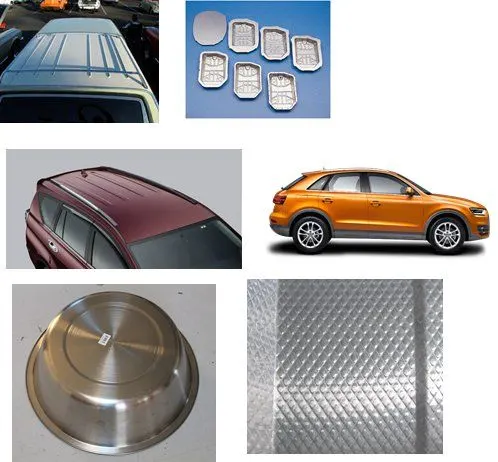
1.EMOBOSS
Embossing is a stamping process which is used for giving sheet metal some useful shape.
For creating emboss we need to insert sheet metal in to the roller die which has already some set of pattern in it,will give desired out put metal sheet.
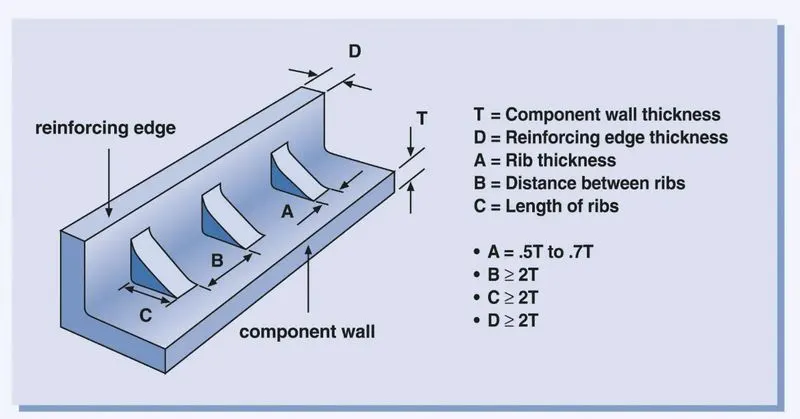
2.RIB
Ribs are thin extend perpendicular surface from a wall or plane to provide added stiffness and strength.
CONCLUSION:
I have learnt, concepts behind fender design,how consideration of every parameters matter in desgining,creating major mounting areas in fender and making ribs to provide additional strength..etc.