Fender Design
OBJECTIVE:
The main objective of this project is to design the BIW(Body-In-White) of the front fender using the fender skin data and the master section as the data by using NX CAD.
INTRODUCTION:
Fender is the US English term for the part of an automobile that frames a wheel well (the fender underside). Its primary purpose is to prevent sand, mud, rocks, liquids, and other road debris from being thrown into the air by the related tire. When a vehicle is moving, tries to pick up stones and other particles and hurt them in all directions. Fenders are present to prevent any injuries to pedestrians & contain the motion of these particles.
Most passenger automobiles have four fenders, one over each wheel. For vehicles with a narrow car body that exposes the tire, the fender is an exposed curve over the top of the tire. For wide-body vehicles that cover the tire, the fender forms the wheel well surrounding the tire and is not directly visible from above the car body. Wheel well tend to be much larger than the diameter of the tire, because they do not move with the tire suspension and consequently must be large enough to allow the full range of tire motion on the suspension without touching the interior of the wheel well.
More elaborate designs include fender skirts for enclosing the outside edge of the wheel well and stylized pontoon fenders for exposed fenders. There two types of the fender which are:
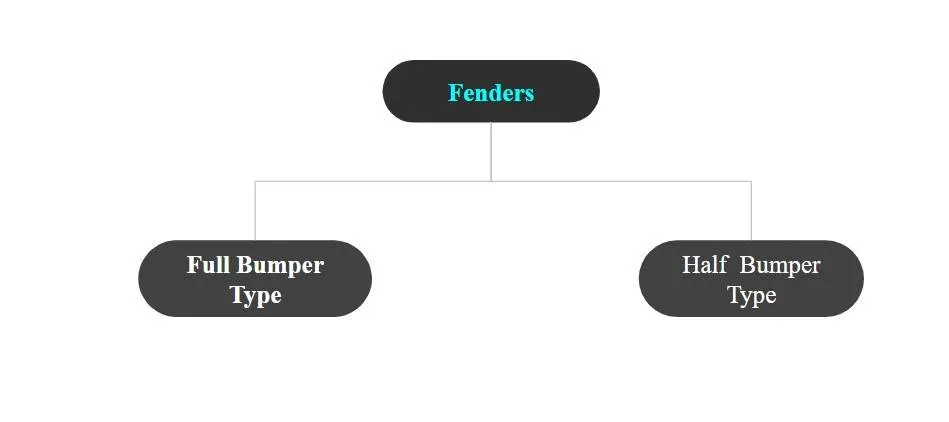
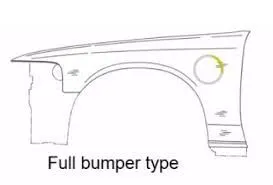
I. Full bumper fender:
The full Bumper type is the traditional type of fender where more material consumption is observed. This type is used in the old design of automobiles where it increases the overall weight and thus reduces performance. The maintenance is also relatively more due to more surface.
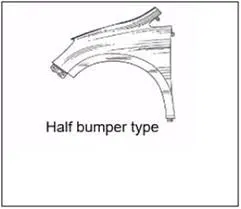
II. Half bumper fender:
Half Bumper type is a modern design where less material consumption is observed. So productivity increases by reducing the size of the blank and thus providing more performance. The maintenance is also relatively low compared to the full bumper type.
The Fender is mounted on 5 main points:
- Body
- A-pillar
- Sill
- Cowl
- Drip
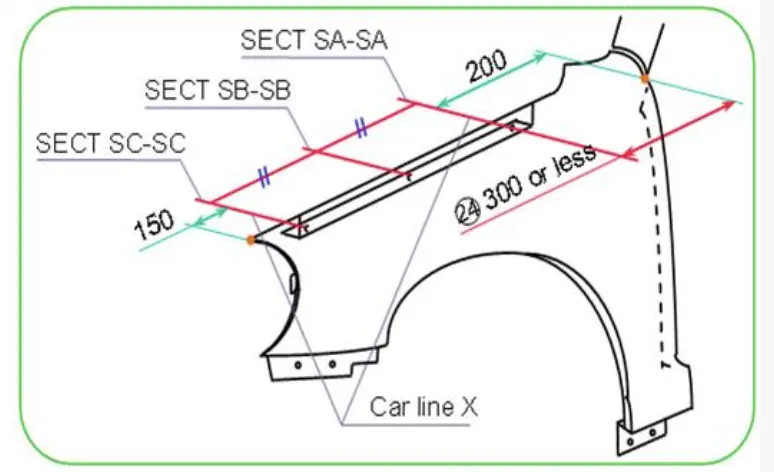
Tool Workability:
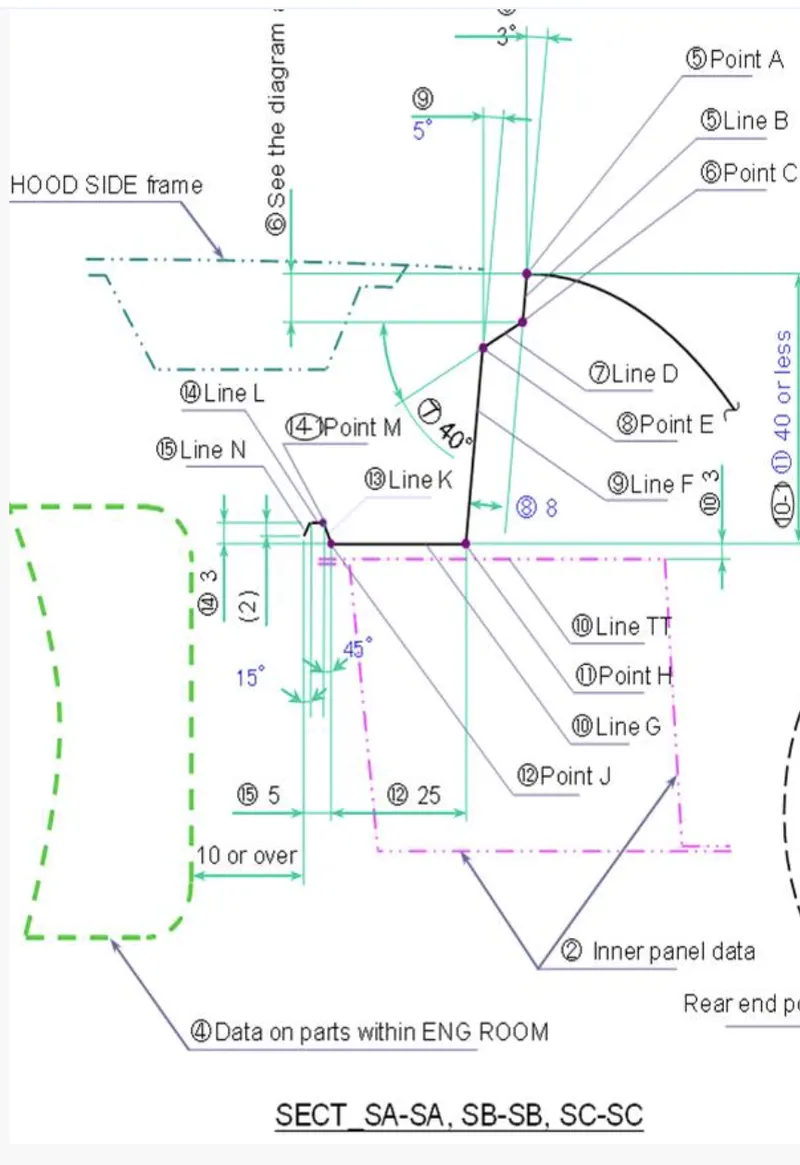 .
. 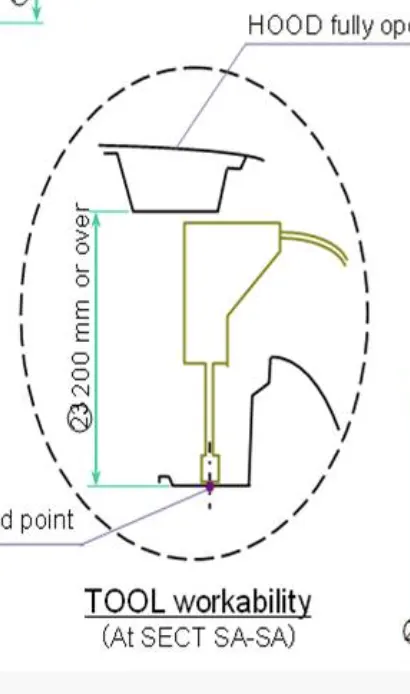
- Defects due to compression stamping such as camber, etc occur. Thus, a touch difference is provided in flange depth when flange length exceeds 800 mm.
- To prevent FDR, fixation Bolt to be seen from outside & improve the appearance of parting gap between HOOD & FR FDR.
- Hood Side Drip depth must be 40 mm or less as maximum productivity is achieved at the depth of 40 mm. If depth exceeds 40 mm, a rigidity bead is to be provided. Also, forming is not feasible if depth exceeds 60 mm due to wrinkling & spring back.
- When the Drip Surface is stamped 3 degrees must be secured for spring back. Angke can be increased to make expected modification possible.
- Wldgs surface of the Drip area with BRKT FR FDR should be flat with a clearance of 1mm from BRKT FR FDR upper surface.
Fender Drip Area:
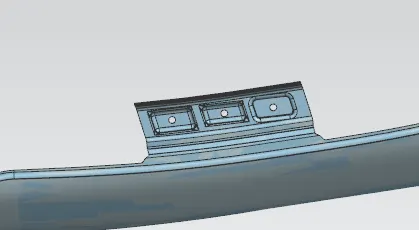
- It is the critical mounting area located inside the engine component. Designed according to the master section provided an optimal opening angle is maintained to make it look well assembled from the outside.
- Minimum clearance from headlamp and cowl part is maintained. The vertical distance of the drip is maintained at less than 60 mm to avoid the spring back effect.
- Drip area is mounted to engine compartment by welded nuts.
A-Pillar Mounting:
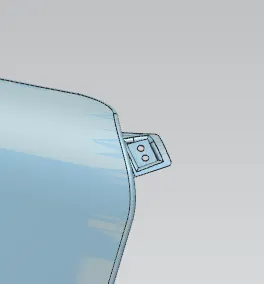
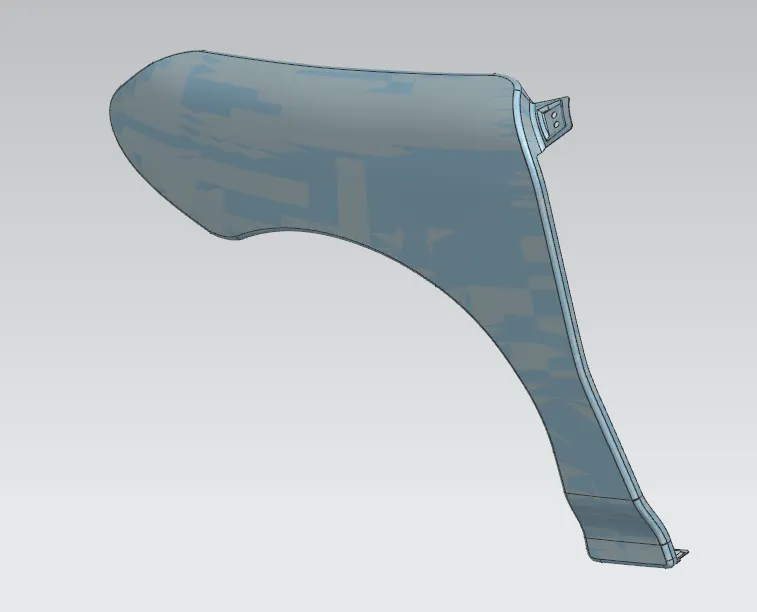
This mounting region is located near the cowl of the vehicle where the fender is fastened with the bottom edge of the windshield. This mounting is covered with the side rear-view mirror.
Bumper Mounting:
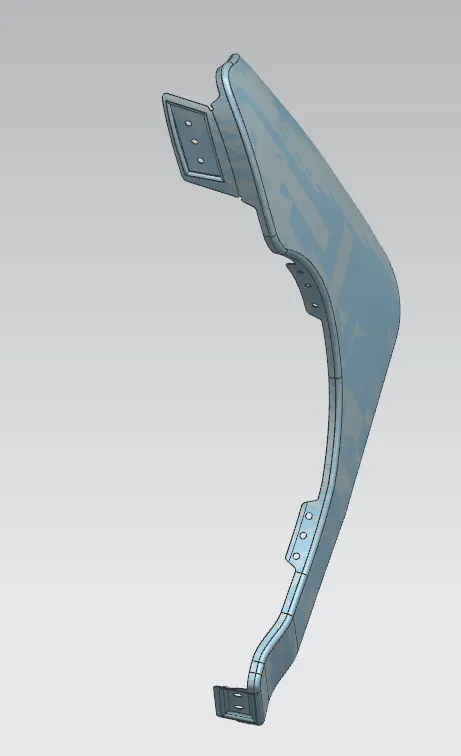
The bumper mounting region is located beneath the bumper. The fender gets attached before the installation of the bumper.

Baffle Mounting:
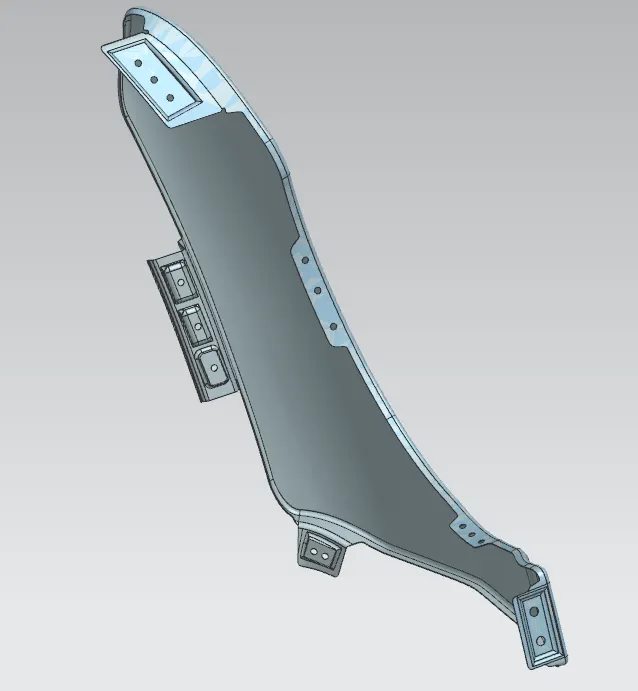
In this region, the baffle gets installed to the fender with the help of clips that holds the baffle with the fender along the wheel arch.
Sill Mounting:
The area at which the bottom of the fender gets connected to the floor near the bottom edge of the door. The Embossed Sill mounting of the fender is attached to the fasteners.
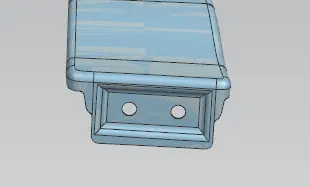
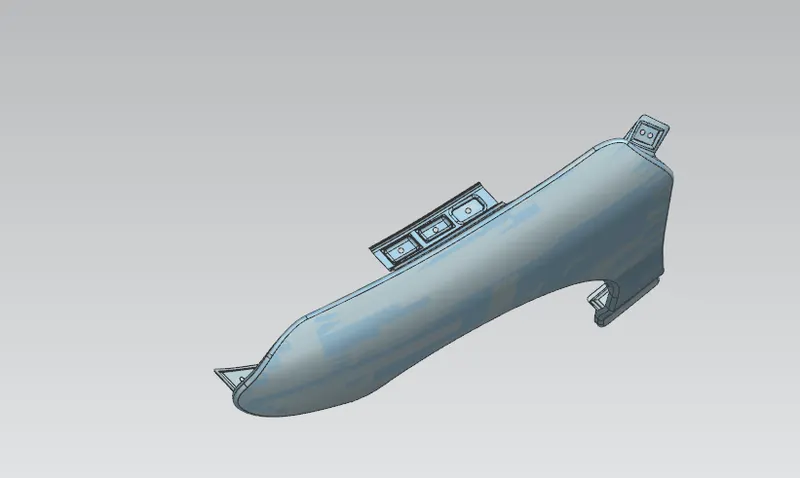
Overall View of Fender:
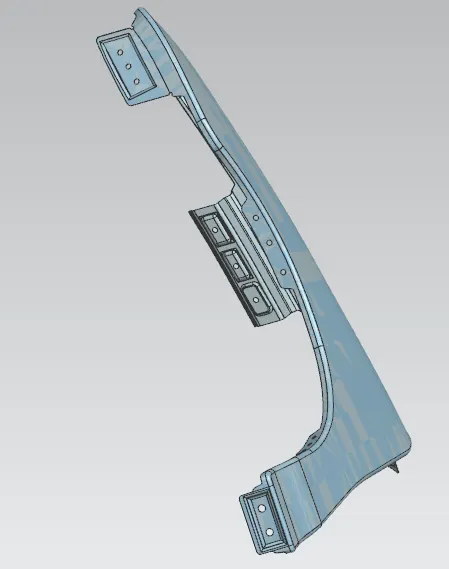
The thickness is 0.75 mm.
FUNCTIONS OF FENDER:
- Car fender limits the exposure of your body and engine to harmful external elements.
- It provides safety to the driver and passengers at the time of accidents or collisions. They are manufactured in a way to provide bend during front and side collisions.
- Fender flares are attached to ensure that both the body and engine have minimal contact with corrosive elements.
- It helps to avoid wind resistance and makes your car more aerodynamic.
CONCLUSION:
In the end, the front fender is Designed from the given skin data, and the master section is provided with Drip mounting, A-pillar, Sill, Bumper, and Splash mountings using NX as a CAD tool.