Fender Design
Introduction
In British English, the fender is called the wing; this may refer to either the front or rear fenders. However, in modern uni-body vehicles, rear fenders may also be called quarter panels.
In modern Indian and Sri Lankan English usage, the fender is called a mudguard.
A fender is the part of an automobile, motorcycle, or other vehicle body, installed over the wheel, which frames a wheel well (the fender underside).
Its primary purpose is to "fend off" sand, mud, rocks, liquids, and another road spray from being thrown into the air by the rotating tire and that scratches the coat of the vehicle. It could cause a vehicle's coat to rust and chip off and would have to repaint the car every now and then, apart from having to wash it more often than is necessary.
Nowadays considered for aerodynamic purposes also. Fenders are designed to minimize wind resistance and make the vehicle more aerodynamic.
Fenders are also a safety feature. In the event of a front-end collision, the edges of the fender are designed to bend so that the engine is as protected as possible. This is why minor accidents are sometimes referred to as fender-benders. The modern materials of fenders are designed to crumple during a crash. By managing crash energy and directing it away from the passenger cabin and engine compartment, the vehicle's occupants are kept safe.
Designing and modeling the front fenders
Front fender panels are located on the sides of each front wheel. These panels typically cover the sides of the headlights to the hinge of the driver and passenger doors on the A-pillar. They run vertically from the hood to the wheel well. The front fender is of two types. They are,
- Full bumper type
- Half bumper type
Full bumper type
For understanding, some examples of full bumper-type fenders are shown in the figure.1
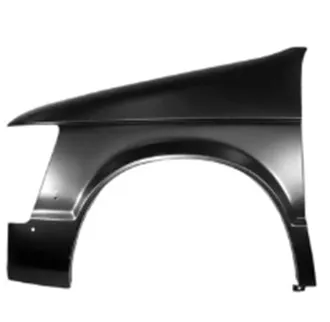
Half bumper type
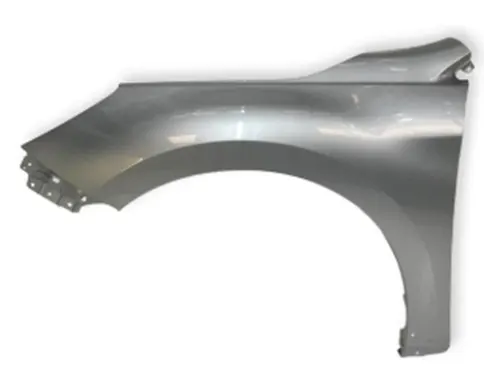
Half bumper type is preferred over the other type because, during manufacturing, the material should be used in a more efficient way to reduce the production cost significantly. Here the material used is less when compared with the full bumper type and so the weight is also less when compared with the full bumper type.
Some examples are shown in figure.2, to understand the half bumper type.
The front fender consists of 5 regions that help to mount the fender with the car.
- Body
- Drip
- Bumper
- Cowl
- Sill
Fasteners are used to mount the fender with the car's body
It is a critical area, where the fender is mounted with the hood of the car. A master sketch is used here to design the drip area as it has many criteria that are to be followed while modeling.
The drip area is to be positioned in such a way that a necessary clearance should be maintained from the ends, with reference to the above figure the clearance is provided. However, the image shows the minimum clearance values, the clearance may change based on the size of the car, parent car, and other factors.
Other regions like Bumper and Cowl are designed to mount the fender with the car with the help of fasteners to reduce the NVH factor.
Here the following images show the mounts that are created to connect the fender with the car.
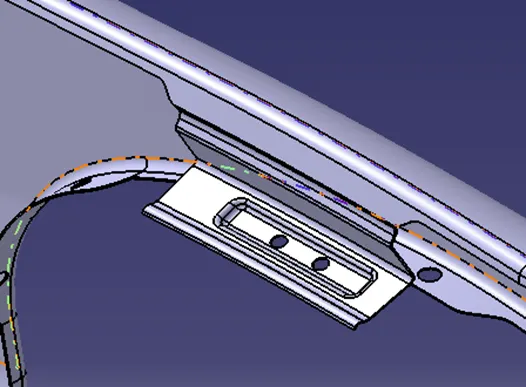
Figure 5: Drip mounts area
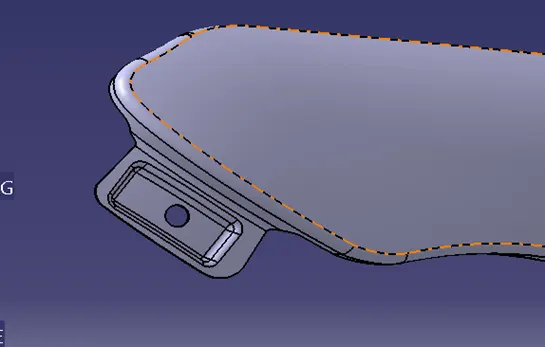
Figure 6: Bumper mount region
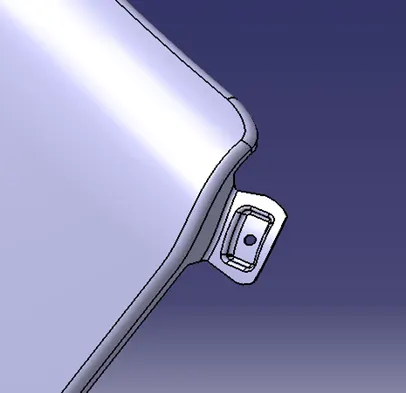
Figure 7: A-pillar / Cowl mount region
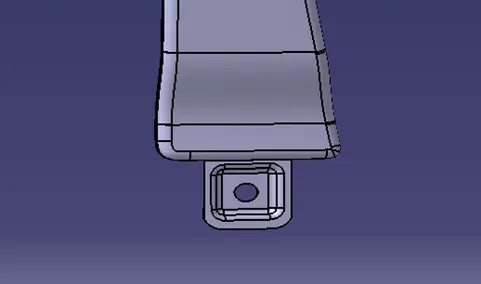
Figure 8: Sill mount area
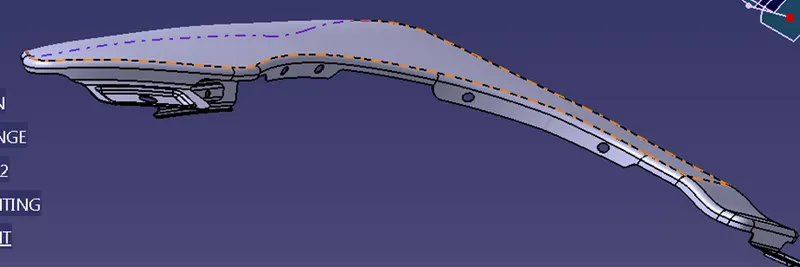
Figure 9: Splash cover / Baffle mount
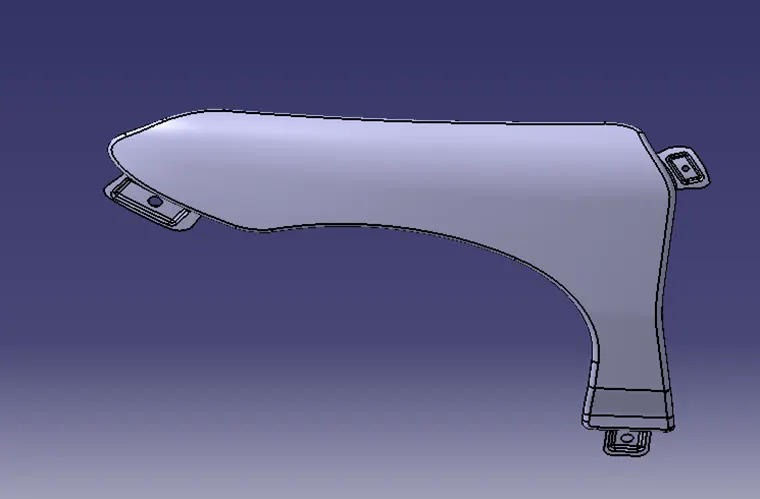
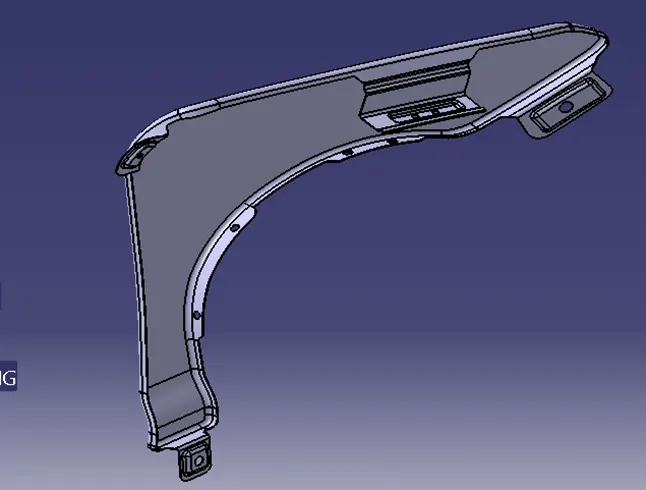
Figure 11: Fender
Conclusion
Thus the Drip Area, Bumper mount region, A-pillar mount region, and Sill Mount area were designed for the Fender from the styling surface provided.