Exhaust Port Challenge
AIM: To perform CHT analysis of Exhaust port.
Conjugate Heat Transfer(CHT Analysis):
The Conjugate Heat Transfer (CHT) analysis type allows for the simulation of heat transfer between solid and fluid domains by exchanging thermal energy at the interfaces between them.
Typical applications of this analysis type exist as, but are not limited to, the simulation of heat exchangers, cooling of electronic equipment, and general-purpose cooling and heating systems.
More specifically conjugate heat transfer (CHT) analysis can accurately predict heat transfer by simultaneous solving all the relevant solid and flow field heat transfer processes, for example: conduction through solids, free and forced convection in the gases/fluids and thermal radiation.
The CHT approach has an advantage over FE thermal analyses in that wall heat transfer coefficients and their local variations on surfaces are directly calculated within the model rather than based on simplified empirical calculations. The CHT approach therefore has benefits for those applications where heat transfer is either non-uniform or difficult to calculate empirically.
The conjugate heat transfer methods have become a more powerful tool for modeling and investigating nature phenomena and engineering systems in different areas ranging from aerospace and nuclear reactors to thermal goods treatment and food processing, from complex procedures in medicine to atmosphere/ocean thermal interaction in meteorology, and from relatively simple units to multistage, nonlinear processes.
ANSYS SETUP:
CASE-I
Geometry:
Import the exhaust model in Space Claim.
Seperate the fluid and solid components.
Share topology to avoid errors in interpretation.
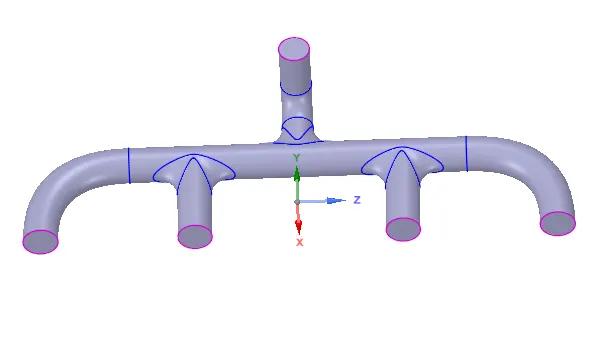
Fluid Volume:
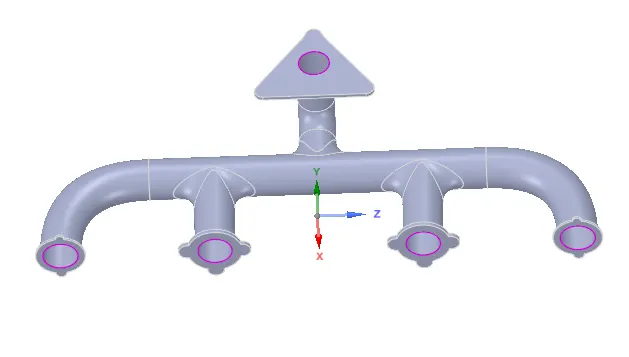
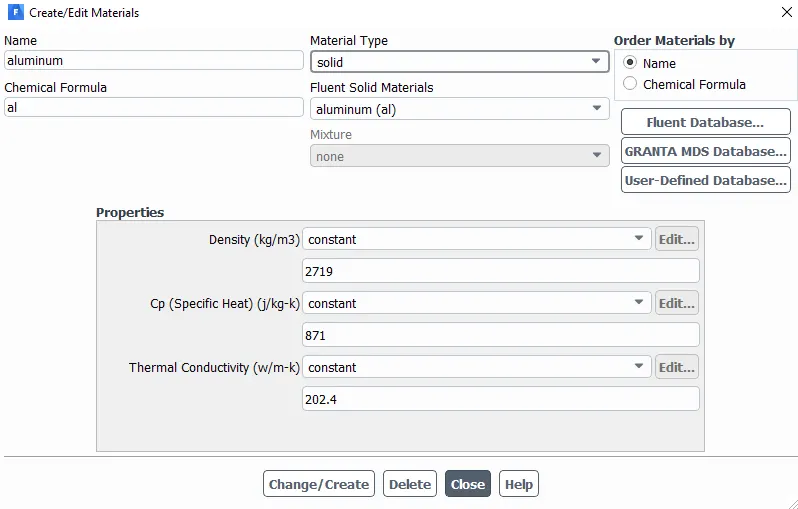
Solid Volume:
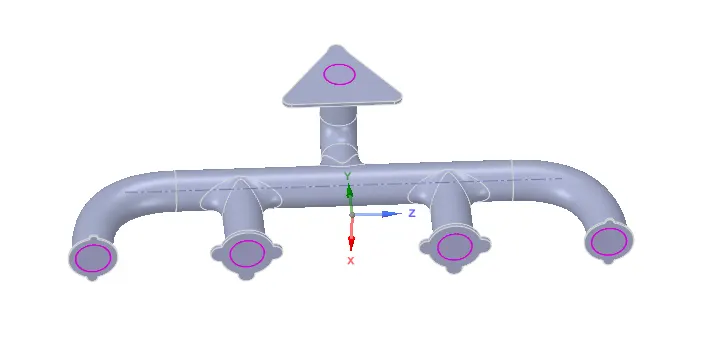
Final Geometry:
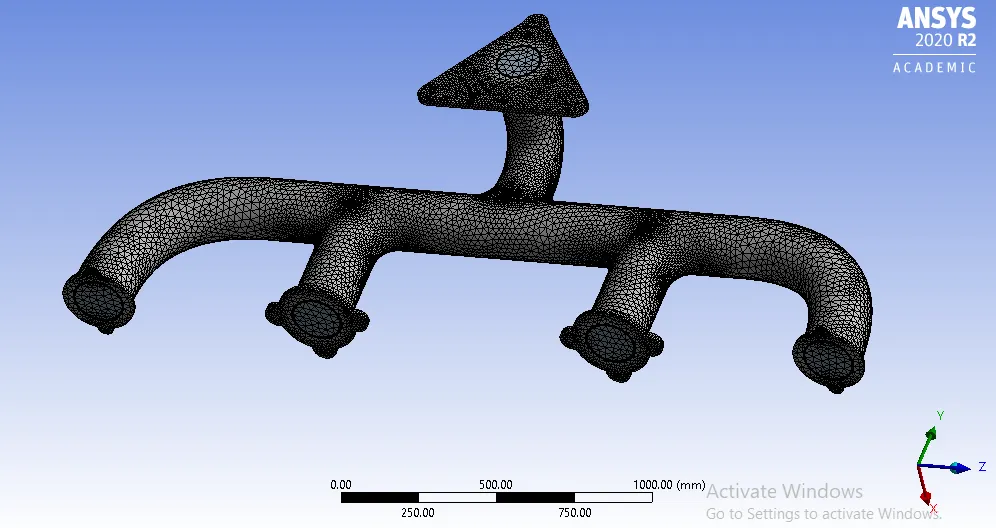
Mesh:
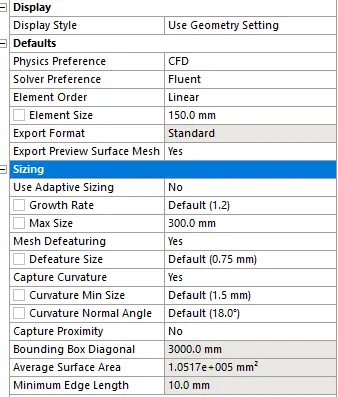
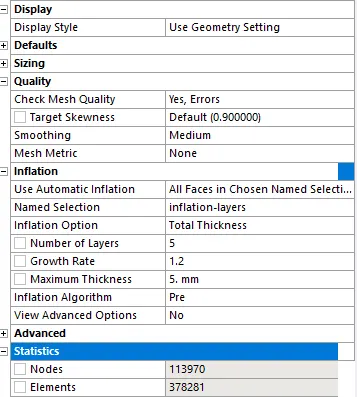
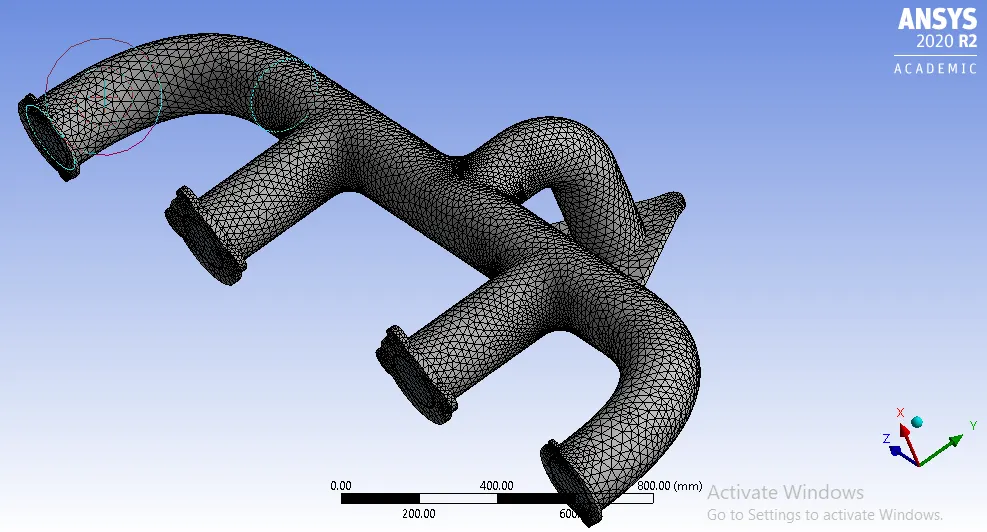
The following figure is the generated mesh of Exhaust Port.
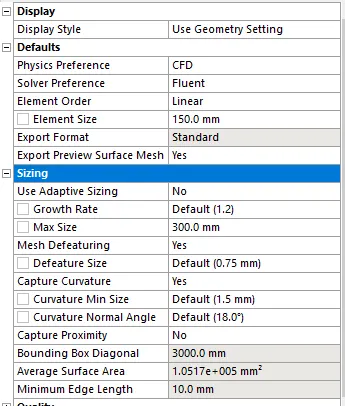
Mesh Details:
Named Selections:
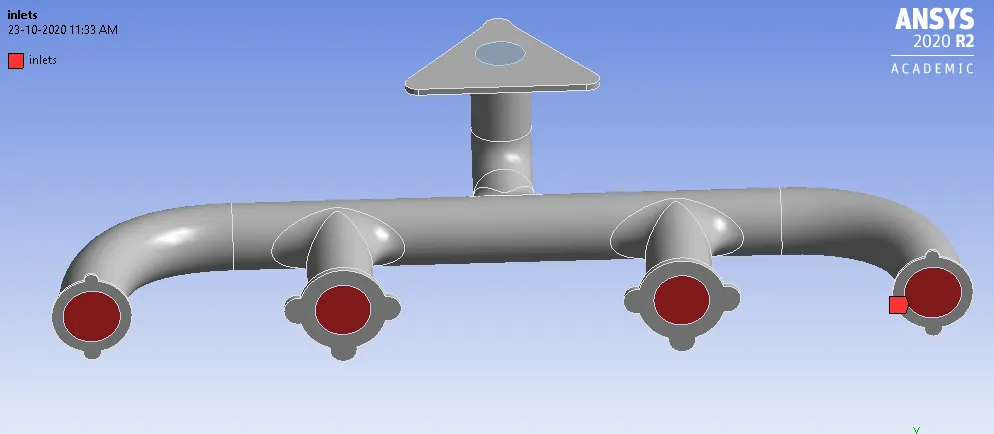
Inlet of Exhaust Port:
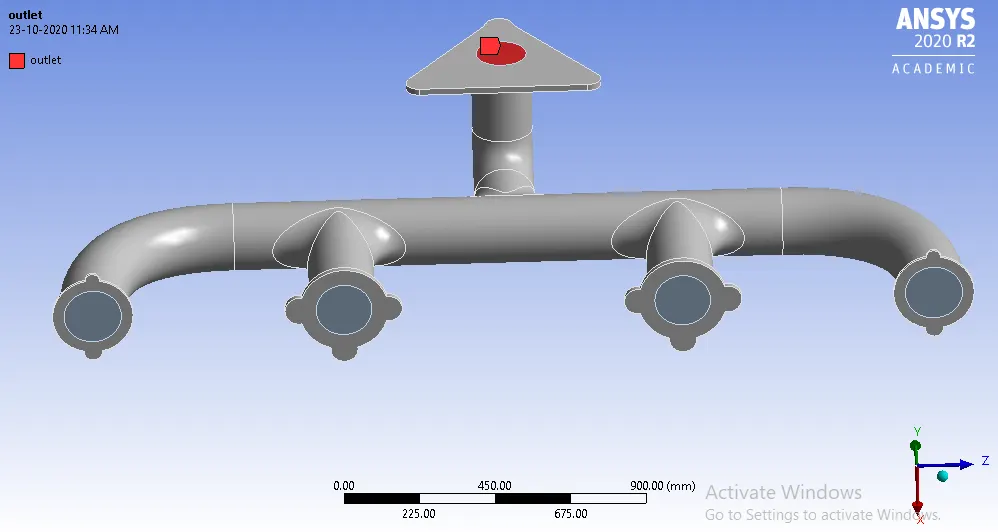
Outlet of Exhaust Port:
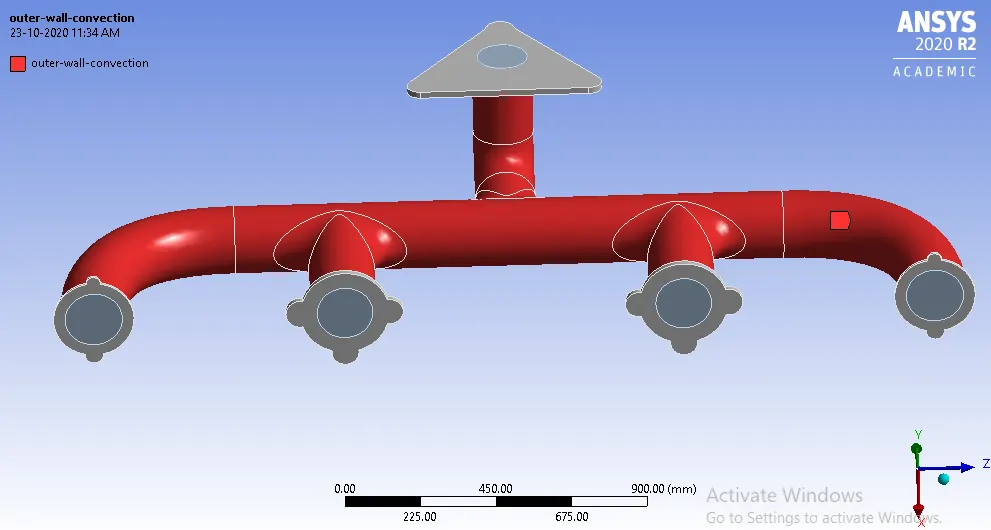
Outerwall Convection:
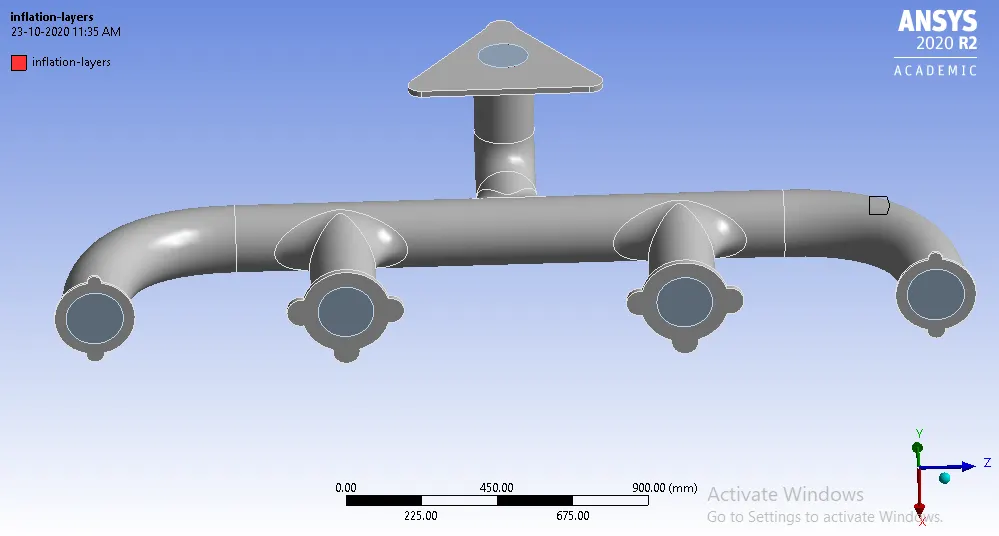
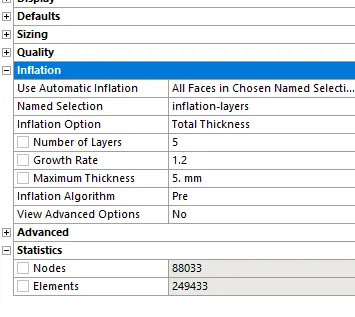
Inflation layers:
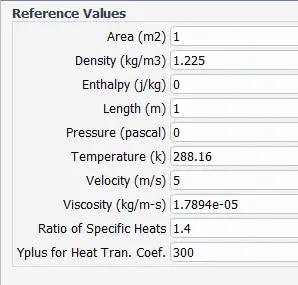
SETUP:
* Pressure based solver and Absolute velocity formulation is used with Steady state.
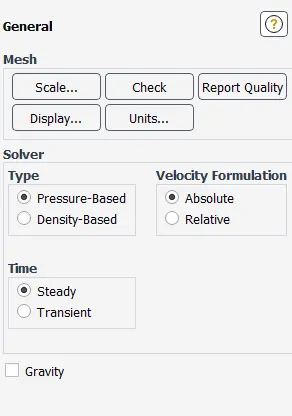
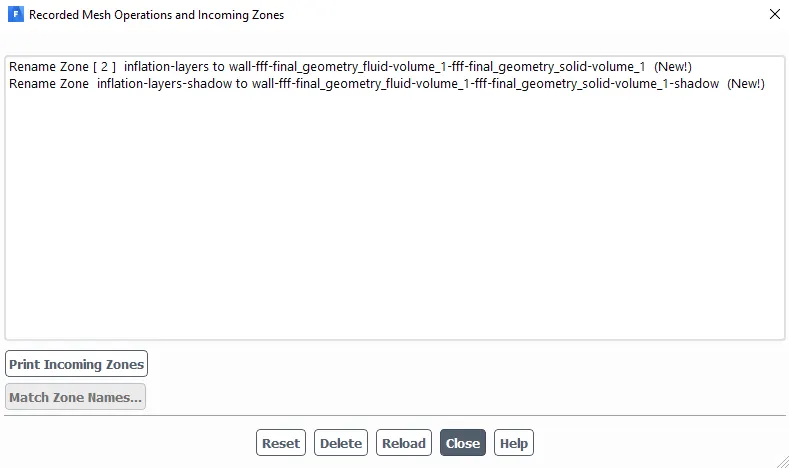
Matching zones should be checked before running the simualtion to avoid errors and to get exact values.
Materials Used:
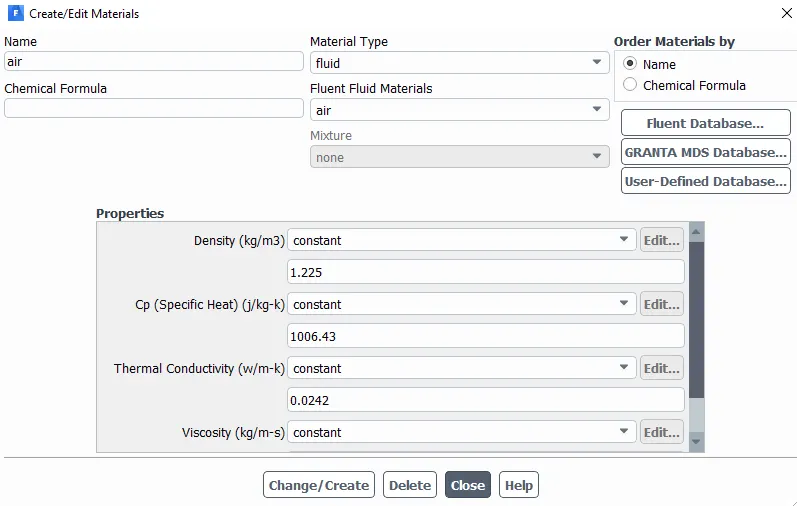
Fluid:
Solid:
Results:
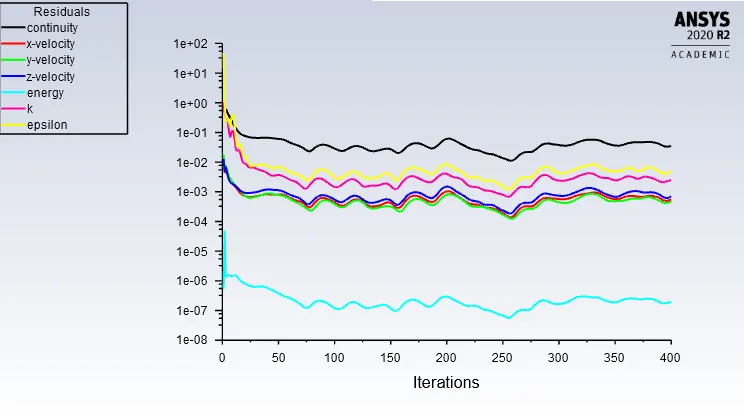
Residuals:
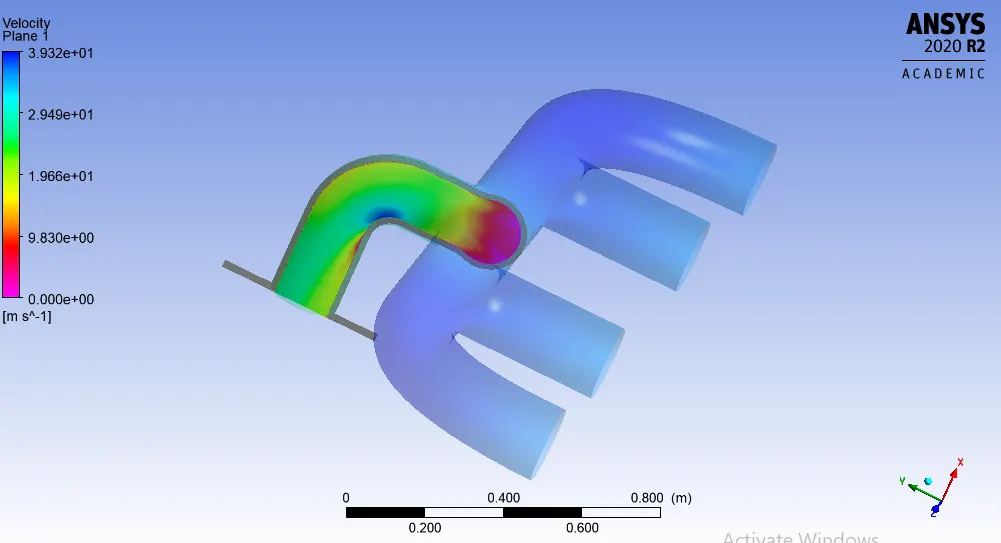
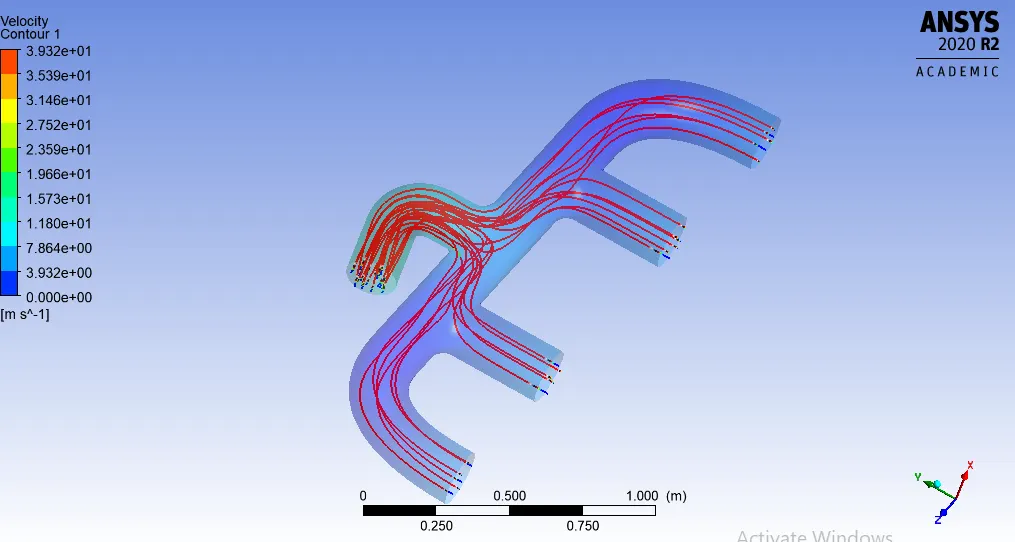
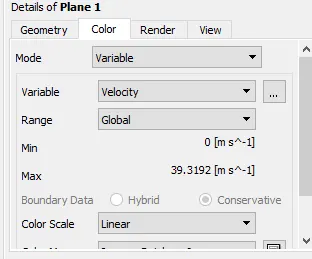
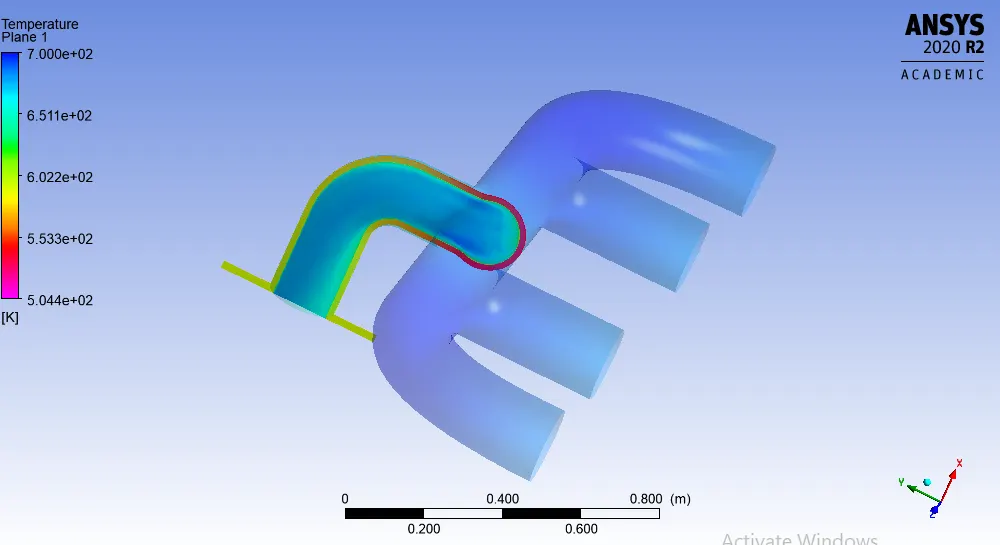
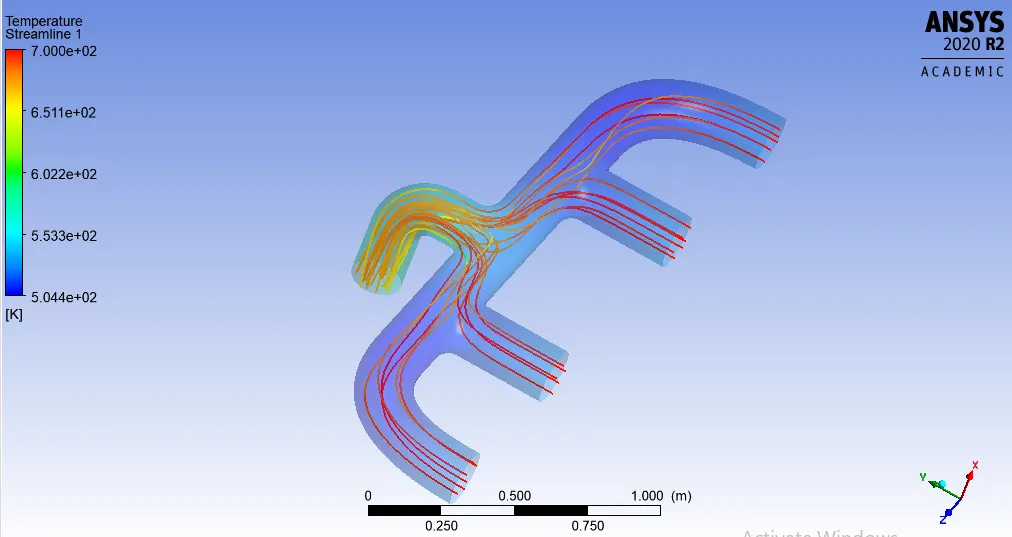
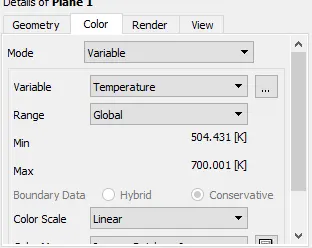
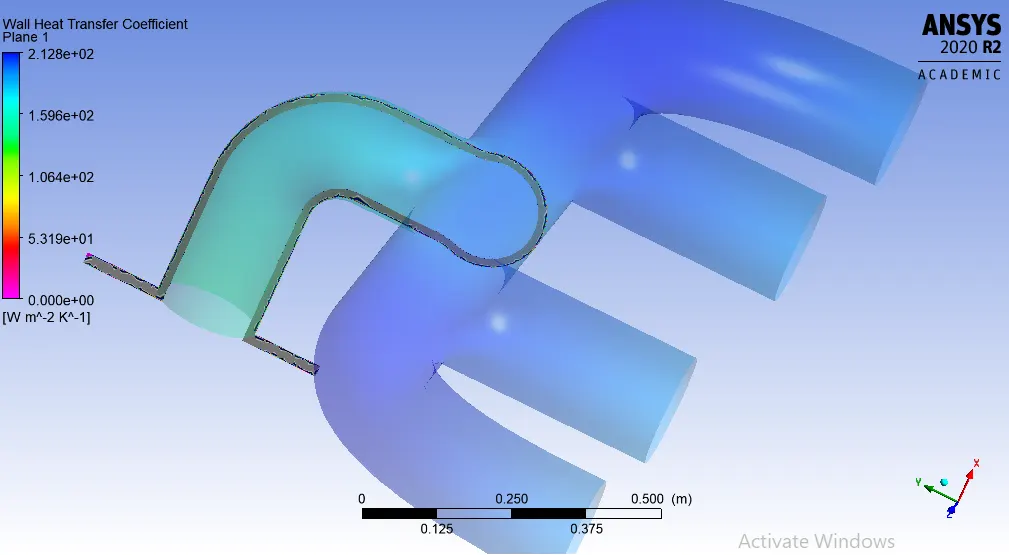
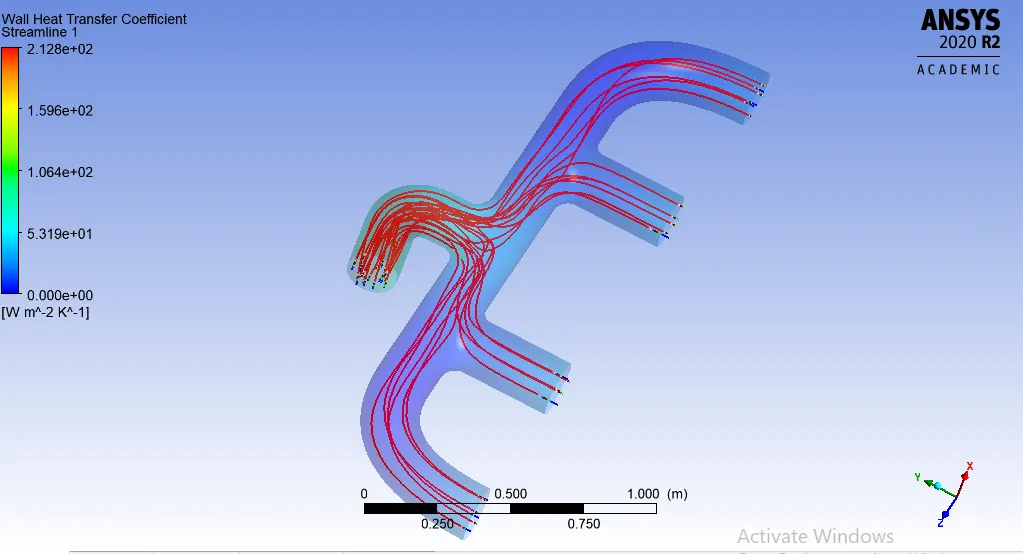
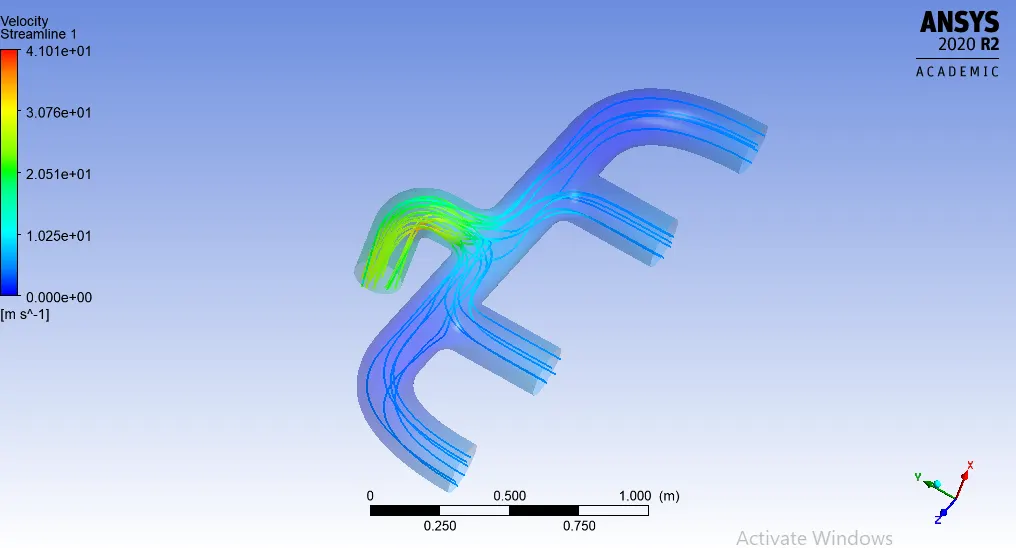
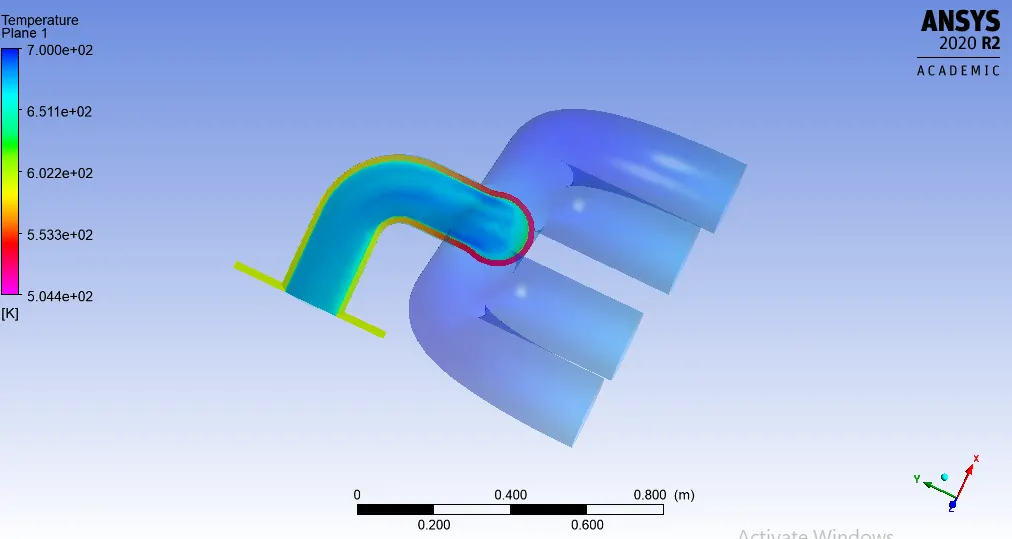
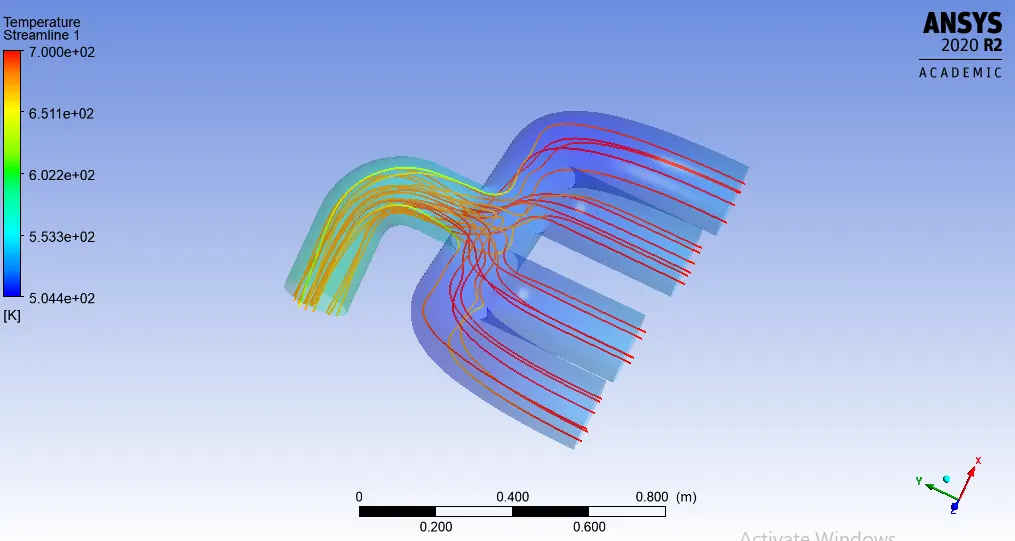
The following results shows the values of velocity, temperature and wall heat transfer coefficient at respecteda areas.
Velocity:
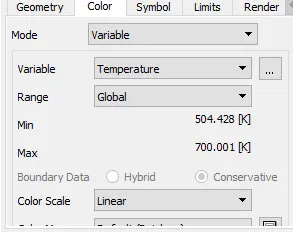
Temperature:
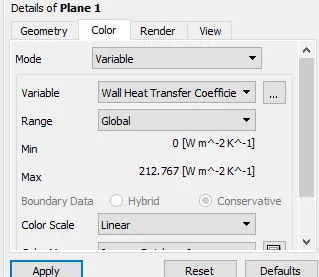
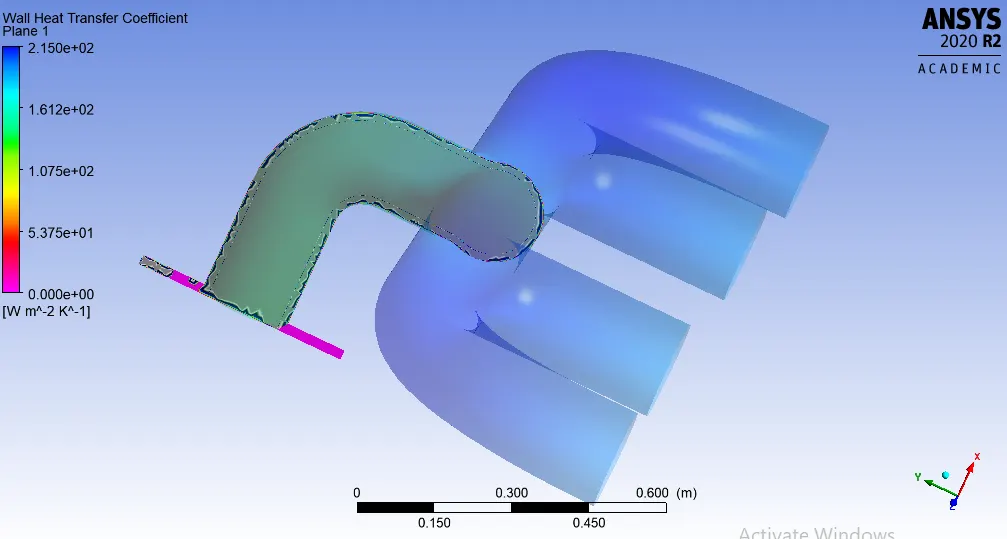
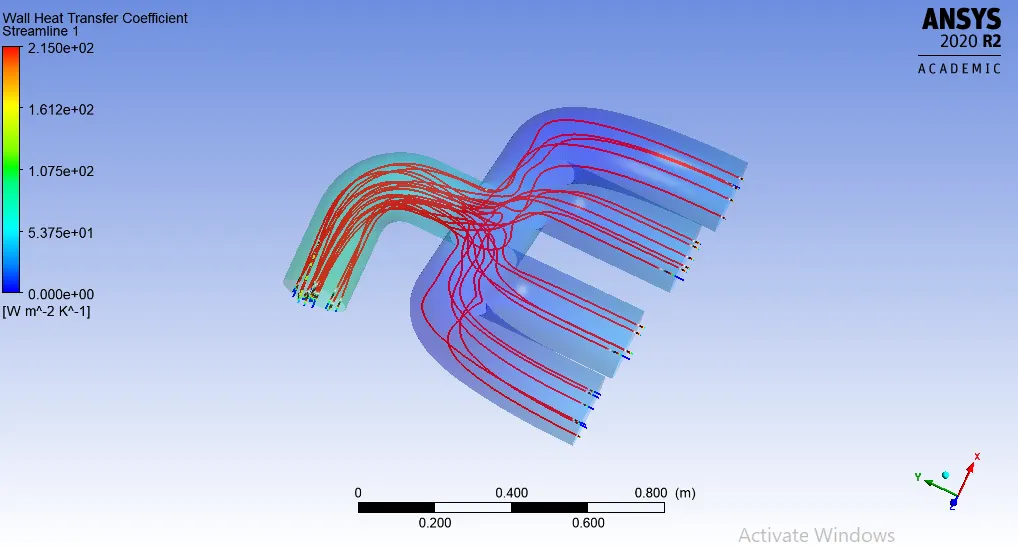
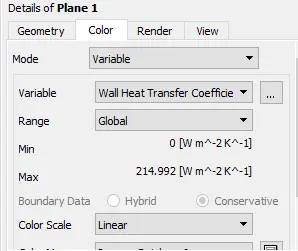
Wall Heat Transfer Coefficient:
ANSYS SETUP:
CASE-I
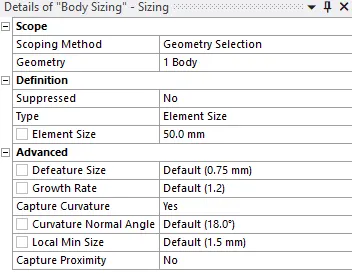
Mesh:
Mesh details:
Results:
The following results shows the values of velocity, temperature and wall heat transfer coefficient at respecteda areas.
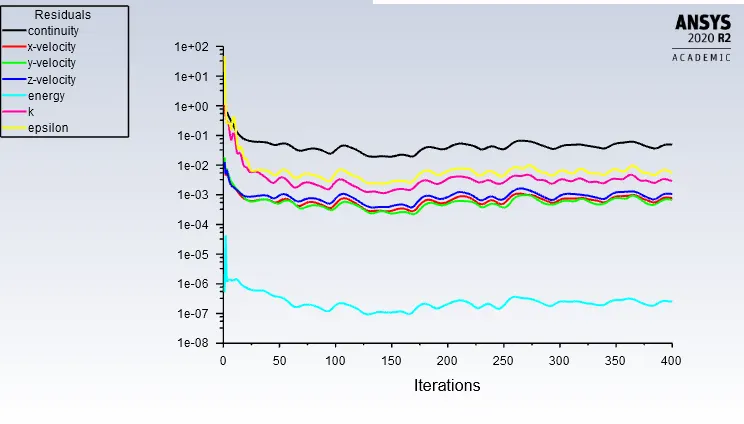
Residual:
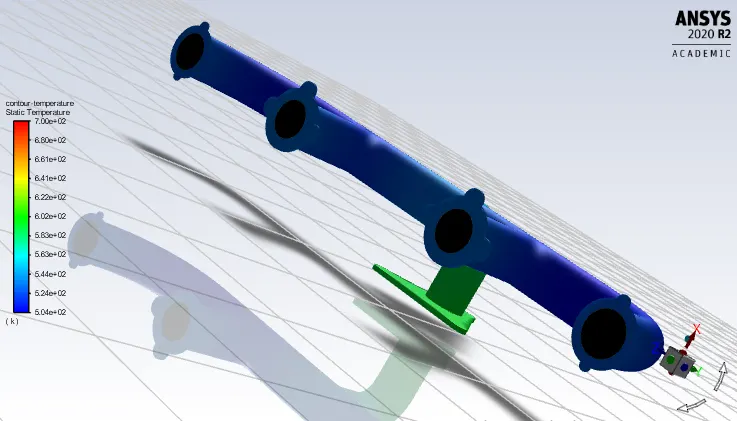
Temperature Contour:
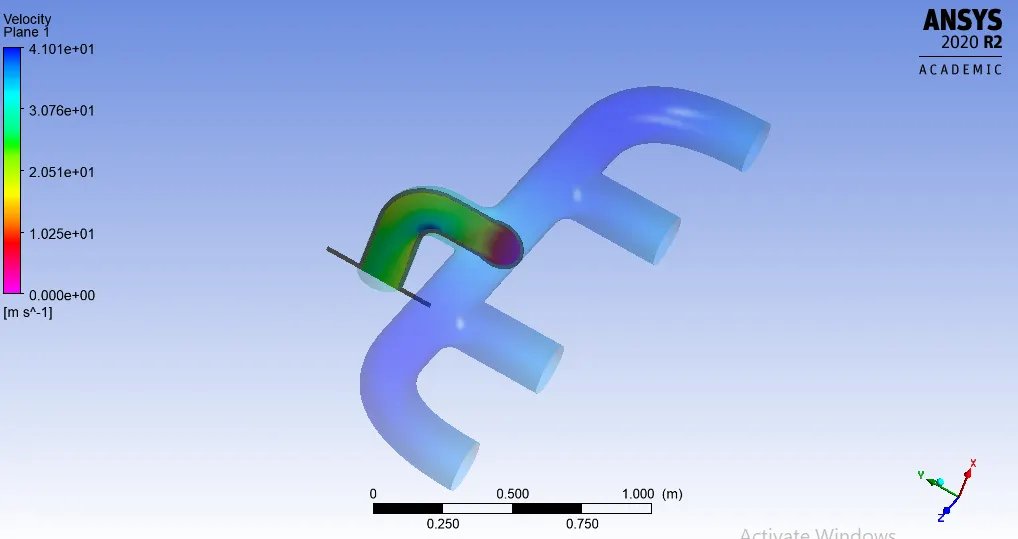
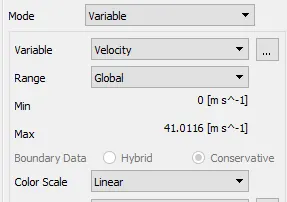
Velocity:
At plane
StreamLine
Temperature:
at plane:
StreamLine
Wall Heat Transfer Coefficient:
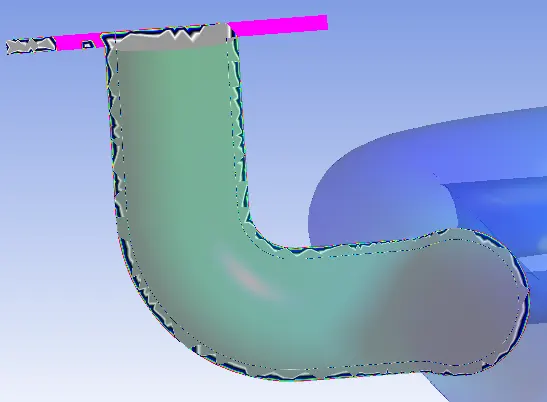
at plane:
streamline:
Grid Independency:
The velocity, temperature and Wall surface heat transfer coefficient results are already mentioned.
Case-1:
Case-II:
To verify Heat Transfer Coefficient:
Heat transfer coefficient can be verified by using Nusselt number.
Nusselt Number is given by Nu = Re.Pr
where, Re - Reynolds Number and Pr - Prandtl Number
Re increases with increase in velocity which in turn will increase Nusselt number.
also, Nu = Convective heat transfer / Conductive heat transfer = h/k/L
when velocity increases, convective heat transfer will also increase.
Accuracy:
Accuracy depends on:
1. No. of elements and element size
2. Inflation layers
3. Mesh refinement
4. Y+value
5. Material Properties
Conclusion:
| Parameters | Case-I | Case-II |
| Velocity | 39.312 | 41.0116 |
| Temperature | 700.001 | 700.001 |
| Wall Heat Transfer Coefficient | 212.767 | 214.992 |
The effect of element size can be clearly observed in two cases.
The value of wall HTC slightly varies in both cases because of inflation layers.
The temperature and velocity values are nearly same.