Design of backdoor
Answer:-
Aim:
From the given CLASS A surface, create a Backdoor Design using Catia v5 software.
Provide the Reinforcements (Hinge axis, Gas stay, Wipper motor, Stricker) and Emboss defination (Design cosidretation)
OBJECTIVE:-
To create the following components of the backdoor panel from the given styling surface.
- Inner panel,
- The upper outer panel,
- Outer lower panel with the
- Hinge reinforcement (left and right)
- Gas stay reinforcement (left and right)
- Wipper motor
- Stricker
Description:-
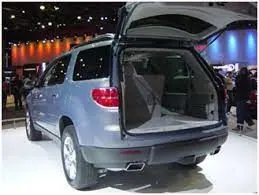
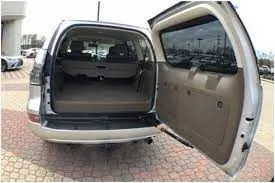
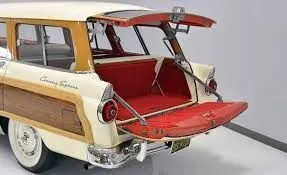
"Back Door" is a door or door system on the back end of a motor vehicle through which passengers can enter or depart the vehicle or cargo can be loaded or unloaded.
The door or opening of a cargo area may be hinged at the top, side & bottom. If the door hinged in the bottom it is called a tailgate.
1.Top mounted
2.Side-mounted doors
3.Bottom-mounted
Stricker:-
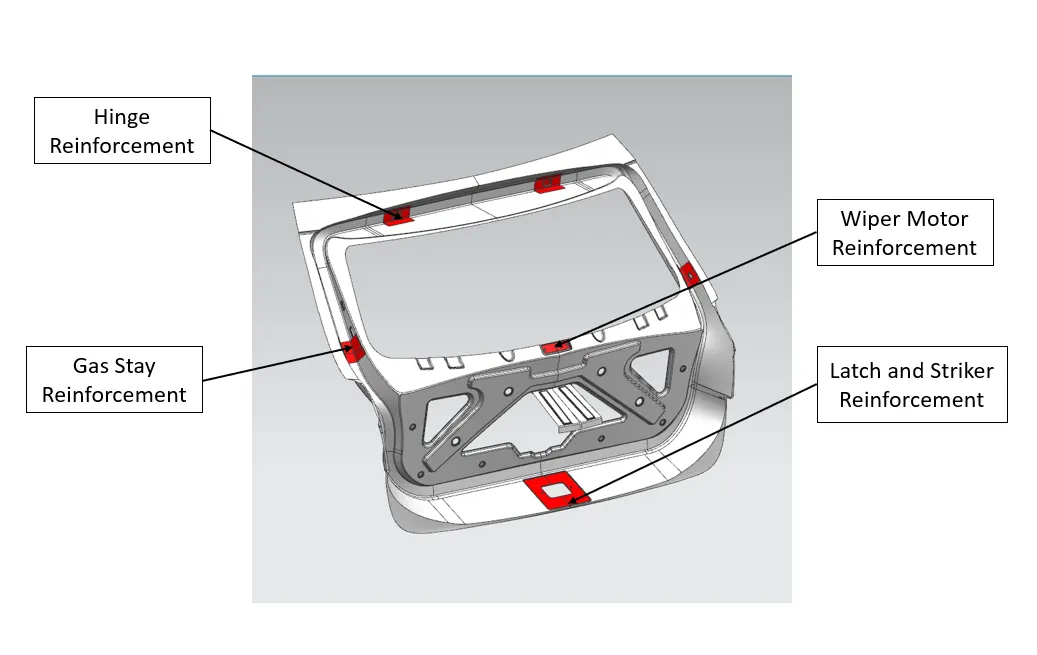
"Stricker" is a device employed to maintain the door in a closed position relative to the vehicle body with provisions for deliberate release (or operation).
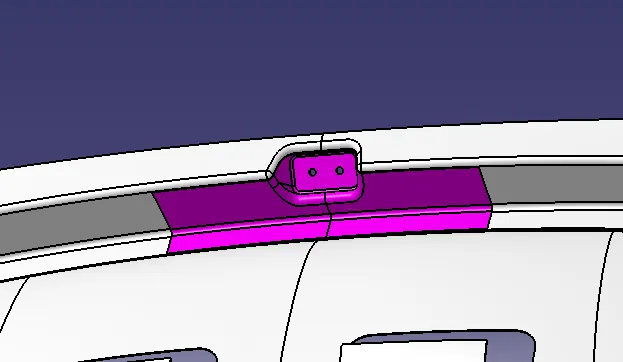
Hinge's:-
“Hinge” is a device used to position the door relative to the body structure and control the path of the door swing for passenger ingress and egress.
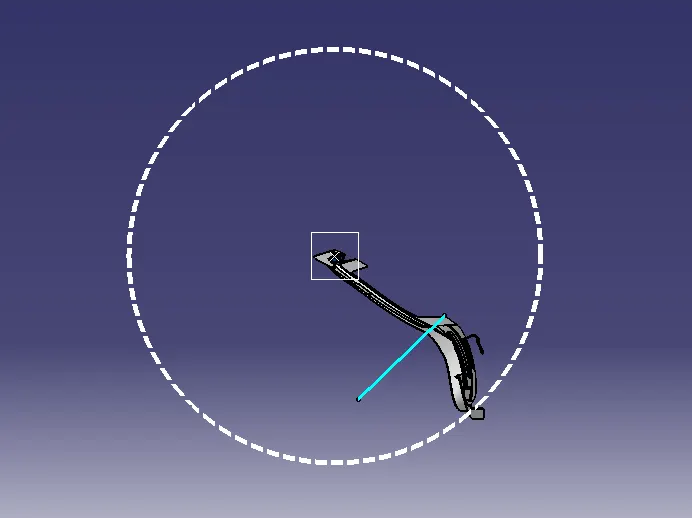
Gas Stay:-
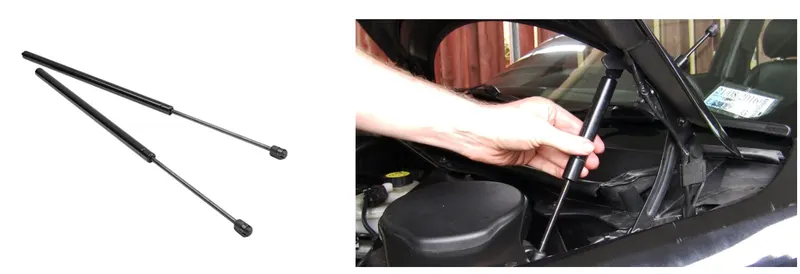
Gas Stay type backdoor is an ideal and most commonly used tailgate mechanism from lower segment car to luxury car segment. The ideal components of the tailgate consist of a hinge, door, gas stay, and some rubber beadings for sealing of the door.
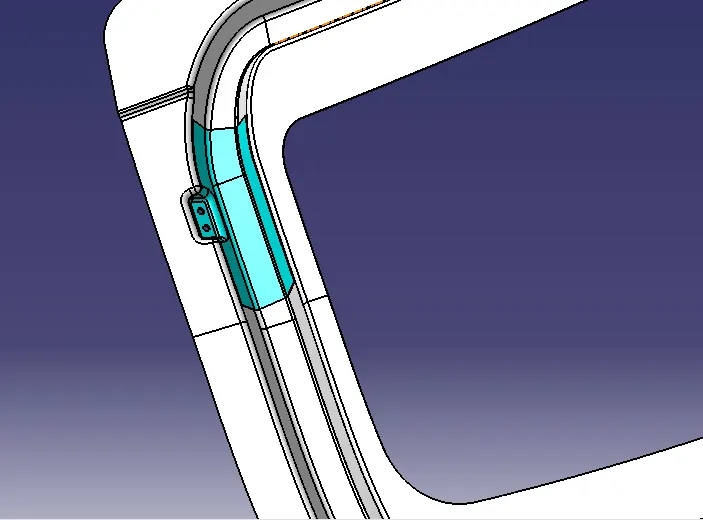
PROCEDURE:-
Given CLASS A surface-
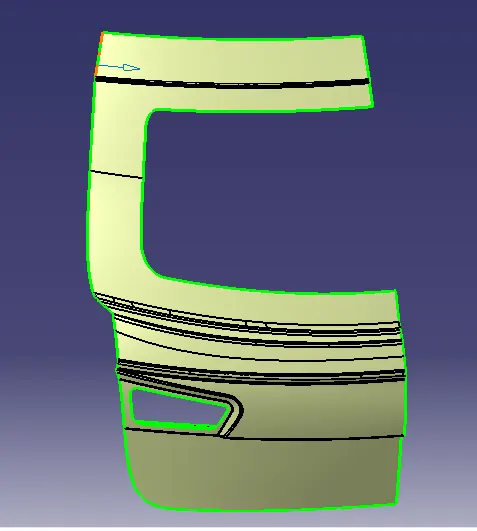
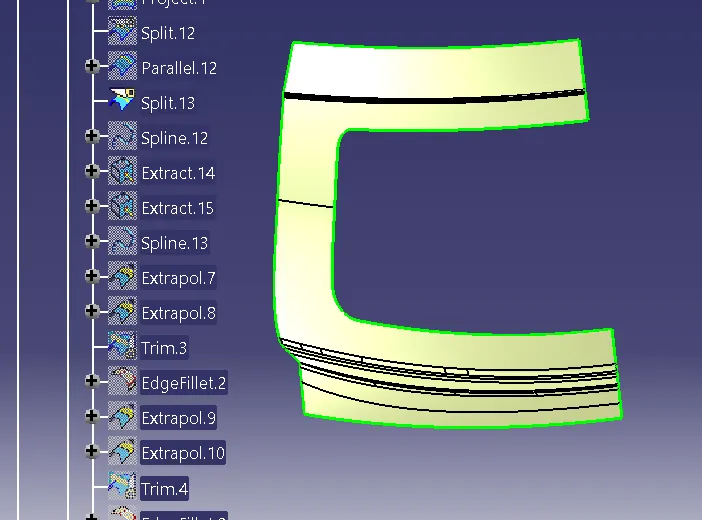
- The above CLASS A styling surface is an input for designing the backdoor panel.
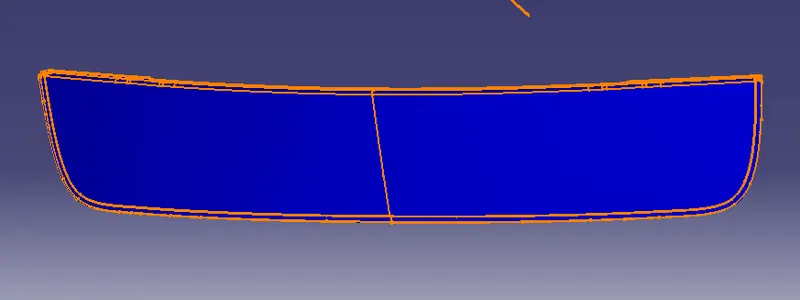
- The styling surface for the upper panel needs to be checked to have the proper connectivity with no gaps between them. As seen here the surfaces are not connected.
- To create the upper panel we use the Trim, Extrapolate, Multi-section and, Blend tools to join the styling surfaces.
HEMMING:-
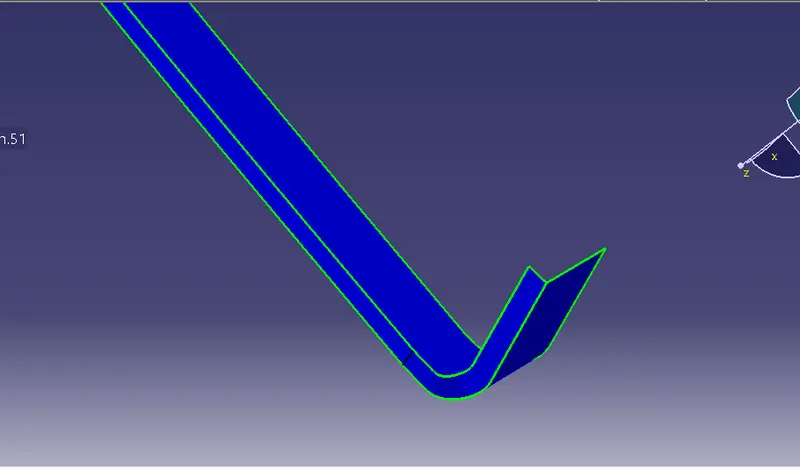
Hemming in automotive manufacturing is a cold process of joining an inner and outer panel by folding the flanges of the outer panel onto the inner panel, permanently clamping the inner panel in place. This process is used in the manufacture of doors, hoods, and decklids and can be accomplished using a traditional press or with a robotically controlled roller.
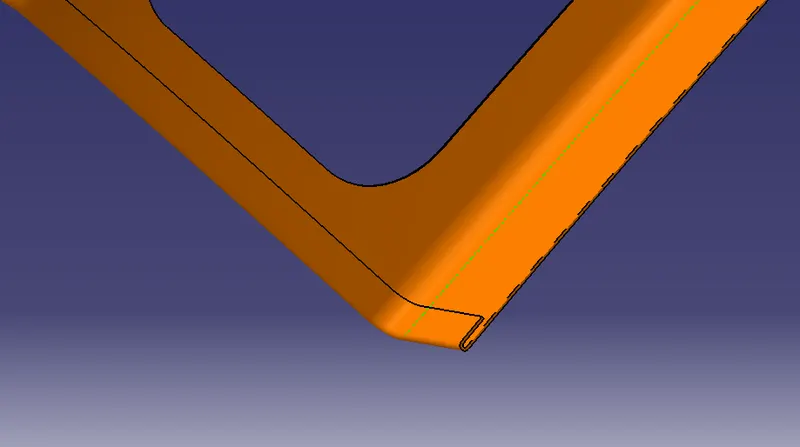
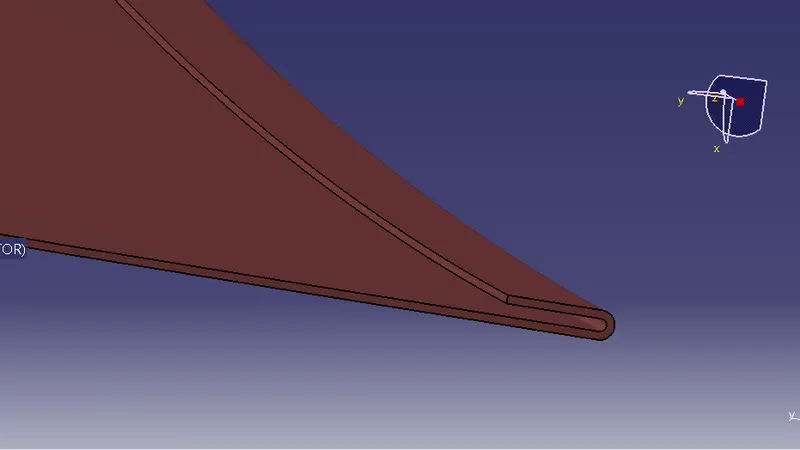
PROCESS:-
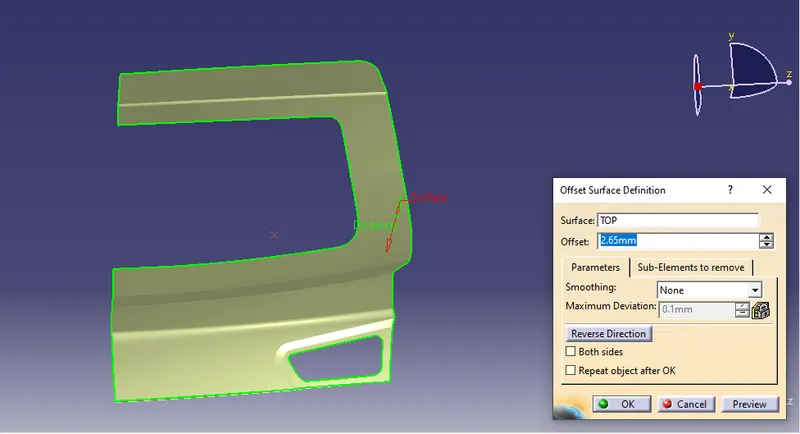
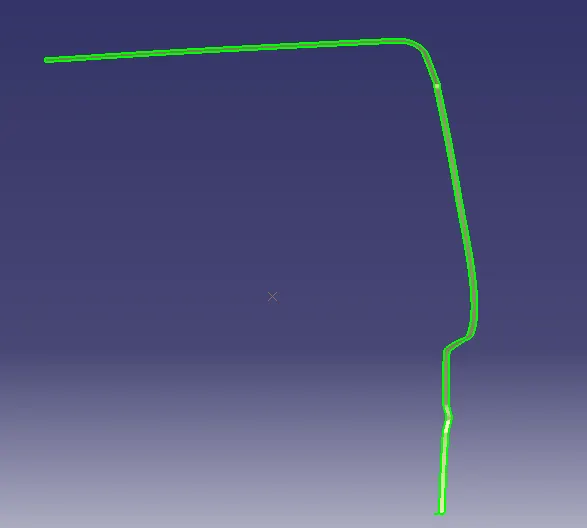
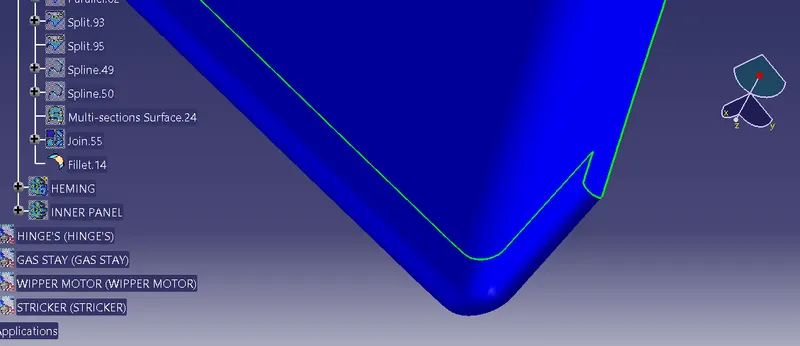
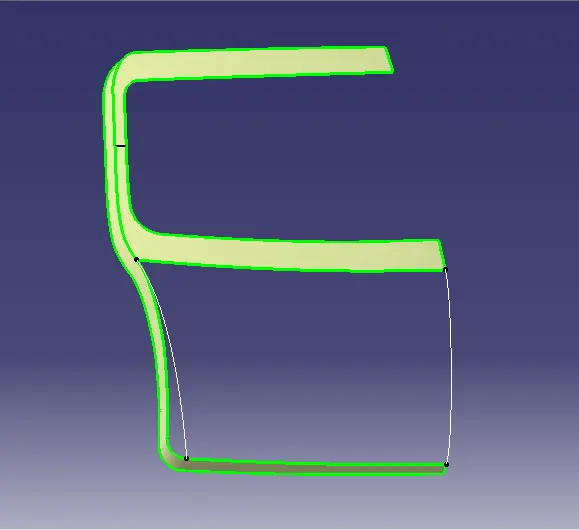
To create the hemming first, Multiple Extract and offset the outer panel by 2.65 mm (Outer panel Thickness- 0.75mm, Inner panel thickness 0.75 gap between Outer and Inner panel – 0.2mm, Hemming area bent region- 0.75mm, the gap between hem and Inner panel- 0.2mm)
SWEEP
SYMMETRY
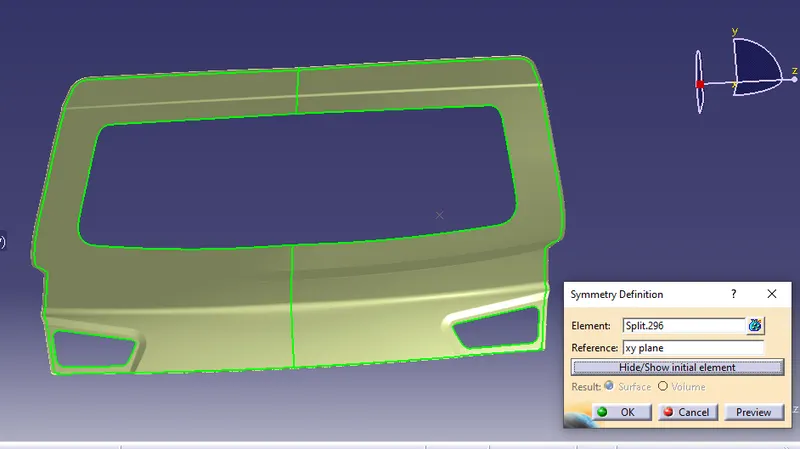
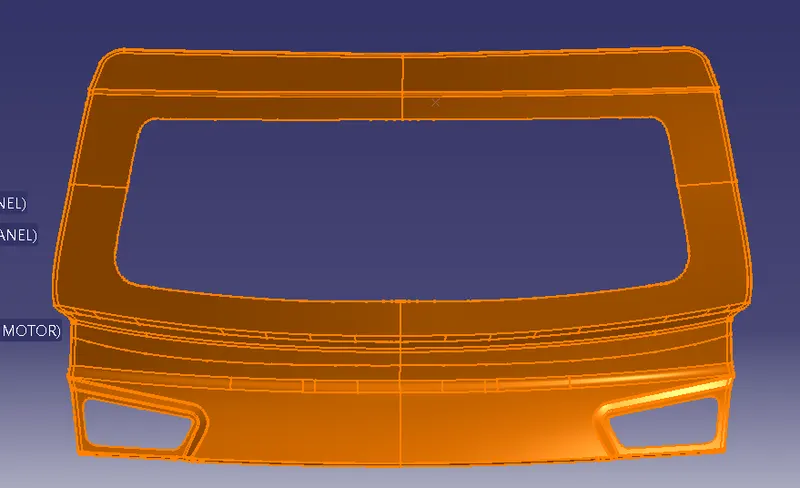
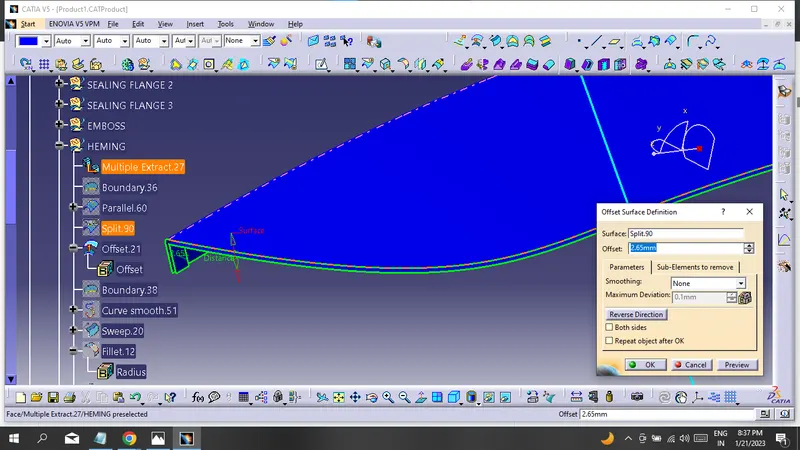
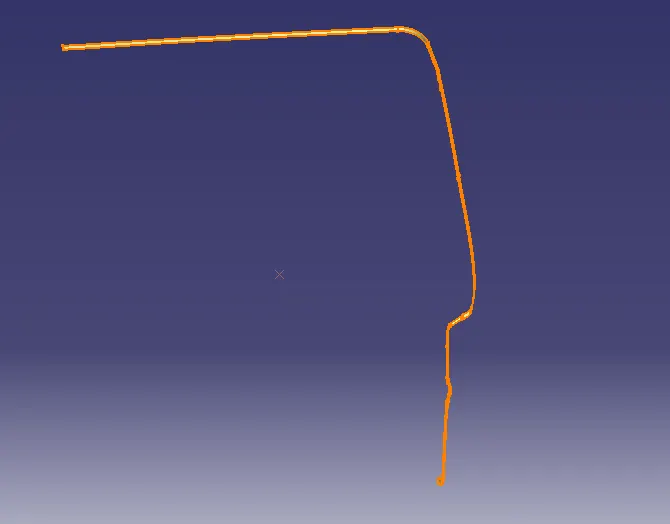
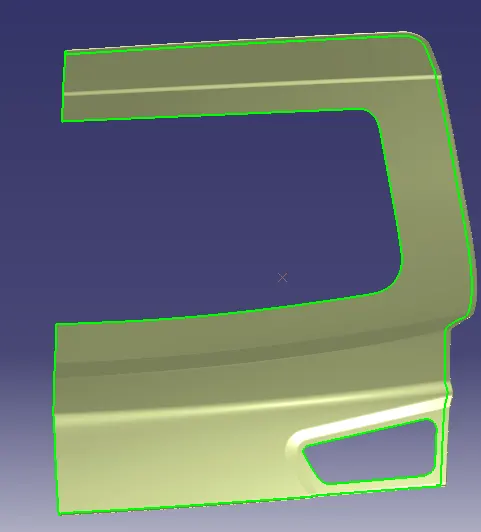
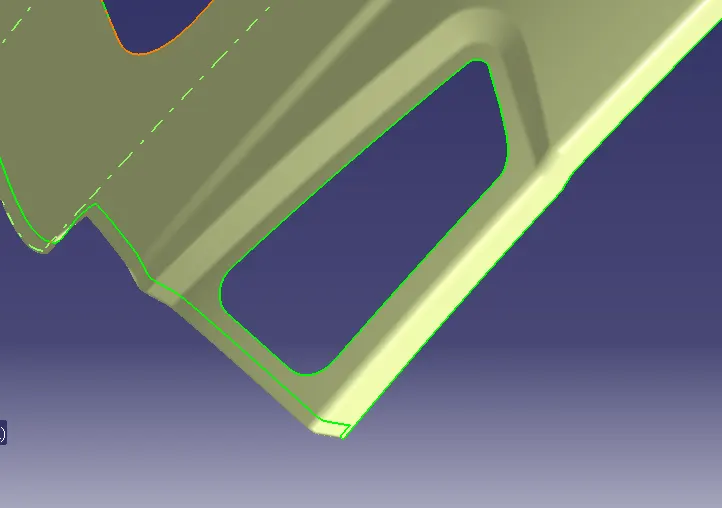
Create flange with the help of parllel curve and split tool's. Then use sweep command and Tantangent fillet.
TOOLING AXIS:-
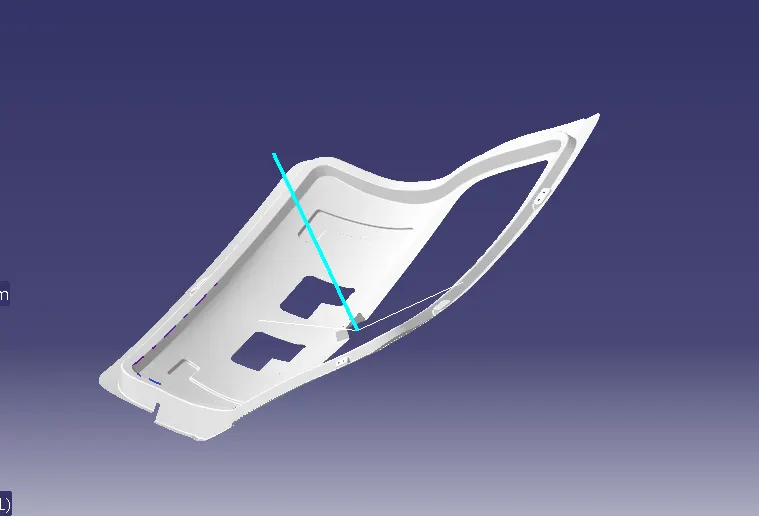
Create 2 line any corner and create bisecting line.
Bisecting line called are TOOLING AXIS.
LOWER OUTER PANEL:-
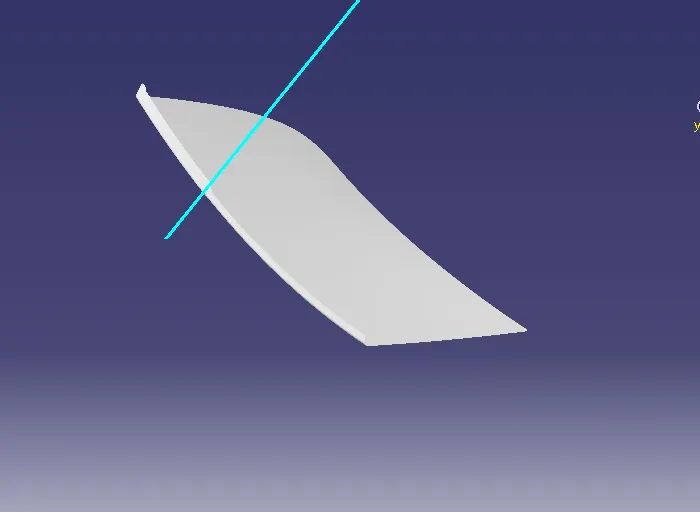
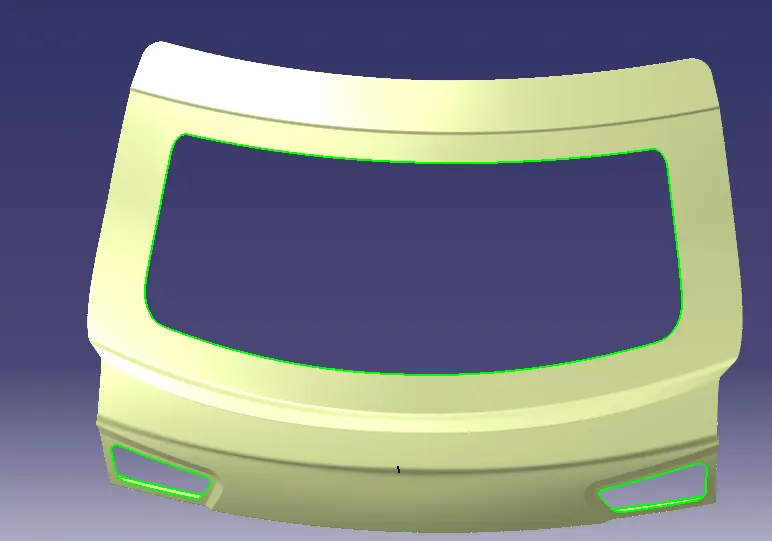
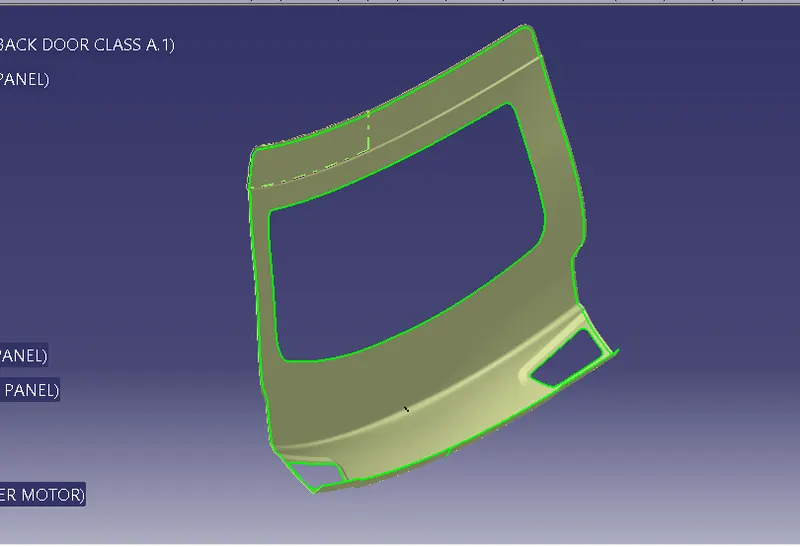
Lower outer panel class a surface is offset to 0.2mm since the upper and lower will be joined by spot welding. So both the surfaces were offset to 0.2mm and extrapolated followed by trimming.
UPPER INNER PANEL:-
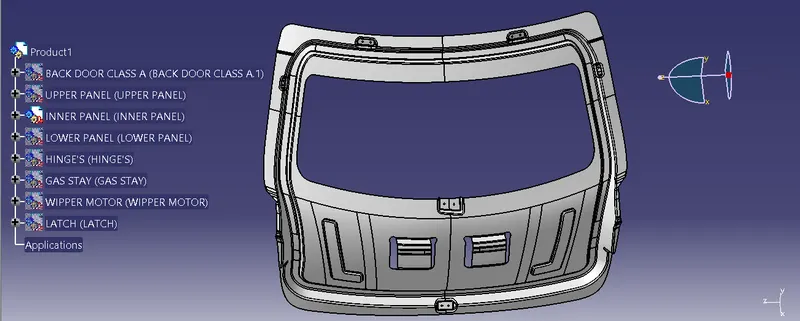
- The inner panel is a single body, unlike the outer panel that has two parts as upper and lower.
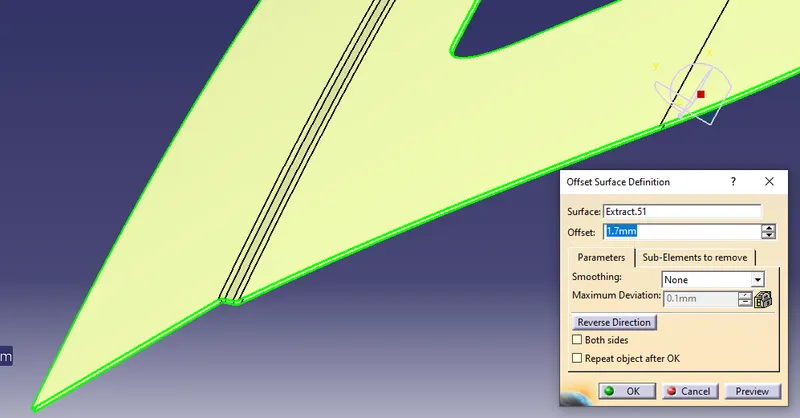
- For the inner panel, the outer panels are offset to the inner side by 1.7mm ( thickened outer panel 0.75mm, thickened inner panel 0.75mm, and 0.2mm gap.)Later on, the surface is again offset to 25mm downwards for the bottom flange of the panel.
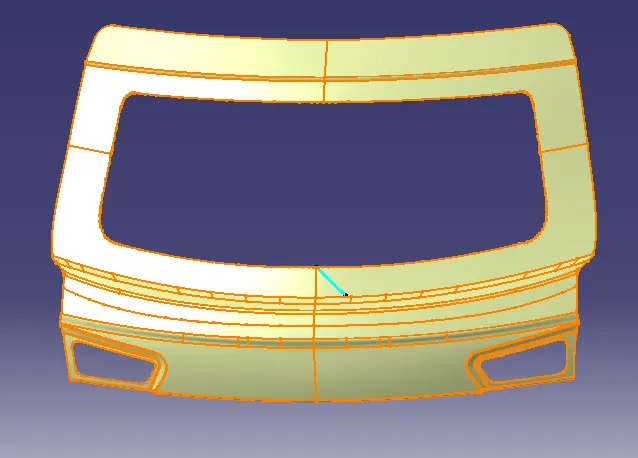
- Bottom flange width is taken here as 30mm. So for that parallel curve followed by split is used obtain the strip.
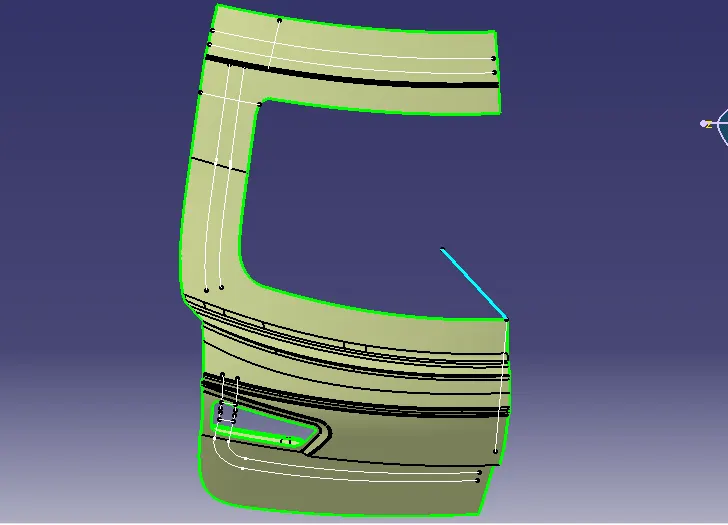
- After splitting, the small strips are connected by drawing the proper curve as the guide for the multisection surface.
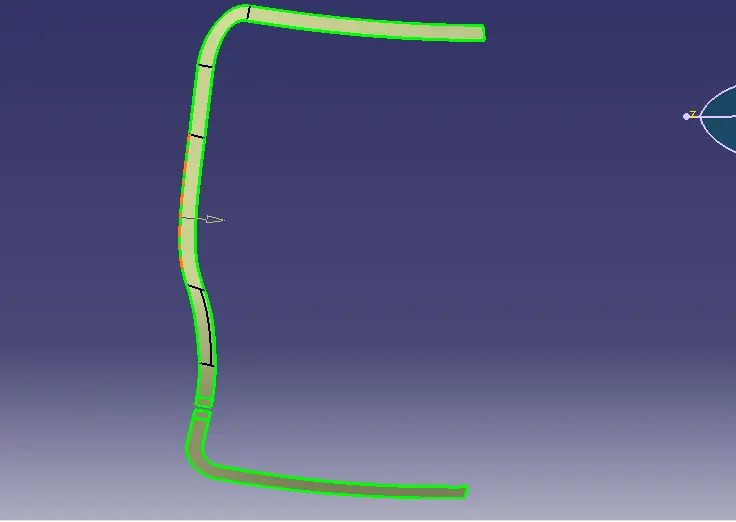
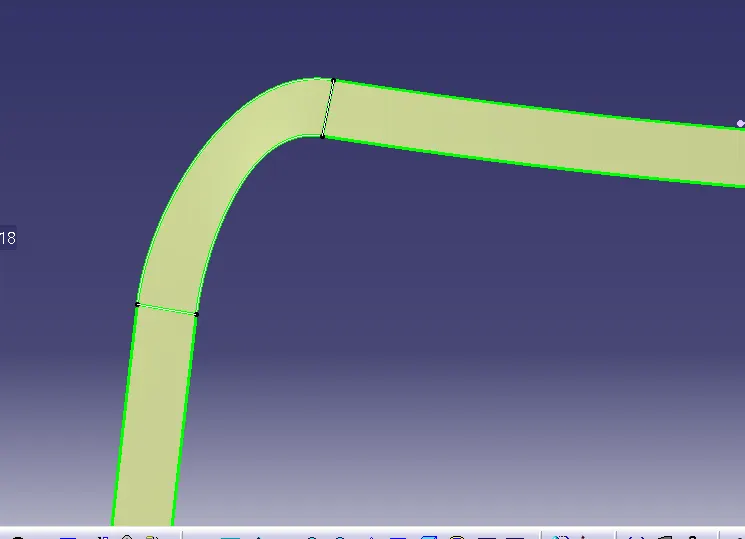
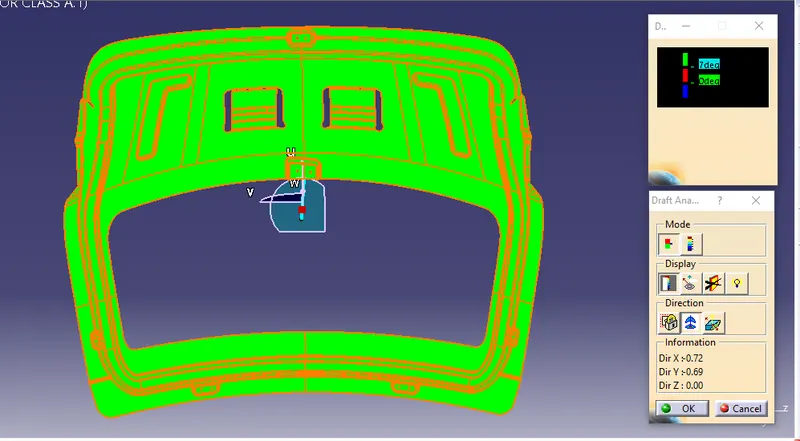
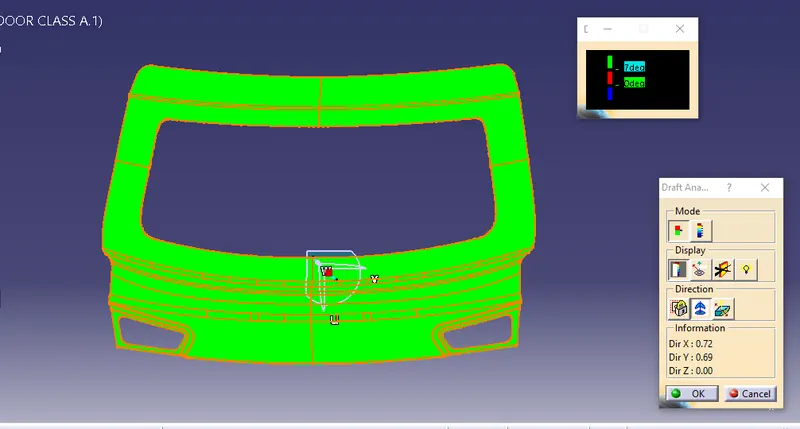
Later on, both the side edges are swept along the tooling direction with the draft angle of 29 degrees
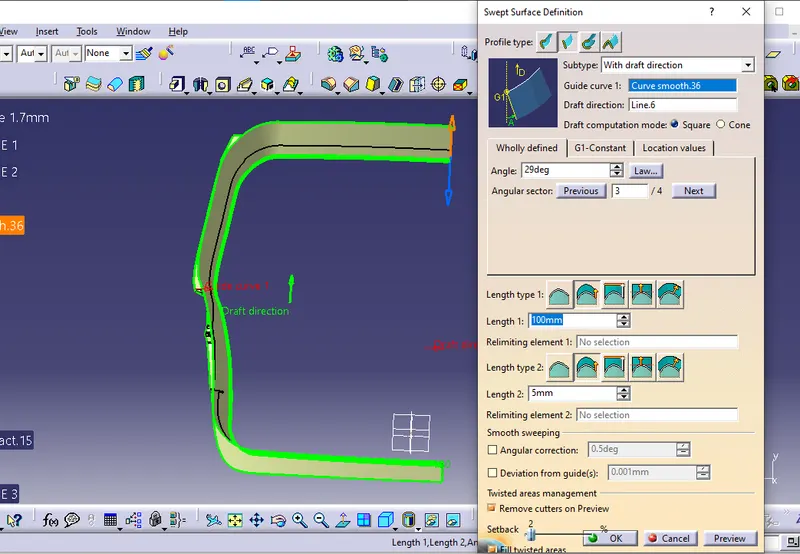
Then, the swept surface is trimmed with the surface offset by 1.7mm from the parent surface.
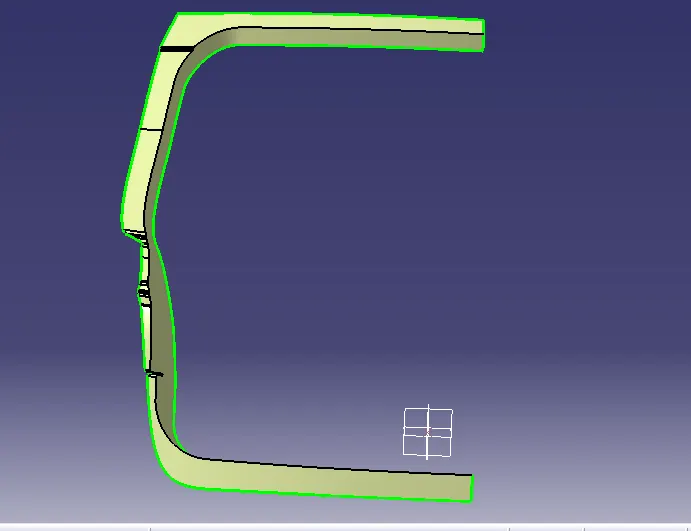
The lower region surface of the inner panel is created using the multisection and then extrapolating and trimming. The corners were provided with the appropriate fillets.
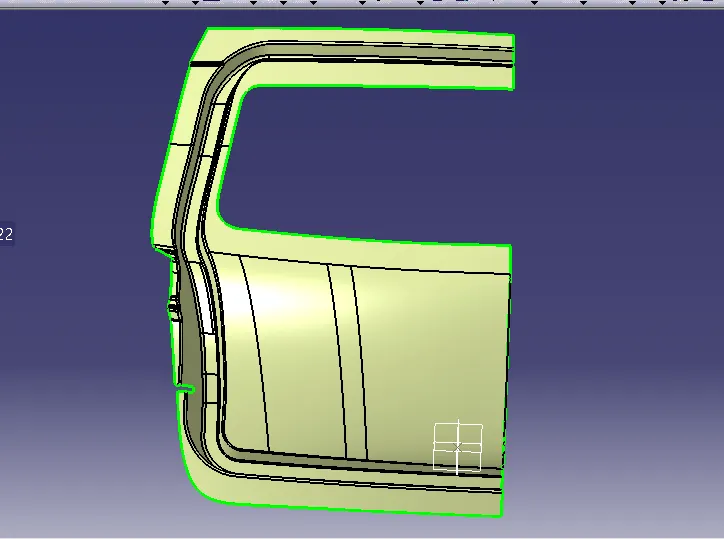
- Create a Sketch of rectangular shape and provide a cut out on the surface. Now, use the sweep option to create the surface perpendicular to the base surface.
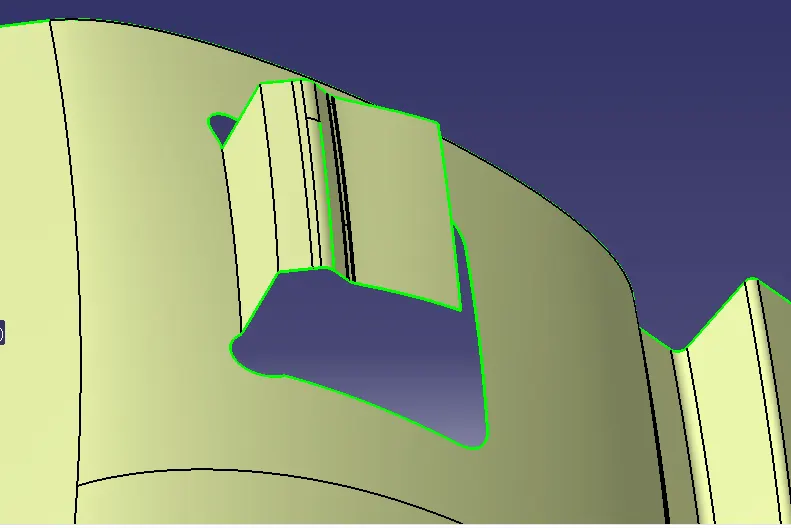
EMBOSSING:-
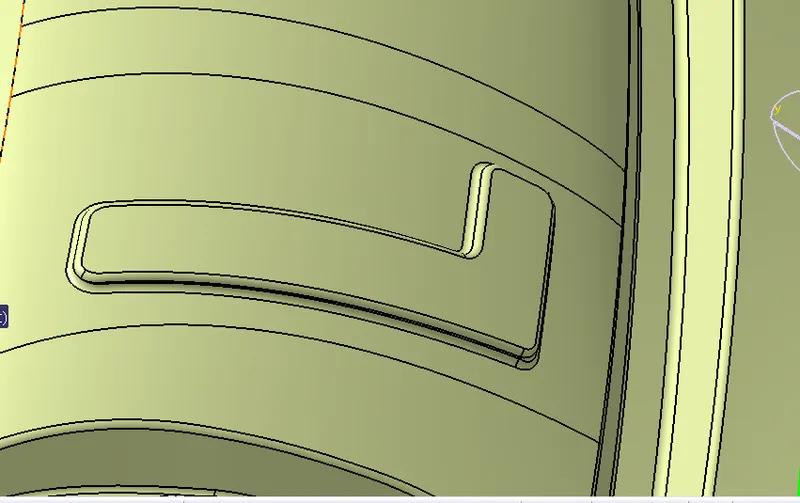
Hinge and gas stay:-
Hinge is used to connect the door to the BIW also enables the opening and closing of the hood.
So the embosses are created of the hinge along with reinforcements to provide additional support to the inner panel.
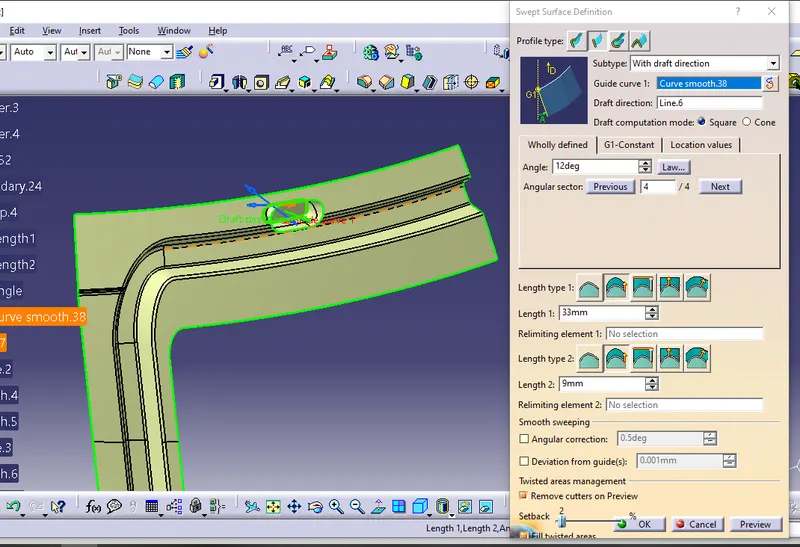
- The Hinges are created at the top of the inner panel using the parallel curves and corner option.
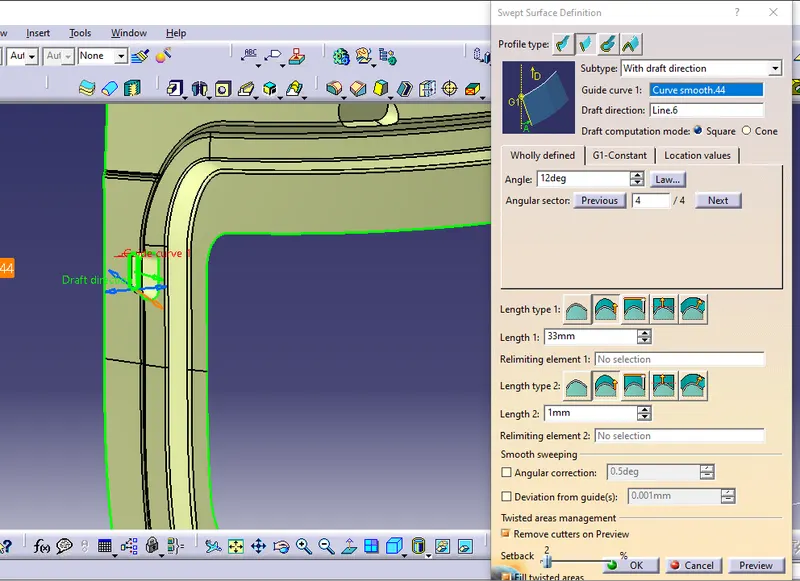
- Sketch the line and sweep this line, reference of the plane and trim the all corner's and sweep the draft direction with 12 degree angle and Use the Trim option to cut the elements.
same for gas stay-
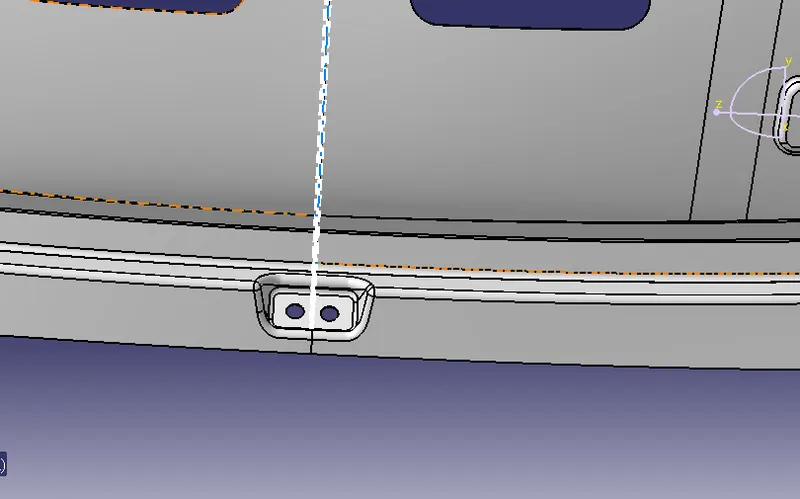
LATCH:-
For the Stricker, it is important to keep the latch embossment according to the trajectory the door opening and closing follows.
- Take create a center point between the two hinge parts and draw a circle marking the sweep of the lower end of the inner panel. Draw a Tangent to the Circle and create the cut on the tangent area and give the cutouts to it.
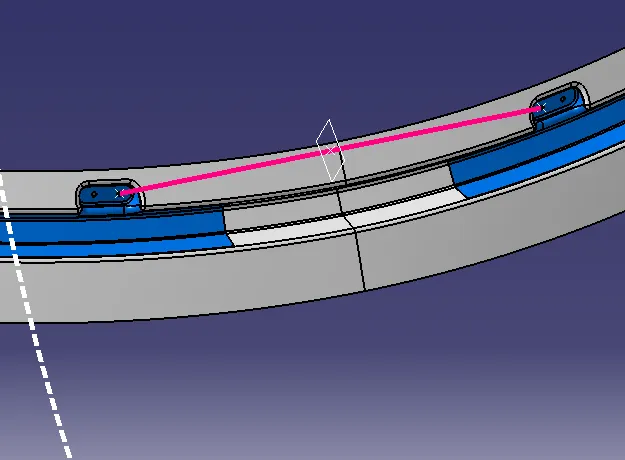
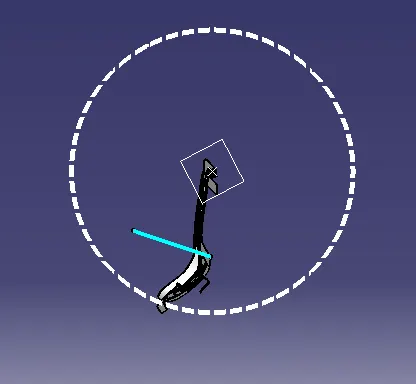
Now draw the sketch on the plane where the circle intersects the inner panel lower side or where the latch follows the trajectory properly.
Reinforcements:-
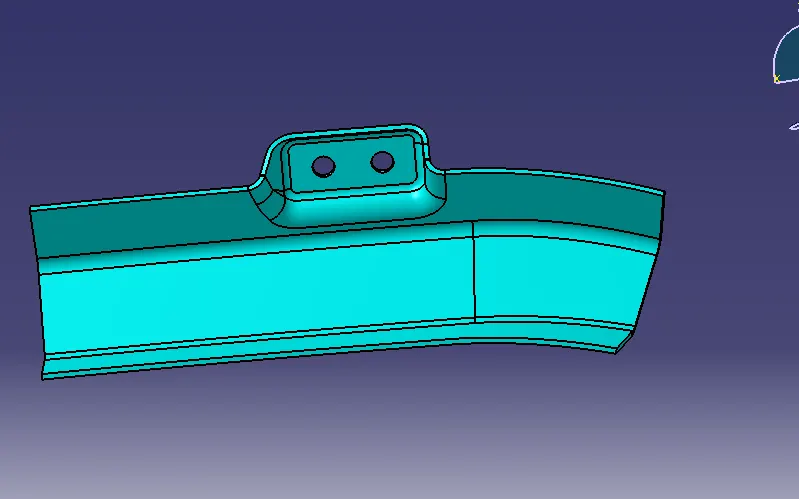
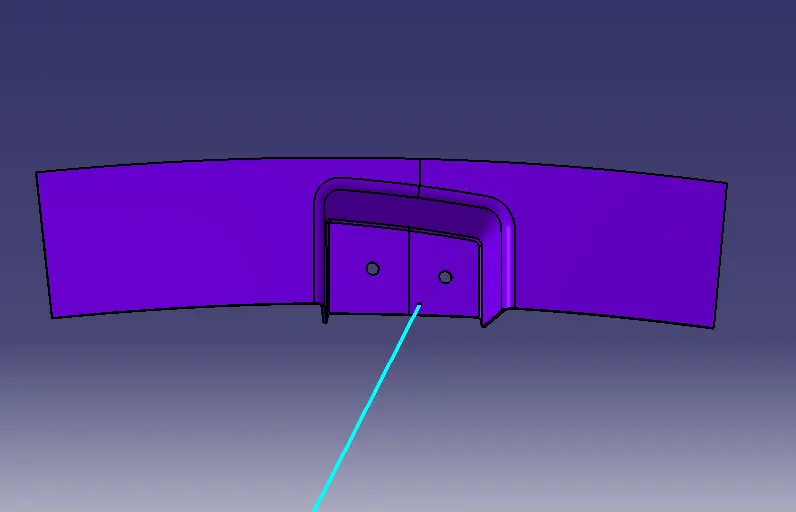
Reinforcements are provided to give strength to parts or regions used for fitting and assemblies. To create the reinforcements steps are as follows:-
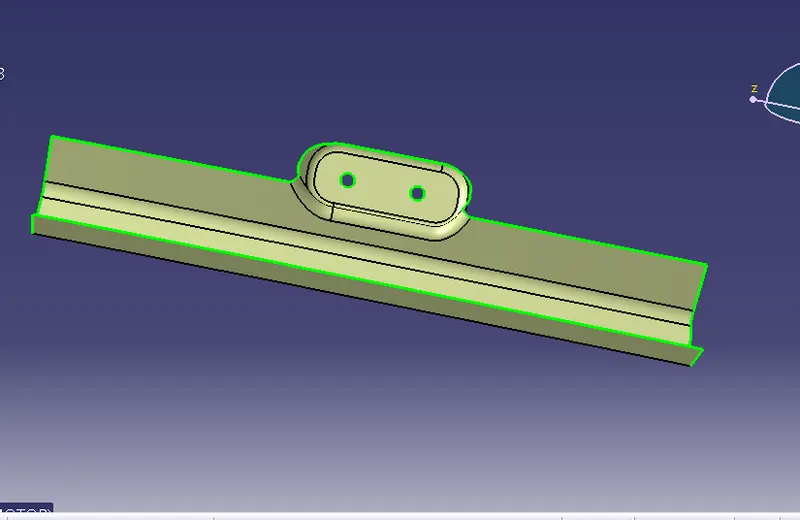
Thickened the surface to 1-1.5mm since the reinforcement has to be stringer than the panel
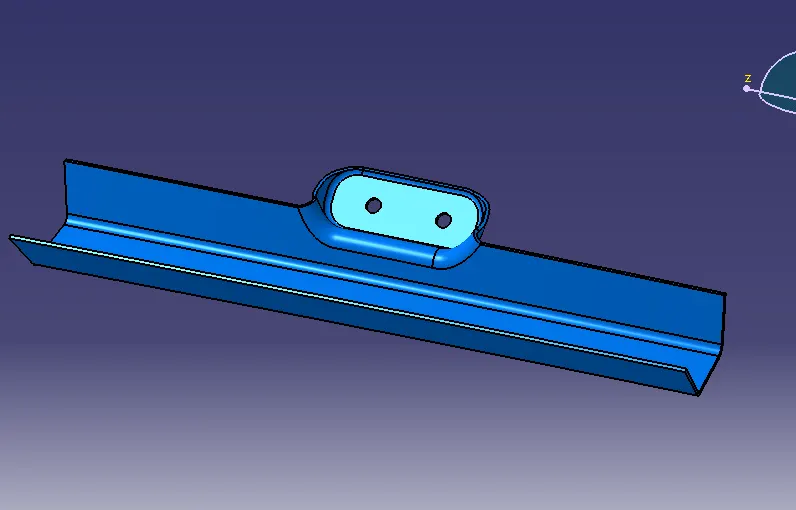
Gas Stay:-
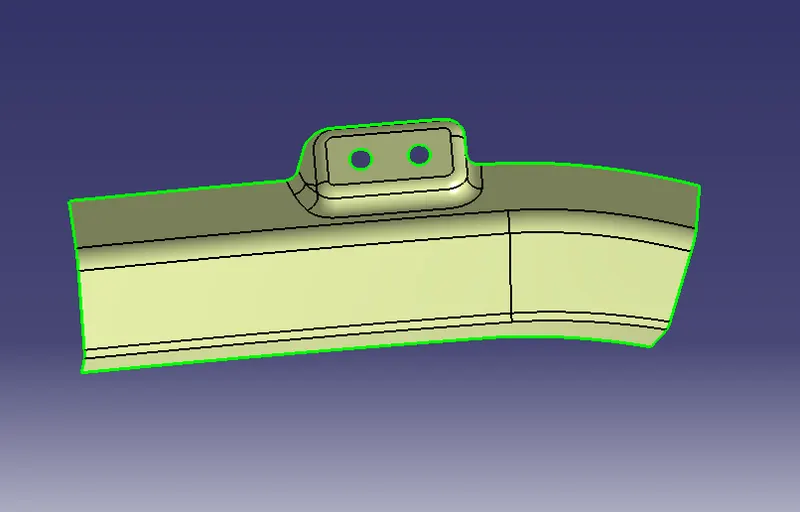
Thickened the surface to 1-1.5mm since the reinforcement has to be stringer than the panel
WIPPER MOTOR:-
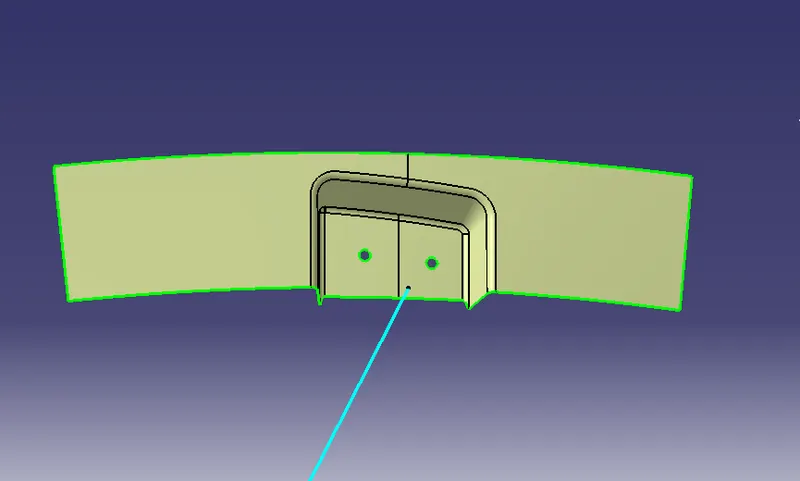
Thickened the surface to 1-1.5mm since the reinforcement has to be stringer than the panel
LATCH:-
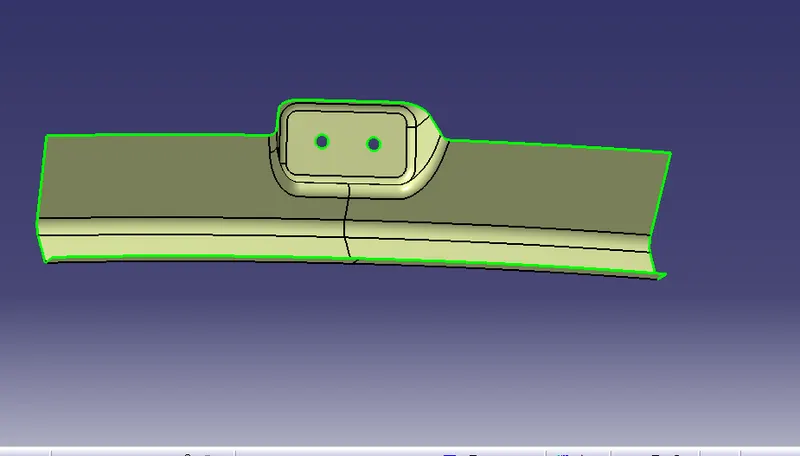
Thickened the surface to 1-1.5mm since the reinforcement has to be stringer than the panel
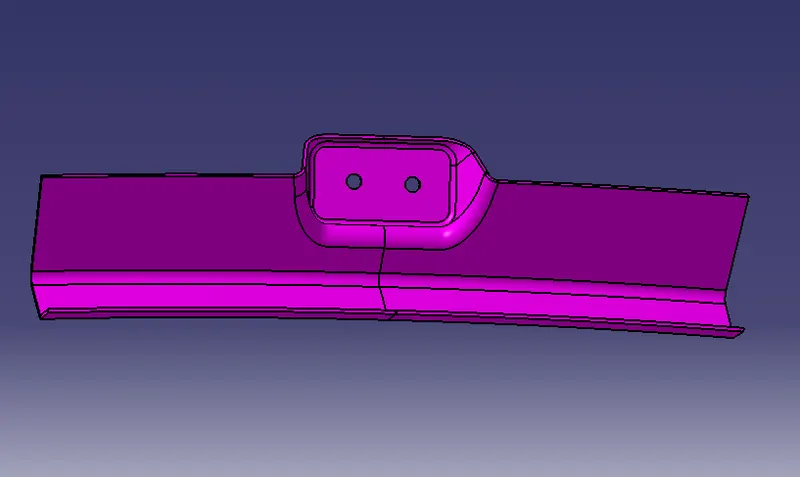
Results:-
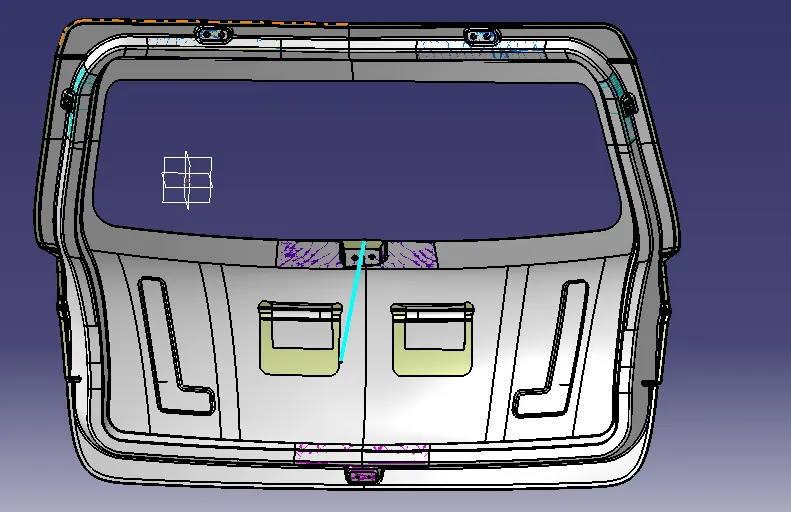
The final backdoor is as shown below -
Inner panel :
OUTER PANEL:-
Corner Relief:-
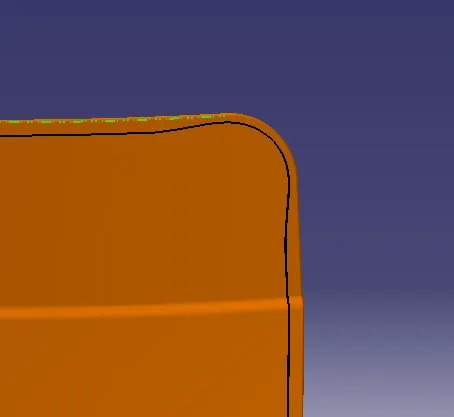
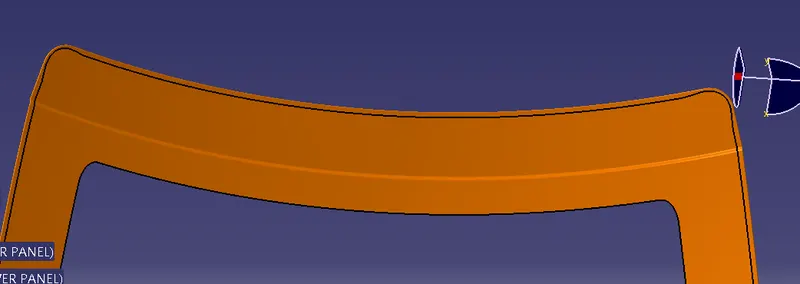
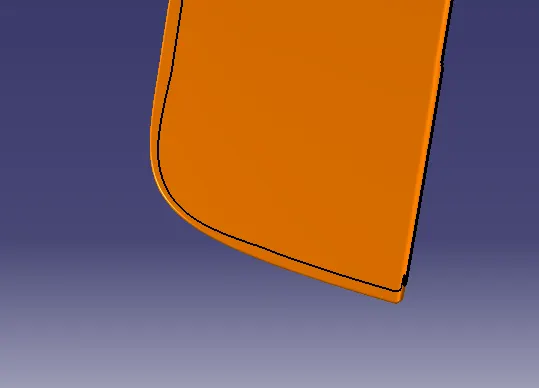
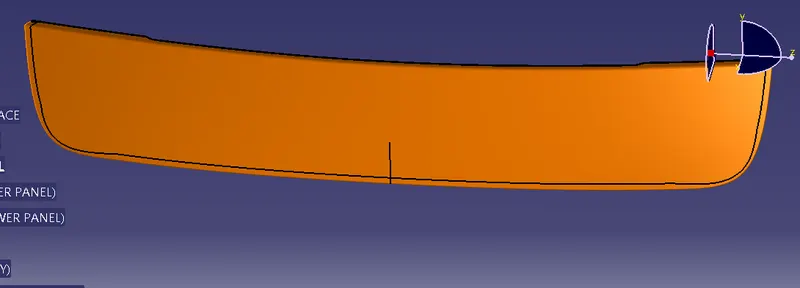
During hemming process multiple rollers are used which causes vibrations and stress concentrations at the some locations due to which design intent of the panel shouldn’t be changed (i.e the panel should spring back to original formation after roller is removed). But most of the time that is not the case at corners so to avoid that situtaion reliefs are provided at corners.
FINAL ASSEMBLY:-
Draft Analysis:-
Inner panel-
OUTER PANEL-
Conclusion :-
The backdoor sheet metal part body for the car was successfully created taking into consideration all the attachments embossments, hemming, and finally with the proper draft angle so that the final component is manufacturable. The approach to design the inner panel was taken in such a way that it dissipates the force outwards in the various crash test.